
Reviewed · YOGA & MEDITATION RETREATS
7 Days Thai Yoga Massage Training and Retreat in Begnas Nepal
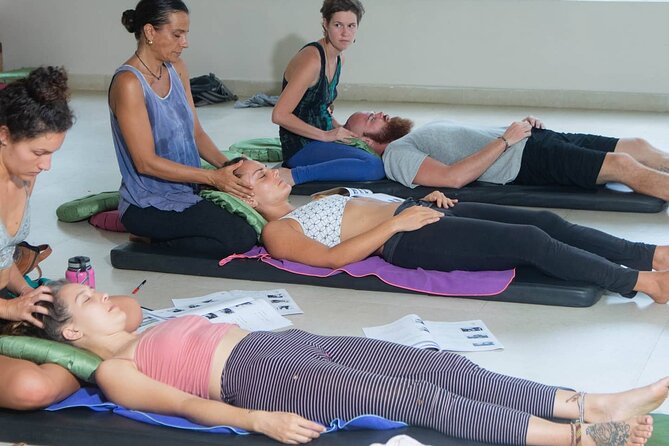
Thai yoga massage training in Pokhara is interesting because it is not just about learning strokes. You are learning a body-and-breath way of working, tied to awareness, movement, and meditation, in a retreat setting. This course is led at Karmayogi Wellness and School by Raj, with a small team that supports hands-on practice.
Two things I really like: you get daily practice (about 5 to 6 hours) and you learn the fundamentals in a structured way, not just random techniques. Also, the course connects massage with mindfulness, so you are training how to feel and breathe as much as how to move your hands. The main drawback to consider is that food and accommodation are not included, so you’ll need to plan those costs on top of the workshop price.
Key highlights you should notice
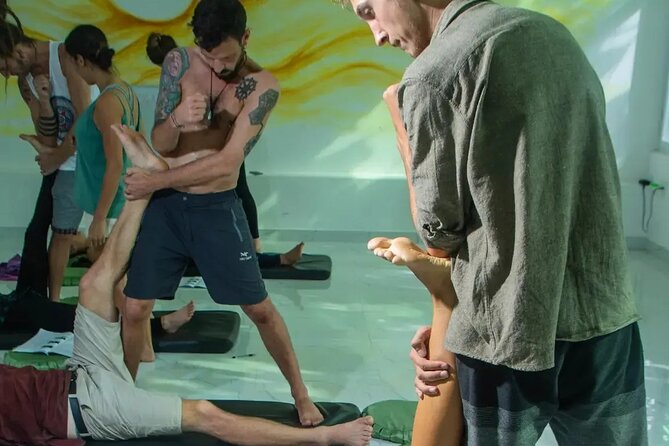
- 7-day, hands-on Thai massage fundamentals with practice built into the schedule
- Nadi awareness (energy lines) taught as part of the body mechanics
- Yoga and meditation daily, not just a warm-up
- Small group size with a maximum of 20 participants
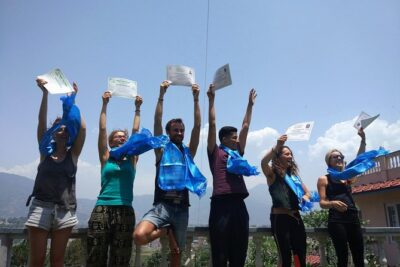
- Certificate and course books included, plus drinks and refreshments
Thai Yoga Massage in Pokhara: What This 7-Day Training Is Really About
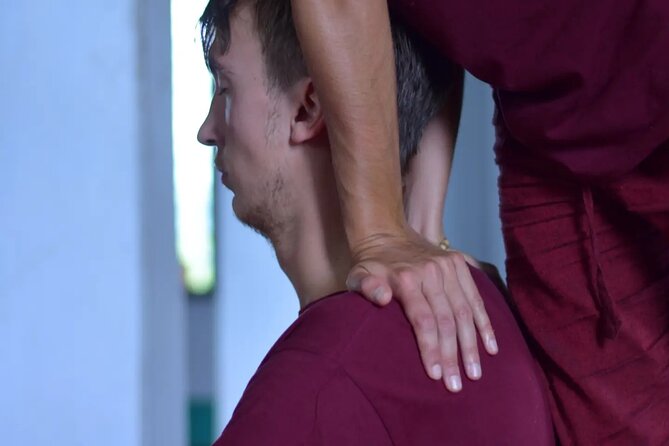
Thai yoga massage is hands-on bodywork, but the training focuses on something bigger than touch. The goal is to develop awareness of breath and body movement, and to bring in meditation so your practice stays calm and intentional. Over the days, you work on control of emotions and mind fluctuations, which is a big part of why people come back to this style again and again.
I also like how the course frames the work as life-supportive and community-oriented. If you learn to work with care and attention, you can use it for yourself, your family, and the people around you. It’s not presented as a mystical performance, it’s taught as a repeatable practice, with you learning to bring presence into each technique.
You’ll be in Pokhara, a practical base for retreat-style learning. The meeting point is at Karmayogi Yoga Retreat and School on Lakeside Road, and the activity starts at 12:00 pm and ends back at the same point.
More Yoga & Meditation Retreats in Pokhara:
Where You Begin at Karmayogi Yoga Retreat and School (Lakeside Road, Pokhara)
Your training starts at Karmayogi Yoga Retreat and School, Lakeside Road 6, Pokhara 33700. That location matters because Pokhara’s Lakeside area is easy to orient to, and the retreat is described as near public transportation. You do not need to plan complicated logistics just to get to the training.
The format also matters for comfort. This is a course with a set daily rhythm, so you can spend your energy learning instead of constantly arranging transfers. Your schedule is anchored to the retreat, with the activity ending back at the meeting point, so you can plan evening time without guessing.
Karmayogi is also where the teaching team works, including Raj and his assistant and family support. Based on the feedback, you should expect a calm, patient atmosphere, the kind where questions are welcome and explanations can be repeated until they click.
A Typical Day: 5 to 6 Hours of Thai Massage Practice, Yoga, and Meditation
The strongest promise here is time on your feet and time on your practice. Each day includes hands-on Thai massage practice, plus yoga and meditation, for roughly 5 to 6 hours total. That’s a lot of learning time compared with short workshops where you only sample a few techniques.
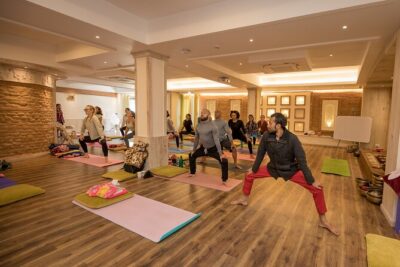
You should expect the day to feel like training. You practice sequences, adjust body mechanics, and learn how to move with intention rather than force. The included meditation techniques are meant to build mindfulness and help you connect your inner focus to your massage movements.
One practical implication: this is not the kind of experience where you can treat each day as optional. The schedule is built so you steadily deepen your understanding. If you’re the type who loves slow, methodical progress, you will like the structure. If you want a mostly relaxing spa day, this will likely feel more work than you planned.
Learning the “Why” Behind Thai Massage: Fundamentals and Nadis (Energy Lines)
Thai massage is often described as stretching plus pressure, but the training goes beyond that. You learn fundamental principles of Thai massage, and you also learn about energy lines, known as Nadis. In the course framing, Nadis connect to how the body functions and how movement and breath support healing.
That makes the learning style different from a purely mechanical approach. You’re not only memorizing a sequence, you’re building an awareness of the body as a network of channels. This can change how you apply techniques, because you start thinking about flow and continuity rather than isolated moves.
The Nadi part is also one reason the experience can feel transformational. In at least one course session, a participant was guided by Raj while he worked on unblocking meridians throughout the torso under careful supervision. Even if you approach it more practically, that kind of guidance can help you feel how sensitive the body can be to focused technique.
More massage and spa time in Pokhara:
- Whole Day Massage & Spa With Lunch
★ 5.0 · 54 reviews - 6 Hours Spa Package in Kathmandu (Massage, Sauna, Steam, Jacuzzi)
★ 5.0 · 43 reviews - Short Day Trip Hiking with 1 Hour Spa Massage in Kathmandu
★ 5.0 · 11 reviews - Kathmandu: Spa Package with Massage, Facial and Bath
★ 4.1 · 11 reviews
Teaching Style at KarmaYogi: Raj’s Patient Explanations and Hands-On Supervision
Raj is the name you will keep hearing. He runs the training, and the course is supported by an assistant and additional team help. The feedback I’m using points to a style that is patient, kind, and open to questions. That matters because Thai massage has lots of small adjustments, and those are hard to learn from a single demonstration.
Another thing I like about this teaching setup is how it supports different learning speeds. Some students start with yoga experience but not Thai massage experience, and that’s exactly the kind of gap this course is good at bridging. One reviewer described that yoga had helped deepen their understanding of Thai massage, which matches the course design of pairing bodywork with breath and meditation.
Group size also plays into the teaching style. The maximum is 20 participants, so you should get some real attention rather than being one face in a crowd. And in at least one instance, the course ran in a quieter way because it was off-season, with one student taking multiple courses. Even without guaranteeing that setup, it signals that the teaching is flexible enough to work at different group sizes.
What You Get for $487: Inclusions, Value, and What Costs Extra
At $487 per person for about 7 days, the value depends on how you compare it to short classes. You’re paying for multiple days of structured training, including daily practice time and instruction, plus written materials and a certificate. For a skill that you can use for yourself and others, that long practice window can justify the price.
Here’s what’s included:
- All fees and taxes
- Books and certificate
- Drinks and refreshments
Here’s what is not included:
- Food
- Accommodation
- Travel tickets of any kind
That last part is important. Since food and lodging aren’t covered, you should budget for where you will stay in Pokhara and how you’ll eat between training blocks. This doesn’t make the course bad value, it just means you should plan it like a training retreat rather than an all-in bundle.
Also, the course uses a mobile ticket, and confirmation is received at booking. It’s a small detail, but it usually means the paperwork side is straightforward and you can focus on showing up on time.
The Training Rhythm: Why Daily Yoga and Meditation Matter
People sometimes treat Thai massage as a standalone skill, like learning a sport. This course treats it more like a practice of awareness. The daily yoga and meditation are meant to support awareness of breath, help you coordinate body movement, and train calm attention.
That combination can help in two practical ways. First, it supports your own comfort and mobility as you practice bodywork for hours each day. Second, it helps you stay steady while applying pressure and stretching, because you’re learning to work from mindful control rather than rushing.
Meditation techniques are included and designed to connect you to your inner self. You’re not just relaxing, you’re building a mental setup for the massage work. If you’ve ever found massage training difficult because your mind races or your body tightens under effort, this structure is designed to address that.
What to Expect From the Experience Beyond Techniques
A good training course leaves you with more than a list of moves. This one is framed as a gathering that supports connection with like-minded people, including yogis and healers. That matters because practice sticks when you can talk about it, compare notes, and feel supported.
The course also emphasizes compassion, love, and sensitivity toward yourself and others. That might sound like intention setting, but in training it often shows up as gentler technique, better communication, and more respect for your own boundaries. Even if you don’t follow the spiritual framing fully, you can still benefit from the softer, careful approach.
One more insight from the feedback: Raj is described as knowing what he is teaching, which is what you want when you are learning a skill that involves other people’s bodies. The supervision tone you see in the descriptions suggests you’ll feel guided rather than thrown in.
Who This Course Fits Best (And Who Might Want Another Option)
This course fits you best if:
- You want a real foundation in Thai yoga massage, not a quick try
- You enjoy yoga and meditation, or you want those tools explained through bodywork
- You like structured learning with time to practice each day
- You want a small-group feel with a maximum of 20 participants
You might consider another option if:
- You’re looking for a fully relaxing retreat where massage is mostly something done to you
- You do not want to manage your own food and accommodation in Pokhara
- You prefer very short courses and cannot commit to about 7 days
If you already practice yoga, that’s a helpful background. But if you do not, you’ll still be able to participate since the course states most travelers can join.
Price and Logistics: How to Plan Your Pokhara Trip Smartly
Think of the $487 as paying for training, instruction, books, and the daily structure. The extra planning is mainly about your life outside the classroom: where you sleep and how you eat.
Your start time is 12:00 pm, so you can plan an easier morning on arrival day. The activity ends back at the meeting point, which makes it simpler to plan evenings. Also, since it’s near public transportation, you should not need a private driver just to move around Pokhara.
If you’re building a longer Pokhara itinerary, you could treat this as the anchor block. Keep one or two low-energy blocks around the training days, because bodywork practice can create muscle soreness. That’s not a flaw in the course, it’s part of learning with your body.
Should You Book This 7-Day Thai Yoga Massage Training and Retreat?
Book it if you want a serious, practical Thai massage foundation with daily yoga and meditation, taught by Raj and supported by a small team. The included books, certificate, and the amount of practice time make the price feel more justified than a typical one-day sampler.
Skip it or look for a different format if you want an all-in retreat with food and accommodation handled for you, or if you want something mostly passive and relaxing. This is training, and the best outcome comes when you show up ready to practice.
If you’re a yoga person who wants to learn Thai massage as a skill you can use for yourself and others, this course is a strong match.
FAQ
What time does the 7-day Thai yoga massage training start?
The course starts at 12:00 pm. You meet at Karmayogi Yoga Retreat and School on Lakeside Road 6, Pokhara 33700, Nepal.
Where do I meet for the training, and does it end nearby?
You start at Karmayogi Yoga Retreat and School on Lakeside Road 6, Pokhara. The activity ends back at the meeting point.
Is food and accommodation included?
No. Food and accommodation are not included, so you will need to plan those separately.
Are training materials included?
Yes. Books and a certificate are included.
How many people are in the group?
The maximum group size is 20 travelers.
What is the cancellation/refund policy window?
You can cancel for a full refund if you cancel at least 24 hours before the experience’s start time. If you cancel less than 24 hours before, the amount paid is not refunded.
Final Call: Who Should Say Yes in Pokhara?
Say yes if you want hands-on Thai massage training in a calm retreat structure, with daily practice that includes yoga and meditation. It’s the kind of course that can turn into a lasting skill, because you are learning technique and attention, not just memorizing moves.
Latest Pokhara write-ups
- Landing Annapurna Base Camp by Helicopter Tour from Pokhara★ 4.0 · 5 reviews
- Sarangkot sunrise with Morning Tibetan Cultural Tour★ 5.0 · 5 reviews
- 3 Day Kapuche Glacier Lake Trek with Siklesh from Pokhara★ 5.0 · 5 reviews
- Entire Day Pokhara Complete Tour★ 5.0 · 5 reviews
- 3 Day Mardi Himal Base Camp Trek from Pokhara★ 5.0 · 5 reviews
- Private Tour Local Culture and The View of Mohare Danda★ 5.0 · 6 reviews
- 3 Days Ghorepani and Poonhill Private Trek from Pokhara★ 5.0 · 6 reviews
- Pokhara: Poon Hill Ghorepani Short Trek★ 5.0 · 6 reviews
Yoga & Meditation Retreats, compared.
500 hours Advanced Yoga Teacher Training at Nepal Yoga Home (Every 1st of month)
Read our review →
200 Hours Yoga Teacher Training at Nepal Yoga Home (starts on 1st of everymonth)
Read our review →
3 night 4 Day Yoga & Ayurveda Retreat to Detox the Body & Mind, Nepal
Read our review →
21 days Himalayan yoga retreat in Nepal in Kathmandu
Read our review →
10 Days Ayurveda & Yoga Retreat in Kathmandu, Nepal
Read our review →
21 Day Ayurveda & Yoga Retreat in the Himalayan country, Nepal
Read our review →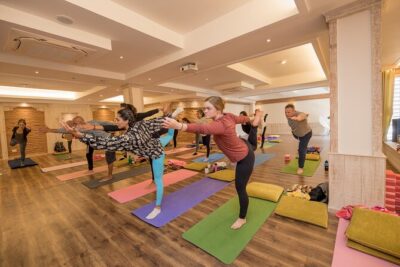
14 Day Ayurveda + Yoga Detox Retreat in Nepal
Read our review →Browse the lists this tour appears in