
Reviewed · WORLD PEACE PAGODA
The World Peace Pagoda in Pokhara
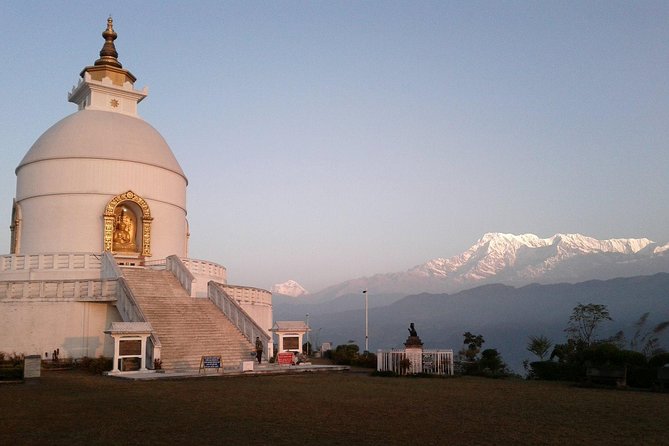
Pokhara has plenty of viewpoints, but the World Peace Pagoda, also called the Shanti Stupa, feels different the moment you arrive. It sits up on a hill above Phewa Lake, so you get wide, postcard-style views, plus a Buddhism-focused story that makes the whole place easier to understand.
Two things I like a lot are the comfortable car transfer (you skip the tough uphill approach) and the guided explanation that ties the stupa to Buddhism in Nepal, not just a quick photo stop. One thing to think about: there is still a short walk up staircases once you reach the hill, so comfy shoes matter.
Key highlights to look for on your Shanti Stupa visit
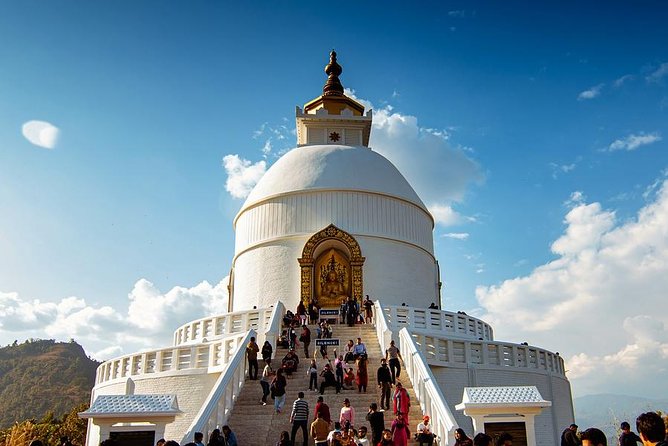
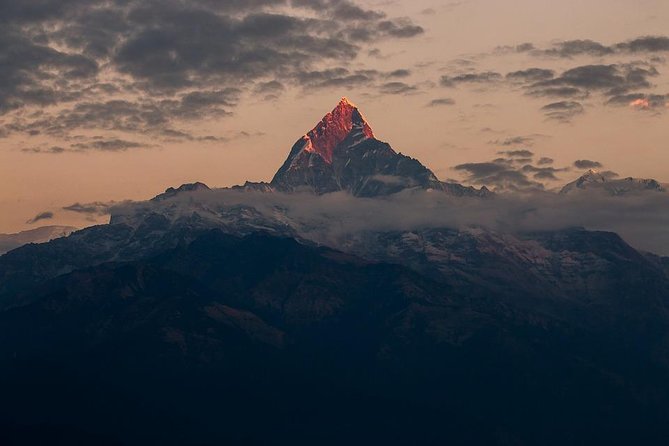
- Big panoramic views over Pokhara, Phewa Lake, and the snow-capped Himalaya on clear days
- Made for understanding, with a guide who explains Buddhism and the stupa’s meaning
- Four directions, four life stages of the Buddha, linked to Lumbini, Bothgaya, Sarnath, and Kushinagar
- Built in the 1970s, so it has that modern-stupa feel with deep spiritual intent
- A 3-hour private tour with entrance fees included and hotel pickup and drop-off
World Peace Pagoda in Pokhara, why this hilltop stupa beats a simple photo stop
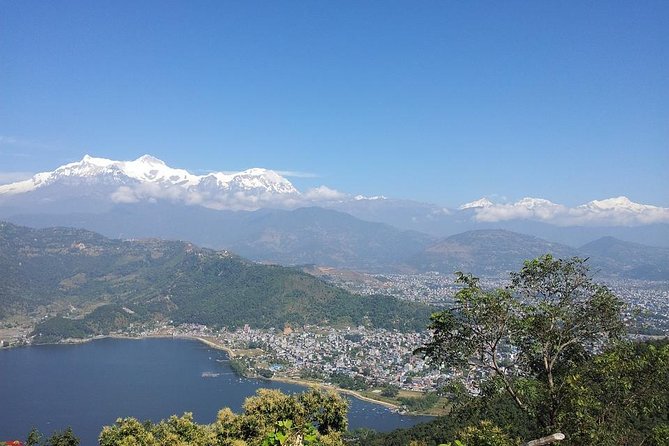
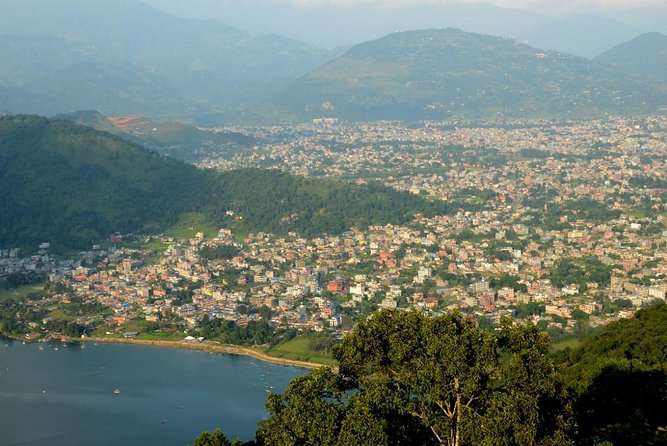
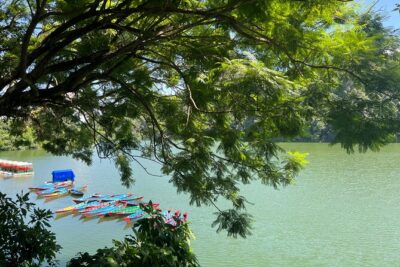
The Shanti Stupa is one of those places where the views and the message work together. From the hill, you look down toward Phewa Lake and across toward Pokhara city, and on good weather you can catch the snowy peaks in the distance. It’s the kind of viewpoint where you can actually pause, breathe, and take in what’s around you instead of rushing through.
What makes it especially worthwhile is the way the stupa is designed to be read. A guide can walk you through how the monument reflects key stages of the Buddha’s life in four directions. That turns the visit from just another lookout into something more meaningful, even if you are not religious. You end up knowing what you are looking at.
The other big plus is the logistics. You do not have to treat this as a “let’s suffer for 30 minutes uphill” outing. The transport does the heavy lifting, then you handle a short stretch of stairs on site.
More walks up to the Peace Pagoda:
- Pokhara: Golden Hour at Peace Pagoda – Himalayan Sunset Tour
★ 4.5 · 16 reviews - From Pokhara : Hiking to Peace Pagoda via Fewa Lake & Jungle
★ 5.0 · 10 reviews - Pokhara: Peace Pagoda Sunset, Annapurna Mountain Views Tour
★ 2.9 · 5 reviews
Price and what you actually get for around $60
At $60 per person, you are paying for more than sightseeing access. You get a private vehicle for your pickup, a professional guide, and the entrance fees included. That matters in Pokhara because time is money, and viewpoints add up fast if you have to piece together transport on your own.
Also, you are not just buying a ticket to a hill. You are buying context. When a guide explains what the stupa represents, you spend less time guessing and more time enjoying. The reviews scoring this tour highly often point to the same pattern: good value and an enthusiastic, informative guide. That is the value you feel, not just the price tag.
One practical note: food and drinks are not included. If you are sensitive to timing, plan a snack before you head out or bring something small. This is a short tour, about 3 hours, so you will likely want to avoid making hunger part of the experience.
How the 3-hour tour works, hotel pickup to hilltop stupa
This is a tight, well-paced visit. You start with pickup from inside Pokhara city at your hotel, then you head to the World Peace Pagoda by private vehicle. The drive takes about 30 minutes, which is long enough to settle in and short enough that you are not stuck waiting around.
Once you arrive, you still do a walk, but it is manageable. Expect around a 10-minute walk through staircases to reach the massive stupa. The walk is short, but it is on stairs, so comfortable shoes are your best friend.
From there, the time is about observing and learning. Your guide will talk about the stupa and Buddhism in Nepal, and you will have time to take in views. Because the tour is private, you can generally match the pace to your group. If someone in your party wants more photos, you do not have to fight crowds to do it.
At the end, you return to the meeting point. In plain terms: you get the experience without turning it into a half-day project.
Entering the stupa zone, staircases and the best way to pace yourself
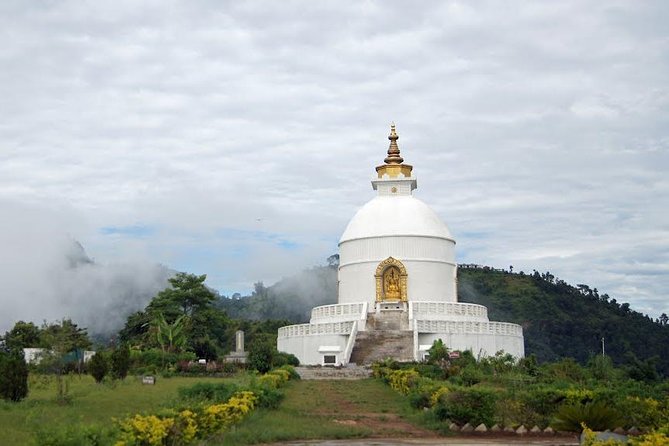
The stairs are the one physical component of this outing. They are not a mountain trek, but they are not nothing either. I would treat this as moderate walking. If you have knee issues or you get winded easily, go slow on the way up and take a quick breather before the main viewing.
Here is a smart move: wear shoes with real grip and plan for uneven steps. Pokhara paths can be slick depending on recent rain. Also, keep water in your mind even though drinks are not included in the tour. You might not need a lot, but the combination of stairs and sun can surprise you.
Once you reach the stupa area, the pacing flips. You can linger, look over the lake, and watch how the view changes as your eyes adjust. If clouds roll in, the guide’s explanations become even more valuable because the “what am I looking at and why?” part stays strong.
More to compare around Pokhara
- ZipFlyer Nepal – The World’s Steepest Zip-line
★ 5.0 · 608 reviews - Bungee Pokhara by HighGround Adventures
★ 5.0 · 366 reviews - From Pokhara: Sarangkot Sunrise Himalayas Tour
★ 4.7 · 218 reviews - Full-Day Tibetan Cultural Tour to Tibetan Settlements Pokhara
★ 5.0 · 184 reviews
Reading the World Peace Pagoda, four Buddha life stages in four directions
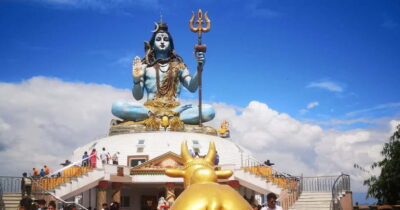
This is where the Shanti Stupa feels more than a viewpoint. The stupa was constructed by Buddhist monks from the Japanese Nipponzan Myohoji order, and it is designed to reflect four prominent stages of the Buddha’s life in four directions.
If you like understanding symbolism while you travel, you will probably enjoy this part. Your guide can help you connect the directions to the story:
- The direction linked to Lumbini, where the Buddha was born
- The direction linked to Bothgaya, where the Buddha became enlightened
- The direction linked to Sarnath, where the Buddha taught most of his life
- The direction linked to Kushi Nagar, where the Buddha reached nirvana
Even if you remember only one or two of these, you will notice you are looking differently. Instead of staring at a big white structure, you start seeing it as a map of ideas.
This is also why the tour is worth doing with a guide. Without explanation, the directions and symbolism can feel abstract. With a guide, you get a clean, understandable framework in a short time.
The 1970s construction story, why this stupa feels both modern and spiritual
The stupa was built in the 1970s, and that timing gives it a particular vibe. It is not a crumbling centuries-old relic. It feels like a deliberate, 20th-century spiritual project meant to spread a message of peace and Buddhism.
I like that contrast, especially in Nepal, where the older sites can be awe-inspiring but sometimes hard to connect to if you do not know the story. Here, the modern construction helps you focus on meaning and design. You can see the structure clearly, and your guide can explain how it fits into Buddhist traditions and Nepalese culture.
If you are short on time in Pokhara, this kind of landmark visit works well because you do not need a long learning curve. You get a compact introduction to symbolism and belief, plus the payoff of the views.
Views over Pokhara, Fewa Lake, and the Himalaya
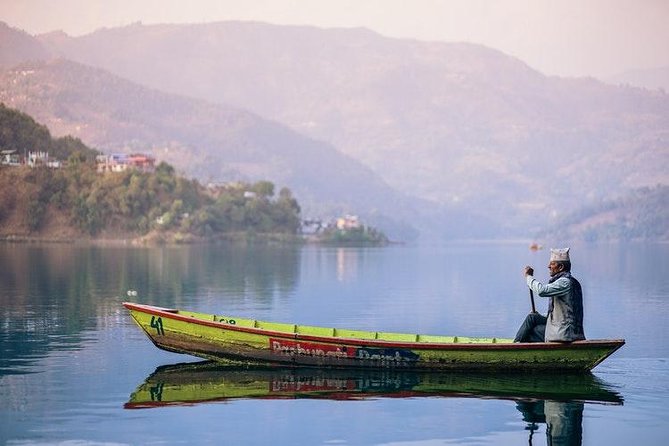
The main reason people schedule this stop is the scenery. From the hilltop, you can look down on Pokhara city and toward Fewa Lake. On clear days, you can also see snow-capped Himalayan peaks in the distance.
The trick with views in the mountains is that the best visibility depends on weather. If the sky is hazy, do not panic. The stupa area still offers useful perspective. You can focus on the lake and city below, and your guide’s explanations keep the time feeling complete even when the peaks are shy.
My practical advice: plan to spend a little extra time standing still once you reach the best viewpoint spot. People rush through, take a quick picture, and move on. But if you give your eyes 2 to 3 minutes, you often notice more in the distance, especially with lighting changes.
Who this tour suits best in Pokhara
This works well if you want one highly focused visit instead of a long day hopping between stops. It is also a great fit for couples and small groups who value guidance, not just transport to a place.
It is especially good if:
- You are in Pokhara for a short stay and want a meaningful stop that does not take all day
- You prefer guided context so you understand what you are seeing
- You would rather save energy on the hill approach and handle a short staircase walk instead
It may be less ideal if your group cannot manage stairs at all. The walking is short, but it is still stairs.
Tips I’d use before you go
A few small things can make this outing smoother.
- Wear comfortable, grippy shoes for the staircases
- Bring a light layer if mornings or evenings feel cool in Pokhara
- Take your photos, then slow down. The stupa symbolism is the real second act
Because the tour is about 3 hours, you will not have time to wander far. So if there is something you want to see up close, ask your guide where to stand for the best angles before you start wandering.
Should you book the World Peace Pagoda tour with Liberty Holidays?
I would book this tour if you want a short, well-structured visit that combines views with interpretation. The value is strong for what you get: pickup and drop-off, private vehicle transport, a professional guide, and entrance fees, all wrapped into a tidy 3-hour outing.
The main reason not to book is simple: if your group needs zero stairs or very limited walking, the 10-minute staircase walk could be a problem. If you can handle that, you are in a great spot to get both scenic Pokhara and a clear explanation of the Shanti Stupa’s design.
FAQ
How long is the World Peace Pagoda (Shanti Stupa) tour?
It lasts about 3 hours (approx.).
Is hotel pickup and drop-off included?
Yes. Hotel transfers are included, and pickup is offered from hotels inside Pokhara city.
Do I have to hike to reach the pagoda?
You will take a vehicle to the area, then do a 10-minute walk through staircases to reach the stupa.
What does the price include?
The price includes hotel pickup and drop-off, private transportation, a professional guide, and entrance fees.
What is not included in the tour price?
Food and drinks, travel insurance, and any extra activities are not included.
Is this a private tour?
Yes. It is a private tour, so only your group participates.
What is the minimum age for the tour?
The minimum age is 5 years.
What if the weather is cloudy at the pagoda?
The tour still includes guided time at the stupa and views, but visibility of the snow-capped Himalaya can vary with conditions.
What is the cancellation policy?
There is free cancellation. You can cancel up to 24 hours in advance for a full refund.
Do I need to provide my hotel name?
Yes. If you want pickup from inside Pokhara city, provide the name of your hotel.
Latest Pokhara write-ups
- Mardi Himal Trek -5 Day Short Trek From Pokhara★ 5.0 · 8 reviews
- Tandem Paragliding in Pokhara★ 4.8 · 8 reviews
- Pokhara: Peace Pagoda Sunset, Annapurna Mountain Views Tour★ 2.9 · 5 reviews
- Short & Scenic: 2-Day Private POON HILL Trek from Pokhara★ 5.0 · 8 reviews
- Seti George and Thrilling Suspension Bridge Tour at Pokhara★ 4.5 · 3 reviews
- Sarangkot Sunrise over the Himalayas★ 4.8 · 83 reviews
- Pokhara: Sarangkot Sunrise and Private Full Day Tour★ 4.8 · 24 reviews
- From Kathmandu/Pokhara: Private 3-Day Chitwan Safari Tour★ 4.7 · 34 reviews
World Peace Pagoda, compared.
Browse the lists this tour appears in