
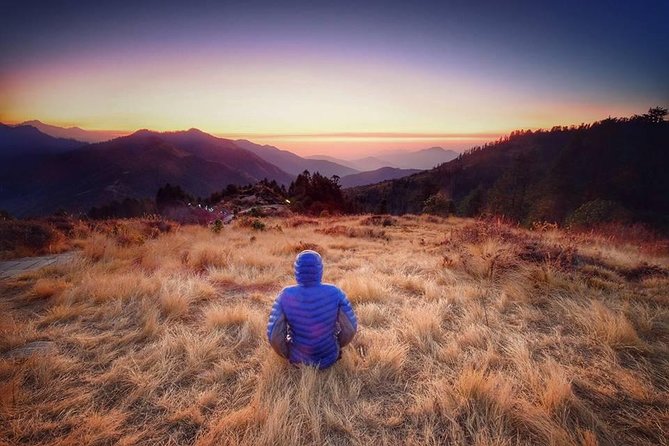
Reviewed · POON HILL TREK
Ghorepani Poonhill Sunrise trek
This trek is interesting because it mixes two kinds of payoff in one week: the pre-dawn rush up to Poon Hill for sunrise views, then the calmer, culture-rich walk through mid-hills villages like Ghandruk, where the mountains feel close and personal. Starting from Pokhara also helps, since you get Lake Phewa and the Annapurna setting before your boots ever hit the trail.
I especially love how the route works for classic mountain photography, including views toward Annapurna I, Dhaulagiri, Manaslu, Machhapuchhre, and more. I also like the human side, too: a government-licensed guide plus a porter, and the personal touch some guides add, like yoga sessions at dawn and at dusk with leaders including Sumir or organizers tied to names like Amir and Kisan. One possible drawback to plan for is the physical side of this trek, including long hill days and a big stair climb (you are set up for around 3,381 steps on the way toward the high views).
Key things that make this trek worth your time
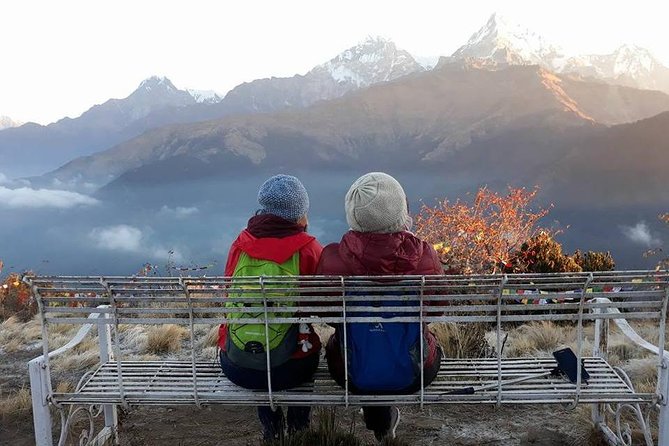
- Sunrise timing built into the day so you can chase light on the Annapurna panorama
- Ghandruk heritage village with strong views toward Annapurna South and Machhapuchhre
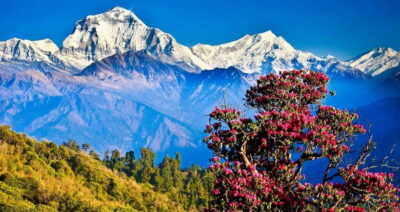
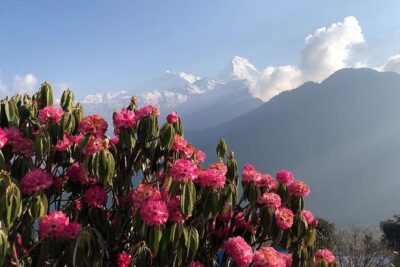
- Forest-to-alpine feel through rhododendron, oak, and magnolia country
- Private group with a licensed guide and porter so you are not fighting logistics
- Food and permits handled with full-board meals during trekking and the required paperwork (TIMS plus permits)
Pokhara to Annapurna, without the usual hassle
If you want an easy entry into the Annapurna region, Pokhara is the right place to base yourself. This trip starts with airport pickup and then a hotel stay in Kathmandu and Pokhara, so you are not jumping straight from jet lag into thin air. You drive from Kathmandu to Pokhara by tourist bus, about 6 hours, which is long but straightforward.
Then comes the real transition. You spend time in Pokhara, with Lake Phewa in the background, and you feel the geography shift from city rhythms to mountain pace. After that, the trek begins from the Nayapool side, where you head into the mid hills and start trading road noise for forest sounds. That flow matters. It keeps the first days from feeling like an abrupt, slap-in-the-face adventure.
More Ghorepani and Poon Hill departures:
- Poon hill Trek 3 days
★ 5.0 · 176 reviews - Pokhara: 4-Day Ghorepani, Poonhill & Ghandruk Mountain Trek
★ 5.0 · 132 reviews - Ghorepani – Poon Hill Trek 3N-4D
★ 5.0 · 125 reviews
Day 1-2: Kathmandu setup, then the Pokhara transfer
On Day 1, you arrive in Kathmandu and get transferred to your hotel. On Day 2, you take a tourist bus to Pokhara. This is not the part you will brag about later, but it is the part that makes the rest of the trip smoother. With a trek like Ghorepani Poonhill Sunrise, small comfort and organization add up.
Practical note: this experience uses a mobile ticket, and you will be asked for passport details at booking time for the required paperwork. That is a good sign of a real operator setup, since they need the names and numbers for permissions.
Day 3: Nayapool to Tikhedhunga, your first real rhythm check
Your trek day begins with a drive to Nayapool, then you hike to Tikhedhunga at about 1,450 meters. Expect the early walking to be your warm-up: steady uphill effort, getting used to trail grading, and learning how your legs respond before the bigger days.
This is also the point where you start appreciating the route’s geography. You are moving from the easier-access valleys toward the higher mid hills. Even without snow around every turn, you will see how the Annapurna range wraps around this part of Nepal.
Day 4: Tikhedhunga to Ghorepani, the steps that set your legs up
Day 4 takes you up to Ghorepani at about 2,874 meters, with a hike lasting around 5 hours. This is a key day for two reasons.
First, it is where the trek leans into effort. Your route is built around a big stair climb, about 3,381 steps, and that is no joke if you usually train on flat ground. Plan your pace for endurance, not speed. Small, steady steps win here.
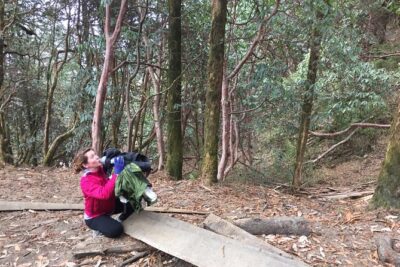
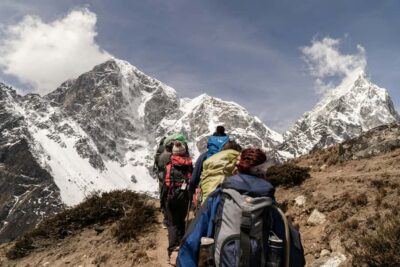
Second, Ghorepani is where the trekking scenery starts to feel more alpine. The walk passes through tranquil forest sections described with rhododendron, oaks, and magnolia trees, and that plant mix is part of what makes the trek feel alive. You are not just hiking between view points. You are walking through a zone with its own character.
More to compare around Pokhara
- ZipFlyer Nepal – The World’s Steepest Zip-line
★ 5.0 · 608 reviews - Bungee Pokhara by HighGround Adventures
★ 5.0 · 366 reviews - From Pokhara: Sarangkot Sunrise Himalayas Tour
★ 4.7 · 218 reviews - ATV Adventure Tour in Pokhara, Nepal
★ 5.0 · 194 reviews
Day 5: Poon Hill sunrise, then on to Tadapani
This is the day you will remember for the rest of your trip.
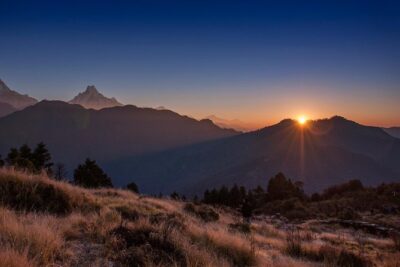
You go out very early for the hike to Poon Hill for sunrise views. The schedule here matters because the whole idea is light on the mountains, not just a random viewpoint at noon. The experience data even lists an early start time, tied to the program timing, so be ready for a pre-dawn wake-up.
After sunrise, you trek onward to Tadapani at about 2,721 meters, for a hike around 5 to 6 hours. Tadapani is not just a stop. It helps you keep the days moving while staying in the zone where the big mountain names make sense. Even if you are not doing hardcore summit trekking, you still get the feeling of living inside the Annapurna region.
What you will likely see from the Poon Hill direction
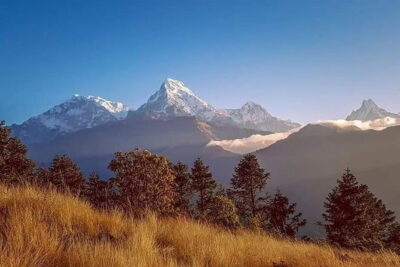
This trek is marketed around major Himalayan highlights you will hear repeated as you hike:
- Annapurna I
- Dhaulagiri
- Manaslu
- Annapurna South
- Machhapuchhre (the Fish Tail Peak)
- Also mentioned in the route context: Barah Shikar, Gangapurna, and Hiuchuli
Even if clouds change the view from morning to morning, the fact that this itinerary is designed around sunrise gives you your best shot at those mountain silhouettes.
Day 6: Tadapani down to Nayapul, then back to Pokhara
Day 6 drops you down to Nayapul, after which you drive back to Pokhara. This day often feels like a relief after the early morning effort, but it is still real trekking time. Going downhill can be its own kind of work, especially if your knees are not happy about steep descents.
Back in Pokhara, you get to reset. You are done with the daily climb and can enjoy the town at human speed again. It is a nice contrast, and honestly, it helps you process what you just did on the trail.
Day 7-8: Return to Kathmandu and depart
On Day 7, you drive back to Kathmandu. On Day 8, you depart for your onward journey.
Again, this part is not about scenery, but it keeps the trip from feeling like it ends abruptly. A farewell dinner is included before departure, which is a small but meaningful touch when you have been hiking with the same guide team and porter.
Included meals and lodging, why it matters on a trek like this
One of the biggest values here is how much is bundled for you during the trekking days.
You get full board meals (breakfast, lunch, dinner) during the trekking period, plus coffee and or tea. That matters because it means you do not have to plan food stops, negotiate menus, or wonder if you can get enough calories on time. Trek days are long enough without turning lunch into a scavenger hunt.
Accommodation is also included during the trek, described as best available. In practice, it means you will not be scrambling to find a room each night. Your guide and porter help keep you on track, which is the difference between a trip that feels guided and one that feels like you are improvising.
The human side: licensed guidance, porters, and the “we’ve got you” feeling
A trek like Ghorepani Poonhill Sunrise can go sideways if you are underprepared, because the early starts and changing weather are real. That is where having a licensed, government-holder guide plus a porter makes a difference.
From the experience feedback you shared, the guides were praised for being attentive and present, not just pointing at trail maps. Names like Sumir and Amir show up as guides who made the experience feel well-managed and friendly. Another name that comes up is Kisan sir, connected with the agency work and appreciation for keeping things smooth.
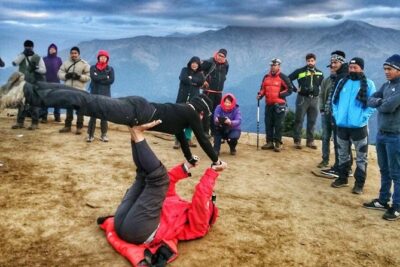
One especially memorable extra mentioned is yoga at dawn and dusk. That might not happen in every group every day, but it is a style detail you can ask about. If you like stretching, breath work, or just a calm moment before sunrise chaos, this is a perk worth discussing.
The mountains and the culture you are actually paying for
This is not only a viewpoint trek. It is a mid-hills cultural route framed by the giant Himalayan names.
The walking passes through villages where Gurung and Pun communities are described as important in the area. You are also staying in and moving near heritage village life, including Ghandruk, which is specifically highlighted as a place with views toward Annapurna South and Fishtail.
So when you think about value, yes, the mountain views are the headline. But you are also paying for the time on trail where culture and daily life are part of the experience, not an afterthought.
Price and logistics: is $815 a fair deal?
$815 per person for an around 8-day trek is not a bargain price, but it also is not a random high number when you look at what is included.
What you do get for the money:
- Hotel stays in Kathmandu and Pokhara
- Airport pickup and drop
- Full board trekking meals
- Best available trek accommodations
- A licensed guide plus a porter
- TIMS card and required trekking permits
- Local taxes and covered support costs for guides and porters
- Ground transport Kathmandu to Pokhara and back, plus Pokhara to Nayapul routing
- A first aid kit and a farewell dinner
What you do not get:
- Nepal entry visa fee
- Travel insurance
- Tips for trekking staff
- Drinks and alcohol
- Personal shopping, laundry, and personal gear
Here is the practical way to judge value: this itinerary is set up so you do not have to assemble the most annoying parts yourself. That is worth real money, especially if it is your first time in Nepal or you simply want the trek to feel organized from start to finish.
Fitness and pacing, what to realistically expect
The experience asks for moderate physical fitness. That is a fair description given the structure.
You have a pre-dawn sunrise hike, multiple days of uphill effort, and a notable stair climb tied to around 3,381 steps. You also have long walking blocks, including a day that runs about 5 hours, and another that runs about 5 to 6 hours. Nothing here is described as a technical climb, but the time on your feet is real.
My advice: if you can handle a few hours of steady uphill hiking and you are okay with early starts, you will likely feel rewarded instead of miserable.
Things to ask before you go
Since some details are not fully spelled out in the core information, I would ask your operator these questions before paying the final balance.
- Will yoga at dawn and dusk be included with your guide, or is it optional by group?
- How do they handle weather if sunrise clouds block the view?
- What exact trekking shoes and gear do they recommend, since personal equipment is not included?
These are the kinds of questions that prevent disappointment, and they help you align expectations.
Should you book the Ghorepani Poonhill Sunrise trek?
Book it if you want a classic Annapurna region experience with real organization: guide, porter, meals, permits, and transport handled. This is also a smart choice if you like the idea of sunrise views plus a village stop like Ghandruk, where culture and mountain scenery connect.
Skip it or consider another option if you know you struggle with early starts or steep stair climbing. This route builds in early mornings and a big stair workload as part of the experience, so your enjoyment depends on your comfort level with that kind of hiking.
If you are ready for that balance of effort and payoff, this is the kind of trek that turns into a clear mental snapshot, sunrise light on the mountains, then hours later, the trail and village life carrying you gently onward.
FAQ
How long is the Ghorepani Poonhill Sunrise trek?
The trek is listed as about 8 days.
Where does the trek start?
The experience starts in Pokhara, with a listed start time of 12:15 am.
What meals are included during the trekking days?
Full board meals are included during the trekking period, with breakfast, lunch, and dinner, plus coffee and or tea.
Do I need trekking permits and a TIMS card?
Yes. The experience includes a TIMS card and trekking permits needed for restricted area trekking.
Is there a guide and porter?
Yes. A government license holder guide is included, and a porter is provided to carry your baggage.
What is not included in the price?
Not included are travel insurance, Nepal entry visa fee, tips for trekking staff, drinks including hot soft cold drinks and liquors, and personal shopping, laundry, gifts, and personal trekking equipment.
Can I cancel and get a full refund?
Yes. Free cancellation is available up to 24 hours in advance of the experience start time for a full refund.
Latest Pokhara write-ups
- Sunrise View from Sarangkot★ 5.0 · 3 reviews
- Beautiful Sarankot Sunrise with Full Day Sightseeing in Pokhara★ 4.5 · 3 reviews
- Sarangkot Sunrise Tour in Private Car★ 5.0 · 3 reviews
- Pumdikot Mahadev Status and Peace Stupa Hiking Private Tour★ 4.5 · 3 reviews
- Pokhara: Dhampus Easy Trek for Families with YoungKids 2 Day Tour★ 5.0 · 3 reviews
- Pokhara: Private Car Drive Tour to World Peace Stupa★ 5.0 · 3 reviews
- 5-Day Private Farming Experience in Nayapul with Accommodation★ 5.0 · 3 reviews
- Transfer to Lower Mustang (Jomsom)★ 5.0 · 3 reviews
Poon Hill Trek, compared.
4-Day Ghorepani, Poonhill & Ghandruk Mountain Trek
Read our review →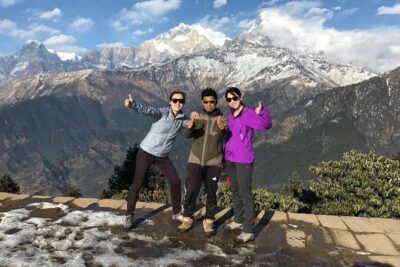
Browse the lists this tour appears in