
Reviewed · POON HILL TREK
Ghorepani Poonhill Trek
The Ghorepani Poon Hill Trek is interesting because it packs big-mountain magic into a shorter Annapurna trip. You get that famous Poon Hill sunrise payoff, but you also walk through villages and forests that change as you climb.
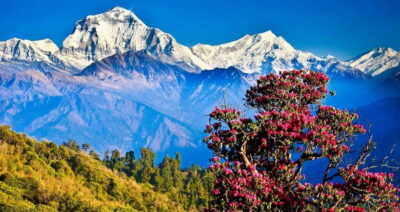
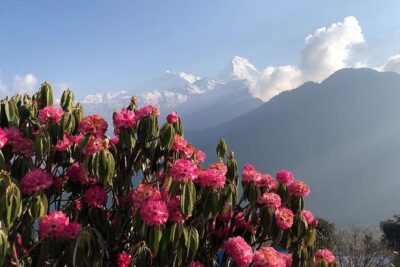
I especially like how the trek blends culture and scenery across lowlands up to alpine forest, with rhododendron, silver fir, and pine forests in the mix. I also like that the operator keeps things flexible, adjusting the plan to match what you want to do and how you feel day to day.
One drawback to consider: you are going up to around 3,210 m for Poon Hill, so even on a “short” trek you still need decent stamina and smart pacing, especially for early starts.
Key highlights you will actually care about
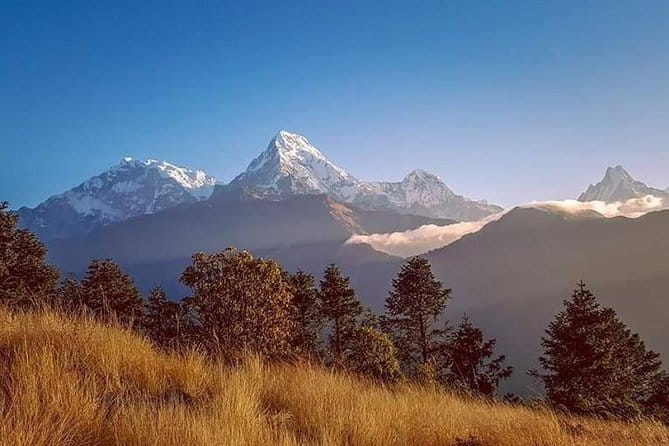
- Poon Hill sunrise views over Dhaulagiri, Annapurna, and Manaslu ranges
- A short Annapurna circuit feel without committing to a long high-altitude trek
- Forest and village variety from subtropical zones up toward alpine greenery
- Food and lodge support with full meals during the trekking days
- Service that adapts to your pace and wishes, not a rigid script
- Guide plus porter setup to keep the trek comfortable for your group
Poon Hill Sunrise: the Annapurna “short trip” that still feels huge
If you want the classic Annapurna experience but you do not have weeks to spare, this trek is built for you. The trail keeps you mostly in the lower elevations of the Annapurna region, yet it still climbs to the viewpoint at Poon Hill (about 3,210 m). That height is enough to create that crisp morning light and wide sky views, without requiring the heavy, multi-week grind of the highest routes.
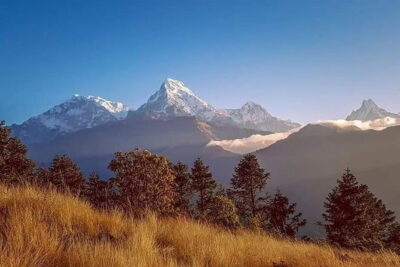
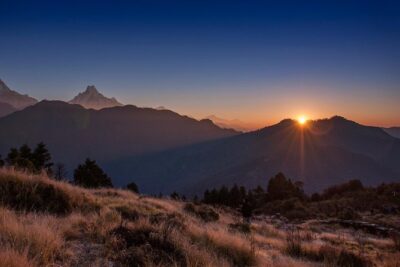
The real reason people do this trek is the sunrise. From Poon Hill, you look out at a sweep of the Annapurna range plus Dhaulagiri and Manaslu. It is the kind of moment that sticks with you, not just because the mountains look dramatic, but because the whole valley changes tone as the sun rises. Early on the trek, you get a taste of the forest world around you, and by sunrise day, the views snap everything into focus.
Do not underestimate the early mornings. Sunrise is not a casual start, even if the trek is not the hardest in Nepal. You will likely be moving in colder air, and you will want to have warm layers ready.
More Ghorepani and Poon Hill departures:
- Poon hill Trek 3 days
★ 5.0 · 176 reviews - Pokhara: 4-Day Ghorepani, Poonhill & Ghandruk Mountain Trek
★ 5.0 · 132 reviews - Ghorepani – Poon Hill Trek 3N-4D
★ 5.0 · 125 reviews
Price and logistics: what $580 buys you, and what it does not
At $580 per person, you are paying for a lot more than “someone walking with you.” This package is set up for convenience and smooth running from city to trail and back.
What is included (in practical terms):
- Airport transfers and the ride plan between Kathmandu and Pokhara
- City stays: three-star hotel in twin-share rooms with breakfast in Kathmandu and lodge stays on trek
- Private transportation during the driving parts (tourist deluxe bus during trips, plus A/C car where applicable)
- All trekking days meals: breakfast, lunch, dinner, plus tea or coffee
- Essential trek admin: TIMS card and trekking permit
- People-power: a guide, plus porters (for two guests, one Sherpa porter is used to carry baggage)
- Comfort add-ons if you need them: sleeping bag and down-jacket (available through the program)
- Extras that matter when you travel hard: first-aid medicine item, a T-shirt, and a trip achievement certificate
- A special cultural show and a farewell dinner
What is not included:
- Your international flights
- Your travel insurance
- Tips for the trekking crew
- Personal expenses and bar bills
- Extra meals in Kathmandu, plus any entrance fees not covered in the package
So is it good value? For many travelers, yes, because you are not arranging transport, permits, meals, and lodge bookings on your own. You also get real support on the trekking days with full meals and a guide handling route logistics. If you would otherwise have to hire a guide and sort permits and food, the package feels less like a premium and more like buying back your time and energy.
Kathmandu and Pokhara: setting the stage before your feet hit the trail
Your trip starts in Kathmandu (about 1,340 m). After you land, you get picked up and taken to a hotel, then you spend time sightseeing around the Kathmandu Valley. This part matters more than it sounds. Nepal travel can feel chaotic at first if you jump straight into hiking. Those first days let you adjust to the rhythm of the country and get a handle on how your plans, timing, and transportation will work.
Then you move to Pokhara, at around 820 m. You will go by tourist bus for about 7 hours or take a quick 30-minute flight, depending on what the schedule uses. Either way, you are shifting into a calmer pace. Pokhara is where the mountains start showing up in your daily life, even when you are just driving around.
This is also a smart buffer. Your trek does not start on your arrival day. You have time to rest, eat normally, and organize anything you want for the trail before the first hike day.
Getting to the trailhead near Tikhedhunga and Nayapul
On the trek start day, you travel from Pokhara toward the trail area. You drive about 1.5 hours to Nayapul, which is the usual jump-off point. From there, the trekking begins near Tikhedhunga.
This matters because it avoids a stressful “we arrived and now we sprint” situation. By the time you start walking, your body understands this is a day of effort, not an all-day travel day.
A practical heads-up: the first real trek day is not just a warm-up. Even if it is “only” six hours, you will be building altitude and adjusting your breathing. I like that the program gives you a clear first hiking day rather than forcing you to scramble through mixed walking and transport.
More to compare around Pokhara
- ZipFlyer Nepal – The World’s Steepest Zip-line
★ 5.0 · 608 reviews - Bungee Pokhara by HighGround Adventures
★ 5.0 · 366 reviews - From Pokhara: Sarangkot Sunrise Himalayas Tour
★ 4.7 · 218 reviews - ATV Adventure Tour in Pokhara, Nepal
★ 5.0 · 194 reviews
Trek day one: Tikhedhunga to Ghorepani at around 2,860 m
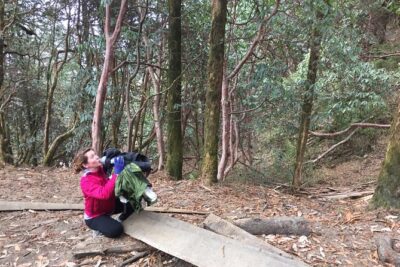
The climb from Tikhedhunga to Ghorepani (about 2,860 m) takes roughly 6 hours. Expect a slow build where the air starts to feel different. This is the part where you start noticing the vegetation shift, and you begin moving from lower-zone greenery toward forest that feels cooler and denser.
Ghorepani is also your base for the sunrise mission later. Think of it as your staging point: you sleep here, you recharge, and you prepare for an early morning push up toward Poon Hill.
The trek has a reputation because the route gives you more than one kind of “wow.” You do not just walk past a single view. You move through dense forest and colorful villages along the way, and you are also in the kind of elevation range where you can still feel connected to daily life rather than being isolated on a high wilderness path.
Trek day two: Ghorepani to Ghandruk, village life at about 1,940 m
From Ghorepani, you hike to Ghandruk (around 1,940 m) in about 7 hours. This section often feels satisfying because you gain perspective, then trade that upward pressure for longer stretches where your legs can settle into a rhythm.
Ghandruk is a village stop, and it changes how you experience the trek. Instead of only thinking about altitude and distance, you start noticing people, homes, and the way the valley works. This is where the “culture” side of the trip becomes real. You are not just moving through scenery. You are passing through places where trekking is part of the local economy.
Also, your elevation drops compared to Ghorepani. That can feel easier in one way and tricky in another, because you might push your pace if you think you are “done with altitude.” Keep steady. Your body still needs time to adapt.
Trek day three: Ghandruk to Nayapul, then back to Pokhara
You then head from Ghandruk down to Nayapul, about 4 hours, and then drive back to Pokhara for about 1.5 hours. This part is a relief for many people. The days up to here involve effort, and then you get a shorter finish that feels like you are cashing in your energy.
You also start shifting your mind from “trail mode” to “travel mode.” Back in Pokhara, you can finally settle into a more relaxed pace. It is a good spot to reflect on the sunrise and how the forests and village stops have shaped the trip.
Back to Kathmandu: your last travel day
After you wrap up in Pokhara, you drive back to Kathmandu, roughly 7 hours. Then you have time for a farewell routine and flying home.
This final step is more than just transport. It helps you avoid the common mistake of turning a trek into an endurance test all the way to the airport. Here, you get a buffer day at the end where you can recover, pack, and handle Kathmandu logistics without rushing.
Food, lodges, and why the guide setup changes everything
Good trek service is not just about having meals on the table. It is about reducing the number of decisions you have to make while you are tired.
This program includes full meals during the trekking days, with breakfast, lunch, and dinner, plus tea or coffee. That means you spend more energy on walking and less time figuring out where to stop. It also helps your routine: you know what to expect from day to day.
Accommodation is also handled. You stay in trekking lodges during the hike and a three-star hotel in the city. Having that set up means you can focus on what you came for: the path and the mountain views.
One of the most praised parts of this experience is the way the guide supports your pace and preferences. People like that the plan can be adjusted, and you can feel that in the day-to-day feel of the trek. When I hear that kind of flexibility, I take it seriously, because a rigid plan is the fastest way to turn a scenic trek into a grind. The best trek guides help you make the day work, not just the schedule.
Who this trek is for, and who should think twice
This trek is ideal if you want a classic Annapurna region experience without the time drain of a long, high-altitude expedition. It is especially appealing when you like a mix of:
- forest walking and changing scenery as you climb
- village stops with real culture
- the big payoff of Poon Hill sunrise over multiple mountain ranges
You should also have moderate physical fitness. The hours on trail are real, and you will hit higher elevations than your starting cities. If you have never trekked before, you can still do it, but you must respect pacing and be honest about your stamina.
If you hate early mornings, that is your biggest mismatch. Sunrise is the highlight, and you need to show up ready.
Should you book the Ghorepani Poon Hill Trek?
Book this if you want the Annapurna viewpoint payoff with built-in support: transport from city to trail, permits handled, full meals during trekking, lodge stays, and a guide who keeps things flexible. The price makes sense when you compare it to what you would pay to assemble all those moving parts yourself, especially during busy trekking seasons.
Do not book it if you want a casual stroll with no altitude exposure. Even though this is a shorter trek, you still go up to the Poon Hill area near 3,210 m, and that requires effort and good timing.
If you like a trip that gives you sunrise mountains, forest walking, and village life in a tight schedule, this is a strong choice.
FAQ
How long is the Ghorepani Poon Hill Trek?
The trip runs about 7 to 12 days (approx.), including time in Kathmandu and Pokhara plus the trekking days.
Where does the trek start and where is the meeting point?
The meeting point is listed as Pokhara, Gandaki Zone, Western Region.
What are the main trek elevations?
You arrive in Kathmandu at about 1,340 m, Pokhara at about 820 m. The trekking reaches Ghorepani at around 2,860 m, and Poon Hill is listed at about 3,210 m. Ghandruk is around 1,940 m.
What transportation is included between cities?
You use transportation during the trip, including a tourist deluxe bus during trips, plus A/C car during other transfers. Kathmandu to Pokhara is about 7 hours by bus or a 30-minute flight (depending on the schedule).
Are meals included during the trek?
Yes. During trekking you get full meals as listed in the itinerary: breakfast, lunch, and dinner, with tea or coffee.
Do I need my own sleeping bag or down-jacket?
If you need them, sleeping bag and down-jacket are included as part of the program.
Is a guide and porter included?
Yes. A guide is included, and for the porters, the program uses porters for two guests, with one Sherpa porter to carry baggage.
Can I cancel for a full refund?
Yes. You can cancel up to 24 hours in advance for a full refund, based on local time. Less than 24 hours before the start time is not refundable.
Latest Pokhara write-ups
- Sunrise View from Sarangkot★ 5.0 · 3 reviews
- Beautiful Sarankot Sunrise with Full Day Sightseeing in Pokhara★ 4.5 · 3 reviews
- Sarangkot Sunrise Tour in Private Car★ 5.0 · 3 reviews
- Pumdikot Mahadev Status and Peace Stupa Hiking Private Tour★ 4.5 · 3 reviews
- Pokhara: Dhampus Easy Trek for Families with YoungKids 2 Day Tour★ 5.0 · 3 reviews
- Pokhara: Private Car Drive Tour to World Peace Stupa★ 5.0 · 3 reviews
- 5-Day Private Farming Experience in Nayapul with Accommodation★ 5.0 · 3 reviews
- Transfer to Lower Mustang (Jomsom)★ 5.0 · 3 reviews
Poon Hill Trek, compared.
4-Day Ghorepani, Poonhill & Ghandruk Mountain Trek
Read our review →
Browse the lists this tour appears in