
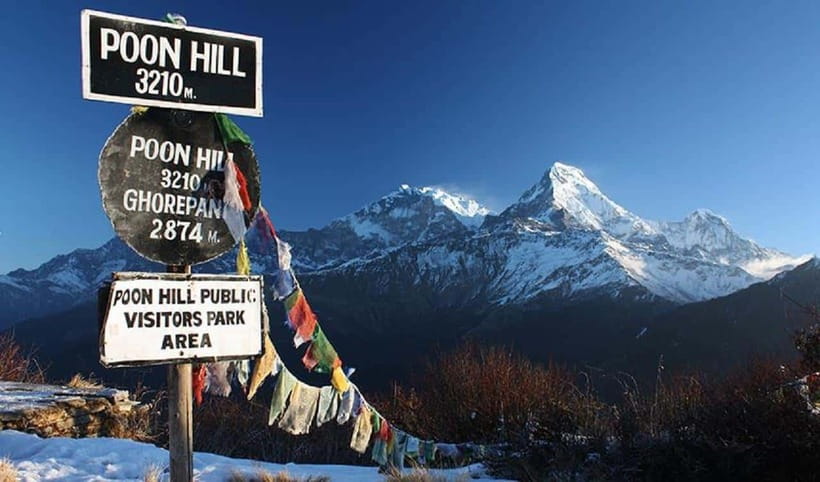
Reviewed · POON HILL TREK
Pokhara: 3-Day Ghorepani, Poon Hill & Ghandruk Trek
This 3-day trek is interesting because it uses Pokhara as a warm-up base and then shoots you up into the Annapurna views game, with Poon Hill sunrise as the headline. I also like that it mixes big scenery with real village stops, so you are not only walking, you are also meeting the places you pass through from Ghorepani to Ghandruk.
My main caution is early starts for the sunrise timetable, and if you pick a packaged meal option it can cost more than paying at tea houses along the way. If that sounds annoying, you will want to plan your food budget carefully before you go.
Key takeaways before you go
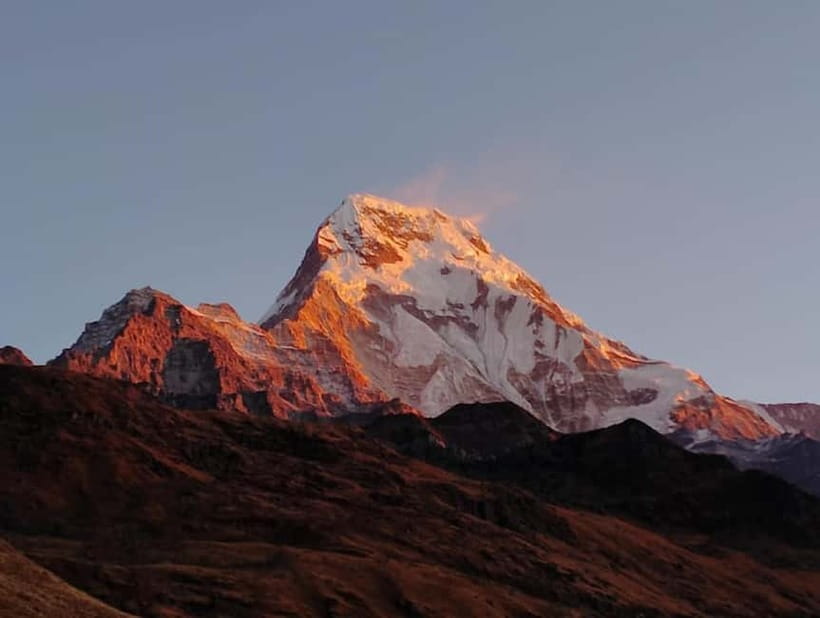
- Poon Hill sunrise is the big payoff: you rise early for first light on the peaks.
- Ghorepani is a proper trekking hub at about 2,840 meters, with mountain views waiting once you arrive.
- Guides can seriously level up the walk: people praise guides like Jeet, Anil, and Sanjay for clear explanations.
- Tea houses are simple, but often better than expected for comfort and convenience.
- Food pricing can vary: one traveler flagged a packaged meal plan as pricey compared to on-the-trail meals.
Why this short Annapurna trek works (even if you have limited time)
A 3-day Ghorepani, Poon Hill, and Ghandruk trek is one of those rare “short but meaningful” itineraries. You get the classic Annapurna viewpoint moment at Poon Hill, plus a village day that feels more local than touristy. And because you start from Pokhara, you are not spending extra days just getting to trailhead.
I like the pacing here. Day 1 gets you climbing steadily from Ulleri up to Ghorepani. Day 2 is the classic pre-dawn sunrise run, then you keep walking through rhododendron forests toward Tadapani. Day 3 slows down into a village-focused finish in Ghandruk before you turn around and drive back toward Pokhara.
The trip also has a practical “comfort layer.” You trek with an experienced, certified guide, with meals and basic lodging handled via simple tea houses or lodges on the route (depending on the meal option you choose). For a first trek, that matters because you spend less time figuring out logistics and more time enjoying the rhythm of the mountains.
More Ghorepani and Poon Hill departures:
- Pokhara: 4-Day Ghorepani, Poonhill & Ghandruk Mountain Trek
★ 5.0 · 132 reviews - From Pokhara: 3-Day Ghorepani Poon Hill Trek with Guide
★ 4.9 · 68 reviews - Pokhara: 2-Day Ghorephani and Poon Hill Private Trek
★ 4.6 · 50 reviews
Pokhara logistics: pickup, transport, and why it matters
This tour builds in transportation between your starting point in the Pokhara area and the trek start. Your pickup can be from several Pokhara locations, including options like Pokhara Lakeside or even Pokhara International Airport (PIA), depending on what you select. Then you travel by a mix of bus/coach and jeep/SUV for roughly a few hours before you reach the trail start area.
Here is why that matters for your day. Mountain trekking is physical, yes, but the day can also feel long if you waste time coordinating rides. By bundling pickup and the drive back after trekking, you keep your energy for the actual climb and the walking sections you came for.
Also, note the rhythm of the route. You get real “road-to-trail” transitions, plus photo stops along the way. Those small breaks help you reset your legs before you start hiking up stone steps and through forest sections.
Day 1: Ulleri to Ghorepani, the steady climb that sets your tone
Your first day starts with the drive up from Pokhara toward Ulleri, the trekking starting point. The road ride is not just transport. It gives you a preview of the terrain you are about to work through: winding roads, rural villages, and a gradual sense that the air is getting thinner.
Once you reach Ulleri, you begin the hike. Expect uphill on stone steps and a rise through forest and hillside paths. This is a good “warm start” kind of climb. You are not asked to rush. You are just asked to keep moving, which helps you settle into that trekking tempo.
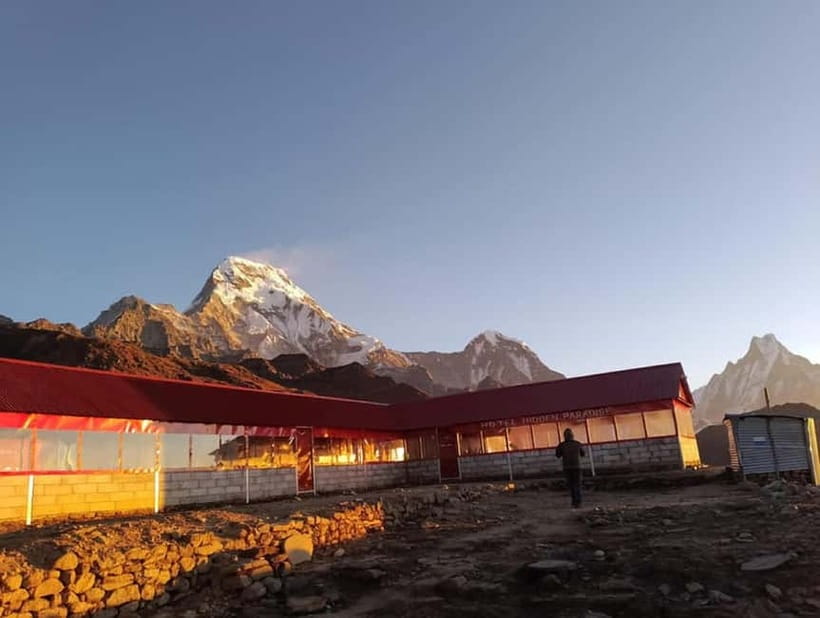
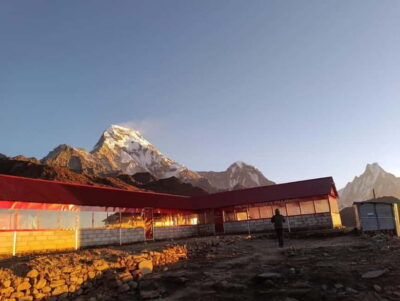
You finish the day in Ghorepani at about 2,840 meters. At that altitude, the air feels crisp, and the mountains start to show themselves more clearly once you are settled. The payoff on Day 1 is that you end with time to take in the surroundings from a village base, then sleep and recover for the early morning you have coming.
Practical note: the walking on day one is often easier than it looks on a map because the trail is worked into steps and switchbacks, but it still adds up. If you are coming in from flat beach time or a couch-heavy travel week, take it slow the first hour. Your legs will thank you tomorrow before sunrise.
Poon Hill sunrise: the early wake-up, the view, and the guide factor
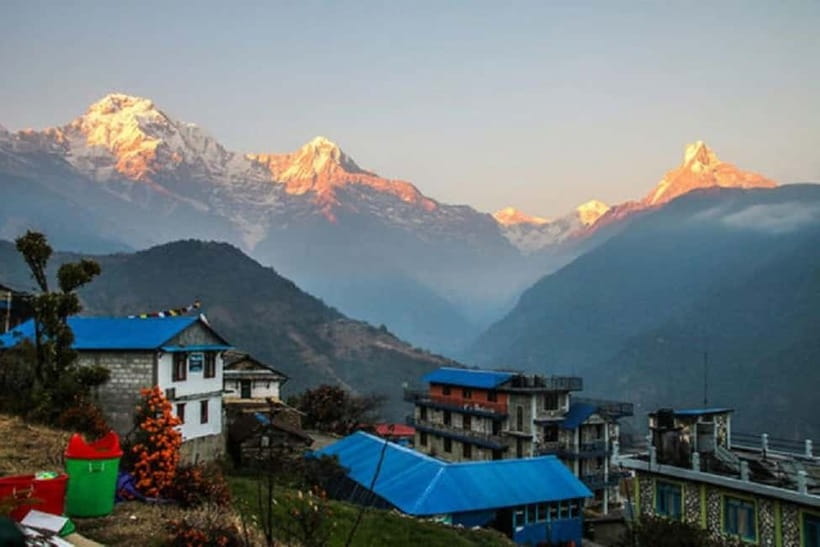
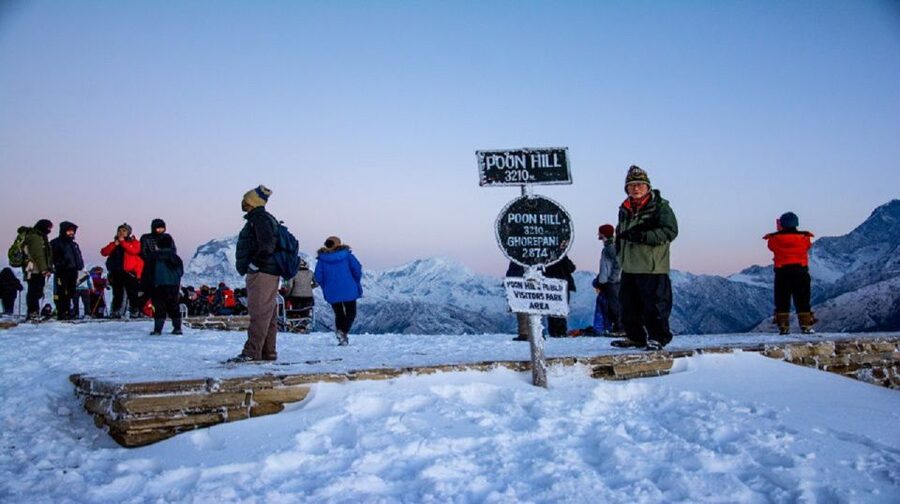
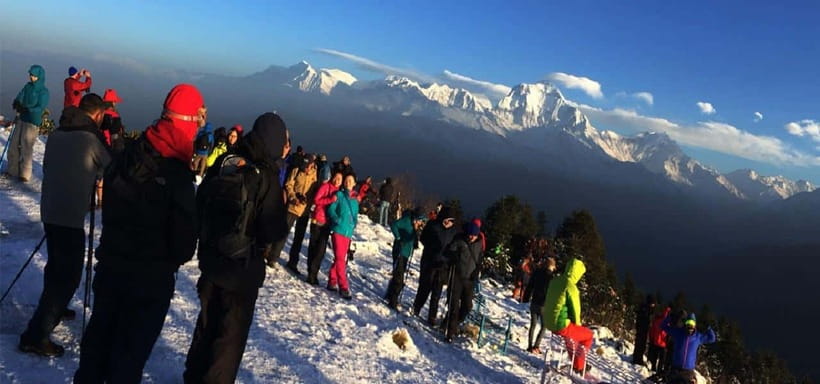
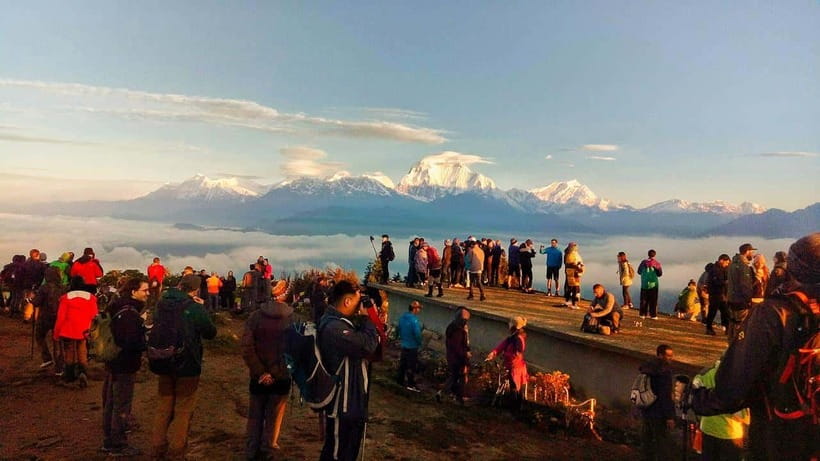
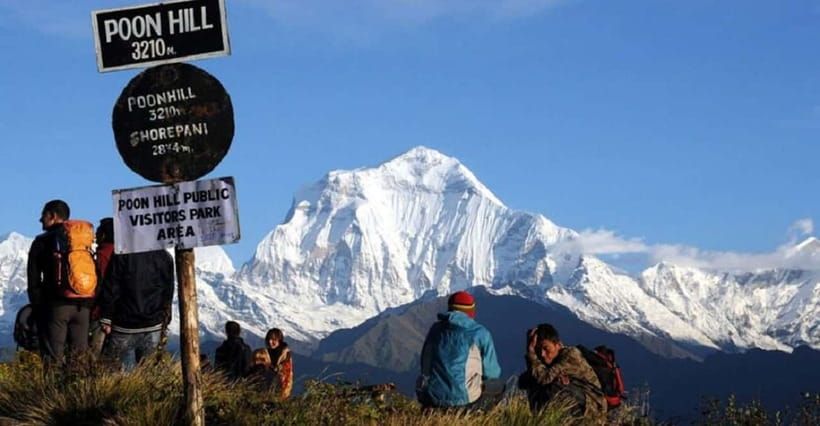
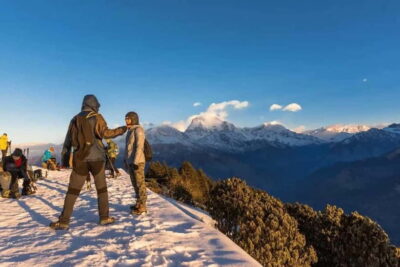
If you want the single moment that defines this whole trek, it is Poon Hill. You rise before dawn, and you head to the viewpoint area at about 3,210 meters to catch the first light.
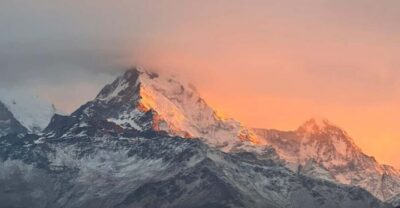
The goal is clear: you watch the snow-capped peaks light up as the sky changes color, typically described in soft tones like pink, orange, and gold. Sunrise on a viewpoint is never guaranteed, because weather rules the mountains. But when it works, it is the reason people choose this route instead of doing a different short hike.
This is also where the guide can change your experience. Some guides are just “walking logistics.” The praised guides here are the type who explain what you are actually seeing, and point out details along the way. One traveler specifically mentioned learning about names of Himalayan peaks and noticing things like monkeys in trees, vegetation at foot level, and beehives built on rock walls. That kind of attention makes the sunrise run feel less like standing in line and more like understanding the place.
A balanced reality check: sunrise treks mean cold early air and tired legs. If you hate waking up before your phone alarm, this is the part of the trip you will feel most. But if you handle mornings well, this is also the part you will remember years later.
More walks through Ghandruk:
- Pokhara: 4-Day Beautiful Ghorepani Poon Hill & Ghandruk Trek
★ 4.8 · 21 reviews - Pokhara: 4-Day Poon Hill and Ghandruk Guided Trek
★ 5.0 · 14 reviews - Pokhara: 4-Day Ghorepani, Poonhill & Ghandruk Village Trek
★ 5.0 · 6 reviews - Pokhara: 3-Day Ghorepani, Poon Hill and Ghandruk Guided Trek
★ 4.4 · 4 reviews
Day 2: Poon Hill to Tadapani through rhododendron country
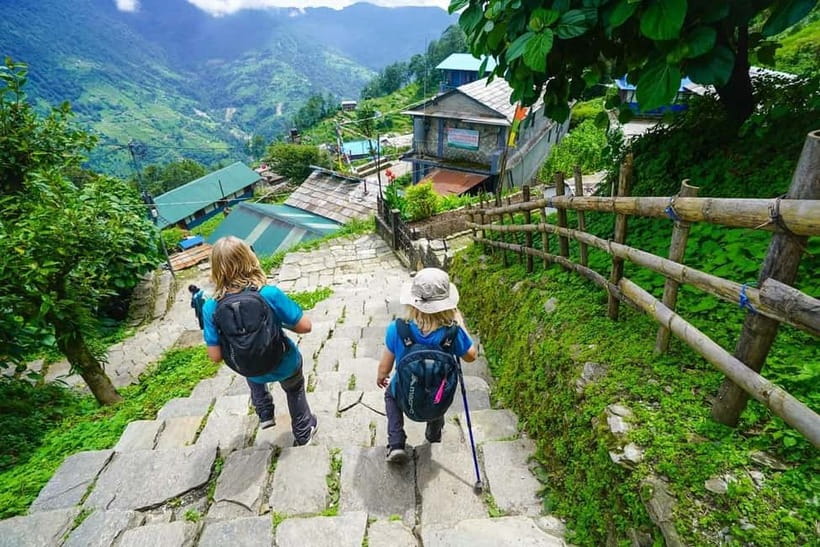
After the sunrise moment, you are not done. You start trekking on to Tadapani, around 2,630 meters.
The trail shifts from “viewpoint mode” to “forest walk mode.” You move along paths that pass through rhododendron forests where you can hear birds and feel like the hike has a calmer pace. This is often the day where the trek feels more like travel and less like a workout. You still climb and descend, but the environment gives you something to notice.
The route also gives you chances to stop, photo, and reset. The structure of the day is helpful: sunrise first, then a steady trek to your afternoon destination. That means you are not doing the hardest parts when you are most sleep-deprived, even though you did wake up early.
When you arrive in Tadapani for overnight, you are still in a trekking village rhythm. Tea houses are usually busy, warm spots are limited, and everyone is dealing with the same thing, which is that you are just trying to eat and rest. If you bring that mindset, you will enjoy the day more.
Day 3: Tadapani to Ghandruk, Gurung village life and photo-ready details
Your final day turns toward Ghandruk, one of the Annapurna region villages most people recognize for its classic trekking-village look. The approach is a mix of walking and village sightseeing time, and that is what makes this day different from Day 1 and Day 2.
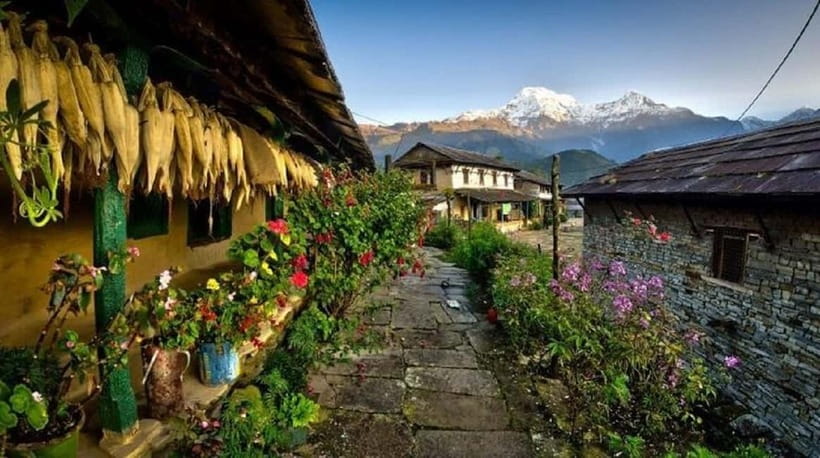
Ghandruk is described as a Gurung village with terraced fields, stone houses, and colorful prayer flags. It can feel like a postcard scene, but the best way to enjoy it is to treat it like a real place you are passing through. Use the free time to watch everyday life: people moving between homes and fields, and tea houses where the mountains are the main reason anyone stays.
A guide helps here too. Someone praised for clear explanations can connect what you are seeing on the route to the local culture around you, instead of just pointing at scenery.
After you explore the village, you then drive back toward Pokhara. That drive is a good bookend. You have done the work on the trail, and now you get a less physical end to the trip. You will likely arrive tired, but in a satisfied way.
Tea houses, meals, and the real cost of convenience
This trek uses simple tea houses or lodges along the trekking route. That is part of the charm, and it is also where expectations need to match reality. You are not booking a resort. You are booking a practical base for sleep and meals on the trail.
Where this tour can feel like good value is the way it handles the basic infrastructure: accommodation through the route, plus an experienced guide and required permits and fees. You do not have to chase paperwork or plan every stop.
Where you might want to be careful is meals pricing. One traveler flagged that the meal plan cost felt very expensive compared to paying at tea houses directly, suggesting it could be roughly half the price if you handle it yourself. That does not mean every option is overpriced, but it does mean you should check what your chosen package includes.
My practical advice:
- If your package meal plan is a big chunk of the price, ask what exact meals are covered.
- If you like flexibility, be ready to buy some snacks or meals along the route with cash.
- Pack a few snack basics you can tolerate when you are hungry before a meal stop.
Guides and private group style: when it’s worth it
This is a private group trek with a live guide who speaks English, Hindi, or Nepali. That is not a small detail. In a short trek, you want someone who can keep you on the right rhythm and explain what you are seeing quickly and clearly.
There is strong praise here for guides like Jeet, Anil, and Sanjay. The common thread is clear communication, friendly vibes, and “small discoveries” along the trail. When a guide tells you what a ridge is, what a peak might be called, or why certain plants matter, the walk becomes smarter without becoming boring.
Private group also means less waiting around. In theory, it gives your group a smoother pace for photo stops and rest breaks. In a sunrise trek, that matters, because you are fighting daylight, not the clock at home.
Difficulty and what to train for (so Day 2 feels doable)
This is a trek with a few key climbing days and some stair and step sections, especially early on. It is not described as a technical climb with ropes or high exposure, but you do need basic endurance.
If you want a simple training plan, do what helps your legs and lungs:
- Walk stairs or do uphill walking when you can.
- Practice carrying a daypack with water and a light layer.
- Don’t save all your cardio for the night before.
Also, accept that altitude is part of the challenge. You are not going super high on this itinerary, but you are still going up into thin-air trekking zones. Hydrate, go steady, and do not treat the first uphill hour like a sprint.
What to bring: the essentials the tour actually mentions
The tour lists passport or ID card as required. Past that, you should follow normal trekking logic:
- A warm layer for pre-dawn at Poon Hill
- Rain protection, because mountain weather can turn
- Sunscreen and lip balm (you are up high and exposed)
- Comfortable trekking shoes with grip
The good news is that the tour says trekking gear is provided as needed, including trekking sticks and sleeping bags. That reduces the hassle if you are traveling light.
Price and value: is $190 fair for what you get?
At $190 per person for 3 days, the headline question is whether this feels like a good deal. Here is how I’d judge it.
You are paying for:
- Guided trek with an experienced, certified guide
- Permits and fees
- Meals throughout the trek, depending on your chosen option
- Simple tea house or lodge accommodation
- Round-trip transportation between your hotel and the trek starting point area (plus the drive back)
For a short trek, the value is mostly in the “bundled service.” Planning permits, coordinating transport, and keeping the schedule tight takes effort, and a guide reduces your friction.
But your budget decision may depend on that meal plan issue. If the included meals are priced high, you might spend less overall by choosing a leaner meal option and buying some food at tea houses. If the package meals are priced reasonably and match what you would eat anyway, then $190 can feel fair and even efficient.
Should you book this trek?
I’d book it if you want:
- A 3-day version of the Annapurna classics
- The Poon Hill sunrise without adding extra complexity
- A village finish in Ghandruk that feels more than just a viewpoint stop
- A guide who can explain what you are seeing, with praise for guides like Jeet, Anil, and Sanjay
I would hesitate if you:
- Hate very early mornings (sunrise means cold and tired before the good part)
- Care a lot about food costs and dislike packaged meal pricing, especially if you plan to eat mostly independently
If you like sunrise views, decent trek comfort, and a guide who actually teaches along the way, this is a strong way to spend three days in the Annapurna region.
FAQ
What does the tour cost and how long is it?
The tour price is $190 per person and the duration is 3 days.
What is included in the price?
It includes round-trip transportation between your hotel and the trek starting point area, permits and fees, meals depending on your chosen option, tea house or lodge accommodation, an experienced and certified guide, guide expenses, local taxes, and some trekking gear like trekking sticks and sleeping bags as needed.
Are meals included?
Yes. The tour says meals throughout the trek are included depending on the chosen option.
Do I need travel insurance?
Yes. Travel insurance is mandatory for your safety.
Do I need a porter?
A porter is optional for $15 per day.
What languages will the guide speak?
The guide is available in English, Hindi, and Nepali.
Latest Pokhara write-ups
- Mardi Himal Trek -5 Day Short Trek From Pokhara★ 5.0 · 8 reviews
- Tandem Paragliding in Pokhara★ 4.8 · 8 reviews
- Pokhara: Peace Pagoda Sunset, Annapurna Mountain Views Tour★ 2.9 · 5 reviews
- Short & Scenic: 2-Day Private POON HILL Trek from Pokhara★ 5.0 · 8 reviews
- Seti George and Thrilling Suspension Bridge Tour at Pokhara★ 4.5 · 3 reviews
- Sarangkot Sunrise over the Himalayas★ 4.8 · 83 reviews
- Pokhara: Sarangkot Sunrise and Private Full Day Tour★ 4.8 · 24 reviews
- From Kathmandu/Pokhara: Private 3-Day Chitwan Safari Tour★ 4.7 · 34 reviews
Poon Hill Trek, compared.
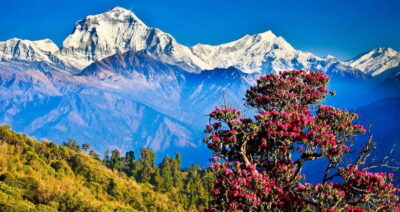
4-Day Ghorepani, Poonhill & Ghandruk Mountain Trek
Read our review →
2 & 3 Days Ghorepani Poon Hill Private Guided Trek
Read our review →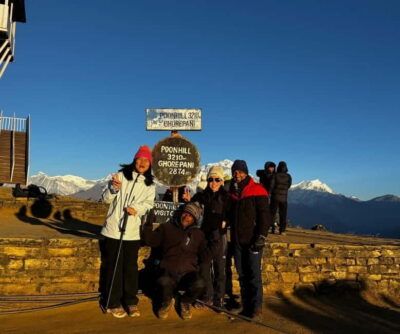
2-Days Beautiful Poon Hill Trek with Sunrise View
Read our review →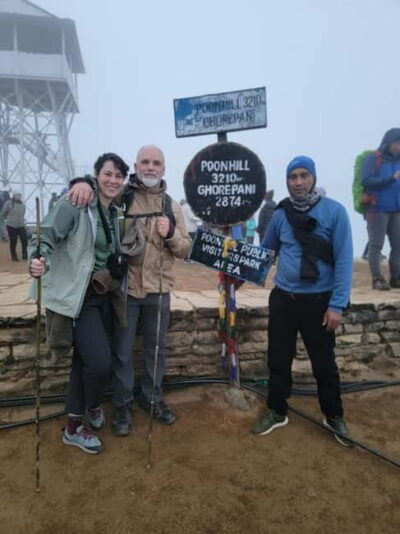
4-Day Beautiful Ghorepani Poon Hill & Ghandruk Trek
Read our review →Browse the lists this tour appears in