
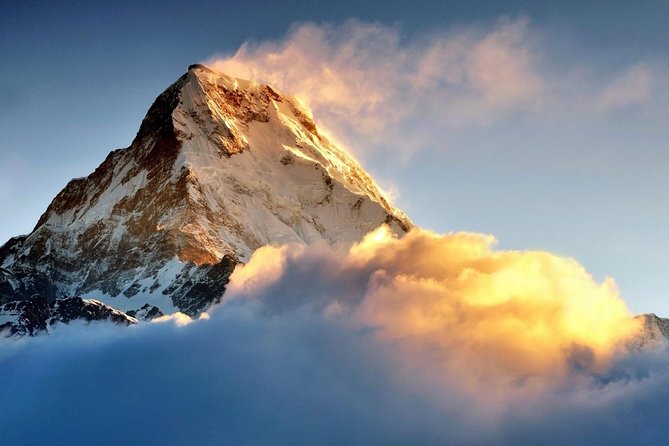
Reviewed · POON HILL TREK
Poon Hill Trek From Pokhara – 3 Nights 4 Days
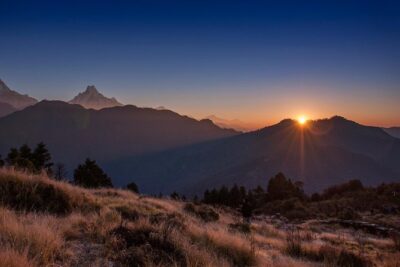
Poon Hill is interesting because you get big Himalayan payoffs fast. In just 4 days from Pokhara, you’ll hike through forests and villages, then wake up for that famous ridge sunrise over the Annapurna range.
I like that this route is short but still covers the core sights, including the Pun Hill viewpoints and a classic finish through Ghandruk. I also like the practical support baked in, with pickup in Pokhara, a guide and porter, plus meals and tea house lodging included. One consideration: it’s still a trek with steep stone steps and early mornings, so you’ll want a moderate fitness base and realistic expectations about simple teahouse facilities.
Key Things I’d Actually Pay Attention To
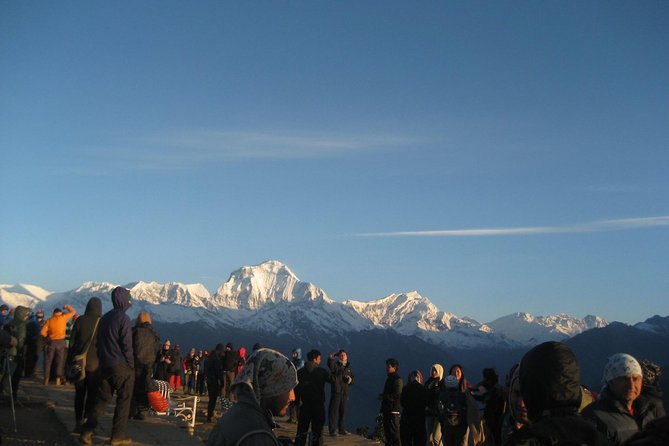
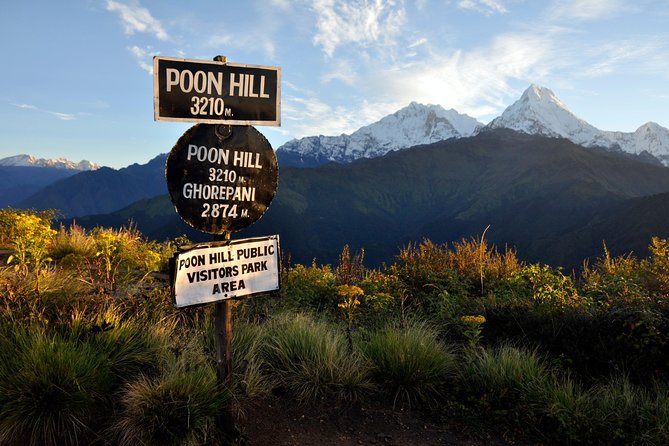
- The sunrise climb is short but early, Pun Hill sits around 3,190 m and is about a 50-minute hike from Ghorepani.
- You’ll pass through Ghorepani and Ulleri, so you get both village culture and high-mountain views in a tight schedule.
- Teahouse life is part of the deal, expect cozy, basic rooms, not hotel comfort.
- You carry less thanks to the porter, the included porter covers up to 25 kg per person.
- Group size stays small, the maximum is 15 travelers, which usually makes the trek feel calmer.
- It’s structured for short holidays, designed for people who want Annapurna scenery without a longer trek.
Why This Short Poon Hill Trek Feels Like More Than 4 Days
If you only have a few days in Nepal, Poon Hill is a smart way to get into the Annapurna region without committing to a long circuit. The trick is timing: the big view moment happens early, and the rest of the days are paced around manageable hiking sections plus time to enjoy the villages you pass through.
This version also starts from Pokhara and uses the drive to reach the trailhead area, so you don’t waste your first day simply getting to the start. From there, your feet do the work, but the day-by-day schedule is built around gradual progress and a night in tea houses, which keeps logistics straightforward.
More Ghorepani and Poon Hill departures:
- Poon hill Trek 3 days
★ 5.0 · 176 reviews - Pokhara: 4-Day Ghorepani, Poonhill & Ghandruk Mountain Trek
★ 5.0 · 132 reviews - Ghorepani – Poon Hill Trek 3N-4D
★ 5.0 · 125 reviews
Day 1: From Pokhara To Thikhedhunga, With a Real Stair Warm-Up
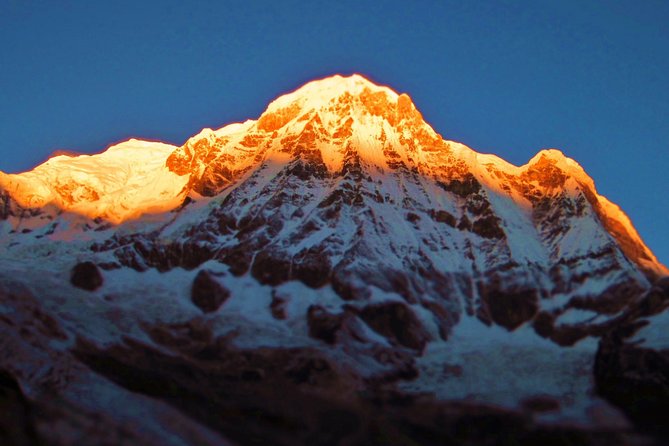
Your day begins with pickup from your hotel in Pokhara, then a scenic drive to Nayapul after breakfast. The drive is about 1.5 hours, and once you reach Nayapul you start following the Modi Khola upstream for around 30 minutes, cross at the confluence area, and then climb gradually along the Burungdi River.
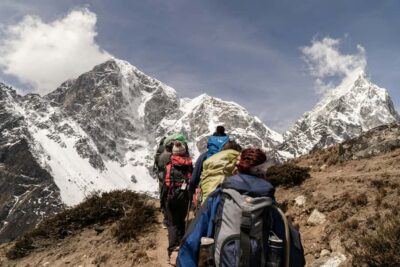
The key walking feature on day 1 is the push up to Ulleri through about 3,000 stone steps to Thikhedhunga and onward toward Ulleri. The itinerary frames this as a warm-up. That’s exactly what it is: it’s not an all-day grind, but it does get your legs ready for the next day’s ascent.
What you should like here: You’re easing in while still getting real trekking rhythm. You’ll feel the altitude gradually, and you’re likely to arrive at the end of the day ready to eat and sleep without overthinking it.
Possible drawback: Those steps can feel relentless if you’re new to trekking or if your pace is slow. You can still take frequent breaks. If you try to power up, you’ll likely feel it later.
Day 2: Ulleri To Ghorepani, Forest Walking and First Big Peaks
Day 2 starts with a climb of steep stone steps that takes about 2 hours in the morning. You’ll pass through Ulleri, a Magar village around 2,100 m, with Pun Magar communities. This is one of the reasons I like this trek: the Annapurna views arrive alongside everyday village life, not only after a long, remote slog.
After Ulleri, the trail rises gradually into alpine forest. The walk is broken up by teahouses, which helps with pacing and gives you places to stop for tea and simple meals.
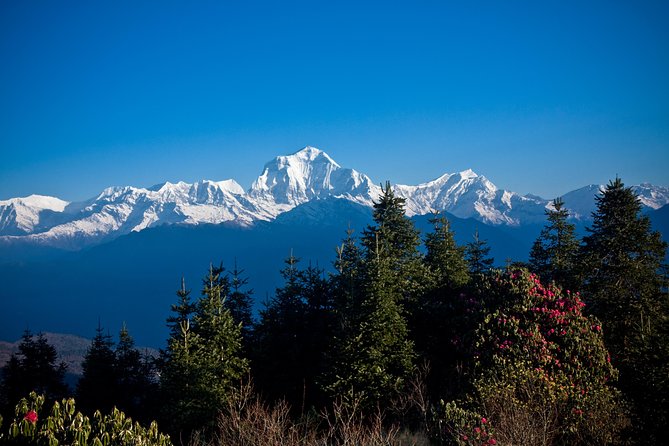
Then you reach the Ghorepani area, described as a pass below Pun Hill overlooking the deep Kaligandaki valley wedged between the Dhaulagiri and Annapurna ranges. Even if you don’t get the full sunrise show yet, you’ll start to feel the scale of the mountains around you.
Practical tip: This is a good day to keep your expectations flexible. Some days the weather is clearer than others. Either way, the forest-to-teahouse rhythm is a big part of why the trek works for short schedules.
Day 3: Pun Hill Sunrise, The Climb That’s Worth the Alarm Clock
This is the day the trek earns its reputation. Pun Hill sits at about 3,190 m and is reached by a hike from Ghorepani that takes around 50 minutes uphill.
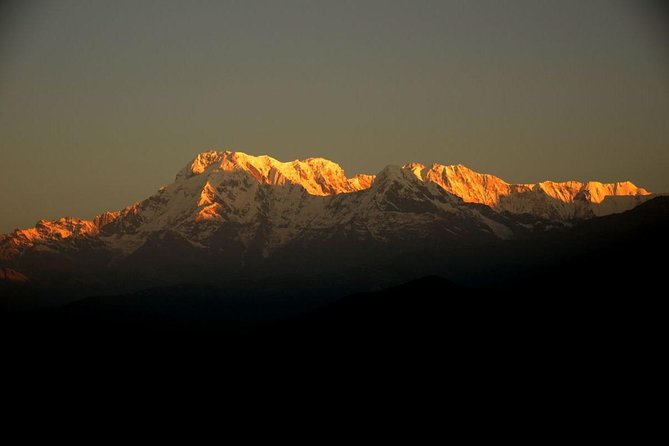
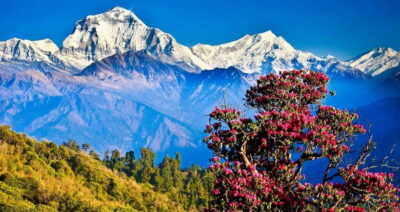
The sunrise description is classic for a reason. As early rays hit the snow peaks, colors can shift from pink to red. And from the viewpoint you can see a wide view across multiple ranges, with over 15 peaks mentioned, including Dhaulagiri, Annapurna I, and Manaslu.
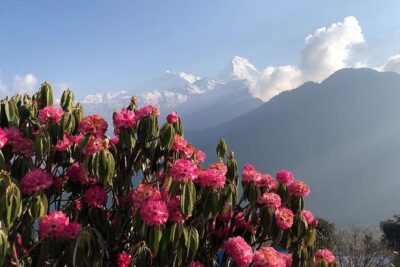
Then comes the other half of the day: descending back to Ghorepani, then walking onward toward Tadapani. The next section is described as a trail that first climbs to a ridge top toward the east, then follows a ridge dense with rhododendron to Deurali, before continuing on toward Tadapani.
What you’ll likely love: The sunrise is short, but it changes your entire attitude about the trek. You’ll also get a full day of hiking after the viewpoint, so you don’t feel like you rushed only for one moment.
Consideration: If you’re sensitive to early mornings or you want long sleep, plan for that. Sunrise days require an alarm and a calm, patient mindset.
More to compare around Pokhara
- ZipFlyer Nepal – The World’s Steepest Zip-line
★ 5.0 · 608 reviews - Bungee Pokhara by HighGround Adventures
★ 5.0 · 366 reviews - From Pokhara: Sarangkot Sunrise Himalayas Tour
★ 4.7 · 218 reviews - ATV Adventure Tour in Pokhara, Nepal
★ 5.0 · 194 reviews
Day 4: Ghandruk Finish, Village Views and a Comfortable Drop Back
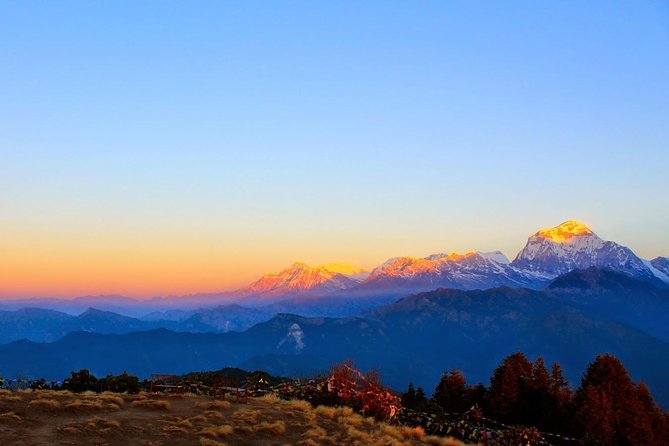
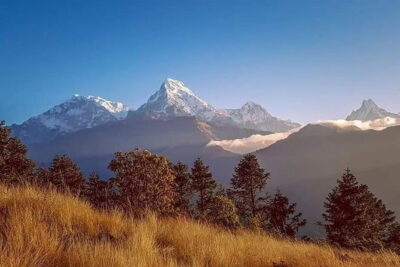
Day 4 is your gradual unwind day. You walk down to Ghandruk, a charming mountain village in front of Annapurna South and Mt. Fishtail. The village is known for thatched and slate-roofed stone houses, plus farming terraces that show how people live with the steep terrain.
Ghandruk is also tied to the Gurung community, described as famous for Gurkha soldiers. Even if you don’t go deep into history, you’ll feel it in the village energy and the way daily life is organized around the mountains.
After lunch, you trek further down for about an hour to catch a ride back to Pokhara. The itinerary notes a shared jeep or local bus back to Pokhara, then you’re dropped at your hotel.
What I like about this finish: It keeps the emotional arc nice and human. You’re not ending in the middle of nowhere. You end in a real village, then you’re back in Pokhara to shower and reset.
Tea Houses, Food, and What “Included” Really Means
This trek includes tea house lodge accommodation in the mountains, and it includes meals: breakfast for 3 days, lunch for 4 days, and dinner for 3 days. That matters because it means you can pack less decision-making into the day. You don’t have to constantly search for food, and you can focus on the hike.
Now, let’s be honest about tea houses. You’re not paying for a spa experience. What you are paying for is the reliable base system that makes this trek doable in 4 days. Rooms tend to be simple, and hot water and charging may be limited depending on the location and season. This is why I recommend you travel with a flexible mindset. If you treat teahouses as clean, warm-ish places to sleep and eat, you’ll enjoy the trek more.
The good news is that the trek is structured so you’re not hunting for meals at the last second. And the included lunches help keep energy stable during the day’s effort.
Guides, Porters, and the Small-Group Advantage
A big part of value here is the staffing. You’re provided with 1 trekking guide and 1 porter, with porter luggage capped at 25 kg. That lets you keep your own pack light, which is huge on a trek with steps.
Small group size also matters. With a maximum of 15 travelers, you’re more likely to move as a cohesive group without constant bottlenecks. In mountains, comfort often equals flow.
You may be led by guides known for being friendly and attentive, including names like Amid and Padam Bahadur Bhujel. The practical takeaway is what matters for you: you should expect help with questions, pacing, and simple logistics on trail.
Price and Value: What $600 Covers and Where Your Money Goes
At $600 per person, this is not an ultra-budget trek. But it can represent good value if you care about “less hassle” more than “cheapest possible.”
Here’s what’s included, based on the tour details you’ll receive:
- Tea house lodging in the mountains
- Pickup from your hotel in Pokhara and transfers to and from the trail start
- Conservation entry permits and necessary paper work
- Guide and porter, with porter luggage up to 25 kg
- Meals: 3 breakfasts, 4 lunches, 3 dinners
The biggest cost drivers on treks like this are usually food, guides, porter wages, and permits. When those are already handled, you avoid common hidden gaps like underpriced tour packages that later charge for critical items.
What’s not included is also important:
- Personal expenses
- Tipping
So your real cost depends on your habits. If you buy lots of snacks, sodas, bottled drinks, or souvenirs, personal expenses can add up quickly. If you keep it simple, you’ll spend more like what you’d expect for a short trekking holiday.
Timing, Starting Point, and What Your First Day Feels Like
The start time is listed as 9:15 am. That means your day typically begins earlier than a normal sightseeing morning, but it also helps you reach the trailhead without rushing.
Day 1 includes a drive and then a long walk with steps. Even though it’s framed as a warm-up, your body will feel it. If you come from a long travel day, I strongly suggest you do not treat the first day like a casual hike.
Your schedule also includes a final day with a ride back to Pokhara after walking down from Ghandruk. That last-day pacing is a relief if you want to end the trek without a forced all-day march.
Weather, Altitude, and How to Think About Fitness for a 4-Day Trek
This is for travelers with moderate physical fitness. I’d interpret that as: you can walk for several hours, you can handle stairs, and you don’t need a completely flat route.
Altitude is not something to ignore even on a short trek. The itinerary climbs up toward Pun Hill around 3,190 m, plus the route includes uphill stretches and gradual movement. You won’t be doing high passes over multiple days, but you are still working at altitude.
Your best defense is basic pacing:
- Walk slower than you think you should on step-heavy sections
- Take breaks when you need them
- Drink water regularly
- Eat the included meals, even if you are not starving
If you do those simple things, most people find the trek becomes enjoyable rather than punishing.
So Who Should Book This Trek?
This trek makes sense if you:
- Want Annapurna-region scenery but have only 4 days
- Like early morning big-view moments, especially the Pun Hill sunrise
- Prefer structured logistics, with pickup, guide, porter, permits, and meals handled
- Want a small-group feel (maximum 15 travelers)
It might be less ideal if you:
- Hate early wake-ups
- Are looking for a comfort-first lodge experience
- Want a route without steep steps at least for part of day 1 and day 2
Should You Book the Poon Hill Trek From Pokhara (3 Nights, 4 Days)?
I’d book it if your goal is one thing: high payoff quickly, with minimal stress. The sunrise at Pun Hill is the reason most people do this, and this plan gives you the time to earn it properly without turning your trip into a full-on endurance project.
Also, the value equation is strong because meals, tea house lodging, guide and porter, permits, and transfers are covered. That means you can spend your energy on the hike, not paperwork or last-minute problem solving.
If you’re the type who enjoys village walking, forest sections, and that moment when mountains go from colorless to dramatic at sunrise, this trek should fit you like a well-worn backpack.
FAQ
What duration is the Poon Hill trek from Pokhara?
It runs for about 4 days (3 nights and 4 days total).
Where do you start, and what time does it begin?
You’re picked up in Pokhara and the start time is listed as 9:15 am.
What does the tour include?
It includes tea house lodge accommodation, pickup and transfers to the trekking start and back, conservation entry permits and paper work, a guide and porter, and meals (3 breakfasts, 4 lunches, 3 dinners).
Are meals included during the trek?
Yes. Breakfast is included for 3 days, lunch for 4 days, and dinner for 3 days.
Is a guide and porter provided?
Yes. You get 1 trekking guide and 1 porter, and the porter carries up to 25 kg of luggage.
What is the maximum group size?
The maximum group size is 15 travelers.
What is not included in the price?
Personal expenses and tipping are not included.
Latest Pokhara write-ups
- Beautiful Sarankot Sunrise with Full Day Sightseeing in Pokhara★ 4.5 · 3 reviews
- Sunrise View from Sarangkot★ 5.0 · 3 reviews
- Sarangkot Sunrise Tour in Private Car★ 5.0 · 3 reviews
- Pumdikot Mahadev Status and Peace Stupa Hiking Private Tour★ 4.5 · 3 reviews
- Pokhara: Dhampus Easy Trek for Families with YoungKids 2 Day Tour★ 5.0 · 3 reviews
- Pokhara: Private Car Drive Tour to World Peace Stupa★ 5.0 · 3 reviews
- 5-Day Private Farming Experience in Nayapul with Accommodation★ 5.0 · 3 reviews
- Transfer to Lower Mustang (Jomsom)★ 5.0 · 3 reviews
Poon Hill Trek, compared.
4-Day Ghorepani, Poonhill & Ghandruk Mountain Trek
Read our review →
Browse the lists this tour appears in