
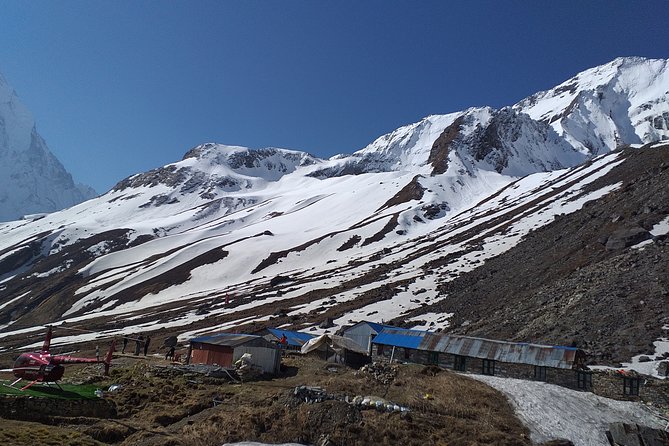
Reviewed · ANNAPURNA BASE CAMP TREK
Golden Mountain Annapurna Base Camp Trek
This trek is interesting because it pairs big Himalayan views with a clear, step-by-step walking plan, starting right outside Pokhara. I like that you get a government-authorized trekking guide plus an included local porter, so your effort stays focused on walking, not logistics. I also like that the route hits classic highlights like Chhomrong and the Annapurna Sanctuary, then ends with an easy payoff at Jhinu Danda hot spring. One possible drawback: it is built for travelers with moderate fitness, so if you want an easy stroll the whole way, the daily 3 to 6 hour walks may feel like work.
The Pokhara end-to-end setup is another plus. With hotel pickup and drop-off and road transfers at the start and finish, you avoid the usual scramble over transport on a tight schedule. Just keep in mind that meals are not included, so you will want to budget for tea house dinners and breakfast along the way.
Key things to know before you go
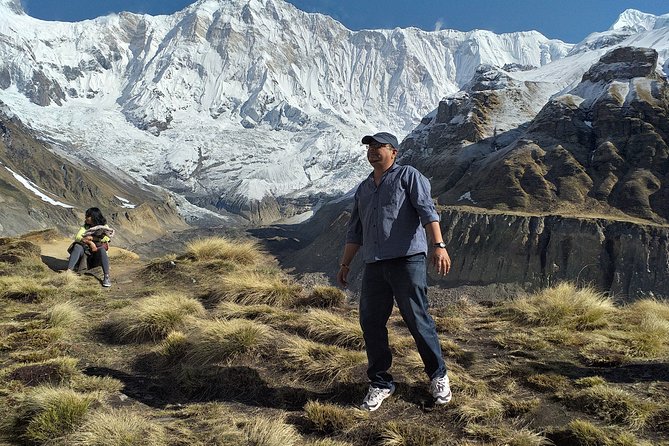
- Government-authorized, English-speaking guide: you get explanations for nature and culture as you walk.
- Porter included: the tour states you do not need to carry anything heavy, which can save your legs.
- Permits handled: trekking permit and TiMS card are included, so you are not hunting paperwork mid-trip.
- Tea house accommodation: you sleep in basic lodges along the route, which keeps the trek realistic for 8 days.
- Classic route highlights: Chhomrong, Machhapuchhare Base Camp area, Annapurna Sanctuary, and Jhinu hot spring.
Golden Mountain Annapurna Base Camp Trek: the deal in plain words
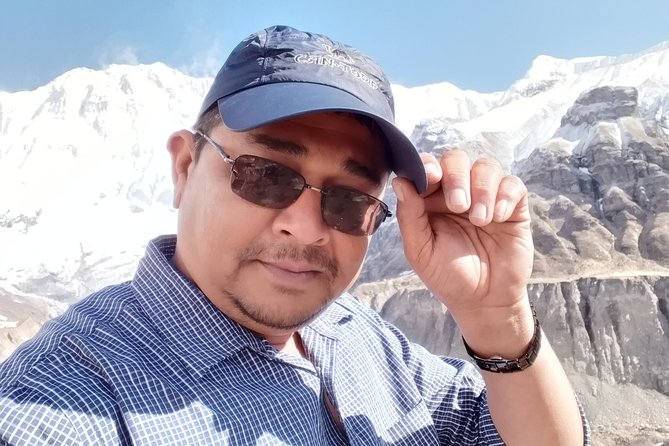
The Golden Mountain Annapurna Base Camp Trek is a structured 8 day plan in the Annapurna region, starting from Pokhara. The heart of it is the walk through well-known foothill villages up toward the Annapurna Base Camp area, with a couple of short “rest” style segments mixed in. This is the kind of trek where your day is mostly walking time, then you switch into tea house mode: hot drinks, a simple meal, and early sleep because tomorrow comes fast.
What makes it feel practical is the way the logistics are covered. You get hotel pickup and drop-off in Pokhara, plus road transfers from Pokhara to Phedi at the start, and from Nayapul back to Pokhara at the end. You also get permits included: a trekking permit and TiMS card. Those two pieces matter because, in real life, permits and transport can turn a dream trek into a stressful day.
The trip is priced at $370.29 per person. For that money, you are paying for the guiding and planning, the included porter support, and the on-route sleeping option. Meals are extra, and that is the main “watch this” item in the overall cost.
More routes into the Annapurna Sanctuary:
- Kathmandu/Pokhara: 5-Day Annapurna Base Camp (ABC) Trek
★ 4.9 · 72 reviews - Annapurna Base Camp Trek -8 days
★ 5.0 · 56 reviews - Private 7 – Day Annapurna Base Camp Trekking
★ 5.0 · 50 reviews
Pokhara logistics, pickup, and the private-trip rhythm
Pokhara is the usual launching pad for Annapurna treks, and this one keeps it smooth. You get pickup from your hotel and a transfer back at the end. For many first-timers, that reduces friction immediately, because you are not trying to figure out taxis, shared rides, or where to meet the guide. It also helps you start the trek with a calm mind, not a half-panicked “Did we miss the vehicle?” feeling.
The tour is also listed as private, meaning only your group participates. That can be a big deal if you want a more flexible walking pace, or if you are traveling with friends and want the trip to feel tailored rather than like a conveyor belt. At the same time, private trips can mean fewer chances to “blend in” with other groups for shared taxi costs. The good news here is that key road legs are already covered.
You will also see notes about mobile ticket and group discounts. Mobile ticket usually means you get your travel documents electronically. Group discounts only matter if you travel with enough people or book in a way that qualifies, so it is worth asking the operator when you confirm.
Guide and porter support: what it means for your energy
A highlight in the description is the experienced, well-informed, government authorized trekking guide. The pitch is not just that the guide leads you, it is that they explain nature and culture along the way. That matters because Annapurna treks are not just about reaching a point on a map. When you understand what you are looking at, the climb feels more meaningful, even when your calves are doing the complaining.
One more practical point: the tour includes 1 local porter and says you do not need to carry anything. In plain terms, that is how you keep the trek from turning into a heavy-bag workout. You will still need a small day bag for your personal items, but the heavy lifting is meant to be handled by the porter rather than by you.
In the reviews connected to this operator, I saw guide names like Dadhi Ram Thapa being praised as gentle and honest, with an excellent, helpful attitude. Another review mentioned Bishnu as responsible and humble during arrangements, and noted a smooth car driver pickup to Nayapul. In a trek, those details matter because you feel the difference when the handoffs are reliable.
Day 1: Phedi Khola to Tolkha, start slow and find your rhythm
Day 1 is a classic warm-up: drive to Phedi, then trek to Tolkha for about 5 hours. Even if it is not the longest day, it is the day where your body checks in. If you are even slightly tense, it shows up immediately on the first stretch, especially on uneven trails.
This is a “get used to it” day. You are building walking rhythm, figuring out how often you want breaks, and learning how your legs respond at altitude. Since you are sleeping at the end in tea houses, it is also a good time to pick up any habits you need for the week, like how quickly you get warm again after a pause.
A potential drawback here is pacing. Many people feel ambitious on Day 1 and start too fast because the trail feels manageable. With this itinerary, Day 2 jumps to about 6 hours, so you will be happier if Day 1 stays controlled.
More to compare around Pokhara
- ZipFlyer Nepal – The World’s Steepest Zip-line
★ 5.0 · 608 reviews - Bungee Pokhara by HighGround Adventures
★ 5.0 · 366 reviews - From Pokhara: Sarangkot Sunrise Himalayas Tour
★ 4.7 · 218 reviews - ATV Adventure Tour in Pokhara, Nepal
★ 5.0 · 194 reviews
Day 2: Chhomrong, the village day that sets expectations
Day 2 takes you up to Chhomrong for about 6 hours. Chhomrong is one of those places that often changes the entire mood of an Annapurna trek. The village setting and the mountain views around it make the experience feel more real than the first day.
You will likely see more “trek life” here, with travelers moving through tea houses and locals busy with their routines. This is a good day to lean into the cultural side, because your guide can point out what is going on around you. It also helps mentally to have a village goal in mind rather than only thinking about the distant base camp.
The consideration on Day 2 is simple: the day is long enough that your power fades if you go out hot. Drink water consistently and keep your steps steady. If your pace is controlled, you will enjoy the views more instead of just fighting fatigue.
Day 3: Bamboo via Dovan, where the trek starts to feel like a journey
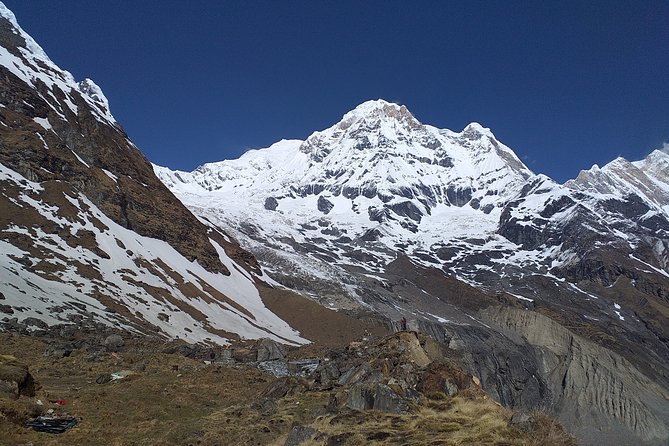
Day 3 is listed as trekking from Chhomrong to Dovan, then using Bamboo as the stop focus. Time on the trail is about 6 hours. This is the day many trekkers start to feel the character of the route. There is a more “in-between” feel: you are not in a village for long stretches, but you are also not constantly climbing at maximum effort.
Bamboo area and similar stops are also useful because they teach you how the tea house cycle works. You learn where you can buy a warm drink, what the evening routine is like, and how to manage energy for the next day. If you want the trek to feel fun, not just hard, this is the day to get comfortable with that rhythm.
A practical drawback: tea house availability is part of the trek reality. The tour includes tea house accommodation, but the quality and comfort can vary. The higher you go, the simpler things feel.
Day 4: Machhapuchhare Base Camp area, shorter day, bigger payoff
Day 4 is about 5 hours, focused on Machhapuchhare Base Camp. The time here is shorter than Day 2 and Day 3, which is exactly what you want at this stage. It gives you recovery without completely skipping the effort.
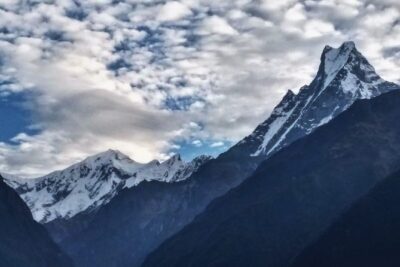
Machhapuchhare is a key “wow” moment because the mountain is dramatic and visually recognizable. Even if you have seen photos, being there changes your sense of scale. This is where good guiding pays off. Your guide can connect what you see to local names and the broader Annapurna region.
Possible drawback: shorter does not always mean easier. Trails can still be uneven and a little tiring. Also, if weather is poor, visibility can drop. The trek does depend on good weather, so build flexibility in your expectations.
Day 5: Annapurna Sanctuary, the 3-hour hit that feels like the midpoint
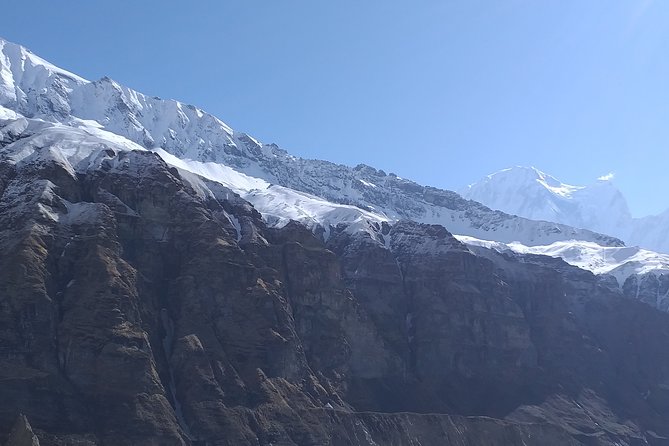
Day 5 is a shorter 3 hour segment tied to the Annapurna Sanctuary. That short time can be misleading if you expect it to be “easy.” In trek timing, a shorter segment can still be intense because it might be steeper or because you are already tired from the previous days.
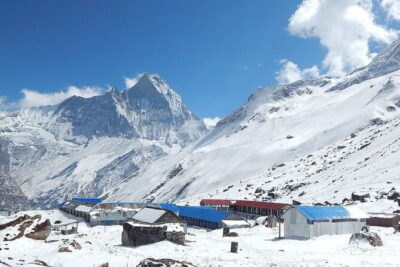
This is the area that is often described as a desert-like wilderness surrounded by Annapurna peaks and glacier presence. The vibe is different from the villages: more open feel, more high-country atmosphere. For many people, this is the day they start believing the whole trek is actually happening.
A practical consideration: because it is short, the day can feel like you arrive, get the view, then move on. If you want longer photo time, you need to ask your guide for a couple of extra minutes while staying mindful of the group and your next day plan.
Day 6: Trek back toward Bamboo, legs get tested again
Day 6 brings you back to Bamboo with about 6 hours of trekking. This is not a “go-go-go” day, but it tests your legs in a different way because you are no longer moving forward toward a single final summit. You are repositioning, and that can make some people feel less motivated.
For you, this is where the mental trick helps: focus on the simple things. Notice changes in air temperature, the rhythm of the trail, and how your body is adapting. If you are traveling with friends, this is also where conversation and shared snacks can make the day feel lighter.
The drawback is predictable: descending and re-walking on different trail sections can wear you out. Take breaks early, not only when you are already spent.
Day 7: Jhinu Danda and real hot spring time
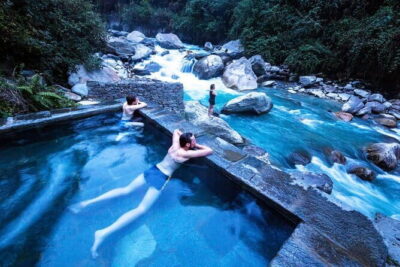
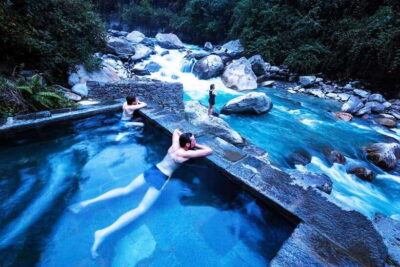
Day 7 is about 6 hours to Jhinu Danda, ending at the natural Jhinu hot spring. This is one of the best “reward” ideas on any trek because it gives you a physical reset. When your calves feel like they belong to someone else, warm water becomes a cheat code.
This day is a good reminder that Annapurna treks are not only about reaching a destination. They are about recovery, too. A hot spring stop gives you a chance to slow down and enjoy the outdoors without immediately preparing for the next long segment.
One consideration: hot springs can mean cold air afterward. Even if you are warm in the water, keep layers handy for when you get out.
Day 8: Nayapul to Pokhara, finish clean and sleep in a real bed
Day 8 ends with trekking to Nayapul, then a private car ride back to Pokhara for a hotel transfer. The trekking portion is listed inside a total of 7 hours, so you should plan for a longer final day than you might expect.
This is your “close the loop” day. You might feel a little sore, and you might also feel a little emotional because the trek phase ends and regular life returns. Your pickup and drop-off again help here. The less time you spend figuring out transport at the finish, the more you can enjoy the post-trek decompression.
Practical note: start your day with water and keep snacks accessible, because finishing treks can trigger hunger that hits fast.
Tea houses, permits, and the cost items you should budget for
This trip includes tea house accommodation, which is how most Annapurna routes work. You get a bed in basic lodges, then you eat at the lodge or nearby. What is not included is meals and drinks. That means your daily budget depends on what you choose to buy for breakfast, lunch, dinner, and warm drinks.
Included items are also important because they protect you from common “extra fee” surprises:
- Trekking permit and TiMS card
- English speaking trekking guide
- Transfer from Pokhara to Phedi and Nayapul to Pokhara by car
Not included items:
- Rescue cost in case of emergency
- Gratitude, described as optional
My advice: pack enough cash or plan for how you will pay for meals and drinks at tea houses. Also, tea house menus can be limited, especially at higher points, so be flexible about what you eat.
Price and value at $370.29 per person
At $370.29 per person, you are paying for a private trek structure with a guide and porter support, plus permits and key road transfers. For value, the big question is whether your comfort comes from reduced carrying and reduced planning stress. Here, that appears to be the main selling point: you are not handling permits and you are not hauling heavy gear.
Meals are extra, so if you budget carefully, you can keep the total cost predictable. Your biggest “cost driver” besides meals will be what you spend on hot drinks and comfort items along the way.
Who this price makes sense for:
- You want private trip attention rather than a crowded group feel.
- You prefer the itinerary to be managed, including permits and transfers.
- You want porter support so you can enjoy the trek without turning it into a backpack slog.
Who might feel it is not the best fit:
- If you are already an experienced trekker who prefers self-guided logistics and already has permits handled, you may find better value elsewhere. But this tour’s included permits and guiding are what make the price feel fair for many first-timers.
Weather, pacing, and the “good day” reality of Annapurna
Your booking notes make it clear the trek requires good weather. That is normal for the region, but it affects how you should plan emotionally. If skies are clear, views can be dramatic. If clouds roll in, you might still trek, but the “signature” mountain moments can be muted.
Pacing-wise, the itinerary is built with a mix of longer and shorter hiking days:
- Most days are around 5 to 6 hours
- Day 5 is shorter at 3 hours
- The final day is longer overall due to the trek plus the ride back
That mix is sensible because it gives you at least one shorter day for recovery. It also means you should be ready for multiple days of moderate effort, not just one big push.
Moderate fitness is requested. If you can handle steady walking for 4 to 6 hours on uneven surfaces, you are likely in the right zone. If not, you might want to train or choose a shorter option.
Should you book this Annapurna Base Camp trek?
I would book it if you want a well-run Annapurna Base Camp route with permit paperwork handled, tea house accommodation included, and a guide who explains what you are seeing. The strongest reason to choose it is the combination of private trip comfort and the reduced load from a porter, which keeps your focus on walking, culture, and the hot spring payoff.
I would pause before booking if your priority is a very light schedule with minimal hiking, since you have multiple days at 5 to 6 hours. Also, because meals are not included, confirm your meal budget so the final cost does not surprise you.
If you do book, ask the operator ahead of time how they handle meal planning preferences and what to expect from the tea house stops at each major point. And if names come up during confirmation, pay attention. The reviews linked to this operator specifically praise Dadhi Ram Thapa for helpful, honest guiding, and Bishnu for responsible arrangements, and that kind of reliability is exactly what you want when you are trekking for days in changing weather.
FAQ
How long is the Golden Mountain Annapurna Base Camp trek?
The trek is listed as 8 days (approx.).
What is the price per person?
The price is listed as $370.29 per person.
What is included in the tour price?
Included items are hotel pickup and drop-off, trekking permit and TiMS card, an English speaking trekking guide, Pokhara to Phedi and Nayapul to Pokhara transfers by car, tea house accommodation, and a private trip.
Are meals and drinks included?
No. All meals and drinks are not included and are available on purchase.
Do I need to carry my own trekking gear?
The overview says you don’t need to carry anything, and the trip includes 1 local porter.
What stops and highlights are on the itinerary?
The itinerary includes trekking to Tolkha, Chhomrong, Dovan/Bamboo, Machhapuchhare Base Camp, the Annapurna Sanctuary, Jhinu Danda hot spring, and then trekking to Nayapul before driving back to Pokhara.
What if the weather is bad?
The experience requires good weather. If it is canceled due to poor weather, you will be offered a different date or a full refund. You can cancel up to 3 days in advance for a full refund.
Latest Pokhara write-ups
- Sunrise View from Sarangkot★ 5.0 · 3 reviews
- Beautiful Sarankot Sunrise with Full Day Sightseeing in Pokhara★ 4.5 · 3 reviews
- Sarangkot Sunrise Tour in Private Car★ 5.0 · 3 reviews
- Pumdikot Mahadev Status and Peace Stupa Hiking Private Tour★ 4.5 · 3 reviews
- Pokhara: Dhampus Easy Trek for Families with YoungKids 2 Day Tour★ 5.0 · 3 reviews
- Pokhara: Private Car Drive Tour to World Peace Stupa★ 5.0 · 3 reviews
- 5-Day Private Farming Experience in Nayapul with Accommodation★ 5.0 · 3 reviews
- Transfer to Lower Mustang (Jomsom)★ 5.0 · 3 reviews
Annapurna Base Camp Trek, compared.
Browse the lists this tour appears in