
Reviewed · ANNAPURNA BASE CAMP TREK
Annapurna Base Camp Trek from Pokhara 7 Days
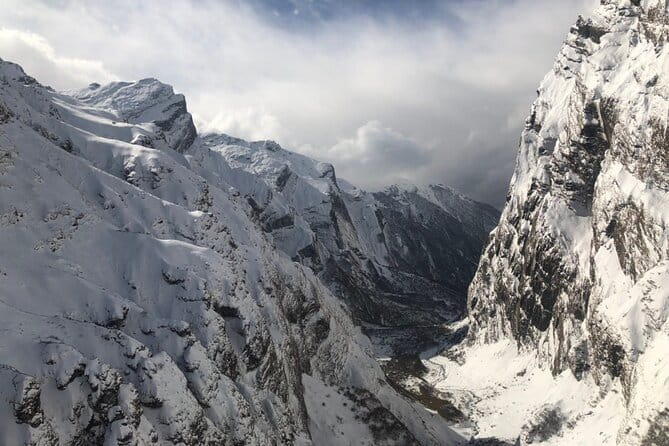
Annapurna Base Camp is one of those treks that looks almost too good on paper. This 7-day route from Pokhara, with stops like Chhomrong and the Annapurna Base Camp area, mixes big Himalayan views with real village life along the Modi Khola river corridor. What I like most is that you are not just “walking to a photo,” you are moving through changing scenery, plus meeting communities and tasting local food along the way.
Two things I really like about this trek setup: the English speaking guide (names like Biru, Dadi, Bikram, Prakash, and Krishna show up in guide feedback), and the fact that permits plus TIMS are handled for you. A possible drawback to think about: the itinerary includes long hiking days and a notable descent toward Bamboo, which can be hard on knees if you are not used to downhill trekking.
You’ll also get a practical, end-to-end plan, with pickup and drop-off from your hotel, shared jeep transfers, and guest house nights. And yes, there is a built-in reward at the end, the hot springs at Jhinu Danda.
Key points to know before you go
- Jhinu Danda and the Modi Khola start: day one is built around getting moving early along the river and setting up with permits.
- Chhomrong is your big village day: you gain altitude on day two and land in one of the larger settlements on the route.
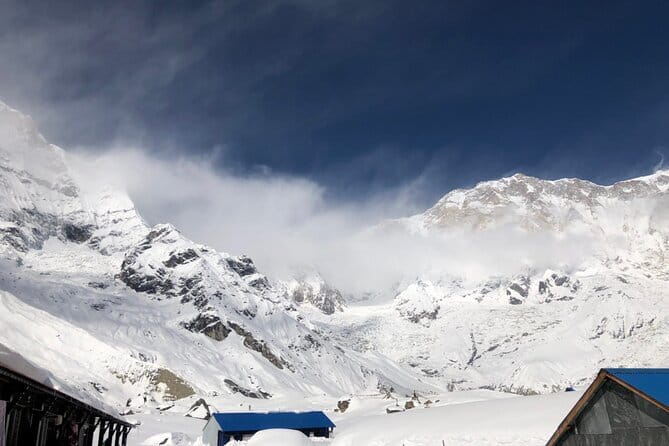
- Deurali is a serious viewpoint day: you get time for lunch with panoramic Annapurna-range views while hiking through forest.
- Machhapuchhare Base Camp plus Ablation Valley: day four includes a glacier-side corridor called Ablation Valley before you reach base camp.
- Day 5 descent to Bamboo is knee work: the trek drops roughly 1,600 m in a day.
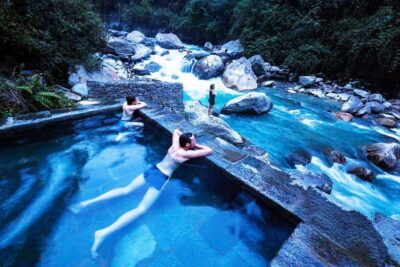
- Hot springs on day six: Jhinu Danda is a classic “soak and recover” finish before the final transfer toward Pokhara.
Price and value: what $395 really buys you
At $395 per person for about 7 days, the value here comes from what is packaged, not from what is vague. You’re paying for a full supported trek with an English speaking guide, permit processing (trekking permit and TIMS card), and a place to sleep each night in guest houses.
It also includes hotel pickup and drop-off, plus round-trip transfers by sharing jeep. For most people, that matters more than it sounds. Instead of doing separate ticket hunting, coordinating local transport, and figuring out where to check your permits, you can focus on the hiking.
One thing to flag: “accommodation” is included, but a full-board meal plan is not clearly listed in the provided inclusions. The experience description talks about Himalayan cuisine and hospitality, so you will be eating along the trek, but you should confirm whether your pricing covers all meals or lodging only.
More routes into the Annapurna Sanctuary:
- Kathmandu/Pokhara: 5-Day Annapurna Base Camp (ABC) Trek
★ 4.9 · 72 reviews - Annapurna Base Camp Trek -8 days
★ 5.0 · 56 reviews - Private 7 – Day Annapurna Base Camp Trekking
★ 5.0 · 50 reviews
Entering the route: days 1 and 2 from Jhinu Danda to Chhomrong
Day 1 starts with hotel pickup in Pokhara and a transfer to the trailhead near Jhinu Danda. Before you start, you will get equipped with necessary gear and have your permits checked. Then the trek follows the Modi Khola River, passing small villages as you ease into the rhythm of the walk.
The day is listed at about 9 hours. That’s a long first day, but it’s also a good way to shake out your legs while the route stays village-connected rather than instantly going full alpine.
Day 2 is about getting to Chhomrong, described as one of the largest villages along the route. It starts with an uphill trek, then you move through dense forest terrain. The forest days matter because they change the feel of the trek. Instead of open, sun-baked slopes, you get shade and a more “alive” trail, with sounds of water nearby and birds overhead.
You finish day two with an overnight stay in accommodations in or near Chhomrong. Net result: day one helps you transition from city to trail life, and day two sets you up for the higher, more dramatic parts ahead.
Practical consideration: if you are coming from a relaxed schedule in Pokhara, treat day one as your warm-up, not your victory lap. The best base camp treks feel steady, not rushed.
Deurali viewpoints and the day four “big ticket” push to Annapurna Base Camp
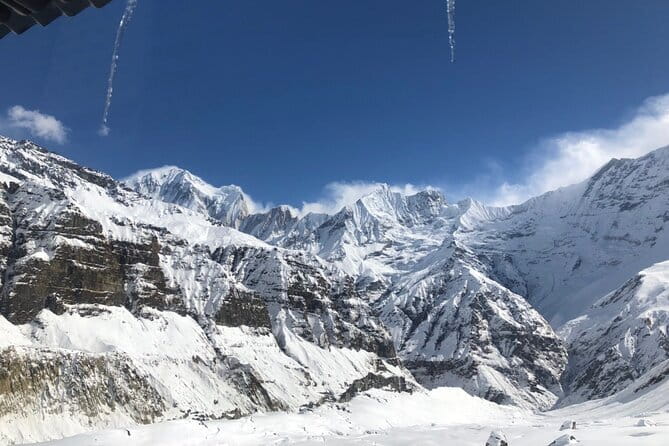
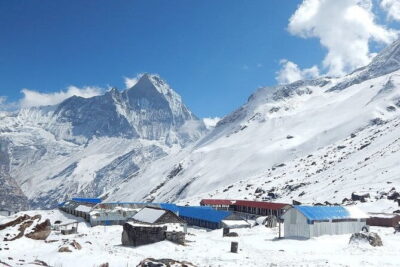
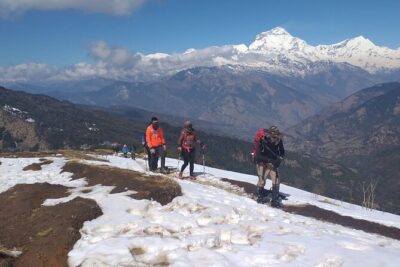
Day 3 shifts into a more scenic, viewpoint-focused rhythm. You trek toward Deurali, with dense forests along the way and a planned lunch stop with views of the Annapurna range. This is one of those days where you do not just walk, you get time to look up and actually take in what you’re seeing.
The day runs about 6 hours. That’s manageable, but it still gives you enough time to feel the altitude change and the way weather can roll in. The route description also promises classic Himalayan backdrops, so expect that lunch to feel like more than just food.
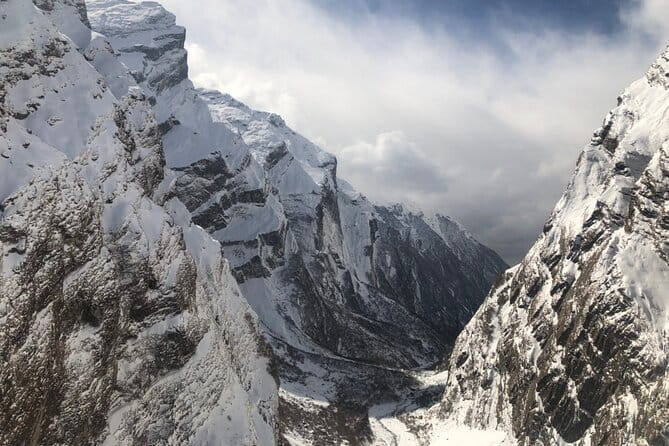
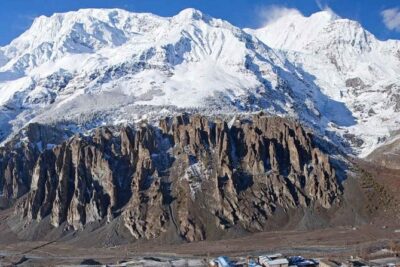
Day 4 is the showpiece. You follow the trail across streams toward Machhapuchhare Base Camp, and then you hike to Ablation Valley. The name might sound technical, but the description is simple: it is a hollow corridor between the glacier and the mountain. After that, you continue over the hills to reach Annapurna Base Camp.
This is listed as about 7 hours, so it’s not a casual stroll. It’s the kind of day where a good guide helps you pace it, so you reach base camp feeling like you still have energy to enjoy the views rather than just survive the walk.
Also note: day four is the only day flagged with an admission ticket included detail. That usually signals that reaching base camp comes with at least one formal access item. Having that handled can save you time and stress.
The descent plan: Bamboo, Jhinu Danda hot springs, and back to Pokhara
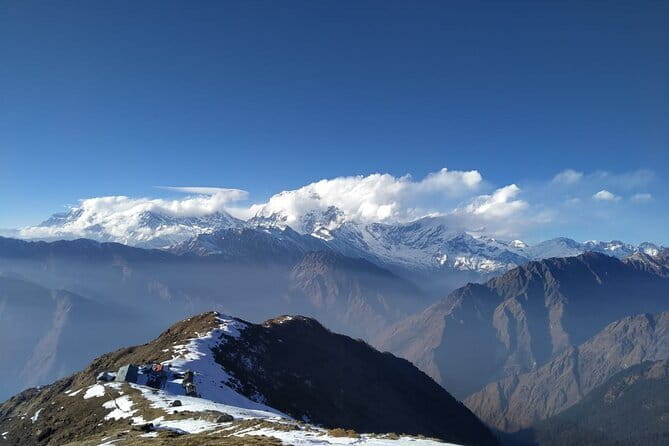
Day 5 takes you from Annapurna Base Camp down to Bamboo, dropping roughly 1,600 m. That descent is exciting because you change altitude quickly, but it’s also the day your knees tend to complain. The itinerary explicitly calls it challenging for knees, so treat this as a “slow down and protect your joints” day.
The hiking time is about 6 hours. You will likely spend more effort on foot placement than on speed, because steep downhills force careful steps. The payoff is that Bamboo is your recovery stop, the place where you reset for the final push.
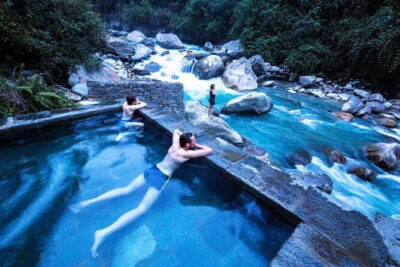
Day 6 is a gradual but satisfying continuation downhill. You trek down the valley, descend to Chhomrong, and then reach Jhinu Danda. Then comes the reward: rest and the chance to soak in hot spring baths at Jhinu Danda.
This is one of the most practical features of the plan. After a knee-stressing descent, hot springs are a mental and physical reset. And even if you only soak briefly, it helps you close the trek on a feel-good note.
Day 7 brings you back to Pokhara. It includes a short morning trek passing through farmland along the river, then reaching Nayapul and transferring back to Pokhara for your drop-off at Lakeside.
Day seven is listed around 7 hours, which is longer than many people expect for a “last day.” But because it blends a short walk with transport, it does not feel like a full trekking day. It’s a gentle off-ramp from the mountains back into the city life.
More to compare around Pokhara
- ZipFlyer Nepal – The World’s Steepest Zip-line
★ 5.0 · 608 reviews - Bungee Pokhara by HighGround Adventures
★ 5.0 · 366 reviews - From Pokhara: Sarangkot Sunrise Himalayas Tour
★ 4.7 · 218 reviews - ATV Adventure Tour in Pokhara, Nepal
★ 5.0 · 194 reviews
Accommodation and pacing: guest houses, realistic days, and a “moderate” plan
Your lodging is guest house accommodation each night. That is a standard setup for this kind of trek, and it usually means simple rooms, shared dining areas, and a chance to hear what other trekkers are doing. With a private group trek, you also get a bit more calm than on some crowded routes.
The pacing is built for moderate physical fitness. The day lengths listed are fairly even, mostly 6 to 7 hours, with day one longer at about 9 hours. The big physical challenge is not only uphill days. The itinerary makes clear that the descent to Bamboo is tough on knees, and that is often the limiting factor for people who feel fine on flat ground.
If you are the type who plans every minute tightly at home, loosen up here. Trekking is about rhythm. A guide with real-world experience helps you keep that rhythm without turning each day into a forced march.
Guides: why the names people trust matter on this route
This trek includes an English speaking trekking guide, and that support shows up clearly in the way people describe their experience. In the feedback tied to this company and this route, guides named Biru, Dadi, Bikram, Prakash, and Krishna are mentioned as being helpful, kind, and professional.
What that usually means in practical terms:
- You get help with the flow of the trek, so you spend less time worrying and more time walking.
- You get a guide who can handle logistics like vehicle timing and accommodations.
- For solo trekkers, having someone who is willing to help with photos and walking coordination can turn an intimidating trip into a comfortable one.
One review also highlights a sunrise mountain view moment. Even if you cannot guarantee sunrise conditions, it points to something important: on trekking days, small pauses for views are part of the value. The best guides know when to slow down so you actually enjoy the place you paid to reach.
Cultural immersion that actually fits into the walking days
The experience description focuses on cultural immersion in the Annapurna region, with interaction through remote villages and traditional hospitality. On this route, culture is not a separate museum stop. It happens because the trek passes through living communities, including small villages on the Modi Khola at the start and the major settlement at Chhomrong.
You also get Himalayan cuisine along the way as part of the trekking atmosphere. Even if your meals are basic, the point is that you are eating where locals live and work, not in a tourist bubble.
So if you like travel that feels human, not just scenic, this trek design fits well.
Who should book, and who might prefer a simpler route
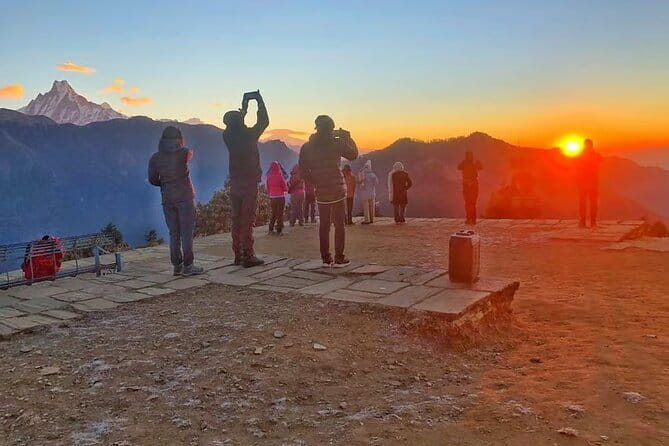
This Annapurna Base Camp trek from Pokhara is a great fit if you:
- want a supported trek with permits and TIMS handled,
- like the idea of a private trip rather than being shuffled into random dynamics,
- enjoy big mountain viewpoints like Machhapuchhare area and Annapurna Base Camp,
- want a trail that mixes villages with nature, ending with hot springs in Jhinu Danda.
You might think twice if:
- your knees do not handle downhill well, or you have not trekked with steep descents before,
- you need a very flexible schedule. This trek is structured by a day-by-day route, with set durations.
Should you book this Annapurna Base Camp trek?
If your goal is the classic Annapurna Base Camp experience with real village trekking and a guide who helps with the practical stuff, this is a strong choice for the price. The big positives are clear: English speaking guidance, permits included, guest house nights, and a route that hits the essential highlights, including Ablation Valley and the hot springs at Jhinu Danda.
My only caution is the physical reality of the itinerary. You have a long first day and a very real downhill day toward Bamboo. If you go into it with a steady pace and care for your knees, you will likely come away feeling satisfied, not wrecked.
FAQ
How long is the Annapurna Base Camp trek from Pokhara?
It is listed as 7 days (approx.).
Where does the trek start?
The trek starts after hotel pickup and transfer to the trek’s starting point, with Day 1 centered on Jhinu Danda.
Is pickup and drop-off included in the price?
Yes. Hotel pickup and drop-off are included, along with round-trip transfers by sharing jeep.
Are trekking permits and TIMS included?
Yes. The trekking permit and TIMS card are included.
Is there an English speaking guide?
Yes. An English speaking trekking guide is included.
What kind of accommodation is provided?
You stay in guest houses during the trek.
Is this trek private?
Yes. It is listed as private, and only your group participates.
Is there anything included for Annapurna Base Camp access?
On Day 4, the itinerary shows an admission ticket included for reaching the base camp area.
What is not included?
Personal expenses and optional gratitude are not included.
What is the cancellation policy?
Free cancellation is available if you cancel up to 24 hours in advance for a full refund. If you cancel less than 24 hours before the start time, the amount paid is not refunded.
Latest Pokhara write-ups
- Landing Annapurna Base Camp by Helicopter Tour from Pokhara★ 4.0 · 5 reviews
- 3 Day Kapuche Glacier Lake Trek with Siklesh from Pokhara★ 5.0 · 5 reviews
- Sarangkot sunrise with Morning Tibetan Cultural Tour★ 5.0 · 5 reviews
- Entire Day Pokhara Complete Tour★ 5.0 · 5 reviews
- 3 Day Mardi Himal Base Camp Trek from Pokhara★ 5.0 · 5 reviews
- 3 Days Ghorepani and Poonhill Private Trek from Pokhara★ 5.0 · 6 reviews
- Private Tour Local Culture and The View of Mohare Danda★ 5.0 · 6 reviews
- Pokhara: Poon Hill Ghorepani Short Trek★ 5.0 · 6 reviews
Annapurna Base Camp Trek, compared.
Browse the lists this tour appears in