
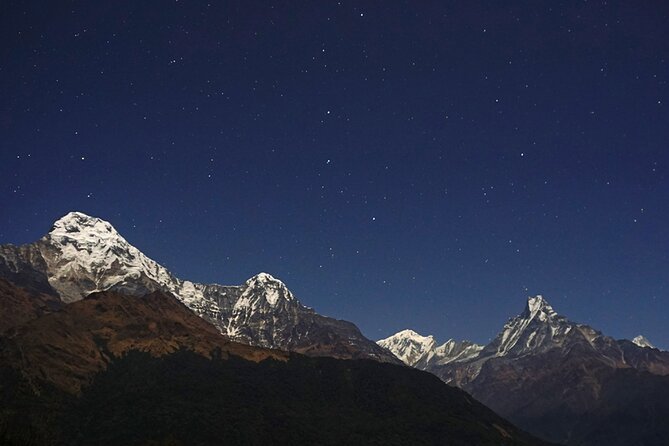
Reviewed · POON HILL TREK
Pokhara: 4 Day Poon Hill Trek
What makes this Pokhara 4-day Poon Hill trek interesting is the mix: early-morning sunrise drama plus slow village walking, without needing serious mountaineering skills. It also starts right from Pokhara, so your day one does not begin with a half-day of hassles.
I like that the route focuses on payoff per hour, especially the Poon Hill morning run and the chance to spend time in Ghandruk. And I like the practical setup, including an English-speaking guide, trekking permits handled for you, and hotel pickup and drop-off around Pokhara.
One drawback to keep in mind: the best parts start early, and day two includes a big stair climb (the Ulleri stairs). If you dislike steep efforts or early wake-ups, plan for that before you book.
Key things to know before you go
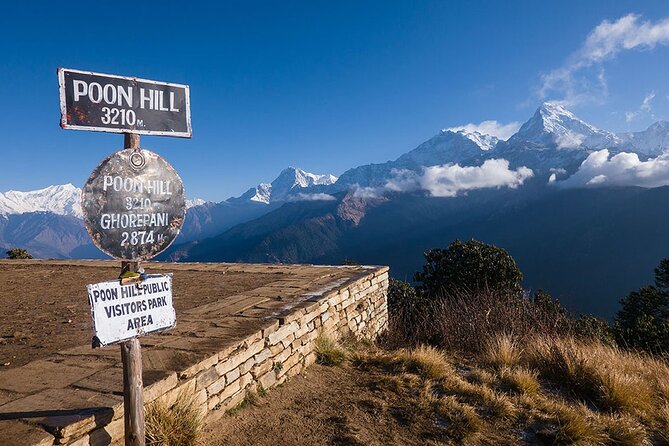
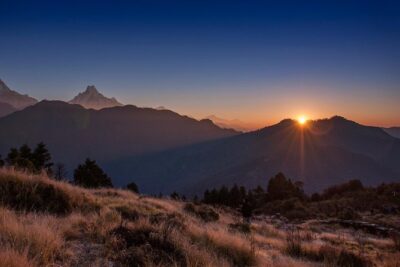
- Poon Hill sunrise starts around 4:30 AM, with views over the Annapurna and Dhaulagiri ranges
- Ulleri stairs are the day-two challenge, about 3,000 steps before you reach Ghorepani
- Ghandruk adds real culture time, including a local museum and excellent mountain views
- Guest-house stays keep this trek “easy to manage,” not a camping-only adventure
- Permits are included (Trekking permit and TIMS card), plus an English-speaking guide
- Meals are not included (plan for about 3,500 NPR per person per day)
Why this 4-day Poon Hill trek from Pokhara is such a smart choice
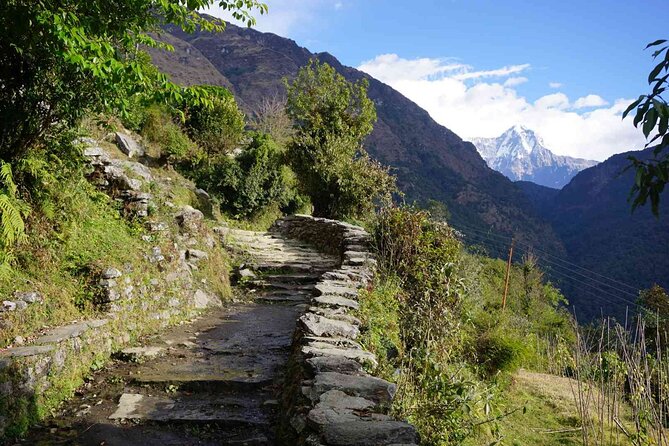
If you want a mountain trek with big rewards but limited time, Poon Hill is a strong pick. You get a classic Annapurna-region sunrise moment, plus walking through villages and forests that change feel day to day.
This trek is built around a simple rhythm: drive in, trek in steady chunks, sleep in guest houses, repeat. That matters because short treks are where logistics can either smooth your trip or ruin it. Here, pickup and drop-off in Pokhara, plus a private car to the trailhead area, keeps the travel days from chewing up your energy.
Also, this is listed for moderate physical fitness. That does not mean it is a stroll. It does mean it is designed for regular hikers who can handle several hours of walking and a steep stair segment.
More Ghorepani and Poon Hill departures:
- Poon hill Trek 3 days
★ 5.0 · 176 reviews - Pokhara: 4-Day Ghorepani, Poonhill & Ghandruk Mountain Trek
★ 5.0 · 132 reviews - Ghorepani – Poon Hill Trek 3N-4D
★ 5.0 · 125 reviews
Route overview: from Nayapul to Tikhedhunga, Ghorepani, Poon Hill, and Ghandruk
You’ll see the trek unfold like a sequence of “view points and village life” rather than one long, technical push. After you’re driven from Pokhara toward Nayapul, you start walking to Tikhedhunga for your first overnight stop.
The next day builds toward Ghorepani, and that is where the rhythm turns more uphill and more work-focused. Day three is the early start day, then you return for breakfast and keep moving.
Day four shifts into descent mode and village time. You’ll reach Ghandruk, a Gurung village area with a museum stop and mountain views, then finish with a trek down to Nayapul and a drive back to Pokhara.
The shortness of the trek is the point. You are not trying to “see everything in Nepal.” You are getting a tight, high-impact Annapurna introduction.
Day 1: Pokhara to Tikhedhunga, settling in after the drive
Day one begins with a drive from Pokhara to Nayapul, about 1.5 to 2 hours. Then you start your trek from Nayapul and walk to Tikhedhunga, with a trekking time of about 7 hours.
This is a good setup day. It is long enough to get your legs awake, but not structured around a single ultra-technical moment. You also get an overnight stay in Tikhedhunga, which helps you avoid the “one big day then chaos” feeling.
For me, day one is where you learn the pace your body likes. If you go out too fast right away, day two’s stairs will feel tougher. The best strategy is to walk steadily, not aggressively, so you save energy for what comes next.
Day 2: Ghorepani and the Ulleri Stairs challenge you should plan for
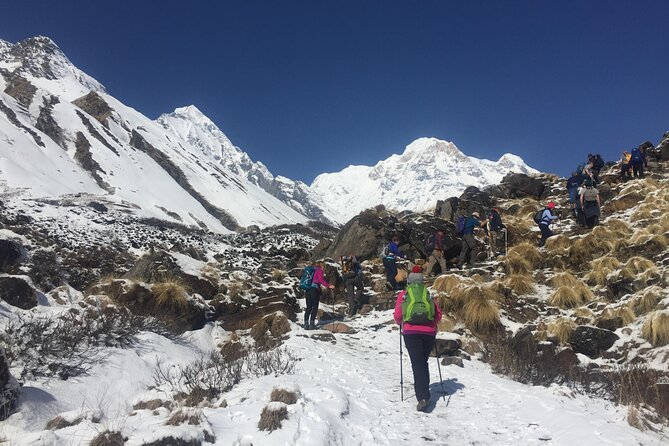
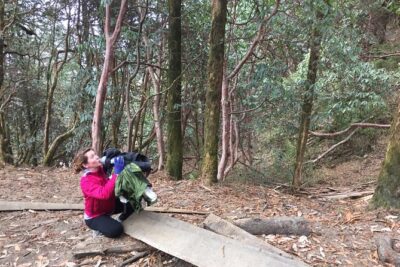
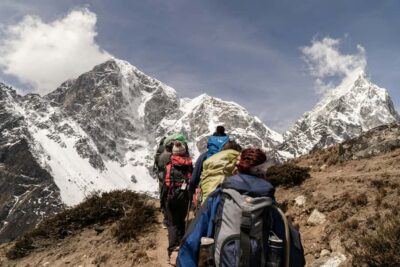
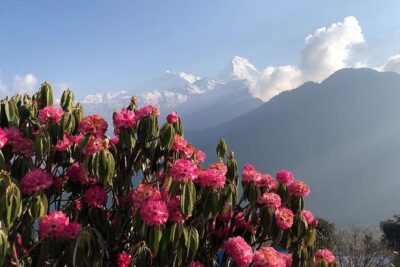
Day two is the trek’s clearest test. You climb Ulleri stairs, a stone stairway with around 3,000 steps. After that, you continue through rhododendron forests and through picturesque villages before you reach Ghorepani.
The rhododendron and village walking is a mental break even while your legs are still working. That combination is one reason this trek stays popular with hikers who want scenery without advanced skills.
My practical advice is simple: treat the stairs as intervals. You do not need to race. Take short breaks as you move upward, and keep your effort consistent. If you can handle the stair climb without sprinting, day three becomes much more enjoyable.
You’ll sleep in Ghorepani at the end of the day. That matters because day three starts early and you want to wake up with less scrambling.
More to compare around Pokhara
- ZipFlyer Nepal – The World’s Steepest Zip-line
★ 5.0 · 608 reviews - Bungee Pokhara by HighGround Adventures
★ 5.0 · 366 reviews - From Pokhara: Sarangkot Sunrise Himalayas Tour
★ 4.7 · 218 reviews - ATV Adventure Tour in Pokhara, Nepal
★ 5.0 · 194 reviews
Day 3: Poon Hill sunrise around 4:30 AM, then breakfast and more walking
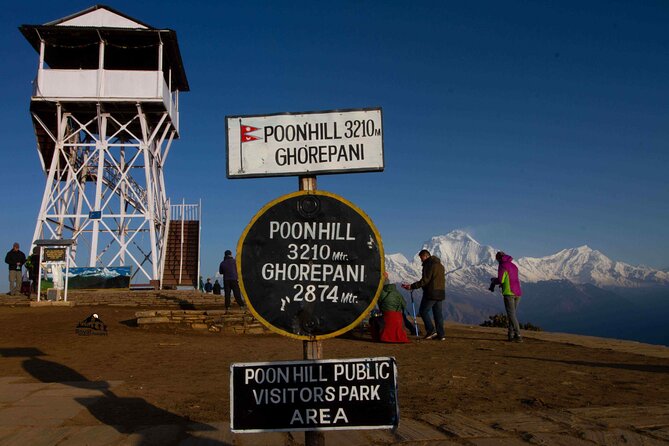
Day three is the headline, and it starts early. You’ll wake around 4:30 AM for the hike to Poon Hill to see sunrise.
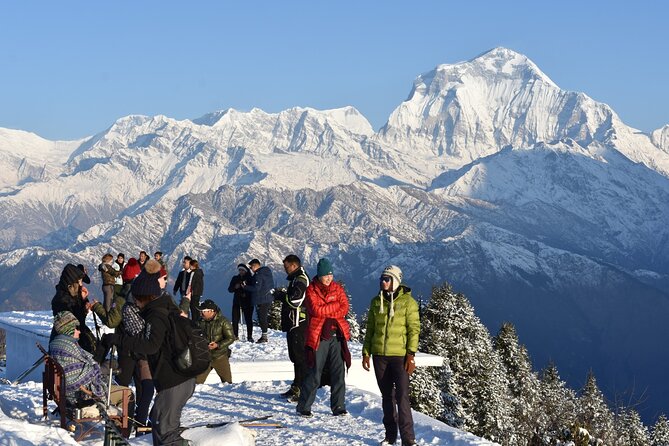
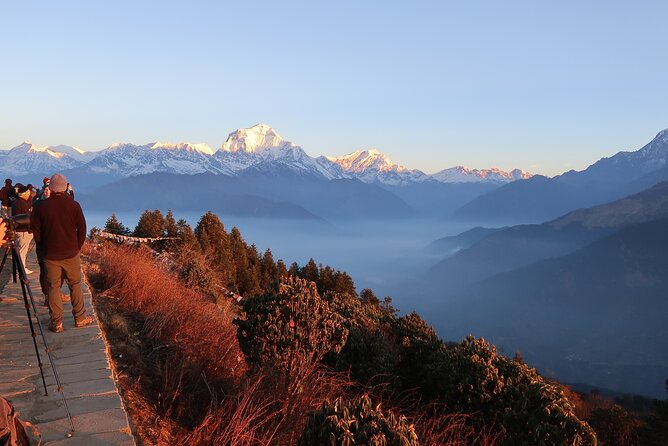
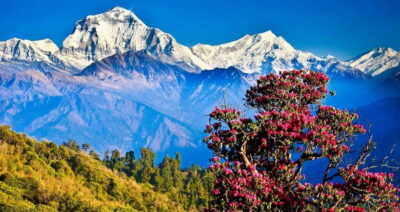
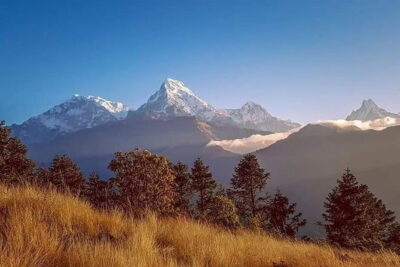
From Poon Hill, you get those big-view moments over the Annapurna and Dhaulagiri mountain ranges. This is the kind of payoff that makes a short trek feel worth it, even though the walking is real.
After the sunrise hike, you return to Ghorepani for breakfast. Then you continue the trek, with about 6 hours listed for the day.
This day works well if you like early starts and you do not mind the cold feeling that often comes with pre-dawn mountain mornings. If you do mind, you can still do it, but I’d treat sleep and pacing as priorities the night before.
Day 4: Ghandruk village time, the museum stop, and the return to Pokhara
On day four, you descend toward Ghandruk, a Gurung village. The trek to Ghandruk is listed at about 3 hours, and once you’re there you can explore the village, including a local museum and mountain views.
This is where the trek becomes more than just scenery. You’re moving through areas associated with Gurung and Magar communities, and Ghandruk is the kind of stop where you slow down enough to notice village life.
After Ghandruk, you trek back down toward Nayapul. Then you drive from there back to Pokhara, about 1.5 hours, and you’ll transfer to your hotel to end the tour.
Day four is a satisfying finish because it feels like both cultural and practical closure. You get a meaningful village stop and then you’re not stuck trekking until midnight.
Price and logistics: what the $235 really covers, and what to budget for meals
The listed price is $235 per person for a 4-day trek. For short treks, value comes from what is handled for you, not just the view.
Here, a lot is included: hotel pickup and drop-off in Pokhara, trekking permits (including the TIMS card), an English-speaking trekking guide, guest-house accommodation, and round-trip transfer by private car to and from Nayapul. It’s also listed as a private trip, meaning your group does not mix with strangers.
Two big budget items can change your final cost: meals and optional tipping. Meals are not included, and they’re listed as available for purchase at around 3,500 NPR per person per day. Gratitude is optional.
If you want to avoid budget surprises, plan on paying for meals each day on the trek and bring some extra cash for snacks or drinks. Meals add up quickly in trekking settings, so treating that 3,500 NPR as a real line item helps.
In short: this price feels fair if you want the permits, guide, and transfers covered. If you were planning to arrange everything yourself, the savings might be smaller than you expect once permits and guide time are priced in.
Guides and permits: why the “paperwork and pace” part is worth paying attention to
Trekking in Nepal is easier when the boring parts are handled. This trek includes the trekking permit and the TIMS card, plus an English-speaking trekking guide. That means you avoid the last-minute scramble and you keep your focus on walking and enjoying the mornings and villages.
The guide piece also matters because short treks are sensitive to timing. Sunrise has a set rhythm, and stair-heavy day two is where good guidance can make your day feel more controlled.
In the field, I’ve seen this operator work with guides such as Mr. Bharat, Dadhi Ram, Govinda, and Som Tripathi, depending on the group. You may also interact with owner Chhabi Paudel behind the scenes, since he shows up in multiple accounts related to coordination and service.
Even if you never meet the owner directly, the repeated guide names are a clue. This is not just a generic booking. The service is trying to match you with a guide who can help you manage the trail and the daily flow.
Guest houses on a short trek, and what “comfortable” really means here
This trek includes accommodation in guest houses. That usually means simple rooms, shared dining spaces, and a setup designed for trekkers who want warmth, a bed, and food options without camping gear.
For a 4-day schedule, guest houses are ideal. You can recover between days, wash up when possible, and keep your packing minimal. You’re not carrying tents, sleeping bags, or cooking systems.
The trade-off is that guest-house comfort can vary by place and availability. Still, the trek is structured with overnight stops each day, so you’re not guessing where you’ll sleep.
If you’re the type who values a predictable routine, guest houses are your friend on this route.
When weather matters for Poon Hill sunrise
Poon Hill is weather-dependent, and this experience is listed as requiring good weather. If the trek gets canceled due to poor weather, you’ll be offered a different date or a full refund.
That means you should be mentally flexible about sunrise days. Clouds can change the experience fast, and mountain conditions can shift even when the day looks promising.
My practical approach is to plan your Pokhara days with cushion time, if possible. If you have fixed flight dates, you’ll want to confirm the tour timing before you lock in anything tight.
Who should book this trek, and who should reconsider
This trek is designed for moderate fitness. If you can handle several hours of walking and you’re willing to climb stairs, you’ll likely enjoy it.
It’s also a strong fit for people who want beginner-friendly structure. There’s a note in past accounts about it working for beginners and families, which makes sense given the short duration and guest-house base.
Solo hikers can do it too, especially if you appreciate having an English-speaking guide and a planned schedule. The experience is private to your group, which is a plus if you want a calmer pace and clear communication.
Consider reconsidering if you:
- hate early starts, since Poon Hill sunrise is around 4:30 AM
- dislike steep stair climbs, since Ulleri stairs are around 3,000 steps
- have a tight budget and do not want to pay for meals separately
Should you book this Pokhara 4-day Poon Hill trek?
I’d book it if you want an efficient Annapurna taste: sunrise views over the Annapurna and Dhaulagiri ranges, village life with a meaningful stop in Ghandruk, and a guided setup that includes permits, transport, and guest-house stays.
I would not book it if you want a relaxed, slow trip with no stairs and no early wake-ups. This trek has two moments that demand effort: the Ulleri stairs day two, and the sunrise hike timing.
One last tip for making the decision: look at your hiking tolerance, then look at your meal budget. The trek price is one part. The full “real cost” includes meals at about 3,500 NPR per day.
If you can handle the stairs and you can afford meals on top, this is a solid, value-focused way to do Poon Hill without turning your trip into a logistics project.
FAQ
How long is the Pokhara: 4 Day Poon Hill Trek?
The trek lasts 4 days, listed as approximately 4 days.
Where do you start the trek and how do you get there from Pokhara?
You’re driven from Pokhara to Nayapul (about 1.5 to 2 hours), then you begin trekking from Nayapul.
What time do you start the hike to Poon Hill for sunrise?
You wake up at around 4:30 AM and hike to Poon Hill for sunrise.
What are the main highlights of the route?
You get sunrise views over the Annapurna and Dhaulagiri ranges from Poon Hill, plus walking through villages and rhododendron forests, and a cultural stop in Ghandruk including a local museum.
Is there an English-speaking guide?
Yes. The tour includes an English-speaking trekking guide.
Are permits included?
Yes. The package includes a trekking permit and the TIMS card.
Is the trek private?
Yes. It is listed as a private tour/activity where only your group will participate.
Where do you stay during the trek?
Accommodation is included in guest houses.
Are meals included in the price?
No. All meals are not included and are available for purchase at approximately 3,500 NPR per person per day.
What happens if weather is bad, or if I need to cancel?
The experience requires good weather. If it is canceled due to poor weather, you’ll be offered a different date or a full refund. Free cancellation is available up to 24 hours in advance for a full refund.
Is a mobile ticket provided?
Yes. Mobile ticket is listed as a feature.
Latest Pokhara write-ups
- Sunrise View from Sarangkot★ 5.0 · 3 reviews
- Beautiful Sarankot Sunrise with Full Day Sightseeing in Pokhara★ 4.5 · 3 reviews
- Sarangkot Sunrise Tour in Private Car★ 5.0 · 3 reviews
- Pumdikot Mahadev Status and Peace Stupa Hiking Private Tour★ 4.5 · 3 reviews
- Pokhara: Dhampus Easy Trek for Families with YoungKids 2 Day Tour★ 5.0 · 3 reviews
- Pokhara: Private Car Drive Tour to World Peace Stupa★ 5.0 · 3 reviews
- 5-Day Private Farming Experience in Nayapul with Accommodation★ 5.0 · 3 reviews
- Transfer to Lower Mustang (Jomsom)★ 5.0 · 3 reviews
Poon Hill Trek, compared.
4-Day Ghorepani, Poonhill & Ghandruk Mountain Trek
Read our review →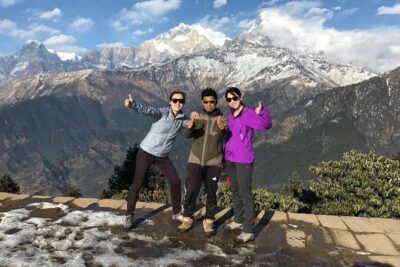
Browse the lists this tour appears in