
Reviewed · POON HILL TREK
Private 4 Day Poon Hill Trek from Pokhara
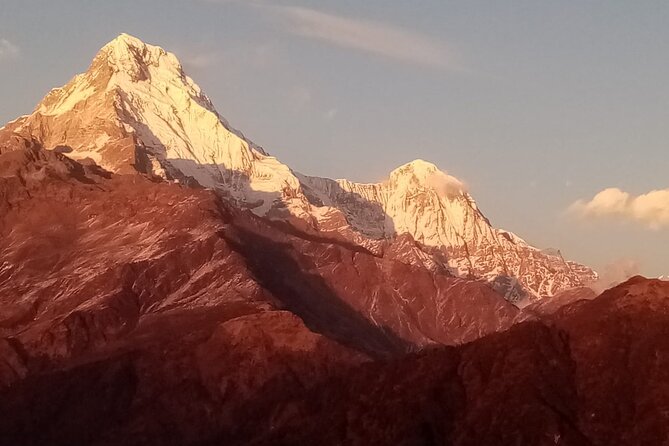
The reason this trek feels so special is the sunrise run up to Poon Hill, where the Annapurna and Dhaulagiri mountains turn orange and gold in the early light. You’re also moving through real working villages, not just scenic viewpoints, with teahouse stops that give you a taste of daily life in the region.
I especially like the setup: hotel pickup and drop off in Pokhara, plus a guide who’s there to make the trek smoother. I also like that your price includes the trekking permit and TIMS card, so you are not juggling paperwork while your legs are doing the heavy lifting.
One consideration: mornings start early, especially on the day you hike up for sunrise. If you want a slow, relaxed schedule, this trek will feel demanding, even though the overall route is popular for a reason.
Key reasons this Poon Hill trek works so well
- Sunrise at Poon Hill with panoramic views of Annapurna and Dhaulagiri ranges
- Steep-but-manageable walking days, roughly 6 hours each, with overnight teahouse stays
- Guides who act like mentors, sharing practical trail info plus local culture and wildlife notes
- Teahouse nights in villages like Ghorepani and Ghandruk, including Gurung hospitality
- Permits handled for you via TIMS card and trekking permit included in the cost
- Private transfer comfort, including round trip by private car and local bus on the return
Why Poon Hill Sunrise is the whole point
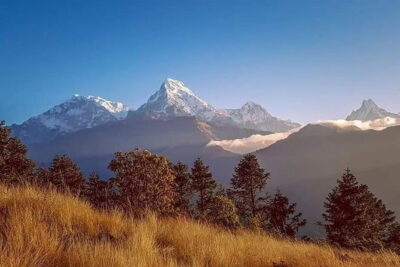
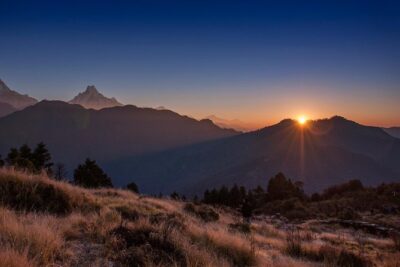
Poon Hill is famous for one reason: you get a big, early-morning view that feels like the Himalayas are turning on a light switch. You hike up early, before the sky fully wakes up, and when you reach the viewpoint the peaks can look dramatically close, especially around Annapurna and Dhaulagiri.
What I like about this kind of sunrise plan is that it shapes the whole experience. The trek is not just about getting from A to B, it is about timing, weather watching, and being outside when the air is still calm. You end up earning the view with effort, not just waiting for a bus to arrive at the top.
More Ghorepani and Poon Hill departures:
- Poon hill Trek 3 days
★ 5.0 · 176 reviews - Pokhara: 4-Day Ghorepani, Poonhill & Ghandruk Mountain Trek
★ 5.0 · 132 reviews - Ghorepani – Poon Hill Trek 3N-4D
★ 5.0 · 125 reviews
The 4-day rhythm: steady walking, smart pacing
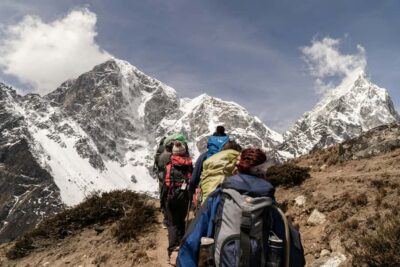
This trek runs about 4 days and is built around classic stops. You do around 6 hours of trekking on key days, with a mix of uphill climbing, forest walking, village paths, and later some downhill. It is not a sprint, but it is also not a stroll. You should expect your daypack to feel heavier over time as you carry water and layers.
The route also has a natural “up then down” rhythm:
- Day 1 climbs into Tikhedhunga
- Day 2 brings you to Ghorepani through Ulleri and forest trail
- Day 3 is the sunrise morning, then you continue toward Ghandruk
- Day 4 is your downhill payoff toward Naya Pul, then back to Pokhara
That rhythm is useful. You get time to acclimate as you go, and by the time you reach the big sunrise morning, you are already partway warmed up and used to the altitude routine.
Day 1 to Tikhedhunga: Nayapul start, village climbs, first teahouse night
You start with a drive from Pokhara toward Nayapul (about 1 to 2 hours). Then the trek begins, moving past Birethanti and Hille before you start ascending through Tikhedhunga.
This first day matters more than it looks on paper. It sets your walking pace and gets you into the rhythm of stone steps, uneven paths, and the steady grind uphill. Tikhedhunga is a good first overnight spot because you end your day in a village teahouse setting, not out on an exposed ridge.
Practical tip: on Day 1, I would not try to “win” the climb. Walk at a pace where you can keep breathing through your nose for a bit. You will likely get a better mood and save energy for the Ulleri staircase later.
Day 2 to Ghorepani: the Ulleri stairs and rhododendron forest time
Day 2 includes a memorable climb: the steep stone staircase to Ulleri village. If you have done stair steps before, you know the trick is rhythm, not speed. If you have not, you will learn fast, and that is okay. It is exactly the kind of effort that helps you build trekking strength without needing special technical skills.
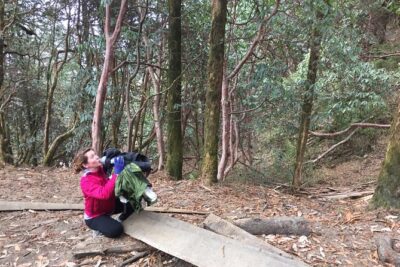
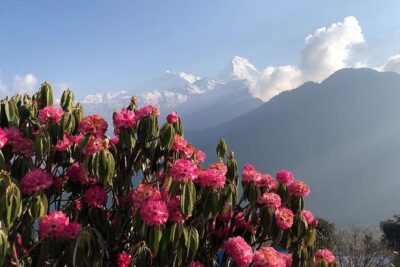
After Ulleri, the trail continues through rhododendron and oak forests. That forest walking helps break up the day visually. Instead of only staring at distance, you get sheltered sections where the temperature can feel kinder and your eyes can rest.
You finish in Ghorepani, a village with panoramic mountain views. It is a solid base for the next morning because you are already close enough to reach Poon Hill early without losing half the day to travel.
More to compare around Pokhara
- ZipFlyer Nepal – The World’s Steepest Zip-line
★ 5.0 · 608 reviews - Bungee Pokhara by HighGround Adventures
★ 5.0 · 366 reviews - From Pokhara: Sarangkot Sunrise Himalayas Tour
★ 4.7 · 218 reviews - ATV Adventure Tour in Pokhara, Nepal
★ 5.0 · 194 reviews
Day 3 to Poon Hill sunrise and onward to Ghandruk
This is the day you should protect. The plan calls for an early morning hike up to Poon Hill for sunrise, then you descend back to Ghorepani and continue the trek toward Ghandruk, arriving for your night there.
The sunrise itself is the headline: you are aiming for a panoramic look at the Annapurna and Dhaulagiri ranges. When the light hits, the peaks can look like they are painted, and it is that moment that makes Poon Hill worth the effort.
After sunrise, the change in pace can catch you off guard. You have a lot of energy on the climb up, then you come down, refuel, and keep walking again. This is where having a guide who can pace you and keep you moving matters. Based on what people highlight, guides like Milan and Biru are praised for staying patient and making sure you feel comfortable and safe, not just thrown into the route and left to figure it out.
Ghandruk is a strong cultural stop. It is known for Gurung hospitality, and it is a place where teahouse stays feel like part of the community, not a tourist service. You also get to experience the kind of village life you came for, with interaction along the trail and a deeper feel for how locals live with the mountains as their backdrop.
Day 4 from Ghandruk to Naya Pul, then back to Pokhara
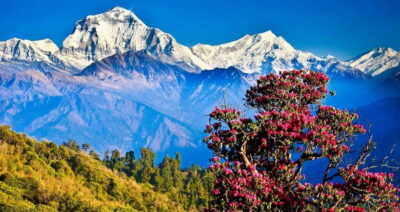
Day 4 is your big downhill day. From Ghandruk you hike toward Naya Pul via a scenic route, with repeated views of peaks like Annapurna I, Annapurna South, Dhaulagiri, Fishtail, and Himchuli as you move through rhododendron forest.
Downhill is easier on your lungs and harder on your knees. I like this day because it is where you earn that calmer feeling that you are almost done. Still, take it seriously. Keep steps short, use trekking poles if you have them, and watch your footing on stone and rooty sections.
After you reach Naya Pul, you take a local bus back to Pokhara (about 1 hour 30 minutes) and the tour includes a drop-off back to your hotel. That “last-mile” comfort is not glamorous, but it is valuable. It helps you avoid the hassle of bargaining for another ride after a long day.
Teahouses, Gurung culture, and what you actually get at night
This trek uses guest houses, and that matters because it keeps you connected to people and places along the route. You are sleeping where hikers and locals overlap, which is where you often get the most honest small moments: shared tea, conversations, and practical tips about the next stretch.
Ghandruk stands out culturally because it is associated with Gurung community life, and the trek also passes through areas connected to Magar and Gurung ethnic groups. Your guide can help turn what you see into something you understand, with local stories about traditions and the way communities have shaped their lives around the mountains.
One thing I value here is that you get a grounded cultural experience without turning it into a performance. You are not stuck in a museum setting. You are walking through villages and sharing space in teahouses.
Guides, permits, and transfers: where your money goes
At $240 per person, the value depends on how you travel. If you want to do this solo without arranging logistics, you can spend time and energy tracking down permits, transfers, and a guide. This private setup bundles the key pieces you would otherwise have to coordinate.
Included in the package:
- Hotel pickup and drop off in Pokhara
- Round trip transfer by private car as per the route plan
- English speaking trekking guide
- Trekking permit and TIMS card
- Guest house accommodation
- Private trip for your group
This is the kind of inclusion that makes the trek feel lighter. Permits and TIMS are not optional in the practical sense, and having them handled means you can focus on the trek.
Guide quality is also a big theme in the feedback you can take seriously. Names that come up include Milan, Biru, Vikram, Amrit, Sham, and Bikram. People emphasize patient care, good English, and guides who explain mountains and culture instead of only counting steps. That difference is huge on a route like this, where the best moments happen early in the morning and in the small conversations during the day.
Price and what to budget for meals
Your base cost is $240 per person, but meals are not included. The estimate given is around US$28 per person per day for food.
That means your real budget is the trekking cost plus meal costs for the days you are on trail. If you are planning to eat a lot of snacks, hot drinks, and full meals at teahouses, you might spend close to that daily number or slightly above it. Still, the upside is you can choose what you eat based on how your stomach feels and how hungry you are.
My practical advice: don’t treat meals as an afterthought. On mountain treks, the wrong timing or too little fuel can slow you down fast. Plan to eat when you stop, not when you are already exhausted.
Pace, fitness, and safety on stairs and early mornings
The tour is geared for travelers with moderate physical fitness. That is the right level for most people who can walk 30 to 60 minutes at a time without needing frequent breaks, and who can handle uneven ground.
Two parts demand respect:
- The steep stone staircase to Ulleri on Day 2
- The early start for Poon Hill sunrise on Day 3
You do not need to be a mountaineer. You do need steady effort. Hydration also matters. Keep sipping even when you do not feel thirsty.
Safety-wise, the key support here is an experienced English speaking guide plus the private nature of your group. You are not getting rushed by a big herd, and your guide can adjust the pace based on how you feel.
And yes, you should pack warm layers. Sunrise hiking usually means cold air and a long wait in the early hours. Even if the sun shows up, mornings can stay chilly while you are moving slowly and standing still for views.
Should you book this private Poon Hill trek from Pokhara?
If you want one of Nepal’s most straightforward “big view” treks, this is a smart choice. The combination of Poon Hill sunrise, teahouse nights in classic villages, and a private guided experience makes it easier to enjoy without constantly managing logistics.
Book this if:
- You care about sunrise views and panoramic mountain scenes
- You want a guide to handle permits and help with pacing
- You like walking through villages and not only hiking to viewpoints
Skip it or rethink if:
- You dislike early mornings and steep stairs
- You expect meals to be included in the base price
- You want a fully relaxed, minimal-effort schedule
If you are comfortable with moderate trekking and you like the idea of combining big scenery with real village life, this private Poon Hill trek is a strong value. It is the kind of itinerary that leaves you with one unforgettable morning view and three days that feel like you actually lived in the route, not just passed through it.
FAQ
How long is the Poon Hill trek, and what is the daily walking time like?
The trek runs about 4 days. The trekking portions listed are around 6 hours on several days, with a shorter 2-hour component for the Poon Hill sunrise hike portion on Day 3.
Is this tour private?
Yes. This is a private tour/activity, so only your group participates.
What is included in the $240 price?
Hotel pickup and drop off, an English speaking trekking guide, trekking permit and TIMS card, round trip transfer by private car as per the itinerary, accommodation at guest house, and the private trip.
Are meals included?
No. Meals are not included. They are available for purchase, estimated at about US$28 per person per day.
Do I need a trekking permit or TIMS card?
The trekking permit and TIMS card are included as part of the tour, with the guide supporting you through that process.
What happens on Day 3?
You start with an early hike to Poon Hill for sunrise and panoramic views of the Annapurna and Dhaulagiri ranges. After that, you descend back to Ghorepani and continue the trek toward Ghandruk for the overnight stay.
What fitness level do I need?
Travelers should have moderate physical fitness level.
Can I cancel and get a full refund?
Yes, free cancellation is available. You can cancel up to 24 hours in advance of the experience start time for a full refund.
Latest Pokhara write-ups
- Beautiful Sarankot Sunrise with Full Day Sightseeing in Pokhara★ 4.5 · 3 reviews
- Sunrise View from Sarangkot★ 5.0 · 3 reviews
- Sarangkot Sunrise Tour in Private Car★ 5.0 · 3 reviews
- Pumdikot Mahadev Status and Peace Stupa Hiking Private Tour★ 4.5 · 3 reviews
- Pokhara: Dhampus Easy Trek for Families with YoungKids 2 Day Tour★ 5.0 · 3 reviews
- Pokhara: Private Car Drive Tour to World Peace Stupa★ 5.0 · 3 reviews
- 5-Day Private Farming Experience in Nayapul with Accommodation★ 5.0 · 3 reviews
- Transfer to Lower Mustang (Jomsom)★ 5.0 · 3 reviews
Poon Hill Trek, compared.
4-Day Ghorepani, Poonhill & Ghandruk Mountain Trek
Read our review →
Browse the lists this tour appears in