
Reviewed · UNESCO WORLD HERITAGE SITES
Kathmandu Bhaktapur Patan Authentic Local Tour +7 UNESCO WH Sites
This experience is interesting because it strings together Kathmandu Valley’s big-name sacred sites with the day-to-day Newar life you usually miss. You get Kathmandu, Bhaktapur, and Patan in one smooth loop, guided by a local expert, with time to watch crafts happen instead of just taking photos and moving on.
Two things I really like: the Juju Dhau making session in Bhaktapur (not a demo from far away, but a live hands-on-style look), and the focus on local craft and neighborhoods, including Pottery Square and Patan’s old-town workshops. One thing to think about: this is a lots-of-sites schedule, so you’ll want comfortable shoes and a flexible pace, especially with walking through older lanes and steps around the temple areas.
Key Highlights You’ll Feel Right Away
- Live Juju Dhau preparation in Bhaktapur, so you understand the dish beyond a menu description
- Craft stops that are practical, not performative, including pottery activity at Pottery Square and art and workshop time in Patan
- A UNESCO-focused route across the valley, built to cover all seven UNESCO world heritage sites in the region
- Native-led interpretation using local context, including guides from the Newar communities of Kathmandu, Bhaktapur, and Patan
- Real market time in Kathmandu, including Ason Tole area shopping before you head to major monuments
- Optional Thamel and Jhamsikhel nightlife after the tour, with escorted VIP line access
Why This 3-City Loop Makes Sense in Kathmandu Valley
If your Nepal plan includes Kathmandu, you usually face a choice: either you hit only the major monuments, or you spend extra days mixing in local life. This tour tries to do both in three days, which is exactly why it feels efficient.
Kathmandu Valley UNESCO sites are spread across different cities. Doing it yourself can turn into a lot of back-and-forth and guessing where to linger. Here, you’re handled by a professionally certified local tour leader and private transport, so your energy stays focused on the places you came for. The big payoff is that the itinerary isn’t only temples and palaces. It also pulls you into workshop areas and traditional food culture.
The tone is also family-friendly in the real sense: most travelers can participate, public toilets are available, and the schedule is structured around short blocks at each stop. If you hate rushing, you can still manage this route by staying present at each location rather than trying to “finish” every site like a checklist.
More of Bhaktapur:
- Private Bhaktapur and Nagarkot Day Tour From Kathmandu
★ 5.0 · 305 reviews - Day Trip to Bhaktapur and Panauti from Kathmandu
★ 5.0 · 184 reviews - Bhaktapur & Patan Durbar Square Day Tours
★ 5.0 · 122 reviews
Day 1 in Bhaktapur: Juju Dhau, Pottery Square, and Durbar Square Gravity
Day 1 is built around Bhaktapur, and that’s smart. Bhaktapur has a way of slowing you down. Even when you’re moving from stop to stop, the old-town feel sticks to your brain.
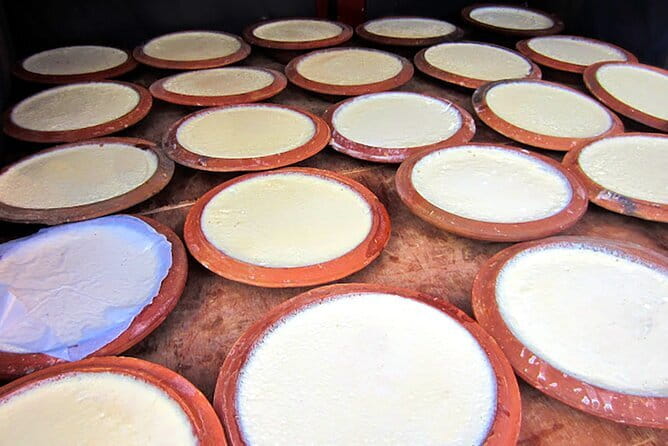
Juju Dhau live session (Bhaktapur)
You start with a live preparation session for Juju Dhau, Bhaktapur’s famous antique dish. The best part is that it’s not framed as a vague food stop. You’re learning what goes into the dish right where locals make it. For you, that means you’ll know what you’re tasting later and why it’s considered special in the Newar food culture.
Tip: if you’re sensitive to dairy-based foods or new flavors, tell your guide. Food tasting time is described as optional, so you can join or watch, depending on your comfort.
Siddha Pokhari (historic pond near Durbar Square)
Next you head to Siddha Pokhari, a historic pond adjacent to the entrance of Bhaktapur Durbar Square. It’s described as believed to have existed since long ago, and that matters because ponds and water features in these towns are not just scenery. They connect to how people lived, prayed, and gathered around the city.
This stop is short, about 30 minutes, so it works as a breather before the bigger “anchor” sites.
More of Patan and its courtyards:
- Kathmandu: Private Patan and Bhaktapur Sightseeing Tour
★ 4.7 · 64 reviews - Patan and Bhaktapur City Full Day Tour
★ 5.0 · 24 reviews - City tour of Bhaktapur and Patan Durbar Square
★ 4.5 · 20 reviews - Patan Heritage Tour – Private/Small Group
★ 5.0 · 14 reviews
Pottery Square via Barahi Agam Ghar
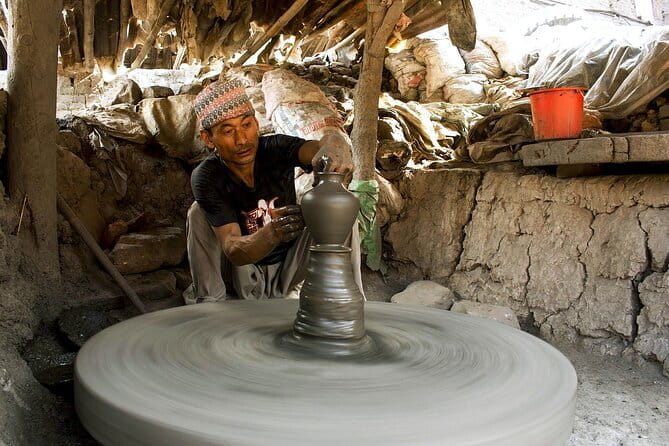
Then it’s on to Pottery Square, reachable on foot from the Durbar Square area. This is one of the most practical stops on the whole day because you see pottery activity while you’re still in the old-town walkable zone.
The tour frames it as lively pottery work with locals active in the square. Even if you do not buy anything, it’s a good place to observe how craft and community space overlap in Bhaktapur.
Bhaktapur Durbar Square (UNESCO world heritage recognition)
After that, you get the big one: Bhaktapur Durbar Square, an ancient palace complex that received UNESCO world heritage status in 1979. This is where you see the palace layout and temple architecture that gives Bhaktapur its reputation.
What I like about having a guide here is interpretation. You don’t just see buildings. You understand the layout and how the religious and civic spaces connect.
Chandeshori temple area, Newari food tasting chance, and more temples
The itinerary continues with Chandeshwori shrine (described as a three-story pagoda style) and a chance for local food tasting. Then there’s Dattatreya Temple via Khacha Pokhari, with a legend connected to King Yaksha Malla and a build date placed in the 14th century, followed by Navadurga temple on the outskirts for a protective-temples context.
Here’s the practical angle: these smaller temple stops add variety and depth. They also prevent Day 1 from feeling like only a long museum visit.
A possible drawback: by the end of Day 1, you’ll likely be temple’d out in the best way, but it can also mean fatigue. Pace yourself and take the optional tasting thoughtfully.
Day 2 in Patan: Golden Temple, Durbar Square, and Workshop-Style Craft Time
Day 2 shifts to Patan (Lalitpur). Patan is the place I’d send a craft-leaning traveler. The route keeps you moving through sacred sites, then circles back through areas where you can see artistry still in motion.
Patan Dhoka gateway to old city
You begin at Patan Dhoka, the gateway to Patan. Gateways matter in cities like this because they set your orientation for the rest of the day. You’re entering the old city fabric, not just arriving at isolated monuments.
Pimbahal Stupa and Jagamadu Pond
Next comes Pimbahal Stupa, described as significant for Buddhist pilgrims, with Jagamadu Pond next to it. This is a nice spiritual pause. It’s also a good moment to look at the relationship between stupa space, pond space, and how people move between them.
Nagbahal Hiti (Elhānani Hiti) drinking fountain
Then you visit Nagbahal Hiti, also known as Elhānani Hiti, believed to date back to the 8th century and still used for cultural events. Water points like hiti are an underrated lens into daily life. Even if your first instinct is, this is smaller than the durbar squares, these are the places where culture keeps functioning.
Golden Temple (Hiranya Varna Mahavihar)
The day’s major highlight is the Golden Temple, known as Hiranya Varna Mahavihar, a Newari Buddhist monastery built in 1409. The tour notes that it is not entirely made of gold, and the nickname is tied to tourism and naming shortcuts.
I like this stop because it keeps expectations realistic. You’re getting architecture, carving, and religious significance. You’re not only chasing a literal gold surface.
Kumbheshwor Temple
Afterward you go to Kumbheshwor Temple, with documentation reaching back to the late 14th century and references to historians like Bernier, Dowman, Hutt, and Sluss. That detail matters because it tells you the site has been studied, not just locally revered.
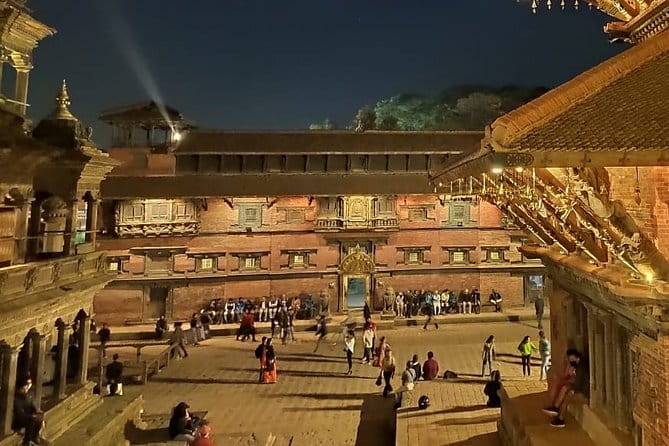
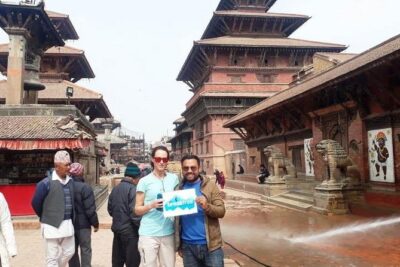
Patan Durbar Square (royal palace complex)
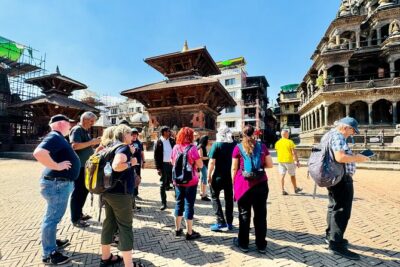
Then comes Patan Durbar Square, the royal palace area set over a dense cluster of temples. It’s described as possibly the most visually impressive area in the old city cluster, and the “packed” nature is part of what you’re paying for with a guided route. You can understand the temple density without getting lost.
Golden Fountain and local art interpretation
You also stop at the Golden Fountain, with mention of an art expert, Gautama Vajracharya, who studied it extensively, including the crafting of the spout. Even though the description is short, it’s a hint that you’re not just walking past things. You’re hearing specific interpretation.
Mahaboudha Temple (terra-cotta look)
Next is Mahaboudha Temple, built in the 14th century, known for clay brick construction and terra-cotta art, plus a distinctive form compared with surrounding pagodas.
This stop gives you variety in texture and visual style. It’s a good counterpoint to the durbar square concentration.
Rudra Varna Mahavihar, Oku Bahal
Later you explore Rudra Varna Mahavihar in Oku Bahal, described as having three courtyards with distinct features. Courtyards are a big deal in these towns. They shape movement, daily use, and the feel of the monastery complex.
Old-town woodwork and Shilpakar families
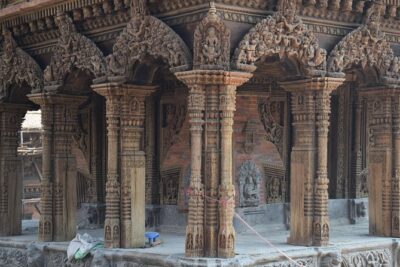
The final Patan segment in the itinerary focuses on narrow alleys and woodwork by Shilpakar families, with a time block just for observing craftsmanship.
Now, here’s where the tour’s “authentic local” promise turns practical: you’re in the area where traditional artisans work. The overview also mentions religious idol hand-carving sessions in Patan, and while the itinerary lists craft observation by Shilpakar families and temples, the theme is consistent: you’re meant to see craft as a continuing trade, not a staged souvenir moment.
If you’re shopping, do it with your eyes first. Patan’s best value is understanding what you’re buying, not just buying quickly.
Day 3 in Kathmandu: Durbar Square to Swayambhunath to Boudhanath to Pashupatinath
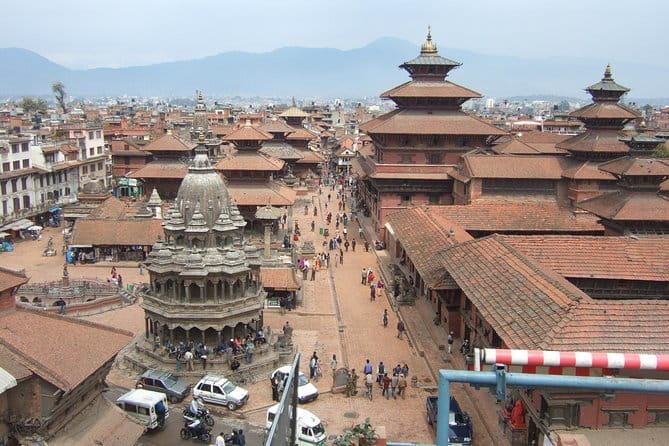
Day 3 is Kathmandu proper, and it’s the longest “sacred sweep” of the trip. It’s also where the tour combines major monuments with neighborhood context.
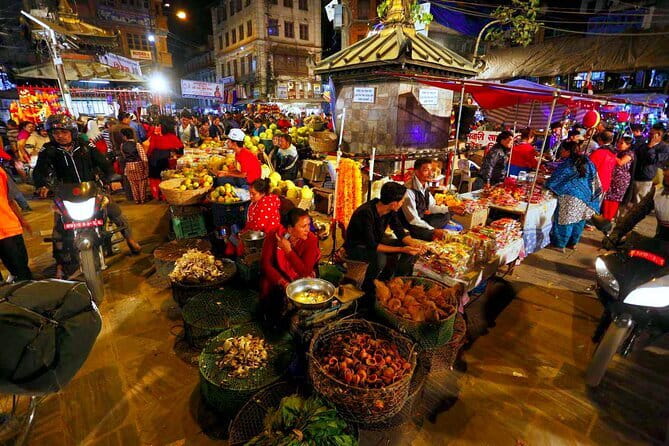
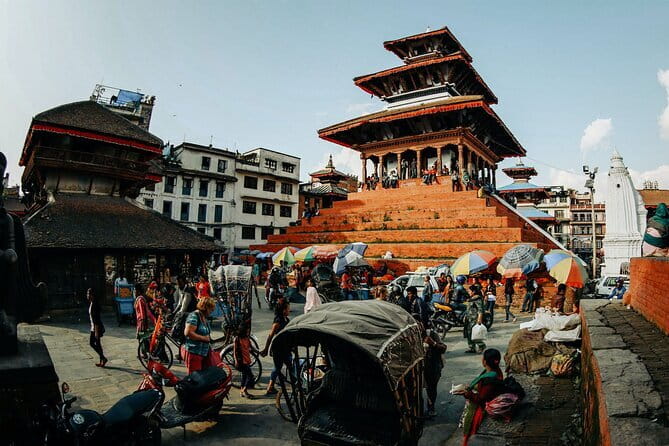
Kathmandu Durbar Square, Thamel walk, Asan Tole shopping lanes
You start with a walk through Thamel and narrow alleys of Asan Tole, moving toward Kathmandu Durbar Square and Newroad Gate.
The practical reason I like this setup: it helps you get your bearings fast. You’re not dropped in the middle of a big ticket site without orientation. And Asan Tole is specifically described as a popular local shopping spot, so you get to see everyday market energy before you switch into temple mode.
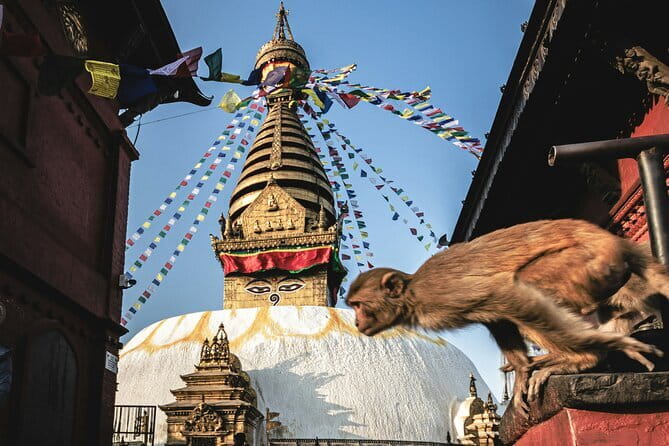
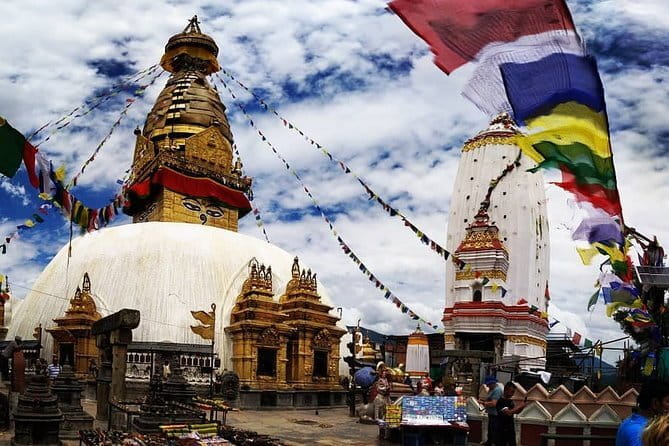
Swayambhunath Stupa
Next you head to Swayambhunath, one of Kathmandu Valley’s architectural marvels, with the stop time set to about an hour. It’s a stupa visit with big views over the valley area.
Budhanilkanth Temple (Jal Narayan Temple)
Then you visit Budhanilkanth Temple, also called Jal Narayan Temple. It’s described as tranquil, a spiritual and cultural heritage site in the valley.
This stop is one of the better “reset points” because the description focuses on the peaceful setting rather than heavy monument crowds.
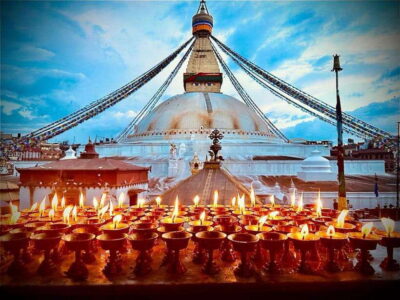
Boudhanath (Buddha Stupa)
After that you drive to Bouddhanath stupa (called Buddha Stupa in the itinerary). The tour frames it with historical context, mentioning an earlier stupa likely built after AD 600 when Tibetan king Songtsen Gampo converted.
Two hours here is useful. You have time to walk the stupa perimeter and watch how pilgrims move, without feeling like you’re sprinting.
Pashupatinath Temple on the Bagmati River
Then it’s a drive to Pashupatinath Temple, a worship place in Kathmandu Valley on the Bagmati River, on the eastern outskirts.
This stop is important. It’s one of those places where the meaning is bigger than the photo. Since the itinerary gives a dedicated time block, you’re not forced into a rushed pass-by.
Thamel and Jhamsikhel nightlife option with VIP line access
Finally, you end with Thamel and Jhamsikhel options. The tour notes a choice to experience nightlife, and that you’ll have escorted VIP line access through restaurants, pubs, clubs, and streets there.
One caution: nightlife time is not included in the tour price as a separate fee, but the tour describes the escorted access. Plan to spend your own money on food and drinks.
What the Price Really Buys You at $385 Per Person
At $385 per person for about three days, the math only works if you actually use the inclusions. This tour includes:
- Private transportation and an air-conditioned vehicle
- All fees and taxes, including entrance fees and environment management fees for the mentioned attractions
- A bottle of water per day
- A professionally certified local tour leader
- A mobile ticket (as described in the tour features)
- Group discount availability (not a promise for every traveler, but listed)
Where this becomes good value is the combination: guided interpretation plus admissions plus transport. If you were to piece together transport and pay entrances on your own across three cities, the costs creep fast.
The main cost you still own is food. Accommodation is also not included, so you’ll be choosing the hotel plan that fits your budget.
Logistics That Affect Your Comfort (And Your Photos)
This trip is structured and private, meaning only your group participates. Private usually means you can stick closer to the pace set by the guide and avoid the “everybody stop here” feeling.
Start time is 9:15 am, so you’ll want to treat mornings seriously. Kathmandu Valley days can be unpredictable with walking and light. Starting on schedule helps.
A practical note from the tour structure: public toilets are available to use. Still, plan for short breaks. Temple-heavy days can make you wish you’d timed your snack earlier.
Also, service animals are allowed, and most travelers can participate. If you have mobility issues, you’ll want to discuss it before booking because the itinerary includes multiple temple steps and short walking segments in old-town lanes.
Should You Book It? My Straight Talk
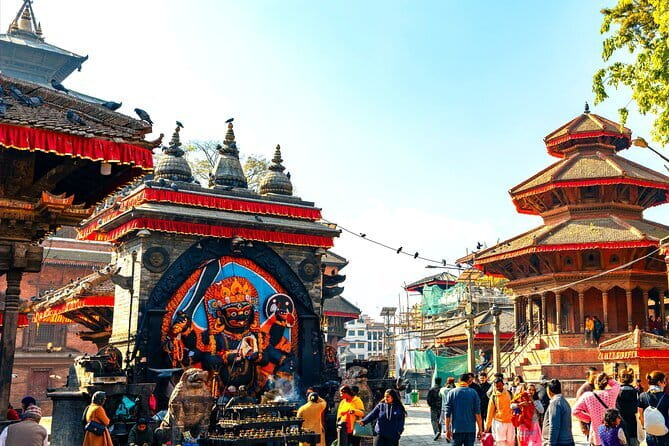
Book it if you want three things at once:
- UNESCO coverage across the Kathmandu Valley region with a schedule that hits the major sites
- Real local culture, especially Juju Dhau in Bhaktapur and craft-focused stops in Bhaktapur and Patan
- A native-led guide with named local expertise like Nirajan, plus the team approach shown in the feedback you have shared
Skip or rethink it if:
- You hate packed days and you only want slow, single-site wandering.
- You want a trip where food is fully included, because food tasting is described as optional and food is not listed as included.
If your goal is to feel what these cities are like, not just tick landmarks, this is a strong choice. The tour’s biggest strength is not the list of famous places. It’s the way it mixes sacred sites with everyday craft and local food moments so your days in Kathmandu Valley feel connected.
FAQ
What is the duration of the tour?
The tour is listed as 3 days (approx.).
What time does the tour start?
The start time is 9:15 am.
Is pickup offered?
Pickup is offered, according to the tour summary.
How much does the tour cost?
The price is listed as $385.00 per person.
Are entrance fees included?
Yes. All entrance fees and environment management fees for the attractions in the itinerary are included.
Is food included in the price?
Food is not included. The guide will advise for the best experience.
Is transportation included?
Yes. Private transportation and an air-conditioned vehicle are included.
Is the tour private?
Yes. It is a private tour/activity, and only your group will participate.
More UNESCO World Heritage Sites in Kathmandu
- Private Kathmandu Sightseeing Tour | UNESCO World Heritage sites
★ 5.0 · 756 reviews - Kathmandu: 7 UNESCO Sites with Lunch
★ 4.8 · 744 reviews - Kathmandu: Full Day 7 UNESCO Tour with Lunch – Private/Group
★ 5.0 · 415 reviews - Kathmandu: Full Day Top 4 UNESCO Tour with Lunch – Private/Group
★ 5.0 · 269 reviews
Latest Kathmandu write-ups
- Langtang Valley Trek★ 5.0 · 3 reviews
- Khopra Danda Trek★ 5.0 · 3 reviews
- Langtang Valley Trek from Kathmandu★ 5.0 · 3 reviews
- 5 night / 6 days Kathmandu Nagarkot Chitwan Pokhara tour★ 5.0 · 3 reviews
- Nepal Highlights Tour: 5 Nights 6 Days Kathmandu & Pokhara Tour★ 5.0 · 3 reviews
- Kathmandu Valley Private Day Tour★ 5.0 · 3 reviews
- Conquer the Himalayas: The Ultimate 16-Day Annapurna Circuit Trek★ 3.5 · 3 reviews
- Kathmandu Heritage Day Tour★ 5.0 · 3 reviews
UNESCO World Heritage Sites, compared.
Private Kathmandu Sightseeing Tour | UNESCO World Heritage sites
Read our review →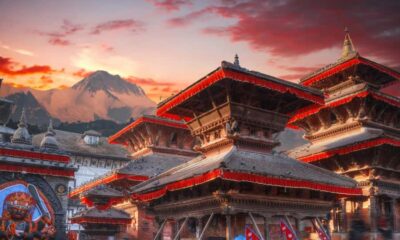
Browse the lists this tour appears in