
Reviewed · DURBAR SQUARES
Nagarkot Sunrise, Bhaktapur and Patan Durbar Square Tour in Kathmandu
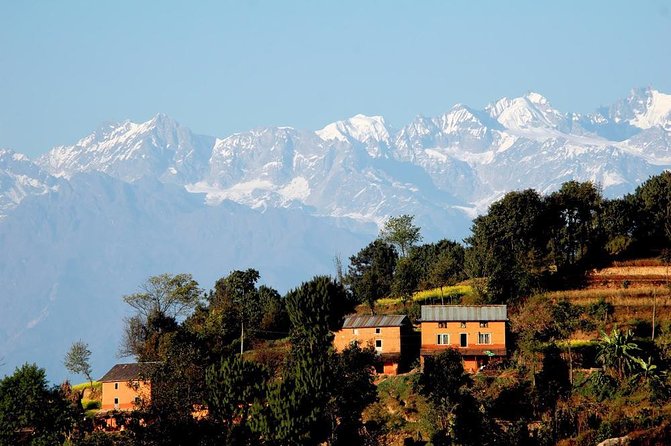
Nagarkot sunrise is one of those Kathmandu Valley experiences that feels like it has only two requirements: time and a clear sky. Starting before dawn, you ride up to Nagarkot View Tower to catch the first light on the Himalayan range, and on good days you can even see all the way toward Everest.
I especially like that the day runs with a professional tour guide and private vehicle, so you are not stressed about timing or roads before sunrise. I also like that the stops are spread across Bhaktapur and Patan, including major temples and palace courtyards instead of just quick photo stops.
The main drawback is the early start at 4:00 am, plus sunrise is weather-dependent, so clouds can change the whole mood of the morning.
Key highlights that make this tour worth your morning
- 4:00 am start so you are in place before the light show begins
- Private vehicle plus hotel pickup and drop-off inside the Ring Road area
- Nagarkot View Tower sunrise spot with an included ticket and about 45 minutes to watch
- Bhaktapur Durbar Square and Patan Durbar Square as UNESCO World Heritage Sites
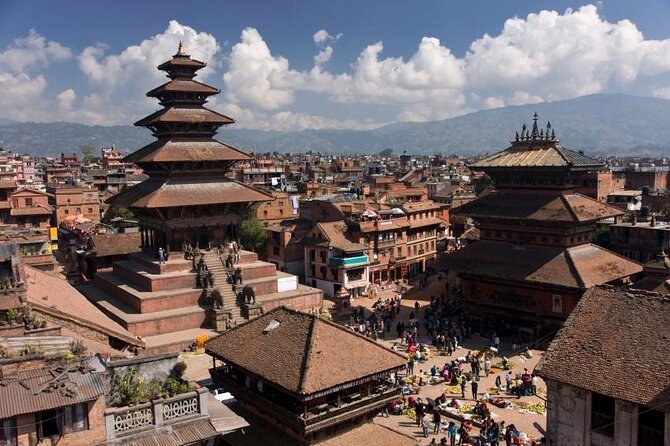
- Cultural temples and palace details, including Nyatapola Temple, Dattatreya Temple, and the 55 Window Palace
- Extra context built in, since the guide explains what you are actually looking at, not just where to stand
Why Nagarkot sunrise paired with Bhaktapur and Patan makes sense
This is a smart full-day combo because it solves two different problems tourists often face in Kathmandu. Sunrise at Nagarkot is logistics-heavy, yet it is also the kind of thing you do not want to wing with public transport at 4:00 am. Then, once the morning pressure is gone, the Durbar Squares in Bhaktapur and Patan give you the kind of architecture that rewards slow attention.
What you get is a morning tied to the mountains, followed by a day tied to stone, wood, and ritual life. You are looking at pagoda-style temple design, carved palaces, courtyard layouts, and sacred ponds, all in one schedule.
And yes, the day is long, but it is long on variety. You are not doing ten hours of the same thing.
More sunrises from Nagarkot:
- Nagarkot Sunrise View and Day Hiking from Kathmandu
★ 5.0 · 471 reviews - Private Bhaktapur and Nagarkot Day Tour From Kathmandu
★ 5.0 · 305 reviews - Kathmandu: Nagarkot Sunrise View & Morning Hike with Lunch
★ 4.9 · 188 reviews
The 4:00 am reality check (and how to enjoy it anyway)
The tour start time is 4:00 am, and you will be picked up early before dawn. That means you should plan to be packed the night before, with layers ready. Early mornings up in the hills can feel cooler than what you are used to down in the city.
Timing is also the point. You are driven from Kathmandu toward Nagarkot so you can reach the View Tower when the first light breaks over the range. When it works, sunrise is almost hypnotic. When it does not, at least you have a guided day of UNESCO monuments to keep things moving.
Also note what is not included: food and drinks. You will want to either eat before pickup or budget for snacks and water during the day.
Stop 1: Nagarkot View Tower sunrise and the Everest on clear days moment
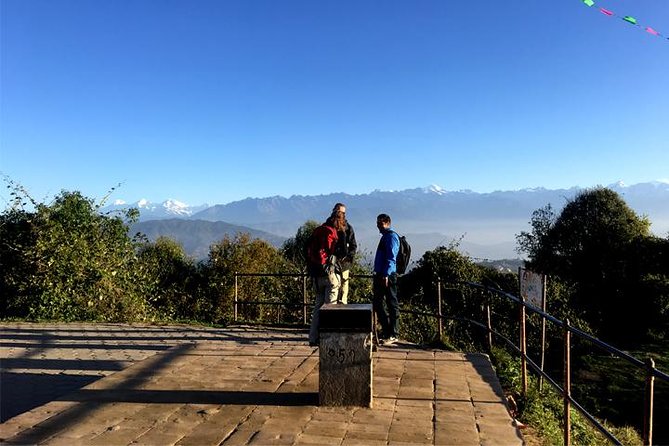
Nagarkot is famous for sunrise and sunset views, and this morning is built around that reputation. You will arrive at Nagarkot View Tower and spend about 45 minutes there. The ticket is free for this stop, so you can focus on the sky instead of checkout lines.
What you are trying to catch is the Himalayan horizon as the light changes. This is where the clear-day factor matters. The tour description specifically promises the possibility of seeing all the way toward Everest on clear days. Translation: if the air is clear, you get a dramatic sense of scale. If clouds roll in, you will still get hilltop light and mountain silhouettes, just with less distance.
I also like that the schedule gives you time. You are not rushed out in two minutes for a single frame. You get a real chance to watch the color shift.
Practical note: sunrise is not just sight. It is also comfort. Bring a warm layer, keep your phone charged, and be ready for the fact that it will feel very early and very quiet.
Bhaktapur Durbar Square: pagoda temples, carved palace corners, and Siddha Pokhari
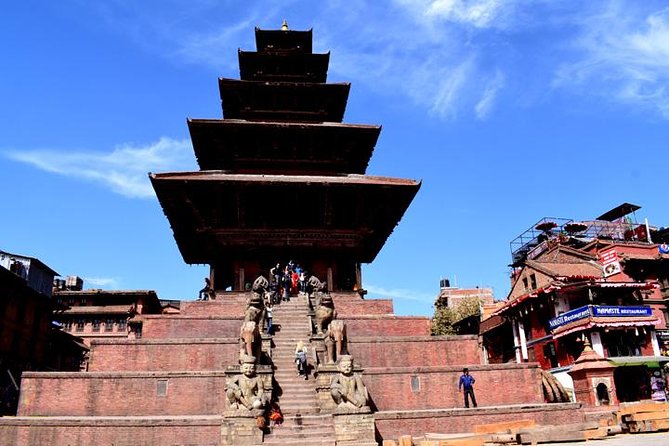
After Nagarkot, you head to Bhaktapur for the Durbar Square area. Bhaktapur is often called the City of Devotees, and the feeling matches the name. Much of the old-style urban fabric remains, and walking around here feels like stepping into a living museum of Newari craftsmanship and city life.
At Bhaktapur Durbar Square, you get about 30 minutes. Admission here is not included, so factor that in when you think about total cost. The big payoff is the density of important buildings in a relatively compact space.
From there, you move to a series of temple stops that are all about specific design and detail.
More of Bhaktapur:
- Day Trip to Bhaktapur and Panauti from Kathmandu
★ 5.0 · 184 reviews - Bhaktapur & Patan Durbar Square Day Tours
★ 5.0 · 122 reviews - Nagarkot Sunrise & Bhaktapur UNESCO Heritage Private Tour
★ 5.0 · 66 reviews - Kathmandu: Private Patan and Bhaktapur Sightseeing Tour
★ 4.7 · 64 reviews
Nyatapola Temple: the five-tier showstopper
Nyatapola Temple is a five-leveled pagoda-style structure. It is described as one of the tallest pagodas in the region, and it is known for superb sculpture. This is the sort of building where you can look up, count the levels, and still find new carvings as you keep walking.
Ticket for this stop is free, and the visit is about 15 minutes, which is just enough time to get oriented and appreciate why it is considered a standout example of craftsmanship.
Dattatreya Temple and the 55 Window Palace
Next comes Dattatreya Temple in Dattatreya Square. The description here is specific: it is believed to have been constructed with the aid of a single stem of a single tree. Even if you are not an architect, that kind of detail helps you see the temple as intentional, not random.
Then you reach the 55 Window Palace. It is called that for a reason, with 55 carved wooden windows. If you like seeing how woodwork and symmetry work together, this is a great stop. It is also a reminder that Durbar Squares are not only religious sites. They are palace-centered civic spaces too.
Both of these stops have free admission and short visit times, so you will feel the rhythm of the day without getting exhausted.
Siddha Pokhari: a pond break that still fits the cultural setting
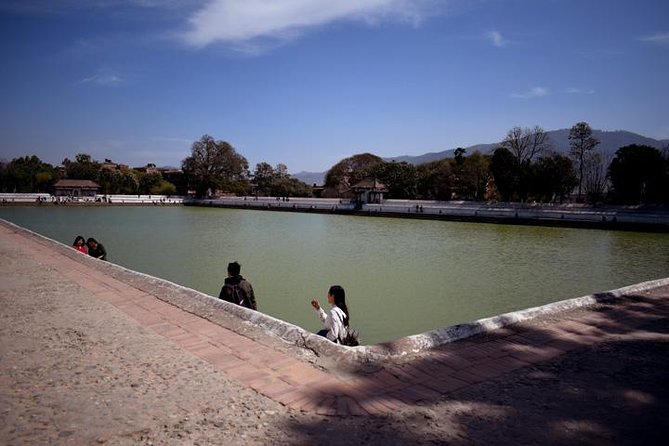
You also visit Siddha Pokhari, a human-made pond near the first city gate. The stop is about 15 minutes, ticket is free, and it is described as 171 meters long and 3 meters deep. That is a big scale for something that also functions like a local hangout.
I like including a pond in an itinerary because it gives your eyes a break from only stone and roofs. Plus it anchors you in the daily texture of the city, not just the headline monuments.
Stop 7: Patan Durbar Square and Newari architecture around the Malla palace court
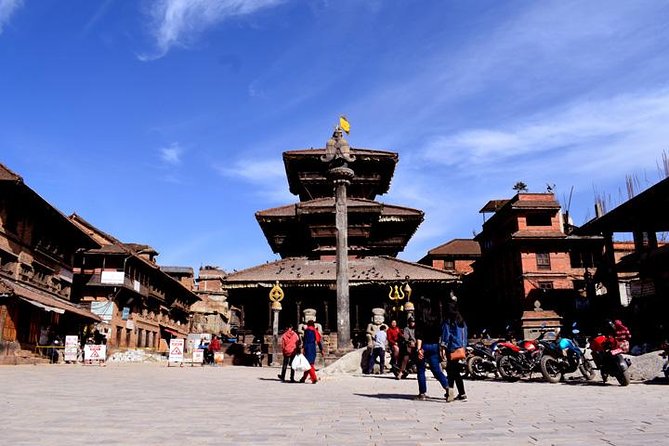
After Bhaktapur, you head to Patan, also known as Lalitpur. Patan Durbar Square sits in the town of Lalitpur, and the description highlights Newari architecture and the Newar community. You are stepping into the courtyard of the old Malla palace, which matters because it frames what you are seeing: this is palace space, temple space, and public space in one.
Your time here is about 30 minutes, and admission is not included. That means you should expect some additional entry-fee planning, depending on how the tickets are handled.
If Bhaktapur feels like a city of devotion, Patan feels like a city of craft. Look for the way structures relate to each other, and how courtyards turn architecture into a kind of stage.
Krishna Temple and Krishna Mandir: stone-built details you can actually read
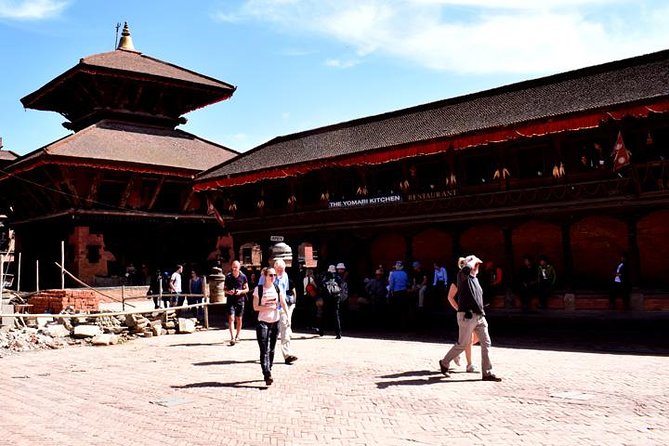
Patan has temple stops that lean hard into craftsmanship. You will see a Krishna Temple built through stones only, with 21 shrines and carvings.
Then later comes Krishna Mandir, described as constructed in the Shikhara style and made entirely of stone. Under its 21 golden pinnacles, the temple is laid out in three floors. The description also notes what is enshrined: the first ground floor has Krishna, and the second has Shiva.
This is one of the reasons this tour feels satisfying even if you are not trying to memorize temple names. The itinerary gives you enough structure to understand what you are looking at, and the guide helps you make sense of the layers.
Ticket for Krishna Mandir is listed as free, and the visit is about 15 minutes.
The Golden Temple (Hiranya Varna Mahavihar) in Patan
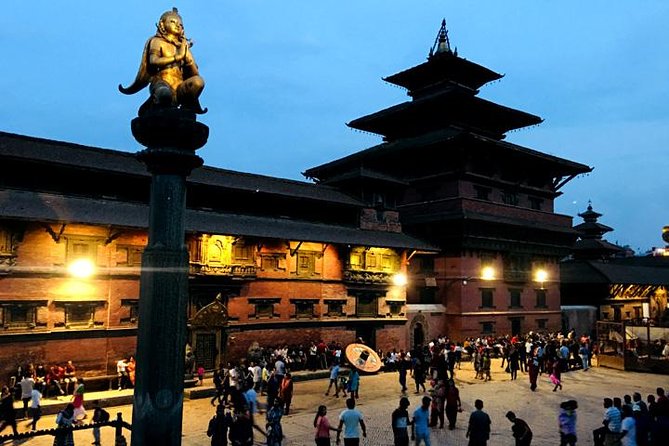
Next is the Golden Temple, also known as Hiranya Varna Mahavihar. The description places it in the 12th century and notes decorated details in silver and gold protected decorations.
Your visit here is shorter, about 10 minutes, and admission is not included. Because the time is brief, it helps to focus on scale and symbolism rather than trying to take in everything at once. Think of this stop as a highlight waypoint in the Patan circuit, not a slow museum experience.
Patan Museum: turning what you saw into context
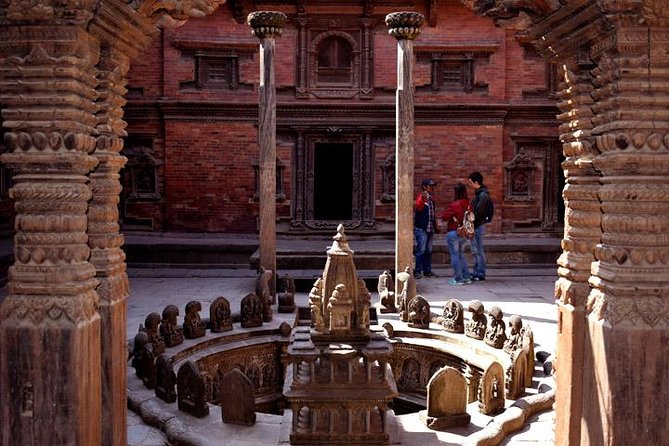
After the temple time, you move to Patan Museum. The stop lasts about 30 minutes, and admission is not included.
This is where the day gets more “why” and less “what.” The description says it includes information about lifestyle and history, particularly about historical civilization. If temples and palaces felt like a beautiful puzzle earlier, a museum stop helps you connect the dots without requiring background reading.
I like having a museum in the middle of a temple-heavy day because it keeps you from feeling like you only got snapshots. It turns the architecture into understanding.
Price and value: what $130 buys, and what extra you should expect
The price is $130 per person for about 10 hours. For a full-day Nepal Valley circuit starting at 4:00 am, that price looks fair when you factor in what you receive.
You get:
- a private vehicle
- hotel pickup and drop-off inside the Ring Road
- a professional tour guide
Those three items are the real value. Sunrise is hard to manage on your own, and guided interpretation makes the UNESCO sites more rewarding. It is not just transportation, it is also translation and context.
What you will pay extra for:
- food and drinks are not included
- entry fees are listed as about USD 20 to 22 per person
So your true budget is closer to $150 to $155 once you add entry fees, depending on how the ticketing is collected on the day. Still, you are not paying separately for transport between distant stops, and you are not trying to piece together early-morning logistics.
If you are traveling as a pair or small group, the private setup can feel even better. The tour also mentions group discounts, which can help on cost.
What the best reviews tell you to prioritize on the day
Two things come through strongly in the feedback for this specific tour.
First, people love the driver and the sunrise logistics. One review basically sums it up: getting up that mountain at dawn takes skill, and it worked smoothly. That is exactly why a private vehicle matters here. Sunrise is not the moment to discover your plan needs fixing.
Second, the guide’s personality and pacing matter. The feedback mentions a personable guide and enough time to actually view what is in front of you, not just rush through. That is a big deal for sunrise. If the schedule is too tight, you miss the point.
So, your job is simple: show up ready for the early morning, and let the guide set the tempo. If you want photos, say so early, then ask for a slower moment at the view tower.
Who should book this tour, and who might prefer something else
This is a strong fit if you:
- want a one-day UNESCO Kathmandu Valley experience without organizing separate trips
- care about sunrise, and you do not want to gamble with local logistics at 4:00 am
- like temples and palace courtyards, especially when a guide explains what you are seeing
It might be less ideal if you:
- hate early starts and prefer unhurried mornings
- are traveling on a very strict budget where you want zero extra costs beyond the main price
- want long museum time, since Patan Museum is about 30 minutes and several temple stops are short
Practical tips for a smoother day (no guesswork)
A few small choices will make this day much easier.
- Dress in layers. Early morning at Nagarkot can feel colder than you expect.
- Bring a light snack strategy. Since food and drinks are not included, plan for gaps between stops.
- Charge your devices before pickup. You will likely use your phone camera during sunrise.
- Use the guide’s context. When you hear the meaning behind a temple detail, the visit becomes more than visual sightseeing.
And one more thing. At Nagarkot, do not treat sunrise like a checkmark. Treat it like a slow show. Even if you do not see Everest, the changing light is still worth your attention.
Should you book this Nagarkot sunrise and UNESCO Durbar Squares tour?
Yes, if you want the best use of limited time in Kathmandu and you like structured sightseeing with a guide. The combination is efficient: sunrise logistics handled for you, then UNESCO sites plus standout temples in both Bhaktapur and Patan.
Book it especially if sunrise is a priority. The private transport, early start timing, and guided pacing are exactly what make this type of day feel effortless instead of stressful.
If you are not interested in sunrise, or if early mornings are a dealbreaker, you might consider a Durbar Squares-focused day tour instead. But if sunrise is on your wishlist, this one is a practical, high-value way to do it in a single shot.
FAQ
What time does the tour start?
The tour starts at 4:00 am.
Is hotel pickup and drop-off included?
Yes. The tour includes hotel pickup and drop-off inside the Ring Road.
Is this tour private?
Yes. It is private, and only your group will participate.
What is included in the price?
Transport by private vehicle, hotel pickup and drop-off (inside Ring Road), and a professional tour guide are included.
Are entry fees included?
No. Entry fees are not included, and they are listed as about USD 20 to 22 per person.
Are food and drinks provided?
No. Food and drinks are not included.
What happens if weather is bad for sunrise?
This experience requires good weather. If it is canceled due to poor weather, you will be offered a different date or a full refund.
More of the Three Durbar Squares
- Kathmandu Sunset Tour by Rickshaw Including Durbar Square Visit
★ 5.0 · 73 reviews - Old Kathmandu Walking Tour, Historic World Heritage Durbar Square
★ 5.0 · 22 reviews - Bhaktapur Old City and Durbar Square Half-Day Tour
★ 5.0 · 15 reviews - Private Half-Day Tour of Kathmandu Durbar Square and Swayambhunath Temple
★ 4.5 · 11 reviews
More of Patan and Its Courtyards
- Patan and Bhaktapur City Full Day Tour
★ 5.0 · 24 reviews - City tour of Bhaktapur and Patan Durbar Square
★ 4.5 · 20 reviews - Patan Heritage Tour – Private/Small Group
★ 5.0 · 14 reviews - Kathmandu and Patan Heritage and Living Goddess Experience Tour
★ 5.0 · 12 reviews
Latest Kathmandu write-ups
- 10 days Annapurna Base Camp Trek★ 5.0 · 5 reviews
- Visit Swayambhunath and Bauddhanath Stupa with Guide★ 5.0 · 5 reviews
- Langtang Trek from Kathmandu 7 Days★ 5.0 · 5 reviews
- 7 Day Kathmandu Pokhara Tour★ 4.5 · 5 reviews
- Island Peak Climbing with Everest Base Camp★ 5.0 · 5 reviews
- Chandragiri Hill Cable Car Tour with Hotel Transfers from Kathmandu★ 4.5 · 5 reviews
- Everest Mountain Flight★ 5.0 · 5 reviews
- Kathmandu city day tour (4 world heritage sites)★ 5.0 · 5 reviews
Durbar Squares, compared.
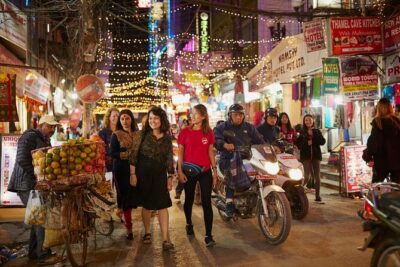
Kathmandu Sunset Tour by Rickshaw Including Durbar Square Visit
Read our review →
Old Kathmandu Walking Tour, Historic World Heritage Durbar Square
Read our review →
Patan & Bhaktapur Durbar Square Tour with Lunch – Private/Group
Read our review →
Private Half-Day Tour of Kathmandu Durbar Square and Swayambhunath Temple
Read our review →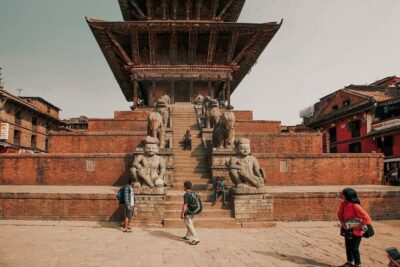
Browse the lists this tour appears in