Reviewed · BHAKTAPUR
Patan and Bhaktapur Boutique Tour
This tour is interesting because it stitches together two UNESCO cities in one long morning, with both major squares and the quieter spots that explain Newar life. You get a convenient start from central Kathmandu, plus a smooth ride that keeps the day from turning into chaos. I like the small group feel and the pickup around Boudha and Thamel that saves you time before you even start walking.
I also like that the route balances headline sights with hands-on culture, like the water spout at Manga Hiti and the craft watching at Pottery Square. The main drawback is the money and timing around entrances, especially the Patan and Bhaktapur Durbar Square cash ticket you pay at the gate, and the fact that lunch is not included.
Key highlights you should know before you go
- Two UNESCO Durbar Squares in one day, plus the Newar details you might miss without a guide
- Patan Dhoka, Asta Matrika paintings, a dramatic start right at the city gate
- Manga Hiti water spout carvings, a quick stop that turns into a great photo and story moment
- Serpent courtyard at Nag Baha Galli, tied to Samyak Mahadan every five years
- Pottery Square watching local artisans at work, not just browsing stalls
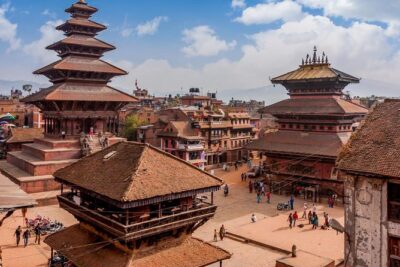
- Bhaktapur’s temple sequence, including Nyatapola Temple and the Peacock Window at Dattatraya Temple
A small-group Patan and Bhaktapur day, and why it works
This isn’t a slow, single-neighborhood wander. It’s a focused day that moves you through Patan (Lalitpur) and Bhaktapur with just enough time at each stop to understand what you’re looking at. For first-time visitors, that kind of structure is a gift. You get to see the big icons and still catch the small visual cues that make each place feel real.
The small-group size matters here. With a maximum of 10 travelers, you’re less likely to get dropped behind in lanes and courtyards. It also means your guide can actually manage attention, point you toward the right angles for photos, and keep everyone moving at a human pace.
You should still plan for a long day on your feet. The itinerary includes temple stairs and uneven stone surfaces in both cities, so moderate walking comfort helps.
More of Bhaktapur:
- Private Bhaktapur and Nagarkot Day Tour From Kathmandu
★ 5.0 · 305 reviews - Day Trip to Bhaktapur and Panauti from Kathmandu
★ 5.0 · 184 reviews - Bhaktapur & Patan Durbar Square Day Tours
★ 5.0 · 122 reviews
Pickup, van comfort, and how the day is paced
The day starts at 8:30 am. Your meeting point is Filli chai on Kathmandu Guest House Rd, and the tour ends back at the same meeting point. If you’re staying in central areas, the pickup from Boudha and the KGH Hotel area in Thamel is a practical advantage, since you do not have to fight traffic or negotiate rides just to begin.
Transportation is handled in an air-conditioned vehicle, with WiFi on board. That’s not just a comfort perk. In Kathmandu, having a reliable ride scheduled for one long day helps you stay on time for timed cultural stops, and it reduces the stress of guessing distances.
Time is built into the schedule. Each site has a set visit window, including a coffee and lunch break that is part of the overall duration, while lunch itself is not included in the tour price. In other words, you’ll get breaks, but you’ll also keep moving.
Patan Gate to Nag Baha Galli: the story of a city entrance and everyday beliefs
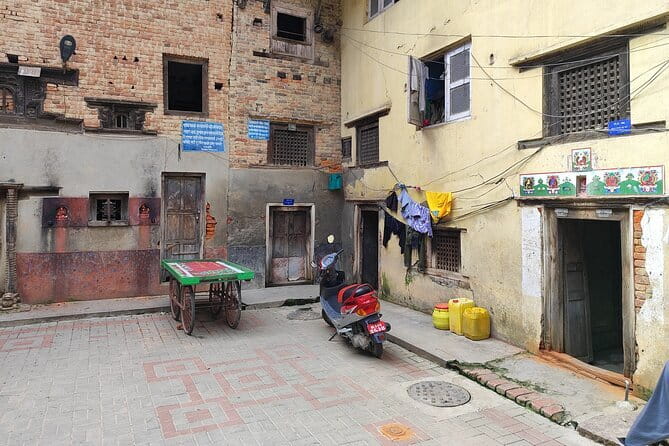
The tour begins at Patan Dhoka, the Patan Gate. It’s decorated with paintings of the Asta Matrika, the eight mother goddesses. This is a strong first stop because it frames Patan not as a museum, but as a living city where religious symbolism is visible at the threshold.
From there you move into Pimbahal. The focus here is how older communities cooked their food, fetched water, and rested. The guide also shares the story of Gaya Baje, a Hindu priest. Even if you only have a few minutes, the point is to make you notice daily infrastructure and small ritual roles, not just grand architecture.
Then comes Nag Baha Galli, a special courtyard dedicated to serpents. It’s linked with the Samyak Mahadan celebration of giving, held every five years. You might not be there during the festival, but that’s still valuable. The reason: it helps you understand why the space looks the way it does and why specific courtyards matter in Newar culture.
These early stops are also a rhythm check. You’re not forced into one big temple right away. You ease into the city, learn what to look for, and then your eyes get smarter before you reach the UNESCO squares.
Hiranya Varna Mahavihar and Manga Hiti: where you slow down on purpose
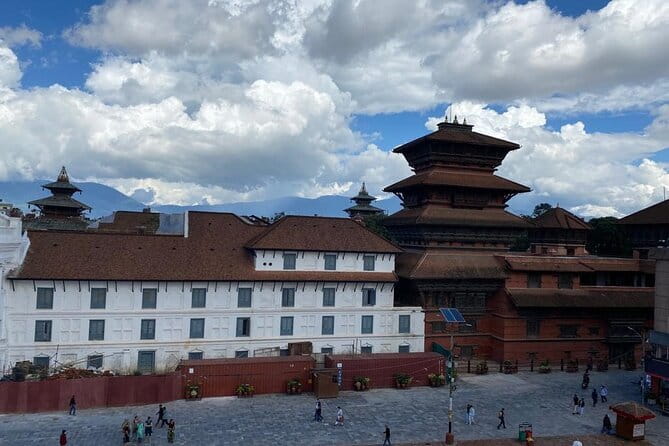
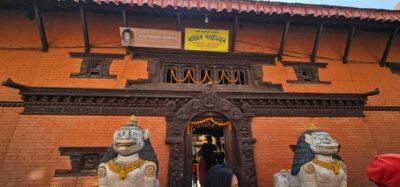
Golden Temple, officially Hiranya Varna Mahavihar, is one of the day’s spiritual highlights. It’s a three-story pagoda with a gilded roof and intricate carvings. The temple is dedicated to Gautam Buddha, which gives it a calmer feel than many sites that can be busy or loud.
Golden Temple’s admission is not included, so plan for a separate payment on the day. I treat places like this as a must-see in a short itinerary, because the payoff is not just the view. It’s the sense of symmetry and quiet that the building creates once you stand in front of it.
Right after that, you stop at Manga Hiti, also called Manga Dhara, a stone water spout built during the Lichhavi period. The best part is that this is not a famous “name” site for most visitors, yet it’s packed with detail. Carvings of gods and intricate design elements make the water spout feel like part shrine, part public utility.
This is the kind of stop that makes your day feel more complete. Instead of only photographing temples and squares, you also see how everyday life has long revolved around shared water systems.
More of Patan and its courtyards:
- Kathmandu: Private Patan and Bhaktapur Sightseeing Tour
★ 4.7 · 64 reviews - Patan and Bhaktapur City Full Day Tour
★ 5.0 · 24 reviews - City tour of Bhaktapur and Patan Durbar Square
★ 4.5 · 20 reviews - Patan Heritage Tour – Private/Small Group
★ 5.0 · 14 reviews
Patan Museum and the UNESCO mindset: how to get more from 30 minutes
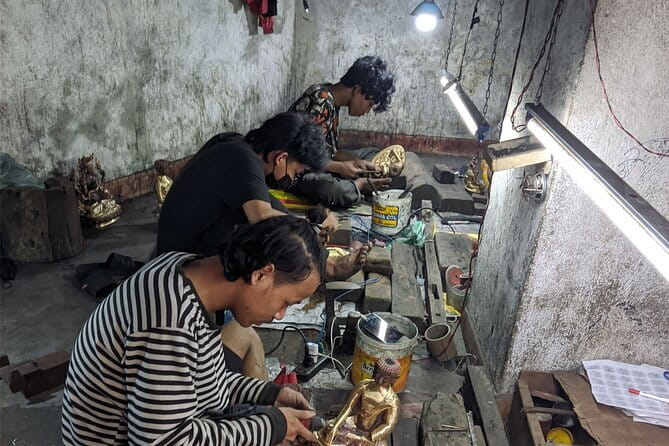
Patan Museum is housed in a restored Malla-era palace. It’s a strong contrast to the outdoor stops, because it helps you understand the art and craft traditions you’re seeing in the streets. Admission is not included, so it’s a pay-as-you-go element. If you like context, this is worth considering.
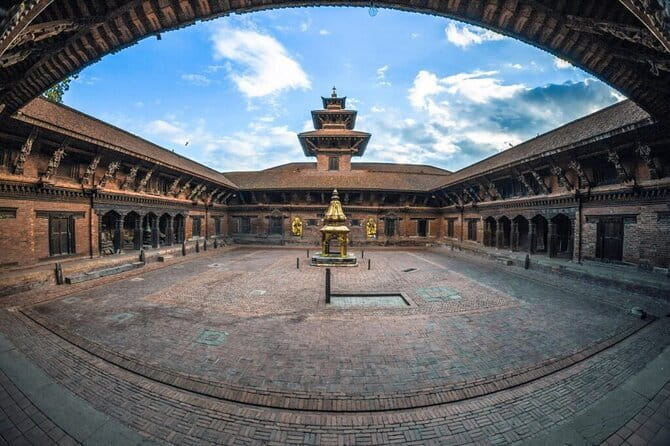
Then comes Patan Durbar Square, a UNESCO World Heritage Site and the heart of royal Malla-era presence. Your time here is about 30 minutes. That’s not much, but you can make it count if you know what you’re looking for.
In Durbar Square, focus on the relationship between carved temples and open courtyards. Newar architecture tends to be detailed in tiers, with windows, struts, and doorways that tell you where to look next. If you let your eyes bounce, you’ll get a better sense of how the square functions as a complex, not just a single building.
Also, remember the practical side: entrance to Durbar Square is not included, and you need cash. The suggested payment is NRP 1000 (about US$9). There’s also a recommendation to pay a minimum of NRP 100 as a donation to the Royal Kumari. If you don’t carry cash, you’ll lose time at the gate and possibly feel rushed.
Bhaktapur Durbar Square: why the next city feels different
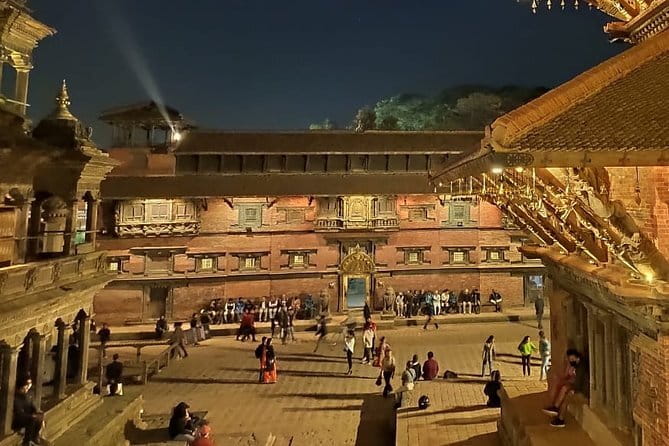
After Patan, you head to Bhaktapur. The shift is immediate. Streets and courtyard layouts feel more compact, and the city’s temple rhythm becomes more noticeable as you move from one open space to another.
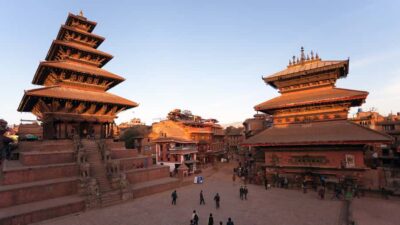
Bhaktapur Durbar Square is also UNESCO-listed. It reflects traditional Newar architecture and contains ancient temples and court-like spaces. Here again, your visit window is around 30 minutes, and that’s enough if you take a simple approach: choose one vantage point, scan for major temple forms, then let your guide point out the specific details you would otherwise miss.
A good guide will help you understand how the square’s design affects crowd movement and visibility. Without that, it’s easy to treat it like a photo stop and miss why people historically gathered in these exact spaces.
Pottery Square and craft watching in the middle of your route
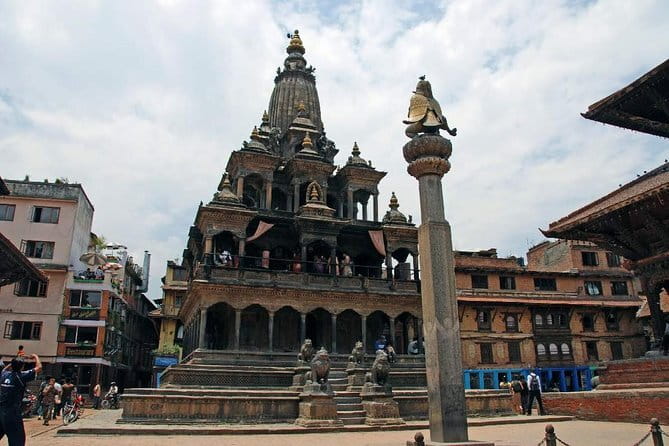
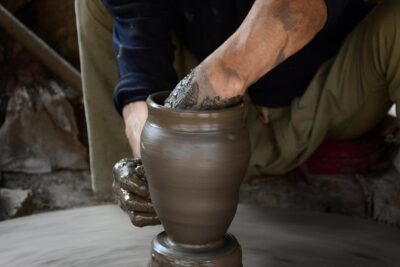
One of the day’s best value moments is Pottery Square. It’s lively and specifically tied to traditional pottery making. You’ll have about 30 minutes here, and the point is not only buying souvenirs. It’s watching artisans at work in the same kind of environment that supports the craft.
This stop works especially well when your brain is tired from temples and stairs. Pottery is tactile, visual, and easy to understand. You can watch hands at work, see how the process repeats, and notice how small design changes show up in finished pieces.
Just keep your expectations realistic. You might not see full production steps end to end in the short time window, but you will get a feel for the craft and for how deeply it’s embedded in daily life.
Taumadhi Square and Nyatapola Temple: Bhaktapur’s temple sequence
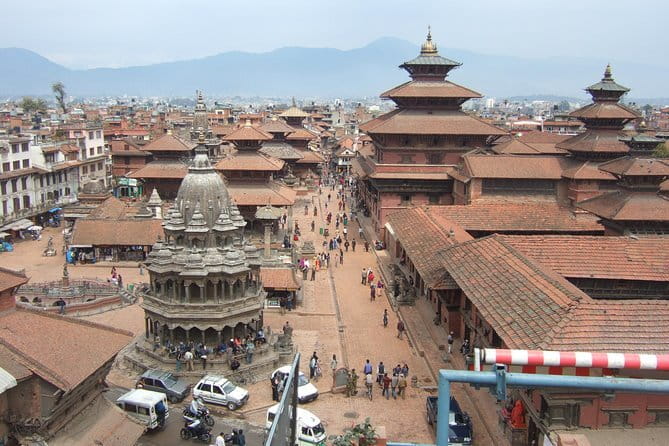
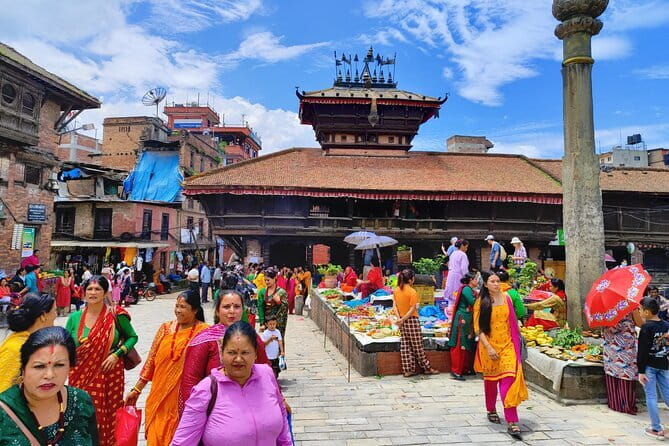
Taumadhi Square is known for the five-story Nyatapola Temple. It’s described as one of the tallest and most beautiful temples in Nepal, dedicated to the goddess Siddhi Lakshmi. The design is the main story here: you’ll see a temple that dominates the skyline, with layered structure you can track as you look upward.
Time at Taumadhi is about 30 minutes. If you climb or step into the viewing zones, give yourself a few extra minutes for slower walking and taking in the proportions. A lot of the impact of Nyatapola comes from stepping back and then looking up again, like you’re reading the building in vertical sections.
Admission is not listed as included here, so treat it as a possible pay-on-arrival stop. If the guide mentions an entrance ticket on the day, plan for it.
Dattatraya Temple’s Peacock Window: the detail stop that feels like a reward
Dattatraya Temple sits in Dattatraya Square. The temple is dedicated to a Hindu god who embodies the unity of Brahma, Vishnu, and Shiva. That is a strong concept, and it becomes easier to grasp when you see the architecture and the iconography connected to the idea.
The square is also famous for the Peacock Window. Even if you don’t know every symbol, you can feel why it’s called out. It’s the sort of detail that rewards attention. With the help of a guide, you can figure out what makes the window distinctive and why it’s worth pausing for rather than rushing past.
This is a great stop for anyone who likes the fine print of architecture. You’ll often get your best photos when you slow down here, not only at the biggest temples.
The final walk through Patan’s connected lanes
After Bhaktapur stops, the itinerary ends with a Patan segment called Patan (Lalitpur). This part focuses on narrow, connected pathways plus open spaces. You’ll be looking for small clusters of ancient palace elements, stupas, and peaceful temples.
This is more than filler. It ties the day together. Early on, you entered through a gate with symbolic paintings. Later, you see how sacred and practical spaces mix at the street level, where temples and stupas sit inside everyday routes.
You may also have chances to pause for refreshments as part of the day’s overall schedule, since the tour duration includes time for lunch and coffee stops even though lunch itself is not included in the price.
Price, entrances, and budgeting cash like a pro
The tour price is $40 per person, with a 9 hours 30 minutes duration including transport and time for lunch and coffee stop. WiFi and an air-conditioned vehicle are included, along with a guide and mobile ticket.
For many visitors, the value question comes down to entrance fees and how much time you actually spend at the sites. Durbar Square entrance requires cash, with the guide recommending payment of NRP 1000 (about US$9). There’s also an optional donation recommendation to the Royal Kumari of at least NRP 100.
Because lunch is not included, budget for a meal on your own during the included break window. If you’re trying to eat cheaply and move fast, pick a spot close to where you’ll be dropped, so you don’t lose tour time.
My practical advice: bring cash in Nepalese rupees specifically. Even if you can pay in some other way, cash is what the itinerary indicates for Durbar Square entrances. You’ll feel calmer when you’re not hunting for an ATM while everyone else is lining up.
What this tour feels like in real life, and who it suits
This day is a good fit if you like a tight route and you want to see more than one major UNESCO site without self-planning. If you’re traveling with only a day or two in Kathmandu, this is an efficient way to understand the Newar urban design in both cities.
It’s also a good option for people who enjoy a guide-led approach. The itinerary includes courtyard stories like Gaya Baje and Nag Baha Galli’s Samyak Mahadan connection. Those details turn sites from scenery into meaning.
One name that shows up in the experience feedback for this area is Shreya Karki, described as bringing culture, history, and traditions to life. Another guide, Santosh, is also mentioned for being charming. If you get either of those guide styles, expect a focus on context and clear explanations, not just where to stand for a photo.
Who should be cautious? If you have trouble with stairs or long walking stretches, you might find the temple sequence demanding. The tour notes a moderate physical fitness level, and it includes temple areas in both cities. Plan for comfortable shoes and take your time at the steps.
Should you book this Patan and Bhaktapur boutique tour?
If you want a structured day with strong value for money, I would book it. At $40, you’re paying for transportation, a guide, and a full itinerary that hits UNESCO squares plus craft and daily-life stops. The route makes sense when you only have one day to cover Patan and Bhaktapur, and the 10-person cap helps the day feel controlled.
Skip it only if you hate walking, dislike paying cash entrance fees at multiple stops, or you want a totally unstructured day where you linger for hours in one location. For most people, though, this is a smart, efficient way to see two of Nepal’s most important cultural cities without getting lost in the logistics.
FAQ
What is the tour price and duration?
The price is $40.00 per person, and the duration is about 9 hours 30 minutes, including transportation and time for a lunch and coffee stop.
Where does the tour start and when?
It starts at 8:30 am, meeting at Filli chai on Kathmandu Guest House Rd, Kathmandu 44600. The tour ends back at the same meeting point.
Are entrance fees included?
No. Entrance to Durbar Square is not included and must be paid in cash at the entrance. Entrance to Golden Temple and Patan Museum is also not included.
Is lunch included?
No. Lunch is not included, but the total duration includes time for a lunch and coffee stop.
How big is the group?
The tour has a maximum of 10 travelers.
What pickup areas does the tour offer?
Pickup is available from Boudha and from KGH Hotel in the center of Thamel.
What are the age and fitness requirements?
The tour suggests a moderate physical fitness level. The minimum age is 9 years, and children under 9 are not allowed for insurance reasons.
Latest Kathmandu write-ups
- Langtang Valley Trek★ 5.0 · 3 reviews
- Khopra Danda Trek★ 5.0 · 3 reviews
- Langtang Valley Trek from Kathmandu★ 5.0 · 3 reviews
- 5 night / 6 days Kathmandu Nagarkot Chitwan Pokhara tour★ 5.0 · 3 reviews
- Nepal Highlights Tour: 5 Nights 6 Days Kathmandu & Pokhara Tour★ 5.0 · 3 reviews
- Kathmandu Valley Private Day Tour★ 5.0 · 3 reviews
- Kathmandu Heritage Day Tour★ 5.0 · 3 reviews
- Conquer the Himalayas: The Ultimate 16-Day Annapurna Circuit Trek★ 3.5 · 3 reviews