
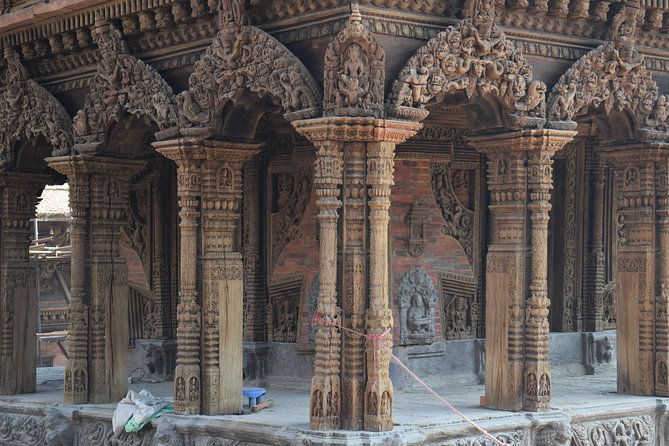
Reviewed · UNESCO WORLD HERITAGE SITES
UNESCO Seven World Heritage Tour in Kathmandu
This Kathmandu Valley day loop is interesting because it aims to fit all seven UNESCO World Heritage sites into one long, guided outing. I like that the private car cuts down the back-and-forth between hills and old squares, and you also get an English-speaking guide such as Shanti or Pankaj, both repeatedly praised for keeping things organized.
I also like the included entry fees for the UNESCO stops, so your time goes toward looking and learning, not paying at every gate. The main drawback is that it is a long day with lots of walking and stairs, including major stair climbs, so you will want comfortable shoes and water ready.
Key highlights to look forward to
- All seven UNESCO Kathmandu Valley sites in one day so you do not have to pick and choose
- Hotel pickup and drop-off plus private vehicle which saves serious time in Kathmandu traffic
- English-speaking guide with flexible pacing that helps you enjoy the sites instead of just ticking boxes
- Swayambhunath’s views and stairs plus prayer wheels and mixed shrine atmosphere
- Bhaktapur temple and palace details like Nyatapola’s tiers and the 55 Window Palace
- Longer stop time at the big three sacred hubs: Changu Narayan, Pashupatinath, and Boudhanath
Why This Kathmandu Valley UNESCO Day Tour Fits So Many Sites
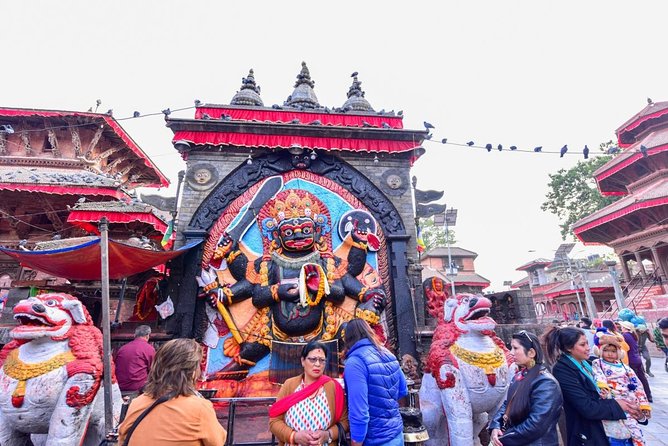
Kathmandu Valley is spread out. The UNESCO sites are not just “one area.” They are scattered across hills, old royal squares, and major sacred complexes. This tour is built for that reality by chaining locations together with private car time and one guide doing the storytelling in plain language.
The other reason it works is the guide factor. In the feedback I reviewed, the best days had guides like Shanti, Kabita, Pankaj, Sarita, and Som. The common thread: they explain what you are looking at without making you feel rushed, and they seem to adjust the day around your interests. If you want a smooth first look at Kathmandu Valley, this format does a lot of the heavy lifting.
Just know the trade-off. You are seeing a lot, fast. It is not a slow “wander and linger” day. If you hate stairs, or if a full day on uneven stone worries you, this itinerary can feel like a grind.
More UNESCO World Heritage Sites in Kathmandu:
- Private Kathmandu Sightseeing Tour | UNESCO World Heritage sites
★ 5.0 · 756 reviews - Kathmandu: 7 UNESCO Sites with Lunch
★ 4.8 · 744 reviews - Kathmandu: Full Day 7 UNESCO Tour with Lunch – Private/Group
★ 5.0 · 415 reviews
Price and Value: What You’re Really Paying for at $180
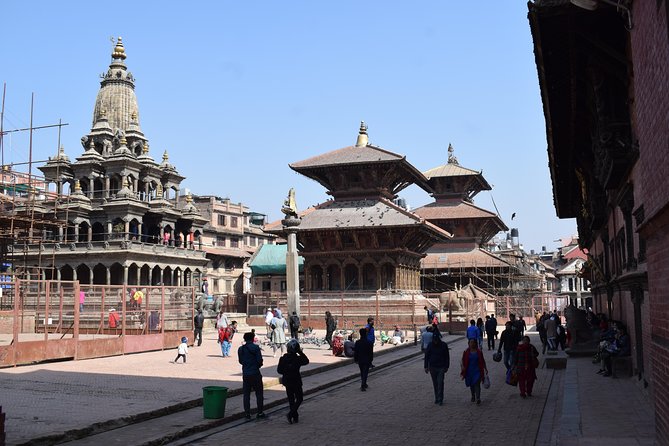
At $180 per person, the value is not just the UNESCO badge. You are paying for three things that are hard to replicate solo:
1) Private transport for a tight route
In Kathmandu, traffic and distance add up quickly. A private car helps you move between stops efficiently, especially when you want to reach the next site before crowds or heat spike.
2) An English-speaking guide included
For UNESCO sites, the difference between seeing and understanding is mostly the guide. Guides in the feedback were repeatedly praised for connecting Hindu and Buddhist themes, and for giving history that actually helps your eye notice details you might otherwise miss.
3) Entry fees for the UNESCO stops included
This matters because it cuts friction. You arrive, you pass through, you spend time with the site. No last-minute budgeting for tickets right at the gate.
One more cost to think about: lunch is not included in Bhaktapur. The tour explicitly leaves that to you, with the note that you can pick from many good options around town. If you budget for lunch and a few drinks, you will feel in control.
Getting Moving: Private Car Timing and the Real Shape of a 12-Hour Day
This is listed at about 12 hours, which usually means an early start and a late finish. Many guides and drivers in the feedback were praised for starting on time, and for navigating Kathmandu traffic safely. That sounds small, but on a day packed with sites, arriving right on schedule makes the difference between “comfortable” and “why are we sprinting?”
The route also includes short and longer stops. Some locations are quick hits, like around 10 to 15 minutes for Swayambhunath and the adjacent Amideva Buddha Park area. Others get more time, including about one hour each at Changu Narayan, Pashupatinath, and Boudhanath.
My practical takeaway: this is ideal if you want a strong overview of Kathmandu Valley without planning separate half-days. It is less ideal if you want to sit quietly for hours in one place and read every inscription.
Dress code is smart casual. It is a good idea to also pack sun protection and refillable water, because the day includes high viewpoints and big stair climbs.
Swayambhunath and Amideva Buddha Park: Views, Prayer Wheels, and Big Stairs
You start at Swayambhunath Stupa, also called the Monkey Temple. Expect a climb first. The information for this stop calls out 365 stairs to reach the top. That is both a fun detail and a real warning: plan on doing those steps at your own pace.
At the stupa, you can move around and interact with the prayer wheels. This site is also described as a place where Hindu temples and Buddhist deities coexist, which is a nice quick lesson in how layered religious life can feel in Kathmandu. If you want one site to set the tone for the whole day, this is it.
After that, you move to Amideva Buddha Park, where the highlight is three large Buddha statues. The time here is short (about 10 minutes), so think of it as a photo-and-perspective stop, not a deep meditation break.
The best way to enjoy this opening: slow down on the stairs, take breaks before you need one, and use the viewpoint to orient yourself for what comes next. Your guide can help connect the visual dots between different parts of the valley.
More Historical Tours in Kathmandu:
- Nepal Discovery Tour: Heritage Sites & Scenic Hill Easy Hike
★ 5.0 · 121 reviews - Kathmandu Private Sightseeing Tour | UNESCO World Heritage Sites
★ 5.0 · 109 reviews - Kathmandu World Heritage Tour
★ 5.0 · 74 reviews - Nagarkot Sunrise & Bhaktapur UNESCO Heritage Private Tour
★ 5.0 · 66 reviews
Kathmandu Durbar Square and Kumari Chowk: Royal Squares Under Repair
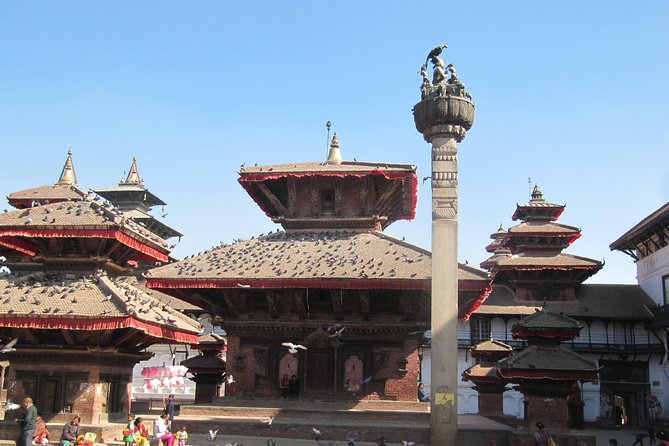
Next up is Kumari Chowk, a courtyard tied to the Kumari tradition. The description explains that Kumari was a selected girl living as a living goddess until puberty. Even if you know nothing about this custom, seeing the setting helps the concept make sense as a real place in daily Kathmandu life.
From there, you go into Kathmandu Durbar Square, where reconstruction work is happening in parts of the complex. That might sound like a downside, but it can also be a meaningful reminder: these are living historic spaces. Even with restoration going on, you still get plenty to explore around the palace-area layout.
A detail called out here is the Krishna Temple, described as created through stones only, plus a cluster of 21 shrines in the area. These kinds of specifics are exactly where a good guide pays off, because you start noticing patterns, carvings, and how the shrine layout guides foot traffic.
One consideration: because parts may be under reconstruction, your “wow” moment might depend on the day and what is accessible. A flexible guide helps you focus on what is open and still worth the stop.
Patan Durbar Square, Golden Temple, and Patan Museum: Different Architecture, Same Sacred Pulse
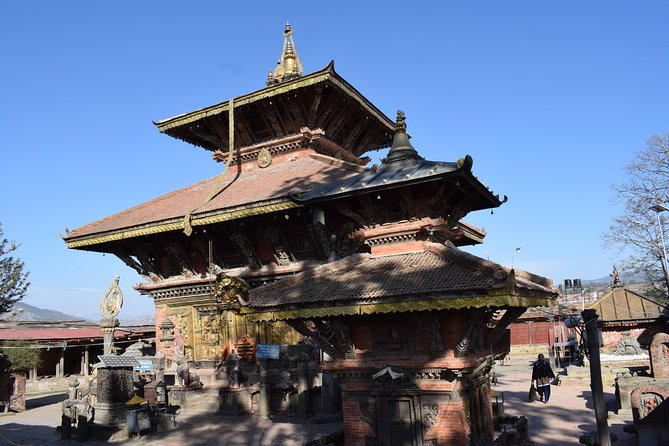
Then you head to Patan, where the old royal square gives a different feel from Kathmandu. Patan Durbar Square is described as the courtyard of the old Malla palace, with strong Newari architecture and a nearby Newar community. If Kathmandu feels like a wide set of hills and corners, Patan can feel more like a dense, patterned city of stone and craft.
At Durbar (Central) Square you also see Krishna Temple elements, but for Patan you are looking for a distinct atmosphere: more of the palace-courtyard vibe and craft details.
The tour also includes Golden Temple (Hiranya Varna Mahavihar), a 12th-century pagoda-style temple. The highlight notes bronze statues and silver and gold elements, along with the idea that this golden look is tied to the temple’s identity. The stop is brief (about 10 minutes), so you are getting highlights rather than a long, quiet study session.
Next is Patan Museum at Keshav Narayan Chowk. The description mentions you can learn about tradition and history, and it even notes coverage of historic Japanese civilization. Even if that topic is a surprise, it is a reminder that museums can be useful during whirlwind itineraries, because they give context when you are otherwise too pressed for time to read everything on site.
If you like the “handcraft plus meaning” style of travel, this segment is a strong one.
Bhaktapur: The Best Place to Feel Kathmandu Valley’s Crafts at Full Speed
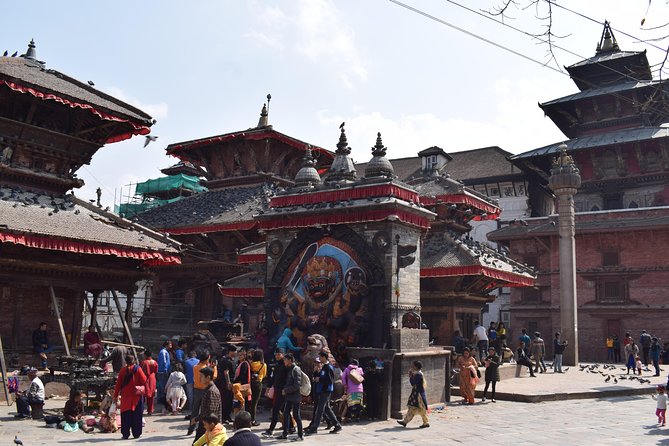
Bhaktapur is described as the City of Devotees, and the way the tour frames it is exactly right: this is where you can see older-style houses and buildings still intact. The time here is broken into several smaller temple and palace moments, which makes the overall day feel varied rather than repetitive.
You spend time in the Bhaktapur City area, then focus on major monuments:
Nyatapola Temple
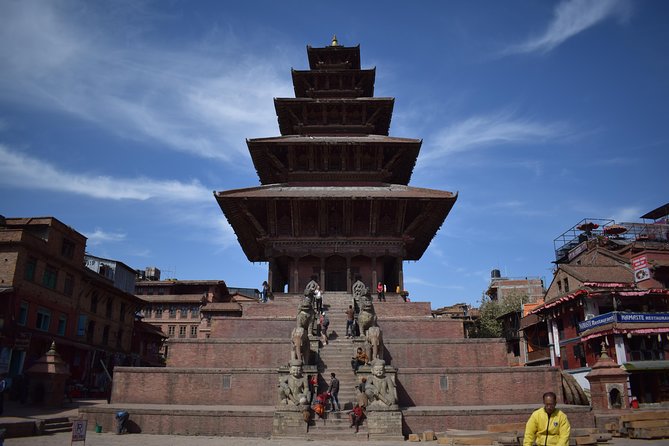
Nyatapola Temple is a pagoda-style temple with five levels. The description highlights that it is among the tallest pagodas and points to the high artistry of its build. This is one of those places where you can look up, take in the tiered roof shape, then look closer for carving and proportion.
Dattatreya Temple
At Dattatreya Temple in Dattatreya Square, the detail to notice is the claim it was built using a resource of a single stem of a single tree. Even if you take the claim with a little skepticism (most of us should), it is still a fun detail to ask your guide about, and it points you toward how people understood materials and sacred construction.
55 Window Palace and Siddha Pokhari
The tour includes the 55 Window Palace, named for the 55 carved windows. This is the kind of stop that rewards a slow look, because the windows are the point.
You also go to Siddha Pokhari, a human-made pond described as about 171 meters long and three meters deep, near the first town gate. It is described as a favorite hangout area, so it is a good pause from constant temples and carvings.
One practical drawback in Bhaktapur
Bhaktapur is where walking fatigue hits. Multiple short stops mean you are repeatedly getting in and out, climbing stairs, and scanning architecture. Your best strategy is simple: take water sips often, and use your guide to help you prioritize what you personally find most interesting.
And yes, lunch is your choice here. Plan on it. If you skip lunch, the day will feel longer than it already is.
Changu Narayan, Pashupatinath, and Boudhanath: The Sacred Trio You Can’t Rush
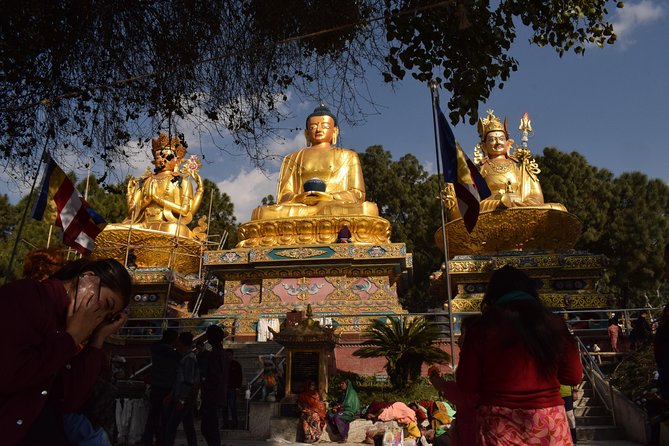
After Bhaktapur, the tour shifts into three larger, more significant spiritual stops, each with about one hour.
Changu Narayan Temple
Changu Narayan is highlighted as one of the oldest temples, with dates going back to the Licchavi period. The site description emphasizes stone and wood carvings, and the sense that it is a temple built to last and be read through details.
Because the stop is longer here, you should use it for slow looking. Take your time with carvings and masonry, and let the guide connect the temple’s age to what you see today.
Pashupatinath Temple Complex
Pashupatinath is described as one of Nepal’s largest temple complexes, covering about 0.64 hectares and housing more than 500 temples and shrines. The scale is the point. Even if you do not catch every shrine, the setting gives you the big-picture feeling of a sacred hub.
Again, you get about an hour, which helps you avoid the “too fast to register anything” effect that can happen in whirlwind itineraries.
Boudhanath Stupa
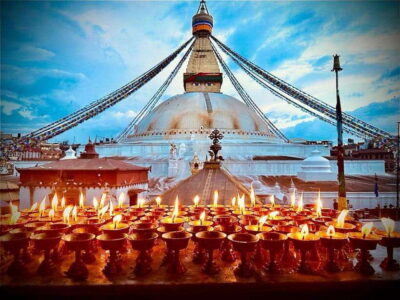
Finally, Boudhanath Stupa is described as about 36 meters tall, with over 50 gompas around it. It is framed as one of Nepal’s most important Buddhist pilgrimage sites, built as a major mandala in the city’s religious life.
This is where you can slow down and let the day’s meaning catch up with your feet. Look around the surrounding structures, then take in the stupa shape from different angles as you walk the area with your guide.
The Human Factor: Why Guides Like Shanti and Kabita Matter on a Day Like This
On a tour that tries to do a lot, the guide can make you feel either supported or stressed. The repeated praise in the feedback I reviewed is consistent: guides were courteous, did not rush people, and adjusted the timeline to keep the day comfortable.
Kabita, Shanti, Pankaj, and others come up again and again for reasons like:
- clear explanations of Hindu and Buddhist themes
- pace control, letting you walk at your speed
- strong English
- help managing practical stuff like getting good photos and keeping street-vendor pressure from taking over your attention
Also, drivers were praised for safe navigation through Kathmandu traffic and for professional timing. You do not want to spend a heritage day worrying about logistics.
If you get a guide who matches your style, this day can feel surprisingly smooth despite being packed.
Who This Tour Suits Best, and Who Might Skip It
This tour is a strong fit if:
- you have limited time in Kathmandu and want a fast, complete UNESCO overview
- you want a private guide instead of doing temples solo
- you like to learn as you go, especially the Hindu and Buddhist connections
- you are okay with a day that includes walking and stairs
You might think twice if:
- you have mobility limits that make long stone walks tough
- you prefer slow afternoons and long rests over a structured route
- you get overwhelmed by lots of religious sites back-to-back
A helpful tip from the tour experience itself: wear good walking shoes and bring sun protection. More than one person explicitly called out comfort and pacing, and that matches the reality of stair-heavy starts and dense old-square stops.
Should You Book This UNESCO Seven-Site Kathmandu Day Tour?
I would book this if your priority is straightforward: see all seven UNESCO sites in Kathmandu Valley with less planning stress, learn what you are looking at, and use a private vehicle to move efficiently. At $180, you are not just paying for transport, you are paying to convert a long day into something meaningful.
I would pass if you want a gentle, unstructured day or if stairs and long walking would be a real strain. This is a “make it count” itinerary, not a “sit and read for hours” one.
If you do book, ask your guide for a pace plan on the first stop. The best versions of this day happen when you set expectations early, take breaks before you need them, and focus your attention on details your guide points out.
Latest Kathmandu write-ups
- 10 days Annapurna Base Camp Trek★ 5.0 · 5 reviews
- Visit Swayambhunath and Bauddhanath Stupa with Guide★ 5.0 · 5 reviews
- Langtang Trek from Kathmandu 7 Days★ 5.0 · 5 reviews
- 7 Day Kathmandu Pokhara Tour★ 4.5 · 5 reviews
- Island Peak Climbing with Everest Base Camp★ 5.0 · 5 reviews
- Chandragiri Hill Cable Car Tour with Hotel Transfers from Kathmandu★ 4.5 · 5 reviews
- Everest Mountain Flight★ 5.0 · 5 reviews
- Kathmandu city day tour (4 world heritage sites)★ 5.0 · 5 reviews
UNESCO World Heritage Sites, compared.
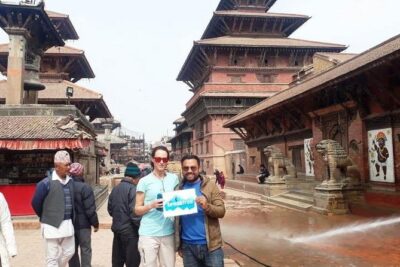
Private Kathmandu Sightseeing Tour | UNESCO World Heritage sites
Read our review →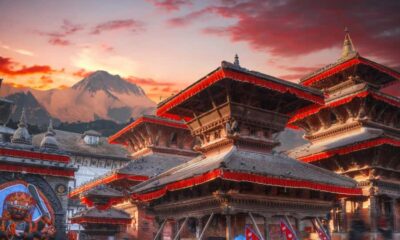
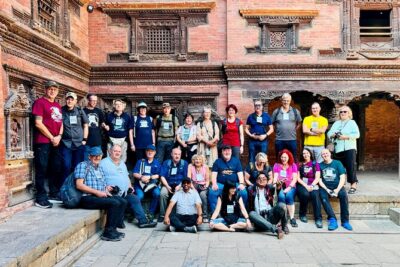
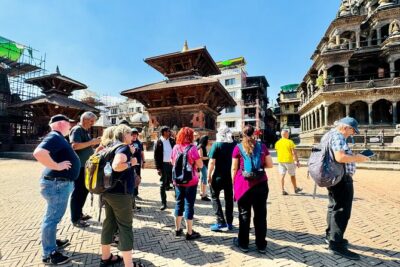
Kathmandu Private Sightseeing Tour | UNESCO World Heritage Sites
Read our review →Browse the lists this tour appears in