
Reviewed · PATAN
Folklore and Everyday Life in Ancient Patan
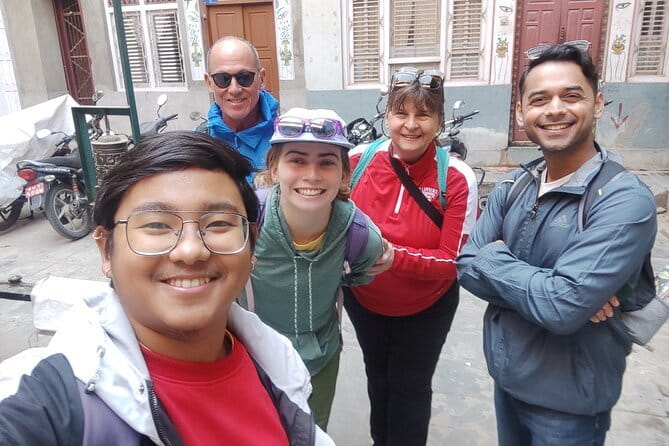
Ancient Patan is interesting because the city does not separate daily life from belief. You’ll move through narrow streets and courtyard monasteries where faith shows up in woodwork, shrines, and even how people rest and gather. Two things I really like: the way the walk connects folklore and faith to real Patan spaces, and the fact that the guide (often Sandip, if that is who you get) brings humor plus context so it feels alive, not like a lecture.
One possible drawback: this tour purposely skips Patan Durbar Square, so if your only goal is the main palace complex, you’ll need to plan that visit separately after the walk.
Key things I’d circle before you book
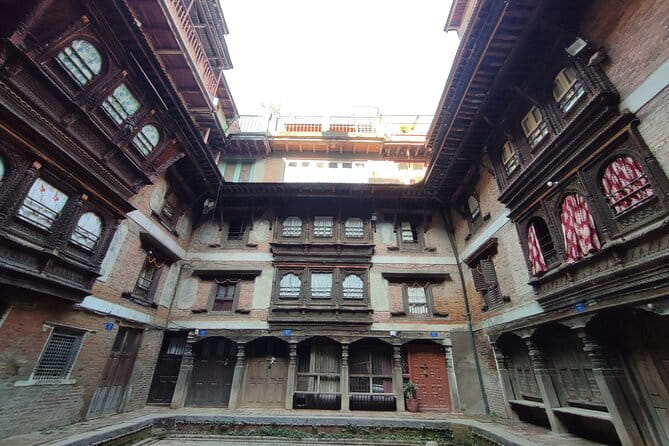
- Courtyard life as a clue to faith, not just pretty architecture
- Pimbahal monastery, including its scale and famous woodwork
- Architectural details you’d miss alone, like falchaa resting areas
- Nagbahaa and ancient globalization, including Greek and Hellenistic icon influences
- Swotha Square end point, with temples, shrines, and tea shops nearby
Why this Patan walking tour feels different from the usual “see the sights” plan
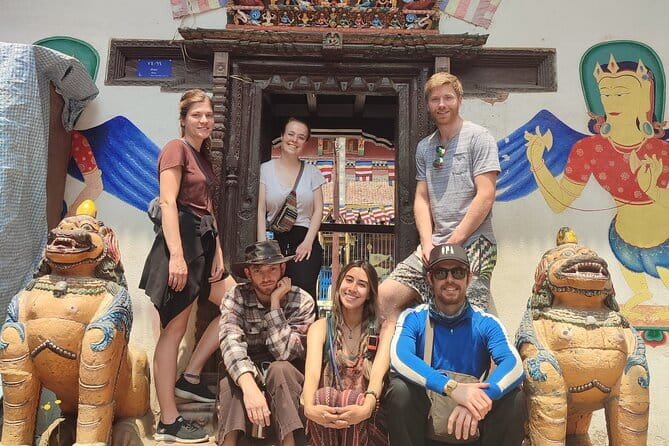
This isn’t a checklist tour where you only stop for photos. The whole point is that ancient Patan’s old town layout still shapes everyday life. In places like Kathmandu Valley, culture is not locked in a museum. It plays out in how communities are organized, where people pause to rest, and how shrines anchor daily routines.
What I like about this style of walking is the pace. You have time to notice small things, then you get meaning right after. A doorway, a courtyard wall, or an old resting spot starts to make sense when your guide ties it to spiritual practice and local knowledge. The tour also looks at how tradition and modern ambition coexist, which matters because young Nepalis are not just preserving old forms. They’re also adapting them while keeping cultural norms in place.
You’ll also get a clear focus on religious threads that shape Patan: Newar Buddhism and Tantric Hinduism. That framing helps you understand why so many structures feel connected, even when their visual styles differ.
More of Patan and its courtyards:
- Bhaktapur & Patan Durbar Square Day Tours
★ 5.0 · 122 reviews - Kathmandu: Private Patan and Bhaktapur Sightseeing Tour
★ 4.7 · 64 reviews - Patan and Bhaktapur City Full Day Tour
★ 5.0 · 24 reviews
Value check: what you pay for at $65 in 2 to 2.5 hours
At $65, this is priced like a small-group, guided cultural walk, and it makes sense for the time and the guide effort. You’re not paying for transportation, because pickup and drop-off are not included. Instead, you’re paying for someone local to help you read the old town system properly.
The tour runs about 2 to 2.5 hours and stays compact, with a maximum group size of 10 travelers. That matters because courtyards can feel tight. A small group keeps the flow smoother and gives you a better chance to ask questions as you go.
It also comes with a mobile ticket, so you’re not dealing with paper vouchers. That’s a small detail, but it helps when you’re moving around a neighborhood like Patan Dhoka to Swotha Square, where you’ll likely want your phone ready anyway.
The route setup: start at Patan Dhoka, end at Swotha Square
Your walk starts at the entrance gate of the old town of Patan, with the meeting point at Patan Dhoka, Patandhoka Road, Lalitpur. Your guide leads you from there into the older street fabric, where lanes feel narrower than you expect and courtyards open like rooms inside a maze.
You finish at Swotha Square. The practical win here is that Swotha Square is only a couple minutes on foot from Patan Durbar Square, the main palace complex. So even though the tour does not include that site, you’re not stranded away from it. If you want the main complex after, you can do it right after the walk while the context is fresh.
The tour also needs good weather, so check the forecast. If rain or heavy clouds roll in, plans can change. I’d treat this as a stroll you want under steady conditions, not a “bring an umbrella and power through” activity.
Stop-by-stop guide: what each place is really teaching you
More to compare around Kathmandu
- Everest Base Camp Trek – 14 Days
★ 5.0 · 1,499 reviews - Everest Base Camp Trek
★ 5.0 · 842 reviews - Private Kathmandu Sightseeing Tour | UNESCO World Heritage sites
★ 5.0 · 756 reviews - Kathmandu: 7 UNESCO Sites with Lunch
★ 4.8 · 744 reviews
Pimbahal courtyard and monastery: Newar Buddhism, 4,000+ ordained monks, and intricate woodwork
The first stop is Pimbahal, described as a highly respected and embellished Buddhist monastery area within Patan. This is not a quick glance stop. You spend about 30 minutes here, and the focus is on how courtyard urban settlements connect to spiritual practice and indigenous knowledge.
One detail that sets the tone fast is the monastery’s scale: it’s noted as having 4,000+ ordained monks. That gives you a sense that this is not just ceremonial space. It is a long-running institution tied to the neighborhood’s rhythms.
You’ll also get a chance to marvel at intricate woodwork. Even if you do not know names of every carving motif, woodwork like this usually carries local artistic identity, and it’s often tied to Buddhist practice and patronage. What I like is that your guide frames it as part of living culture, not as isolated craftsmanship.
Possible consideration: monasteries and active religious sites can feel more solemn than street markets. Wear clothes that let you feel comfortable and respectful, and keep your head up for signs or posted cues you might notice once you’re there.
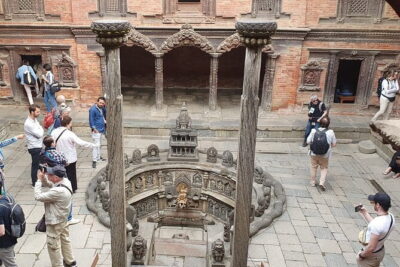
Nyakhachowk: falchaa resting areas, ancestral shrines, and vernacular houses
From Pimbahal you take a cozy path into the next courtyard system at Nyakhachowk, another 30-minute stop. This part of the walk is about reading architecture as daily life infrastructure.
You’ll be shown traditional elements like falchaa, which are resting areas, plus ancestral shrines and vernacular houses. That set of examples is smart because it moves beyond “temples and statues.” It explains how people historically built comfort, memory, and ritual into the same physical web.
Courtyards like this are also a good place to see how faith and family histories coexist in ordinary space. Ancestral shrines remind you that belief in Patan often works at multiple levels. It can be public and institutional, but it’s also personal and tied to lineage.
One practical tip here: go slowly. Courtyards reward attention. If you speed through, you’ll miss the features your guide points out, and you lose the whole reason you booked a guided walk.
Nagbahaa: the largest courtyard feel, plus Greek influence in Buddhist and Hindu iconography
Next is Nagbahaa (Nag Bahal), where you spend about 15 minutes in one of the largest courtyards in old Patan. This is a shorter stop, but it comes with a strong idea: globalization is not new.
Your guide talks about how outside influence, described here as Greek influence and Hellenistic impressions, can show up in Buddhist and Hindu iconography. That’s a fascinating angle for a walking tour because it links art style to centuries of exchange. It also gives you a new way to look at symbolism you might otherwise treat as purely local.
Even with limited time, this stop works if you approach it like an observational lesson. Look at patterns and figures, then listen for how your guide connects visual details to older contacts and evolving interpretation.
Swotha Square: temples, shrines, tea shops, and your easy link to Patan Durbar Square
You wrap up at Swotha Square after about 15 minutes. This ending spot is intentionally social and calming: it includes several temples and shrines, and also tea shops.
I like this kind of finish because it lets you shift from “learning and looking” to “resting and letting it sink in.” It also sets you up for your next choice. Your guide can help you with directions toward Patan Durbar Square so you can explore it on your own.
If you do go, plan for extra admissions. The main palace complex and its museum are described as worth visiting, but they come with additional admission fees and are ticketed separately. The key point is that this tour keeps the walk focused on the surrounding old town for a more local, nuanced feel, rather than repeating the main palace tour route.
How Newar Buddhism and Tantric Hinduism show up in everyday Patan life

The religious focus of this walk is not presented like abstract doctrine. It’s presented like everyday geography.
In Newar Buddhist settings, you can often feel how the community and the monastery connect through shared space and ongoing practice. In Tantric Hinduism, you see how ritual tradition can shape artistic expression and iconography, and how that artistic language can travel across time.
The tour’s best trick is that it connects these traditions to physical places you can point at. Courtyards become teaching tools. Woodwork becomes a clue. An icon detail becomes a story about contact and change, not just decoration.
That’s why it fits the tour’s bigger theme: traditions of the past meeting ambitions of the future. You’re not only looking at old stones. You’re watching how living belief and cultural norms continue to guide how people build, gather, and remember.
What you should pack and how to prepare so you enjoy the walk
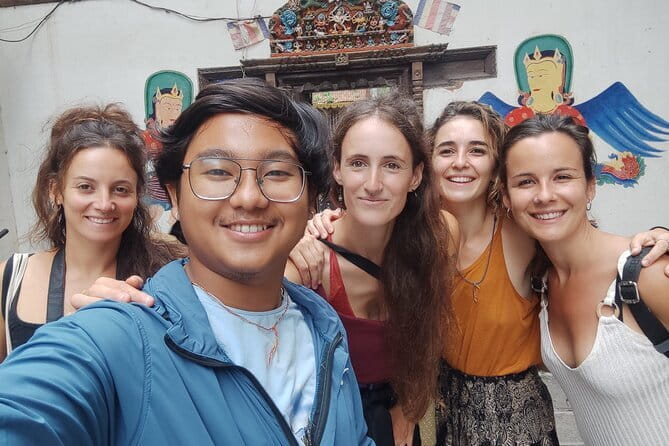
This is a walking experience through old-town streets and courtyards, so practical stuff matters more than fancy stuff.
Bring:
- Comfortable walking shoes with good grip
- A light layer for shade changes in courtyards
- Water (tea shops exist at Swotha Square, but you may want water earlier too)
- Your phone for the mobile ticket and map access if needed
Also, keep your pace calm. Courtyards can be busy with local activity, and narrow lanes need patience. If you enjoy slow looking, you’ll get more out of it.
Who should book this tour, and who should skip it
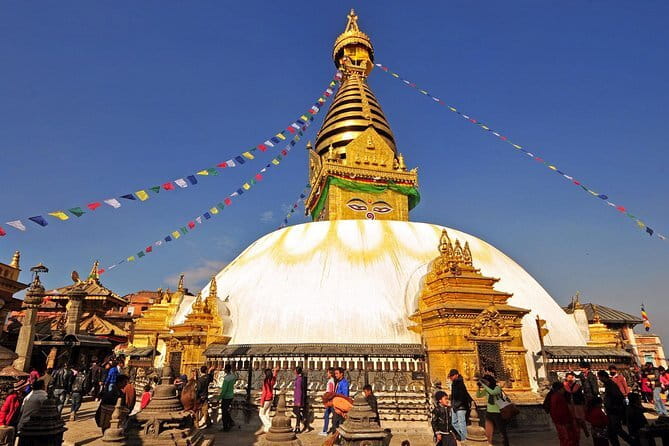
Book it if:
- You want a local, nuanced view of Patan rather than only the headline palace complex
- You like architecture when someone explains how it relates to faith and daily life
- You’re curious about Newar Buddhism and Tantric Hinduism in real settings
Skip it if:
- Patan Durbar Square is your top priority and you do not want a separate visit planned
- You prefer a strictly “big monument” itinerary with longer time at one major site
If you are traveling with limited time, the structure still helps. You get context around the main square area without spending your whole afternoon only at the palace complex.
Short wrap-up: should you book Folklore and Everyday Life in Ancient Patan?
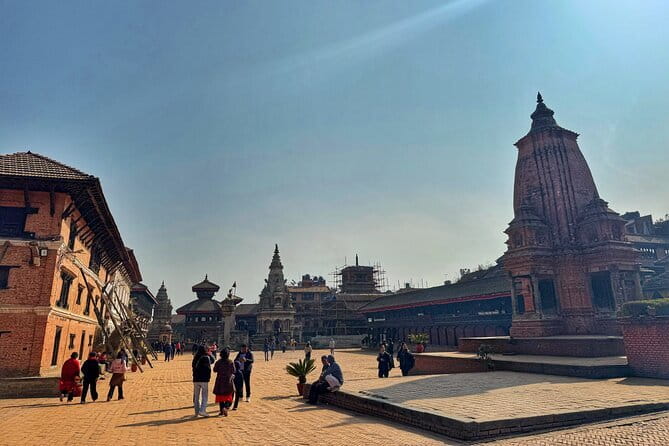
I think this tour is worth booking when you want meaning, not just sights. It’s built around Patan’s courtyard life, with a strong lead-in to religious practice and cultural continuity. The price is reasonable for a small group and a guide who clearly explains what you’re seeing, and the ending at Swotha Square makes it easy to extend your day to Patan Durbar Square afterward.
If your idea of Patan is mainly the palace complex, then you’ll likely feel like the wrong side of the city. But if you want the surrounding old-town fabric that makes the palace make sense, this walk is a smart use of your time.
FAQ
Where does the tour start?
The tour starts at Patan Dhoka on Patandhoka Road, Lalitpur 44600, Nepal.
Where does the tour end?
The tour ends at Swotha Square, Lalitpur 44600. It is a couple minutes walk from Patan Durbar Square.
What time does the tour start?
The tour starts at 10:00 am.
How long does the walk last?
It runs for about 2 hours to 2 hours 30 minutes.
Is Patan Durbar Square included?
No. Patan Durbar Square is intentionally not covered, though you can visit it independently after the tour. Admission fees and museum entry are extra.
Do I need to buy tickets for the courtyard stops?
The stop admissions listed for the tour route are free during the walk.
How big is the group?
The maximum group size is 10 travelers.
Is it suitable for most travelers?
Yes, most travelers can participate.
What happens if weather is bad?
The experience requires good weather. If it is canceled due to poor weather, you will be offered a different date or a full refund.
Are service animals allowed?
Yes, service animals are allowed.
Latest Kathmandu write-ups
- Langtang Valley Trek★ 5.0 · 3 reviews
- Khopra Danda Trek★ 5.0 · 3 reviews
- Langtang Valley Trek from Kathmandu★ 5.0 · 3 reviews
- 5 night / 6 days Kathmandu Nagarkot Chitwan Pokhara tour★ 5.0 · 3 reviews
- Nepal Highlights Tour: 5 Nights 6 Days Kathmandu & Pokhara Tour★ 5.0 · 3 reviews
- Kathmandu Valley Private Day Tour★ 5.0 · 3 reviews
- Conquer the Himalayas: The Ultimate 16-Day Annapurna Circuit Trek★ 3.5 · 3 reviews
- Kathmandu Heritage Day Tour★ 5.0 · 3 reviews
Patan, compared.
Kathmandu and Patan Heritage and Living Goddess Experience Tour
Read our review →
Patan & Bhaktapur Durbar Square Tour with Lunch – Private/Group
Read our review →
Bhaktapur darbar, Patan Darbar square & Changu Narayan in 1 day
Read our review →Browse the lists this tour appears in