
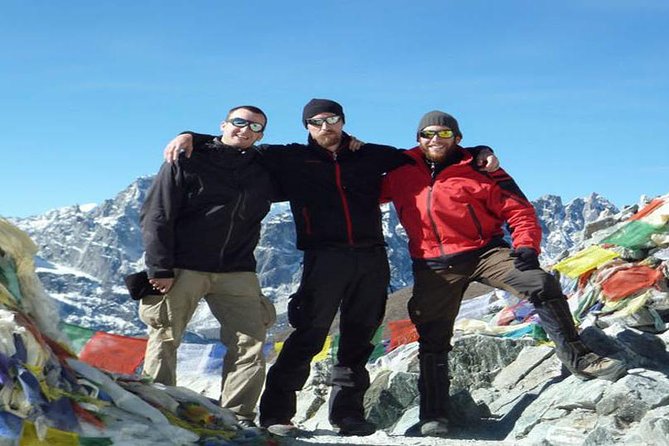
Reviewed · EVEREST BASE CAMP TREK
Everest Base Camp Trek
This Everest Base Camp trek is interesting because it removes most of the headaches and still lets you hike on a private guided schedule. You get the full high-mountain route, but you are not tied to a big group rhythm or stuck guessing about trails. The biggest win is that you can focus on the route and the views instead of logistics.
I like the personal pace built into a private setup, especially on long, tiring days when it helps to move at your own steady rhythm. I also like that the plan includes acclimatization hikes (like the Everest View Hotel day and the Nagarjun hill day), which makes the climb feel more intentional and less like guesswork. One possible drawback is the early start and the flight component, since meeting time is 2:15am and the experience depends on good weather.
Key takeaways before you go
- Private guide, not a crowd pace: you hike at your own rhythm with an English-speaking certified guide.
- Logistics handled end to end: flights to Lukla via Ramechap, permits, lodge-to-lodge stays, and meals are included.
- Acclimatization built in: Everest View Hotel and Nagarjun hill give your body a chance to adjust.
- Your big wow day is structured: Everest Base Camp plus Kala Patthar happens in the right order for the best payoff.
- Hot showers are limited but available: hot showers are listed at Phakding, Namche, and Lukla lodges, not everywhere.
- You still have to carry the cold: the trek is challenging and you need proper cold-weather gear, plus a sleeping bag rated for winter temps.
Everest Base Camp, with Your Daypack and Not a To-Do List
The practical reason this trek feels smoother is that your itinerary covers the whole arc, from Kathmandu pickup through the trek and back again. You are not just buying a route, you are buying a system: transport, permits, lodge bookings, meals, and the guide and porter team that keeps everything moving.
As an approach, it is built around safety and orientation. You follow a guide so you do not have to worry about getting lost, and you spend your energy on walking and adjusting to altitude instead of map math. That matters on EBC, where the trails can look similar and the mountains keep changing the light and your sense of distance.
Kathmandu Arrival and the 2:15am Reality Check
Your tour starts in Kathmandu, and the meeting time is listed as 2:15am. That is not a minor detail. It affects how you plan your first night, how much sleep you can realistically get, and how you pack your day before the big travel day.
On Day 1, you arrive in Kathmandu, and the package includes two nights at a 3-star hotel. That gives you a controlled buffer for rest, gear checks, and early-morning logistics. If you are a solo traveler, the smoother airport-to-hotel transition is exactly the kind of thing that helps you feel steady before you step into the mountains.
More ways to walk to Everest Base Camp:
- Everest Base Camp Trek – 14 Days
★ 5.0 · 1,499 reviews - Everest Base Camp Helicopter Tour landing at Everest View Hotel
★ 5.0 · 668 reviews - Everest Base Camp Trekking
★ 5.0 · 485 reviews
Day 2 Flight to Lukla and the First Trek Into the Valley
Day 2 is a long travel day in itself: drive to Ramechap, fly to Lukla, then trek to Phakding. The trek distance is listed as about 8 km and around 3 hours, and the elevation is noted at Phakding (8699 ft).
This is a great day for keeping expectations realistic. It is not the hardest hiking, so you can settle into the feel of the trail, the altitude, and the routine. You will learn quickly that walking in Nepal is not about speed, it is about rhythm, foot placement, and staying warm.
A helpful detail: meals and full board are included during the trek. That reduces the stress of hunting for food options along the route. Just keep in mind that drinks, hot and cold, and snacks are not included, so plan to budget for water and extra calories beyond the meal plan.
Namche Bazaar on Day 3, and Why That First Big Climb Matters
On Day 3, you trek to Namche Bazaar, at 11,283 ft. The route is listed as 10 to 12 km with around 6 hours walking. Namche is where the trek starts to feel serious because you are higher and the air is thinner.
What I like about this setup is how the pacing lines up with the story your body needs to hear. You go up steadily, you stop, you walk again. It does not jump from sea level to summit dreams in one step, and the later acclimatization day confirms that this is not a random route stitched together.
Day 4 Acclimatization: Everest View Hotel Makes the Climb Make Sense
Day 4 is an acclimatization day with a hike to Everest View Hotel (12,995 ft). It is listed as 3 to 4 hours and 3 to 4 km, which sounds small, until you are doing it at altitude.
This is one of the smartest parts of the itinerary. Instead of pushing harder just to say you did, you get a controlled hike that helps you adjust to altitude and gives you big mountain views while you are still fresh. You also get a mental reward: you are not only walking toward Everest, you get to see what you are walking toward.
If you want a quick rule of thumb, here it is: acclimatization days are not time to be brave. They are time to be consistent, slow down, and let your body adapt.
More to compare around Kathmandu
- Private Kathmandu Sightseeing Tour | UNESCO World Heritage sites
★ 5.0 · 756 reviews - Kathmandu: 7 UNESCO Sites with Lunch
★ 4.8 · 744 reviews - Half day cooking class in Thamel kathmandu
★ 5.0 · 607 reviews - Nagarkot Sunrise View and Day Hiking from Kathmandu
★ 5.0 · 471 reviews
Tengboche and Dingboche: Two Days of Views, Weather, and Recovery
Day 5 takes you to Tengboche (12,660 ft), about 10 to 11 km and around 5 hours. Day 6 takes you to Dingboche (14,464 ft), around 11 to 12 km and about 5 hours.
These are long walking days where the guide matters. A good guide keeps you moving but also watches how you are handling the altitude. In past trips with Nepal Hiking Team, guides like Ram and Shyam were praised as attentive and always ready to help when needed, and that kind of support is exactly what makes the middle of the trek feel manageable instead of chaotic.
Day 7 Nagarjun Hill Acclimatization: A Shorter Circuit, Better Adjusted Body
Day 7 is another acclimatization day: a hike to Nagarjun hill and back. The walking distance is listed as 5 to 6 km, with a duration of 4 to 5 hours.
You might not think of hill hikes as a big deal, but it is the point where your body learns the pattern. You climb, you slow down, you recover, and you repeat. The itinerary is designed to keep you from rushing, and that is a major reason many people find they finish successfully even if they are not super trained.
Lobuche on Day 8 and Gorakshep on Day 9: The Route Turns Dramatic
Day 8 takes you to Lobuche (16,105 ft), about 11 to 12 km and around 5 hours. Day 9 is a key day: trek to Gorakshep, then Everest Base Camp, and back to Gorakshep. The walking distance is listed as 14 to 15 km, with about 8 hours, and the Everest Base Camp reference is 5364 m (17,594 ft).
This is where the trek feels like a serious alpine hike rather than a scenic walk. The terrain, the cold, and the altitude all add up. If you are the type who wants a clear goal, this is your day.
Also, this day tends to be where you notice the value of a guide who can manage pacing and timing. The route is long, and you need to stay hydrated and keep your energy stable.
Kala Patthar on Day 10: The View Payoff, Then the Descent to Pheriche
Day 10 starts with Kala Patthar, listed at 11,283 ft, then trekking back to Pheriche (4,210 m / 13,810 ft). The distance is listed as 13 to 14 km and about 7 hours.
Kala Patthar is the day many people remember for the payoff. In practical terms, you are doing more than sightseeing. You are climbing near the viewpoint, managing cold and wind, then stepping back down so your legs can recover for the last stretch.
One important reality: this part of the trek asks for mental discipline. It is not just about willingness, it is about staying steady when the cold and fatigue try to bargain you into slowing down in the wrong way.
The Home Stretch: Namche and Lukla, Then Back to Kathmandu
Day 11 takes you to Namche (11,283 ft), 14 to 15 km, around 7 hours. Day 12 goes to Lukla, listed at 18 to 19 km and around 7 hours. Day 13 includes flying to Ramechap, then driving to Kathmandu.
These are big mileage days. The good news is that your altitude has dropped compared to the earlier sections. The challenge is that downhill can still beat you up, especially after days at high elevation. This is also where having a private guide helps you plan your effort, because you can tailor your pace to how your knees and lungs feel.
If you are flying out of Lukla, remember the experience requires good weather. That is not a small note. Air schedules in the Everest region are influenced by conditions, and your itinerary is tied to flights that run when conditions allow them.
What You Get for the Price: Good Value, Especially for the Included Flights
The price is $1,790 per person for a roughly 14-day trek. For many people, the best value piece here is that the package includes round trip flight to and from Lukla via Ramechap, with transfers. That alone often makes or breaks the budget for EBC trips, because the logistics are part of the cost and part of the complexity.
Next, you are not paying for permits separately. All required permits, plus government taxes and office service charges, are included. You also get full board meals during the trek, plus seasonal fruits.
You also get a team. The package includes 1 professional English-speaking certified guide and a porter (with the noted ratio of 2 trekkers to 1 porter). The porter carries some weight for you, which helps keep the walk steady when the air thins.
Where you should expect extra spending:
- Drinks and snacks are not included.
- Hot showers are not blanket included during the entire trek, but hot showers are listed at Phakding, Namche, and Lukla lodges.
- Personal expenses, plus tips and gratuities for trekking staff and drivers, are not included.
- Travel insurance is not included.
My take: for the amount of logistics handled, this is priced like a package that reduces your planning workload. If you are the kind of traveler who wants a clear structure, that is where you get your money’s worth.
Accommodation That Matches a Trek, With Private Bathrooms at Key Stops
Accommodation is lodge-to-lodge with best-available twin sharing during the trek, plus private bathrooms with hot shower at Phakding, Namche, and Lukla. That is a meaningful upgrade compared to some trek setups where hygiene is more basic.
Also, you get two nights in Kathmandu at a 3-star hotel. That matters because the first and last nights are when people often feel most travel-fatigued. Having a real hotel buffer can make the whole journey feel less like a long scramble.
Guides and Porters: Why the Team is the Real Experience
This trek lives or dies on execution, and the reviews highlight that repeatedly through the behavior of guides and the responsiveness of the leadership. In the accounts shared, people praised communication and planning support from Ganga, plus guide support from names like Ram, Shyam, Vishma, Paban, and others. The common thread was a calm presence and real help, especially for solo travelers who wanted reassurance.
A private trek also changes the feel of the day. Even when the route is fixed, you are not forced to match someone else’s pace. That is why reviews specifically call out that a private guide lets you set your rhythm as comfortably as possible.
One more practical detail: the porter is part of the system, and the gear notes state a porter can carry up to 25 kg at maximum. Pack lighter than you think you need, and keep only essentials at the front of your mind.
Packing Reality: You Can Buy Some Gear in Kathmandu
The equipment checklist is detailed, and it is worth treating it like a minimum standard. You will want cold weather layers, a winter-rated sleeping bag, proper boots, and a headlamp.
They list items such as:
- Sleeping bag rated to zero degrees F (and winter cold references also appear)
- Headlamp with spare bulbs and batteries
- UV sunglasses and sun hat or scarf
- Gloves, including a heavier option for very cold conditions
- Gaiters for winter
- Trekking poles
- Binoculars (handy for mountain watching)
- A day pack (about 20 to 22 liters)
- A lock or combination lock for your belongings
Good news if you forgot something: the notes say gear can be purchased in Kathmandu, and they also mention that many items are manufactured locally. You are responsible for your own personal trekking equipment, but the trip provides a complimentary water and a wind proof duffel or kit bag.
Who This Trek Fits Best
This trek is described as challenging, and it is best suited to fit, active travelers. If you can handle multi-hour hikes and you are comfortable with altitude exposure, it is a strong option.
It is also a good fit for people who want structure without being rushed. The private setup is ideal if you want to slow down when needed, take breaks before you feel wrecked, and avoid getting dragged into an uncomfortable pace.
If you prefer a fully independent adventure, this might feel too managed. But if you want to arrive with questions already answered and the heavy logistics already solved, this package is made for you.
Should You Book This Everest Base Camp Private Trek?
I would book this trek if you value inclusion. Flights via Lukla through Ramechap, permits, lodge stays, full board meals, and a guide and porter team are already handled, which lets you spend your energy on walking and acclimatization instead of planning.
I would pause and check your expectations if you do not handle early mornings well, since the listed meeting time is 2:15am and travel days are long. Also double-check your gear. Cold nights and long days are part of the deal here, and the equipment list is not optional.
If your goal is Everest Base Camp, and you want a guided route that keeps you oriented while still letting you hike at a human pace, this is a solid choice.
FAQ
How long is the Everest Base Camp trek?
The trek is listed as 14 days approximately.
Where does the trek start, and what time do we meet?
The tour starts in Kathmandu, and the meeting time is listed as 2:15am.
Is this a private trek, and what is the group size?
It is a private tour/activity, so only your group participates. The minimum is 2 people per booking, and the maximum is 15 people per booking.
How do the flights to Lukla work?
The package includes a round trip flight to and from Lukla via Ramechap, including transfers.
What kind of accommodation and bathrooms are included during the trek?
Accommodation is lodge-to-lodge with best available twin sharing. Private bathrooms with hot shower are provided at Phakding, Namche, and Lukla.
Are meals included, and is there a vegetarian option?
Yes, full board meals with tea or coffee are included during the trek. A vegetarian option is available if you advise the provider at the time of booking.
What guides and permits are included?
You receive 1 professional English-speaking certified guide and a porter (noted as 2 trekkers to 1 porter). All required permits for the trek are included, along with a first aid medical kit, trekking map, and an achievement certificate.
Do I need a Nepal visa, and is travel insurance included?
Nepal entry visa information is provided: you can obtain the visa at the airport for USD 40 for 30 days. Travel insurance is not included.
What gear do I need, and how much can the porter carry?
You are responsible for personal trekking equipment. The notes also say a porter can carry up to 25 kg at maximum, and they provide complimentary water and a wind proof duffel or kit bag.
What happens if weather is bad or you need to cancel?
The experience requires good weather. If it is canceled due to poor weather, you will be offered a different date or a full refund. There is free cancellation up to 24 hours in advance for a full refund.
Latest Kathmandu write-ups
- Visit Swayambhunath and Bauddhanath Stupa with Guide★ 5.0 · 5 reviews
- 10 days Annapurna Base Camp Trek★ 5.0 · 5 reviews
- Langtang Trek from Kathmandu 7 Days★ 5.0 · 5 reviews
- Island Peak Climbing with Everest Base Camp★ 5.0 · 5 reviews
- 7 Day Kathmandu Pokhara Tour★ 4.5 · 5 reviews
- Everest Mountain Flight★ 5.0 · 5 reviews
- Kathmandu city day tour (4 world heritage sites)★ 5.0 · 5 reviews
- Chandragiri Hill Cable Car Tour with Hotel Transfers from Kathmandu★ 4.5 · 5 reviews
Everest Base Camp Trek, compared.
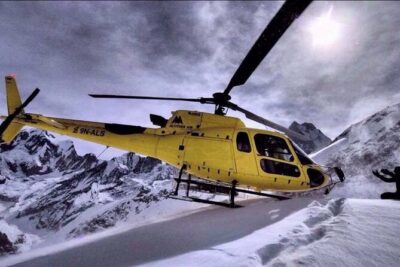
Everest Base Camp Helicopter Tour landing at Everest View Hotel
Read our review →
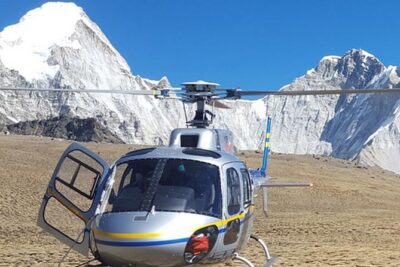
Everest Base Camp Helicopter Tour landing at Hotel Everest View
Read our review →
Browse the lists this tour appears in