
Reviewed · PATAN
Patan Heritage Tour – Private/Small Group
Patan Heritage Tour is interesting because it connects street-level life in Patan with the big ideas of Newar Buddhism and the Malla kings who shaped the city. I like the small-group size (max 5), which makes it easier to ask questions and move at a human pace.
I also like the way the route stitches together major landmarks and lesser streets, so you actually understand how the past still shows up in daily routines. Guides such as Bajey, Santosh, and Shreya Karki are praised for taking you through passages you would miss on your own and adjusting the detail level to what you care about.
One drawback to plan for: not all entry fees are included. You will need cash for Durbar Square (NRP 1000 is mentioned) and you may also pay at other stops, like the Golden Temple and Patan Museum.
Key things to know before you go
- Max 5 people means more conversation and less waiting around
- English-speaking guides with strong storytelling about Newar Hindu and Buddhist life
- Stops mix sacred sites and royal architecture, not just one main monument
- Some entrances are not included, including Durbar Square cash payments
- The pace is flexible, since the walk adapts to what you want to see and learn
- Tour ends back at Patan Dhoka, so it’s easy to continue exploring
Patan Heritage Tour: Why Patan Feels Like a Living Culture, Not a Checklist
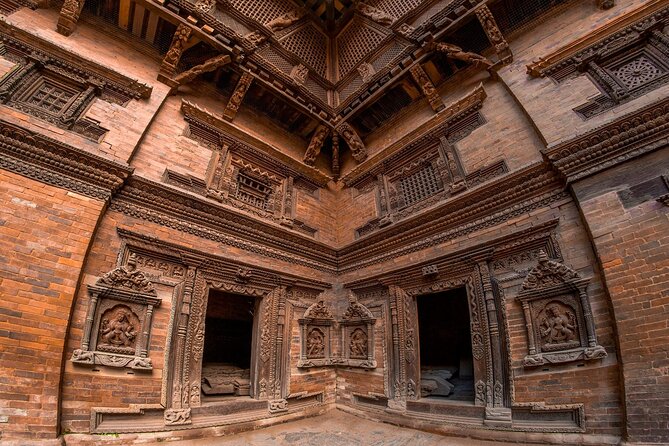
If Kathmandu is your front door to Nepal, Patan is one of the rooms where the building materials are made of faith, art, and old family networks. This tour keeps you on foot in a part of Patan where temples and courtyards sit close enough that you can feel the city’s rhythm in real time. In a few hours, you get a guided story line that links Buddhist practice, Hindu symbolism, and the Malla-era royal world.
The best part is that you are not just collecting photos. You are learning what the places meant, then seeing how that meaning still affects daily life, from shrines to how people move through the old lanes.
More of Patan and its courtyards:
- Bhaktapur & Patan Durbar Square Day Tours
★ 5.0 · 122 reviews - Kathmandu: Private Patan and Bhaktapur Sightseeing Tour
★ 4.7 · 64 reviews - Patan and Bhaktapur City Full Day Tour
★ 5.0 · 24 reviews
Price and Logistics: What You Pay, What You Might Still Pay
The advertised price is $5 per person, and that is the headline that makes this tour such a bargain. But here is the practical reality: the guide fee is included, yet several admissions are not.
What’s included is simple: an English speaking guide, plus the tour uses a mobile ticket. What is not included includes coffee or tea, and multiple site admissions. The big one is Durbar Square, where entry is listed as NRP 1000 (about US$ 9) paid in cash at the entrance. There is also a recommendation to pay a minimum donation of NRP 100 to the Royal Kumari.
So you should budget in two layers:
- The low base tour price you already paid
- On-site cash for places that charge admission
If you are traveling with students, there is a youth price for students with a student card, which helps make this even more affordable.
Start at Patan Dhoka: How the 3-Hour Walk Really Plays Out
You meet at Patan Dhoka in Lalitpur (Patan). The tour runs about 3 hours, and it ends back at the same meeting point, which is handy if you want to keep walking after the tour.
The route is built to work in short segments:
- A quick shrine stop
- A major Buddhist monastery stop
- A longer royal square and art museum block
- A final return to the gateway where the story of city security and murals is shared
Because the group is small (max 5), the guide can slow down when you have questions and speed up when you want to move on. In several guides’ approaches, the big theme is adaptability, which matters a lot in a place like Patan where alleys, courtyards, and details can pull your attention in different directions.
Ganesh Mandir Stop: The Fast Story That Sets the Tone
Early on, you pass Ganesh Mandir, a shrine dedicated to Lord Ganesha. It is a short stop, about 15 minutes, and admission is free.
This stop may feel like a detour, but it actually works as a warm-up. Ganesha shows up everywhere in South Asian religious life, and hearing the story of how he got his elephant head gives you a mental framework for what you will see next. Even if you already know the basics, a local guide tends to connect the symbolism to what people do day to day.
Practical note: since it is brief, go in ready to listen. If you want to linger for photos, ask your guide if you can add a minute.
More Historical Tours in Kathmandu:
- Private Kathmandu Sightseeing Tour | UNESCO World Heritage sites
★ 5.0 · 756 reviews - UNESCO Seven World Heritage Tour in Kathmandu
★ 5.0 · 253 reviews - Nepal Discovery Tour: Heritage Sites & Scenic Hill Easy Hike
★ 5.0 · 121 reviews - Kathmandu Private Sightseeing Tour | UNESCO World Heritage Sites
★ 5.0 · 109 reviews
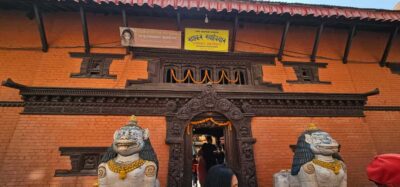
Golden Temple (Hiranya Varna Mahavihar): Newar Buddhism in a 14th-Century Setting
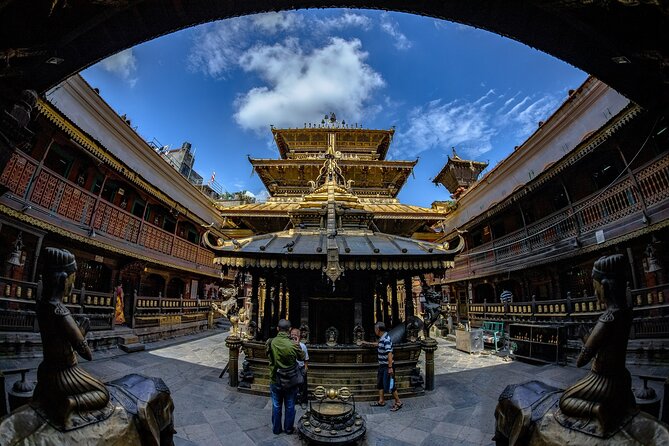
Next is the Golden Temple, Hiranya Varna Mahavihar, a Newari Buddhist monastery connected to the 14th century. The stop is about 15 minutes, and the admission is not included.
Here the guide focuses on two things:
- What Buddha’s teachings are, at least in the way local practitioners frame them
- How Vajrayana Buddhism relates to Newar practice, including mention of influences from Theravada
Why that matters for you: when you visit a Buddhist site in the Kathmandu Valley, the details are not just decorations. They often signal sect, ritual style, and the way teachings are practiced. Even during a short stop, you can come away with clearer context for what you are looking at.
If you do not want surprises, plan for possible entrance payment at the monastery. The tour listing clearly flags that admission is not included here.
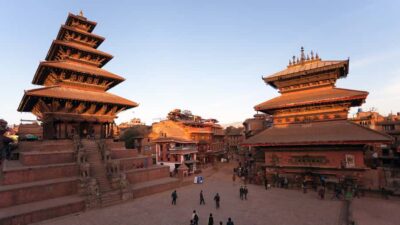
Patan Durbar Square: Malla Kings, Sacred Space, and the Royal Kumari
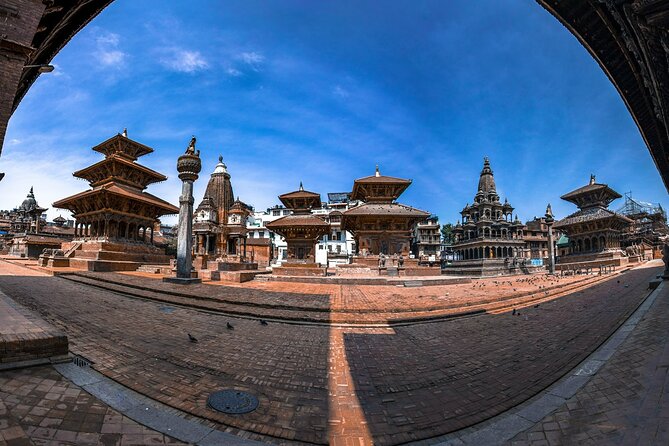
The walk then moves into Patan Durbar Square, with about 45 minutes set aside. Admission is not included, and the major cash payment is noted here.
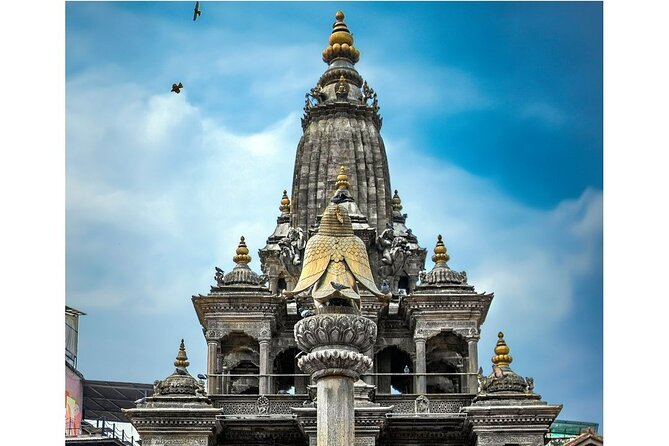
This square is described as the ancient royal palace area where the Malla Kings of Patan lived. That royal connection is key, because the architecture is not neutral. It was designed to communicate power, protection, and devotion.
You also get a special nod to the Royal Kumari, connected to the donation recommendation at Durbar Square. Even if you are not there for rituals, the guide’s explanation helps you understand why a donation might be suggested, and why the Kumari is so tied to how people think about the city.
What to watch for:
- Architectural details on shrines and buildings
- How the square’s layout supports ceremonies and daily movement
- The way stories about the kings connect with what you see on the stone
One consideration: if you are trying to keep your cash use minimal, you should still expect the Durbar Square fee. It’s a normal part of visiting this kind of site.
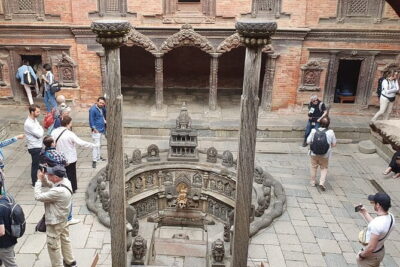
Patan Museum: Traditional Sacred Arts Inside an Old Royal Court
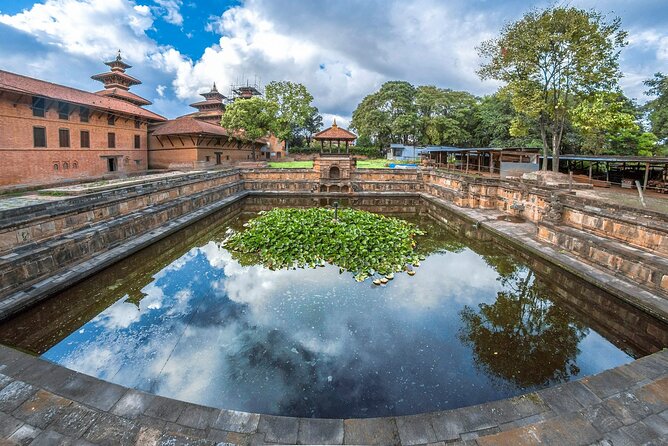
After the square, you head to the Patan Museum, with about 1 hour allotted. Admission is also not included.
The Patan Museum is described as being housed in an old residential court linked to Patan Durbar, so you are not just looking at exhibits in a separate building. You are viewing sacred arts in a setting that originally belonged to the city’s royal world.
This stop is especially helpful when you want to slow down. Temples and squares are great for street-level atmosphere, but museums help you connect the dots: why certain styles repeat, how artisans expressed religious belief, and how sacred art is meant to be read.
If you prefer hands-on learning, you might still enjoy the museum even with only an hour, as long as you keep a small focus. For example, pick one theme the guide mentions and track it through what you see.
Patan Dhoka Murals and Malla-Era Security: The Ending That Feels Like a Beginning
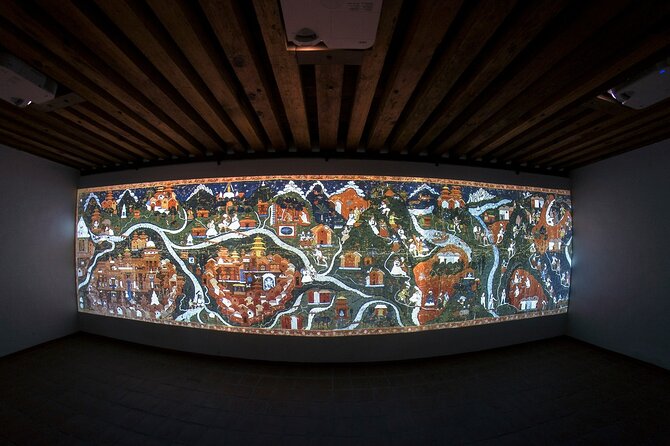
The tour ends by returning to Patan Dhoka, your meeting point. There is another 15-minute stop here, and admission is free.
This is where you get a story about how the Malla kings arranged security for the old city and how that connects to what you see at the gate. You also hear about the murals on the walls of the gate.
Why this ending works: a gateway is more than a landmark. It is a boundary between inside and outside, between old rules and new arrivals. When the guide ties the gate to security and murals, you come away with a stronger mental map of Patan’s old city system.
If you want to keep exploring after the tour, this is the perfect place to pause and decide your next walk, since you already understand what direction matters and why certain lanes feel important.
Guides Make the Difference: Bajey, Santosh, and Shreya Karki
Small group tours live or die on the guide, and the standout pattern here is storytelling plus real city navigation.
I like the way guides such as Bajey and Santosh are praised for taking people through narrow alleys and passageways they would not easily find on their own. That matters in Patan because the most interesting parts are often not on the biggest streets.
Another strong theme is pacing that matches your interests. One write-up mentions that the guide adjusts detail based on what the group finds interesting. In practice, that means if you care more about Buddhism, you get more of that angle. If you care more about architecture and daily life, the guide can lean that way.
And it is not just male guides. Shreya Karki is mentioned for being patient with deep knowledge of Nepal’s culture, which is a big deal if you like to ask lots of questions or if you prefer slower explanations.
Finally, there is a social side that can really help. Santosh, for example, is described as making you feel like a friend, respectful and kind. That tone keeps the tour from feeling like a lecture.
Who This Tour Suits Best (And Who Might Want a Different Option)
This tour suits you if you want:
- A 3-hour walking introduction to Patan with context, not just sightseeing
- A small group so you can ask questions without feeling rushed
- A focus on Newar Buddhism and Malla-era culture, tied to what you see
- A guide-led route through alleyways and courtyards
You might consider a different option if:
- You strongly dislike paying multiple on-site entrance fees, since several stops are not included
- You want a very relaxed, low-effort tour, because it is a walking route with multiple short stops
Practical Tips to Make Your 3 Hours Go Smoothly
First, plan for cash. Durbar Square requires cash payment at the entrance, and other admissions are not included at multiple stops. If you prefer fewer transactions, it helps to withdraw money before you start.
Second, wear walking shoes. Even though each stop is not long, you are moving between shrine areas, courtyards, and museum space. Stone floors and uneven paths are common in old city areas.
Third, tell your guide what you care about at the start. If you are into Buddhism, say so. If you are more into royal architecture and sacred art, say that. The tour is set up to be flexible, and the guides are praised for adjusting their detail level.
Fourth, give yourself permission to linger in the streets, but do it strategically. The tour is only about 3 hours, so if you find an especially good mural or small shrine, ask the guide if you can spend a few extra minutes without cutting off later stops.
Should You Book This Patan Heritage Tour?
If you want a high-value introduction to Patan that connects religion, art, and royal architecture into one coherent walk, this is an easy yes. The base price is extremely low for a private or small-group format, and the guide quality comes through in how routes are chosen and stories are explained.
Book it if you:
- Want a guided plan for Patan’s key sacred and royal sites
- Like the idea of a max 5 group and a guide who can tailor the pace
- Are fine with paying some on-site admissions in cash
Skip it or choose another option if you:
- Do not want to manage separate entrance fees during a short outing
- Prefer a purely outdoor walking tour with no museum component
In short, this is the kind of tour that helps you look at Patan with better eyes, because the guide connects the buildings to beliefs, and the lanes to daily life.
FAQ
How long is the Patan Heritage Tour?
The tour lasts about 3 hours.
What is the group size for this tour?
It is a small group tour with a maximum of 5 participants.
Where does the tour start and end?
The tour starts at Patan Dhoka in Lalitpur and ends back at the same meeting point.
Is the tour guided in English?
Yes. The tour includes an English speaking guide.
What entrance fees are not included?
Entrance to Durbar Square (NRP 1000, about US$ 9) is not included, and admissions for places like the Golden Temple and Patan Museum are also not included. Durbar Square is paid in cash at the entrance.
Do I need cash for the tour?
You should plan on having cash for Durbar Square entry at the entrance, since it is required there.
Are there any stops with free admission?
Yes. Ganesh Mandir and Patan Dhoka are listed as free admission.
Is coffee or tea included?
No. Coffee and/or tea is not included.
Is there a youth discount?
Yes. The youth price is for students with a student card.
What is the cancellation policy?
You can cancel for a full refund up to 24 hours in advance of the experience start time, and free cancellation is available.
Latest Kathmandu write-ups
- Visit Swayambhunath and Bauddhanath Stupa with Guide★ 5.0 · 5 reviews
- 10 days Annapurna Base Camp Trek★ 5.0 · 5 reviews
- Langtang Trek from Kathmandu 7 Days★ 5.0 · 5 reviews
- Island Peak Climbing with Everest Base Camp★ 5.0 · 5 reviews
- 7 Day Kathmandu Pokhara Tour★ 4.5 · 5 reviews
- Everest Mountain Flight★ 5.0 · 5 reviews
- Kathmandu city day tour (4 world heritage sites)★ 5.0 · 5 reviews
- Chandragiri Hill Cable Car Tour with Hotel Transfers from Kathmandu★ 4.5 · 5 reviews
Patan, compared.
Kathmandu and Patan Heritage and Living Goddess Experience Tour
Read our review →
Patan & Bhaktapur Durbar Square Tour with Lunch – Private/Group
Read our review →
Nagarkot Sunrise, Bhaktapur and Patan Durbar Square Tour in Kathmandu
Read our review →
Bhaktapur darbar, Patan Darbar square & Changu Narayan in 1 day
Read our review →Browse the lists this tour appears in