
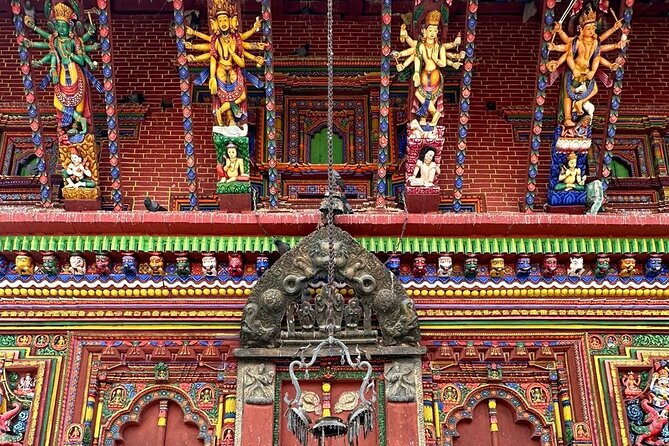
Reviewed · UNESCO WORLD HERITAGE SITES
Private Kathmandu Day Tour – UNESCO World Heritage Sites
This is the kind of Kathmandu day trip that makes sense when you want real meaning, not just photo stops. You’ll see Buddhist and Hindu holy sites in one tight loop, plus the old royal heart of Kathmandu City. I like that it runs as a private tour with pickup and drop-off, so you are not wasting time negotiating, and the day feels organized.
The main thing to consider is that it is religion-first sightseeing. You’ll be walking on uneven ground and stairs, and entrance fees are not included, so you should plan cash or be ready to pay on arrival.
Key highlights worth knowing
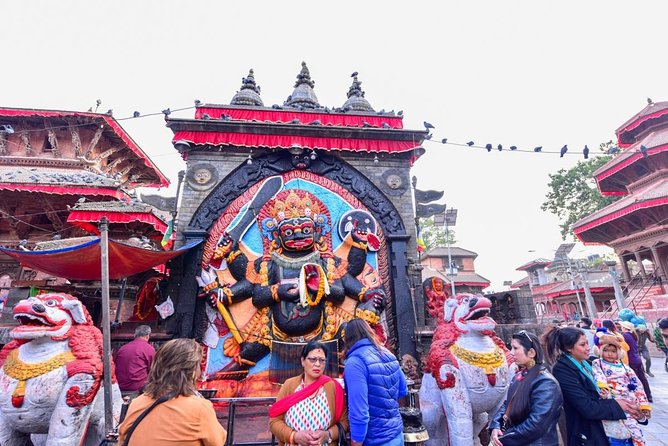
- Swayambhunath Monkey Temple viewpoint with prayer wheels at the base and the big Shakyamuni Buddha image on the western side
- Pashupatinath Temple pagoda-style architecture with silver doors, a golden roof, and carved details around Shiva shrines
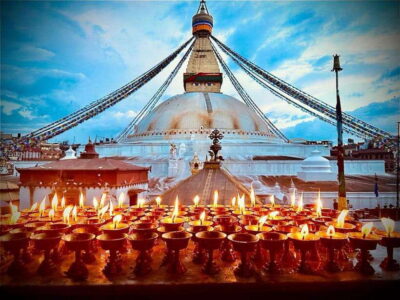
- Boudhanath Stupa after the 2015 earthquake with renovation completed and the site back as one of Nepal’s largest Tibetan stupas
- Kathmandu Durbar Square as a living museum tied to royal-era history and temple architecture from the 15th to 18th centuries
- Private, air-conditioned comfort plus hotel pickup and drop-off to keep the day from feeling like a logistics puzzle
A smart 6-hour loop through Kathmandu Valley’s UNESCO sites
This private tour is built for travelers who want a strong Kathmandu Valley overview without getting stuck in traffic, taxi confusion, or the “which side is the entrance?” problem. It is designed as a half-day rhythm: drive in comfort, meet each major site, then move on while your energy is still decent.
The value sits in the practical parts. You get an air-conditioned vehicle, and you also get hotel pickup and drop-off, which matters in Kathmandu because travel time can swing quickly. On top of that, the tour is private, meaning only your group is with the guide and driver, not a rotating stream of strangers.
One more thing I like: it mixes holy sites with Kathmandu’s historic city core. Swayambhunath and Pashupatinath give you major religious context, Boudhanath adds a distinctly Tibetan thread, and Kathmandu Durbar Square shows you how all of this thinking became stone, craft, and royal power.
More UNESCO World Heritage Sites in Kathmandu:
- Private Kathmandu Sightseeing Tour | UNESCO World Heritage sites
★ 5.0 · 756 reviews - Kathmandu: 7 UNESCO Sites with Lunch
★ 4.8 · 744 reviews - Kathmandu: Full Day 7 UNESCO Tour with Lunch – Private/Group
★ 5.0 · 415 reviews
What “private” changes for you
When you travel privately, you tend to move more smoothly. You can pause for questions, adjust at crowded moments, and spend a little longer at the details you care about. The tour format also makes it easier to keep your day on track, especially if you are juggling jet lag or you only have one day.
Price and what it actually covers at $45 per person
At $45 per person for about 6 hours, this tour is positioned as a value option for a full, high-impact day. In that price, you are paying for transportation (including air-conditioning), hotel pickup and drop-off, and a licensed guide.
What you need to budget separately is entrance fees and food. The tour lists an entrance fee of NPR 2600 (about USD 21) plus monument admissions that are not included for the stops. Food and drink are also not included.
So the real question is not the headline price. The real question is whether you want a guided route that hits the big UNESCO highlights efficiently. If you are trying to do these sites on your own, you will spend time planning routes, figuring out entry points, and managing transport gaps. Paying for a guide and car is usually the faster, less-stressful route when you only have one day.
Pickup to drop-off: how the day stays organized
The tour runs for about 6 hours, with pickup and drop-off. That time window matters because it shapes what kind of experience you get. This is not a “linger all day” pace. It is a “see the key sights, learn what you’re looking at, and keep moving” pace.
Because the stops are spread across the valley, the vehicle ride is part of the experience. You’re not just hopping between temples, you’re getting the feel of how the Kathmandu Valley works as a network, with religious sites placed across neighborhoods and hills.
More Historical Tours in Kathmandu:
- UNESCO Seven World Heritage Tour in Kathmandu
★ 5.0 · 253 reviews - Nepal Discovery Tour: Heritage Sites & Scenic Hill Easy Hike
★ 5.0 · 121 reviews - Kathmandu Private Sightseeing Tour | UNESCO World Heritage Sites
★ 5.0 · 109 reviews - Kathmandu World Heritage Tour
★ 5.0 · 74 reviews
Air-conditioned vehicle is not a luxury here
Kathmandu weather can be unpredictable, and even on mild days you’ll appreciate AC once you’re back in the car. It also helps when you have family members, older travelers, or anyone who gets tired quickly on uneven walking surfaces.
Stop 1: Swayambhunath Monkey Temple on the hilltop
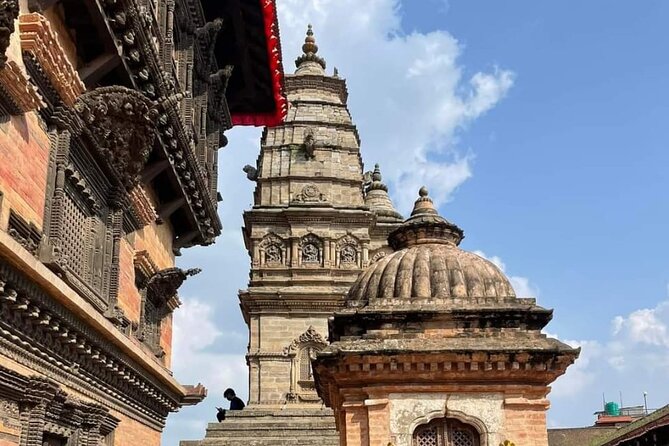
Swayambhunath is one of those places where the approach already feels like the start of a story. It sits on a hill on the northwest side of the Kathmandu Valley, and the whole area is full of Buddhist stupas and shrine structures with deep age. It is especially popular for Buddhist pilgrimage.
What I like here is how the site reads from different levels. At the base, you’ll notice prayer wheels surrounding the foundation area. Up the hill, there are shrines and statues placed from lower levels toward the top. On the western side, you can spot the largest image of Shakyamuni Buddha located on the pedestal.
There’s also a small pond in the setting. Even if you’re not spending a long time lingering, it helps set the mood. This is not just a monument, it’s a living sacred space with regular activity.
The drawback to plan for
Swayambhunath involves climbing. You’ll want comfortable shoes and a steady pace. If you have mobility limits, this stop can be the hardest part of the day. Also, because it is famous for monkeys, you should keep an eye on bags and anything loose.
Stop 2: Pashupatinath Temple and the power of Shiva
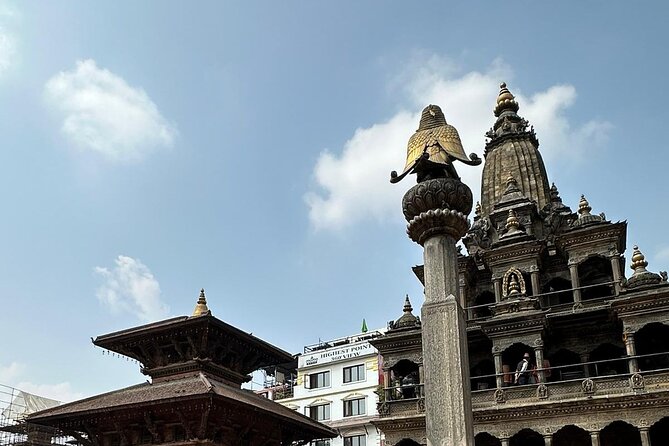
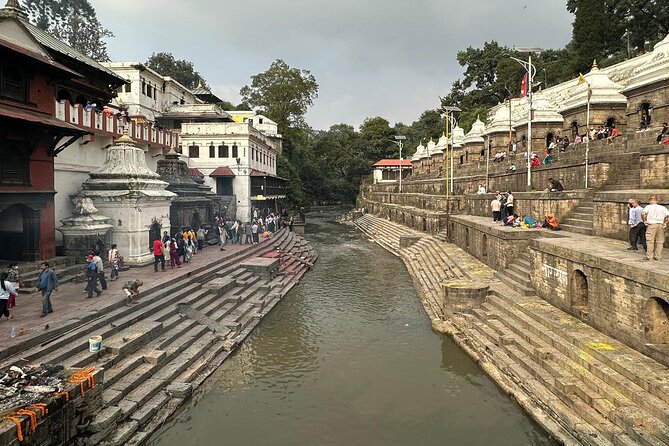
Pashupatinath is one of Nepal’s most important Hindu temples, dedicated to Lord Shiva. In simple terms, it’s a major spiritual center, and you can feel that in the way the area is arranged and the number of shrines around the main temple zone.
Architecturally, it’s striking. The temple is built in a pagoda style, with four silver doors and a golden roof, plus wood carvings that add to the sense of craft and care. The stone sculpture details are also highlighted as a standout feature.
Then there is the scale of the sacred complex. The area around Pashupatinath includes many structures tied to Shiva, including Shivalaya shrines and other Shiva-related shrines and phallic symbols known as jyotirlinga. You also have Guheswori Temple nearby, dedicated to Shiva’s consort.
How a guide changes this stop
With a guide, you are more likely to notice the patterns: why certain shrine types are placed where they are, and what it means when you see a cluster of Shiva-related shrines within the wider Pashupatinath area. Even a short explanation turns the visit from sightseeing into understanding.
This is also where dress and respectful behavior matter most. You are in an active religious site, so plan to cover appropriately and follow the guidance of your guide.
Stop 3: Boudhanath Stupa and the return after April 2015
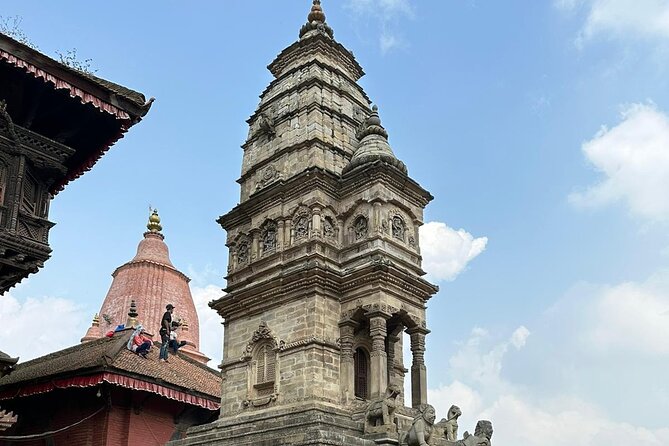
Boudhanath Stupa is one of the best-known places to visit in Kathmandu if you want a clear Tibetan Buddhist presence. It lies on the northeastern outskirts of the valley, and it is surrounded by Tibetan settlements, which shapes the atmosphere around it.
A key part of the story is the 2015 April earthquake. The stupa was devastated then, and now renovation is completed. The rebuilt structure is described as one of the largest Tibetan stupas in Nepal, and it’s also listed as a UNESCO World Heritage Site.
What I like is the visual simplicity that becomes powerful at scale. The stupa is spherical in structure, and because of its size and setting, it reads like a landmark you can keep returning to in your mind even after you leave. It’s also a center point for Tibetan culture, and Thanka production is popular in the area.
Consideration: timing and crowd energy
Boudhanath can be lively because it draws Buddhist visitors and cultural activity around it. The good news is that your guided timing helps you avoid the feeling of arriving too late with energy already drained. You’ll still want patience, and you’ll want to watch your footing around busy edges of the square area.
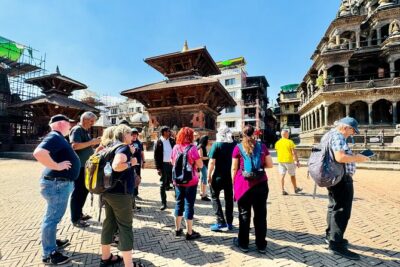
Stop 4: Kathmandu Durbar Square, the royal-era living museum
Kathmandu Durbar Square is where history turns into physical craft. It was the residence of the Royal Nepalese family until the 19th century, when coronation ceremonies took place. It sits in the heart of Kathmandu City near Thamel, which makes it easy to connect with other areas later in your trip.
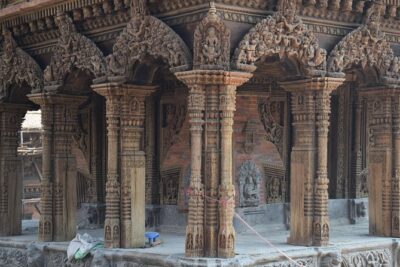
I love this stop because it feels layered. Buildings, temples, art, and sculptures reflect periods from the 15th to 18th centuries, so you are looking at a real timeline in stone and wood. It’s often described as a living museum of temples because the architecture is not just static, it’s woven into the daily cultural fabric of the city.
In front of Kathmandu Durbar Square, there is a big Hanuman sculpture that gives you a clear orientation point as you begin to explore the complex.
What can feel tricky
This is one of the places where walking through a dense historic layout can slow you down. It is not hard, but it can take more time than you expect if you stop to read and observe multiple facades. Since this tour is about covering several UNESCO highlights in one day, your time here is best spent thoughtfully, not trying to see every corner like a checklist.
How the guide and flexible pacing make the difference
The tour includes a licensed, experienced tour guide. That matters because these sites are loaded with symbols, shrine categories, and historical context. With a good guide, you’ll notice small distinctions that most people miss when they arrive without an explanation.
There is also evidence that the operator works to match the request to the pace. In past service, a private driver and tour guide named Kamil helped make the route feel flexible, so the visit could fit what the group wanted to prioritize.
And if service quality is your concern, this operator is linked with owner Chandan Thapa in customer thanks for service. That kind of visible ownership usually translates into a higher chance that expectations are handled directly.
What to wear, bring, and plan for on a religious site day
You are visiting temples and stupas, so comfort and respect matter more than fashion.
- Wear comfortable shoes with grip, because you will walk on uneven ground.
- Dress with shoulders and legs covered as a general rule for entering sacred zones.
- Keep your phone charged, but don’t treat the sites like a photo shoot only. If you see a worship area, step back and watch the flow.
- Expect monument entrance fees to be paid separately. Bring cash if you can.
Who this tour suits best (and who might want a different plan)
This is a strong fit if you:
- Have one day in Kathmandu and want a serious UNESCO overview
- Want a private guide and a heated or air-conditioned ride to reduce stress
- Travel with family or mixed ages and need a manageable pacing plan
It may be less ideal if you:
- Want to spend long hours at only one site and go deep
- Need a fully low-walking, step-free itinerary, because some stops include climbs and uneven surfaces
Should you book this private Kathmandu UNESCO day tour?
Book it if you want the practical version of Kathmandu Valley UNESCO sightseeing: clear route, major sites in one day, and a guide who helps you make sense of what you’re seeing. The $45 per person price is reasonable for a private half-day with hotel pickup, air-conditioned transport, and guided interpretation, especially when entrance fees and food are handled as separate, known costs.
Skip or consider another option if you have limited mobility, you hate walking climbs, or you are expecting a slow, relaxed day with lots of downtime between stops. This tour is efficient by design.
If your goal is to get your bearings fast, see the iconic places that define Kathmandu’s spiritual map, and then enjoy the rest of your trip with confidence, this is a solid booking.
Latest Kathmandu write-ups
- Langtang Valley Trek★ 5.0 · 3 reviews
- Khopra Danda Trek★ 5.0 · 3 reviews
- Langtang Valley Trek from Kathmandu★ 5.0 · 3 reviews
- 5 night / 6 days Kathmandu Nagarkot Chitwan Pokhara tour★ 5.0 · 3 reviews
- Nepal Highlights Tour: 5 Nights 6 Days Kathmandu & Pokhara Tour★ 5.0 · 3 reviews
- Kathmandu Valley Private Day Tour★ 5.0 · 3 reviews
- Conquer the Himalayas: The Ultimate 16-Day Annapurna Circuit Trek★ 3.5 · 3 reviews
- Kathmandu Heritage Day Tour★ 5.0 · 3 reviews
UNESCO World Heritage Sites, compared.
Private Kathmandu Sightseeing Tour | UNESCO World Heritage sites
Read our review →
Browse the lists this tour appears in