
Reviewed · DURBAR SQUARES
Swayambhu and Kathmandu Durbar Square Half Day Tour
If you want a fast, meaningful taste of Kathmandu, this half-day loop is a smart match. You’ll connect two UNESCO World Heritage sites in about four hours, then squeeze in extra temple stops and a look at how people actually move through the area day to day.
I especially like that it includes hotel pickup and drop-off plus entrance tickets, so you do not lose time figuring out logistics. I also like the focus on interpretation, with a local guide helping you read the Hindu and Buddhist symbols instead of just ticking off monuments.
One thing to consider: the schedule is tight. Each stop is short, so if you want slow wandering, lots of photos, or deep time in one temple complex, this might feel like a sprint.
Key things to know before you go
- Four hours, two UNESCO sites: Swayambhunath and Kathmandu Durbar Square, with extra temple stops added in.
- Hotel transfers included: You get collected and returned to your hotel, which matters in Kathmandu traffic.
- Entrance fees covered: You spend your energy on temples and courtyards, not ticket counters.
- A guide who explains symbols: You’ll get context for the Hindu and Buddhist traditions you’re seeing.
- Rare-feeling extra stop: Amideva Buddha Park is tucked inside the Monkey Temple area.
- Durbar Square highlights in one route: Kumari Chowk, Hanuman Dhoka, Basantapur Tower area, and Akash Bhairav Temple.
A half-day Kathmandu route that hits the right spiritual landmarks
This tour is built for one main goal: get your bearings fast in Kathmandu. You’re not just visiting two famous places, you’re also learning how the city’s Hindu and Buddhist worlds show up in daily life, carvings, courtyards, and temple layouts.
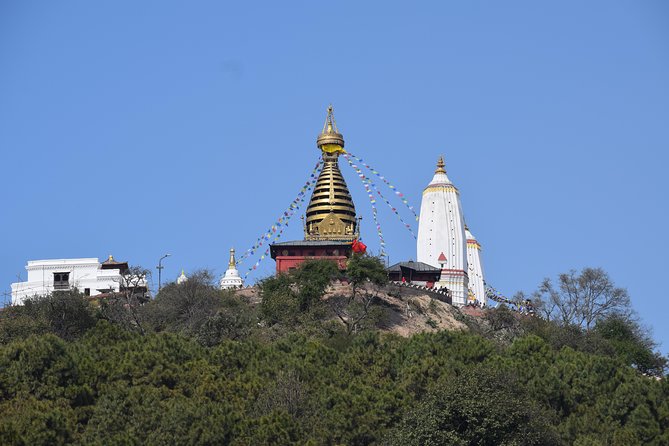
Swayambhunath (often called the Monkey Temple) is perched high above the city. From there, you can look out over Kathmandu and the valley beyond, which instantly helps you understand where everything sits. Then you drop into the older, courtyard-heavy heart of the city at Kathmandu Durbar Square, where royal dynasties once lived and ruled until 2008.
If you’re short on time, this kind of route is a practical win. You get structure, interpretation, and pacing, without spending hours planning or bouncing around with unclear directions.
More of Swayambhunath:
- Kathmandu: Chandragiri Cable Car and Monkey Temple Tour
★ 4.8 · 139 reviews - Monkey Temple – Swayambhunath Tour – Private/Small Group
★ 5.0 · 50 reviews - Private Chandragiri Cable Car and The Monkey Temple Tour
★ 5.0 · 30 reviews
Hotel pickup, private transport, and how that affects your day
The tour includes hotel pickup and drop-off, plus transport by private vehicle. That sounds basic, but in Kathmandu it’s the difference between enjoying your morning and burning it. You avoid the hassle of getting to meeting points and navigating busy streets on your own.
It also runs as a private tour/activity, meaning only your group participates. That’s nice for pacing, questions, and moving at a comfortable speed. The itinerary is still time-based, so the guide will keep you moving, but you are not stuck waiting for strangers to catch up.
One more practical point: the tour is listed as near public transportation. You probably won’t use it because pickup is included, but it can be reassuring if you have to plan around timing or if you change hotels.
Stop 1: Swayambhunath Monkey Temple and the viewpoint that makes sense of the city
Swayambhunath sits on a hill overlooking Kathmandu and the valley beyond. That elevated position is part of the magic. Even if you’ve only got a short visit, you quickly get the big-picture view that makes the rest of your trip easier.
The nickname Monkey Temple comes from the monkeys you’ll see around the area. They’re part of the visual scene, and they also help create the lively, slightly chaotic atmosphere that comes with one of the city’s most visited religious sites. Keep an eye on your belongings and be mindful in crowded lanes, especially if you’re carrying a bag you would normally swing over your shoulder.
What I like about starting here is how it sets the tone. You’re stepping into a place where multiple generations have walked the same paths. And since this stop includes admission, you can focus on temple viewing instead of ticket handling.
Time is about 45 minutes, so you’ll want to decide quickly what you want most:
- A wide overview from the hilltop areas
- Close-up views of the stupa and surrounding religious details
- Time to walk inner paths slowly enough to notice symbols
A short tip: look upward as well as around. These complexes are designed so you notice different parts as you move, not all at once from one spot.
Amideva Buddha Park inside the Monkey Temple area
Inside the Swayambhunath complex, you’ll also visit Amideva Buddha Park. This is a short stop, around 15 minutes, but it adds something different from the main stupa experience.
Here you’ll find a big statue featuring three symbols and Buddha, all within the Monkey Temple site area. The interesting part is that it can feel quieter and less repeat-visited than the main viewpoints. The fact that it’s tucked into the larger complex means the guide can help you find it and understand what you’re looking at, instead of you spending your time wandering.
I like this stop because it rewards the people who want a little more than the postcard version. Even though the time is brief, the setting can make it feel like a bonus chapter of the story of the hill.
If you’re the type who enjoys stopping at smaller, less obvious corners during tours, you’ll likely appreciate this one.
More of the three Durbar Squares:
- Bhaktapur & Patan Durbar Square Day Tours
★ 5.0 · 122 reviews - Kathmandu Sunset Tour by Rickshaw Including Durbar Square Visit
★ 5.0 · 73 reviews - Old Kathmandu Walking Tour, Historic World Heritage Durbar Square
★ 5.0 · 22 reviews - City tour of Bhaktapur and Patan Durbar Square
★ 4.5 · 20 reviews
Kathmandu Durbar Square: royal courtyards, sacred architecture, and daily life
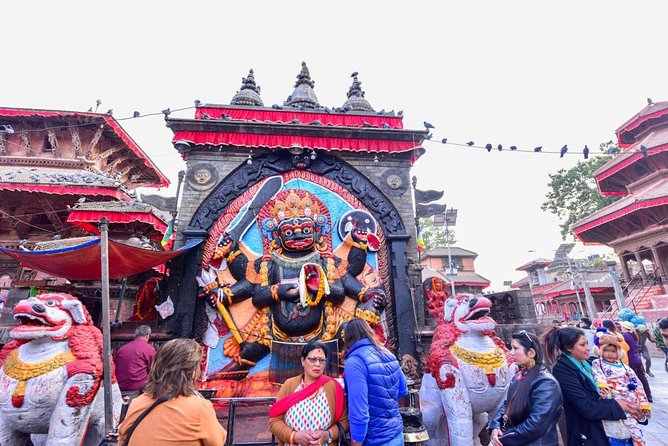
Then the tour shifts to Kathmandu Durbar Square, one of the most important places to understand Kathmandu’s past. For well over 1000 years, it was home to the royal dynasties that ruled the Kathmandu Valley until 2008. It was also where kings were crowned, lived, and reigned.
That context matters. When you walk around a square like this, it’s easy to see it as just stone and carvings. But once you know it was tied to coronations and governance, the details start making more sense. You’ll likely spot how the layout of courtyards and temple entrances reflects power, religion, and community life in the same space.
This stop is about 30 minutes, which is enough to get the overall feel, especially with a guide pointing out what to notice. You will not have time to explore every side street or every doorway, so focus on the key areas you pass and listen for the explanations that connect the symbols to what the site used to represent.
Also, this is where you’ll feel the rhythm of Kathmandu more directly. People move through the square, and you’ll see the connection between temple life and everyday living.
Kumari Chowk and the peacock window moment
Inside Kathmandu Durbar Square is Kumari Chowk, a popular stop for one reason: you may have a great chance to see the live Goddess Kumari. Along with that, you’ll be in the right place to notice the famous peacock window and fine carved details.
This stop is short, around 15 minutes, so the main thing is timing and attention. If the viewing is available when you arrive, it can be one of the most memorable moments of the day because it ties the site to a living tradition.
Even if you do not catch a clear view of Kumari, the carvings and the way the space is used by locals can still be worthwhile. Either way, this is a stop where your guide’s pointers help. The guide can tell you what you’re seeing and how it fits into the broader Hindu tradition represented here.
If you’re someone who loves ceremonial culture and symbolic art, this is the kind of stop that makes half-day tours feel worth it.
Hanuman Dhoka, Basantapur Tower area, and the texture of the square
After Kumari Chowk, the route continues through other important points inside the Durbar Square orbit.
Hanuman Dhoka
You’ll visit Hanuman Dhoka, another well-known area within the square. This is described as a chance to enjoy the local life and learn about the people and their culture. It’s also a place where you can feel less like you’re at a museum and more like you’re walking through a working part of the city.
Time is about 15 minutes, so you’ll get enough to orient yourself and notice the character of the space, but you won’t linger long. If you want photos, this is a good moment to do it, but keep your attention on what the guide is pointing out.
Basantapur Tower area
Next is the Basantapur Tower area, described as an open area around the durbar square and a busy street spot for handicrafts. This is about 15 minutes, and it’s where the tour adds a practical cultural layer.
You’ll have an easy chance to look at small-scale local shopping. Since the tour does not include food and drinks, this stop can also help you plan what to eat later, based on what you see and what sounds good to you in the moment.
A local shopping market on the way
The itinerary also includes a stop at one of Kathmandu’s busiest local shopping markets, located on the way to Kathmandu Durbar Square. This is more about atmosphere than a structured shopping spree. You’ll get to watch everyday commerce, which helps the historic sites feel less isolated.
If you’re traveling with limited time, this is a smart trade. Instead of turning the whole tour into shopping, you get a taste of local life without losing your main cultural targets.
Akash Bhairav Temple and a sweet break with lassi
The final temple highlight is Akash Bhairav Temple, described as small but one of the busiest places in town. Time is again about 15 minutes, which means you’ll experience the energy quickly, then move on.
One nice detail here is the mention that you can have delicious lassi. Since food and drinks are not included, you’re choosing to add it, but it’s a natural fit for a short temple stop. If you’re feeling a little temple-fatigued by then, a cool drink can reset you before you head back.
This stop also works well for people who like sensory travel. Busy temples bring sound, movement, and faces into the frame. It feels like Kathmandu rather than a staged attraction.
Price, timing, and when this $65 tour is great value
At $65 per person for about four hours, this is priced like a mid-range guided excursion. The key value is what’s included: hotel pickup and drop-off, private transport, a professional guide, and admission tickets to both main sites.
If you were doing this on your own, you would still need to manage transit, ticketing, and translation of what you’re looking at. The guide is what turns the carvings, courtyards, and symbolism into something you can actually understand in a short window.
This tour is especially worth it if:
- You arrive in Kathmandu with limited time and want structure.
- You prefer a guided route through the busy center of town.
- You want both Swayambhunath and Kathmandu Durbar Square without spending your day hopping between ideas.
- You like the idea of learning the “why” behind what you see.
It may be less ideal if:
- You dislike tight schedules and prefer longer, slower visits.
- You’re mainly interested in shopping or a long food-focused day.
- You plan to stay until late at night exploring markets, because this ends in roughly half a day.
Also, note the pacing. Each major stop is short. That’s not a flaw, it’s the design. You get breadth, not hours in one place.
What you’ll walk away understanding (and what to expect on the ground)
This is a tour that teaches by context. You’ll connect Hindu and Buddhist traditions to physical places: stupa areas on a hill, royal courtyards in Durbar Square, and smaller temples with strong local presence.
I like that it highlights how religion and daily life blend in the same city spaces. Kathmandu is not only impressive architecture. It’s people using those spaces, decorating them, moving through them, and keeping traditions alive.
You should expect crowds at major sites, especially around the Monkey Temple and the Durbar Square area. Plan on moving carefully through tighter lanes. With only about four hours total, you’ll want to keep your phone charged and your energy decent.
If you’re the kind of traveler who enjoys asking questions, this is a good fit. A good guide can make even short stops feel like you learned something real instead of just seeing buildings.
One review highlight includes a guide named Pankaj, praised as informative and fun. That kind of guiding style is exactly what you want on a short route: clear explanations without turning the day into a lecture.
Should you book this half-day Swayambhu and Durbar Square tour?
Book it if you want a structured, high-value introduction to Kathmandu in about four hours, with hotel transfers and entrance fees handled. It’s a strong choice for first-timers, time-crunched travelers, and anyone who wants to understand the cultural meaning behind what they’re seeing.
Skip it if you’re looking for a slow, flexible day with lots of extra time per site. This route is designed to cover ground, so you’ll have to let go of deep wandering.
My quick decision rule: if you feel confident you can enjoy a “see a lot, learn a lot” pace, this tour is a great use of a half day in Kathmandu.
FAQ
How long is the Swayambhu and Kathmandu Durbar Square half-day tour?
It runs for about 4 hours (approx.).
Is hotel pickup and drop-off included?
Yes. Hotel pickup and drop-off are included.
Which places are included on the itinerary?
You visit Swayambhunath (Monkey Temple), Amideva Buddha Park, Kathmandu Durbar Square, Kumari Chowk, Hanuman Dhoka, Basantapur Tower area, Akash Bhairav Temple, plus a local shopping market stop on the way.
Are entrance tickets included?
Yes. Admission tickets to both main places are included, and entrance fees are covered for the stops listed.
Are food and drinks included?
No. Food and drinks are not included.
Is this tour private or shared?
It is a private tour/activity. Only your group will participate.
What is the cancellation policy?
Free cancellation is available. You can cancel up to 24 hours in advance for a full refund. If you cancel less than 24 hours before the start time, the amount paid is not refunded.
Latest Kathmandu write-ups
- Langtang Valley Trek★ 5.0 · 3 reviews
- Khopra Danda Trek★ 5.0 · 3 reviews
- Langtang Valley Trek from Kathmandu★ 5.0 · 3 reviews
- 5 night / 6 days Kathmandu Nagarkot Chitwan Pokhara tour★ 5.0 · 3 reviews
- Nepal Highlights Tour: 5 Nights 6 Days Kathmandu & Pokhara Tour★ 5.0 · 3 reviews
- Kathmandu Valley Private Day Tour★ 5.0 · 3 reviews
- Conquer the Himalayas: The Ultimate 16-Day Annapurna Circuit Trek★ 3.5 · 3 reviews
- Kathmandu Heritage Day Tour★ 5.0 · 3 reviews
Durbar Squares, compared.
Kathmandu Sunset Tour by Rickshaw Including Durbar Square Visit
Read our review →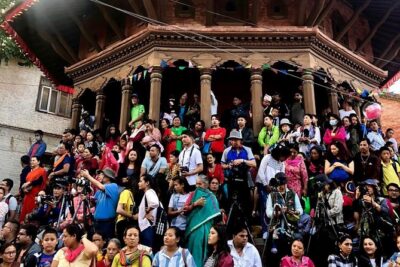
Old Kathmandu Walking Tour, Historic World Heritage Durbar Square
Read our review →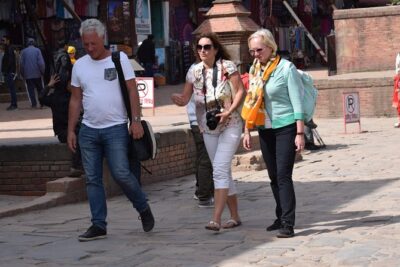
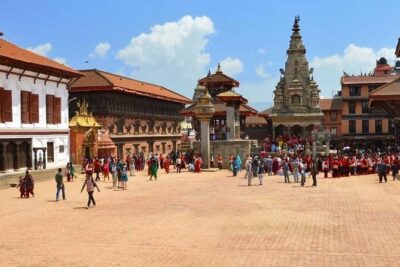
Patan & Bhaktapur Durbar Square Tour with Lunch – Private/Group
Read our review →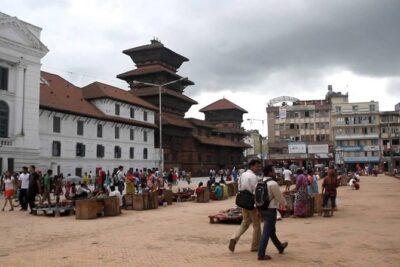
Private Half-Day Tour of Kathmandu Durbar Square and Swayambhunath Temple
Read our review →
Browse the lists this tour appears in