
Reviewed · MARDI HIMAL TREK
4 Day Mardi Himal Base Camp Trek from Pokhara
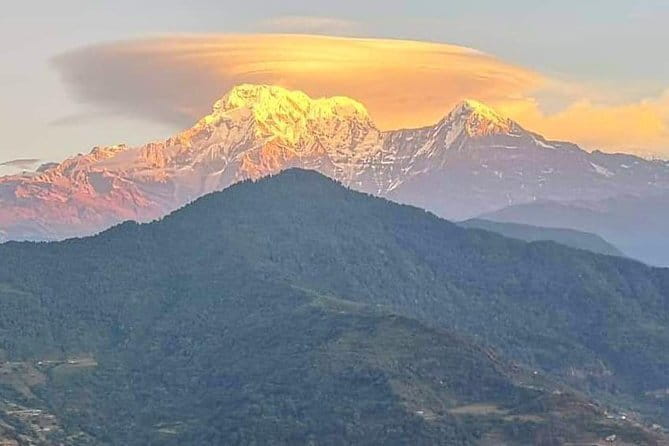
Mardi Himal Base Camp is one of those treks where the hard part is mostly timing and effort, not months of logistics. You climb through rhododendron forests, stop at tea house style places, and then end up staring at Himalayan giants like Machhapuchhre, Annapurna, and Hiunchuli from a very rewarding viewpoint.
What I like most: the trip is tightly organized from start to finish, and the guide support is repeatedly praised by real trekkers. I also like that you’re not just paying for walking, you’re paying for permits, official documents, and transfers, so you can focus on the trail and not the paperwork. In some groups, guides like Krishna, Biru, and Birendra come up again and again for being friendly, attentive, and on top of the pace.
One consideration: the trekking is not flat. Day 1 and Day 3 both include steeper sections, and the days run long enough that you should have moderate fitness and be ready for a serious 5 to 8 hour effort.
Key highlights before you go
- Short, realistic 4-day plan that starts in Kande and takes you to Mardi Himal Base Camp without a long multi-week grind
- Tea house trekking through forests and villages, with food and drinks available for purchase
- Guided, permit-covered experience with an English speaking trek guide and all official documents handled
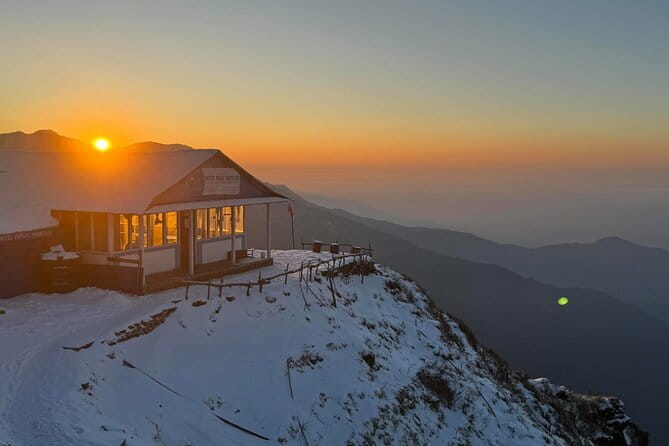
- Village-to-village rhythm that includes Forest Camp, Low Camp/High Camp, and a finish via Siding Village
- Transfers included with round trip transport by sharing bus or jeep based on the route
Why the 4-day Mardi Himal Base Camp trek works so well from Pokhara

If you’re based in Pokhara and you want mountain views without turning your vacation into a full-on expedition, this trek is a strong match. Mardi Himal sits in the Annapurna region, and the route is built to be doable in a handful of days while still feeling like you truly went into the mountains.
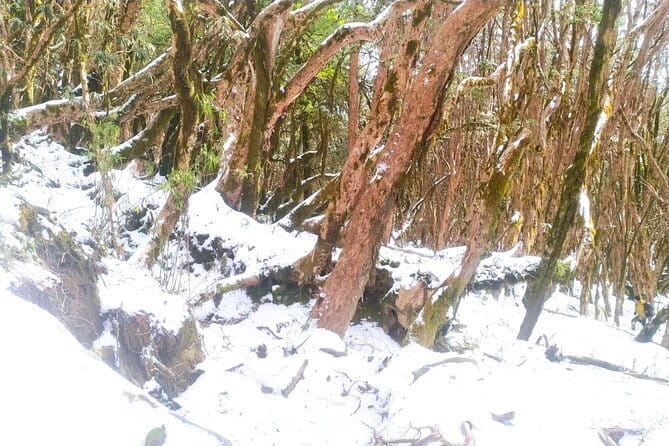
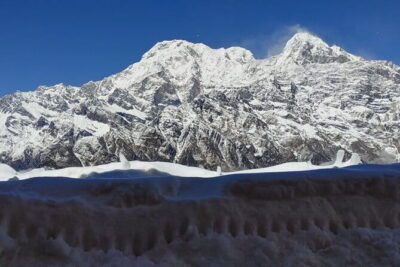
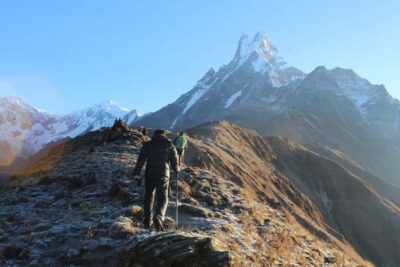
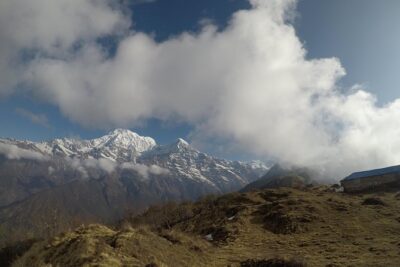
The best part is how the scenery changes as you gain elevation. Early on, you’re walking through lush rhododendron forests and local villages. As the days progress, you move into higher, rockier, more dramatic terrain with alpine meadows and wildflowers mentioned as part of the trek experience. Then you get the payoff: big panoramic views of peaks including Machhapuchhre, Annapurna, and Hiunchuli in the background as you approach the base camp area.
This is also the kind of trek where a good guide makes a noticeable difference. In the reviews, guides such as Krishna, Biru, and Birendra are highlighted for being helpful and attentive. That matters because the trail can get steeper on the upper days, and you’ll feel better when someone is pacing you and watching the details.
More on the Mardi Himal ridge:
- Pokhara: 4-Day Mardi Himal Trek
★ 4.9 · 59 reviews - Private Mardi Himal Trek
★ 5.0 · 42 reviews - Mardi Himal Trek
★ 5.0 · 30 reviews
Day 1: Pokhara to Kande, then the steep climb to Forest Camp
Your day starts with a drive from Pokhara to Kande, which takes about an hour. The trekking portion begins from Kande and you’ll work your way through forests and villages right away. This is one of the reasons I like Day 1. It doesn’t throw you onto a barren trail. You get to warm up your rhythm with changing scenery and small community stops before the real climb.
The time commitment on Day 1 is about 5 to 6 hours, and the trail is described as steep in places. That steepness is the main thing to plan for. It’s not just about leg strength, it’s about how you manage your breathing and how often you take short pauses. If you go out fast, the day can feel longer than it actually is.
At the end of Day 1, you reach Forest Camp, with accommodation in a tourist standard guest house. Think simple, practical, and focused on sleep and recovery. The inclusion of an emergency normal first aid kit with the guide is a quiet comfort factor here, especially if you’re traveling with less trekking experience.
A small but important detail: the tour includes all entrance fees and official documents, which means you’re not dealing with permissions mid-trip. That saves time and stress when you’re already focused on walking and acclimating at the same pace you can handle.
Day 2: From Low Camp toward High Camp with gradual ascent and mountain views
Day 2 starts with a gradual ascent through the forest, which is a nice shift from Day 1. You’re still hiking for about 6 to 7 hours, but the route is described as relatively easy compared to the steeper sections elsewhere. In practical terms, this day is about finding your stride before the real challenge of reaching the base camp area.
As you climb higher, you’ll start seeing stunning mountain views more clearly. This is the day when your focus can shift from just putting one foot in front of the other to paying attention to what you’re walking toward. If you’re the kind of traveler who likes stopping for photos, this is a better day for it because the effort feels steadier.
You’ll reach High Camp area for the night, with guest house accommodation included. The name Low Camp and High Camp appear in the itinerary summary, but the key idea is the same: you’re moving upward and building your day-to-day altitude comfort gradually rather than lurching from flat to steep.
Food and drinks are not included, but they are available to purchase along the way. I recommend budgeting a bit for meals here. Tea house style trekking works because you can eat when you’re ready, but you should still plan for payment, especially if you want hot drinks to manage cold mornings.
Day 3: Steeper climb to Mardi Himal Base Camp, panoramic payoff, and a long day
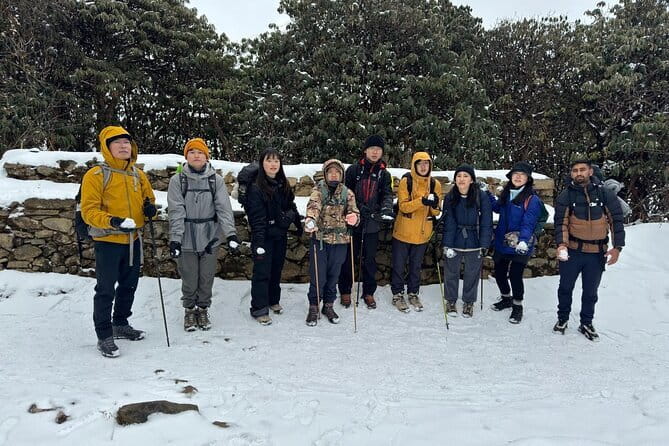
Day 3 is where the trek earns its reputation for being memorable. The trail becomes steeper and more challenging as you climb higher. You’ll spend about 8 hours on the trek, and the itinerary notes that the upward push takes around 3 to 4 hours to reach the base camp area (with High Camp connected to the timing in the plan).
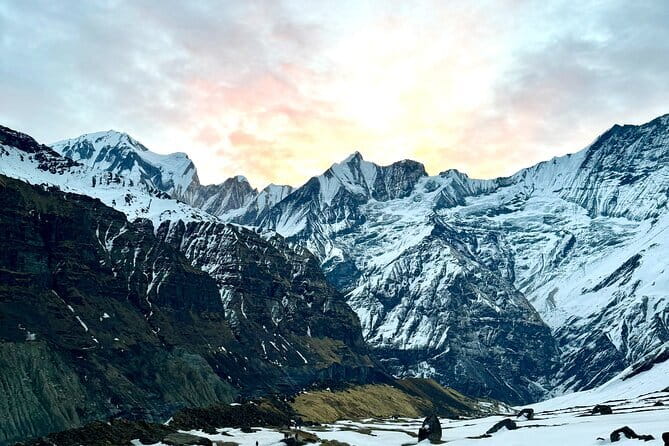
The reason this day feels worth it is the view line. Once you’re up there, you get panoramic views of the mountains and the valley below. That combination is a big part of why people choose Mardi Himal. You see layers of terrain, not just one peak in the distance. And with Machhapuchhre, Annapurna, and Hiunchuli in the mix, your camera roll can get out of control fast.
Even with a good guide, this day is physical. The best way to handle a steep day is not heroics. Go steady. Drink when you can. Take short, frequent breaks. You’ll feel less drained than if you try to power through.
Accommodation continues in the tourist standard guest house style, and the guide’s normal first aid kit gives you one more layer of reassurance. It’s a small inclusion, but it signals that the company is thinking about practical safety, not just selling the idea of a trek.
More to compare around Pokhara
- ZipFlyer Nepal – The World’s Steepest Zip-line
★ 5.0 · 608 reviews - Bungee Pokhara by HighGround Adventures
★ 5.0 · 366 reviews - From Pokhara: Sarangkot Sunrise Himalayas Tour
★ 4.7 · 218 reviews - ATV Adventure Tour in Pokhara, Nepal
★ 5.0 · 194 reviews
Day 4: Forest-and-village descent to Siding Village and the drive back to Pokhara
Day 4 starts with a descent through forests and villages, which is often easier on the lungs and harder on the knees. The route includes views of traditional Nepalese houses and terraced fields, which adds a cultural texture to the day. You’re no longer climbing toward the clouds, you’re walking back toward real life.
The day has a two-step travel flow. First, you trek about 5 to 6 hours to reach Siding Village. Then you have another 2 to 3 hours of drive back to Pokhara. The total day is listed as about 8 hours, which fits that rhythm.
If you’re smart with your pacing on the descent, Day 4 feels like a satisfying cooldown. If you go fast downhill, it can feel like a punishment. I’d rather you arrive in Pokhara tired in a good way, not limping.
At the end of the trek, hotel pick up and drop off are included. That’s one of those details that matters more than people think. After four days, you want the logistics handled so you can shower, eat something satisfying, and sleep.
What’s included (and what you should budget for)
This trek is structured like a packaged experience, which is a big part of its value. Here’s what you get:
- Trekking permit and all official documents
- Experienced English speaking trekking guide
- Round trip transfer by sharing bus or jeep according to the itinerary
- Accommodation in tourist standard guest houses during the trek
- Private tour, meaning only your group participates
- Emergency normal first aid kit carried by the guide
- All entrance fees
- Hotel pick up and drop off
What is not included is equally important:
- Food and drinks (available on purchase)
- Gratuities (optional)
So the real budgeting decision is not the trek price alone. It’s how you’ll spend money on meals and hot drinks. If you like three hot meals a day and frequent tea, your spend will be higher. If you’re comfortable eating simply and ordering fewer extras, it’ll be lower.
The tour also mentions pickup offered, group discounts, and a mobile ticket. I take that to mean you’ll have a clearer system for meeting up and starting on time, which is helpful when you’re traveling in a new country and you don’t want to waste energy on confusion.
Price and value: $290 for a guided 4-day trek from Pokhara

At $290 per person, this trek looks fairly priced for what’s bundled in. You’re not just paying for a guide and a few nights in basic lodging. You’re paying for permits and documents, official handling, transfers by jeep or sharing bus, entrance fees, and hotel pick up and drop off.
That matters because the “hidden” costs in trekking often come from the parts people forget to budget: permits, entrance fees, transport coordination, and guide support. Here, those items are included, so your final number is closer to what you see at booking.
Also, the trek is short. A 4-day plan means you’re spending less on nights, less time tied up in transport, and less overall cost compared to longer Himalayan routes. For many travelers, that’s the whole point: you get the main experience without the long-haul commitment.
The tradeoff is that it’s still a mountain trek, not a casual walk. The steep bits on Day 1 and Day 3 are real, so you’re paying for logistics and guidance, not for comfort that replaces effort.
Guides, pace, and the kind of traveler who will enjoy this most
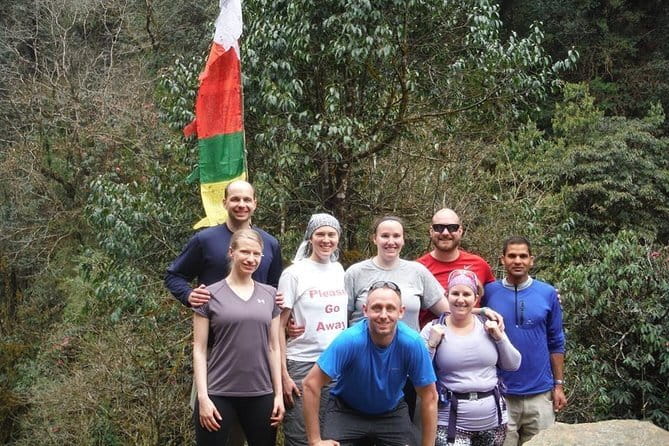
One of the strongest signals from the reviews is consistency around the guides. Names like Krishna, Biru, and Birendra show up as friendly, helpful, and knowledgeable, with a focus on being attentive during the walk. That translates into something practical for you: better pacing, fewer moments of uncertainty about the trail, and more confidence dealing with the day-to-day rhythm.
This is a moderate fitness trek. That doesn’t mean couch-to-summit. It means you should be comfortable walking for several hours per day and handling steep segments. Day 1 and Day 3 can feel harder because the climb is steep in places and the route becomes steeper higher up.
I think this trek suits:
- You if you want big Himalayan views in a short time from Pokhara
- You if you prefer an organized trip where permits and transport are handled
- You if you like tea house trekking with villages and forests, not only mountain ridgelines
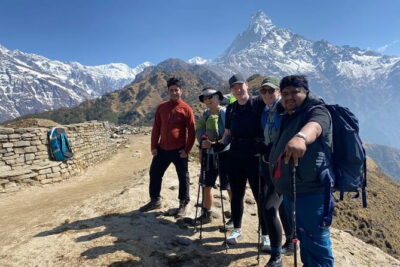
- You if you’re traveling with a small group and want private tour attention
If you’re looking for a flat, easy hike with very little elevation, this probably won’t feel right. But if you like a challenge that stays within a reasonable time window, Mardi Himal is a great fit.
Should you book this 4-day Mardi Himal trek with CAN Travels?
I’d book it if your priority is a well-run trek that gets you to Mardi Himal Base Camp in a time-efficient 4 days, with the paperwork, permits, transfers, and guest house stays handled. The guide focus in the reviews is a strong sign you’ll be looked after on the steep parts, not just dropped at a trailhead.
I’d hesitate only if you hate steep climbs and long days. Day 1 and Day 3 are the ones to respect. If that sounds like your weak spot, consider preparing with extra walking before you go.
For most people, the decision comes down to this: you want authentic mountain walking, tea house stops, and panoramic views, without spending your entire vacation on logistics. This trek checks those boxes.
FAQ
What is the duration of the Mardi Himal trek from Pokhara?
The trek is listed as 4 days (approx.).
Where does the trek start?
The trekking starts from Kande, after a drive from Pokhara of about 1 hour.
How long are the trekking days?
Day 1 is about 5 to 6 hours, Day 2 is about 6 to 7 hours, Day 3 is about 8 hours, and Day 4 is about 8 hours (including trekking plus driving).
What are the main stops on the trek?
The itinerary includes Forest Camp, Low Camp/High Camp areas, Mardi Himal Base Camp, and Siding Village on the way back.
Is an English speaking guide included?
Yes. An experienced English speaking trekking guide is included.
What about permits and entrance fees?
Trekking permits and all official documents are included, as well as all entrance fees.
Is accommodation included?
Yes. You get accommodation in tourist standard guest houses during the trek.
Are meals included?
Food and drinks are not included, but food and drinks are available to purchase along the way.
How do the transfers work?
Round trip transfers are included by sharing bus or jeep, depending on the itinerary.
Where and when is the meeting time?
The start time is listed as 7:15 pm.
Is there free cancellation?
Yes, you can cancel for a full refund up to 24 hours in advance of the experience’s start time. If you cancel less than 24 hours before, there is no refund.
Latest Pokhara write-ups
- Landing Annapurna Base Camp by Helicopter Tour from Pokhara★ 4.0 · 5 reviews
- Sarangkot sunrise with Morning Tibetan Cultural Tour★ 5.0 · 5 reviews
- 3 Day Kapuche Glacier Lake Trek with Siklesh from Pokhara★ 5.0 · 5 reviews
- Entire Day Pokhara Complete Tour★ 5.0 · 5 reviews
- 3 Day Mardi Himal Base Camp Trek from Pokhara★ 5.0 · 5 reviews
- Private Tour Local Culture and The View of Mohare Danda★ 5.0 · 6 reviews
- 3 Days Ghorepani and Poonhill Private Trek from Pokhara★ 5.0 · 6 reviews
- Pokhara: Poon Hill Ghorepani Short Trek★ 5.0 · 6 reviews
Mardi Himal Trek, compared.

Mardi Himal Trek – 8 Days | Hidden Gem of the Annapurnas
Read our review →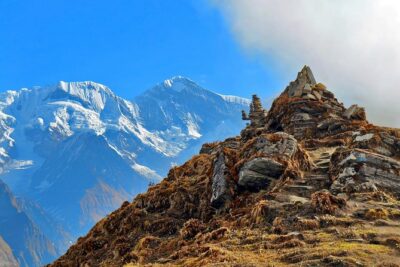
Browse the lists this tour appears in