
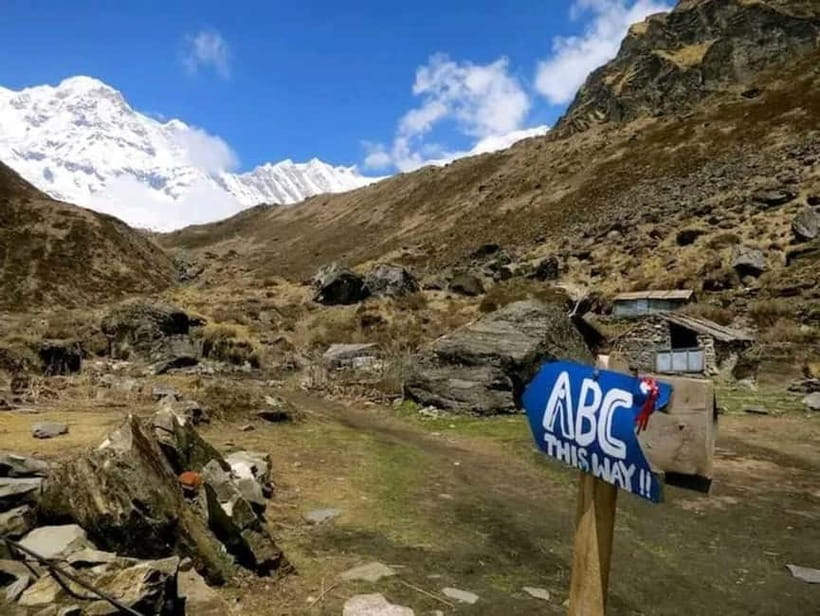
Reviewed · ANNAPURNA BASE CAMP TREK
Pkr/Kathmandu: 5-Day Annapurna Base Camp & Hot spring Trek
The Annapurna Base Camp route is famous for a reason, and doing it in just 5 days makes it feel extra purposeful. I like how quickly you get into real mountain trekking, and I really like the mix of forests, waterfalls, and hot springs along the way. The main drawback is simple: it is moderate to challenging and high enough that you need to take altitude seriously, even on a short schedule.
I also like that this trip is built around genuine village trails and small guest houses, not just quick sightseeing stops. You’ll hike with a private guide, with the option of Kathmandu-to-Pokhara flight for those starting in Kathmandu. One consideration: weather in the Annapurna region can turn fast, so pack for cold and rain, not just sun.
Key highlights I’d circle on your planning map
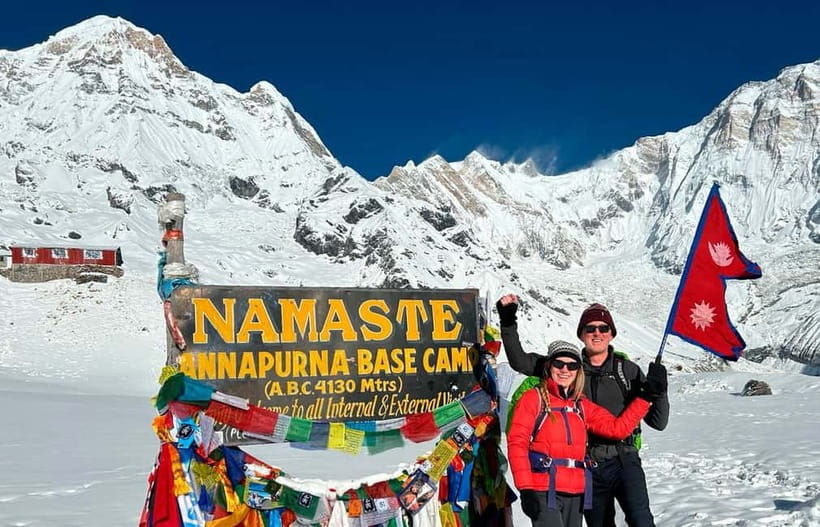
- Reach Annapurna Base Camp in 5 days without a long, drawn-out trek
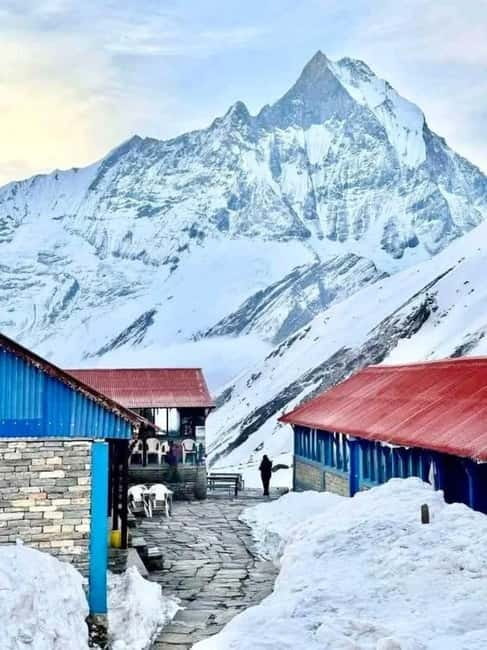
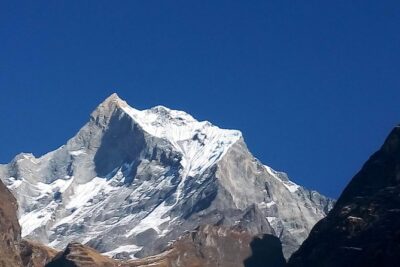
- Panoramic views of Annapurna I, Machapuchhare, and Hiunchuli from the base-area viewpoints
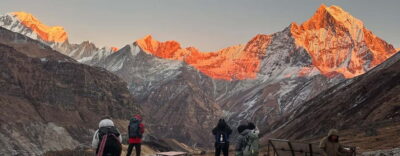
- Sunrise at Machhapuchhare Base Camp area, a rare wow moment on a shorter itinerary
- Gurung village life through the small settlements on the trekking days
- Optional Jhinu Danda hot springs on Day 5, great after a hard downhill
- Strong guide support often including pros like Raj, Sagar, Shiva, Nareen, and Bimal, who focus on pacing and safety
Why a 5-day Annapurna Base Camp trek feels like a smart challenge
Annapurna Base Camp is at about 4,130 m, inside the Annapurna Sanctuary. Most people think of it as a big expedition. This version keeps the romance of the Himalaya but compresses the schedule. That matters because you get a real sense of accomplishment without needing a full week or two off work.
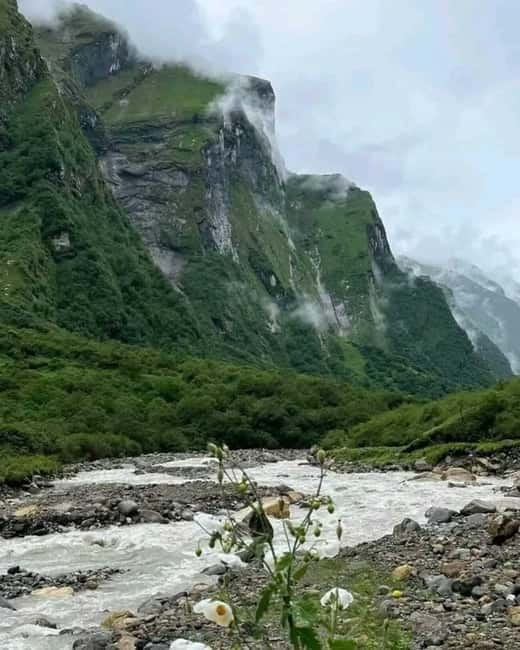
On this trek, the days are built around manageable segments with guest-house stops. You don’t just march uphill. You pass through dense forests, cross rivers and waterfalls, and walk through traditional villages where life continues at trail level. If you like your mountain time to feel human, this route delivers.
You’ll also get a very practical bonus for short-trip planning: the itinerary is structured around max altitudes that step up day by day. For example, Day 1 tops out around 2,340 m, Day 2 around 3,230 m, then Day 3 reaches the big target at 4,130 m. That pacing does not replace acclimatization, but it gives you a workable framework.
The trade-off is that the itinerary is still demanding. It is listed as moderate to challenging, and you should only go if your fitness is solid. If you’ve struggled with steep days before, you’ll want to train first. Short doesn’t mean easy.
More routes into the Annapurna Sanctuary:
- Kathmandu/Pokhara: 5-Day Annapurna Base Camp (ABC) Trek
★ 4.9 · 72 reviews - Pokhara: 5 Day Annapurna Base Camp Trek & Natural Hot Spring
★ 4.9 · 44 reviews - Pokhara: 7 Day Annapurna Base Camp Trek
★ 4.9 · 38 reviews
Kathmandu or Pokhara: how the start shapes your trek day
You can start from Pokhara or Kathmandu. If you choose Kathmandu, you take a 30-minute flight to Pokhara. Then the big transfer is a 2 to 3 hour drive to Simrung via Nayapul. From there, you trek into the mountains.
Why does that matter to you? Because Day 1 is not a pure warm-up stroll. After the drive, you still hike from Simrung to Sinuwa in about 4 to 5 hours. You’ll want to land well-rested and not treat Day 0 like a party night.
Pokhara is also the practical base for this trek. The pickup and drop-off happen around the lakeside hotel area, and you return to Pokhara late afternoon on Day 5, about by 17:00. If you’re pairing the trek with other Nepal plans, Pokhara is easier to connect from than many other regions.
Bottom line: choose Kathmandu only if you genuinely want to start there. If you’re already in Pokhara, you’ll feel the trek sooner, with less moving parts.
Day 1: Simrung to Sinuwa, your first taste of trail-country Nepal
Day 1 starts with pickup from your hotel in Kathmandu or Pokhara. Then you go to Simrung, and the trekking begins with Simrung to Sinuwa in about 4 to 5 hours. The max altitude listed is around 2,340 m, so it’s a good first day for getting your breath and rhythm under control.
What I like about this opening segment is that it sets your expectations. You’re not instantly at icy heights. You’re walking through the foothill feel of the region, with enough climb to wake up your legs. Guest-house life starts right away too. You sleep in Sinuwa, in a mountain lodge environment, not a city hotel.
A realistic caution: Day 1 can still feel long after travel, especially if you’re coming from Kathmandu and the flight timing squeezes your sleep. Bring warm layers even on the first day. Mountain temperatures drop faster than people expect once you’re moving in the shade.
Day 2: Deurali via Himalaya, waterfalls and forest trekking
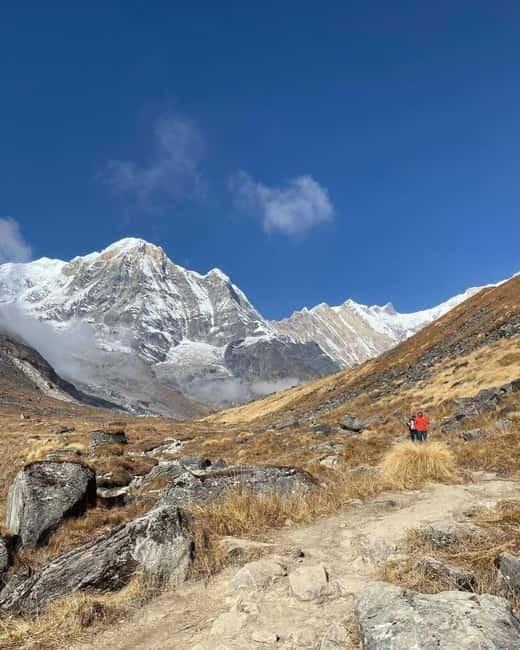
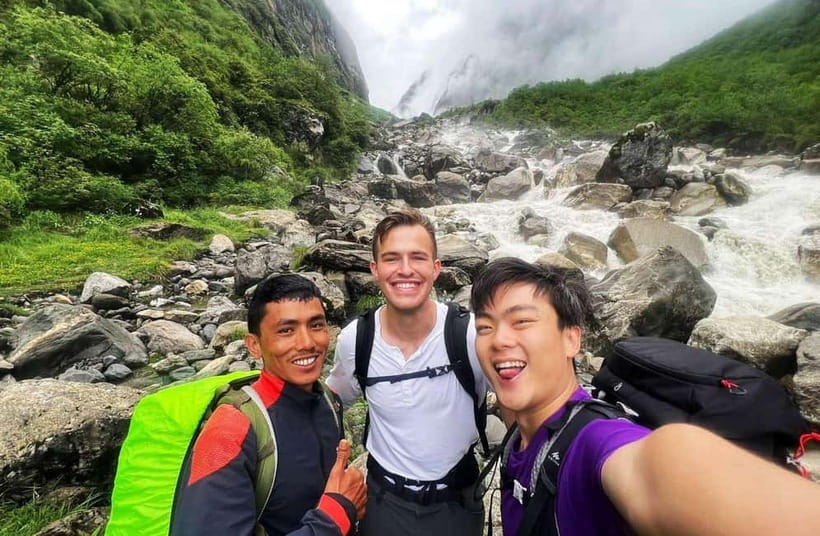
Today is Sinuwa to Deurali via Himalaya, and it takes about 5 to 6 hours. The route is known for a dense forest stretch and plenty of waterfalls along the way. You’ll stop for the night at Deurali, with a max altitude around 3,230 m.
This day is where you either start enjoying the rhythm of the trek, or you start hating it. The difference is usually pacing. The forest environment can tempt you to “press on” because it feels cooler. Then your breathing catches up to you on the uphill.
If you’re going in with any nerves about altitude, this is a good day to steady your effort. Take breaks before you feel forced to stop. Drink water regularly, even if you do not feel thirsty. And let your guide do the spacing, especially if you’re with a private group.
In the evening, you’re at a higher altitude guest house where cold can set in. This is one of those treks where warm clothing is not a suggestion. It’s part of the comfort plan.
More to compare around Pokhara
- From Pokhara: 5-Day Annapurna Basecamp Trek with Hot Springs
★ 4.9 · 26 reviews - Pokhara: 7-Day Annapurna Base Camp Via PoonHill & Hot Spring
★ 5.0 · 6 reviews - Pokhara: Amazing 7-Day ABC Trek with Natural Hot Spring
★ 5.0 · 5 reviews - Pokhara: 7-Day Annapurna Base Camp Trek with Hot Spring
★ 5.0 · 5 reviews
Day 3: Machhapuchhare Base Camp valley and the climb to Annapurna Base Camp
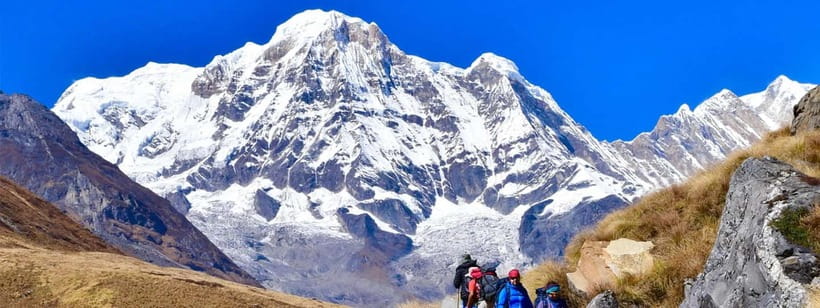
Day 3 is the big one, Deurali to Annapurna Base Camp in about 5 to 6 hours, passing Machhapuchhre Base Camp (MBC) on the way. The max altitude reaches 4,130 m, which is why the sunrise and panoramic viewpoints matter here.
What makes this day special is the combination of scenery and payoff timing. The trek notes highlight views around the Annapurna range, including Annapurna I, Machapuchhare, and Hiunchuli. Even when the day is clouded, the mountains tend to appear in layers as you gain height. Your perspective changes quickly, and you start to understand why this area draws hikers year after year.
Also, MBC is described as a valley experience that feels like a different world compared to the village and forest days. This is where the trek turns from “walking through Nepal” into “walking inside the mountains.”
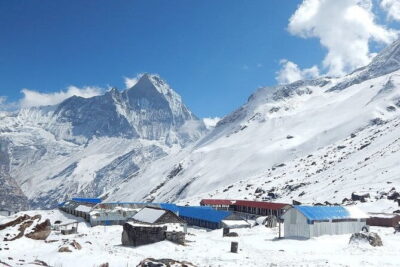
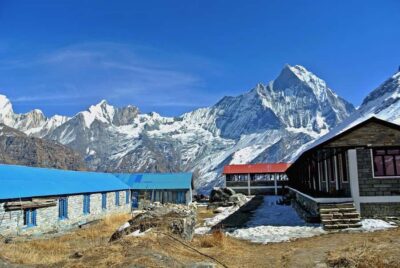
You’ll sleep at Annapurna Base Camp area guest houses. The trek description specifically calls out the area’s sunset views towards the west, which is a great moment to slow down and just watch the light change. If you have a camera, this is where you’ll use it a lot, but try to spend at least a few minutes not looking through a lens.
Day 4: Back down from base-area altitude, with sunrise at the MBC region
On Day 4, you trek back down to Bamboo or Sinuwa, and it takes about 6 to 7 hours via Deurali, Himalaya, and Dobhan. The minimum altitude noted is around 2,340 m.
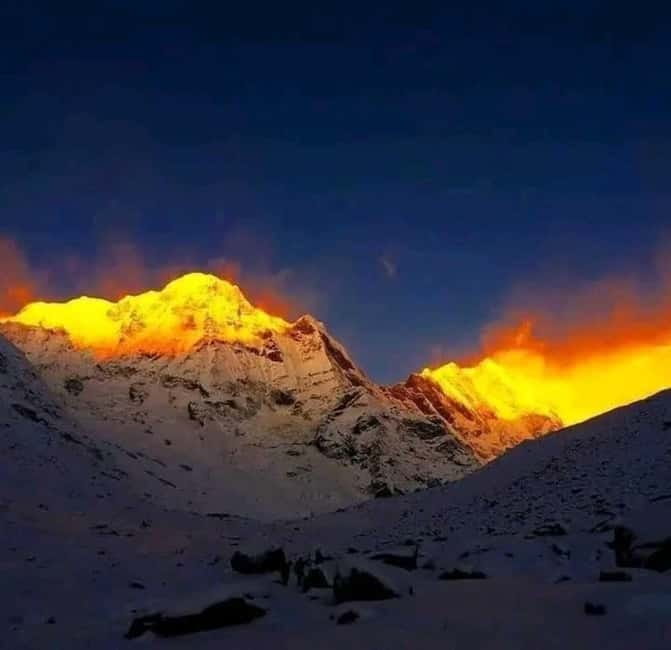
Before you descend, you start the morning with a spectacular sunrise. This is one of those “short trek” benefits that still delivers something that feels big. Sunrise is cold, but it’s also worth it. The sky tends to clear more than daytime weather, and the mountains look sharper in early light.
This is also the day where your body gives feedback. Downs can be tougher than ups on knees and shins, even if the altitude is lower than the day before. Trekking poles help here. If your package includes borrowed poles, use them. If you don’t have them in the exact moment you need them, tell your guide early so you can solve it. One key point from real-world experiences: even when a service says poles are included, you should confirm what you will actually receive before you start hiking.
Evening comfort matters too. A night at Bamboo or Sinuwa is still high enough for chilly temperatures. Plan for that, and keep your warm layers accessible.
Day 5: Jhinu Danda hot springs, then the return to Pokhara
Day 5 is Sinuwa or Bamboo to Simrung via Jhinu Danda in about 3 to 4 hours, then drive back to Pokhara for 2 to 3 hours. Minimum altitude listed is around 830 m. You should reach Pokhara late afternoon, about by 17:00.
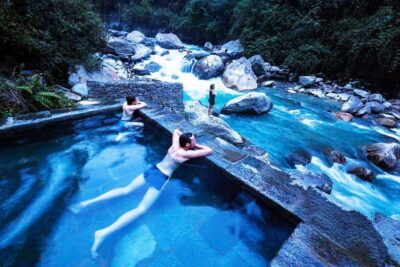
Jhinu Danda hot springs are described as optional, and the itinerary includes the hot springs element on this final day. If your legs are sore, this is the kind of payoff that makes the whole trek feel worth it. The timing also works well because you’re already descending in altitude, so your body gets both relief and a final reset.
After the trek walk to Simrung, you’ll ride back to Pokhara. This end-of-trip structure is valuable because it gives you enough time to shower, eat a proper meal, and plan any next-day sightseeing without feeling trapped in the mountains.
Guides, pacing, and the small details that make or break a short trek
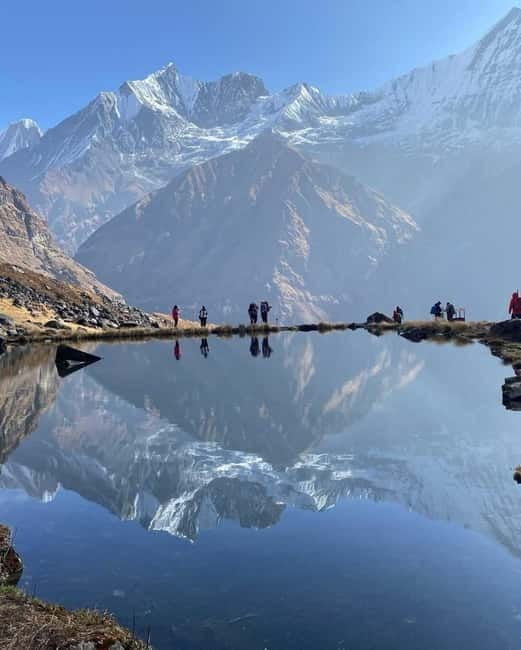
This trek’s success often comes down to the guide. In the experiences I’ve seen tied to this route, guides like Raj, Sagar, Shiva, Nareen (Anarayan), and Bimal are praised for being attentive, professional, and focused on safety and pace. That is exactly what you want on a short Annapurna itinerary, where you have less margin for mistakes.
A good guide also handles the practical stuff that drains energy if you are figuring it out yourself: meal coordination, guest-house planning, and route timing in changing conditions. Even better, these guides are described as friendly and easy to talk to, which matters when you’re spending long hours in the cold with only tea houses and trail stories for company.
Porters also make a difference. People associated with this trek include Naron, Visnu, and Azis, praised for going above and beyond. If you’re carrying your own heavy load, Day 4 and Day 5 can feel harder than they need to. That’s why porter inclusion matters in value terms, not just convenience.
One note on equipment: the package says you can borrow sleeping bags, duffle bags, and trekking poles. Still, a quick confirmation is smart. If the poles end up delayed or missing, ask your guide on Day 1. The goal is to avoid knee regret halfway down.
Price and value: why $60 can be a good deal, and when it might not be
The price listed is $60 per person for a 5-day Annapurna Base Camp trek. That’s a budget price for Nepal trekking, especially since the trip includes 4-night mountain guest-house accommodation, trekking permits, a trekking guide, equipment borrowing (as listed), first aid, and Pokhara-Simrung-Pokhara shared jeep transfers.
But here’s the fair warning for value shoppers: what you get can change with the option. Meals are included only if you select the all-inclusive option. If you choose the budget/from Kathmandu option, meals and porter may be add-on items. That means your true cost can rise if you want a fully supported experience.
So how do you judge value quickly? Add up what you’re likely to pay separately:
- Meals during the trek if they are not included
- A porter if you want one and your option doesn’t include it
- Flights if you start from Kathmandu and add the Kathmandu-Pokhara return flight option
If you select the option that truly covers meals and ideally porter support, this can be excellent value for a short timeframe. If you select a bare-bones option and then add everything later, you may end up paying closer to mid-range prices anyway. The itinerary structure itself stays the same, so your biggest lever is support and comfort.
Fitness, altitude, and safety checks before you say yes
This trek is labeled moderate to challenging and not suitable for people with certain health issues. You should be cautious if you have heart problems, respiratory issues, altitude sickness history, or low fitness. It is also not suitable for people with mobility impairments.
Altitude is the real deciding factor. You go from about 2,340 m on Day 1 to 3,230 m on Day 2, then up to 4,130 m on Day 3. Acclimatization is called out as important, and weather can be cold and unpredictable. Even if you feel fine in Kathmandu or Pokhara, your body’s response can still surprise you once you gain altitude quickly.
What you can do to stack the odds in your favor:
- Plan for a steady pace, not a sprint
- Keep warm layers accessible every day, not only at night
- Drink water regularly and eat what you can at tea houses
- Tell your guide immediately if you feel symptoms associated with altitude discomfort
If you are the kind of hiker who pushes hard every day, this trip might punish you. If you’re the kind of hiker who can slow down and enjoy the climb, you’ll likely do well.
Should you book this 5-day Annapurna Base Camp trek?
Book it if you want a fast, well-supported route to Annapurna Base Camp with a real chance at sunrise moments, Machhapuchhare Base Camp views, and a final-day soak at Jhinu Danda hot springs. It’s a strong choice for hikers who can handle 5 to 7 hour days and who care about village trail life, not just summit bragging rights.
Skip it or talk to a doctor first if you have heart or respiratory conditions, if altitude issues are already part of your medical history, or if you do not have the fitness for steep, cold days. Also be honest about equipment and comfort needs. This trek is short, but you will still feel altitude and weather.
If you do book, one practical move will pay off: confirm what’s included for your exact option (especially meals and porter support) and make sure you understand what gear you will actually have on Day 1. That’s how you turn a good trek into a great one.
FAQ
What is the duration of the trek?
The itinerary is 5 days, from the initial pickup and transfers through the return to Pokhara on Day 5.
Where does the trek start, and can I start from Kathmandu?
It can start from Pokhara or Kathmandu. If you start from Kathmandu, you take a 30-minute flight to Pokhara as part of the plan.
How long is the Day 1 trek?
Day 1 is the drive from Pokhara to Simrung, then trekking from Simrung to Sinuwa, which takes about 4 to 5 hours.
What is the highest altitude you reach?
The itinerary lists the highest point on the trek as about 4,130 m at Annapurna Base Camp.
Are there hot springs on this trek?
Yes. Jhinu Danda hot springs are included as part of Day 5, and they are described as optional.
What kind of accommodation do you use?
You stay in mountain guest houses for 4 nights during the trek.
What’s included for trekking support?
A trekking guide is included, along with necessary permits and first aid. The package also states that you can borrow sleeping bags, duffle bags, and trekking poles.
Are meals included?
Meals are included only if you choose the all-inclusive option. If you select a budget/from Kathmandu option, meals may require an add-on.
What languages are available for the live guide?
The live tour guide can be available in English, French, Japanese, and Chinese.
What should I pack, and what is not allowed?
Bring warm clothing, hiking shoes, sunscreen, water, and travel insurance. Alcohol and drugs are not allowed.
Latest Pokhara write-ups
- Mardi Himal Trek -5 Day Short Trek From Pokhara★ 5.0 · 8 reviews
- Tandem Paragliding in Pokhara★ 4.8 · 8 reviews
- Pokhara: Peace Pagoda Sunset, Annapurna Mountain Views Tour★ 2.9 · 5 reviews
- Short & Scenic: 2-Day Private POON HILL Trek from Pokhara★ 5.0 · 8 reviews
- Seti George and Thrilling Suspension Bridge Tour at Pokhara★ 4.5 · 3 reviews
- Sarangkot Sunrise over the Himalayas★ 4.8 · 83 reviews
- Pokhara: Sarangkot Sunrise and Private Full Day Tour★ 4.8 · 24 reviews
- From Kathmandu/Pokhara: Private 3-Day Chitwan Safari Tour★ 4.7 · 34 reviews
Annapurna Base Camp Trek, compared.
5 Day Annapurna Base Camp Trek & Natural Hot Spring
Read our review →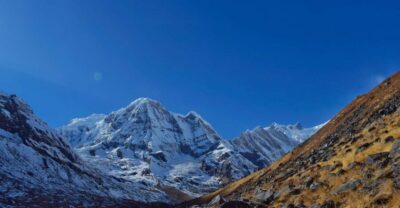
14 Days Annapurna Base Camp Trekking | Best trek for visit Nepal 2020
Read our review →
7-Day Annapurna Base Camp Trek & Natural Hot Spring
Read our review →Browse the lists this tour appears in