
Reviewed · POON HILL TREK
10 Days Nepal Trip – Heritage Kathmandu – Natural Pokhara and Poon Hill Trek
This trip is interesting because it ties together three sides of Nepal in one sweep: sacred Kathmandu, lakeside Pokhara, and the famous Poon Hill sunrise trek. You also get the kind of pacing that helps you enjoy the cities without rushing, then focus for a few days on mountain walking.
What I like most is the way the planning handles the hard parts for you, like TIMS and trekking permits plus an English speaking guide on the trek and city tour. The other big win is the logistics, private car pickup and drop-off around your travel days, so you spend less time figuring out transport and more time seeing things.
One possible drawback to know up front: the trip does not include meals, and during the trek you stay in small basic guest houses. If you want full-board comfort at every step, you may find you need to budget extra for food, and the mountain stays are not fancy.
Key things to know before you go
- Airport, hotel, and bus-station transfers keep you moving with minimal hassle (private car for key connections).
- 2-star hotels in Kathmandu and Pokhara, plus basic guest houses during the trek.
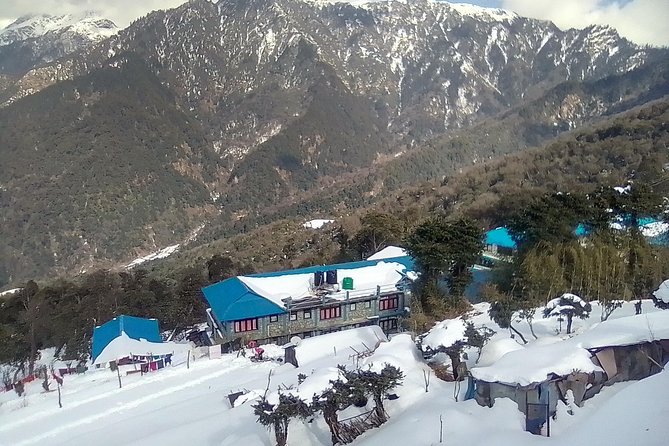
- Poon Hill sunrise is built in early morning, then you continue trekking toward Tadapani.
- Trekking permits and TIMS are included, so you do not have to hunt these down last minute.
- Pokhara sightseeing includes Devi’s Fall, Cave, Mountain Museum, World Peace Stupa, Sarangkot, Begnas Lake, and Fewa Lake.
- Private trip style means it is for your group only, even if some parts run on shared vehicles like jeeps.
From Kathmandu Durbar Square to mountain tea houses: how this trip actually feels
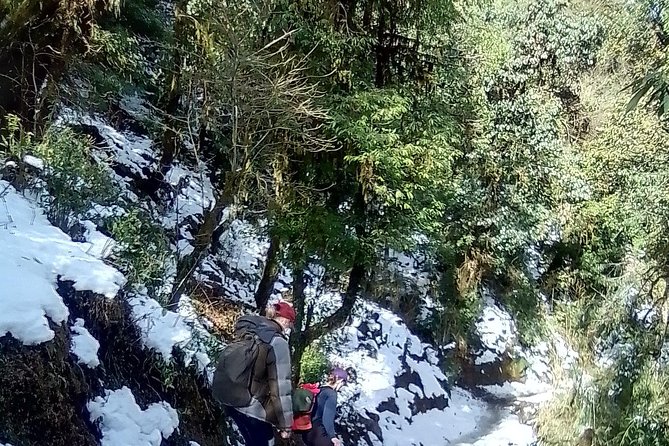
This is not just a checklist itinerary. It is a travel flow that matches Nepal well. You start in Kathmandu with an easy first day, then you shift to Pokhara by bus, then you go into the hills for several walking days, and finally you return to city sights.
The best part is that you do not only see mountains from afar. You actually work your way up, down, and through local villages. And when you finish the trek, you do not disappear into a bland hotel routine. You get a full Pokhara day with viewpoints, lakes, and a mix of religious and scenic stops.
Your effort is mostly concentrated on the trek days, and your comfort is handled on the front and back ends. That balance is what makes this kind of 10-day trip worth considering if you want a wide Nepal taste without turning the entire trip into a nonstop grind.
More Ghorepani and Poon Hill departures:
- Pokhara: 2 Day Ghorepani & Poon Hill Private Trekking
★ 4.9 · 8 reviews - 15 Days Round Annapurna Trek with Poon Hill from Pokhara
★ 5.0 · 5 reviews - Ghorepani – Poon Hill yoga Trek – 10 Days
★ 5.0 · 4 reviews
Day 1 in Kathmandu: easy start, real orientation
Your first day is straightforward. You get picked up from the airport or from your location, then transferred to your Kathmandu hotel for the night.
Even with a “simple” arrival, I like this approach. Kathmandu can be chaotic for first timers, so having a private car transfer helps you get your bearings fast. You can also rest properly before the city touring later and before you head toward Pokhara.
What to watch: your hotel is listed at a 2-star level, so plan for clean and functional rather than luxury. If you are sensitive to noise or basic rooms, bring what you need for comfort, like earplugs.
Day 2: the bus to Pokhara (and why that matters)
On day 2, you transfer to the bus station early, then take a tourist bus drive to Pokhara, arriving for a hotel transfer.
I like the idea of this segment because it gives you a day that is about transition, not struggle. Instead of flying and feeling like you missed the journey, the road time sets you up for the change in scenery and altitude that comes with the trek.
Practical note: you will be on a bus for about 7 hours. That is a lot of sitting. Bring layers for temperature swings, and keep water and a small snack handy since meals are not included.
Day 3: Ulleri, the first real trek day
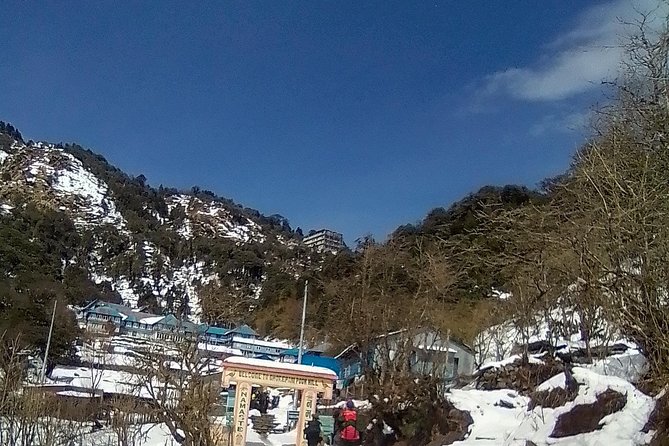
Day 3 is your first mountain step. You drive to Nayapul, then trek to Ulleri.
Trekking to Ulleri after the drive is a smart way to ease into the trail. You will feel like you are getting into the rhythm without jumping straight into a heavy multi-pass day. It also helps you adjust to mountain breathing and steady walking before you commit to earlier starts.
The walk is listed as about 6 hours. That usually means a mix of uphill sections, village stops, and time to take in views. Your guide will be managing the pace, so you can focus on staying comfortable rather than counting steps.
What I’d plan for: even on early days, your legs can feel it. Wear shoes you trust, and treat this day like training, not a race.
More Historical Tours in Kathmandu:
- Kathmandu: Private UNESCO World Heritage Site Tour
★ 4.9 · 47 reviews - Private Kathmandu UNESCO World Heritage Sites Tour
★ 4.8 · 28 reviews - Pick 2-Wonders of Kathmandu: A 3-Hour Heritage Hop
★ 5.0 · 22 reviews - UNESCO Five World Heritage Tour in Kathmandu
★ 5.0 · 12 reviews
Day 4: Ghorepani and the build-up to sunrise country
On day 4, you trek to Ghorepani, another day that is about 6 hours.
Ghorepani is the kind of base area that sets up your Poon Hill morning. You are getting higher, moving through familiar trekking territory, and building anticipation for the viewpoint day.
From a value angle, this day matters because it is part of what makes Poon Hill worth it. You get to be closer to the sunrise zone, not starting too far away.
This is also where you start leaning on your guide. Even if you are a confident hiker, the “small details” like trail timing, where to rest, and how long breaks should be help you enjoy the walk instead of merely completing it.
Day 5: Poon Hill sunrise, then on to Tadapani
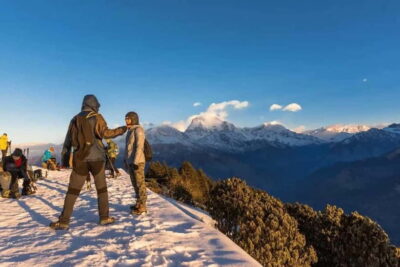
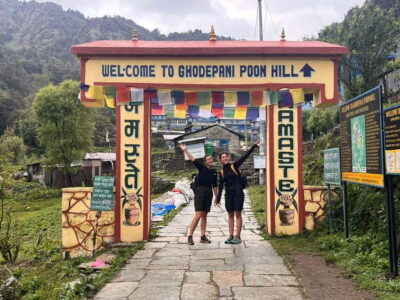
This is the centerpiece day. You do an early morning trek to Poon Hill to catch sunrise views over Annapurna, then you continue trekking to Tadapani.
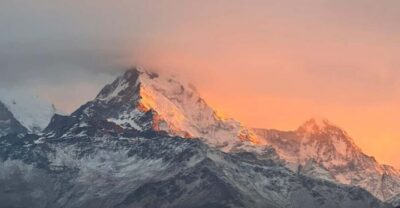
The sunrise piece is why many people choose this route. What makes it more enjoyable is that you do not stop at the viewpoint and turn around. You watch the sky change, then keep moving, so the day feels full instead of “one hour of effort for bragging rights.”
Day length is listed as about 7 hours total. Expect the early start to be the toughest part mentally, not necessarily because the trail is impossible, but because you will be waking up before you feel fully awake.
Bring layers for the cold morning, then plan for warming up later. The temperature shift can be surprising in the Annapurna region.
Day 6: Ghandruk, Gurung village time, and the quick exit by jeep
Day 6 takes you to Ghandruk. Along the way you explore the Gurung village in Ghandruk, then trek down to Kimche.
From Kimche, you take a sharing jeep back to Nayapul, and then your car transfers you to Pokhara.
This is a smart design for a 10-day trip. You get the cultural connection in Ghandruk, then you do not spend forever walking back down. That jeep shortcut helps you save energy for the rest of your trip, especially because you will have a full Pokhara day immediately after returning.
The trek time is listed as about 7 hours. That suggests a day with both walking and time to slow down for village exploration.
A practical consideration: jeep rides on mountain roads can be bumpy. If you get motion sickness easily, plan for that before you need it.
Day 7: Pokhara day with waterfalls, caves, stupas, and lakes
Now the trip turns scenic in the best way. You explore Pokhara with a guide, covering Devi’s Fall, Cave, Mountain Museum, World Peace Stupa, Sarangkot, Begnas Lake, and Fewa Lake.
This day is valuable because it gives you variety in one stretch. You are not choosing between views and culture, you get both. Sarangkot is a classic viewpoint, and lakes like Begnas and Fewa add that slower, easy feeling after the trek.
A note on expenses: entrance fees during city tour in Kathmandu and Pokhara are listed as not included. Even if some stops are shown as ticket free in the schedule, I still suggest carrying a bit of cash for small entry costs so you do not get stuck at a gate.
Also, your hotel in Pokhara is a 2-star level stay. That is totally workable for a sightseeing day, but do not expect resort services. The goal here is to use the room as a place to sleep, wash, and reset.
Day 8: back to Kathmandu by tourist bus
Day 8 is your return to Kathmandu. The tour transfers you with a tourist bus that starts at 7am from Pokhara.
The key benefit is timing. A morning departure reduces the amount of daylight lost to travel, so you arrive in Kathmandu with enough time to orient and rest.
You might find this day feels long, since travel days always add fatigue after hiking. The good news is you are already done with the trek effort, so it is a simpler kind of tired.
Day 9: Kathmandu heritage day, temples and Durbar Square
Day 9 is a proper heritage tour of Kathmandu’s historic core. You cover Pashupatinath Temple, Baudhdhanath Temple, Swayambhunath Temple, and Kathmandu Durbar Square.
This is a highlight for most people because these sites are not just pretty stops. They are living places with ongoing worship and big local meaning. In a short time, you get a sense of Kathmandu’s spiritual gravity.
Two practical tips based on this kind of temple circuit:
- Wear clothing that works for religious sites, shoulders and legs covered.
- Plan for stairs and uneven stone. Even if the trek is done, your feet will still feel Kathmandu walking.
Again, entrance fees in Kathmandu are not included. Bring some cash and be ready to pay at specific stops.
Day 10: airport drop-off and the clean finish
Your last day is simple: you get dropped back to the airport based on your flight schedule.
This ending matters because it protects your travel day. Kathmandu traffic can be unpredictable, and you do not want your last hours spent worrying about how to get to the airport.
The pickup and drop are included as part of the airport shuttle plan, which is a comfort feature I really appreciate for end-of-trip stress management.
Price and value: is $480 worth it for your time?
At $480 per person, this trip sits in the midrange for a 10-day Nepal package that includes a trek plus city touring. The value comes from how many moving parts are handled for you.
Here is what you get that usually costs extra when you DIY:
- Hotel stays in Kathmandu and Pokhara at a 2-star level
- A guide during the trek and city tour
- Trekking permit and TIMS
- Private transfers where it counts, like airport and key connection points
- Trek-related logistics such as round trip private transfer from Pokhara to Nayapul and back
- Accommodation in small basic guest houses during the trek
What is not included is also clear and important:
- Meals and drinks
- Entrance fees during the Kathmandu and Pokhara city tour
- Gratitude for your guide, which is optional
So, is it worth it? If you want to cover a lot of Nepal without spending your days solving transport, paperwork, and day-to-day logistics, then yes. The price becomes more attractive when you compare it against the cost of permits, a guide, and coordinating multiple legs across regions.
If you are a super independent traveler who already knows the route and is comfortable arranging trekking permits, guides, and guest-house reservations on your own, you might get cheaper. But you will trade away the “smooth handoffs” that make this trip easier to enjoy.
The service experience: why the guide and vehicles get praised
One theme that shows up strongly is service quality. The trips are described as having excellent support, with an awesome guide and smooth transportation. People also mention the vehicle as a standout, including comfort details like air conditioning.
That matters because the trek is demanding enough. You want the non-trek part to feel reliable. When vehicles are comfortable and transfers line up, you lose less time to waiting, confusion, and energy-drain.
No matter what your travel style is, I recommend asking yourself one question: do I want to spend my energy on walking and sightseeing, or do I want to spend it on logistics? This style leans toward the first option.
What fitness level you actually need (and how to prepare)
The trip calls for a moderate physical fitness level. That matches the trek durations you see on most days, like 6 to 7 hours of walking.
You do not need to be an elite athlete, but you should be able to walk steadily for most of the day, handle some uphill, and still be okay the following day. The good pacing helps, but the altitude and early starts still take it out of your legs.
If you are preparing, I’d focus on:
- Consistent walking for several weeks before travel
- Stair climbing or hill walking if you can
- Buying shoes that feel comfortable on day two, not just day one
For packing, keep it simple: layers for sunrise cold, rain protection for mountain weather, and a small daypack for water and snacks.
Should you book this Nepal heritage, Pokhara, and Poon Hill combo?
If you want one trip that covers Kathmandu heritage, Pokhara lakes and viewpoints, and the Poon Hill sunrise trek, this is a strong match. It is also a good fit if you like the idea of a guide handling permits, route logistics, and key transfers, so you can focus on the experience.
I would particularly recommend it if:
- You want to walk in the Annapurna region but you do not want a super long trek
- You value clear planning and smooth connections between cities
- You want a balance of culture, scenery, and mountain time
I would skip it or at least plan carefully if:
- You expect meals and city entrance fees to be included
- You dislike basic guest-house stays
- You are not comfortable with early morning starts and several days of 6 to 7 hour trekking
FAQ
How long is the Nepal trip?
The trip is about 10 days, covering Kathmandu, Pokhara, and the Poon Hill trek.
What is included in the price?
Included are airport shuttle in private car, 2-star hotel accommodation in Kathmandu and Pokhara, tourist bus transfers between Kathmandu and Pokhara, private car pickup and drop-offs, trekking permits and TIMS, an English speaking guide for the trek and city tour, private transfers between Pokhara and Nayapul and back, a sharing jeep from Kimche to Nayapul, and basic guest-house accommodation during the trek.
Are meals included during the trek and sightseeing?
No. All meals and drinks are not included, and they are available for purchase.
Do I need trekking permits?
Yes, trekking permits and TIMS are included as part of the tour.
What kind of hotels will I stay in?
In Kathmandu and Pokhara you stay in 2-star hotels. During the trek you stay in small basic guest houses.
What is the cancellation deadline for a full refund?
You can cancel up to 3 days in advance of the experience for a full refund. If you cancel less than 3 full days before the start time, the amount paid is not refunded.
Latest Kathmandu write-ups
- 16 Days Island Peak Climbing With Everest Base Camp Private Trip★ 5.0 · 3 reviews
- 15 Days Round Annapurna Trek with Poon Hill from Pokhara★ 5.0 · 5 reviews
- Private Nepal round trip including Ghorepani Poonhill trek★ 5.0 · 3 reviews
- Everest Base Camp Trekking 16 Days★ 4.0 · 7 reviews
- Everest Base Camp Trek★ 5.0 · 87 reviews
- 14 Days Luxury Annapurna Base Camp Trek★ 5.0 · 6 reviews
- Everest Base Camp Trek★ 5.0 · 32 reviews
- Everest Base Camp Trek★ 5.0 · 97 reviews
Poon Hill Trek, compared.
4-Day Ghorepani, Poonhill & Ghandruk Mountain Trek
Read our review →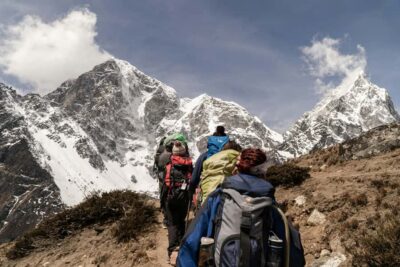
2 & 3 Days Ghorepani Poon Hill Private Guided Trek
Read our review →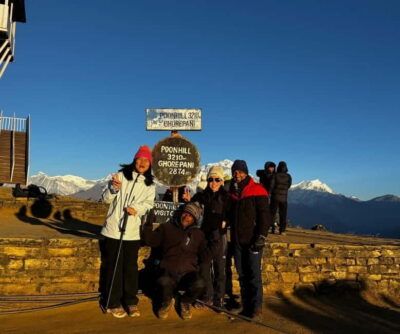
2-Days Beautiful Poon Hill Trek with Sunrise View
Read our review →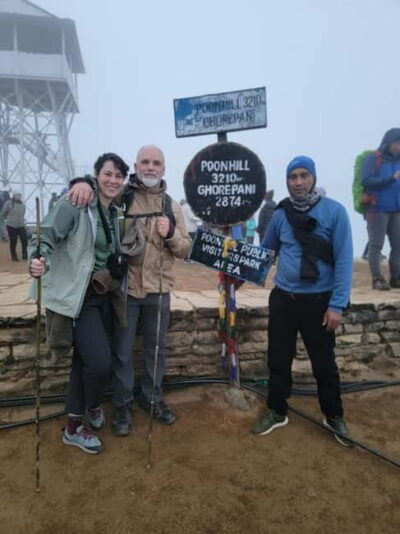
4-Day Beautiful Ghorepani Poon Hill & Ghandruk Trek
Read our review →Browse the lists this tour appears in