
Reviewed · ANNAPURNA BASE CAMP TREK
Annapurna Base Camp with Poon hill 9-Day Trek Itinerary
This trek is interesting because it layers two fan favorites back to back: the world-famous Poon Hill sunrise and the big goal, Annapurna Base Camp. You get close-up views of the Annapurna range, including the dramatic Machhapuchhre area, without needing technical climbing.
I love the way this itinerary is built around short-to-steady trekking days, with cozy tea house stays and meals taken care of on the trail. I also like the high-touch support, including a license-holder trekking Sherpa guide and porter help under a clear ratio. The main drawback to consider is altitude. You’ll be going up to 4,130 m, so you need a calm pace and basic altitude sense, not a sprint mindset.
Key points to know before you go
- Poon Hill sunrise timing: you hike early so the mountains are doing their best light show
- Tea houses with full trek meals: breakfast, lunch, and dinner are included while you’re trekking
- Permit paperwork handled: ACAP and TIMS are covered as part of the service
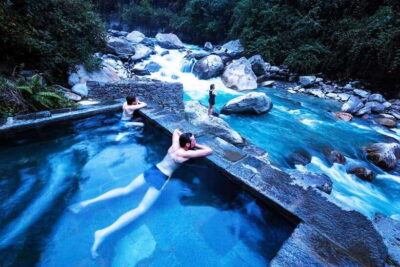
- Natural reset in hot springs: Jhinu Danda’s wilderness hot springs are part of the itinerary
- A real rhythm to the climb: villages, forests, higher camps, then a long descent for recovery
Why this Annapurna Base Camp plus Poon Hill plan is such a strong fit
If you’re trying to pick a first Annapurna trek, this one has a clear logic. You start in the foothills around Pokhara, ease into trekking, then peak at Annapurna Base Camp. Along the way you get the classic Annapurna mix: terraced farms, rhododendron forests, and higher alpine meadows, plus a handful of village stopovers where daily life feels normal rather than staged.
The Poon Hill sunrise part matters because it gives you a reward before you hit the highest day. It also acts like a warm-up in a way. You’re already acclimating on the trek, and sunrise at 3,000 m-ish (Poon Hill is listed through the Ghorepani side) makes the whole climb feel earned. Then Annapurna Base Camp takes over as the emotional highlight.
The other reason the plan works is the pacing. The itinerary alternates climbs with rest nights at tea houses. That reduces the “always uphill, always exhausted” feeling you get on harder itineraries. It’s still a demanding trek, but it’s built for steady progress.
More routes into the Annapurna Sanctuary:
- Kathmandu/Pokhara: 5-Day Annapurna Base Camp (ABC) Trek
★ 4.9 · 72 reviews - Annapurna Base Camp Trek -8 days
★ 5.0 · 56 reviews - Private 7 – Day Annapurna Base Camp Trekking
★ 5.0 · 50 reviews
Price and value: what $910 includes, and what it doesn’t
$910 per person is not cheap, but for Nepal trekking it’s also not just marketing. You’re paying for the practical stuff that keeps the trek running smoothly.
Included items that add real value:
- Private transportation to and from Pokhara to Nayapul
- Tea house accommodation during the trek
- All meals on trek days (breakfast, lunch, dinner)
- An experienced license-holder trekking Sherpa guide plus a porter
- Permit paperwork (ACAP and TIMS)
- Government taxes and service charge
Things you should budget separately:
- Tips for guide and porter
- Accommodation and meals in Pokhara (before and after the trek)
- Drinks (tea, coffee, water, soft drinks, alcohol) and hot shower
- Internet access
- Travel insurance, which is compulsory for an adventure trip
A simple way to judge value: if you were hiring a guide, handling permits, and organizing porters yourself, the administrative load is the part that usually bites. Here, that load is handled, and your time is spent hiking.
Fitness, altitude, and how to pace yourself on these 9 days
This trek is listed for travelers with moderate physical fitness. That’s a good sign, because “moderate” usually means you can get through the days if you walk consistently and don’t treat the trail like a race.
Still, altitude is the real job on Annapurna. You’ll trek from about 1,520 m (Ulleri) up through 2,880 m (Ghorepani), then to the 2,600s, 2,900s, and finally 4,130 m at Annapurna Base Camp. The itinerary does a descent after the summit goal, which helps your body reset.
Practical pacing tip: on this kind of trek, slow and steady usually gets you farther than big climbs. Your guide’s job is not just route navigation, it’s also helping you keep a pace that makes sense for altitude.
Also note: you’ll be spending about 5 to 8 hours hiking on most days, depending on the day. That’s not constant strain, but it adds up. Bring layers and plan for cold mornings and warmer midday hiking.
Day 1: Pokhara to Nayapul to Ulleri, then settle in
You start from Pokhara Lakeside around 7:15 am, then travel by private transport to Nayapul. After that, you trek to Ulleri at about 1,520 m.
This first day is important because it sets your rhythm. A 5 to 6 hour walk sounds manageable, and it is, but don’t underestimate the walking on uneven steps. It’s also your first tea house night, which means you’ll learn the routine quickly: when meals are served, how early you need to set up for mornings, and how cold it can get once the sun drops.
If you’re the type who likes to arrive, eat, and sleep, this day is a good match. You’re not trying to “win” the altitude game yet. You’re just starting.
More Ghorepani and Poon Hill departures:
- Poon hill Trek 3 days
★ 5.0 · 176 reviews - Pokhara: 4-Day Ghorepani, Poonhill & Ghandruk Mountain Trek
★ 5.0 · 132 reviews - Ghorepani – Poon Hill Trek 3N-4D
★ 5.0 · 125 reviews - From Pokhara: 3-Day Ghorepani Poon Hill Trek with Guide
★ 4.9 · 68 reviews
Day 2: The climb to Ghorepani (2,880 m) for sunrise territory
Day 2 takes you from Ulleri up to Ghorepani at 2,880 m. You’re looking at about 6 to 7 hours of trekking.
This is where the trail starts to feel more Himalayan and less village-by-village. You’re gaining elevation steadily, and tea house nights here are usually about comfort between climbs, not luxury. Still, the win is big. Ghorepani puts you in position for Poon Hill sunrise the next morning, which is the moment many people hike this trek for.
One consideration: because the ascent is real, you’ll want to keep your effort smooth. If you feel breathless, that’s not a signal to push harder. It’s a signal to slow down.
Day 3: Poon Hill sunrise, then down toward Tadapani
This is the day with two distinct moods.
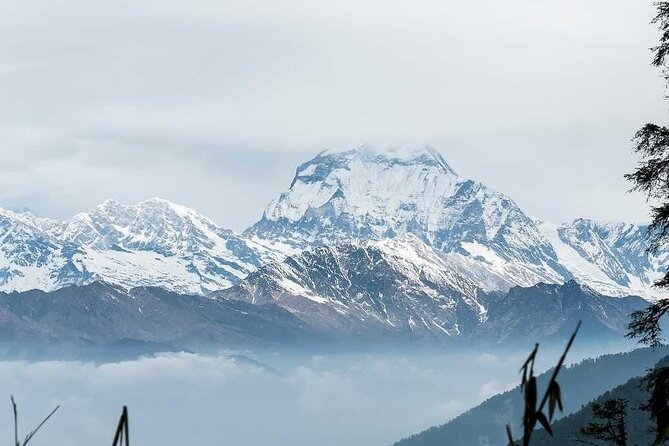
First, you do an early hike to Poon Hill for sunrise. The payoff is a famous panorama over the Himalayas, and it’s also a chance to get your bearings. Seeing multiple peaks from one viewpoint helps the trek make sense, especially once you move toward higher base-camp zones.
After sunrise, you trek to Tadapani (listed at 2,650 m) for an overnight stay, with about 6 to 7 hours on the move.
Why this stop after sunrise is smart: it’s a transition day. You’re not going straight from the sunrise excitement into the steepest high-altitude effort. Instead, you move into the next segment of the route with time to adjust.
Day 4: Tadapani to Chhomrong, village views and steady trekking
Day 4 goes from Tadapani to Chhomrong at 2,170 m in about 5 to 6 hours.
That elevation drop matters. It gives you a breather after the Ghorepani/Poon Hill area. Chhomrong is a classic tea house village stop in the Annapurna region, and you get views plus the sense of living communities along the trail.
You’ll likely notice how the trail changes with altitude, not just the mountains. As you move, the air, the vegetation, and the feel of the path shift. This is one reason the trek is more than a “mountain day.” It’s a sequence of changing ecosystems.
Day 5: Chhomrong to Himalaya (2,920 m) for a higher-altitude vibe
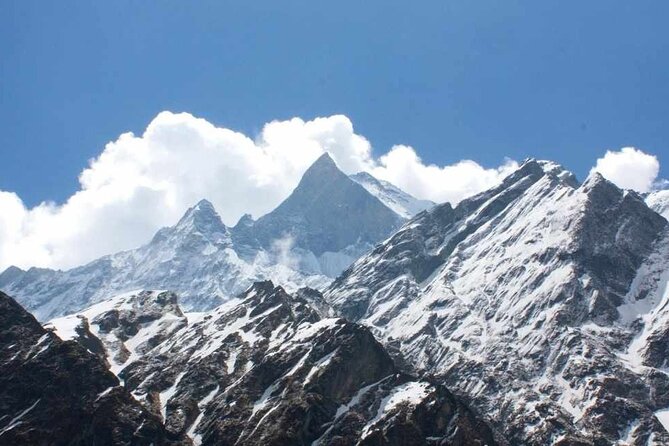
Day 5 takes you to Himalaya at 2,920 m in around 6 to 7 hours.
This is one of the days that makes the trek feel more serious. You’re higher, the cold mornings tend to come on faster, and you start to think about the next big day toward Annapurna Base Camp. Also, tea house stays at this elevation often feel a bit tighter and more focused. You’ll likely spend more time conserving energy and staying warm.
The good news: the itinerary’s structure is working. You’re not jumping from low to base camp in one day. You’re stepping upward in a way that supports acclimatization.
Day 6: The big goal, Annapurna Base Camp via Machhapuchhre Base Camp
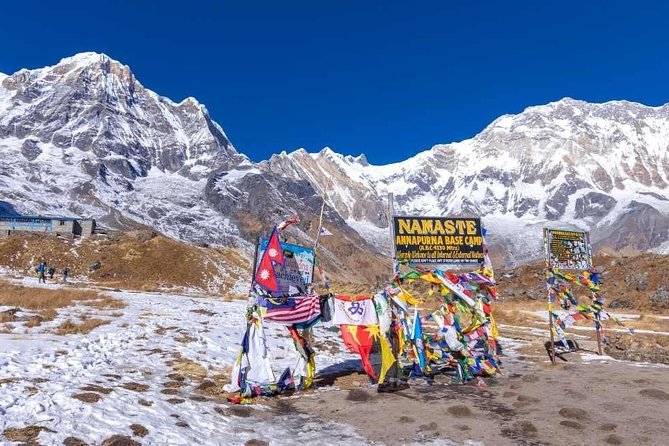
Day 6 is the heart of the journey. You trek to Annapurna Base Camp (4,130 m) via Machhapuchhre Base Camp, with about 5 to 6 hours hiking.
This is the day you remember for years.
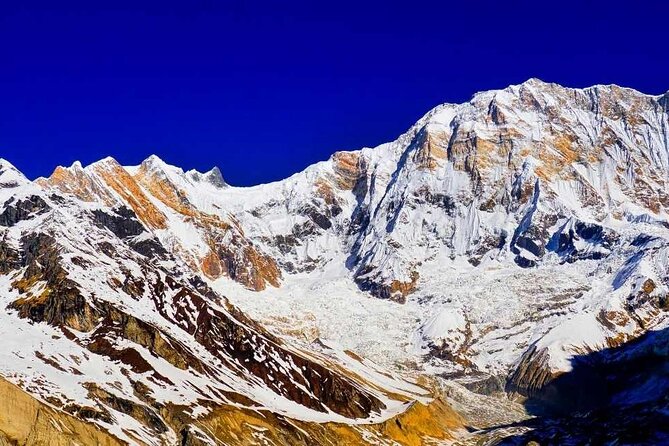
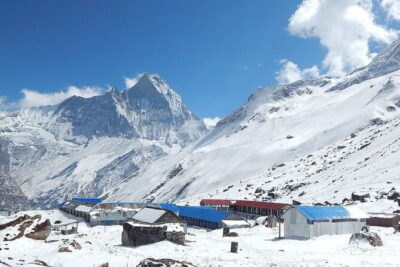
Machhapuchhre, often called the Fishtail, gives the Annapurna region its unmistakable drama. The route through Machhapuchhre Base Camp helps you arrive with context rather than surprise. Then Annapurna Base Camp itself is the moment where the whole effort turns visible. Close-up Himalayan views are the point, and you can feel why people return to this area again and again.
One consideration on this day: your body might feel slow even if the walk length is reasonable. That’s normal at altitude. Your best move is to pace, breathe, and take breaks without turning them into a long delay.
Day 7: Descend to Bamboo (2,310 m), recover with tea house life
Day 7 takes you from Annapurna Base Camp down to Bamboo (2,310 m). Expect 7 to 8 hours of descent.
Long descents are not “easy.” Your legs do a lot of work controlling speed, and your knees may feel it. This is where trekking poles can become more important than you expected. You’re doing the right thing by descending after the base camp day, but go easy with your footing.
The reward is the tea house reset. Bamboo is lower and typically feels more breathable. It’s a night that helps your body recover before the final descent toward hot springs.
Day 8: Bamboo to Jhinu Danda (1,780 m) plus natural hot springs
Day 8 goes down to Jhinu Danda (1,780 m) in about 5 to 6 hours.
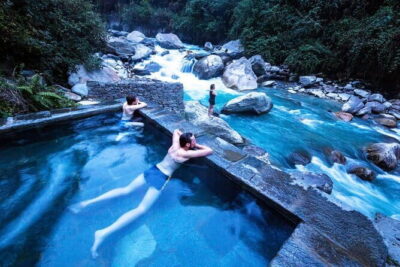
Then comes the highlight that’s not just photos. Jhinu Danda is known for natural hot springs in a wilderness setting. After days of hiking, soaking is not only relaxing, it’s functional. It helps your legs feel less angry, and it gives your mind a break from cold mornings and altitude focus.
Why this stop is worth building into your itinerary: it turns a tough trek into a full experience, not just a series of climbs. The contrast between hiking all day and soaking after is exactly the kind of travel balance I like.
Day 9: Trek out to Naya Pul and drive back to Pokhara
On Day 9 you trek down to Naya Pul, then drive back to Pokhara. The trek duration details aren’t spelled out beyond the day summary, but the day is clearly built around finishing with comfort.
This is the moment to notice what your body learned over nine days. If you paced well, you’ll feel tired but not destroyed. If you sprinted early, you might pay for it later. Either way, it’s a satisfying ending, because you’re not ending in a remote, awkward place. You’re returning to Pokhara, where you can eat a real meal and look back at what you climbed.
Tea houses and meals: cozy stays that also help you stay on schedule
Tea house trekking can sound simple until you realize it affects every part of your plan. With this trek, your accommodation during the trek and all meals are included, with breakfast, lunch, and dinner provided.
That means you’re not stopping to negotiate for food, and you’re not scrambling for options when you’re tired. It also keeps your day rhythm predictable. For a first-time trekker, that predictability is a big deal.
You should expect basic mountain comfort. A tea house is not a hotel, but it’s often warm enough to recover and share stories over food. The overall vibe is part of the appeal too, since the itinerary is built through Gurung and Magar village areas.
Permits, guide support, and how the trek stays organized
One of the best value points here is that you’re not handling paperwork and trail permissions yourself. The trip includes ACAP and TIMS permits through the necessary paperwork, plus a license holder trekking Sherpa guide.
It’s also organized in a practical way with porter support. The porter ratio is listed as 2 trekkers to 1 porter. That matters because it reduces the load you carry, especially on days when you feel altitude or cold in your joints.
The result is something you can trust: fewer logistics surprises, more time for the actual hiking, and a calmer experience overall. That calmer feeling is a big part of why people talk about being in good hands.
Weather reality: good conditions make the trek, but flexibility protects you
This experience requires good weather. That’s not drama, it’s just the Himalayas being the Himalayas. If the trek can’t run due to poor weather, you’ll be offered a different date or a full refund.
So what should you do with that information? Be ready for change. Pack with layers. Keep your schedule flexible. If you’re the type who hates plan changes, you’ll feel a little edge. If you’re okay with Himalayan weather rules, you’ll be fine.
Who should book this trek, and who should think twice
This trek is a good match if:
- You want a classic Annapurna highlights route with Poon Hill sunrise and the base camp goal
- You prefer tea house comfort and a built-in meal plan
- You want a structured approach with permits handled and porter support in place
- You’re comfortable trekking 5 to 8 hours most days and you understand altitude takes time
You should think twice if:
- You’re not ready for altitude at 4,130 m and you tend to push hard when you feel anxious
- You expect hot showers, internet, or lots of drinks included, because those are not included
Should you book the Annapurna Base Camp with Poon Hill 9-day trek?
I’d book it if you want the Annapurna story told in the right order. Sunrise first, then villages and forests, then base camp, then hot springs and a descent. The trek’s structure is its secret weapon. It gives you big moments without turning every day into a suffer-fest.
If you’re aiming for value, it also helps that meals, trek accommodation, guide, porter support, and permits are all bundled. That reduces stress, which matters a lot when you’re walking uphill for nearly a week.
If you’re still on the fence, read your own comfort needs like a checklist. If you can handle tea houses, plan for cold mornings, and respect altitude pacing, this itinerary fits very well. If you want a fully cushy trip, you might end up frustrated.
FAQ
Where does the trek start and when?
It starts at Pokhara Lakeside, at 6X84+3JQ, Lakeside Rd, Pokhara 33700, Nepal. The start time is 7:15 am.
How long is the trek?
The duration is 9 days, approximate.
Is transportation included?
Yes. The tour includes private transportation to and from Pokhara to Nayapul.
What is included during the trekking days?
Tea house accommodation during the trek and all meals during the trek are included, with breakfast, lunch, and dinner.
Are permits included?
Yes. The trip includes all necessary paperwork and trekking permits, including ACAP and TIMS.
Do I get a guide and porter?
Yes. You get an experienced license holder trekking Sherpa guide and a Sherpa porter. The porter ratio is listed as 2 trekkers to 1 porter.
Is hot shower or internet included?
No. Hot shower and internet are not included.
What about drinks like tea, coffee, water, or alcohol?
Drinks are not included. That includes tea, coffee, water, soft drinks, and alcohol.
Do I need travel insurance?
Yes. Travel insurance is compulsory to take an adventure trip.
What is the cancellation policy?
There is free cancellation. You can cancel up to 24 hours in advance for a full refund, and cancellations due to poor weather can result in a different date or a full refund.
Latest Pokhara write-ups
- Sunrise View from Sarangkot★ 5.0 · 3 reviews
- Beautiful Sarankot Sunrise with Full Day Sightseeing in Pokhara★ 4.5 · 3 reviews
- Sarangkot Sunrise Tour in Private Car★ 5.0 · 3 reviews
- Pumdikot Mahadev Status and Peace Stupa Hiking Private Tour★ 4.5 · 3 reviews
- Pokhara: Dhampus Easy Trek for Families with YoungKids 2 Day Tour★ 5.0 · 3 reviews
- Pokhara: Private Car Drive Tour to World Peace Stupa★ 5.0 · 3 reviews
- 5-Day Private Farming Experience in Nayapul with Accommodation★ 5.0 · 3 reviews
- Transfer to Lower Mustang (Jomsom)★ 5.0 · 3 reviews
Annapurna Base Camp Trek, compared.
Browse the lists this tour appears in