Reviewed · BHAKTAPUR
Bhaktapur Sightseeing
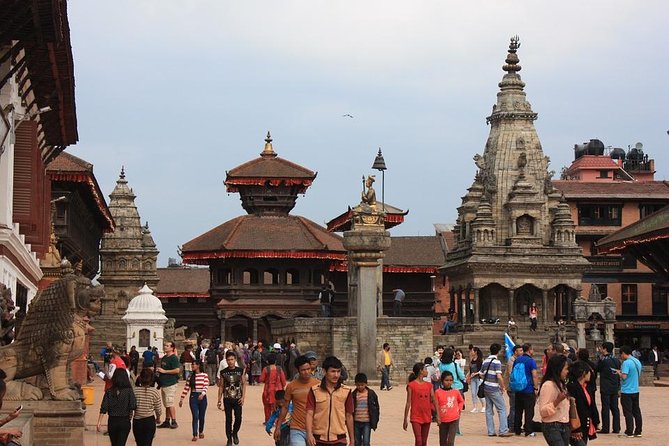
Bhaktapur is one of those places in the Kathmandu Valley where the past still feels organized, not museum-quiet. It has Malla-era stories tied to temples, and the town’s most famous squares and pagodas are right there for you to read with your eyes. I especially like how this route connects dates and rulers, instead of just pointing at pretty buildings like they are all the same.
Two parts I really value are the long, unhurried time at Bhaktapur Durbar Square and the chance to see temple architecture that traces back to specific reigns, like King Yaksha Malla and King Bhupatindra Malla. The main consideration is simple: this is a 7-hour day, with a big chunk of time standing and walking, so comfy shoes matter.
If you’re starting around 8:45 am, this tour is set up to move smoothly from hotel pickup to temple viewing, with a professional guide, private transport, and afternoon tea included along the way. You’ll also get a mobile ticket, so you spend less time figuring things out and more time looking.
Key highlights worth your morning
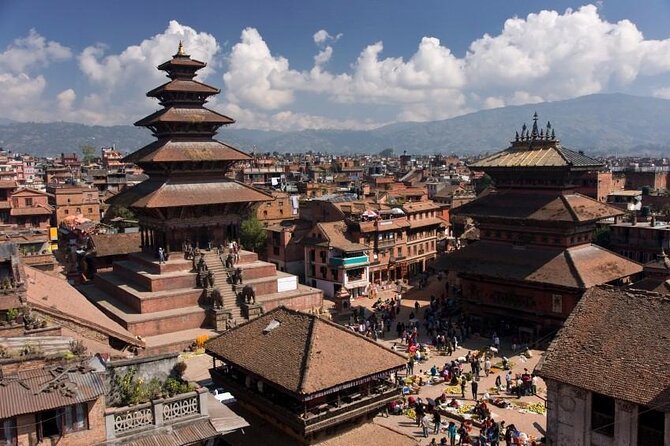
- UNESCO Bhaktapur Durbar Square set in front of the old royal palace, including a full 4 hours there
- Dattatreya Temple with a three-story pagoda style and the Hindu trinity figures (Brahma, Vishnu, Shiva)
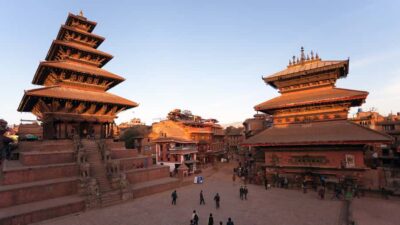
- Nyatapola Temple from 1702, one of the still-standing icons under King Bhupatindra Malla
- Private transportation and hotel pickup/drop-off so your day stays on schedule
- Afternoon tea included, which helps when you are not counting meals into your budget
- Guides who make the stories click, with Dipesh Sapkota and Rabina names showing up as examples of strong guiding
Bhaktapur’s Malla-era soul, and why it still feels different
Bhaktapur used to be the decision seat of power in the Kathmandu Valley. That matters, because you can feel it in the layout and the way temples and sanctuaries are positioned like they were built for real public life, not just spiritual dreaming.
This city is often described as the flawless one, compared with the other two towns where everyday change has moved faster. In practical terms for you, it means the core heritage fabric is still easy to experience without constantly fighting modern clutter. You get to focus on what is in front of you: plazas, courtyards, rooflines, and the symbolic details carved into the stone.
And yes, Bhaktapur has wrestling in its DNA. The city was famous for Malla Yuddha, the furious battle between two wrestlers. The interesting part is how that theme echoes through the city’s sanctuaries, including watcher-style imagery tied to protection of the city and of the gods. Your guide can point out those motifs, so you are not just snapping photos, you are actually reading the place.
There’s also political context, which makes the architecture feel more than decorative. King Yaksha Malla isolated the kingdom between his three children in 1482, and that internal fracture set the stage for the Shah line from Gorkha to take over later. When you understand that backdrop, temples built during the Malla period feel like cultural pressure systems, holding identity steady through political change.
More City Tours in Kathmandu
- Private Kathmandu Sightseeing Tour | UNESCO World Heritage sites
★ 5.0 · 756 reviews - Kathmandu: Private City Guided Tour
★ 4.9 · 174 reviews - Kathmandu Private Sightseeing Tour | UNESCO World Heritage Sites
★ 5.0 · 109 reviews
Price and value for $80, what you get beyond tickets
At $80 per person for about 7 hours, this tour is priced like a proper guided heritage day, not a do-it-yourself taxi shuffle. You are paying for time, not just entrances.
Here’s what the price covers, and why it matters:
- Hotel pickup and drop-off: you start and end with less stress
- Private transportation: less waiting, fewer route debates
- A professional guide: the difference between seeing temples and understanding them
- All activities in the plan, so you are not improvising each stop
- Afternoon tea included: a small thing that makes a long day easier
- Admission tickets included for the main sites on the route
What’s not included is also important:
- Food and drinks are on you. The plan includes tea, but it does not replace lunch.
- Tips for guide and driver are not included, so budget for that.
- Any personal expenses are yours.
One small caution: the list of inclusions says all fees and taxes are not included, but the site entries in the schedule say admission tickets are included for the stops. In practice, your guide and the operator should clarify what’s covered when you confirm. If you want to be extra safe, ask what, if anything, you would pay on arrival, and you’ll feel confident walking in.
Bottom line on value: if you like heritage with explanation, and you want a smooth day with pickup, transport, and tea handled, $80 is reasonable. If you prefer solo roaming with zero structure, you may feel the guide portion is the part you could skip. But for Bhaktapur, guidance usually turns the visit from pretty to meaningful.
Start time 8:45 am, and how to pace a full heritage day
The day starts at 8:45 am. That early start is smart in Kathmandu Valley, because you get cooler morning energy and you avoid some of the crush that tends to build later.
Because this is a private tour, only your group participates. That means you can move at a pace that fits your comfort level, rather than getting pulled along like a human timeline. It also makes it easier to ask questions that come up while you are standing inside courtyards or looking at roof details.
You’ll likely use a mobile ticket for entry, which reduces friction. Still, I recommend keeping your phone charged and your confirmation details easy to access.
Also remember this: Bhaktapur Durbar Square sits at about 1,400 meters above sea level. You might notice the air feels a bit thinner or just cooler than lower areas, especially in the morning. The practical fix is to dress in layers and go a little slower at the beginning. Nothing dramatic, just enough to let your body catch up.
For comfort, plan for:
- Walking shoes you can trust on stone
- A light layer even if Kathmandu feels warm
- Water and a snack if you know you get hungry between tea and lunch, since food and drinks aren’t included
Bhaktapur Durbar Square: the royal palace plaza that you actually need time for
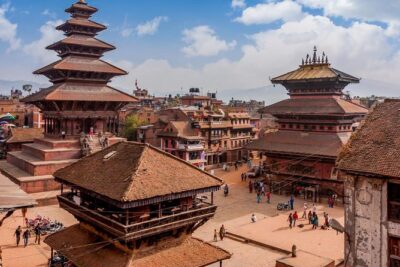
Bhaktapur Durbar Square is the plaza in front of the old Bhaktapur royal palace. You can think of it as the city’s stage: a place where power, religion, and public life overlapped.
You get about 4 hours here, which is exactly the right amount of time. Most people rush Durbar Squares and miss what makes them special. With a longer stop, you can slow down enough to notice patterns, not just big landmarks. And your guide can connect what you see to the story of Bhaktapur’s rule, including how Malla-era identity shaped the city.
What I’d focus on during your time at Durbar Square:
- Layout and sight lines: don’t only photograph one spot, walk the edges too
- Rooflines and carved details: look for repeating guardian-style motifs tied to protection themes
- How the palace-front space works: the plaza feels like it was meant for gatherings, not quiet passing
Practical note: 4 hours can sound long until you realize the space invites lingering. If your group energy runs low, you can still use the guide to prioritize the best viewing angles first, then relax afterward. That’s where a private setup really helps.
Also, Bhaktapur’s altitude and stone surfaces mean you’ll feel your legs after a while. This is the stop where shoes and pacing matter most.
More of Bhaktapur:
- Private Bhaktapur and Nagarkot Day Tour From Kathmandu
★ 5.0 · 305 reviews - Day Trip to Bhaktapur and Panauti from Kathmandu
★ 5.0 · 184 reviews - Bhaktapur & Patan Durbar Square Day Tours
★ 5.0 · 122 reviews - Nagarkot Sunrise & Bhaktapur UNESCO Heritage Private Tour
★ 5.0 · 66 reviews
Dattatreya Temple: a three-story pagoda tied to Yaksha Malla
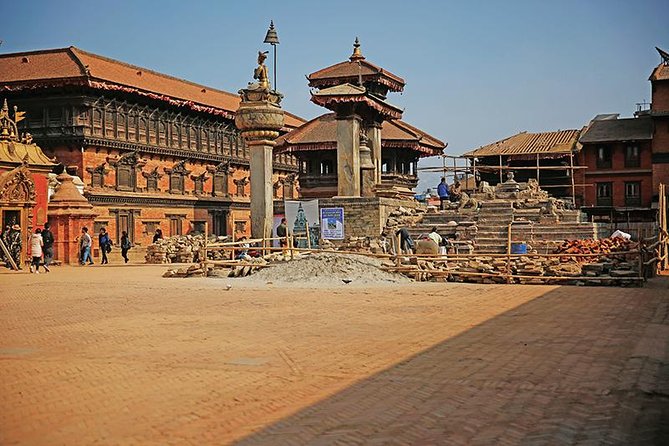
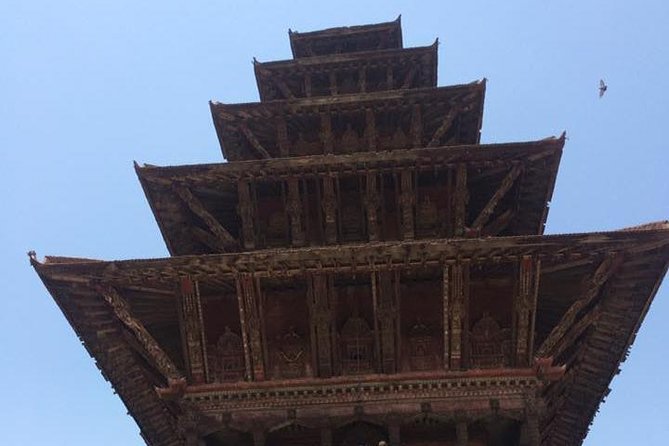
Next up is the Dattatreya Temple, a three-story pagoda-style temple built during the reign of King Yaksha Malla. The Hindu trinity sits at the center of the story here, with sculptures representing Brahma (creator), Vishnu (preserver), and Shiva (destroyer).
The timing details are what make this stop satisfying for history-minded visitors. The temple was opened to the public around 1486 A.D., after Yaksha Malla’s demise. So you are not just looking at an old building, you are witnessing a post-ruler moment where a dynastic project became public heritage.
Why you should care about that:
- It shows how ruling periods shaped what eventually became shared space.
- It turns your visit into a timeline. You are mentally moving through reigns instead of just collecting facts.
You’ll have about 1 hour at Dattatreya Temple. That’s enough time to take in the full pagoda form, then slow down for statue work and roof-tier details.
If you want to get the most out of that hour, do this:
- First, step back and take in the temple’s overall shape
- Then move closer for the trinity figures
- Finally, look for how the levels relate to each other, since pagoda design is all about visual stacking
One more practical point: because this temple is religious space, keep your posture respectful and your camera use calm. A good guide will remind you what is appropriate without killing your momentum.
Nyatapola Temple: the 1702 icon and the fun of perspective
Nyatapola Temple is one of the still-existing heavy hitters of Bhaktapur’s temple landscape. It was built in 1702 A.D. under King Bhupatindra Malla.
You’ll have about 30 minutes at Nyatapola. That might sound short, but Nyatapola’s main value is visual impact and perspective. It’s the kind of site where a short, focused visit beats a long wandering session. You want the time to step into a few key angles, then absorb the scale.
What to look for:
- The temple’s stacked form and how it reads from different viewpoints
- Stone figures and guardian motifs around the structure, which fit Bhaktapur’s broader theme of protectors for city and gods
- Foreground details, because temples like this often have meaningful ornament you miss if you stay too far away
The main drawback risk here is overconfidence. If you treat Nyatapola like a quick photo stop and run straight through, you’ll miss what makes it iconic. A guide helps you slow down at the right moment, when the angles line up best.
Also, 30 minutes is short enough that you can still recover if the earlier Durbar Square stop made your feet angry. Think of Nyatapola as your reward stop, not a second endurance test.
Tea break, transport, and keeping the day comfortable
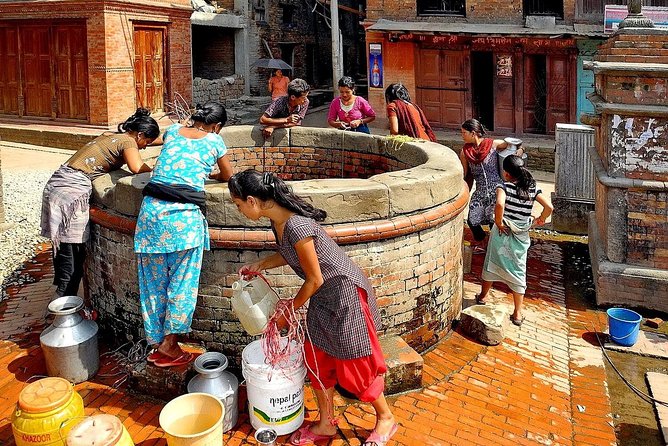
This tour includes afternoon tea, which is one of those quietly practical inclusions. You do not need to track where to find it, and it gives you a pause in the middle of a heritage-heavy block.
You still should plan for lunch separately, since food and drinks are not included. I suggest you pick something simple and nearby, then return without a long detour. When you are on a fixed route with private transport, protecting your schedule is half the success.
The private transportation also matters more than it sounds. Kathmandu traffic and local road navigation can turn a calm day into a stop-and-go headache. Here, you get to keep your attention on Bhaktapur itself, instead of spending your morning watching your route app spin.
If you’re someone who gets tired in bursts, use the schedule like this:
- Use your energy early at Durbar Square
- Save your best focus for Dattatreya’s symbols
- Treat Nyatapola as the “stand, look, and let it sink in” moment
And keep in mind the day runs to about 7 hours total, even though the temple times add up to less. That extra time is for getting between stops and letting you breathe, which is the part most people forget to account for.
When you should choose this tour, and when you might not
This tour is a strong fit if:
- You want guided context for UNESCO heritage sites, not just a checklist of buildings
- You care about how kings like Yaksha Malla and Bhupatindra Malla left marks in the stone
- You like city-scale stories, including the wrestling legacy and protector imagery tied to sanctuaries
It’s also a good fit for a first-time Bhaktapur visit because the route hits the big thematic anchors: Durbar Square, Dattatreya, and Nyatapola.
You might reconsider if:
- You only want quick photos and minimal explanations
- You have very limited stamina, since the Durbar Square stop alone is 4 hours
One more helpful note: good guiding is a huge part of why this circuit works. Names like Dipesh Sapkota and Rabina come up as examples of guides who make the day feel lively and story-led. You can’t always choose your guide, but you can choose your attitude. Ask questions, point out details you notice, and your visit gets better fast.
Should you book this Bhaktapur sightseeing tour?
Book it if you want a smooth, private heritage day that includes transport, a guide, admission for the key sights, and afternoon tea, all timed around a real 7-hour pace. Bhaktapur rewards people who slow down, and this plan gives you that time instead of racing you between stops.
Skip or look for an alternative if you hate structured routes, or if a 4-hour Durbar Square block sounds like punishment rather than a pleasure.
If you do book, do one simple thing: plan to show up rested and ready to walk. Bhaktapur is not hard travel, but it is a stone-and-story kind of day. When you match your pace to the city, the Malla-era details start to feel like they are speaking directly to you.
FAQ
What time does the Bhaktapur sightseeing tour start?
The start time is 8:45 am.
How long is the Bhaktapur sightseeing experience?
It runs for about 7 hours.
Is this tour private?
Yes. It is a private tour, so only your group will participate.
Which sites are included in the sightseeing route?
You visit Bhaktapur Durbar Square, Dattatreya Temple, and Nyatapola Temple.
Are admission tickets included?
Yes. Admission tickets are included for Bhaktapur Durbar Square, Dattatreya Temple, and Nyatapola Temple.
What’s included in the price?
Hotel pickup and drop-off, private transportation, a professional guide, local taxes, afternoon tea, and the scheduled activities.
What’s not included?
Food and drinks, tips for the guide and driver, personal expenses, and any other fees and taxes not covered in the plan.
Can I get a full refund if I cancel?
Yes, you can cancel up to 24 hours in advance for a full refund.
Latest Kathmandu write-ups
- Langtang Valley Trek★ 5.0 · 3 reviews
- Langtang Valley Trek from Kathmandu★ 5.0 · 3 reviews
- Khopra Danda Trek★ 5.0 · 3 reviews
- 5 night / 6 days Kathmandu Nagarkot Chitwan Pokhara tour★ 5.0 · 3 reviews
- Nepal Highlights Tour: 5 Nights 6 Days Kathmandu & Pokhara Tour★ 5.0 · 3 reviews
- Kathmandu Valley Private Day Tour★ 5.0 · 3 reviews
- Conquer the Himalayas: The Ultimate 16-Day Annapurna Circuit Trek★ 3.5 · 3 reviews
- Kathmandu Heritage Day Tour★ 5.0 · 3 reviews