
Reviewed · UNESCO WORLD HERITAGE SITES
Kathmandu UNESCO Heritage Tour with Local Food Tasting
A Kathmandu UNESCO heritage tour with local food tasting is interesting because it links two very different moods of the city, Thamel streets and the calm height of Swayambhunath. I like how the day starts lively and ends with prayer flags, monk chants, and a big view over the Kathmandu Valley.
Two things I’d put at the top of your must-do list are Kathmandu Durbar Square and the chance to see the Kumari at her window. If you care about meaning, not just photos, the guide’s explanations around temples, icons, and living traditions help it click fast.
One possible drawback to think about: you’ll spend time walking through busy market lanes and on temple ground that can feel uneven, plus the food tasting is meant to be a full-on snack run. If you’re cautious with lots of street food, or you hate stairs, go in with a plan and pace yourself.
Key highlights you should know before you go
- Swayambhunath guided visit with a hilltop feel, prayer flags, and monk chanting
- Durbar Square UNESCO stop with centuries-old temples and living cultural traditions
- Kumari at her window as part of the Durbar Square experience (timing depends)
- Asan Market snack and shopping time with spices, grains, seasonal produce, and everyday trade
- Eat-as-you-like Nepali tastings including multiple iconic local dishes and Indrachowk lassi
- English-speaking private group led by Rajan, with flexible pacing you can feel during the day
Kathmandu in 5 hours, from Thamel energy to hilltop peace
This tour is built for people who want Kathmandu to feel like Kathmandu, not like a checklist. You’ll start in Thamel, where trekking gear shops and handicrafts sit alongside global travelers, and the street scene moves constantly.
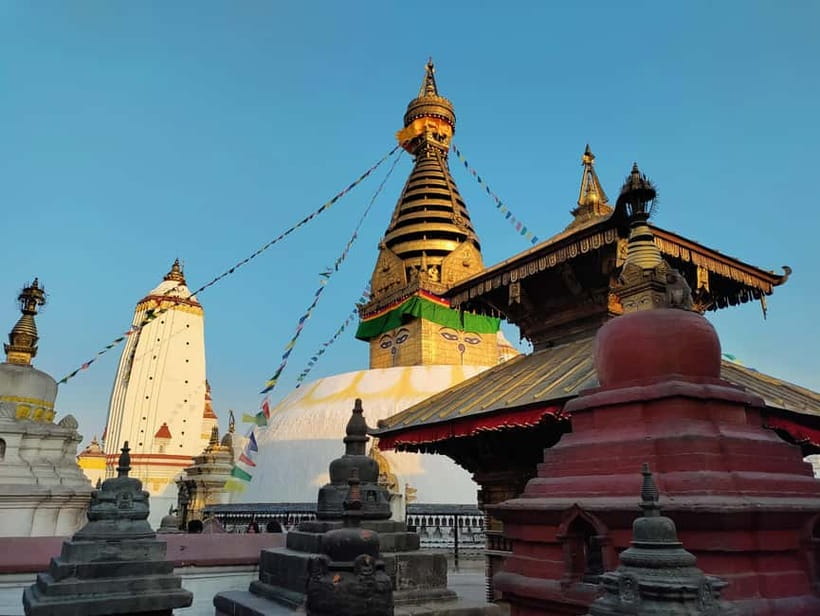
Then you’ll rise above it. Swayambhunath is the contrast point, a hilltop shrine area where prayer flags flutter and monks chant while the city noise fades into the background.
The 5-hour timing is also a big part of the value. You get several major heritage sights plus a real food tasting block, without the kind of all-day drag that can make people cranky.
More UNESCO World Heritage Sites in Kathmandu:
- Kathmandu: 7 UNESCO Sites with Lunch
★ 4.8 · 744 reviews - Kathmandu: Full-Day 7 UNESCO Tour with Lunch – Private/Group
★ 4.9 · 247 reviews - Kathmandu: 7 UNESCO Sites Tour in 1 Day (Private Tour)
★ 4.9 · 204 reviews
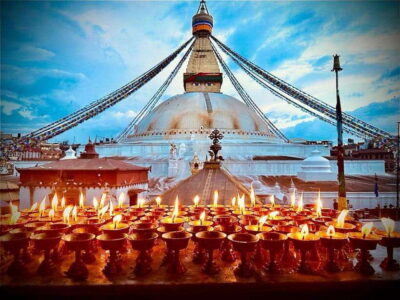
Swayambhunath Stupa, also called the Monkey Temple
Swayambhunath is one of Kathmandu’s best “first understanding” stops. The stupa sits on the hill and gives you that immediate sense that this religion is woven into daily life, not locked behind museum glass.
Your visit is guided for about an hour, which matters. It means you’re not just staring at buildings, you’re learning what you’re looking at as you walk. You can expect the atmosphere to feel serene compared to the street level below, with prayer flags and a steady spiritual soundtrack from monks.
Practical tip: plan for time to look up. The stupa is designed to reward careful attention, and the panoramic views over the valley are part of why the hill is worth the climb.
Kathmandu Durbar Square: UNESCO temples and a Living Goddess moment
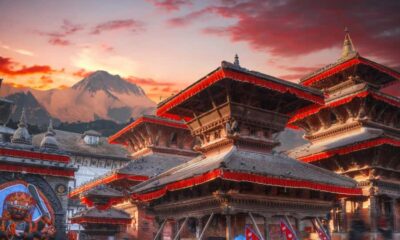
Next comes Kathmandu Durbar Square, a UNESCO World Heritage site known for temples, carved details, and continuing traditions. This is where the city’s past feels physical, because so much of it is built to be used, not just admired from a distance.
Your guided hour here is centered on storytelling and sacred icons. You’ll see references to Kal Bhairav and Swet Bhairav, and you’ll also have the chance to see the Living Goddess, Kumari, appear at her window.
Here’s the mindset that helps: treat Durbar Square like a working cultural stage. You’re not only sightseeing, you’re observing a place where symbolism and ceremony still play a role.
And because the Kumari moment depends on the day and timing, keep expectations open. The value is still there even if the exact window moment doesn’t line up perfectly, because the guide’s explanations help you understand what you’re seeing.
Asan Market lanes: spices, grains, brass, and everyday Kathmandu
After the heritage sites, you head to Asan Market, and the shift is noticeable. This is the place where you can feel how Kathmandu actually runs, with trade happening all around you.
You’ll get about an hour that mixes guided context and free time. That combination is smart. The guide helps you spot what matters, then you can wander at your own speed to browse, shop, or just watch people work.
Asan is especially good if you like sensory travel. You’ll pass stalls with spices and grains, see seasonal produce, and spot everyday items like saris and handmade jewelry. If you’re into practical souvenirs, you might also notice brass utensils and other traditional goods.
Practical tip: don’t treat shopping here like a museum gift shop. Prices and quality vary. Use the guided time to ask questions, then decide what feels fair for you.
More Historical Tours in Kathmandu:
- Kathmandu: Private UNESCO World Heritage Site Tour
★ 4.9 · 47 reviews - Private Kathmandu UNESCO World Heritage Sites Tour
★ 4.8 · 28 reviews - Pick 2-Wonders of Kathmandu: A 3-Hour Heritage Hop
★ 5.0 · 22 reviews - UNESCO Five World Heritage Tour in Kathmandu
★ 5.0 · 12 reviews
The food tasting is the main event, not a side quest
This is a food-focused heritage tour, and the tasting portion is the kind you plan around. You’re offered multiple Nepali favorites, and the experience is designed so you can eat as much as you like during the tasting segment.
You can expect a mix of savory snacks and sweet treats. Based on what’s included, the menu can include:
- MoMo, Nepali dumplings
- Newari Samaybaji, a ceremonial platter with beaten rice, marinated meat, fried eggs, and pickles
- Yomari, a sweet steamed dumpling filled with jaggery
- Bara, a savory lentil pancake
- Chatamari, a rice flour crepe often called Nepali pizza
- Gwaramari, crispy fried bread
- Indrachowk lassi, a refreshing drink to balance the flavors
Why this matters for your trip: Nepal’s food isn’t one style. It changes with region and tradition, and a tasting lineup like this helps you understand that variety in a few hours.
Also, don’t underestimate the role of pacing. The tour is compact, and it’s easy to overdo snacks when everything smells great. If you have a sensitive stomach, start with smaller portions as you go, then add more once you know how your body feels.
Who this tour fits best, and who should rethink it
I think this one is a great match if you want a guided UNESCO experience with food at the center. It’s also ideal if you want an English-speaking guide who can explain what you’re looking at at Swayambhunath and Durbar Square, then connect those sites to daily life in places like Asan Market.
It’s also a solid choice for people who prefer a private group. A smaller group usually means fewer awkward pauses and more time for questions.
You may want to rethink it if you’re not into street foods or you hate walking. Between temple grounds and market lanes, you’ll be on your feet, and the food tasting is meant to be substantial.
Price and logistics: what $64 buys you
At $64 per person for a 5-hour private guided tour, the value depends on what you’d otherwise pay for separately. Here, the included items matter: entrance fees for the sites, local food tastings, an English-speaking guide, transportation, and a bottle of drinking water.
Government taxes are included too, which keeps the final amount from creeping upward. On top of that, you have the convenience of hotel-zone pickup and drop-off in Kathmandu or Thamel.
The best “value signal” is the mix. You’re not just paying for one sight. You’re getting multiple heritage stops plus a real tasting menu, all with a guide who helps you interpret the place.
Also, the experience is described as flexible with the schedule. In practice, that kind of adjustment is useful in Kathmandu, where timing can be influenced by crowds and small on-the-street realities.
The guide and team: what makes it feel smooth
The tour is operated by Adventure Himalaya Nepal Pvt. Ltd., and the guide you’ll meet can be Rajan. In the way he presents the day, the focus stays on clarity, not complicated details.
Rajan’s style also shows up in how the day flows. The pacing can adapt, and that flexibility helps if you want extra minutes in a market lane or more time at a temple detail.
The driver matters too. Getting between hilltop and city streets in Kathmandu takes skill, and having a steady, friendly driver makes the whole half-day feel less stressful.
Should you book this Kathmandu UNESCO Heritage Food Tour?
Book it if you want the best kind of Kathmandu mix: UNESCO heritage sites plus an Asan Market food run in one guided afternoon. If you enjoy learning what the symbols mean, and you’re happy to taste multiple Nepali dishes, it’s an efficient way to get real flavor and real context.
Don’t book it if you’re mainly looking for a quiet, slow, low-walking day. This tour is for people who like exploring, and it includes a lot of sensory street time.
If you fall in the first group, you’ll likely walk away with two things you’ll remember: the feel of Swayambhunath and Durbar Square, and the satisfying knowledge that you ate a real slice of Nepali culture, not just a snack stop.
Latest Kathmandu write-ups
- 16 Days Island Peak Climbing With Everest Base Camp Private Trip★ 5.0 · 3 reviews
- 15 Days Round Annapurna Trek with Poon Hill from Pokhara★ 5.0 · 5 reviews
- Private Nepal round trip including Ghorepani Poonhill trek★ 5.0 · 3 reviews
- Everest Base Camp Trekking 16 Days★ 4.0 · 7 reviews
- 14 Days Luxury Annapurna Base Camp Trek★ 5.0 · 6 reviews
- Everest Base Camp Trek★ 5.0 · 32 reviews
- Everest Base Camp Trek★ 5.0 · 87 reviews
- Everest Base Camp Trek★ 5.0 · 97 reviews
UNESCO World Heritage Sites, compared.
Private Kathmandu UNESCO World Heritage Sites Tour
Read our review →
Browse the lists this tour appears in