
Reviewed · ANNAPURNA BASE CAMP TREK
Pokhara: 7-Day Annapurna Base Camp Trek & Hot Spring
Pokhara: 7-Day Annapurna Base Camp Trek & Hot Spring is interesting because you get high-altitude Annapurna drama, then you reset in real natural hot springs at Jhinu Danda. I like this trek for two main reasons: the sunrise over the Annapurna range can be truly unforgettable, and the route layers forest walking with village life instead of feeling like one long grind.
One drawback to think about is not the trail itself, it is the human side. This itinerary leans on smooth transport and clear expectations, and in at least one report the return logistics and extra charges at guest houses were not handled as promised.
Key things I’d pin to your fridge before you book
- Sunrise timing at Annapurna Base Camp for big early views of the Annapurna range
- Tea house style stays (basic lodges) that keep you moving without packing tents
- Jhinu Danda natural hot springs as your muscle-relief payoff
- Altitude progression up to 4,130m, then a fast drop to 1,610m for recovery
- Guide and permits included, with an experienced government-registered guide
- Transport details matter, especially for the drive back to Pokhara
Pokhara start to Nayapool, then your first big hike day
Your trip begins in Pokhara. You are picked up for round-trip transportation that connects your hotel, Pokhara International Airport, and the trek starting point. The hike itself starts from Nayapool.
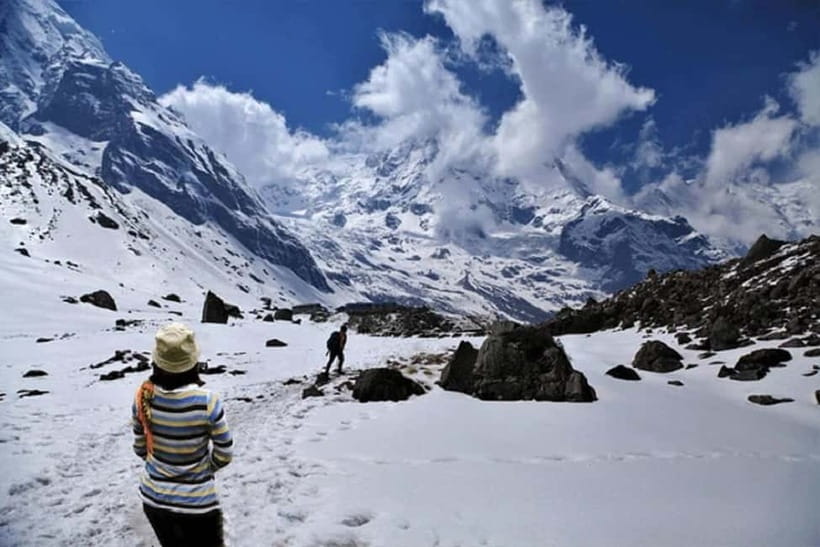
From there, the first day is built to get your body used to uphill trekking without going straight to extreme altitude. You walk about 5 to 6 hours along the Modi Khola, and you pass ethnic villages and forest sections as you make your way toward Ghandruk (1,940m). This is a good intro day because the trail changes enough to keep you mentally awake. Forest shade helps, villages break the monotony, and you still end at a proper trekking stop rather than sleeping in transit.
What to watch for: even on the first day, you are earning every meter. Wear comfortable shoes you actually trust. The packing list calls for hiking shoes and comfortable shoes, which tells you this is not a slippers-and-sightseeing walk.
More routes into the Annapurna Sanctuary:
- Kathmandu/Pokhara: 5-Day Annapurna Base Camp (ABC) Trek
★ 4.9 · 72 reviews - Pokhara: 5 Day Annapurna Base Camp Trek & Natural Hot Spring
★ 4.9 · 44 reviews - Pokhara: 7 Day Annapurna Base Camp Trek
★ 4.9 · 38 reviews
Ghandruk to Chomrong, rhododendron forest rhythm and classic views
The next leg brings you to Chomrong (2,170m). This is where the Annapurna scenery starts to feel like it is always nearby, not just something you see for a minute at a viewpoint.
You hike after breakfast in Ghandruk, and the day again uses a mix of hilly settlements and rhododendron forests. You also get obvious panoramic views of the Annapurna range during the approach. That means this day is not just moving forward, you are working your breathing while your reward is constantly in your line of sight.
Chomrong is a key stop for the simple reason that it sets your tempo for the days after. If you come in too fast, the higher days will punish you. If you come in steady, the rest of the trek feels more controlled.
Possible drawback: tea house nights can be “basic.” That is part of the tradeoff for being on a well-used trail. You should plan for simple rooms and simple comfort.
Chomrong to Himalaya, higher, quieter, and more about endurance
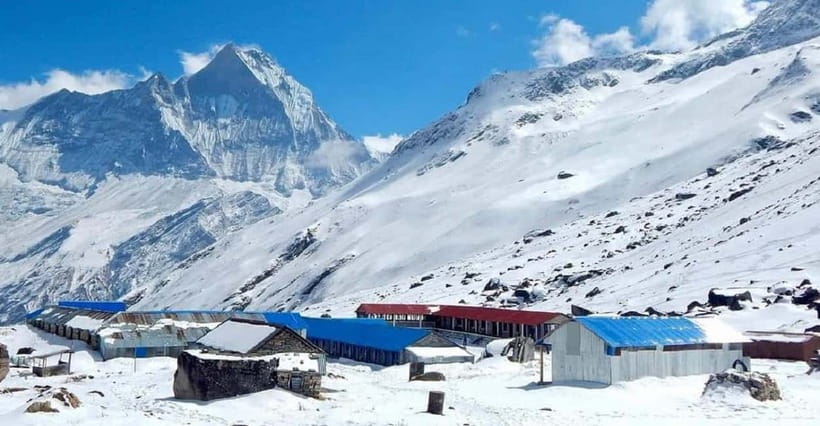
Day three takes you from Chomrong up to Himalaya (2,920m). This is a meaningful jump, and it is also a stretch where you stop thinking about the trek as a series of villages and start thinking about it as a sustained climb.
Expect more rhododendron forest sections and passing villages along the way. The scenery is part of the motivation, but the bigger takeaway for you is pacing. At around this elevation, steady steps tend to beat hero mode. You want your lungs working, but you do not want to turn every switchback into a sprint.
What I like about this stage: it keeps the trek feeling alive. You are not just walking through empty ridges. You are still seeing human settlements and forest patterns as the trail gains altitude.
The big day: Himalaya to Annapurna Base Camp at 4,130m
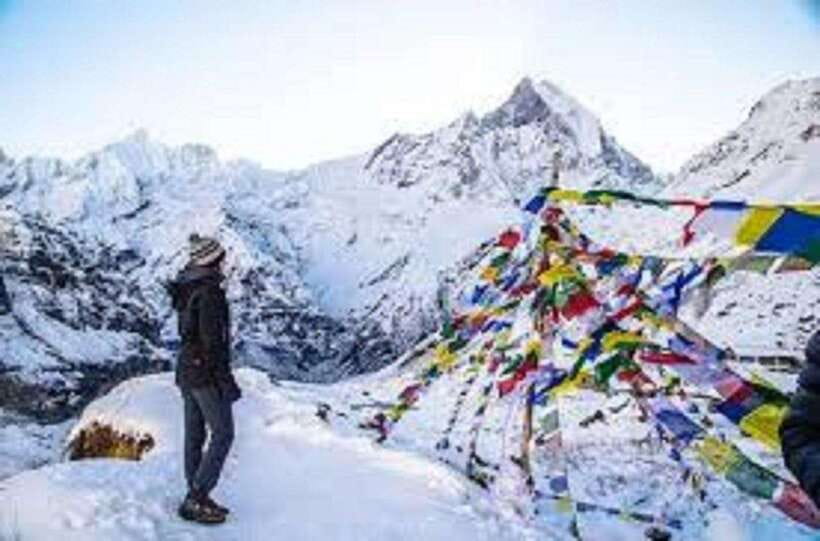
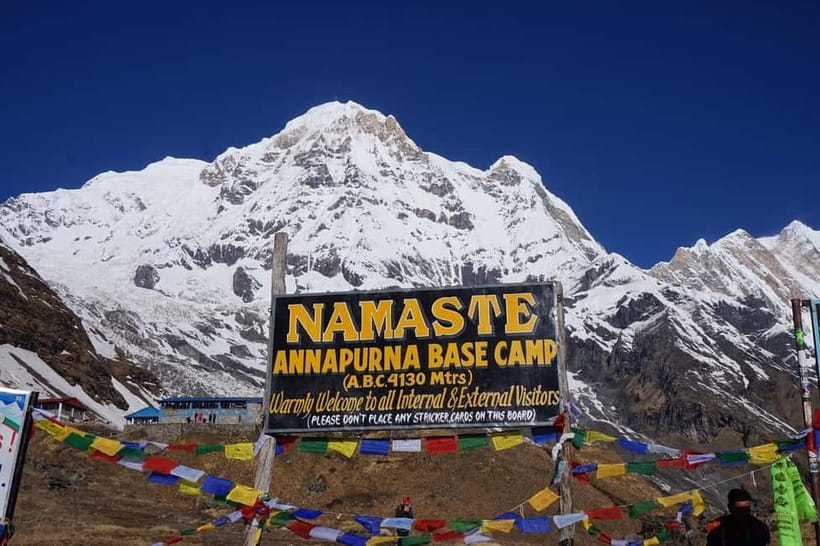
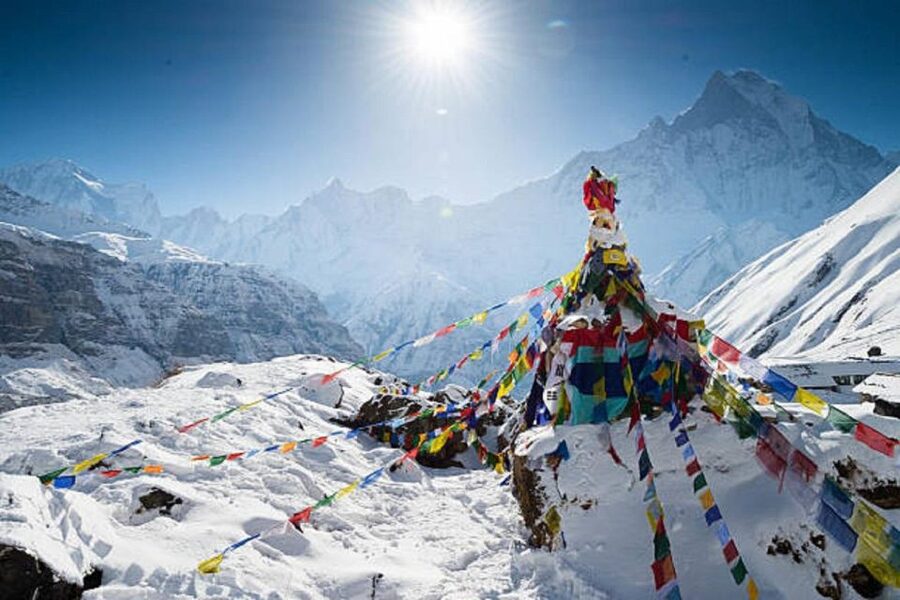
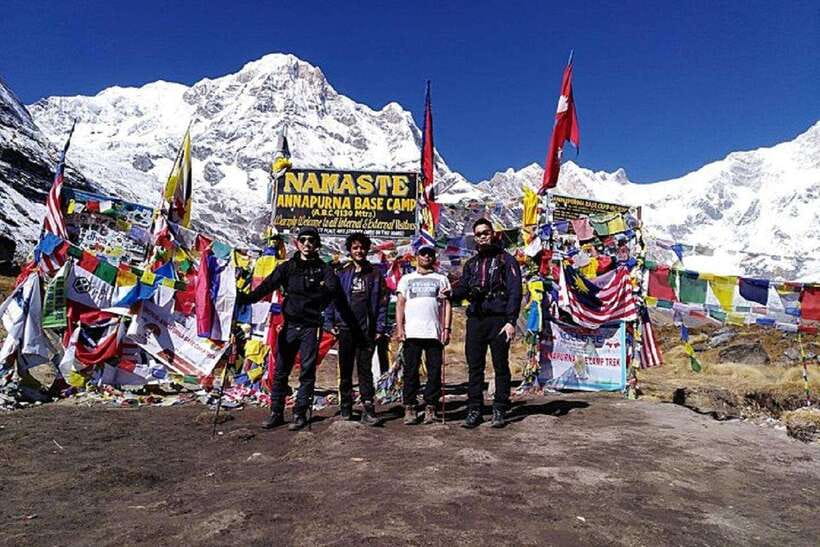
The heart of the trek is reaching Annapurna Base Camp (4,130m). This is the high point, the moment the route stops being “about getting there” and becomes “about being there.”
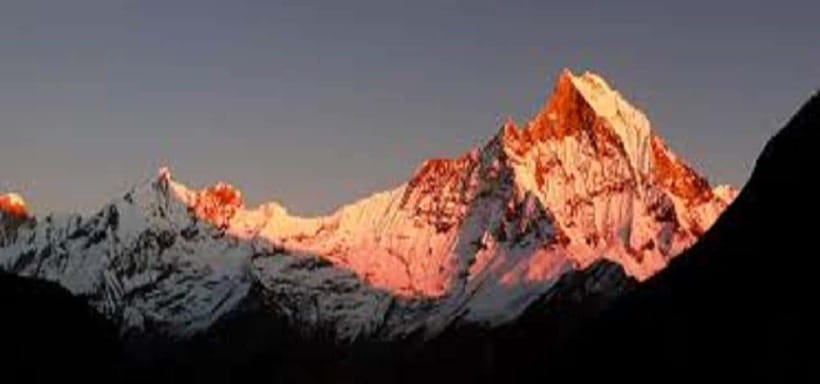
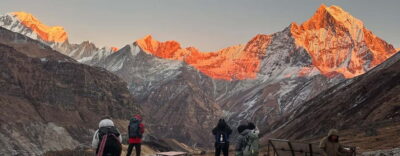
You go from Himalaya to ABC and you stay overnight at Annapurna Base Camp. This matters. With an overnight, you are positioned for the next day’s sunrise over the Annapurna range, which is one of the trek highlights and a huge reason people book this exact route.
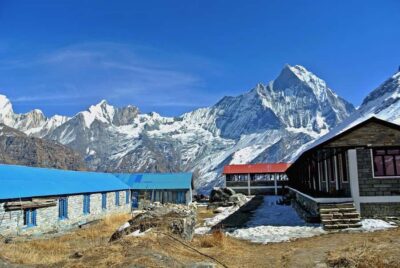
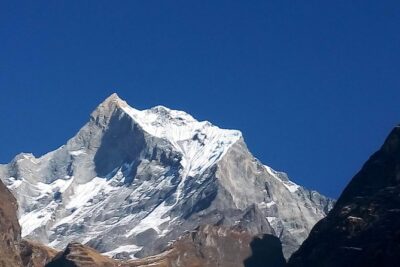
If you want a practical way to think about ABC, it is not just an altitude number. It is closeness. The itinerary is structured so you reach the base camp and then get time for the mountain views to sink in. The trek description also emphasizes stunning views of Annapurna and Machapuchare, which fits how people talk about this region when they are finally not rushing.
What to consider: 4,130m is high. The tour lists warm clothing, a jacket, and a hat, which is a big clue that cold nights and early mornings are part of the deal. Follow that packing guidance. Also remember the trail day ends with overnight at ABC, so you are not just getting a quick photo and moving on.
More to compare around Pokhara
- From Pokhara: 5-Day Annapurna Basecamp Trek with Hot Springs
★ 4.9 · 26 reviews - Pokhara: 7-Day Annapurna Base Camp Via PoonHill & Hot Spring
★ 5.0 · 6 reviews - Pkr/Kathmandu: 5-Day Annapurna Base Camp & Hot spring Trek
★ 5.0 · 6 reviews - Pokhara: Amazing 7-Day ABC Trek with Natural Hot Spring
★ 5.0 · 5 reviews
Bamboo to Jhinu Danda: losing altitude fast, then soaking in relief
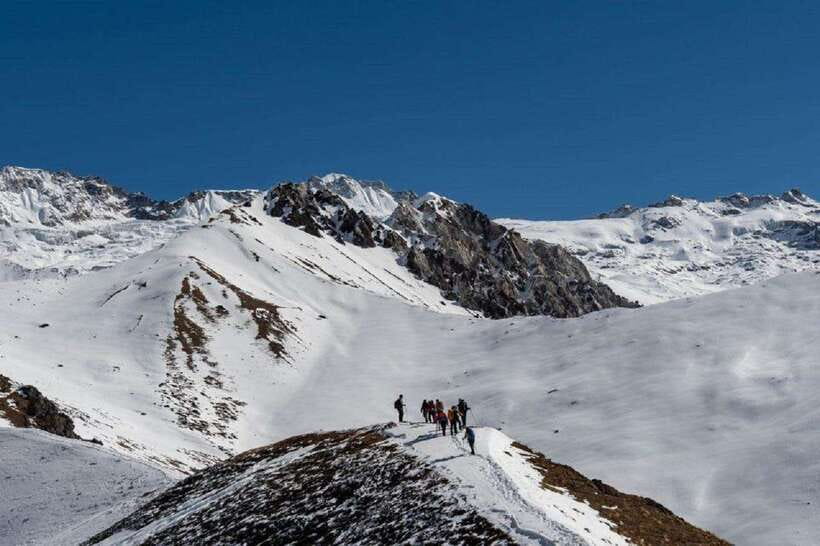
After the base camp night, the itinerary starts your descent with Annapurna Base Camp to Bamboo (2,335m). The day keeps the route scenic and varied: rhododendron forest walking, natural springs and waterfalls, and ethnic settlements along the trail.
For most trekkers, the descent can feel easier, but you still have to manage legs and knees. A day like this is a reminder that “down” still takes strength. Bamboo is a good waypoint because it sets up your next day’s transition from trekking altitude to hot springs.
Then comes the recovery payoff: Bamboo to Jhinu Danda (Hot spring) (1,610m). The lower elevation matters because it helps you bounce back from the altitude and effort. The hot springs are described as natural hot springs, and the stated goal is relaxing stressed-out muscles from the hike.
This is the moment you appreciate the trek being a 7-day loop rather than a one-way slog. You earn the soak. And because the itinerary ends at a much lower elevation, you are not stuck shivering after you get out of the water.
What to bring here: the packing list includes change of clothes and warm clothing. Use that. The trek has hot spring time followed by a return day, so plan for drying and staying warm after soaking.
Jhinu Danda to Nayapool and back to Pokhara, with transport you should verify
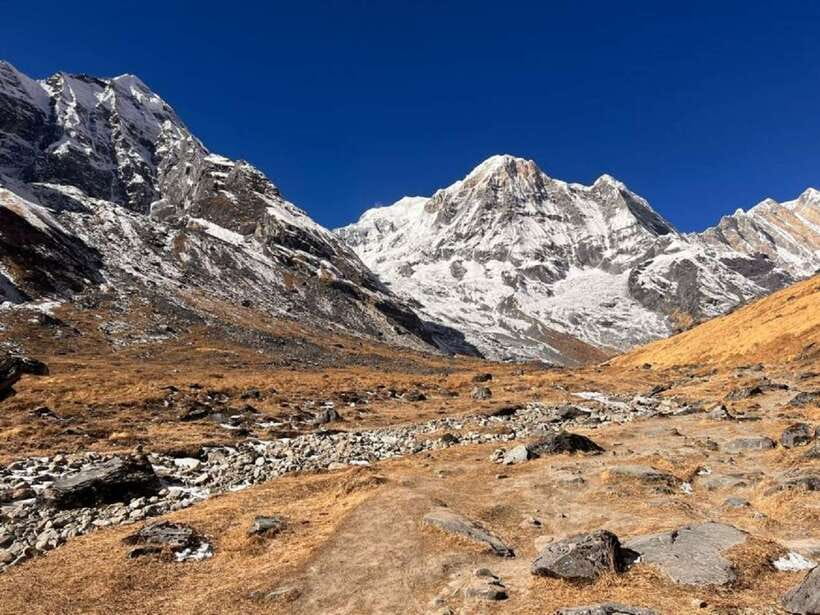
The final day is Jhinu Danda to Nayapool, then a ride back to Pokhara. You are dropped at your Pokhara hotel of choice.
This part sounds straightforward, but it is also the part you should take seriously when you book. The trekking itself is the big physical experience, but the last transfer affects how “finished” the trip feels.
In one reported experience, the return transport did not match expectations, and the return was handled faster than planned, with a different vehicle than expected. I cannot promise that will happen to you. But it is a strong reason to do two things before you go:
- Confirm what vehicle you will use on the return, and when.
- Confirm whether your route timing could shift, and what that means for transport and sleeping places.
Also ask directly how extra costs are handled at tea houses, since at least one report mentioned paying for WiFi and drinking water on top of what was expected.
What you really get for around $190, and where value shows up
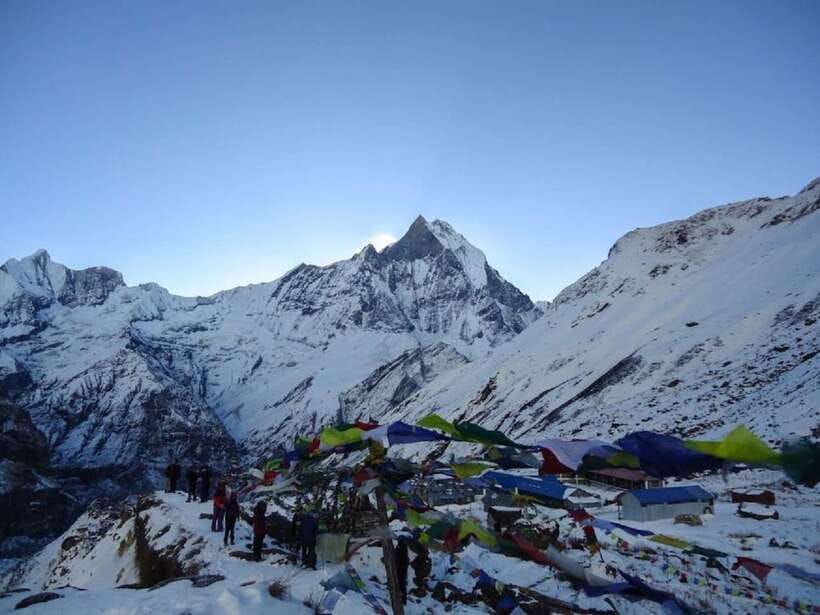
The price listed is $190 per person for a 7-day trek. That number is attractive because the package includes more than just a route on paper.
Here’s where the value shows up in the inclusions:
- Round-trip transportation between your hotel, Pokhara International Airport, and the trek starting point
- All necessary permits and fees
- Accommodation in basic tea houses or lodges during the trek
- All meals during the trek, depending on the option you choose
- An experienced, professional, government-registered trekking guide
- Guide and porter costs covered, including food, accommodation, insurance, salary, transportation, and equipment
- Government and local taxes
- Trekking gear such as a trekking stick and sleeping bag as needed
- A first aid kit
That is a lot packed into one line item. What can change the value for you is the part that says meals depend on the option chosen, and also personal expenses, which are not included.
My practical take on cost: this is not a bare-bones discount trek. A legitimate guide and permits do real work in Nepal, and the hot springs stop is a specific add-on. If you are mentally prepared for basic lodging and for extra guest house purchases like WiFi or drinking water, the overall value can feel fair. If you arrive expecting everything to be fully included with no extras, you may feel surprised.
Included in spirit, but confirm the details in writing
This is a private group trek, and the tour is offered with a live guide in English, Hindi, or Nepali. Private groups can be great because the pace can be more personal and less crowded.
Still, I strongly suggest you confirm the practical stuff that affects your day-to-day comfort:
- Whether meals are fully included under your selected option
- What is included in guest house costs versus what you might pay personally
- Which vehicle is planned for each long ride segment, including the return to Pokhara
- How the schedule handles timing changes, since some treks naturally run faster or slower
The trek description clearly maps out the sleeping stops and the altitude path, but your real travel experience depends on how smoothly transport and handoffs run.
A packing list that matches this Annapurna route
The tour gives a clear “bring this” list, and it is sensible for a 7-day high-altitude trek followed by hot springs.
Bring:
- Comfortable shoes plus hiking shoes
- Warm clothing, including a jacket
- A hat
- Change of clothes
- Camera
- Cash
- Flashlight
- Hair tie, hiking pants
- Hand sanitizer or tissues
- Passport or ID card, and a copy accepted
- Trekking gear as needed
The fact that a sleeping bag and trekking stick are included as needed suggests you do not have to over-pack. But I still treat the packing list as your baseline. If you want comfort more than tradition, give yourself gear you already use.
Also note what is not allowed:
- Pets
- Alcohol and drugs
- Baby carriages
That matters if you are traveling with someone who expects to bring extras.
Who this trek suits best, and who should think twice
This trek suits you if you want:
- A classic 7-day Annapurna Base Camp route that hits a high point at 4,130m
- A sunrise moment at the top that is part of the design, not an afterthought
- Cultural walking through villages, plus forest time, not just high ridge walking
- A real recovery stop at Jhinu Danda natural hot springs
It is less ideal if:
- You are extremely sensitive to basic lodging style
- You need every part of transport to be perfectly predictable, without any flexibility
- You hate the idea that WiFi or drinking water might be extra at guest houses, since those are common add-ons on trekking routes
If you read the included list and it feels like your pace, your expectations, and your budget line up, you will likely be happy here.
Should you book this trek?
Yes, I would book it if you are drawn to the ABC altitude experience, the Machapuchare views, and the payoff of hot springs at Jhinu Danda. The route is set up for sunrise at the high point and for recovery on the back half of the journey.
But I would also book it with eyes open. Confirm meal inclusions by option, confirm what you may pay for at tea houses, and verify return transport details before you leave Pokhara. The trail can be incredible, and the main thing you can control is whether logistics match what you were told.
FAQ
Where does this trek start, and how do you get there?
The trek begins at Nayapool. Your package includes round-trip transportation between your hotel, Pokhara International Airport, and the trek starting point.
How high do you get on the Annapurna Base Camp trek?
The itinerary reaches Annapurna Base Camp at 4,130m.
What happens after you reach Annapurna Base Camp?
You trek onward down to Bamboo, then to Jhinu Danda for natural hot springs. On the last day, you hike back to Nayapool and then return to Pokhara, where you are dropped at your chosen hotel.
Are meals and lodging included?
Yes, the package includes all meals during the trek, depending on the option chosen. Accommodation is provided in basic tea houses or lodges during the trek.
What languages are the live guides?
The live tour guide provides English, Hindi, and Nepali.
Is this tour flexible for booking and cancellation?
You get free cancellation up to 24 hours in advance for a full refund. You can also reserve now and pay later.
Latest Pokhara write-ups
- Mardi Himal Trek -5 Day Short Trek From Pokhara★ 5.0 · 8 reviews
- Tandem Paragliding in Pokhara★ 4.8 · 8 reviews
- Pokhara: Peace Pagoda Sunset, Annapurna Mountain Views Tour★ 2.9 · 5 reviews
- Short & Scenic: 2-Day Private POON HILL Trek from Pokhara★ 5.0 · 8 reviews
- Seti George and Thrilling Suspension Bridge Tour at Pokhara★ 4.5 · 3 reviews
- Sarangkot Sunrise over the Himalayas★ 4.8 · 83 reviews
- Pokhara: Sarangkot Sunrise and Private Full Day Tour★ 4.8 · 24 reviews
- From Kathmandu/Pokhara: Private 3-Day Chitwan Safari Tour★ 4.7 · 34 reviews
Annapurna Base Camp Trek, compared.
5 Day Annapurna Base Camp Trek & Natural Hot Spring
Read our review →
14 Days Annapurna Base Camp Trekking | Best trek for visit Nepal 2020
Read our review →
7-Day Annapurna Base Camp Trek & Natural Hot Spring
Read our review →Browse the lists this tour appears in