
Reviewed · ANNAPURNA BASE CAMP TREK
Pokhara: 7-Day Annapurna Base Camp Trek & Natural Hot Spring
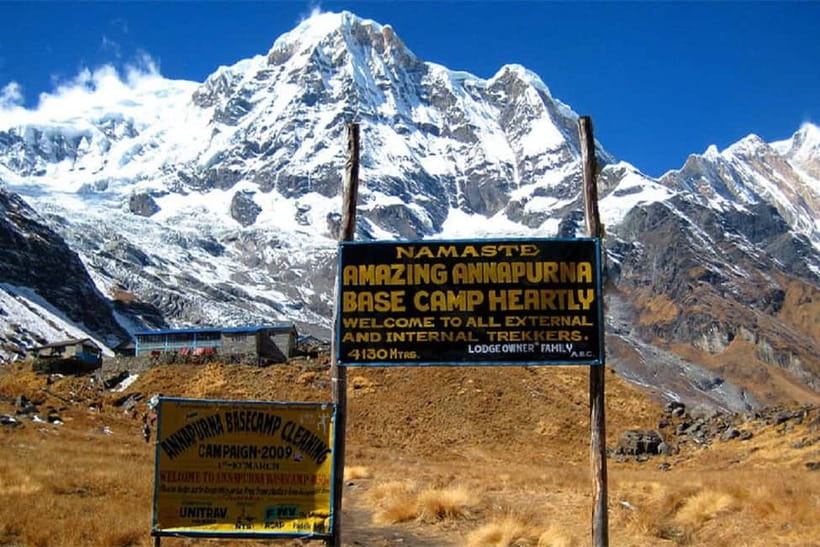
Hitting Annapurna Base Camp in a week, then easing back down with a soak in a natural hot spring near Jhinu Danda, is a smart way to experience the Annapurna region without stretching your whole holiday. What I really like is the mix of big mountain moments and real village trekking, plus the way you get to walk into the Annapurna Sanctuary and return through different scenery. One consideration: you will be climbing to 4,130 m, so you need solid fitness and a slower pace than your ego wants.
I also like that this trek is guided and set up for comfort along the way with tea houses or lodges, meals (depending on your option), and a certified English-speaking guide. In past groups, guides like Chaundra, Anil, Jeet Bhadur, Bishnu Giri, Chandra, Sun, and Laxman have been praised for safety focus, good English, and caring attention at higher altitudes.
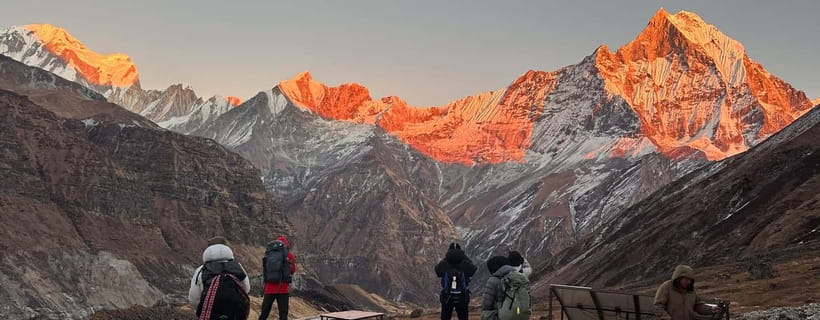
If the weather is clear, you can get sunrise and sunset views framed by giants like Annapurna I and Machhapuchhre, which is exactly what you came for. If not, you still get a beautiful, varied route with forests, valleys, and mountain villages, but the “wow” factor at base camp will depend on conditions.
Key highlights worth knowing
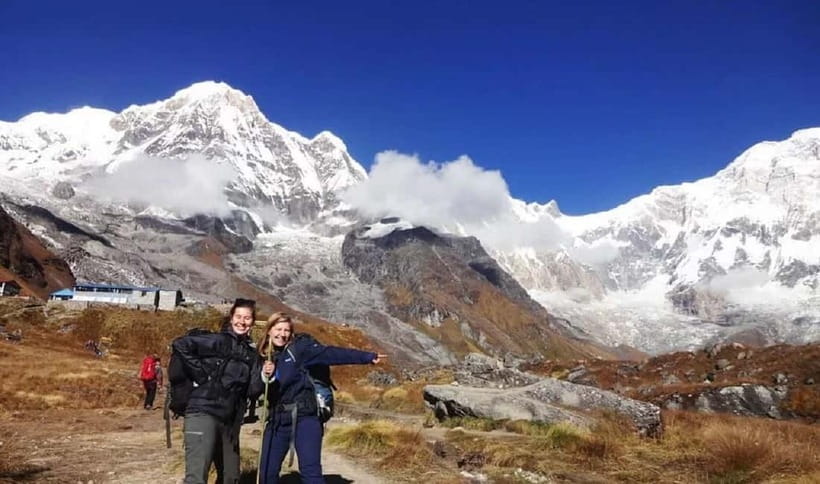
- 7 days, step-by-step altitude, reaching Annapurna Base Camp at 4,130 m
- Annapurna Sanctuary walking time, including the glacier-valley feel near base camp
- Gurung and village culture on trail, with cozy tea house stays as your daily rhythm
- Rhododendron and bamboo sections, so the scenery changes even when you’re climbing
- Jhinu Danda natural hot spring, a real recovery moment after high altitude
- Private group with an experienced guide, with flexibility to match your pace
Why this one-week Annapurna Base Camp plan makes sense
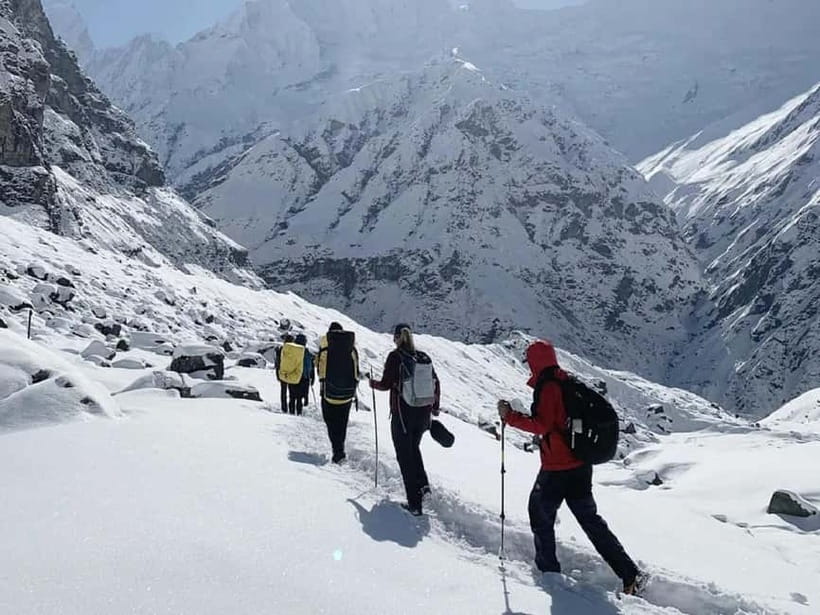
This trek works because it gives you the classic Annapurna Base Camp “endpoint,” but it doesn’t make you spend all week just getting there. Day by day, you’re walking through different kinds of terrain, forests, and valleys, then you finish with a natural hot spring soak that helps your legs bounce back.
I like the pacing of the route on paper. You climb in stages from around 1,940 m to 4,130 m, then you descend for the hot springs at about 1,610 m. Even if the altitude still hits hard, the structure is sensible.
The other value is that it’s not just a hike to a point on a map. You’re also living the “tea house trek” routine, eating warm meals at simple lodges, and moving through real communities rather than only camping in remote places.
More routes into the Annapurna Sanctuary:
- Kathmandu/Pokhara: 5-Day Annapurna Base Camp (ABC) Trek
★ 4.9 · 72 reviews - Pokhara: 5 Day Annapurna Base Camp Trek & Natural Hot Spring
★ 4.9 · 44 reviews - Pokhara: 7 Day Annapurna Base Camp Trek
★ 4.9 · 38 reviews
Day 1: Pokhara to Nayapool, then Ghandruk at 1,940 m
Day 1 starts with a scenic drive from Pokhara to Nayapool, about one hour. Then you trek roughly 5 to 6 hours to Ghandruk, overnight at about 1,940 m.
This first walking day matters more than it looks. It’s your chance to find your rhythm, test your footwear, and get your breathing steady before the bigger altitude gains. Along the way, you’ll follow the Modi Khola route through villages and forests, which is a nice introduction because it feels lively without being physically demanding.
Practical note: because you start with a drive and then switch into trekking, you’ll want to pack smart from the beginning. Keep your warm layer accessible, since even an early start in the Himalaya can feel chilly once you’re moving through shaded forest.
Day 2: Ghandruk to Chomrong, stone steps and big views
You’ll trek about 5 to 6 hours from Ghandruk to Chomrong, overnighting around 2,170 m. Expect stone steps and forest trails, and expect views of Annapurna and Machhapuchhre opening up as the trail climbs.
Chomrong is often where the trek starts to feel more serious. Your legs wake up, and your lungs start working harder, but you’re not thrown into the deep end yet. This is also the day when the scenery begins to feel more “Himalaya close,” since you’re gaining elevation and getting wider sightlines.
The best way to handle Day 2 is simple: walk slow, sip water often, and don’t sprint just because the trail looks clear. The guide will be thinking about your well-being, and in past trips, guides like Chaundra and Bishnu Giri have been praised for keeping people safe and comfortable as altitude rises.
Day 3: Chomrong to Himalaya, bamboo and rhododendron altitude lift
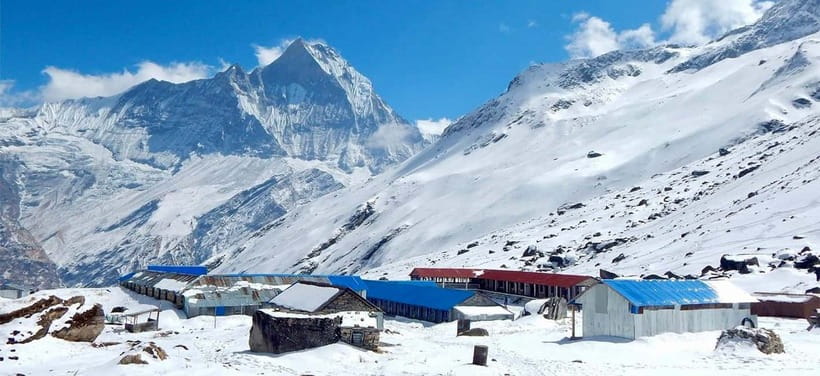
Day 3 is a 6 to 7 hour trek from Chomrong to Himalaya, overnight at about 2,920 m. The trail descends to a river, then climbs through bamboo and rhododendron forest.
This is a genuinely good day for your body and your mood. The forest sections help break up the climb, and the day’s up-and-down rhythm makes the altitude feel more gradual than a straight grind. Also, bamboo and rhododendron bring variety, so you’re not staring at the same kind of view all day.
You’ll likely feel the altitude more on this day than on the earlier stages. That’s normal. If you want the trek to stay enjoyable, keep your pace controlled on the climbs, and use the descents to reset your breathing.
More to compare around Pokhara
- From Pokhara: 5-Day Annapurna Basecamp Trek with Hot Springs
★ 4.9 · 26 reviews - Pokhara: 7-Day Annapurna Base Camp Via PoonHill & Hot Spring
★ 5.0 · 6 reviews - Pkr/Kathmandu: 5-Day Annapurna Base Camp & Hot spring Trek
★ 5.0 · 6 reviews - Pokhara: Amazing 7-Day ABC Trek with Natural Hot Spring
★ 5.0 · 5 reviews
Day 4: Himalaya to Annapurna Base Camp at 4,130 m, the amphitheater moment
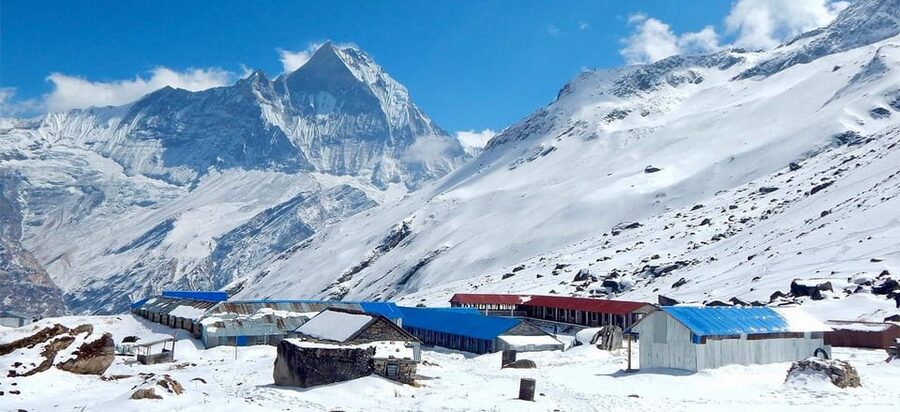
This is your big day. You’ll trek about 6 to 7 hours from Himalaya to Annapurna Base Camp, overnight right at 4,130 m.
Near base camp, the route shifts into alpine territory and a glacier-valley feel. When you reach the amphitheater area of Annapurna Base Camp, it’s less about walking and more about standing there for a minute, letting the scale hit you.
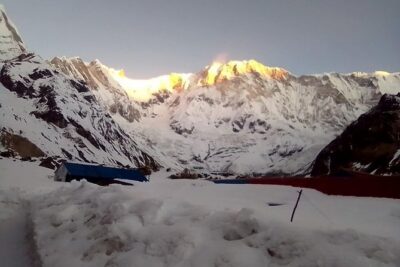
The trek hits a reward peak here, and the success of your day depends on two things you can control a bit. Go slow and steady on the final ascent, and aim to be at base camp around good visibility windows if weather is cooperating. The region is known for sunrise and sunset moments, with peaks like Annapurna I and Machhapuchhre framing the view.
Also, expect colder conditions at this altitude. Even if you’re moving, the air can feel sharp, so keep a warm layer plan ready. Past groups have highlighted guides like Chandra and Sun for answering questions and helping people manage the higher-altitude part with practical tips.
Day 5: Annapurna Base Camp to Bamboo at 2,335 m, waterfalls and backward views
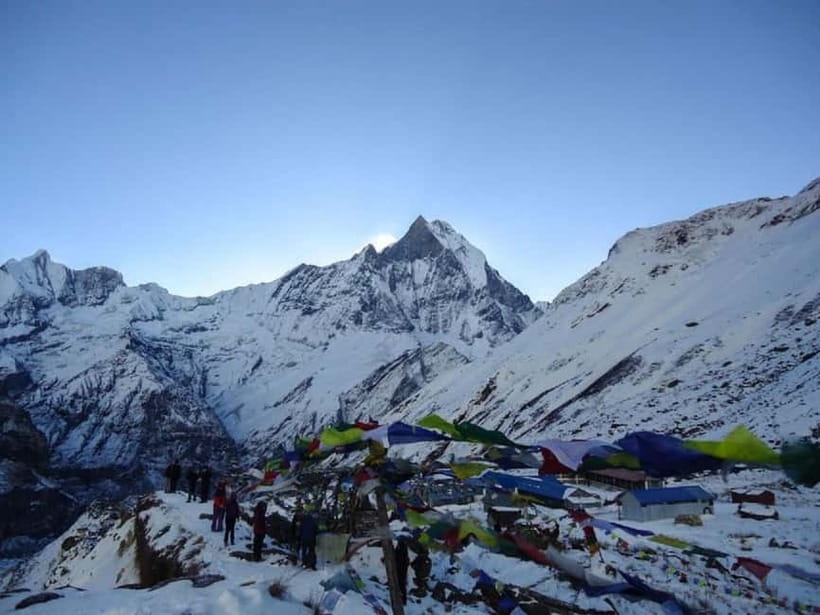
After the base camp high, Day 5 is about moving down smartly. You’ll trek roughly 6 to 7 hours from Annapurna Base Camp to Bamboo, overnighting at about 2,335 m.
This is one of those days where your legs might be tired, but your eyes get to feast. The route includes incredible backward views of the Annapurna range and waterfalls. That backward glance is not just for sightseeing, it’s a morale tool. You’ll be able to check your progress, and it reminds you that you really did reach the endpoint.
Downhill can be rough on knees, even when the altitude is dropping. Take shorter steps, keep your weight balanced, and let your guide set a pace that keeps you comfortable. That knee-friendly approach is how you avoid turning the “recovery day” into a painful one.
Day 6: Bamboo to Jhinu Danda at 1,610 m, natural hot spring reset
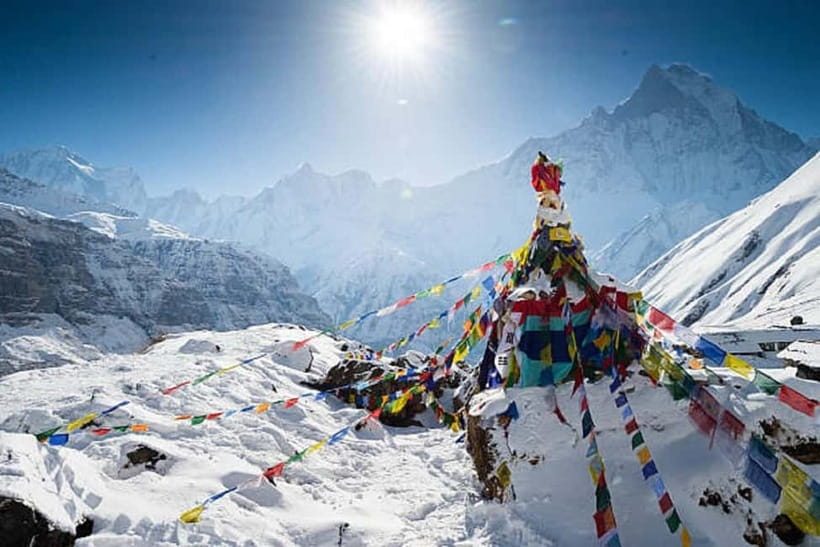
Day 6 is a 5 to 6 hour trek from Bamboo to Jhinu Danda, overnight at about 1,610 m. The route goes down to the riverside, and then you get the payoff: a natural hot spring bath.
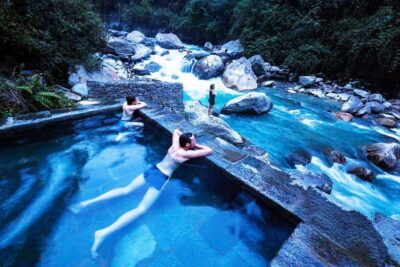
If you’re wondering whether the hot springs are really worth it, think about the trek your body just went through. You climbed to 4,130 m, walked for multiple days, and descended again. A real soak is not a luxury here, it’s a practical recovery tool.
The vibe at Jhinu Danda tends to be calm because people are done with big hiking for the day. You can stretch, relax, and feel human again. Just remember the logistics of warmth: you’ll likely want a towel and dry change of clothes ready so you don’t spend the evening shivering.
Day 7: Jhinu Danda to Nayapool, then back to Pokhara
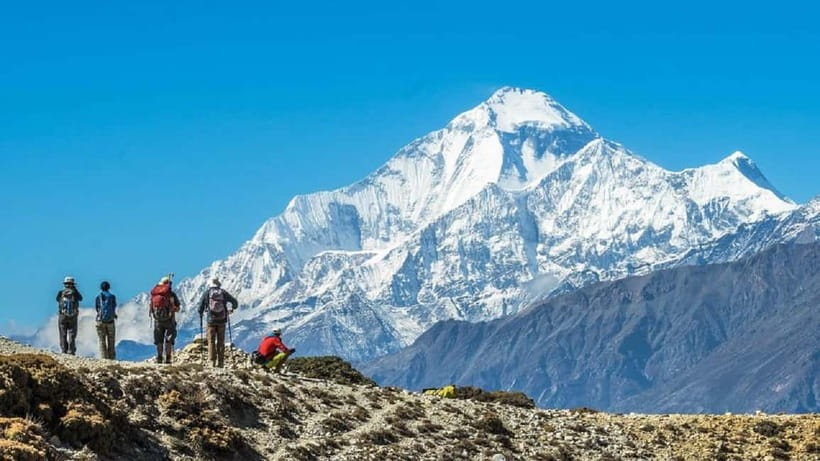
Your final day includes about 4 to 5 hours of trekking from Jhinu Danda to Nayapool, plus a drive of about one hour back to Pokhara. This is a good way to end because it gives you an easy-ish finish after the more demanding sections.
Even on a shorter day, you’ll still be dealing with altitude effects and tired muscles. The key is to keep it steady. Don’t force speed because your brain wants to be done, the body often needs a little time to wrap up.
By the time you roll back into Pokhara, you’ll get that classic “I can’t believe we walked there” feeling. It helps that you also saw the trek’s full arc: forests and villages early, the sanctuary and base camp middle, then the hot springs and descent finale.
Tea house stays and meals: simple comfort, no surprises
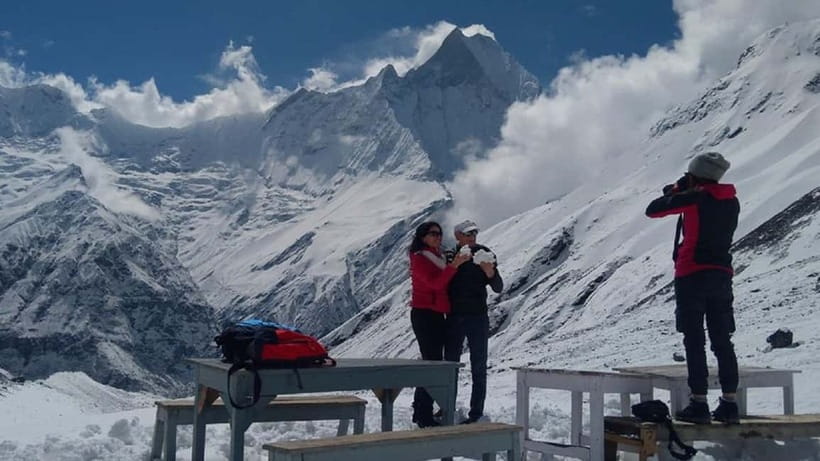
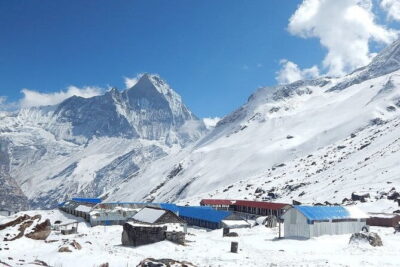
This trek is built around tea houses or lodges along the route. The accommodations are simple, and that’s part of the point. You get a warm place to eat, sleep, and reset, without spending energy on complicated camping logistics.
Meals are included depending on the option you choose. On a tea house trek, that usually means you’ll eat hearty, warm food that fits the pace of hiking days. The exact menu can vary day to day, but you can count on regular meal breaks that support the rhythm of the trail.
What I like about this setup is that it keeps you focused on the route. You’re not constantly searching for food or trying to solve daily logistics while your body is adjusting to altitude.
Guides, permits, and safety, what’s actually covered
This experience includes a professional, friendly, English-speaking trekking guide certified by the Nepal Government. The guide also carries insurance and has covered guide expenses included in the trip.
Permits are handled for you too. The trek includes all required permits, necessary paperwork, and TIMS fees. You also get first aid kit support on the trip.
You will still need to do one key admin step. You should submit a copy of your passport at least one day prior to the trek so the permits can be obtained. That’s not glamorous, but it’s essential.
One more real-world safety note: travel insurance is mandatory for your safety and peace of mind, and emergency rescue services are not included. That means you should arrange coverage before you go, not after you land.
Price and value: is $181 per person a smart deal?
At $181 per person for 7 days, you’re paying for a guided, permit-managed trek with tea house stays and transportation. On paper, that’s good value because some of the biggest costs on a Himalayan trek are often the permits, the guide, and the logistics.
Here’s what you should check to judge value for your exact plan:
- Transportation between your hotel or Pokhara International Airport and the trek starting point is included.
- All government and local taxes are included.
- Trekking gear like a trekking stick or sleeping bag is provided as needed.
- Meals throughout the trek are included depending on your selected option.
What’s not included matters too:
- Travel insurance is not included, and it is mandatory.
- Personal expenses, like extra snacks and beverages, are on you.
- Emergency rescue services are not included.
- Porter service is optional, listed at $20 per day if needed.
If you want the simplest trip with the least daily hassle, this price can be a bargain. If you hate uncertainty about meals based on option selection, confirm what your option includes before you pay.
What to pack, including the hot spring and cold altitude basics
Pack for cold at height and a warm rinse at Jhinu Danda. The tour guidance is clear about what to bring, and you’ll be happier if you follow it.
Bring:
- Comfortable shoes and hiking shoes
- Warm clothing, jacket, gloves, and a hat
- Sunglasses and sunscreen
- Rain gear
- A change of clothes, plus a towel
- A flashlight
- Trekking gear items you might be missing, plus a power bank
- Cash
- Passport (copy accepted), submitted in advance
For the hot springs day, prioritize a towel and dry clothes. Nothing makes a good soak feel pointless like needing to change without a proper setup.
Who this trek suits best, and who should think twice
This is a classic Annapurna Base Camp trek for people who want a real challenge but not a hardcore expedition. You’ll walk around 5 to 7 hours most days, and you’ll reach a high point at 4,130 m.
I’d say it suits best if you:
- Have a reasonable fitness level for multi-day hiking
- Like guided travel where permits and logistics are handled
- Want cultural village trekking plus a clear final reward at base camp
- Appreciate recovery at the end, with the natural hot spring at Jhinu Danda
I’d think twice or prepare extra carefully if you’re not confident with altitude. The trek may be challenging for some participants, and it’s smart to ensure you’re in good health before booking.
Should you book this 7-day Annapurna Base Camp plus hot springs trek?
I’d book it if you want the Annapurna Base Camp experience in a tight 7-day window, with a guided setup that covers permits, transport, and day-to-day support. The route is a strong mix of forest walking, village culture, and big peak views, and the hot springs add a practical end-of-trek payoff.
Book it with a couple expectations managed:
- Your experience will depend on weather for the clearest base camp moments.
- The altitude is real, so pace and health matter more than speed.
If you do those two things, this is the kind of trip that leaves you with photos you can’t explain and memories your legs will still thank you for later.
Latest Pokhara write-ups
- Mardi Himal Trek -5 Day Short Trek From Pokhara★ 5.0 · 8 reviews
- Tandem Paragliding in Pokhara★ 4.8 · 8 reviews
- Pokhara: Peace Pagoda Sunset, Annapurna Mountain Views Tour★ 2.9 · 5 reviews
- Short & Scenic: 2-Day Private POON HILL Trek from Pokhara★ 5.0 · 8 reviews
- Seti George and Thrilling Suspension Bridge Tour at Pokhara★ 4.5 · 3 reviews
- Sarangkot Sunrise over the Himalayas★ 4.8 · 83 reviews
- Pokhara: Sarangkot Sunrise and Private Full Day Tour★ 4.8 · 24 reviews
- From Kathmandu/Pokhara: Private 3-Day Chitwan Safari Tour★ 4.7 · 34 reviews
Annapurna Base Camp Trek, compared.
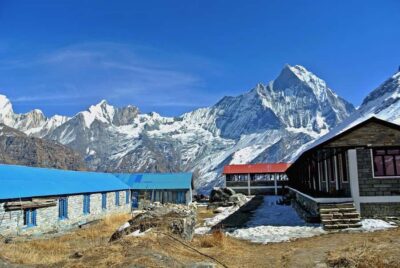
5 Day Annapurna Base Camp Trek & Natural Hot Spring
Read our review →
14 Days Annapurna Base Camp Trekking | Best trek for visit Nepal 2020
Read our review →
10 Days Annapurna Base Camp Trek from Kathmandu
Read our review →Browse the lists this tour appears in