
What makes this Annapurna Base Camp yoga trek interesting is the way it treats the trail like a moving classroom, with daily yoga built into your hiking rhythm instead of tacked on later. I especially like that you start your days with grounding practice, then hike with clearer focus.
Another thing I really like is the payoff of early mountain viewing, including Poon Hill sunrise, before you head deeper into the Annapurna region. I also appreciate that the trip is structured with hotels, breakfasts, and transport so you are not stuck making logistics decisions at altitude.
One consideration: this is not a passive vacation. It asks for moderate physical fitness and real hiking time, and good weather matters for the experience to run as planned.
Key highlights worth your attention
- Daily morning and evening yoga plus pranayama and meditation to match the demands of trekking
- Poon Hill sunrise scheduled early, so you are on the viewpoint when the light hits
- Ghandruk village and a Gurung family dinner, a cultural break inside the physical one
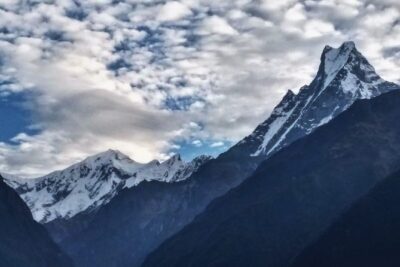
- Wildlife and iconic views along the way, including close Machhapuchhre sighting
- A guided, low-planning approach with accommodation, breakfasts, and transport handled for you
- Small group size up to 20 travelers, which usually keeps things calmer on the trail
Yoga and Hiking on the Annapurna Base Camp Trail
If you have ever felt like trekking is great but stressful, this is a clever fix. Here, yoga is not sold as a spa add-on. It is used as a practical tool for the body and mind, timed to the same days you will be walking uphill, negotiating switchbacks, and dealing with that day-after-day altitude fatigue.
I like the clear “before and after” rhythm. You get yoga in the morning and again later in the day. That means you can wake up more ready to move, and you can come down from the physical intensity with breathing work and meditation. On long trail days, that is not fluffy. It helps you reset.
You also get the benefit of structure. Hotels, breakfasts, and transfers are planned, and a guide handles the route decisions. In one group I read about, the guide named Manoj stood out for being very professional and making the journey feel systematic, not chaotic. Another name that came up in communication was Tirtha, described as caring and responsive. When those parts are handled, you can focus on your feet and your breathing instead of paperwork.
More routes into the Annapurna Sanctuary:
- Annapurna base camp trek 5 Days
★ 5.0 · 252 reviews - 14-Day Private Annapurna Base Camp Trek
★ 5.0 · 180 reviews - Annapurna Base Camp Trekking
★ 5.0 · 116 reviews
How the 15 Days Flow, From Kathmandu to ABC and Back
This trek is designed as a loop that builds gradually, peaks at Annapurna Base Camp, then eases back down through familiar villages. You start with Kathmandu recovery time, move to Pokhara for a bigger scenic reset, and then begin the trek with short-to-medium day segments that gradually add up.
Here is what you should expect, day by day, and why each stop matters.
Days 1 to 3: Kathmandu acclimation and the Pokhara setup
Day 1, Kathmandu
You arrive and get accommodation in Kathmandu, with a welcome dinner organized by the office. This is useful because it means you can settle without hunting down your own dinner plan after travel. You also get a bit of freedom to shop if you want to pick up trekking essentials locally.
Day 2, Kathmandu yoga day
This day is a calm start built for your body. You do yoga in the morning before breakfast. In the evening, the plan includes pranayama and meditation. If you are the type who gets tense when you travel, this is the kind of day that helps you switch from city mode to mountain mode.
Day 3, Kathmandu to Pokhara
You travel by road, about 7 hours from Kathmandu to Pokhara. The bus ride matters more than people think because it gives you your first long view of the hills, forests, mountains, and villages as you move west. When you reach Pokhara, you are transferred to your hotel and you overnight there.
Practical note: this is the kind of travel day where you will want to be mentally ready for a long sit. The payoff is the scenery you watch slide by.
Days 4 to 6: Tikhedhunga, Ghorepani, and the Poon Hill sunrise push
Day 4, Tikhedhunga
You drive to Nayapul, then trek from Birethanti beside the Modi Khola River toward Tikhedhunga. This is a classic entry day. You begin to feel the rhythm of “walk, pause, walk,” and the river valley makes the scenery feel close and real, not distant.
Day 5, Ghorepani
This day works through rhododendron and oak forests. You cross Bhurungdi Khola (a stream), then reach Nangethanti at 2,460 m for lunch. After that, you continue on to Ghorepani, where you sleep.
Why this day is worth it: forest trekking here can feel gentle on your brain even when your legs are doing work. The route gives you variety, shade, and that steady sense of moving forward.
Day 6, Poon Hill sunrise, then down to Tadapani
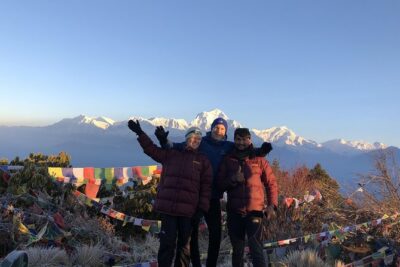
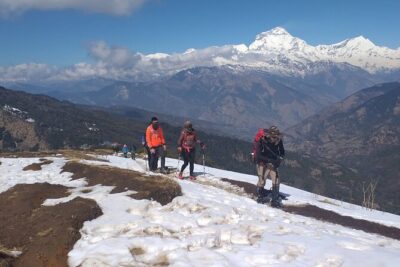
You start early for sunrise at Poon Hill (3,210 m). The plan is straightforward: go up, enjoy the mountain views at sunrise, return to Ghorepani, then continue onward to Tadapani. The trail here is described as steep through pine and rhododendron forests, with lunch at Deurali (2,960 m). After lunch, the route goes downward to Tadapani for the night.
If you love mountain light, this is one of the most rewarding days. Sunrise at altitude also tends to make the rest of the day feel more purposeful, like the trek has a “main event” early.
More Yoga & Meditation Retreats in Kathmandu:
- 500 hours Advanced Yoga Teacher Training at Nepal Yoga Home (Every 1st of month)
★ 5.0 · 185 reviews - 200 Hours Yoga Teacher Training at Nepal Yoga Home (starts on 1st of everymonth)
★ 5.0 · 125 reviews - 3 night 4 Day Yoga & Ayurveda Retreat to Detox the Body & Mind, Nepal
★ 5.0 · 37 reviews - 21 days Himalayan yoga retreat in Nepal in Kathmandu
★ 5.0 · 28 reviews
Days 7 to 9: Chhomrong into the upper Modi Khola valley
Day 7, Chhomrong
Today you walk to Chhomrong village. The trek is framed as one of the prettiest parts of the route, and Chhomrong is described as the base of Himal Chuli, with it being the last permanent settlement of the valley. That matters because it gives you a sense of arrival and boundary. You are not just climbing. You are reaching a community and a viewpoint zone.
Day 8, Dobhan
You descend to Chhomrong Khola, then begin climbing to Sinuwa. From there, you keep trekking through the upper Modi Khola valley, with lunch along the way. Finally, you reach Dobhan by the forest for your overnight.
This is a good “transition” day. The valley feel stays strong, but the day is also telling you to prepare for the higher, moodier terrain.
Day 9, Deurali with Hinko Cave and Machhapuchhre
You leave Dobhan for Deurali, trekking past Hinko Cave at about 3,100 m. Lunch happens on the route, and the description includes a chance to spot wildlife like deer, jackals, and peacocks. You also get a close view of Machhapuchhre, known as Fish Tail because of its shape.
This is the kind of day where the trek can feel like a wildlife walk plus a mountain hike. Even if you do not spot animals, the mention of fauna hints at the route’s liveliness.
Reaching Annapurna Base Camp and Staying There
Day 10, Annapurna Base Camp (ABC)
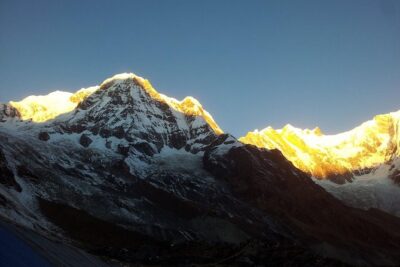
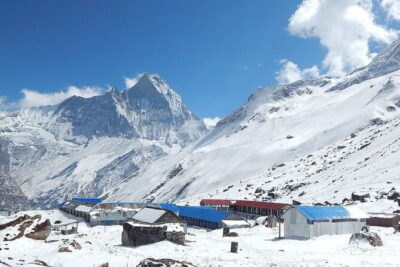
From Deurali, you start to Annapurna Base Camp. The plan calls out that you will be surrounded by mountains and can see real, close views from this area. You overnight at ABC.
This is the heart of the trek. The big win is not just the altitude thrill. It is the sudden shift from “the mountain is ahead” to “the mountain is around you.” It is also where the yoga makes more emotional sense. When you are tired and the air feels thin, focused breathing and meditation can help you settle instead of getting irritated with your body.
Day 11, back to Sinuwa
You walk from ABC to Sinuwa, mostly a descent. You take lunch on the way and sleep in Sinuwa.
A descent can feel easier, but it can also feel rough on knees and feet. If you have a tendency to rush when you think it is easier, this is the day to slow down. Your yoga routine on the schedule can help you keep your movement smooth.
Ghandruk, the Village Feel, and the Finale in Pokhara and Kathmandu
Day 12, Sinuwa to Ghandruk
You trek from Sinuwa to Ghandruk. The route is described as covered by forest, and you walk downwards to reach the village. Ghandruk is known for mountain views and for its Gurung community, including distinct culture, language, dress, and lifestyle.
You will also have dinner at a house of an ethnic family in Ghandruk. That is one of the most meaningful “human” moments on the route, especially if you usually only connect with places through scenery.
Day 13, return portion to Nayapul, then Pokhara
You finish the trekking section from Birethanti to Nayapul. Then you drive to Pokhara, with the option to celebrate finishing your Annapurna Base Camp yoga trek. You overnight in a hotel in Pokhara.
Day 14, Pokhara back to Kathmandu
You drive from Pokhara to Kathmandu, about 7 hours. You get free time in Kathmandu afterward, and that time can be used for shopping and last-minute items you want to bring home.
Day 15, depart
You leave Nepal from Tribhuval International airport. The itinerary ends back at the meeting point in Kathmandu.
Price and Logistics: What You Pay For, and Why It Can Be Worth It
At $2,133.34 per person for roughly 15 days, you are paying for convenience plus guided safety and rhythm. This is not just a hotel plus a route map. You are also buying a package that includes:
- 15 nights of accommodation and daily breakfasts
- Daily morning and evening yoga, including pranayama and meditation
- Overland travel plus domestic flights during the trek (the plan also uses major road segments like the Kathmandu to Pokhara day)
- Trekking, national park, and conservation fees
For value, the key question is: how much admin do you want to handle? If you try to self-plan, you would be coordinating lodging, getting permits and fees sorted, arranging internal transport, and building a schedule that matches your yoga practice. Here, the structure is the product.
One practical drawback: the package does not include visa fees, medical insurance, or airport taxes. It also does not provide a sleeping bag or charge for emergency evacuation. So you still need to budget for personal essentials and safety coverage.
Also, you are not handed free money for tips. The plan explicitly does not offer tips for guides and porters. If you come from a tipping culture, plan your budget for that. If you do not, at least ask locally what is typical so you do not guess.
Group size is capped at 20 travelers, which is a comfort factor. Big groups can turn a trek into a traffic jam. Smaller groups tend to feel more flexible on trail and in shared spaces.
The Daily Yoga Piece, and How It Changes the Trek
This trek’s yoga is not random. It is scheduled in a way that matches the day.
On Day 2 you do yoga in the morning before breakfast, then in the evening you practice pranayama and meditation. That pattern continues, with the itinerary specifying daily morning/evening classes with an experienced instructor. The benefit of having it every day is consistency. Your body learns what to expect. Your brain also stops wondering when the relaxing part happens.
In the reviews, people described the yoga and meditation as life-changing and as a way to calm down after long walking. That tracks with the mechanics of trekking. When your legs are tired, your posture changes. You end up holding tension in shoulders, jaw, and hands. Breathwork helps you notice that earlier. Yoga practice can also give you a smoother way to recover, instead of collapsing.
Real talk: yoga on a trek still means you will sweat. You might feel stiff the first few sessions. Then it clicks. You do not get lighter overnight, but you often get less annoyed about being tired.
Who This Trek Fits Best (and Who Might Want Another Option)
This trip is aimed at fit, outdoor-loving travelers with hiking experience. The itinerary includes steep sections through forests, early starts for sunrise, and an overall rhythm that adds up.
You are likely to enjoy it if:
- You want a guided Annapurna Base Camp route where transport and accommodation are handled
- You like daily structure, especially when it includes wellness practice
- You want cultural time in villages like Ghandruk, not just mountains
You might want to think twice if:
- You are looking for a gentle walk-only experience
- You get discouraged by early mornings and steep trail segments
- You prefer to fully self-direct your schedule and pacing
Should You Book This Annapurna Base Camp Yoga Trek?
I think this is a strong choice if you want Annapurna Base Camp but you also care about mental reset and daily recovery. The best part is the integration. Yoga and meditation are not hanging out on the edges of the trip. They are part of how you move through each day, and the itinerary gives you a consistent rhythm.
Book it if you value a professional guide like Manoj, daily yoga with an experienced instructor, and a route that includes both mountain highlights and a real village experience like dinner in Ghandruk. Skip it if you want maximum flexibility or if your fitness level is more suited to short walks than this kind of 15-day hiking progression.
If you do book, do yourself a favor: treat the trek like a training period, not a checklist. When you show up mentally ready for steep bits and early mornings, the yoga schedule starts to feel less like a bonus and more like the secret sauce.
FAQ
What is included in the trip for days on the mountain?
The trip includes accommodation for 15 nights, daily breakfasts, morning and evening yoga classes as per the itinerary, overland transport, applicable fees for trekking, national park, and conservation areas, and domestic flights during the trek.
Does this Annapurna Base Camp trek include yoga and meditation every day?
Yes. The itinerary includes daily morning and evening yoga classes with an experienced instructor, and it also specifically mentions pranayama and meditation (for example on Day 2 in the schedule).
How do we travel between Kathmandu and Pokhara?
You travel by road from Kathmandu to Pokhara, and the journey time is described as about 7 hours. Pokhara to Kathmandu is also described as about 7 hours by road later in the trek.
Are domestic flights part of the package?
Yes. Domestic flights during the trek are listed as included, alongside the overland transport used in the itinerary.
What about park fees, trekking fees, and conservation fees?
These fees are included as part of the trek package.
Is my visa fee included?
No. The visa fee is not included, and you would pay it yourself.
Do I need to bring my own sleeping bag?
Yes. Personal sleeping bags are not included.
Is there a limit on group size?
Yes. The tour lists a maximum of 20 travelers.
If the weather is bad, what happens?
The experience requires good weather. If it is canceled due to poor weather, you will be offered a different date or a full refund.
What is the cancellation refund policy?
You can cancel up to 6 days in advance for a full refund (100 percent if you cancel at least 6 full days before the start). If you cancel 2 to 6 full days before, you get a 50 percent refund. If you cancel less than 2 full days before, the amount paid is not refunded.
Latest Kathmandu write-ups
- Langtang Valley Trek★ 5.0 · 3 reviews
- Khopra Danda Trek★ 5.0 · 3 reviews
- Langtang Valley Trek from Kathmandu★ 5.0 · 3 reviews
- 5 night / 6 days Kathmandu Nagarkot Chitwan Pokhara tour★ 5.0 · 3 reviews
- Nepal Highlights Tour: 5 Nights 6 Days Kathmandu & Pokhara Tour★ 5.0 · 3 reviews
- Kathmandu Valley Private Day Tour★ 5.0 · 3 reviews
- Conquer the Himalayas: The Ultimate 16-Day Annapurna Circuit Trek★ 3.5 · 3 reviews
- Kathmandu Heritage Day Tour★ 5.0 · 3 reviews
Annapurna Base Camp Trek, compared.
Browse the lists this tour appears in