
Reviewed · TICKETS
Full Day Ticket Access around Kathmandu Valley
This full day circuit around Kathmandu Valley is interesting because it connects four major spiritual hubs in one efficient sweep, from hilltop Buddhism to riverbank Hindu ritual and Tibetan practice in between. It is a simple plan that helps you get your bearings fast in a city where everything feels close and yet totally different.
What I like most is the mix of story + on-site details from a guide who can explain culture and religion without turning it into a lecture. I also like that the route is structured around walk-through time at each place, so you are not just passing by big names.
One thing to consider: entrance costs are listed as not included, with an estimated $20 per person for monument admissions. And like most Kathmandu sightseeing, good weather matters for comfort and visibility on hilltop stops.
Key highlights worth knowing
- English in-person cultural guide, with English audio support
- Pickup and private transportation, so you spend less time organizing logistics
- Swayambhu Hill views plus the meaning behind this “Monkey Temple” stupa complex
- Patan Durbar Square in one compact stop, focused on Newar craft culture
- Boudhanath kora route, where Tibetan devotion and everyday temple life meet
- Pashupatinath on the Bagmati River, a powerful stop that requires respectful, quiet observation
Why this Kathmandu Valley day circuit is such good value
For $40, this is the kind of tour that can make your Kathmandu time feel more solid, not more frantic. You are paying for three things that matter: an experienced guide who can translate what you are seeing, transportation that keeps travel time under control, and a full day schedule that covers the big religious geography of the valley in about 7 hours.
The key word here is efficiency. Kathmandu’s sights are famous for a reason, but the city is also a tangle of lanes, traffic, and customs. When you have an itinerary with stop times built in, you avoid the classic trap of spending half your day trying to figure out where to go next and how to get there.
The other value piece is interpretation. A site like Swayambhunath is not just a stupa you point at. It’s a living religious place where symbolism, layout, and daily behavior all matter. Having a guide who can connect that to how people live their faith is what turns a photo stop into an actual understanding.
A quick practical note: the itinerary you’ll follow includes stops marked as ticket-free, but the package also says there is an estimated $20 per person for entrance fees you pay. I’d plan for that $20 and keep some cash handy, just in case a particular gate or area is handled slightly differently on the day you go.
More Full-Day Tours in Kathmandu
- Kathmandu: Full Day 7 UNESCO Tour with Lunch – Private/Group
★ 5.0 · 415 reviews - Kathmandu: Full Day Top 4 UNESCO Tour with Lunch – Private/Group
★ 5.0 · 269 reviews - Kathmandu: Full-Day 7 UNESCO Tour with Lunch – Private/Group
★ 4.9 · 247 reviews
The 9:30 am start, plus how the 7 hours actually work
The day starts at 9:30 am and runs about 7 hours. Pickup is offered, and you’ll travel by private transportation. That matters because Kathmandu traffic and road navigation can be exhausting, even when the distance is not huge.
You’ll be moving between four major areas, with roughly two hours at three of them, then about one hour at the river temple stop. That pacing is realistic. Some sites are visually complex, especially Swayambhu and Boudhanath, and you’ll want time to look around at your own speed after listening to the guide.
This is also the kind of schedule where shoes and small patience pay off. You’ll likely do stairs and uneven ground at hilltop and temple areas. A simple plan: wear comfortable footwear, drink water before you feel thirsty, and save your shopping energy for after you’ve walked the temple grounds.
English support is part of the value too. The guide is in-person and the experience includes English audio. That gives you a better chance of understanding what you’re seeing even if some religious details are unfamiliar.
Stop 1: Swayambhu Mahachaitya, the hilltop stupa with stories attached
Your first stop is Swoyambhu Mahachaitya, the famous Swayambhunath complex often called the Monkey Temple. Perched on a forested hill, it’s one of the most sacred Buddhist sites in the Kathmandu Valley, with a history that stretches back over 3000 years.
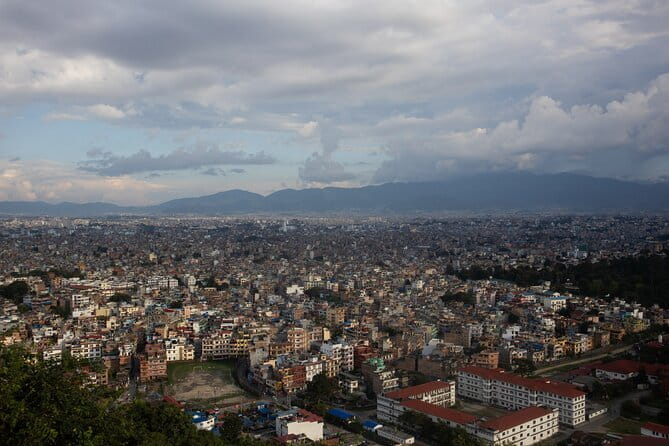
Why this stop works at the start of the day: you get altitude and orientation early. From the stupa hill, you can better understand how the valley is laid out and why this spot became a spiritual magnet. You’ll also see how Buddhist practice is embedded into everyday movement, not sealed off behind a fence.
What to focus on when you’re there:
- The stupa and its surrounding symbolism, which the guide can translate into plain language
- How worshippers circulate and pause, so you understand the flow of devotion
- The feeling of being above the city, even though you are still inside it
A small drawback: hilltop sites can feel crowded at peak times and the steps can be tiring. If you go in with realistic expectations, it’s still a rewarding opener. Also, if weather is hazy, you might not get the same clarity from the hill, so plan for that.
If you’re lucky, you’ll get a guide who can keep it lively. The team has been praised for guides like Manish, noted for strong knowledge of Nepal and its religions and for explaining things in a passionate, exciting way.
Stop 2: Patan Durbar Square, where Newar crafts show up in stone and wood
Next up is Patan Durbar Square, a World Heritage Site and a window into the ancient Newar kingdom of Patan. This is where the tour shifts from hilltop Buddhism to a more civic, cultural setting.
Patan is known for traditional craft guilds, especially metal-casting and wood-carving. That matters because Durbar Squares are not just “historical places.” They are stages for how communities organize art, skill, and identity.
What you’ll likely appreciate most here is how compact the experience feels. In a small area, you can see centuries of architecture and craft influence without doing an all-day museum marathon. Your guide can point out the kinds of details that are easy to miss if you’re only looking for the biggest landmarks.
A practical consideration: Durbar Square scenes often involve uneven surfaces and lots of visual information at once. Give yourself a little time to slow down. If you rush, you’ll miss the small craft-related cues that make Patan different from the more purely religious stops.
More to compare around Kathmandu
- Everest Base Camp Trek – 14 Days
★ 5.0 · 1,499 reviews - Everest Base Camp Trek
★ 5.0 · 842 reviews - Private Kathmandu Sightseeing Tour | UNESCO World Heritage sites
★ 5.0 · 756 reviews - Kathmandu: 7 UNESCO Sites with Lunch
★ 4.8 · 744 reviews
Stop 3: Boudhanath Stupa and the kora, Tibetan devotion in motion
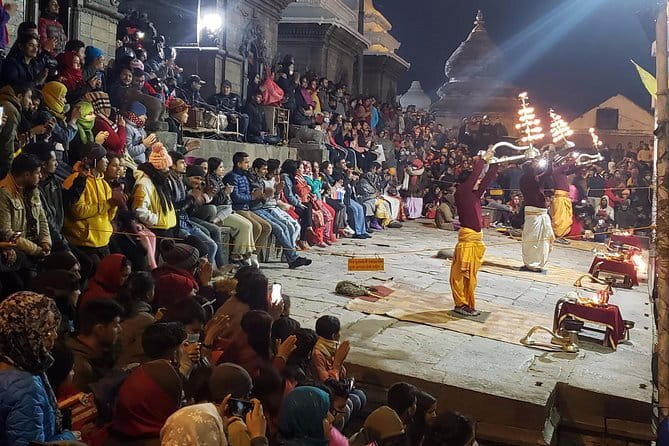
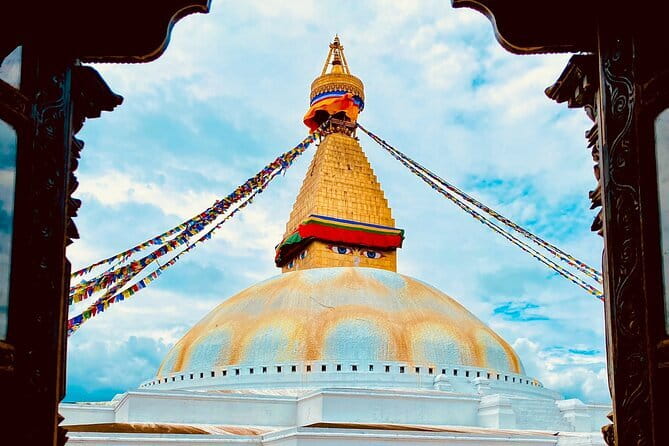
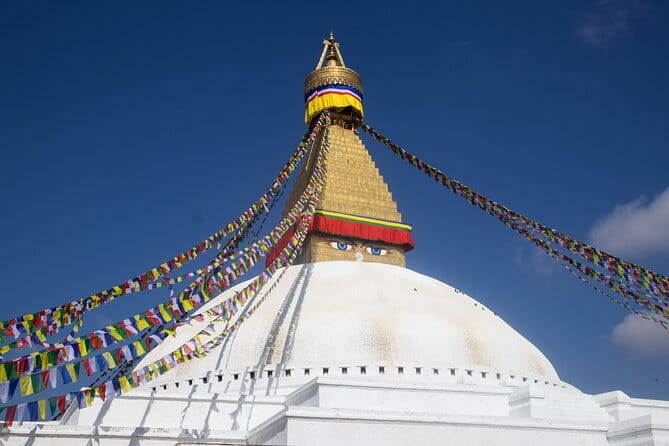
The day’s spiritual heart turns Tibetan at Boudhanath Stupa, described as one of the world’s largest spherical stupas and the spiritual center for Nepal’s Tibetan community.
This stop is about movement and atmosphere. The classic practice here is a circumambulation (kora), walking around the stupa alongside monks and devotees. You’ll likely notice the sensory details: incense drifting from rooftop monasteries, clothing in red tones, and the steady rhythm of people paying attention with their whole bodies, not just their eyes.
Why Boudhanath is such a strong middle stop: by now, you’ve seen the idea of worship in two formats, stupa on a hill and sacred monuments in a civic center. Boudhanath teaches a different lesson. It shows faith as a daily route you can walk.
Tips for getting more out of your time:
- Follow the flow rather than forcing your own path
- Pause where the guide suggests, then look again after listening
- Keep your phone ready, but don’t let it replace seeing with your eyes
Possible drawback: Boudhanath can be intense for the senses. If incense and crowds are not your thing, plan to step aside occasionally and just watch people. It’s still worth it, especially if you want a fuller picture of Tibetan Buddhist practice in Nepal.
Stop 4: Pashupatinath Temple, Bagmati river rituals and respectful viewing
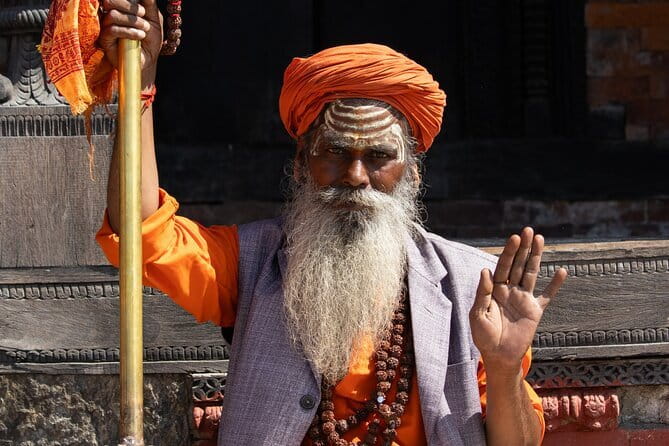
Your final stop is Pashupatinath Temple, an ancient sacred Hindu site on the bank of the holy Bagmati River. This is where the tour’s focus on religion becomes most direct and most emotionally powerful.
The plan describes a blend of cultural practice connected to life and afterlife, with ideas of soul and body treated as separate entities. Even if you do not know the theology, you can still understand what people are doing: tending, observing, and participating in a place that carries meaning beyond tourist photos.
What to do as a visitor:
- Keep your voice down and move with purpose
- Watch the difference between where people gather and where they perform specific actions
- Let the guide explain what you are seeing rather than trying to guess
The tour gives you about one hour here. That’s enough for understanding, but not for lingering forever, so prioritize quiet attention and ask questions early if you have them.
One consideration: because this is a working sacred site, you may face stricter behavior expectations than at the other stops. Plan to be respectful even if you see tourists pushing the limits.
Price and admissions: what $40 really buys you
At $40 per person, you’re paying for a guided day with transportation. The package includes:
- Private transportation
- A highly experienced cultural guide, in-person, with English audio
- Pickup offered
That is a fair structure for Kathmandu because transportation and interpretation are often what add up fast if you arrange everything yourself.
The admissions question is the one part you should budget carefully. The package states that entrance fees are not included and that you should pay them yourself, with an estimated $20 per person. At the same time, the plan marks each stop with admission ticket free. That conflict means you should be flexible. I’d bring money just in case a specific area requires a fee on the day you visit.
Value verdict: if you want a single day that covers the core valley icons with a guide explaining culture and religion, this is priced like a practical choice, not a bargain-and-scramble. If you already plan to hire a private guide or you love self-guided wandering with minimal structure, you might compare costs before booking.
Transport, timing, and how to get the most from each stop
The tour’s rhythm is built around walking and looking. Roughly two hours at Swayambhunath and two hours each at Patan Durbar Square and Boudhanath, then a shorter but significant hour at Pashupatinath.
To make that work for you:
- Wear one pair of shoes you can handle on stairs and uneven ground
- Bring water and a light layer, since temple hills can feel cooler than you expect
- Give yourself a small window after each explanation to re-look on your own
Pickup and private transportation also help you avoid wasting time on finding meeting points. Even so, Kathmandu days move with the local pace, so build in a calm mindset. If you are trying to fit this day between tight restaurant reservations, you may find it stressful.
This experience is listed as suitable for most travelers, and it also notes that service animals are allowed. It also says the area is near public transportation, which is useful if you need to adjust your plans day-of. If you have mobility challenges, you’ll want to consider the hill and temple stairs, even if the tour says most people can participate.
The guide factor, and why it can make or break a day like this
A day that hits four different religious zones can easily turn into “I saw the places” instead of “I understood the places.” This is where the guide matters.
The information you have points to English-language instruction and local cultural context, plus strong feedback for guides such as Manish. The praise is specific: he is said to have great knowledge of the country and religions, and he is passionate and exciting.
That combination is exactly what you want on a route like this. You are not just learning facts, you’re learning how to read what you see, why worshippers behave the way they do, and what a stupa, a durbar square, and a river temple each represent in daily life.
If you book this, take advantage of that. Ask simple questions like:
- What should I notice first when I enter?
- What does this symbolism mean in plain terms?
- How do people practice here today?
You’ll get more out of your hour at Pashupatinath when you know what the guide wants you to look for.
Who should book this Kathmandu Valley ticket access day
This is a great fit if you want:
- A guided way to see Kathmandu Valley icons without doing route research all morning
- English explanations for religion, culture, and how sites function today
- A full day plan that stays focused, with multiple stops and time at each one
It may be less ideal if:
- You hate guided groups and prefer complete freeform wandering
- You have very limited mobility and you cannot handle stairs or uneven temple ground
- You want to spend half a day at one place only, instead of seeing four major areas
If your goal is to understand the valley’s cultural map in one day, this has the right shape.
Should you book it? My take
Book it if you want an efficient, well-structured day where English guidance helps you interpret major Buddhist and Hindu sites around Kathmandu Valley, and where transportation and pickup remove the headache of moving between neighborhoods.
Pass or shop around if you already have a strong plan to visit these spots with your own guide, or if you know you want more time at just one location, like Boudhanath or Swayambhunath.
Either way, do one thing: budget for possible entrance fees (the package mentions an estimated $20 per person), and go prepared to be respectful at sacred sites where people are actively practicing.
FAQ
What is the duration of the Kathmandu Valley full day ticket access tour?
The tour lasts about 7 hours.
What time does the tour start?
The start time is 9:30 am.
Is pickup offered?
Yes, pickup is offered.
How much does it cost?
The price is $40.00 per person.
What is included in the price?
Included are private transportation and a cultural guide with in-person English, plus English audio support.
Are entrance fees included?
No. Entrance fees for monuments are not included and are subject to payment by the guest, with an indicated estimate of $20.00 per person.
Where are the main stops on this day tour?
The stops are Swoyambhu Mahachaitya (Swayambhunath), Patan Durbar Square, Boudhanath Stupa, and Pashupatinath Temple.
Is free cancellation available?
Yes. You can cancel up to 24 hours in advance for a full refund.
What happens if the weather is bad?
This experience requires good weather. If it is canceled due to poor weather, you will be offered a different date or a full refund.
Is the experience suitable for everyone?
It is listed as suitable for most travelers, and service animals are allowed.
Latest Kathmandu write-ups
- Langtang Valley Trek★ 5.0 · 3 reviews
- Langtang Valley Trek from Kathmandu★ 5.0 · 3 reviews
- Khopra Danda Trek★ 5.0 · 3 reviews
- 5 night / 6 days Kathmandu Nagarkot Chitwan Pokhara tour★ 5.0 · 3 reviews
- Nepal Highlights Tour: 5 Nights 6 Days Kathmandu & Pokhara Tour★ 5.0 · 3 reviews
- Kathmandu Valley Private Day Tour★ 5.0 · 3 reviews
- Conquer the Himalayas: The Ultimate 16-Day Annapurna Circuit Trek★ 3.5 · 3 reviews
- Kathmandu Heritage Day Tour★ 5.0 · 3 reviews
Tickets, compared.




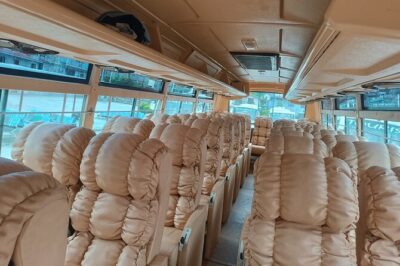

Kathmandu to Pokhara Luxury Bus Ticket – Easy & Reliable Booking
Read our review →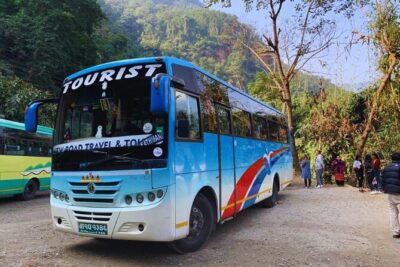
Tourist Bus Tickets: Kathmandu to Chitwan or Chitwan to KTM
Read our review →
Tourist Bus Tickets: Kathmandu to Pokhara or Pokhara to KTM
Read our review →Browse the lists this tour appears in