Reviewed · TOURS
Real Nepal Tour
If you like your Nepal trips to mix major pilgrimage sites with jaw-dropping mountain viewpoints, this route is interesting. I like the way it strings together Kathmandu’s sacred Bagmati River scene, Pokhara’s lake stops, and then the big spiritual payoff at Muktinath. It also sounds like you get real help from a lead organizer, with guides like Himal and Hari Shrestha getting called out for smoothing out transport and plans.
Two things I really like about this experience are the small group size (max 15) and the fact that you travel with an English-speaking guide who handles the on-the-ground moving parts. That matters when you have flights, jeeps, and temple tickets in the same day. You can focus on seeing, not negotiating.
One possible drawback: the schedule is intense for a day that’s billed as about 1 day. You will also face a real walking portion at Muktinath, plus long drives, so plan for moderate stamina and some patience.
Key highlights you’ll actually feel during the day
- English-speaking guide support that helps coordinate transport and activities
- Small group size (1 to 15) so the day feels more controllable
- Cable car ascent to Chandragiri Hills for Himalayan views between temple stops
- Pokhara lake sightseeing with stops like Devis Fall and Tal Barahi Temple
- Muktinath access by jeep then walk (jeep to Ranipauwa, about 45 minutes on foot)
Why this Nepal route works when time is tight
This tour feels built for people who want the headline spiritual sites without treating Nepal like a multi-week logistics project. In one flow, you go from Kathmandu’s temples to a scenic hill cable car ride, then down to Pokhara for water and viewpoints, and finally toward the high-religious atmosphere around Muktinath.
The best part is how the day shifts gears. One moment you’re at an important shrine along a river, then you’re on a different kind of Nepal day in Pokhara, and then you’re dealing with the practical reality of altitude-area travel near Jomsom.
Also, you’re not left to figure things out on your own. In the past, people specifically praised how a guide named Himal handled taxis and activity coordination, and how Hari Shrestha was described as warm and responsible, including helping with local needs like comfortable transport and hotel arrangements.
More to compare around Kathmandu
- Everest Base Camp Trek – 14 Days
★ 5.0 · 1,499 reviews - Everest Base Camp Trek
★ 5.0 · 842 reviews - Private Kathmandu Sightseeing Tour | UNESCO World Heritage sites
★ 5.0 · 756 reviews
Starting at Tribhuvan Airport, 9:00 am, and getting oriented
Your day starts at Tribhuvan International Airport. The meeting point is listed at Ring Rd, and the start time is 9:00 am. If you’re arriving earlier, you’ll want to plan for that first gap of time, because this experience begins at a set clock time.
Pickup is offered and you’ll have airport transfer by private car or van or bus, depending on the group size and routing. That’s a real value piece. Kathmandu traffic can turn a simple transfer into a time-sink, and having a plan at the beginning helps you settle into the trip instead of starting stressed.
The group size is min 1, max 15, and the tour is private in the sense that only your group participates. That usually means fewer awkward waiting moments and more flexibility if your guide needs to regroup you around tickets, entrances, or short transitions.
Kathmandu Valley power stop: Pashupatinath and what to notice
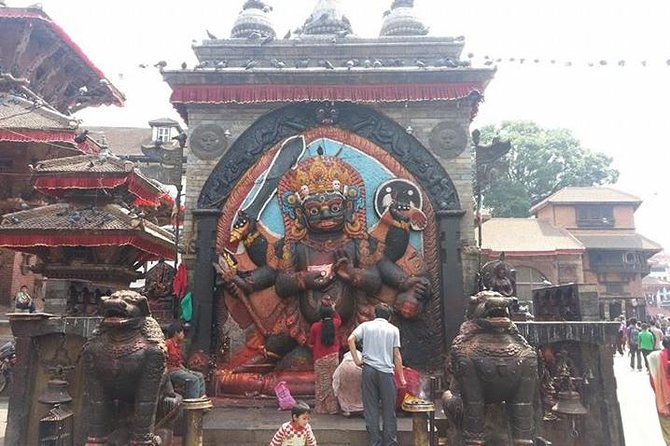
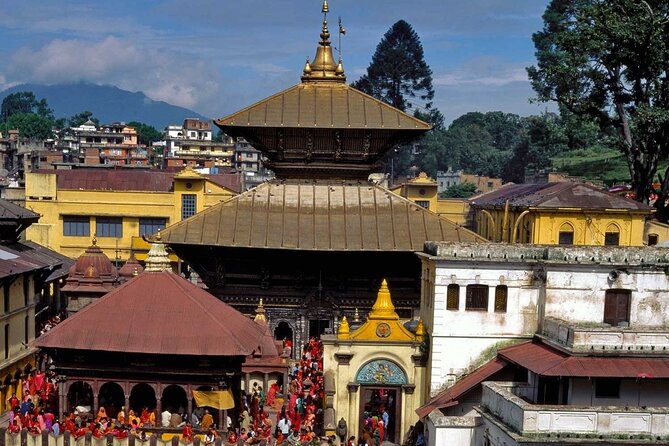
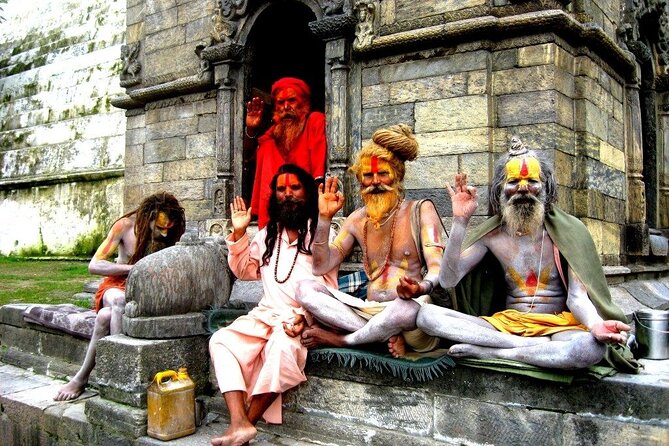
The Kathmandu Valley portion centers on Pashupatinath, described as one of the world’s greatest Hindu shrines, dedicated to Lord Shiva, on the banks of the Bagmati River. It’s also listed as a UNESCO world heritage site. This is the kind of place where you’ll feel how Nepal’s religion isn’t locked in museums.
What I like here is the focus on the full setting, not just the main temple building. The tour notes mention cremation sites nearby, jungle/riverside surroundings, and the general area as part of what makes the shrine so powerful. If you’ve ever wondered what it looks like when belief and daily life share the same space, this is one answer.
Practical note: this is an active religious site, so dress and behavior matter. Keep it respectful, move when locals move, and expect that the vibe will be both solemn and busy.
After Pashupatinath, the schedule says you’ll head toward Sanga nearby Bhaktapur for another visit. The itinerary text cuts off mid-sentence there, so I can’t promise you exactly which second stop you’ll get. That’s still something to clarify with your guide before you arrive, so you know what time you’ll spend where.
Kathmandu Durbar Square and temple stops that fit together
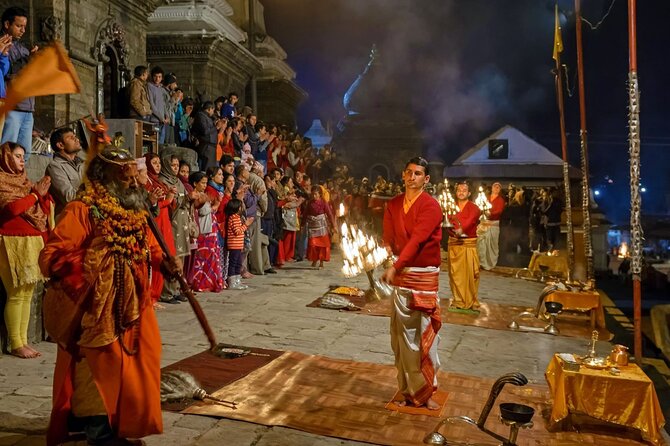
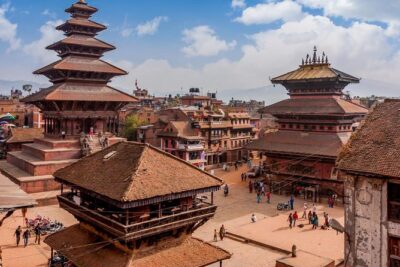
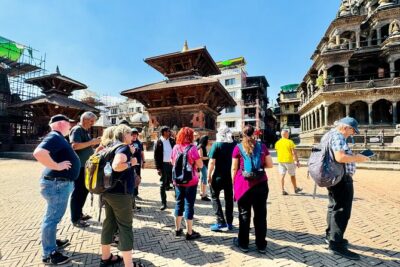
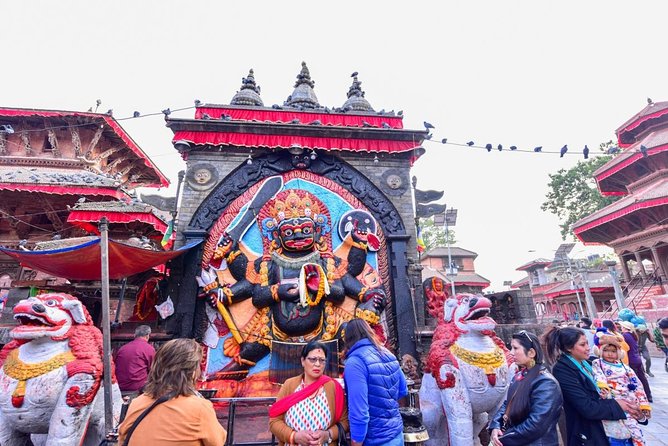
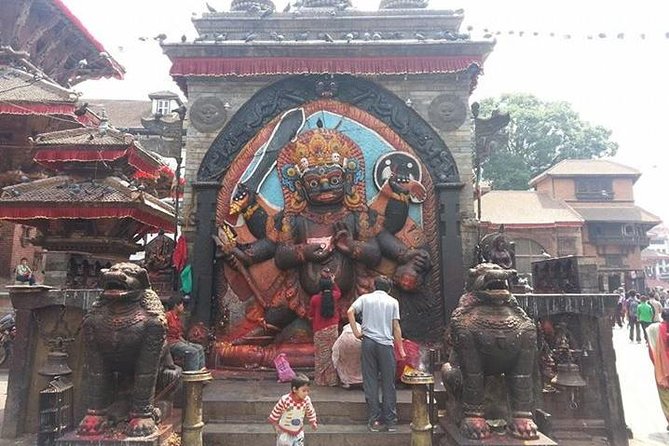
Next up is Kathmandu Durbar Square, which the plan pairs with visits around Dakshinkali Temple and Narayanthan Temple. The flow matters. You’re not just walking one postcard square, you’re also threading through other religious stops nearby.
Durbar Square areas typically reward people who slow down for details. Look for carvings, the way courtyards connect, and the layered signs that Nepalese architecture was built for both worship and community life. Even if you’re not a temple person, this stop gives you a strong sense of the Kathmandu you don’t see from the road.
The itinerary says admission ticket included on this segment, so you can expect at least some sights to be handled in the package. Still, bring some cash and a small amount of patience. Ticket lines and security checks can vary day to day.
A different sort of day out of Kathmandu:
- Kathmandu: 7 UNESCO Sites with Lunch
★ 4.8 · 744 reviews - Everest Base Camp Helicopter Tour landing at Everest View Hotel
★ 5.0 · 668 reviews - Half day cooking class in Thamel kathmandu
★ 5.0 · 607 reviews - Everest Base Camp Trekking
★ 5.0 · 485 reviews
Chandragiri Hills cable car: the viewpoint break you’ll want
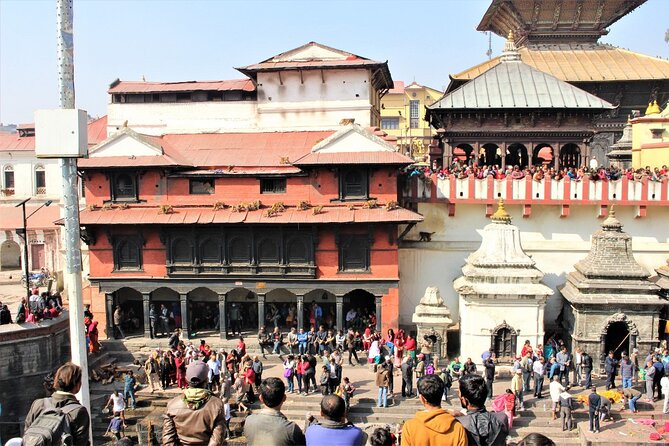
The tour overview includes Chandragiri Hills by cable car, with panoramic views of the Himalayas. Even if your day already includes temple time, this part is a helpful reset. You’ll get out of the dense city rhythm and see the wider geography that makes Nepal special.
I like viewpoint breaks because they give your brain somewhere to rest. You can process the sacred intensity of earlier stops, then come back to human-scale scenes later. If the weather is clear, you’ll get the best payoff here, so ask your guide when the views are most likely to be decent.
Because the detailed day-by-day itinerary you shared doesn’t explicitly list the cable car segment as a numbered stop, treat this as something to confirm in the final schedule you receive. The overview says it’s part of the experience, so you should get it, but never hurts to double-check timing.
Pokhara: lake sightseeing with a mix of easy walking and iconic views
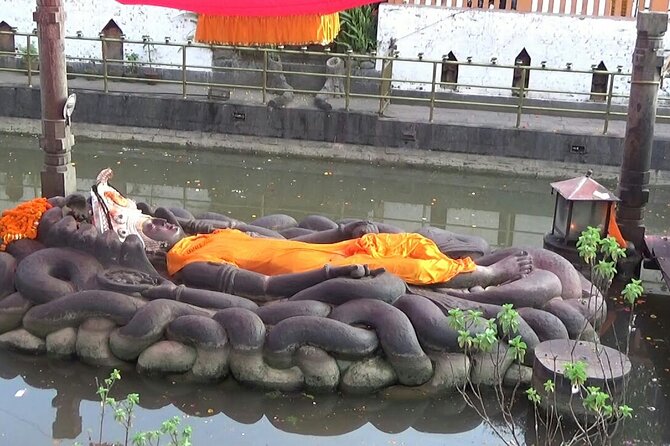
Pokhara is where the day gets calmer. The plan includes a drive to Pokhara after a stop at Manakamana Temple. From there, you spend time exploring the lake city with a series of sights.
Here’s what’s specifically listed:
- Bindabashini Temple (a holy site tied to wishes of devotees)
- Devis Fall (described as a spectacular waterfall)
- Gupteshwor cave (named after Lord Shiva)
- Tal Barahi Temple on an island in Phewa Lake, reached by boat ride
Then you’re set up for time around the lakeside for individual activities.
This segment is valuable because it mixes the spiritual with the scenic. You can see how Pokhara works for people who want a view, not just a worship stop. And the boat ride to Tal Barahi Temple adds a nice sensory change from temples on land. If you’re traveling in a group, it also gives everyone a shared moment that isn’t just standing in a doorway.
One note: caves and falls can mean uneven surfaces. You don’t need hiking boots, but you do want comfortable shoes, especially if you’re also dealing with later walking at Muktinath.
The big day-changer: flight to Jomsom and the road to Muktinath
Now we get to the part that explains why the schedule feels full. The itinerary says you’ll have an early breakfast and catch a short 30-minute flight from Pokhara to Jomsom. After checking in at a hotel in Jomsom, you go by jeep toward Muktinath.
The jeep detail is important. The plan says the jeep reaches only Ranipauwa, and from there you walk about 45 minutes to reach Muktinath Temple. That’s not optional, and it’s the main physical effort in the whole tour plan.
Muktinath is described as a major pilgrimage site for Hindus, tied to salvation. The tour notes include the belief that around 108 waters sprout inside the temple, and taking a holy bath there leads to salvation. Whether or not you follow the belief, the ritual focus is what you’ll remember.
After Muktinath, you also visit Jwala Mai Temple, where natural gas emerges and lights eternal flames, believed to be created by Lord Brahma. This is one of those stops where Nepal shows you its old-school spiritual storytelling, tied to a real physical phenomenon.
Practical advice: plan for the walk portion, take water if permitted, and wear clothing you can manage in changing temperatures. Early mornings can feel cool even when afternoons warm up.
Jomsom and Pokhara again: how the itinerary is arranged
The day plan includes a segment called Jomsom Muktinath Trek, but the described activities are actually a second look at Pokhara: lake sights, Bindabashini Temple, Devis Fall, Gupteshwor cave, Tal Barahi Temple, and lakeside time.
That overlap can confuse you, so here’s my advice: treat the schedule as a moving puzzle piece. The important fixed points you can trust from the details you shared are:
- the Pokhara to Jomsom flight timing is planned as short and early
- Muktinath requires jeep to Ranipauwa plus about 45 minutes walking
- Pokhara lake sights are a packaged set of icons
If you want to avoid surprises, ask your guide to confirm the day’s order. You want to know whether you’re doing Pokhara sights the same day you fly, or whether the schedule is spread across different day phases in practice.
Returning to Kathmandu: long drive, more time on the road
After the Jomsom and Muktinath side, the plan says you’ll return to Kathmandu on a scenic 200 km drive, crossing valleys, rivers, ridges, and settlements. Then you’ll check into a hotel for rest and get further Kathmandu Valley exploration later in the day.
This is the kind of segment you should mentally prepare for. Even when the scenery is good, your time is still time on the road. If you dislike buses and long drives, ask your guide about the route conditions and what stops might be built in.
The final day ends with a transfer to Tribhuvan International Airport. You fly back home with the feeling of peace and enlightenment from visiting multiple Hindu pilgrimage sites. I can’t promise spiritual breakthroughs, but I can say this kind of sequence often leaves people quieter than they expected, especially after Muktinath and the flame temple.
Where Lumbini and Bandipur fit in this plan
The tour overview says your journey includes the sacred birthplace of Buddha in Lumbini and the quaint town of Bandipur for traditional Newari architecture and local culture. But the detailed numbered stops you provided do not clearly list Lumbini or Bandipur.
So here’s the practical way to handle it: before you book, confirm the final itinerary you’ll receive. Ask your guide to point to the exact day and time for Chandragiri, Lumbini, and Bandipur. If those stops are swapped in or moved around, you’ll want to know early so your expectations match the actual schedule.
This matters because Lumbini and Bandipur are not quick add-ons. They can change travel times a lot, especially when flights and temple access already dominate the plan.
Value and price: is $1,880 per person a smart deal
At $1,880 per person, you’re paying for a lot more than sightseeing tickets. The included items you listed are:
- An English speaking tour guide
- Airport transfer by private car or van or bus
- Fuel surcharge
On top of that, your activities list includes domestic flight, private car, van, and jeep, and the itinerary includes admission ticket labels for certain segments. Even if some sights are listed as free and some included, the main value driver is that the package handles the moving parts: routes, tickets where applicable, and the coordination between Kathmandu, Pokhara, and the Jomsom side.
If you tried to assemble this yourself, the hard part wouldn’t be finding temples. It would be stitching together timing for flights, ground transport to trailheads, and the practical access constraints like the jeep ending at Ranipauwa.
So I consider it good value if:
- you want minimal stress and clear guidance
- you’re okay with a tight schedule
- you’re specifically interested in Muktinath and want it done with local support
It’s not ideal value if:
- you hate long driving days
- you want a slow travel pace
- you’re hoping for lots of free time for wandering between major stops
Who this tour suits best
This experience fits best if you:
- want pilgrimage-focused sightseeing with some viewpoint variety
- prefer a guided day over DIY planning
- can handle moderate physical fitness needs, including the about 45-minute walk segment at Muktinath
- like having one responsible contact to coordinate things, the way guides like Himal and Hari Shrestha were praised for in past trips
If you’re traveling with older family members or someone who struggles with stairs or long waits, ask your guide about pace and timing. The tour describes moderate fitness, but it also includes long transitions and walking.
Should you book Real Nepal Tour
I’d book it if your priority is to cover Kathmandu and Pokhara highlights and then hit Muktinath with real local coordination. The package value is in the logistics, especially the Pokhara to Jomsom flight and the jeep-to-walk pattern at Muktinath. The viewpoint option at Chandragiri Hills also gives you a needed pause from temple-only time.
I would not book it without confirming your final schedule if you care deeply about Lumbini and Bandipur, because the detailed stops list you shared focuses on other sights. Once the full itinerary is confirmed, this can be a very satisfying, faith-and-views Nepal day with a guide who knows how to keep things moving.
FAQ
What time does the tour start, and where is the meeting point?
It starts at 9:00 am at Tribhuvan International Airport on Ring Rd, Kathmandu 44600, Nepal.
Is pickup included?
Yes. The tour offers pickup, and it includes airport transfer by private car, van, or bus.
What’s included in the tour price?
The included items are an English speaking tour guide, airport transfer by private car/van/bus, and fuel surcharge.
What is not included, and should I tip?
Not included are personal items like alcoholic drinks and laundry, plus personal clothing and equipment. Tips for guide and driver are expected.
Is this a private tour, and how big is the group?
It’s a private tour/activity. Only your group will participate, with group size min 1, max 15.
Is free cancellation available?
Yes. You can cancel up to 24 hours in advance for a full refund. Canceling less than 24 hours before start time will not be refunded.
Latest Kathmandu write-ups
- Langtang Valley Trek★ 5.0 · 3 reviews
- Langtang Valley Trek from Kathmandu★ 5.0 · 3 reviews
- Khopra Danda Trek★ 5.0 · 3 reviews
- 5 night / 6 days Kathmandu Nagarkot Chitwan Pokhara tour★ 5.0 · 3 reviews
- Nepal Highlights Tour: 5 Nights 6 Days Kathmandu & Pokhara Tour★ 5.0 · 3 reviews
- Kathmandu Valley Private Day Tour★ 5.0 · 3 reviews
- Kathmandu Heritage Day Tour★ 5.0 · 3 reviews
- Conquer the Himalayas: The Ultimate 16-Day Annapurna Circuit Trek★ 3.5 · 3 reviews
Tours, compared.
Private Kathmandu Sightseeing Tour | UNESCO World Heritage sites
Read our review →
Everest Base Camp Helicopter Tour landing at Everest View Hotel
Read our review →