
Reviewed · DURBAR SQUARES
Kathmandu Sunset Tour by Rickshaw Including Durbar Square Visit
Kathmandu at sunset is the kind of city moment that hits fast, and this tour gives you a very practical way to catch it, from a rickshaw seat rolling through alleyways to a walk inside Kathmandu Durbar Square. I love that you start in Thamel, where you can gauge what kind of food, shops, and chaos you want to explore later. I also like how guides such as Nikita and Sanjeeb point out what you are looking at, from temple spots to the small details you would miss if you were just wandering.
The best part is the mix of motion and stillness: ride through the street noise, then step off to see the temples and courtyards as the light changes. A possible drawback is that this is a night experience, and some lighting can be tricky for photos and for spotting uneven stone during the walk, so sturdy shoes matter.
Key things that make this tour worth your time
- Rickshaw first, walking second: you get both the street-level view and the calm of temple courtyards
- Durbar Square entry included so you do not have to sort tickets mid-trip
- Asan market lanes and major temple stops before you reach the main square
- Small group capped at 12 for a less stressful pace in crowded lanes
- Rickshaws directly support the drivers and the trip is described as carbon neutral via a B Corp certified operator
Why a sunset rickshaw through Kathmandu feels like the right time
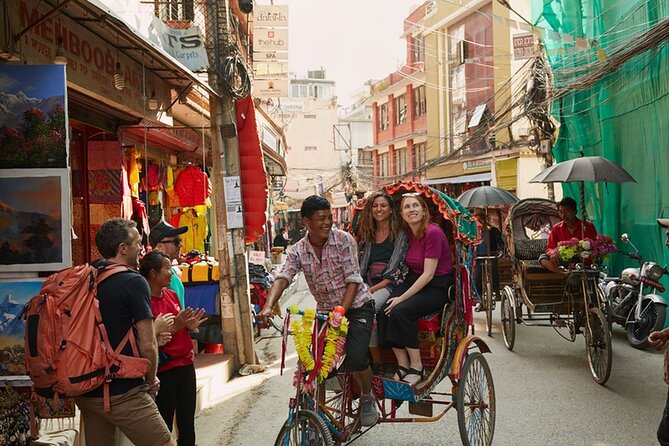
There is a reason rickshaws make sense in Kathmandu. The city is a patchwork of narrow streets, uneven pavement, and sudden pedestrian waves. A car feels too big. A bike can feel like work. A rickshaw lets you sit up, take in the lane rhythm, and still move with the flow.
Starting at 6:00 pm is smart. Daytime Kathmandu can be hot, loud, and fast. At dusk, the energy shifts. You still get the smells of cooking and spices, but you also start to see temples and facades darken into silhouette. That contrast is exactly what you want at Durbar Square, where the buildings are old enough to look different every time the light changes.
The tour also balances two different ways of seeing the city. First you watch, from above street level, as your driver threads through busy crossings and turns. Then you get off the rickshaw to walk inside Durbar Square, where the pace slows and you can actually look at courtyards, shrines, and ceremonial spaces.
One more thing I appreciate: the ride is framed as both a cultural stop and a local-support stop. The tour hires rickshaws directly from drivers, and it is described as carbon neutral through a B Corp certified company. That does not replace good travel behavior, but it does give your ticket more meaning.
More of the three Durbar Squares:
- Bhaktapur & Patan Durbar Square Day Tours
★ 5.0 · 122 reviews - Bhaktapur Durbar Square and Boudhanath Stupa
★ 5.0 · 7 reviews - Kathmandu Durbar Square | Holi Festival Celebration 2 March
★ 4.7 · 4 reviews
Getting oriented in Thamel before you hit Asan and Durbar Square
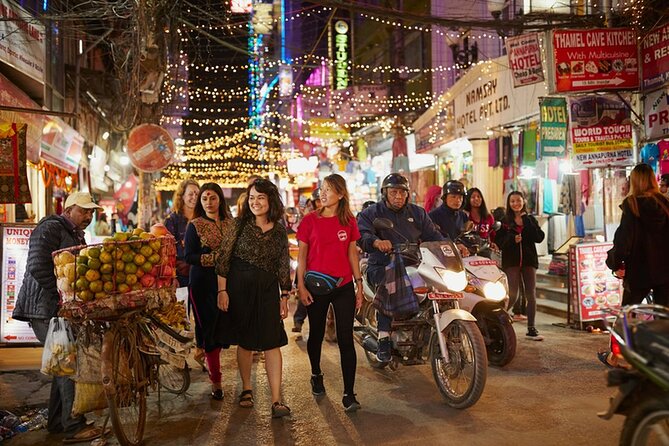
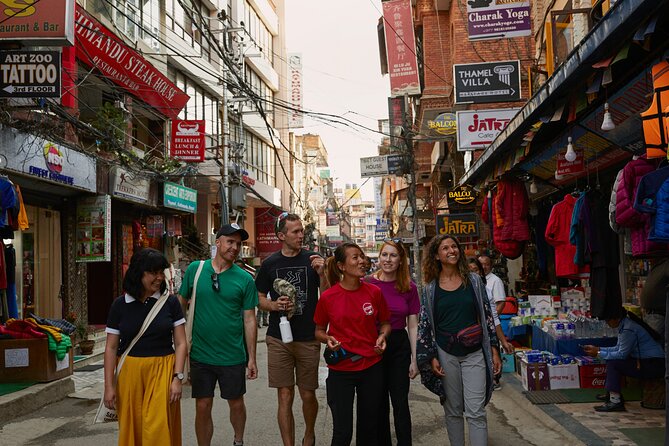
Your tour begins at Hotel Marshyangdi near Chaksibari Marg at 6:00 pm. Thamel is the launchpad. You will board your rickshaw there and get immediate context for the city you are about to enter, tourist gear in storefronts, restaurants around the corner, and the constant movement of people heading somewhere.
In practice, this start matters because it sets expectations. You are not dumped into the deep end. You ease into the route: Thamel first, then you head toward Asan, one of the city’s oldest market areas. That gradual flow gives you time to notice what kind of street life you will be passing, including vendors, temple-facing corners, and side lanes that look like they lead to everything.
Also note the timing. The tour runs for about 2 hours 30 minutes. That is short enough that you will not lose the evening, but long enough to feel like you actually did something. It also means you will likely want to plan dinner after, not before, since food is not included.
If you like a guided experience that still feels flexible, this is a good match. You get a driver, a guide, and enough structure to not get lost, but you still get time to pause, sit, and look around.
Asan market lanes: Annapurna Temple and small shrines you might miss
Asan is where Kathmandu becomes intensely local. Expect a compact mix of commerce and belief, with stalls and narrow lanes that can feel full even when you think the pace is slow.
You will pause to look around near Annapurna Temple, tied to the goddess of abundance. The stop is not just decorative. It is there so you understand what you are seeing when you walk past shrines on the street side later. Your guide can help connect the dots between everyday market life and the religious landmarks embedded in it.
You will also pass by or stop near several other temple spots, including Seto Machindranath (also called Janabaha Dyo), worshiped by Hindus and Buddhists in Kathmandu. Another named stop is Aakash Bhairab, connected with the Nepal Bhasa tradition and the figure named as King Yalambar. You do not need to memorize these names, but it helps to know that Kathmandu is layered. Markets here are not separate from sacred spaces, they sit next to them.
This part is where I think the tour earns its keep. If you tried to do Durbar Square by yourself right after arriving in town, you might treat it like a single museum-like stop. Asan changes that. It shows you how the city’s spiritual and street life overlap.
One consideration: Asan can be crowded. That is part of the point. Just be ready for shoulder-to-shoulder moments, especially as people move between stalls and temple corners.
Kathmandu Durbar Square after dark: UNESCO site, courtyards, and Gaddhi Baithak
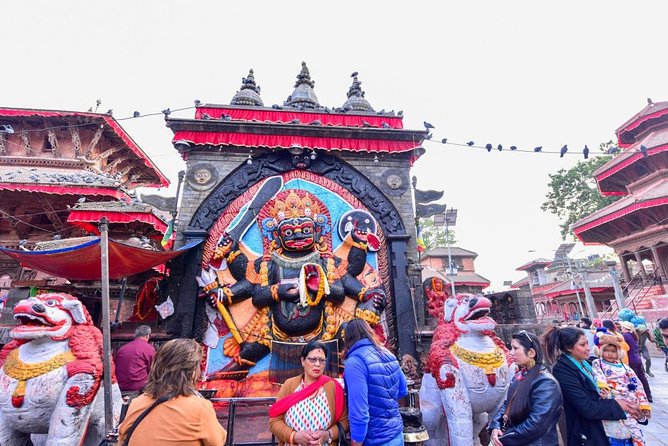
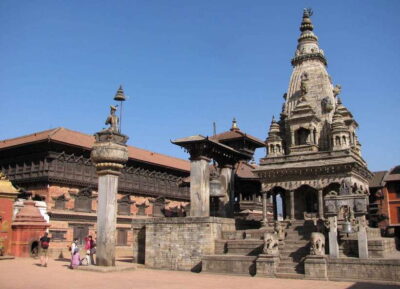
When you reach Kathmandu Durbar Square, you are entering one of the UNESCO World Heritage areas of the Kathmandu Valley. The complex is famous because it is dense with temples and shrines, with palaces and courtyards packed within a few blocks. Your guide gives context for what you are seeing, including the fact that structures in the area date from roughly the 12th to the 18th centuries and connect to the Malla kings.
Your time on foot is where the tour becomes more than transport. You can actually slow down and look up. Instead of watching motion blur, you get to take in doors, pillars, ceremonial spaces, and small corners of religious life.
A specific feature you are meant to notice is Gaddhi Baithak. It is described as a white, European-influenced building that was built during the Rana regime. Today it is used for ceremonial programs from the balcony. Even if you do not follow every detail, you will see how this building contrasts with the older temple structures nearby, and your guide helps connect the time periods.
You will also see a mix of what this square is used for today: food stalls, shops, and active shrine areas. That matters because Durbar Square is not frozen in time. People come here after their workday, for religious reasons, to snack, to browse.
Another named cultural layer you might notice: Freak Street shops inside the Durbar Square area. The tour mentions reliving the 1960s hippie heyday. Even if you are not chasing nostalgia, it is a fun way to understand how international attention shaped the neighborhood culture over time.
And yes, there is also a Buddhist shrine visit included, specifically the Sigal shrine. Kathmandu is full of blended traditions, and this stop gives you a chance to see that in a concrete way rather than as a concept.
More rickshaw rides in Kathmandu:
- Kathmandu Food & Drink and Shopping Rickshaw Tour
★ 5.0 · 48 reviews - Kathmandu: Food, Drink and Shopping Rickshaw Tour
★ 4.9 · 15 reviews - Kathmandu: Food, Drink and Shopping Rickshaw Tour
★ 4.7 · 7 reviews - Kathmandu at Sunset: Explore the City on Rickshaw
★ 5.0 · 5 reviews
The rickshaw ride experience: narrow streets, uneven ground, and your angle of view
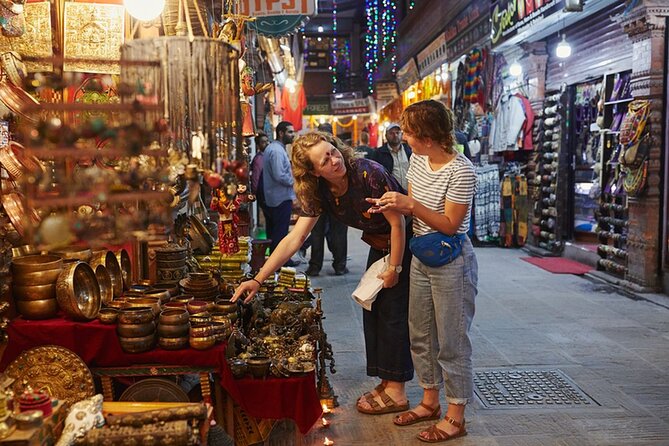
Riding up on the rickshaw seat changes everything about street sightlines. From up there, you see hands waving into shop openings, baskets passing at shoulder height, and pedestrians cutting across the road like they know the driver’s rhythm by instinct.
Your driver navigates narrow lanes and busy crossings, and you can expect uneven pavement and tight turns. This is not a smooth, controlled city stroll. It is more like moving through Kathmandu the way locals move through Kathmandu, where you are always negotiating space.
That is also why sturdy shoes and good balance matter. Even though the ride is guided and planned, the walking portion inside Durbar Square includes time on stone and in courtyards. Lighting at night can also make it harder to see drops or uneven patches. Bring a practical mindset: slow down when the ground looks unfamiliar.
The good news is the tour length is short. You are not stuck walking for hours. You get a guided walk time of about 1 hour 25 minutes at Durbar Square, plus stops along the way.
At the end, you hop back on your rickshaw and wind your way back to the meeting point at Hotel Marshyangdi. The tour is designed to loop you back where you started, so you can plan the rest of your night without doing extra guesswork.
Price and value: what $50.30 buys you in Kathmandu
At $50.30 per person, this is not the cheapest thing you can do in Kathmandu, but it is also not hard to justify if you think about what is included.
You get:
- a rickshaw hire (the vehicle and driver time)
- Durbar Square entrance fee included
- guided time through Asan and Durbar Square, with stops at specific temple and shrine points
- group size control, with a maximum of 12 people
- tips on what else to see, do, and eat during your stay
The rickshaw part alone is often the thing that makes night plans work. A driver and guide do the heavy lifting for route navigation in tight lanes. The entrance fee being included also reduces friction. You are not trying to find a ticket booth in the middle of your evening.
There is also an ethical angle. The operator describes the experience as carbon neutral, and the company is B Corp certified. It also states that rickshaws are hired directly from drivers, which means your ticket money feeds into local livelihoods, not just a ticketing pipeline.
Who this fits best:
- First-time visitors who want a local way to orient themselves fast
- People who prefer a moderate pace, ride when possible, walk when meaningful
- Travelers who want cultural context, not just photo stops
- Anyone who likes night atmospheres, especially with temple silhouettes and evening street energy
Who might want a different option:
- If you already planned a lot of Durbar Square time, this could feel like overlap with other city-center tours
- If you hate walking on uneven stone at night, consider whether the Durbar Square time works for you
Practical tips so your evening goes smoothly
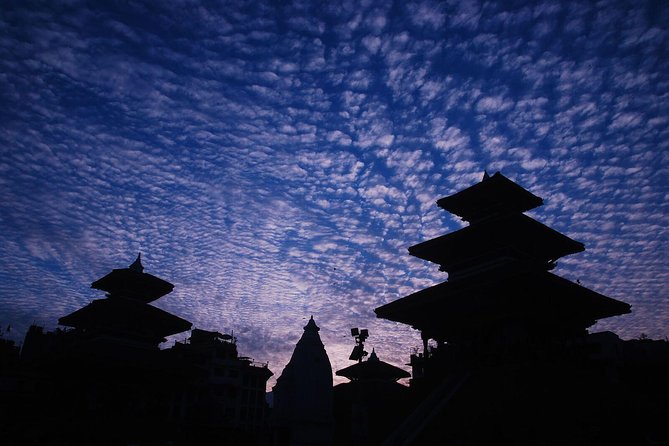
A few things can make or break your comfort on a night rickshaw tour in Kathmandu.
Start with basics:
- Wear comfortable shoes with grip. You are walking in courtyards and around temple spaces.
- Bring a layer. Even if the day is warm, evenings can feel cooler depending on the season.
- Keep your phone ready for photos, but do not rely on lighting. Some areas may be dim.
For what you will do inside Durbar Square, plan to take your time with the key moments your guide helps highlight. This tour is set up so you get both quick observations and slower stops, including sitting for people-watching. If you want chai, the tour mentions you can pick up chai from a local food vendor in the area, but food and drinks are not included, so budget for that.
Also, do not stress about crowding too much. Asan and the Durbar Square area can be busy, especially around temple activity. Your best strategy is to follow your guide’s timing, not try to rush to the next viewpoint.
Finally, the tour uses a mobile ticket, so have your ticket accessible on your phone.
Should you book this Kathmandu Sunset Tour by Rickshaw?
I think you should book it if you want a street-level Kathmandu experience that still includes real cultural context, and if you like the idea of watching temples at dusk instead of only in daylight. The combination of Thamel orientation, Asan temple-market flavor, and Durbar Square walking time makes the route feel connected, not random.
Skip it or swap it for something else if you already have a heavy second itinerary built around the exact same center, or if night walking on uneven ground sounds like a chore. Also, if you are very photo-focused, be realistic that lighting can be uneven at night.
If you go, go with comfortable shoes, patience for tight lanes, and an interest in how markets and temples share the same space. That is where this tour earns its magic.
FAQ
Where does the tour start?
The tour starts at Hotel Marshyangdi, Chaksibari Marg, Kathmandu 44600, Nepal.
What time does the tour begin?
The start time is 6:00 pm.
How long is the Kathmandu Sunset Tour by Rickshaw?
The duration is approximately 2 hours 30 minutes.
How much does the tour cost?
The price is $50.30 per person.
What is included in the price?
You get a rickshaw ride, a guided visit around temples including Sigal shrine, time to explore Kathmandu Durbar Square, and the Durbar Square entrance fee. You also receive tips on what else to see, do, and eat during your stay.
Is food included?
No. Food and drinks are not included.
How many people are in the group?
The tour has a maximum of 12 travelers.
Is the tour family-friendly for children?
Yes. Children under 6 are permitted to join the tour free of charge.
Is there any sustainability or carbon information?
The tour is described as carbon neutral, operated by a B Corp certified company.
Can I cancel for a full refund?
Yes, there is free cancellation. You can cancel up to 24 hours in advance for a full refund. If you cancel less than 24 hours before the experience starts, the amount paid will not be refunded.
Latest Kathmandu write-ups
- 16 Days Island Peak Climbing With Everest Base Camp Private Trip★ 5.0 · 3 reviews
- 15 Days Round Annapurna Trek with Poon Hill from Pokhara★ 5.0 · 5 reviews
- Private Nepal round trip including Ghorepani Poonhill trek★ 5.0 · 3 reviews
- Everest Base Camp Trekking 16 Days★ 4.0 · 7 reviews
- 14 Days Luxury Annapurna Base Camp Trek★ 5.0 · 6 reviews
- Everest Base Camp Trek★ 5.0 · 32 reviews
- Everest Base Camp Trek★ 5.0 · 87 reviews
- 14 Days Everest Base Camp Trek★ 5.0 · 5 reviews
Durbar Squares, compared.
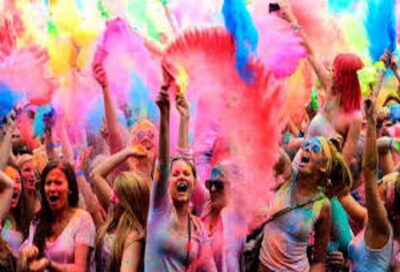
Kathmandu Durbar Square | Holi Festival Celebration 2 March
Read our review →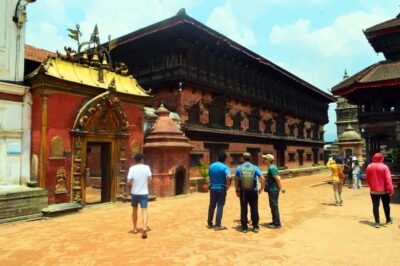

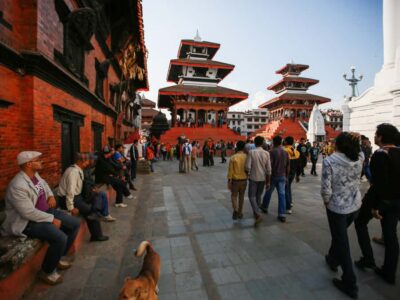
Chandragiri Hills & Kathmandu Durbar Square Tour
Read our review →Browse the lists this tour appears in