
Reviewed · CITY TOURS
Kathmandu Sightseeing Tour by Private Vehicle
Kathmandu can feel like sensory overload, so I like tours that bring structure without sucking the fun out of the day. This half-day loop through Patan Durbar Square, Swayambhunath, Boudhanath, and Pashupatinath is a smart way to see Nepal’s spiritual landmarks in a short window.
I especially like the easy pickup and drop plus the fact it’s in a clean, air-conditioned vehicle. You also get an English-speaking driver who explains what you’re looking at, which helps you connect the sites to Kathmandu Valley culture fast.
One consideration: entrance fees are extra, and this is more of a transport-and-walks plan than a full monument-guiding package. If you want a true site guide, you should confirm what your driver will cover, and also double-check that Patan Durbar Square is definitely on your route.
Key Things to Know Before You Go
- Comfort-first transportation: air-conditioned vehicle, hotel pickup, and drop-off.
- Half-day timing: plan on about 5 to 6 hours total, with roughly an hour per stop.
- Entrance fees are extra: budget for monuments entry at each location.
- Driver in English: expect explanations during the drive and walk time, not a separate guide.
- Small group feel: maximum 15 travelers on this tour.
- Patan can be sensitive: confirm Patan Durbar Square is included on your exact departure.
A Half-Day Loop Through Kathmandu’s Big Spiritual Sites
This Kathmandu sightseeing tour works because it’s built like a greatest-hits sampler of the Kathmandu Valley. In one morning, you’ll be at UNESCO-level heritage ground in Patan, then you’ll climb to a stupa viewpoint at Swayambhunath, then shift to the world of Tibetan Buddhism at Boudhanath, and finish at Hindu heartland ground at Pashupatinath.
The pacing is the key. Each stop is about an hour, which is long enough to look around, take photos, and understand what you’re seeing without turning your day into a marathon. If you’re only in Kathmandu briefly, this structure saves you from wasting time figuring out routes on your own.
Also, the sites connect to different sides of Nepalese religion. You get Buddhist landmarks, Tibetan Buddhist influence, and major Hindu worship in one arc. Even if you are not a religion expert, your driver can give you the basic meaning so the visit clicks.
More City Tours in Kathmandu
- Private Kathmandu Sightseeing Tour | UNESCO World Heritage sites
★ 5.0 · 756 reviews - Kathmandu: Private City Guided Tour
★ 4.9 · 174 reviews - Kathmandu Private Sightseeing Tour | UNESCO World Heritage Sites
★ 5.0 · 109 reviews
Price and Logistics: What You Pay, What You Still Need
The price is $60 per person, and you should judge it based on what’s included. You do get an air-conditioned vehicle, hotel pickup and drop, and transport between four major destinations. That part alone is worth real money in Kathmandu, where getting around can cost time and energy.
What’s not included is the monuments entry. Admission fees are listed as extra, so your final cost depends on current rates at each stop. One practical detail from the experience details is that foreigners may need to pay an entry fee in the range of about 200 to 1000 Nepalese rupees per location, depending on the site and the day’s rules.
So yes, the headline price looks simple, but you should plan a small budget buffer for entrance fees. I recommend carrying some cash in small bills, because temple-ticket counters and on-site payment can be picky about what they accept.
Finally, there’s an important wording gap to be aware of. The tour includes an English-speaking driver, but a tour guide is listed as not included. That means your driver may explain things, yet you should not assume it is the same as hiring a separate professional guide focused only on monuments.
Getting Picked Up and Working With Your English-Speaking Driver
The tour starts at 9:15 am, and pickup and drop happen at your accommodation. That matters because Kathmandu mornings can get chaotic fast, and you do not want to waste your limited sightseeing hours walking to a meeting point.
You’ll travel in an air-conditioned vehicle, and the ride is designed for a group. Even though it is described as sharing basis, the feel is small-group friendly with a maximum of 15 travelers. That’s a good size for moving together while still getting personal attention if you ask questions.
Your driver is English speaking, and the plan is built around explanations as you go. Expect the driver to orient you on what matters at each site, especially the religious and cultural significance of what you’re looking at. The more you communicate what you want to understand, the more you’ll get from that explanation time.
One more practical tip: the schedule is tight enough that “shopping for tickets and then wandering” can eat your hour. Show up to each stop with your entry situation sorted quickly, so you spend time actually seeing.
Stop 1: Patan Durbar Square and UNESCO-Grade Heritage Ground
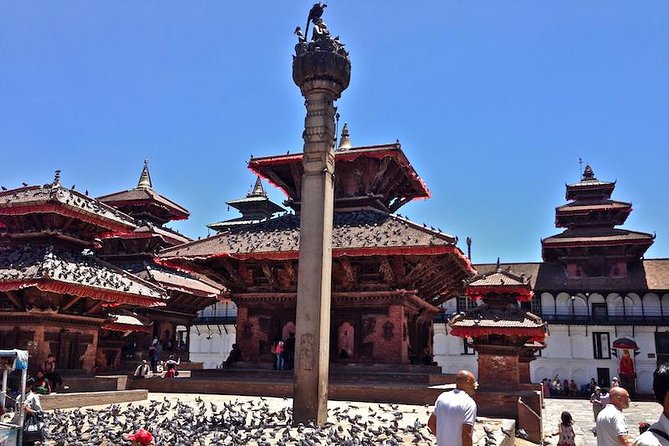
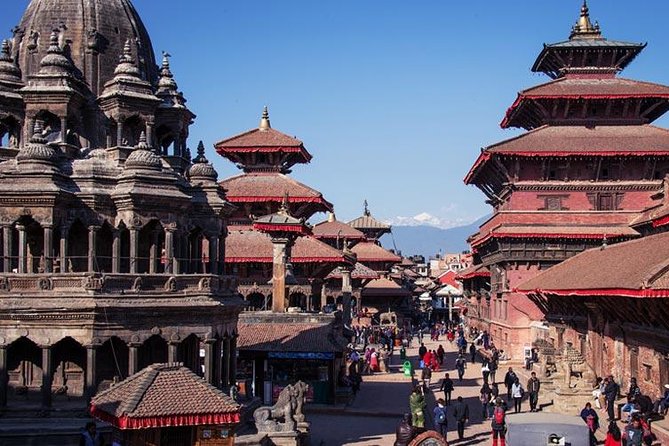
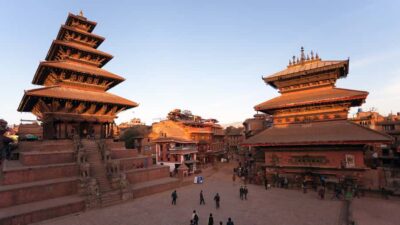
Patan Durbar Square is in the center of Lalitpur, and it is one of three Durbar Squares in the Kathmandu Valley that are recognized as UNESCO World Heritage Sites. This is your heritage anchor point, and it sets the tone for the day.
What makes it worth your time is that Durbar Squares are not just photo stops. They are heritage areas that reflect how cities once worked around temples, courtyards, and royal-era architecture. With only about an hour here, aim to prioritize the big visual elements and get a basic story before you start chasing details.
There is also a real-world lesson from one experience note: some departures may end up skipping Patan. Since Patan is one of the four planned stops, the best move is to confirm during booking or right at pickup that Patan Durbar Square is included for your specific day.
If Patan is skipped, you lose one of the UNESCO-listed stops and the day changes from “four major sites” to “three big sites plus time.” It’s not a disaster, but it can feel like you paid for a route that did not fully happen.
A different sort of day out of Kathmandu:
- Everest Base Camp Trek – 14 Days
★ 5.0 · 1,499 reviews - Everest Base Camp Trek
★ 5.0 · 842 reviews - Kathmandu: 7 UNESCO Sites with Lunch
★ 4.8 · 744 reviews - Everest Base Camp Helicopter Tour landing at Everest View Hotel
★ 5.0 · 668 reviews
Stop 2: Swayambhunath, the Monkey Temple Viewpoint
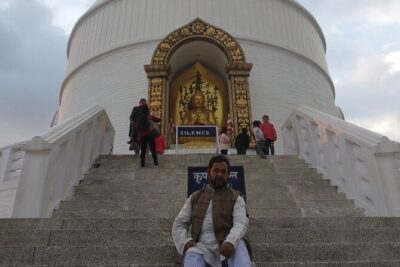
Swayambhunath is an ancient Buddhist stupa, roughly 2600 years old. It overlooks the Kathmandu Valley, and that viewpoint quality is a big part of the appeal. Even in a short visit, being up there changes how you see the city.
You’ll likely hear it referred to as the Monkey Temple, a nickname tied to the area’s monkeys. The important part for your visit is this: you are not only looking at a stupa, you are looking out across the valley while you do it.
This is also a great stop for understanding why stupa locations matter. Stupas are often placed where they connect earth, sky, and community. In practical terms, Swayambhunath gives you a “why this place” feeling quickly, even if you are not reading religious texts.
One caution: this stop involves walking and likely some stairs or uneven ground, depending on where crowds are concentrated at the moment. Wear comfortable shoes and go at your own pace. You have an hour, so you do not need to sprint to see everything.
Stop 3: Boudhanath Stupa and the Tibetan Buddhism Focus
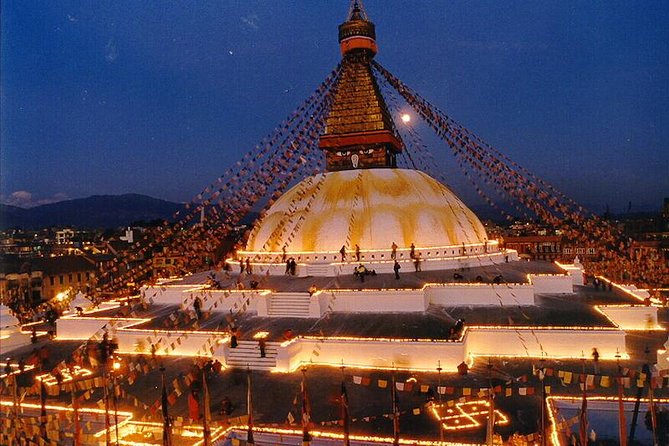
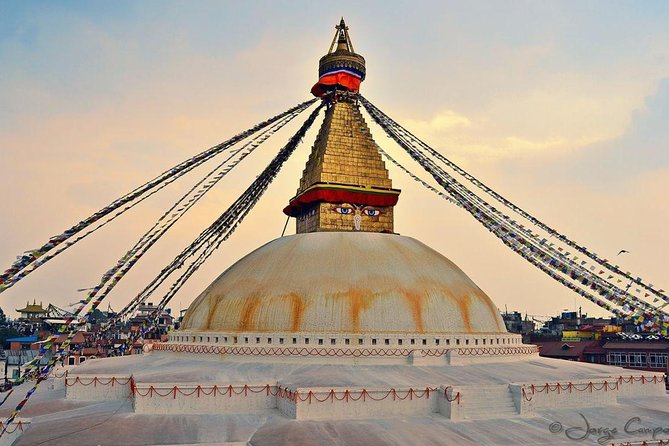
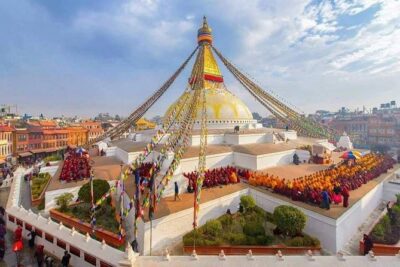
Boudhanath Stupa is one of the largest stupas in the world, and it has long been a major point for Tibetans in the region. The site is tied to wisdom, and it dates back to the 4th century, which gives it a deep-time feel even with a half-day schedule.
What I like here is the contrast. After the valley viewpoint at Swayambhunath, you drop into a site that is strongly associated with Tibetan Buddhist worship. That shift gives your brain a change of scenery and meaning, even though you are still in the same wider religious landscape.
This is also the stop where you can slow down, at least briefly. When a stupa is this significant and this active, it’s the little rhythms that create the atmosphere, not just the main structure. Take a moment to watch how people move through the space, then do your own quiet circuit for photos.
Just remember: your hour is shared between viewing and entry time. If you arrive with a clear photo plan, you’ll feel more satisfied when your time is up.
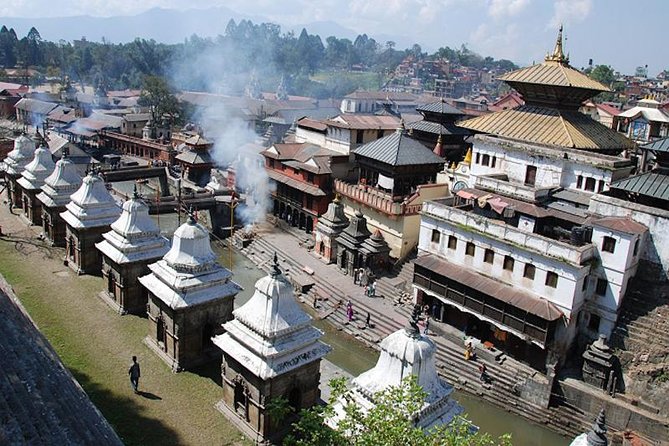
Stop 4: Pashupatinath Temple and Hindu Pilgrimage Energy
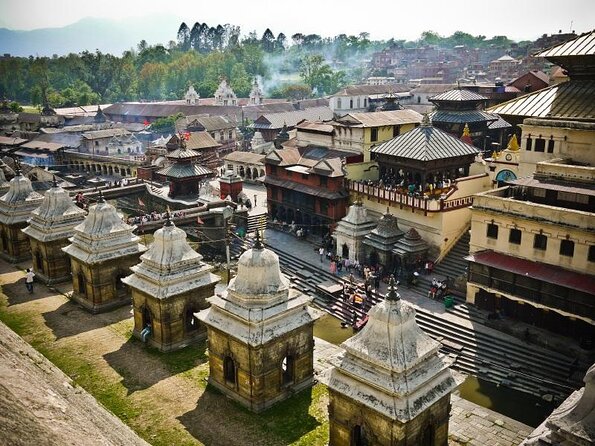
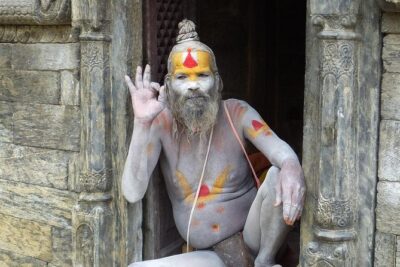
Pashupatinath is a major Hindu temple, and the name is tied to the god of animal lives. It’s widely described as one of the must-visit legendary Hindu temples in the subcontinent, and it draws millions of visitors each year.
That scale is hard to understand until you’re there. With only an hour, you are not experiencing a full pilgrimage in the way locals might, but you can still grasp why this temple is such a magnet. It is not only about architecture, it’s about living worship that keeps happening around the temple grounds.
If you care about how different religions occupy public life, this is your strongest “human culture” stop. People come to pray, to witness, and to mark their own relationship to faith. Even if you are unsure of the finer theology, you can still observe the practical rhythms of devotion.
A heads-up for temple visits in general: expect modest attire expectations and respectful behavior. You’ll be in a religious site, so treat the space like a place of worship, not a theme park. If you plan to buy clothing at a bazaar, keep that in mind, but comfortable, conservative choices usually work best.
Timing That Actually Works: How to Use Your 5 to 6 Hours
The whole tour is about 5 to 6 hours, with roughly one hour per stop. That’s a decent amount of time for first-timers, especially when you’re also dealing with pickup, travel, and ticketing.
Here’s how to make it feel worth it:
- Decide what matters most to you before you arrive, like viewpoints at Swayambhunath or heritage architecture at Patan.
- Use the driver explanation time to learn the basics, so your photos have context.
- At each stop, do a quick scan, then spend your remaining time slower, not faster.
The drive between sites is part of the experience. Kathmandu traffic and distance can change your timetable on any given day, so a transport-included tour helps keep the day on rails. You will not be stuck figuring out which route to take, and you will arrive with less stress.
If you are the type who loves deep exploration, you might want to follow up on one or two sites later with extra time. This tour is designed for getting the overview and building direction for future wandering.
Value Check: Is $60 a Smart Deal or a Budget Risk?
Let’s be honest. $60 per person can feel like either a bargain or a letdown, depending on what you expect from it.
If your priority is transport and convenience, this is strong value. Hotel pickup and drop, plus an air-conditioned vehicle and an English-speaking driver, removes the biggest hassle in Kathmandu sightseeing: time spent negotiating rides and routes.
If your priority is a guided deep-dive at each monument, you may feel shortchanged unless your driver provides the level of detail you want. The listing information suggests a guide is not included, even though your driver may act as the explanation source. So think of it as a guided walking tour with interpretation, not a formal museum-style guide.
The entrance fees are the other variable. Since admission is extra, your total spend will rise. Based on the experience notes, the foreigner entry fee range can be in the hundreds of rupees per site. Even if you end up at the low end, it’s still money you should plan for.
My overall take: this tour is a good deal if you want a clean, organized half-day and you’re okay doing your own exploring during each hour. It becomes less of a bargain if you planned to rely on included monument guiding to understand everything.
Who This Tour Suits Best (and Who Should Skip It)
This tour is best for:
- First-time visitors to Kathmandu who want an efficient religious heritage overview.
- People who hate logistics, and just want pickup, transport, and short walks between major stops.
- Travelers who like hearing the basics from an English-speaking driver and then using that context to explore.
- Anyone who prefers a small-group setup, with a maximum of 15 travelers.
It may not suit you if:
- You are a serious heritage hound and want a dedicated tour guide for deep architectural or historical commentary.
- You are sensitive to schedule changes and you really need Patan Durbar Square on the dot. Since there is a known risk of not going to Patan on some departures, confirm that stop ahead of time.
- You don’t want to pay multiple entry fees during a single morning.
If you’re traveling with limited time, this half-day format is a practical choice. If you have several days in the valley, you might want to pair this tour with one additional longer visit to your favorite site.
Practical Tips for Making Each Stop Feel Satisfying
These sites are active religious spaces, and your experience improves when you keep expectations realistic.
Bring a small amount of cash for entrance fees, and keep it separate so ticketing at each stop goes quickly. Arriving without a plan can turn your hour into a waiting game.
Wear comfortable footwear. Even when a stop is described as around an hour, religious sites often have uneven surfaces and lots of small turns.
Also, do not overstuff your day. This tour starts at 9:15 am, and by the time you finish Pashupatinath, you’ll probably be ready for a relaxed lunch and a calmer pace. Use the afternoon for rest or for one low-effort activity nearby.
Should You Book This Kathmandu Sightseeing Tour?
Book it if you want a straightforward morning route with hotel pickup, air-conditioned transport, and a driver who helps you connect the dots between Nepal’s major Buddhist and Hindu sites. At $60, the value is strongest when you treat it as a convenience plus short orientation tour.
Skip or reconsider if you are expecting a dedicated monument tour guide at each stop. Also, ask for confirmation that Patan Durbar Square will be included on your exact departure, since that stop can be the weak link.
If you can handle entrance fees being extra and you keep expectations aligned with the half-day format, this is a solid way to get your bearings fast and see the big spiritual highlights of Kathmandu Valley.
FAQ
How long is the Kathmandu sightseeing tour?
It runs about 5 to 6 hours total.
What time does the tour start?
The start time is 9:15 am.
Is hotel pickup and drop-off included?
Yes, hotel pickup and drop are included.
Is transportation included in the price?
Yes. You get an air-conditioned vehicle as part of the tour.
Are monument entrance fees included?
No. Admission fees are not included, so you’ll need to pay at the sites.
Is a tour guide included?
A tour guide is not listed as included. You’ll have an English-speaking driver.
What stops are included on the route?
The planned stops are Patan Durbar Square, Swayambhunath, Boudhanath Stupa, and Pashupatinath Temple.
Is this a private tour?
The experience is described with sharing basis and a maximum of 15 travelers, so it is not just you and your party.
What is the cancellation policy?
Free cancellation is offered, with full refund if you cancel at least 24 hours before the experience start time.
Latest Kathmandu write-ups
- Langtang Valley Trek★ 5.0 · 3 reviews
- Langtang Valley Trek from Kathmandu★ 5.0 · 3 reviews
- Khopra Danda Trek★ 5.0 · 3 reviews
- 5 night / 6 days Kathmandu Nagarkot Chitwan Pokhara tour★ 5.0 · 3 reviews
- Nepal Highlights Tour: 5 Nights 6 Days Kathmandu & Pokhara Tour★ 5.0 · 3 reviews
- Kathmandu Valley Private Day Tour★ 5.0 · 3 reviews
- Conquer the Himalayas: The Ultimate 16-Day Annapurna Circuit Trek★ 3.5 · 3 reviews
- Kathmandu Heritage Day Tour★ 5.0 · 3 reviews
City Tours, compared.
Private Kathmandu Sightseeing Tour | UNESCO World Heritage sites
Read our review →
Kathmandu Private Sightseeing Tour | UNESCO World Heritage Sites
Read our review →
Browse the lists this tour appears in