
Reviewed · UNESCO WORLD HERITAGE SITES
Kathmandu: Full-Day Tour of 5 World Heritage Sites
Kathmandu is interesting because in one day you can hop between Hindu temples, Buddhist stupas, and the living-world rituals of the Bagmati River. I like how this tour targets the World Heritage Sites you actually want to see, and I also love the focus on Durbar Square, including the Palace of Kumari. One thing to consider, though, is that monument entry fees and your meals are not included, so you will want extra cash or a plan for snacks.
This is also a good way to understand Kathmandu as more than a postcard. You learn how the city’s story stretches back more than 2,000 years, and how the Kathmandu Valley developed as one of the oldest settlement areas in the region. In my mind, the real win is a calm, guided flow through big sites that would otherwise feel overwhelming on your own, especially if your guide is someone like Uddhab, noted for being patient and easy to follow.
Key things to know before you go
- Pickups from Thamel or Tribhuvan International Airport mean you can join easily from either the city center or right after landing.
- A 6-hour guided block in Kathmandu helps you see a lot without spending the day figuring things out.
- Durbar Square plus Pashupatinath, Swayambhunath, and Buddhanath gives you a balanced Hindu and Buddhist day.
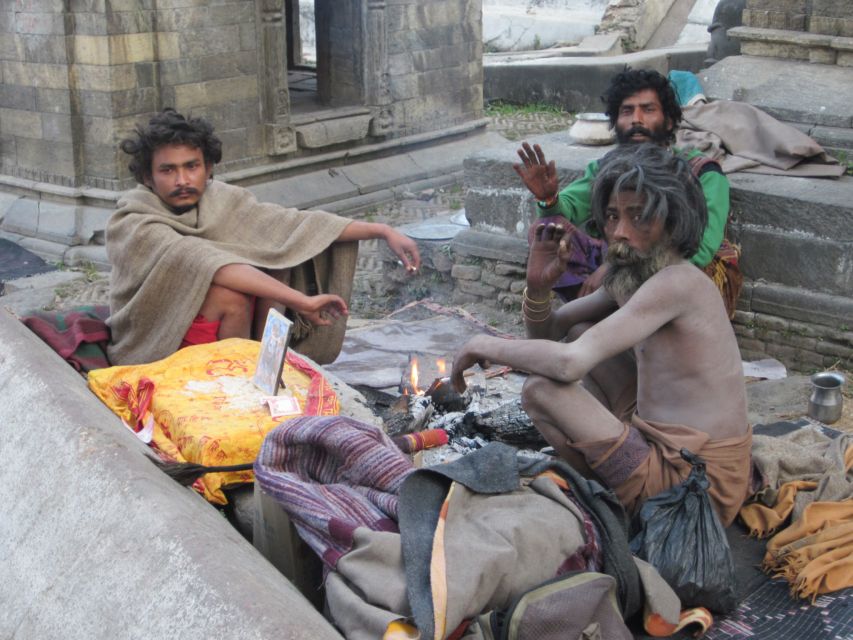
- Watch for hands-on rituals at Pashupatinath where pilgrims and sadus gather for meaningful daily life around the temple.
- Nagarkot viewpoints around 35 km out are a real reason to carry your camera and your expectations for mountain visibility.
Kathmandu’s World Heritage circuit, minus the guesswork
Kathmandu can feel intense on first arrival. Streets are tight, sites are scattered, and the terminology around temples and stupas can blur together fast. This full-day tour is designed to solve that problem with one guided route and clear targets: five UNESCO World Heritage Sites across the Kathmandu Valley cultural zone, plus story and context that makes each stop click.
The payoff for you is simple. You get a “greatest hits” kind of day, but not in a rushy, stop-and-shuffle way. The tour includes transportation, an English-speaking tour guide, and taxes and service fees, so you can budget around a single known price and then decide how you want to handle the extras like entrance fees and meals.
And because your guide is there to interpret what you are seeing, religious architecture starts to make sense. You notice the difference between pagodas, temples, and stupas. You understand why certain spaces are treated as sacred, and how daily devotion looks different for Hindus and Buddhists. Even if you are not a history buff, the day becomes easier to process.
More Full-Day Tours in Kathmandu
- Kathmandu: Full-Day 7 UNESCO Tour with Lunch – Private/Group
★ 4.9 · 247 reviews - Full Day Guided Tour in Kathmandu
★ 5.0 · 61 reviews - Patan and Bhaktapur City Full Day Tour
★ 5.0 · 24 reviews
Price, value, and what to budget on top
The tour is priced at $65 per person for a full day. That is not just a ticket price. You are paying for transportation, a live English-speaking guide, and covered taxes and service fees.
What is not included matters for your planning:
- Monument entrance fees
- Food and beverages
- Personal expenses
So here is the practical way to think about value. If you are paying for entry fees anyway, a guided day like this often saves you time and decision fatigue. You are also less likely to miss key parts of sites like Durbar Square or the temple precincts at Pashupatinath. If you already know you will spend a big chunk of the day at these places, then the $65 guide and transport portion starts to look like a decent bargain.
I recommend you plan your day as “tour first, then spend what you want.” Decide in advance whether you prefer sitting down for lunch or doing a snack-and-go rhythm. Since food is not included, you will avoid any awkward hunt for a meal between stops.
The pickup and drop-off choices that fit real travel days
This tour gives you two convenient pickup options:
- Thamel
- Tribhuvan International Airport
And you get two drop-off options at the end:
- Tribhuvan International Airport
- Thamel
This is a big deal if you are juggling flight times. If you land at Tribhuvan, you can join the day’s route without having to transfer into central Kathmandu first. If you are already based in Thamel, you can meet up in the neighborhood that is built for travelers, with shops and restaurants on narrow streets.
One more practical point. Since pickup is tied to either Thamel or the airport, you should build buffer time into your schedule. Kathmandu traffic and route planning can be unpredictable, and you do not want your day to start with a scramble.
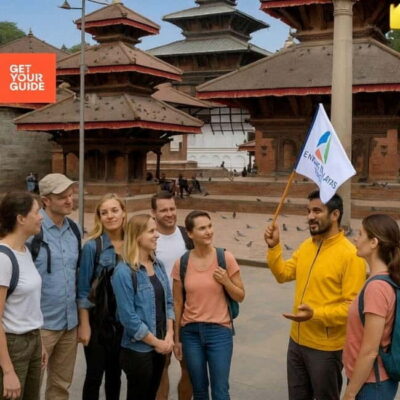
Durbar Square and the Palace of Kumari: where Kathmandu’s identity shows
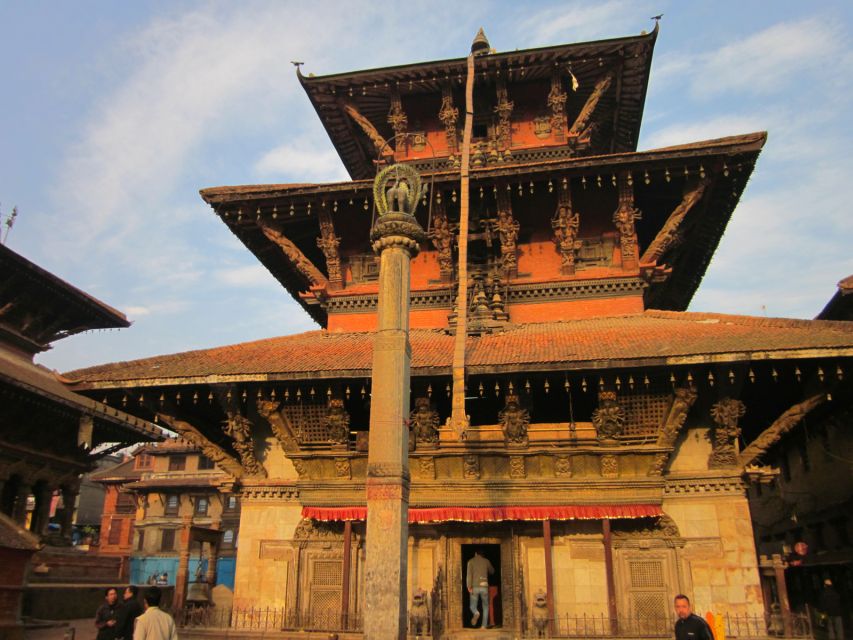
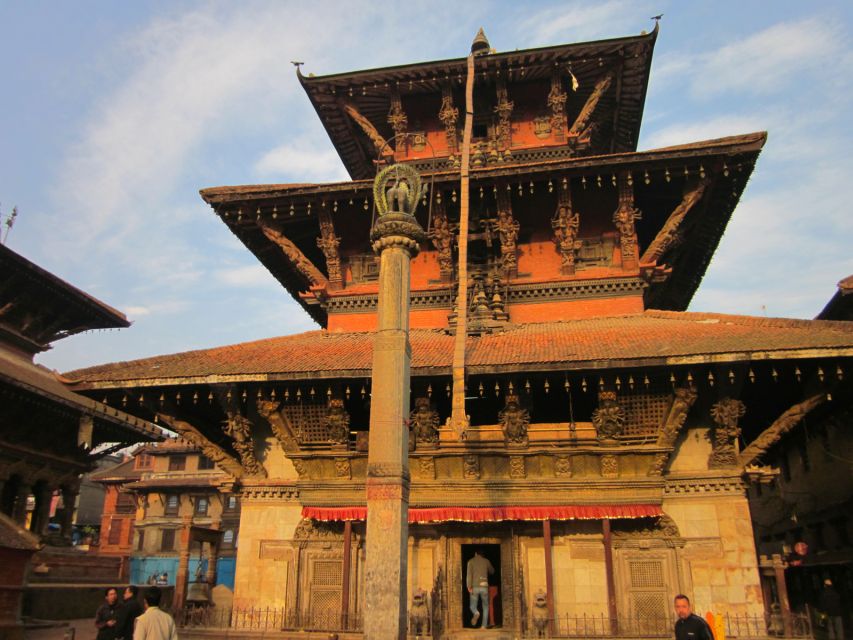
Durbar Square is one of the easiest places to understand why Kathmandu is called the city of temples. The area is packed with Hindu temples and statues of deities, so it feels like a living museum that also acts like a public square.
What you should look for:
- Hindu temple clusters and religious statues
- The Palace of Kumari, the living goddess
That Palace of Kumari detail is what makes Durbar Square more than architecture. It reflects how tradition and daily life intersect in Kathmandu. Even if you do not know the rules around how Kumari worship works, you will feel the significance the moment you are standing there.
The drawback to keep in mind is crowd flow. Durbar Square draws people because it is visually powerful and culturally important. If you like calm photography and wide-open views, you might find certain corners busy at peak times. The guide helps here by directing your attention so you still get the best parts without you constantly repositioning yourself.
More UNESCO World Heritage Sites in Kathmandu:
- Kathmandu: 7 UNESCO Sites with Lunch
★ 4.8 · 744 reviews - Kathmandu: 7 UNESCO Sites Tour in 1 Day (Private Tour)
★ 4.9 · 204 reviews - Kathmandu: Top 4 UNESCO Tour with Lunch – Private/Group
★ 4.9 · 181 reviews - Kathmandu: Private UNESCO World Heritage Site Tour
★ 4.9 · 47 reviews
Pashupatinath: the most significant Hindu temple precinct you can visit on foot
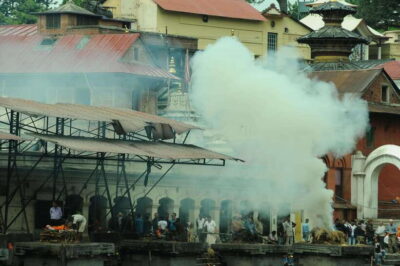
Pashupatinath is a major anchor on this circuit. It is described as the world’s largest Hindu temple, and it attracts pilgrims and colorful sadus. You are not just looking at a monument. You are entering a working sacred space where the living and the sacred sit side by side.
A detail that makes this stop especially memorable is the connection to the Bagmati River. Many Hindus choose cremation on the riverbanks, so you may see parts of that tradition as part of the daily rhythm around the temple precinct.
How to approach this respectfully:
- Dress appropriately for religious sites (cover shoulders and knees)
- Keep your voice low and your camera use thoughtful
- Expect that some areas feel intense, because grief and faith are real here
This is the kind of place where good guiding matters. A solid guide can explain what you are seeing in a way that feels respectful, not touristy. If your guide is patient and calm, you will get more from the experience instead of feeling like you are just passing by.
Swayambhunath and Buddhanath: Buddhist gompas with a different sense of time
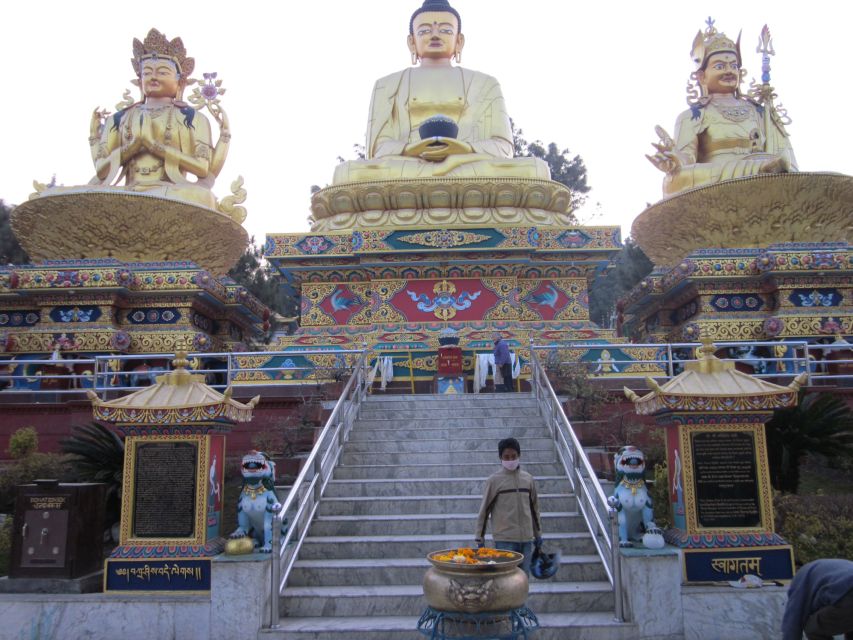
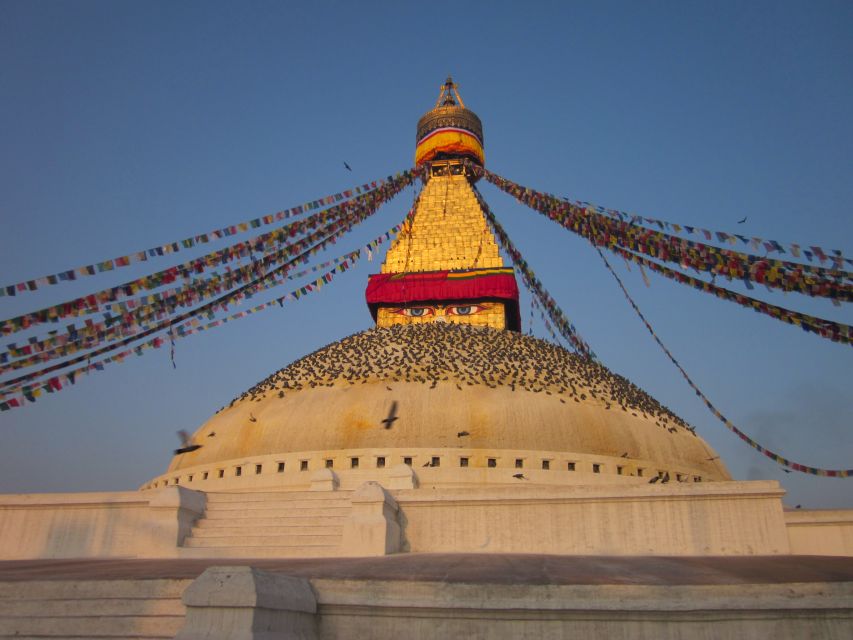
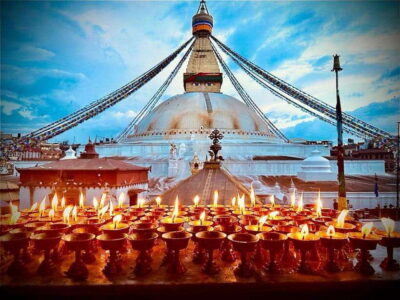
Kathmandu’s Buddhist sites are not quiet, museum-like stops. They feel devotional and human. Two significant gompas are part of your day: Swayambhunath and Buddhanath. Both are UNESCO World Heritage Sites.
Here is what makes each one distinct in your experience:
- Swayambhunath: it is one of the best-known gompas for Buddhist architecture and spiritual symbolism in the valley.
- Buddhanath: another major stupa-focused site that draws pilgrims.
Instead of treating these stops as just “stupas you check off,” try to slow down for what the guides encourage you to notice: how Buddhist worship spaces are designed for repetition and reflection. You see how people move through the site, how they relate to sacred forms, and how the space holds different meanings for different visitors.
If you are traveling with mixed interests, this is also a strong balance point. Hindu pilgrims at Pashupatinath have their own rhythms, and Buddhist worship here brings a different tone. On this tour, you get both without needing to plan separate half days.
The fifth UNESCO stop and why that matters for your understanding
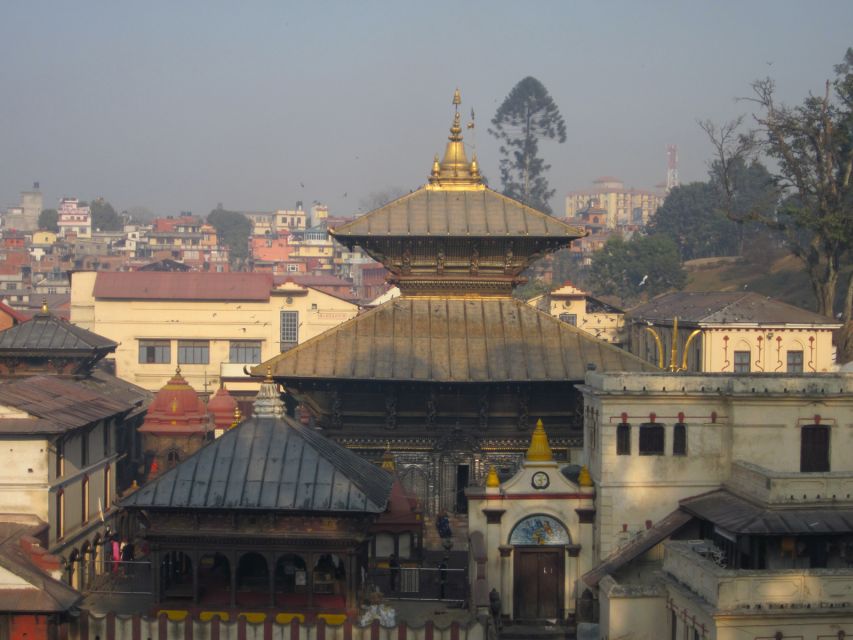
The tour describes five UNESCO World Heritage Sites in Kathmandu. You will see the headline locations that most people talk about: Durbar Square, Pashupatinath, Swayambhunath, and Buddhanath.
The extra UNESCO stop in the day is important because it rounds out the story of Kathmandu Valley as a whole. Without it, your visit can feel like four great monuments with loose connections. With the fifth heritage site included, you start to feel how the valley’s culture expresses itself across multiple monument zones, not just one highlight area.
Since the tour is built as a single guided circuit, the guide’s job is to connect the sites so they stop feeling random. If you are even mildly curious about religious architecture, that connection is what turns a list of places into understanding.
Nagarkot views: the mountain connection to your city day
Even though the core of the tour is Kathmandu’s heritage, the description also points toward Nagarkot, about 35 kilometers from the city center. Nagarkot is the highest point in the range surrounding the Kathmandu Valley, and it offers views of the Langtang range.
You also get hints of the giants beyond, including Annapurna, Manaslu, Cho Oyu, and Shishapangma. That might sound like a brochure list, but it is still useful context. Kathmandu sits at about 1,400 meters in a valley bowl surrounded by major peaks such as Shivapuri, Phulchowki, Nagarjun, and Chandragiri. When you catch a clear view, the city’s setting becomes real.
Practical reality check: mountain visibility depends on weather. When visibility is good, it makes the day feel larger than temples alone. When it is hazy, you still learn the “why” of where Kathmandu sits, but the dramatic panorama may be muted.
If you care about the view, plan your day so you do not treat Nagarkot like a quick photo stop. Give it time to work, and follow your guide’s cue about when to look and where to stand.
How the 6-hour guided block feels on the ground
Inside Kathmandu, the tour includes a guided segment lasting about 6 hours. That time window is long enough to be meaningful, but not so long that you spend the entire day stuck in one place.
What you can expect from that structure:
- A guided narrative that ties sites together
- Time at key monuments so you can actually see details like temple forms and stupa geometry
- Transport between clusters so your feet stay fresh
A possible downside is that a full day with multiple sites can be tiring, especially if you are coming off jet lag. You will want to eat something before the day starts, bring water, and wear comfortable shoes. Even if you think you are fine, your legs may disagree by late afternoon.
What to wear and carry for temple sites
I do not know your travel style, but I can tell you the kinds of things that matter for this route:
- Lightweight layers. Kathmandu weather can shift, and you will be standing around.
- Comfortable, grippy shoes. Stone surfaces and temple steps can be tricky.
- A small scarf or shawl. It helps with shoulder coverage if needed.
- A reusable water bottle. Hydration makes the long day easier.
- Cash or a payment plan for entrance fees and food.
Also, keep your phone charged. You will likely want photos, but also you might want to capture architectural details that are hard to remember later.
Who this tour suits best
This experience fits you if you want:
- A structured day that covers major UNESCO heritage without planning every turn
- A balanced Hindu and Buddhist itinerary
- Explanations that help you interpret what you are seeing
It is especially useful if you are short on time, landing in Kathmandu for only a day or wanting a single “hero tour” to anchor your trip. It also works well for travelers who are not confident navigating Kathmandu’s sites solo, but still want authentic cultural stops.
If you hate crowds and prefer total quiet, you might find certain temple precincts busy. In that case, you can still enjoy the itinerary, but you should adjust your expectations and plan for slower pacing.
The guide quality that actually changes your day
The tour includes an English-speaking tour guide, and the guide experience is highlighted through feedback for being patient and easy to follow, with Uddhab called out by name for that supportive approach.
That matters more than people think. In a place like Kathmandu, the difference between a rushed narration and a careful explanation can change how connected you feel to each site. Patient guiding helps you:
- Understand why certain rituals happen
- Notice religious and architectural details you would otherwise miss
- Ask questions without feeling rushed
So if you care about learning, go with a tour that leans on guide quality, not just transport and a checklist.
Should you book the Kathmandu full-day UNESCO tour?
Book it if you want one high-impact day that strings together Kathmandu’s major Hindu and Buddhist heritage, including Durbar Square and big spiritual anchors like Pashupatinath, Swayambhunath, and Buddhanath. The $65 price makes sense because transportation and an English-speaking guide are included, and you know you will spend real time at the key monuments.
Skip it or reconsider if you:
- Prefer to travel at your own pace with no guided structure
- Are not interested in religious sites or ritual spaces
- Have a very tight schedule where pickups and a full-day plan could feel stressful
If you like culture, architecture, and big-picture context, this tour is a strong value. You leave with more than photos. You leave with a clearer sense of how Kathmandu’s religious life and history connect across centuries.
FAQ
What is the duration of the Kathmandu tour?
The tour duration is 1 day. Starting times vary, so you will need to check availability for the exact departure time.
Where can I get picked up?
You can choose between two pickup locations: Thamel and Tribhuvan International Airport.
Where will the tour drop me off?
Drop-off locations are either Tribhuvan International Airport or Thamel.
How much does the tour cost?
The price is $65 per person.
What is included in the tour price?
The tour includes transportation, an English-speaking tour guide, and taxes and service fees.
What is not included?
Monument entrance fees, food and beverages, and personal expenses are not included.
What languages are available for the live guide?
The live tour guide is available in English, French, German, and Italian.
Is there a cancellation window?
You can cancel up to 24 hours in advance for a full refund.
More Historical Tours in Kathmandu
- Private Kathmandu UNESCO World Heritage Sites Tour
★ 4.8 · 28 reviews - Pick 2-Wonders of Kathmandu: A 3-Hour Heritage Hop
★ 5.0 · 22 reviews - UNESCO Five World Heritage Tour in Kathmandu
★ 5.0 · 12 reviews - Kathmandu: Guided -Day Tour of World Heritage Sites
★ 5.0 · 10 reviews
Latest Kathmandu write-ups
- 16 Days Island Peak Climbing With Everest Base Camp Private Trip★ 5.0 · 3 reviews
- Private Nepal round trip including Ghorepani Poonhill trek★ 5.0 · 3 reviews
- Everest Base Camp Trekking 16 Days★ 4.0 · 7 reviews
- 15 Days Round Annapurna Trek with Poon Hill from Pokhara★ 5.0 · 5 reviews
- 14 Days Luxury Annapurna Base Camp Trek★ 5.0 · 6 reviews
- Everest Base Camp Trek★ 5.0 · 32 reviews
- Everest Base Camp Trek★ 5.0 · 87 reviews
- Everest Base Camp Trek★ 5.0 · 97 reviews
UNESCO World Heritage Sites, compared.
Private Kathmandu UNESCO World Heritage Sites Tour
Read our review →
Browse the lists this tour appears in