
This one-day Kathmandu circuit is interesting because it stacks five UNESCO World Heritage sites into a tight loop around the valley, starting at Swyambhunath (the Monkey Temple). You get Hindu and Buddhist sacred places in the same day, plus royal-square architecture in Patan and Kathmandu without the stress of figuring out routes and entry times on your own.
I love how the tour is built around a clear, human pace with a real guide and private transportation, so you can focus on what you’re seeing instead of juggling buses. I also love the practical bonus of local food stops suggested by guides, like the tips from Ajit for places around Basantapur and Indra Chowk, and the way guides such as Shiva or Ganesh explain what you’re looking at. One possible drawback: the tour is short, so each UNESCO stop is typically around 30 minutes for the main sites, which means you have to choose what to linger on once you’re there.
Quick Hits You’ll Care About
- Five UNESCO sites in one day around Kathmandu valley, all within a manageable time window
- Start at Swyambhunath and see why it’s famous as a Monkey Temple with both Hindu and Buddhist elements
- Patan Durbar Square’s Newari temple density gives you “wow per square meter,” fast
- Boudhanath’s giant dome and the stupa’s scale make it easy to understand Buddhism on sight
- Pashupatinath on the Bagmati River hits Nepal’s biggest Hindu pilgrimage site theme
- Private transportation and an experienced guide with group size capped at 15
Why This Kathmandu Valley Route Works in One Day
Kathmandu can feel like a lot at first. Traffic, crowds in the center, and a maze of lanes can make even simple sightseeing feel like a chore. This tour helps because it turns the valley into a route, not a random set of stops.
The best part is the balance of sacred sites and historic squares. Swyambhunath is set on a hill and known for the mix of Hinduism and Buddhism. Patan Durbar Square focuses on Newari architecture and temple clusters. Boudhanath gives you the big stupa visual language of Buddhism. Kathmandu Durbar Square adds the royal core and a visit to Kumari Temple. Then Pashupatinath delivers the big, unmistakable Hindu pilgrimage centerpiece on the Bagmati River.
You’re not trying to do everything in a week. You’re doing the high-impact stuff in a few hours with a guide who can translate the “why” behind the “what.”
More Full-Day Tours in Kathmandu
- Kathmandu: Full Day 7 UNESCO Tour with Lunch – Private/Group
★ 5.0 · 415 reviews - Kathmandu: Full Day Top 4 UNESCO Tour with Lunch – Private/Group
★ 5.0 · 269 reviews - Kathmandu: Full-Day 7 UNESCO Tour with Lunch – Private/Group
★ 4.9 · 247 reviews
Plan Your Day: Timing, Pickup, and What $40 Really Buys
The tour meets at 9:15 am, and the total time runs about 4 to 6 hours. That time window matters because these are major religious and heritage sites. You’ll need time to get from point to point, walk around, and still have enough minutes at each stop to take in the key views and details.
It’s also priced at $40, which is the value sweet spot for Kathmandu city touring. What you’re really paying for is not just entry access, it’s private transportation plus an experienced tour guide. The tour also offers pickup, group discounts, and a mobile ticket. Group size is limited to a maximum of 15 travelers, which helps keep the day from turning into a shuffle.
One detail that affects your budget: monument entrance fees are not included and are listed as worth 30 USD. Lunch is also not included. So if you’re budgeting the trip, plan on adding those costs on top of the tour price.
Stop-by-Stop: Swyambhunath to the UNESCO Core
This day is structured so you can hit the major icons without turning your legs into noodles. Expect short site time blocks, with several main stops listed at 30 minutes each. That doesn’t mean you can’t enjoy a place, it just means you’ll want to decide what to focus on before you get there.
A good strategy: at each stop, pick one theme. Is it the religious symbolism? The architecture? The viewpoint? The courtyard feel? When time is tight, focusing your attention keeps the experience satisfying instead of rushed.
Swoyambhu Mahachaitya (Monkey Temple): Hindu and Buddhist in One Hilltop
Swyambhunath, also called Swoyambhu Mahachaitya, is one of Nepal’s holiest Buddhist chaityas. What makes it special is that it’s not a single-faith bubble. You’ll see a mix of Hindu and Buddhist presence, which is part of why it feels like a living spiritual neighborhood rather than a museum.
The legends are part of the magic here. The site is said to have evolved spontaneously when the Kathmandu valley was created from a primordial lake more than 2,000 years ago. Even if you treat legends as stories, they still guide the meaning of the place.
Practically, you’ll want to be ready for walking and the hilltop vibe. You’ll likely spend about 30 minutes at the site, so go with a “quick scan then settle” approach. Look from the hilltop, then circle in the area and take in the chaityas and stupa details. If you’re the type who likes to watch pilgrims rather than just pose for photos, this is a great spot.
More UNESCO World Heritage Sites in Kathmandu:
- Private Kathmandu Sightseeing Tour | UNESCO World Heritage sites
★ 5.0 · 756 reviews - Kathmandu: 7 UNESCO Sites with Lunch
★ 4.8 · 744 reviews - UNESCO Seven World Heritage Tour in Kathmandu
★ 5.0 · 253 reviews - Kathmandu: 7 UNESCO Sites Tour in 1 Day (Private Tour)
★ 4.9 · 204 reviews
Patan Durbar Square: Newari Architecture in a Concentrated Temple Cluster
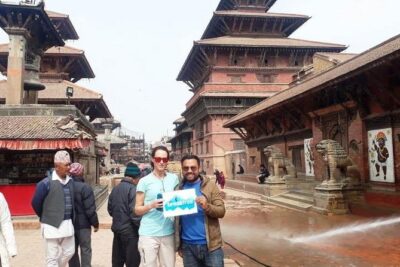
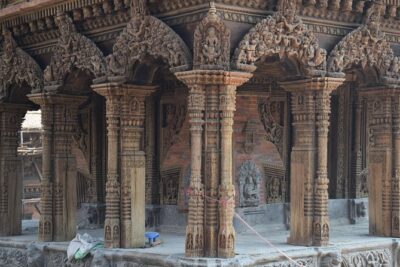
Patan Durbar Square is the old royal palace area of Patan. The headline here is Newari architecture and the concentrated mass of temples in one space. You don’t need a full lecture to feel the difference. The geometry, the stonework, and the way temples cluster give you that “how did they fit all this together?” reaction fast.
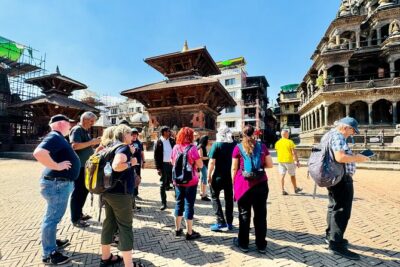
You’ll typically have about 30 minutes here. That’s enough time to walk the main feel of the square, orient yourself, and notice how closely packed the temple structures are. If you like cultural details, this is also where a guide’s explanations can really pay off.
One of the nicest parts of the day is that your guide can help you connect heritage to everyday life. In past days, guides such as Shiva have paired Patan sightseeing with local food suggestions, including a stop for momo. Even if you just take the idea and look for a local place afterward, the timing is good because you’re already in the historic zone.
Boudhanath Stupa: The Giant Dome Feeling You Can See From Far Away
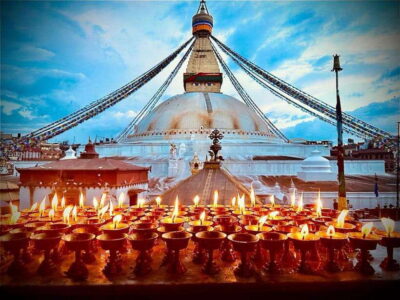
Boudhanath is famous for scale. The stupa is described as being built around the 14th century and known for a huge dome, with a Buddhist pyramid positioned on top of the dome. The effect is simple: even before you read anything, you understand why it’s a major pilgrimage center.
This is also one of the sites where Buddhism’s visual language becomes very easy. You’ll see the stupa shape, the surrounding space, and the way people move around the monument. Even in a short visit, it helps to slow down for a minute and watch the flow.
Time is again a factor, with about 30 minutes noted at this stop. So don’t plan on doing a full photo session. Do one sweep from a good viewing angle, then one closer look at details around the dome and the upper pyramid element. If you’re sensitive to crowds, try to arrive with your patience ready, since this is a popular spiritual stop.
Kathmandu Durbar Square and Kumari Temple: The Royal Core Right in the City
Kathmandu Durbar Square brings you back to the capital’s historic center. The tour includes time to visit Kumari Temple, which is a key cultural stop in this area.
The practical idea: Durbar Square is not just about one building. It’s a whole zone of heritage structures, courtyards, and sightlines. That means your guide can help you choose where to stand, which gates to look toward, and how to read the area without getting lost in it.
You’ll likely have about 30 minutes at this stop. That’s enough to see the Kumari Temple area and get a sense of the square layout. If you’re the kind of traveler who loves architecture, you’ll probably enjoy this stop most with a guide who points out reconstruction and design details you might otherwise miss.
Pashupatinath Temple: Nepal’s National Deity Seat on the Bagmati River
Pashupatinath Temple is the Hindu pilgrimage centerpiece of the day. It’s described as the biggest temple in Nepal and India, situated on the bank of the Bagmati River, and known as the seat of Nepal’s national deity.
This stop can feel intense in a way that’s hard to replicate elsewhere. It’s a living religious complex, meaning activity is part of the experience. That’s also why a guide helps. You’ll get context for what you’re seeing, and how to approach the site respectfully without turning it into a checklist.
Since the itinerary information provided doesn’t give a specific time block for Pashupatinath, treat it as the moment where you may linger a bit longer if your guide says it fits. If you’ve got a limited attention span, still take at least a short pause and look across the river zone and toward the main temple area. It’s one of those “you understand why it matters” views.
Entrance Fees, Lunch, and the Real Budget
Here’s the money reality in plain terms. The tour costs $40, and monument entrance fees are listed as worth 30 USD and are not included. Lunch is also not included.
So your realistic total is closer to $40 plus whatever entrance fees you pay at the sites (based on the listed 30 USD figure), plus lunch and any extra snacks. The nice part: because lunch isn’t included, you have flexibility. If you want a simple meal near the squares, you can. If you prefer to keep it light and snack along the way, you can do that too.
Also remember that you’ll probably want small cash for street snacks or drinks. Some of the best moments in Kathmandu are tied to food timing, like suggestions connected to the areas around Basantapur and Indra Chowk.
Your Guide Changes the Day: From Ganesh to Shiva to Ajit and Ram
A short tour lives or dies by the guide. When time is limited, you don’t want a guide who just announces where you are. You want someone who explains what the place is and how to look at it.
In the feedback included here, guides such as Ganesh, Shiva, Ajit, Ram, and Ramesh show up in different ways. One person credits Ganesh for being well prepared and explaining details at each stop. Another highlights Shiva pairing Patan history with local food moments. Ajit is specifically tied to walking toward local food spots, including a mention of Indra Chowk lassi and a route related to freak street. Ram appears in a context of helping with a flexible extra day in Kathmandu after an Everest Base Camp trek plan.
You don’t need all that to enjoy the tour. But it does suggest a strong pattern: the best days include not just monuments, but also quick cultural context and smart local guidance.
If you book, ask your guide one simple question early in the day: What should I pay attention to right now that I would miss on my own? You’ll feel the difference immediately.
Group Size, Pace, and What 30 Minutes Feels Like
The tour caps at a maximum of 15 travelers. That number matters in real life. Smaller groups usually mean less waiting, fewer bottlenecks at staircases, and more chances for your guide to help you find good angles quickly.
The time blocks listed at several stops are about 30 minutes. In a day that includes multiple UNESCO sites, that pace is normal. Still, you should plan for a “watch, walk, snapshot, move on” rhythm.
If you like slow travel, you might find the overall day a bit fast. If you like efficient culture hits, this is your kind of tour.
Weather and Comfort Considerations for Kathmandu Days
This experience requires good weather, and if it’s canceled due to poor weather, you’ll be offered a different date or a full refund. Kathmandu weather can shift, so this is a smart policy.
Comfort-wise, wear shoes you trust for uneven stone and temple approaches. You’ll likely do more walking than the stop duration suggests, because getting between views is part of the experience.
Also bring something for sun or light rain. You want to stay focused on the sites, not on being uncomfortable.
Who This Tour Fits Best (and Who Might Skip It)
This tour is ideal if you:
- Want to see major UNESCO World Heritage sites in one day without complex planning
- Prefer a guide-led experience where context helps you enjoy the sites more
- Like a structured route, starting around 9:15 am, with private transportation and a small group limit
You might consider another option if you:
- Want long, unhurried time at only one or two sites
- Plan to use the day as a deep photography session and need lots of repeated angles
- Travel with needs that would make a multi-site walking day uncomfortable (the tour itself is designed for most travelers, but the day is still active)
Should You Book This Full Day Kathmandu Tour?
If your goal is a high-value Kathmandu overview with real context, I think this is a solid booking. The price is reasonable for private transportation plus an experienced guide, and the route hits the UNESCO big hitters: Swyambhunath, Patan Durbar Square, Boudhanath, Kathmandu Durbar Square with Kumari Temple, and Pashupatinath.
The main reason you would not book is if you hate the idea of limited time on each stop. This is efficient. That’s the point. If you go in ready to focus on a few priorities per site, you’ll leave with a strong sense of Kathmandu’s spiritual and historic core.
FAQ
What time does the Kathmandu tour start?
The tour start time is 9:15 am.
How long does the full day tour take?
It runs about 4 to 6 hours.
Which UNESCO World Heritage sites are included?
The tour includes Swyambhunath Stupa, Bouddhanath Stupa, Pashupatinath Temple, Basantapur Durbar Square (Kathmandu Durbar Square), and Patan Durbar Square.
Are entrance fees included in the $40 price?
No. Monuments entrance fees worth 30 USD are not included. Lunch is also not included.
Is pickup available, and how is the group size kept small?
Pickup is offered, and the tour has a maximum group size of 15 travelers.
Do I get tickets on my phone?
Yes, the tour includes a mobile ticket.
What happens if the weather is bad?
This experience requires good weather. If it’s canceled due to poor weather, you’ll be offered a different date or a full refund. The experience is listed as non-refundable otherwise.
More Historical Tours in Kathmandu
- Nepal Discovery Tour: Heritage Sites & Scenic Hill Easy Hike
★ 5.0 · 121 reviews - Kathmandu Private Sightseeing Tour | UNESCO World Heritage Sites
★ 5.0 · 109 reviews - Kathmandu World Heritage Tour
★ 5.0 · 74 reviews - Nagarkot Sunrise & Bhaktapur UNESCO Heritage Private Tour
★ 5.0 · 66 reviews
Latest Kathmandu write-ups
- Langtang Valley Trek★ 5.0 · 3 reviews
- Langtang Valley Trek from Kathmandu★ 5.0 · 3 reviews
- Khopra Danda Trek★ 5.0 · 3 reviews
- 5 night / 6 days Kathmandu Nagarkot Chitwan Pokhara tour★ 5.0 · 3 reviews
- Nepal Highlights Tour: 5 Nights 6 Days Kathmandu & Pokhara Tour★ 5.0 · 3 reviews
- Kathmandu Valley Private Day Tour★ 5.0 · 3 reviews
- Conquer the Himalayas: The Ultimate 16-Day Annapurna Circuit Trek★ 3.5 · 3 reviews
- Kathmandu Heritage Day Tour★ 5.0 · 3 reviews
UNESCO World Heritage Sites, compared.
Private Kathmandu Sightseeing Tour | UNESCO World Heritage sites
Read our review →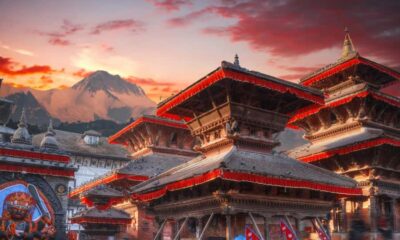
Browse the lists this tour appears in