Reviewed · KATHMANDU TOURS
Annapurna Panaroma
This experience is interesting because it blends a Poon Hill sunrise trek with serious Kathmandu and Pokhara sightseeing, then ties it up with a gentle return to town life. I love that you trek with an English-speaking leader and a porter setup, so you are not wrestling with logistics when the trail gets steep. I also love that you get hotel bases in Kathmandu and Pokhara plus teahouses on the route, with meals included along the trek. One thing to consider: you will start early a lot, and you need to be comfortable with daily uphill and downhill walking near about 3,200m.
You meet early, around 6:15 am, and the plan is built for a doable Annapurna-region hike rather than a technical expedition. If you want big Himalayan views and real village stops, with help carrying the heavy stuff, this is a solid value-minded way to do it.
Key things to know before you go
- Poon Hill sunrise at 3,210m for wide views over the Annapurna and Dhaulagiri ranges
- Ghandruk Gurung village gives you more than scenery, it is a look at everyday local life
- Guide plus porter support (one porter for two trekkers) means you hike, not haul
- Kathmandu and Pokhara world-famous stops before and after your trek, including Boudhanath and Swayambhunath
- Teahouse trekking with meals included keeps your day-by-day rhythm simple
- Private-group feel (only your group participates), which usually means smoother timing
How the Annapurna panorama route really feels
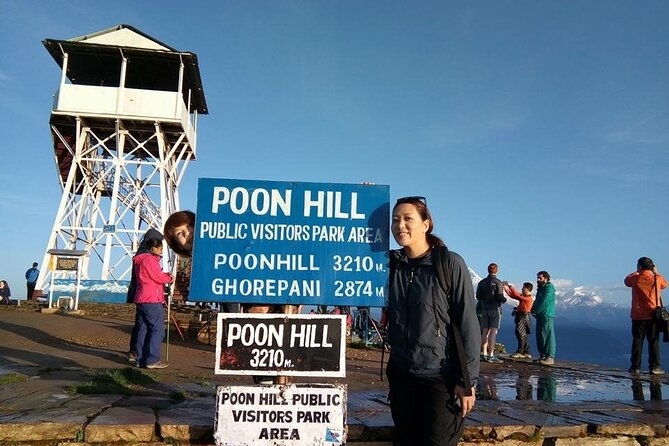
This is sold as an Annapurna panorama experience, and the “panorama” part is not just marketing speak. The centerpiece is the Poon Hill climb, where you get your payoff: a sunrise moment with snowy peaks glowing as morning light hits the ridgelines. Then the trek continues through forested trails and into village areas where you can see how people live, eat, and organize life at trekking elevations.
What makes this plan work well for many first-timers is the pacing. You are not trying to push marathon distance every day. You hike, stop for meals, and keep the schedule predictable. You also get to reset in towns: Pokhara is your halfway “breather” before the final descent, and Kathmandu gives you culture and shopping time afterward.
The only drawback I see from a practical angle is that early starts are non-negotiable. You will be climbing in the dark for sunrise views, and that means you should plan your sleep and energy like you are training for a morning workout.
More to compare around Kathmandu
- Everest Base Camp Trek – 14 Days
★ 5.0 · 1,499 reviews - Everest Base Camp Trek
★ 5.0 · 842 reviews - Private Kathmandu Sightseeing Tour | UNESCO World Heritage sites
★ 5.0 · 756 reviews
Kathmandu: temples, courtyards, and getting your bearings
Your trip starts with an airport meet-up in Kathmandu, with someone from Himalayan Sanctuary Adventure waiting outside holding your name. From there, you go straight to your hotel, which is a nice way to avoid the first-day scramble.
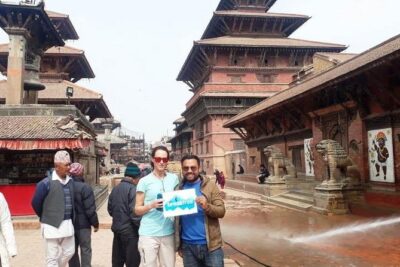
Day two is Kathmandu Valley sightseeing with several major heritage highlights. You can expect stops like Boudhanath Stupa, one of the biggest in the valley, plus Pasupatinath Temple, a major Hindu pilgrimage site with a river beside it and many small shrines. You also visit Patan Durbar Square, known for palace buildings, courtyards, and religious architecture, and Swayambhunath, the Monkey Temple perched on a hill with big views over Kathmandu.
Why I like this sequence is simple. You start the trip in a high-information, high-feeling way. Temples and squares help you understand the region, not just the trekking route. Also, these sites are iconic enough that even if you are tired from travel, you still get a meaningful first taste of Nepal.
In the evenings, you get a chance to settle into the rhythm of Thamel later in the trip. Thamel is the practical base for many visitors, and it is also where you can sort out small travel needs and do souvenir shopping at your own pace.
Pokhara transfer, riverside time, and the view setup
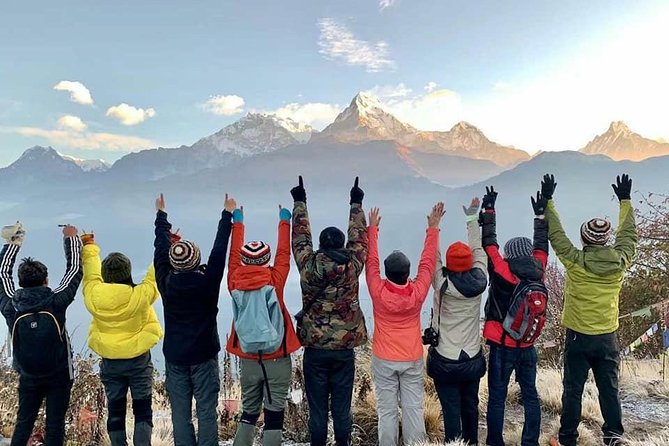
The Kathmandu to Pokhara drive is about seven hours, and it matters because it gives you time to adjust before you start climbing for real. When you arrive in Pokhara, you have time to walk around the lakeside area near your hotel, which is a good way to decompress after a day of roads.
This operator also signals classic Pokhara viewpoint content in the package summary, including Fishtail Mountain views and Sharangkot for sunrise or sunset. Pokhara is also where Mahendra Cave fits into many Annapurna-region itineraries, and it appears in the experience features here. While the exact timing can vary with day-of conditions, your overall goal is consistent: build your excitement for the mountains, then transition into the trek.
What you should watch for in Pokhara is weather and light. Clouds can soften sunrise plans, and view opportunities often depend on how the day turns out. The schedule gives you the right idea, just remember that mountains do not do “on demand.” If the view is hazy, your best move is to stay flexible and enjoy the town in the meantime.
Trek day 1: Nayapul to Tikhedhunga and the first taste of the climb
Your trek starts with a drive from Pokhara to Nayapul. From there, you begin walking through sub-tropical valley forests and along trails that can feel carved into hillsides. After lunch, you cross Bhurungdi Khola by bridge and reach the village of Tikhedhunga for overnight.
This first trekking day is important even if it feels short on paper. It is where your body learns the rhythm of steady steps and where your pack setup becomes obvious. If you have never done a multi-day trek before, this is the day to pay attention to footwear comfort and how much weight you are actually carrying.
You will sleep in a local guesthouse. That means basic trekking comfort, simple rooms, and the expectation that you are living at a different pace than you do at home.
A different sort of day out of Kathmandu:
- Kathmandu: 7 UNESCO Sites with Lunch
★ 4.8 · 744 reviews - Everest Base Camp Helicopter Tour landing at Everest View Hotel
★ 5.0 · 668 reviews - Half day cooking class in Thamel kathmandu
★ 5.0 · 607 reviews - Everest Base Camp Trekking
★ 5.0 · 485 reviews
Trek day 2: Tikhedhunga to Ghorepani, and why Ghorepani is named the way it is
After breakfast, you ascend toward Ulleri and then continue into rhododendron and oak forests. You will reach Ghorepani for overnight, a village sitting higher than Tikhedhunga where evenings get chilly.
Ghorepani has a neat backstory in the route description. The name is connected to horse-water, because it used to matter for traders before it became a trekker stop. That tells you something about the whole Annapurna region: towns along the trail grew around practical movement of people and goods, not only around today’s tourism.
In Ghorepani, you get small shops and stalls selling local products and crafts. The place has two parts, one higher and one lower, and the higher section is where you get panoramic views over surrounding mountains including Annapurna South and Nilgiri.
I like this day because it sets you up for Poon Hill without exhausting you completely. By the time you arrive, you are higher, your breathing feels different, and your mind is ready for the sunrise climb.
Trek day 3: Poon Hill sunrise, 3,210m payoff, then Tadapani
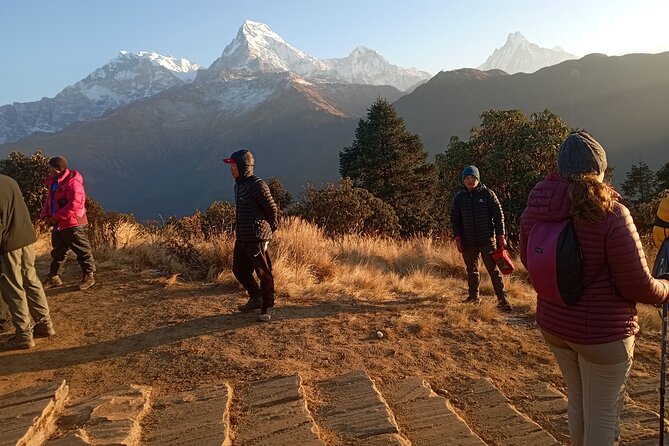
This is the money day. You wake early and climb along a steep trail to Poon Hill at 3,210m, widely considered the top viewpoint in the Annapurna region. The route description emphasizes views over more than 20 high peaks, including close-up ranges of Annapurna and Dhaulagiri.
What matters more than the number is the feeling: you are high above the villages, looking across layers of ridges. Snowy peaks glow as the light changes, and the air can feel sharp when you are standing still waiting for the best moment.
Then you go back down to Ghorepani for breakfast and continue onward to Tadapani. The trek shifts from the viewpoint energy to a more “trail and rhythm” feel. You head east, climb a ridge, then descend again until you reach Tadapani for overnight.
If you are choosing your trekking style, Tadapani is a good place to be. It is not the final finish, but it is far enough along that you feel like you are earning the last leg through the villages.
Trek day 4 and 5: Ghandruk Gurung culture, then the walk back to Nayapul
From Tadapani, you descend through dense forest to reach Ghandruk, also described as Gurung village. This is one of the bigger cultural highlights on the trip because you are not only passing through. You spend time in a local community and can interact with people, learning about everyday life and the Gurung settlement history.
Ghandruk also gives you mountain views, so you get both culture and the scenery payoff without needing to chase another viewpoint hike that morning.
On the final trekking day, you follow your trail back to Nayapul from Ghandruk, then drive to Pokhara. This end phase is usually where people feel proud and relieved at the same time. Your legs might be tired, but you are moving toward the finish line with the comfort of being back in town that night.
Hotels, teahouses, and the guide-porters difference
A big part of the value here is how support is handled. You get a trekking guide who is English-speaking, plus porters to carry luggage. The package says the ratio is two trekkers to one porter, including salary, insurance, equipment, and lodging for the porter side of the operation.
You stay in 3-star hotels in Kathmandu and Pokhara, then use teahouses during the trek. Meals on the trek are included, plus breakfast in Kathmandu and Pokhara, and there is a farewell dinner at the end.
This is where the experience often lives or dies. A good guide keeps the day flowing and helps you keep a steady pace. In the feedback for this operator, guide Bishnu gets specific praise for making the journey feel smooth and caring, and porter Bhupen is also thanked for help along the way. You should not expect every group to have the same team, but it is a useful signal that the human support is taken seriously, not treated like an afterthought.
Also, you get permits taken care of in the package, including ACAP and TIMS paper work. That is one less set of uncertainties to handle while you are trying to focus on walking and enjoying the trip.
Price and logistics: is $687 actually good value?
At $687 per person for a 10-day trip, you are paying for more than a hike. You are getting airport transfers, private hotel transport by car, hotel nights, trek teahouse support, and a guided trek with porter staffing. You also have multiple meals covered during the trek and breakfast in key city segments, plus a transportation coach between Kathmandu and Pokhara.
What gets excluded is also clear. You do not have sightseeing entrance fees included, and you also cover your own Nepalese visa fee and international airfare. Alcohol is not included, and so are travel and rescue insurance, plus tips for guides and porters. Personal expenses like phone calls, laundry, showers, and even battery recharge or bottled or boiled water are in the personal expense bucket too.
So the value equation is this: if you would otherwise pay separately for a guide, permits, transport between Kathmandu and Pokhara, and most meals during the trek, the package can be a cleaner deal. If you already have a plan for those items or you are trying to travel as ultra-budget as possible, you might feel the cost more.
One more practical note: the experience features mention an Annapurna circuit style emphasis, but your actual trekking rhythm here centers on the classic Poon Hill route and the Ghandruk area. If you are expecting a full long circuit with big high passes, read the daily plan closely before committing.
Practical tips so the trek stays enjoyable
First, plan for early mornings. The Poon Hill climb is sunrise-focused, so you are waking up before the day feels awake. Treat sleep and hydration seriously in the days before the ascent.
Second, pack for teahouse reality. Teahouses can be warm in common areas and cooler in sleeping quarters. You might be surprised by how chilly it feels at higher elevations, especially after sunset. Also, your package includes meals and basics, but personal items like water purchases and showers are on you unless your operator clarifies otherwise.
Third, use your guide for pacing, not just navigation. A good trek leader will help you maintain a steady tempo so your day feels consistent. That is part of what made guide Bishnu stand out in the feedback you can find for this operator.
Finally, keep some flexibility in mind for mountain weather. Sunrise views depend on conditions, and Pokhara viewpoint plans can shift based on sky clarity.
Should you book this Annapurna panorama experience?
I would book it if you want an Annapurna-region trek with a strong view payoff and enough support to keep your energy for the hike itself. This is a good fit for first-time trekkers who want a guided structure, hotel comfort at the start and finish, and village culture stops like Ghandruk.
I would think twice if you are chasing a hardcore, long-distance circuit experience. The trip is more focused on the Poon Hill viewpoint storyline than on a big high-pass circuit. Also, if you hate early starts, this one may feel like a test.
If you do book, bring the right expectations: you are buying sunrise time, village life, and logistics support. Then, you let the mountains do what they do best.
FAQ
What is the duration of this experience?
The tour is listed as 10 days approximately.
When is the meeting time?
The meeting point start time is 6:15 am.
What is the price per person?
The price is $687.00 per person.
What is included in the trip?
Included are hotel pickup and drop-offs by private car, 3-star hotels in Kathmandu and Pokhara, teahouse accommodation during the trek, breakfast in Kathmandu and Pokhara, all meals during the trek, transportation between Kathmandu and Pokhara, a trekking guide and porters, permits paper work (ACAP and TIMS), and a farewell dinner.
Are airport transfers included?
Yes. You get a pickup from the international airport terminal gate on arrival, and you are also driven to the TIA before your scheduled flight on departure.
Will I have a guide and porter?
Yes. An experienced English-speaking trek leader is included, and porters are provided. The plan specifies a porter for every two trekkers, and porter costs are included.
What permits does the package handle?
The package says it includes paper work and permits including ACAP and TIMS.
What is not included in the price?
Not included are sightseeing entrance fees, alcohol, Nepalese visa fee, international airfare to and from Kathmandu, lunch and dinner in Kathmandu and/or Pokhara, extra night accommodation if your flight timing changes, travel and rescue insurance, personal expenses, and tips for guides and porters.
Is free cancellation available?
Yes. Free cancellation is offered up to 24 hours in advance for a full refund.
Latest Kathmandu write-ups
- Langtang Valley Trek★ 5.0 · 3 reviews
- Langtang Valley Trek from Kathmandu★ 5.0 · 3 reviews
- Khopra Danda Trek★ 5.0 · 3 reviews
- 5 night / 6 days Kathmandu Nagarkot Chitwan Pokhara tour★ 5.0 · 3 reviews
- Nepal Highlights Tour: 5 Nights 6 Days Kathmandu & Pokhara Tour★ 5.0 · 3 reviews
- Kathmandu Valley Private Day Tour★ 5.0 · 3 reviews
- Conquer the Himalayas: The Ultimate 16-Day Annapurna Circuit Trek★ 3.5 · 3 reviews
- Kathmandu Heritage Day Tour★ 5.0 · 3 reviews
Kathmandu Tours, compared.
Private Kathmandu Sightseeing Tour | UNESCO World Heritage sites
Read our review →

Everest Base Camp Helicopter Tour landing at Everest View Hotel
Read our review →