Reviewed · TOURS
Buddhist Pilgrimage Tour In Nepal
This is interesting because it turns Kathmandu’s big-name Buddhist sites into a single day of real spiritual focus, with time to chant and learn. I especially love the way Boudhanath Stupa hits you with scale and symbolism, and how the route also includes the signature views and structures of Swayambhunath.
I also like that this trip is built around a small group and a fully trained English speaking guide, not a rushed crowd shuffle. One thing to consider is that it’s only about one day, so your time at each place is limited, even though the stops are meaningful.
Key things to know before you go
- Three major Kathmandu Valley pilgrimage stops in one morning-to-afternoon flow
- Admission tickets included for each of the main religious sites
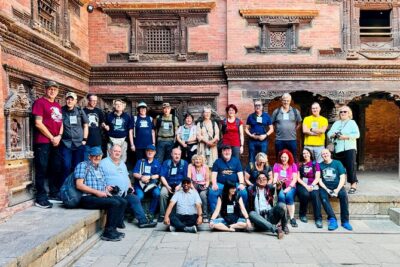
- Maximum of 10 travelers, so questions stay possible
- Private comfortable vehicles with hotel pickup and return
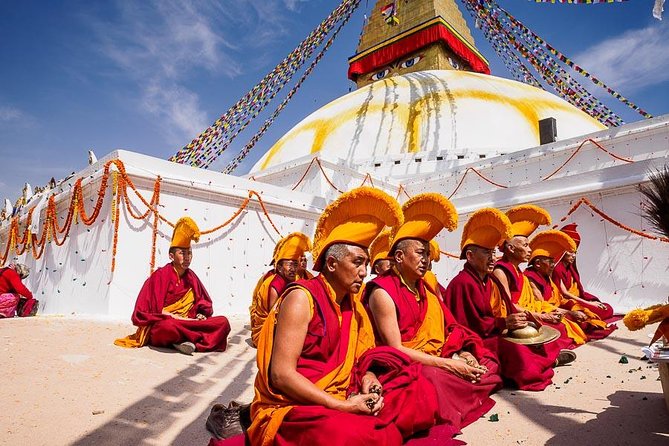
- A chanting-style moment with monks as part of the spiritual experience
- Thamel lunch stop with a reserved table at The Ship Restaurant and bar
A fast path through three Buddhist Kathmandu Valley landmarks
If you want Buddhism in Nepal in one day, this tour is a smart shortcut. Nepal’s population is mostly Hindu, but Buddhism is everywhere in daily life, because Buddha was born here. You’ll see that mix firsthand as you move through Kathmandu’s best-known pilgrimage sites, each with its own look, rhythm, and reason people come.
The tour’s biggest strength is the order and focus. You are not just taking photos. You’re stopping at places that function as living religious centers, then tying it together with a guide who can explain what you are looking at. That matters, because Buddhist art and architecture can feel abstract if you do not get a quick translation into plain language.
The day also has a devotional side. The experience is designed so you can chant and participate alongside monks. Even if you are not religious, it’s one of those travel moments that makes the place feel personal instead of just scenic.
More to compare around Kathmandu
- Everest Base Camp Trek – 14 Days
★ 5.0 · 1,499 reviews - Everest Base Camp Trek
★ 5.0 · 842 reviews - Private Kathmandu Sightseeing Tour | UNESCO World Heritage sites
★ 5.0 · 756 reviews
How the one-day schedule actually feels (and why it works)
The day starts at 9:15 am with pickup from your hotel in Kathmandu. You’ll ride in private comfortable vehicles, and you return to the meeting point at the end. This format is ideal if you are short on time, you want reliable timing, or you would rather not piece together taxis and bus connections between three distant landmarks.
You’ll also notice that the tour is built around efficient movement. For example, the plan includes heading to Kopan Monastery while cutting across daytime traffic, which helps you arrive without wasting your best energy on traffic stress.
The tradeoff is simple: you cannot linger for hours at each site when the goal is three major stops. If you like slow travel, long meditation pauses, or deep study at one location, you might feel slightly rushed. But if your goal is to see the big pilgrimage highlights and learn enough to understand what you’re looking at, this schedule hits the sweet spot.
Stop 1: Boudhanath Stupa and the power of scale
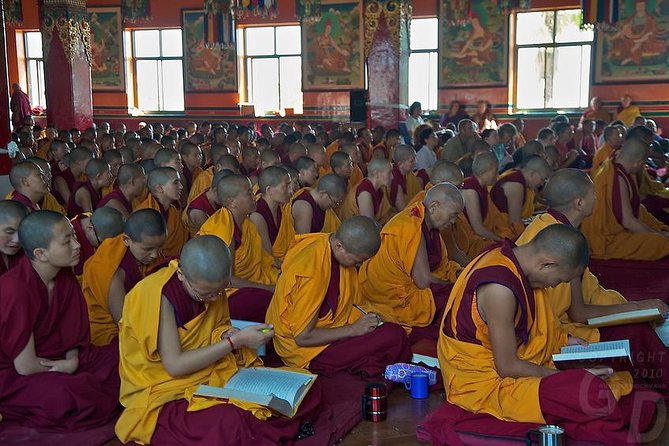
Boudhanath Stupa is about 4 miles from the heart of Kathmandu, and the tour starts there first. That timing is practical, because the morning is often the best moment for walking around major religious sites, before the day gets crowded or chaotic.
This stupa is described as one of the largest stupas in the world, and that label is not just trivia. When you see something that big in person, it changes how you interpret the whole space. The architecture is meant to guide the eye and the mind toward something steady and timeless, and a structure at that scale does it in a way smaller monuments simply cannot.
Even beyond the size, Boudhanath works as a confidence builder. It’s easy to understand why people come here. You’ll likely notice how pilgrims move, how people pause, and how the stupa anchors the surrounding activity. The included admission ticket means you can focus on the spiritual atmosphere rather than figuring out entry logistics mid-trip.
Practical tip: wear shoes that handle uneven stone and crowded paths. You’ll be on your feet more than you expect at pilgrimage sites, even on a short, guided visit.
Stop 2: Kopan Monastery, Gelug tradition, and a chanting moment
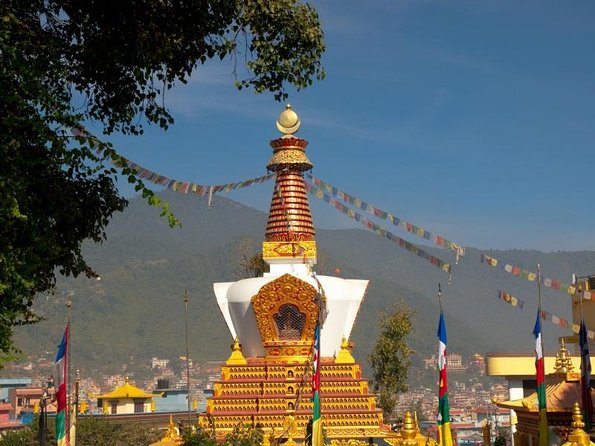
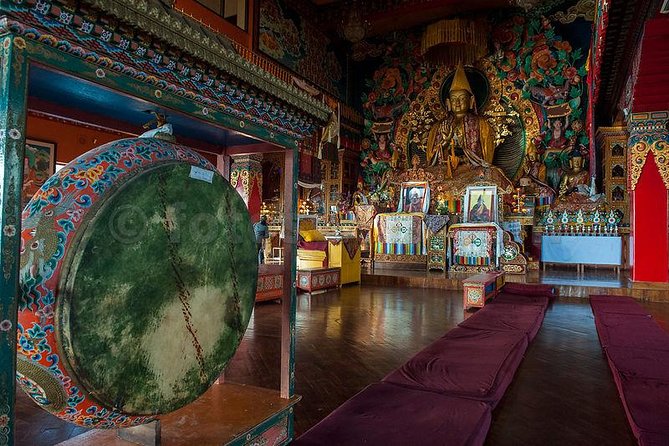
After Boudhanath, you head toward Kopan Monastery, one of the most famous Buddhist pilgrimage stops in the Kathmandu Valley. The tour is designed to reach it by cutting across daytime traffic, so you are not burning half the day to get there.
Kopan is part of the Gelug tradition of Tibetan Buddhism. You’ll learn enough basics to make sense of what you’re observing, and you may also experience the more devotional side of the tour. The overall tour description includes chanting along with monks, so this is where that spiritual component typically feels most present.
This stop lasts about 1 hour, and the admission ticket is included. One hour is not a semester, but it’s long enough to see the main points, ask questions, and get a feel for how monastery life shows up in a visitor’s experience. The guide’s role becomes especially important here, because Tibetan Buddhist terms and practices can sound unfamiliar. A good guide helps you connect the dots fast, without making you feel lost.
What I would watch for when you’re there: keep your questions simple. Ask what you should notice first, then ask what the symbolism is pointing to. This is the kind of tour where a strong English speaking guide can turn confusion into clarity, and that is consistently the most praised aspect of this experience.
A different sort of day out of Kathmandu:
- Kathmandu: 7 UNESCO Sites with Lunch
★ 4.8 · 744 reviews - Everest Base Camp Helicopter Tour landing at Everest View Hotel
★ 5.0 · 668 reviews - Half day cooking class in Thamel kathmandu
★ 5.0 · 607 reviews - Everest Base Camp Trekking
★ 5.0 · 485 reviews
Stop 3: Swayambhunath, the Monkey Temple, and a Thamel lunch break
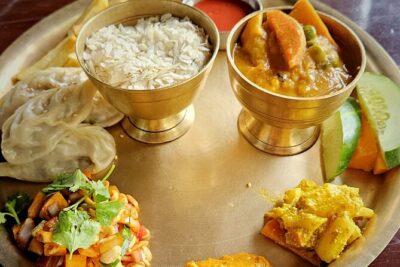
From Kopan, you head to Thamel for lunch. The plan is to reserve you a table at The Ship Restaurant and bar, where you can enjoy traditional dal-bhat. Keep expectations realistic: meals are listed as not included, so you should treat lunch as an easy, guided convenience stop where you can order what you want, rather than an automatic free meal.
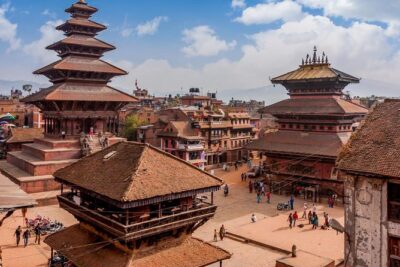
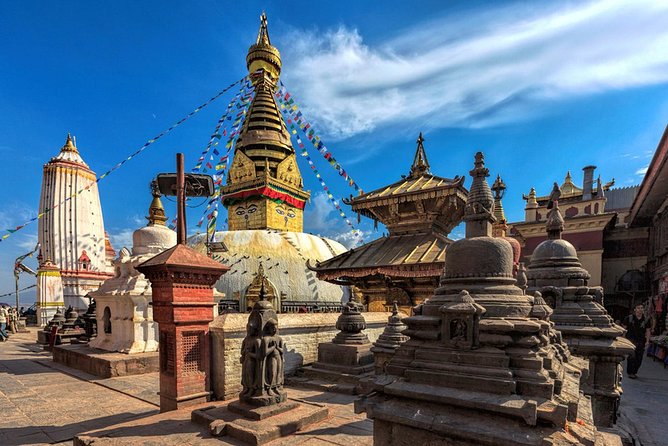
After lunch, you visit Swayambhunath Temple, commonly known as the Monkey Temple. This is one of Kathmandu’s most recognized religious sites, and it delivers on both the visual and the practical. You get impressive structures and a strong sense of place in the Kathmandu Valley.
Swayambhunath is also a great capstone because it tends to make the day click. After Boudhanath’s scale and Kopan’s monastery focus, Swayambhunath feels like the final piece, bringing together architecture, pilgrimage energy, and the wider city setting.
Practical tip: expect steps and hills at Swayambhunath. Wear grippy shoes and take your time, especially if it’s warm. If you are carrying a daypack, keep it light. The more you can move comfortably, the more you’ll enjoy the moment.
Price and value: what $150 buys you in Kathmandu
At $150 per person, the value here comes from what is included and what it saves you from.
You’re paying for:
- Private ground transportation in comfortable vehicles
- A fully trained English speaking professional tour guide
- Admission tickets included at the main sites
- All government and local taxes
- Coverage for staff through salary and insurance
On paper, that may not sound dramatic. In real life, it matters. Kathmandu traffic and distance can chew up your day fast, and religious sites are not always where you want to be improvising logistics. A guided run also keeps you from spending time on entry details, which is easy to underestimate until you’re standing there with limited time.
There are a couple of budget considerations. The tour does not include:
- Nepal visa fees
- Meals and accommodations in Kathmandu
- Tips for staff
- Any optional activities during free time
So I recommend you price your total day as the tour plus your own food, visa, and any side stops. If you already planned to hire a guide or rent a car anyway, this becomes a more attractive deal. If you were planning to self-tour solo with public transport and no tickets, it can feel pricey. But the built-in guidance and ticket coverage are the main reason this works.
Also, this experience is typically booked about 18 days in advance on average, which usually signals demand for a small-group setup. Booking ahead tends to help you get the exact day you want.
The group size, guide quality, and why questions matter
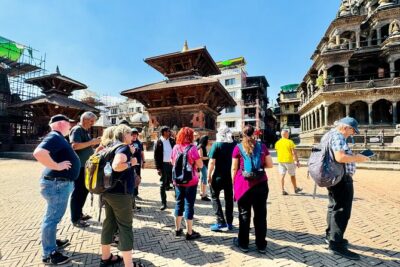
This tour caps at 10 travelers, which is a big deal in practice. With a smaller group, you get more room to ask questions, and the guide can adjust pace when people need clarification. The most strongly praised part of this experience is the guide’s ability to answer questions about culture and Buddhism. That’s not just a nice extra. It’s the difference between seeing religious sights and actually understanding what you’re seeing.
If you are someone who likes to ask, this tour fits well. If you are shy, it still works because you can listen first, then speak when you feel ready. Either way, the guide quality becomes the engine for making the day feel meaningful.
Practical tips that will make your day smoother
Here are the things I’d do before your 9:15 am start so you are not scrambling later.
1) Bring what you need for Nepal entry
Visa fees are not included. The instructions specify bringing accurate USD cash and two passport photographs. Do not assume this is flexible once you arrive.
2) Use the mobile ticket
A mobile ticket is part of the experience. Have your phone charged, and plan a backup in case your battery is low.
3) Plan for walking at all three stops
Even though each site visit is around 1 hour, the sites involve moving through crowded areas and dealing with temple steps. Comfortable shoes matter more than you think.
4) Dress with respect
Monasteries and stupa areas are religious spaces. Wear clothing that covers your shoulders and knees, and keep it simple. It usually makes entry smoother and keeps you comfortable during chanting moments.
5) Budget for lunch and any snacks
Meals are not included overall, even if the schedule includes a lunch stop in Thamel with a reserved table. If you want water or small snacks, plan for it.
Should you book this Buddhist pilgrimage tour in Nepal?
Book it if you want a guided, small-group day that hits three top Buddhist pilgrimage sites in Kathmandu Valley, with admission tickets included and private transport. It’s especially worth it if you care about understanding culture and Buddhism, because the guide is clearly a highlight.
Skip it or consider adding extra time elsewhere if you are hoping for a slow, meditative pace at just one site. This tour is designed to move and cover the main landmarks, so you may not have the hours you’d want for deep personal practice at a single location.
Overall, if your time in Kathmandu is limited and you want a meaningful introduction to Nepal’s Buddhist side, this is a strong choice. It’s structured, efficient, and designed to help you leave with more than memories, you’ll leave with context you can actually use.
FAQ
How long is the Buddhist pilgrimage tour in Nepal?
The tour is about 1 day.
What time does the tour start?
Pickup and tour start time is 9:15 am.
Where does the tour begin and end?
It starts in Kathmandu (Kathmandu Valley, Bagmati Zone, Central Region) and ends back at the meeting point.
Which Buddhist sites are included?
You visit Boudhanath Stupa, Kopan Monastery, and Swayambhunath.
Are admission tickets included?
Yes, admission tickets are included for the stops listed.
Do I get a guide, and is the guide English speaking?
Yes, the tour includes a fully trained English speaking professional tour guide.
What transportation is provided?
All ground transportation is provided in private comfortable vehicles.
Is lunch included?
Meals are not listed as included. The schedule includes a lunch stop in Thamel with a reserved table at The Ship Restaurant and bar, where you can enjoy dal-bhat.
What about Nepal visa fees?
Nepal visa fees are not included. You should bring accurate USD cash and two passport photographs.
How big is the group?
The tour has a maximum of 10 travelers.
Latest Kathmandu write-ups
- Langtang Valley Trek★ 5.0 · 3 reviews
- Khopra Danda Trek★ 5.0 · 3 reviews
- Langtang Valley Trek from Kathmandu★ 5.0 · 3 reviews
- 5 night / 6 days Kathmandu Nagarkot Chitwan Pokhara tour★ 5.0 · 3 reviews
- Nepal Highlights Tour: 5 Nights 6 Days Kathmandu & Pokhara Tour★ 5.0 · 3 reviews
- Kathmandu Valley Private Day Tour★ 5.0 · 3 reviews
- Conquer the Himalayas: The Ultimate 16-Day Annapurna Circuit Trek★ 3.5 · 3 reviews
- Kathmandu Heritage Day Tour★ 5.0 · 3 reviews
Tours, compared.
Private Kathmandu Sightseeing Tour | UNESCO World Heritage sites
Read our review →
Everest Base Camp Helicopter Tour landing at Everest View Hotel
Read our review →