
Reviewed · POON HILL TREK
Ghorepani Poon Hill Sunrise Trek
The Ghorepani Poon Hill Sunrise Trek is interesting because you get a big slice of the Annapurna region without a grueling grind. You start in lower, warmer countryside, then gradually walk into cooler forest lines where the views open up fast.
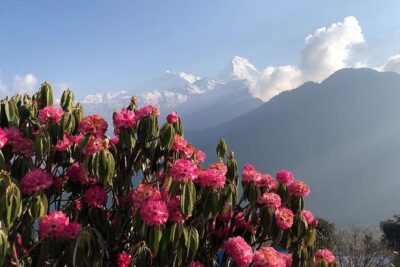
I love the Poon Hill sunrise setup, where the morning light is the whole point and the reward is wide, dramatic mountain scenery. I also like the way the route mixes short village walks with forest time, including traditional Gurung and Poon-Magar areas and shade under rhododendron, pines, magnolias, oaks, and fir.
One consideration: it is an early-start trek, and mornings at higher altitude can feel cold even if the trail later warms up. If you’re not ready for a short, steep-feeling push to viewpoints, you’ll want to manage your pace and layers from day one.
Key things to know before you go
- Big sunrise payoff in a short trip: you’re up early for the Poon Hill viewpoint, with a classic dawn view focus
- Forest-to-views walking: the trail shifts from warmer, cultivated areas into cooler woodland under rhododendron and conifers
- Village culture without feeling rushed: you pass through Gurung and Poon-Magar communities while still keeping the route “moderate”
- Tea houses on the ridge: nights are in lodge-style accommodation, which keeps the experience comfortable and simple
- Serious logistics, not a gamble: transport between Kathmandu, Pokhara, and the trek trailhead is handled with bus and private car legs
Why the Ghorepani Poon Hill Sunrise Trek feels like a smart Annapurna choice
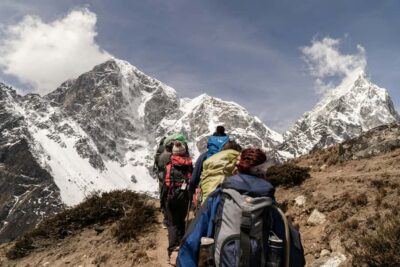
This is a classic “starter trek” for people who want real mountain walking, but not a multi-week commitment. The route is designed around gradual altitude progress, so you can enjoy the scenery shift rather than just battling for breath.
The best part is how the trek turns you into an observer. You’ll watch temperature and vegetation change as you climb, notice how the trail cuts through different community rhythms, and then cash in on the big morning payoff at Poon Hill.
Also, the day flow is friendly. You’re not driving around for hours every day. Most of the time you’ll be walking, with the longer transport stretches saved for the Kathmandu and Pokhara transfers.
More Ghorepani and Poon Hill departures:
- 4 Days Poon Hill Trek
★ 5.0 · 94 reviews - Ghorepani(Poonhill Trek)
★ 5.0 · 81 reviews - 4-day Poon Hill Trek
★ 5.0 · 74 reviews
Kathmandu to Pokhara: getting the setup right, not just getting there
Your trip begins in Kathmandu at the operator’s office area in Thamel (Marg 24). You’ll be met and transferred to a tourist-standard hotel for bed and breakfast, then later enjoy a welcome or farewell dinner in Kathmandu at an authentic Nepalese restaurant, with cultural programs.
The Pokhara leg is where the geography becomes real. You travel by a mix of flight and road (about a 30-minute flight plus roughly 6 hours of driving). Pokhara sits on the lap of the Annapurna Himalaya with well-known lakes, and that scenery shift matters because it makes the trek feel like the continuation of a landscape you already saw from town.
Practical tip: keep your daypack light for the trek, but bring a real layer system for the transition from city warmth to mountain cool.
Nayapul to Tirkhedhunga: the warm-up walk that starts telling the story
After you drive to the Nayapul trailhead area, you begin trekking from around 1,100m up to Tirkhedhunga (around 1,450m). This part of the trek is a useful warm-up. It helps you settle into the rhythm of stone steps, footpaths, and the stop-and-look pattern that makes these treks so satisfying.
You’ll also feel the region’s farming backdrop before it becomes heavy on forest. Even if you’ve seen mountain photos online, this leg is where you get your bearings fast, because you can actually understand how settlements cling to slopes and ridges.
Value note: your package includes trekking meals (breakfast not listed for trek days, but lunch and dinner are included from day 3 through day 6). That means you can focus on walking instead of constantly deciding what to eat on the trail.
Climbing to Ghorepani: where temperatures change and the forest starts doing its magic
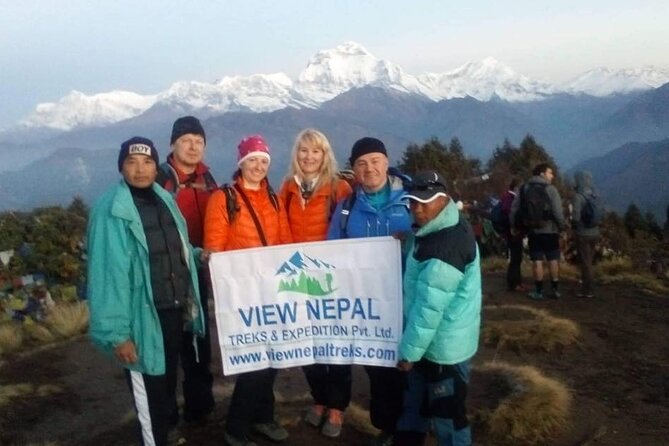
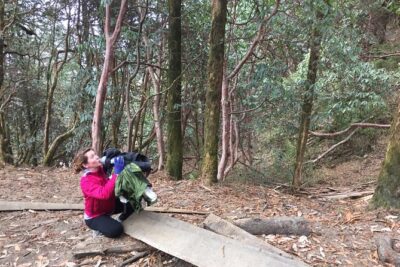
The climb to Ghorepani is the big “you’re going higher” day, reaching about 2,874m in roughly 5 hours of trekking. As you gain altitude, the vegetation shift becomes noticeable, moving toward cooler zones with rhododendron and conifer lines.
This is also the day where the trek’s promise starts to show: fewer flat moments, more slope walking, and more chances to pause for the wide view when the clouds allow it. If you’re the type who likes photos, this is when you’ll want to take fewer, better shots because the light changes quickly in higher areas.
One more practical thing: tea houses along the way are part of the rhythm. You’ll be walking with the knowledge that someone has already handled your lodge-style accommodation, so you can keep your energy for the next leg rather than planning late.
More to compare around Kathmandu
- Everest Base Camp Trek – 14 Days
★ 5.0 · 1,499 reviews - Everest Base Camp Trek
★ 5.0 · 842 reviews - Private Kathmandu Sightseeing Tour | UNESCO World Heritage sites
★ 5.0 · 756 reviews - Kathmandu: 7 UNESCO Sites with Lunch
★ 4.8 · 744 reviews
Poon Hill sunrise plus Ghandruk: the morning that sells the whole trek
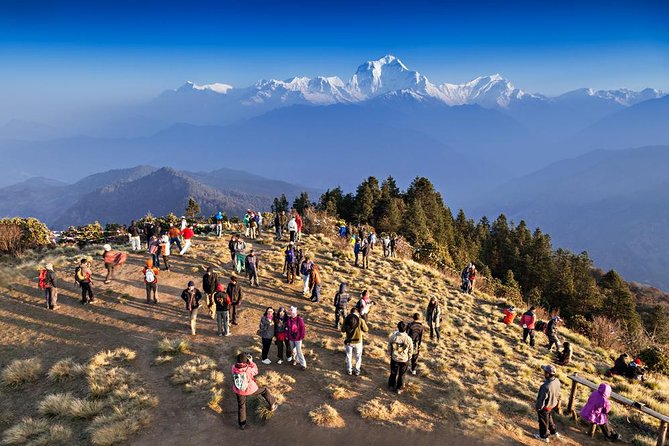
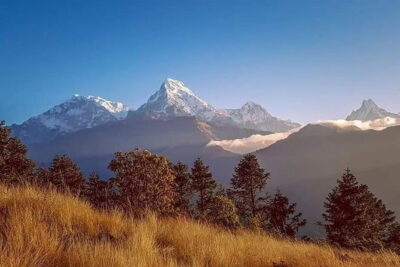
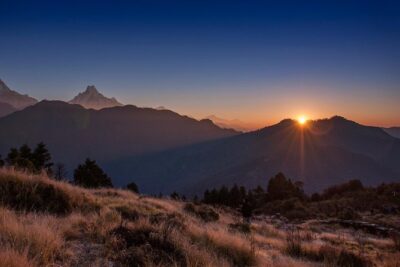
This trek turns a whole day into one “main event,” and that event is Poon Hill at sunrise. The viewpoint is famous for a wide mountain panorama, including that satisfyingly cinematic chain-of-peaks feeling over the Annapurna region.
In the data, Poon Hill is described as a place for stunning sunrise views over the world’s highest mountain ranges. The real reason it works is timing. You’re not just seeing mountains, you’re seeing them wake up, with light rolling across ridgelines and the contrast improving fast as the sun climbs.
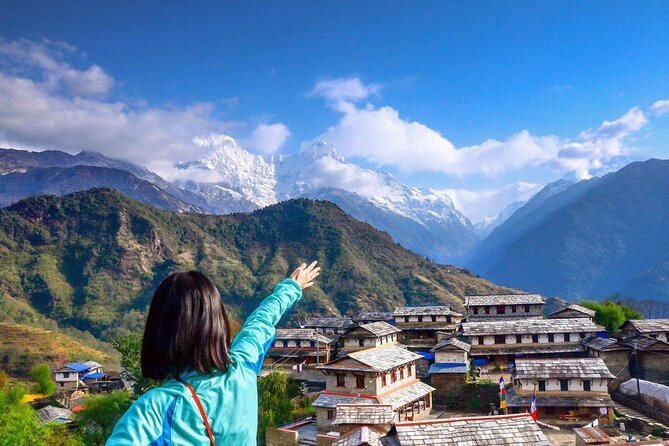
After sunrise, you keep walking. The route continues toward Tadapani (around 2,721m), then you overnight in the Ghandruk area (around 1,750m). Ghandruk is one of those villages that makes sense after a day of altitude walking, because it’s where you can feel how community life fits the terrain.
Culture note: the trek includes moderate walks through traditional Gurung and Poon-Magar villages. That matters because you’re not only buying views. You’re also watching daily life in communities that have lived alongside these ridges for generations.
Practical tip: carry a headlamp and warm layer for the early start. Even when the afternoon feels mild, mornings at the viewpoint can be surprisingly chilly.
Tea houses, food, and what your $799 price is really buying
Let’s talk value in plain terms. At $799 per person for an approx. 8-day trip, you’re paying for more than “guiding.” You’re getting a package that covers:
- Kathmandu and Pokhara tourist-standard hotels on bed and breakfast basis
- Deluxe tourist bus and private car legs for transfers between Kathmandu, Pokhara, and the trek area
- A licensed English-speaking guide
- Tea house or lodge accommodation during the trekking portion
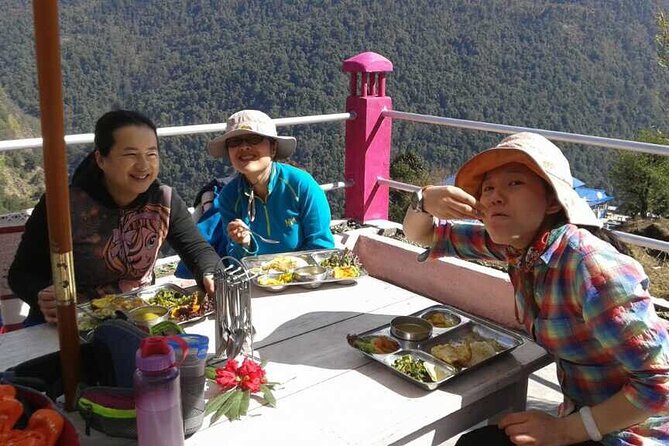
- Food in the trekking window (lunch and dinner from day 3 to day 6)
- Permits needed for the area, including ACAP and TIMS
- Transportation support for the trek staff, plus their equipment and daily wages as part of the service structure
- Welcome or farewell dinner in Kathmandu with cultural programs
What’s not included is also important. Your price does not include your Nepal visa, international airfare, or travel and medical insurance. Personal items, drinks, and tips are on you. And there’s no included emergency evacuation by heli or other means. If that kind of risk plan is important to you, you’ll want proper travel insurance on your side.
How this affects your experience: with permits and transfers handled, your mental load drops a lot. You spend less time worrying about paperwork or getting stuck on logistics, and you spend more time walking.
The guide difference: the recurring strength you’ll want to bank on
The guide is often the make-or-break part of Nepal treks, and this operator clearly leans into staffing. Your trip includes an English-speaking government-licensed guide, and multiple guide names have come up as standout examples: Sonam, Kumar Adhikari, Narayan, Pemba Sherpa, Ram, and Bikash.
Across those examples, the same strengths show up: patient English explanations, a friendly attitude, and a habit of managing pace and questions day by day. That kind of attention helps on a trek like this because the route is moderate, but the altitude still demands smart pacing.
If you want an easy-going experience, pick a guide who feels calm with timing and flexible with your walking speed. Even on a “standard” trek, your day can feel totally different based on how the guide handles breaks, viewpoints, and small route choices.
Weather, seasons, and how to pack for this specific trek
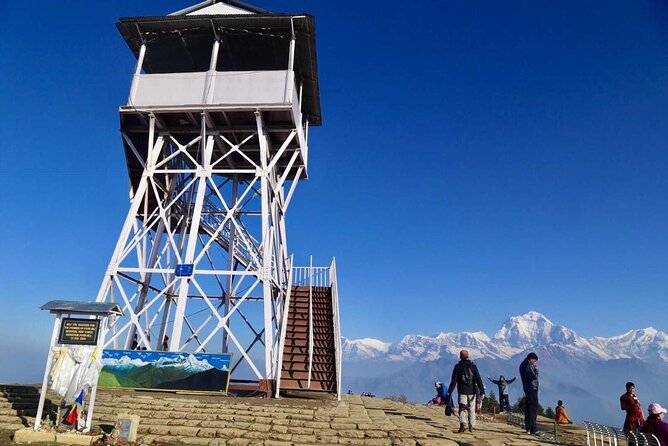
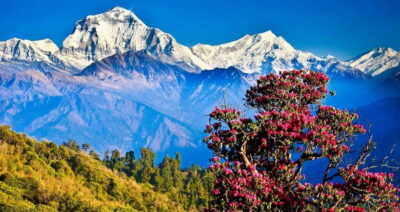
This trek runs through a wide temperature range. The route description highlights a change from semi-tropical, paddy farmland and terrace areas up toward cooler alpine forest zones. That means you need layers more than you need one perfect outfit.
Also, the route can be walked in different seasons. A past trek experience included good weather even during a rainy period, but you should still assume the mountain can do what it wants. Bring rain protection and expect wet stone steps at times.
Packing focus:
- A warm layer for early mornings at higher elevation
- A rain shell or waterproof outer layer
- Comfortable hiking shoes with decent grip
- A small daypack for water, snacks, and layers
- Light gloves and a hat if you run cold
If you plan to use trekking poles, bring your own. They can help on stone steps and long downhill sections.
Getting from the trek back to Kathmandu without stress
After the main trekking days, you trek back down toward Nayapul and then drive to Pokhara again. On the final full day, you return to Kathmandu either by drive or fly, with afternoon free time for leisure.
That free time matters. You’ve earned it. After a sunrise-focused trek and several days on trails, it helps to have an unstructured afternoon to grab a meal you missed, do some souvenir browsing, or just sit somewhere warm with a view of the city.
Should you book this Ghorepani Poon Hill trek?
If you want a solid first taste of the Annapurna region, this is a strong pick. It hits the big basics: sunrise at a famous viewpoint, walking through real villages, and lodge-based comfort that keeps the trek practical.
I’d particularly recommend it if you:
- Want a moderate trek with a clear daily rhythm
- Like cultural village time, not just mountain photos
- Appreciate having permits, transport, and accommodations handled
- Are okay with early mornings for the best views
I’d hesitate if you:
- Get uncomfortable with cold early starts
- Have limited patience for changing conditions (steps, stone paths, weather swings)
- Are looking for a fully self-guided experience, since everything is structured around the included plan
If you match those points, booking makes sense. You’ll get that classic Poon Hill moment, plus a walking route that actually shows you how Nepal changes as you climb.
FAQ
Where is the meeting point, and what time does the trek start?
The meeting point is View Nepal Treks & Expedition P. Ltd. in Thamel Marg 24, Kathmandu. The start time listed is 6:15 am.
How long is the Ghorepani Poon Hill Sunrise Trek, and what’s the overall route like?
It’s listed as 8 days approximately. The trip includes Kathmandu and Pokhara, then trekking from Nayapul up to Tirkhedhunga, Ghorepani, Poon Hill, and onward toward Tadapani and Ghandruk before returning toward Nayapul and back to Pokhara, then finally to Kathmandu for departure.
What are the main altitude points on the trek?
Key elevations listed include: Nayapul area around 1,100m, Tirkhedhunga around 1,450m, Ghorepani around 2,874m, Tadapani around 2,721m, and Ghandruk around 1,750m. Pokhara is listed around 950m.
What permits are included in the trek cost?
The package includes ACAP (Annapurna Conservation Area Project) permit and TIMS (Trekking Information Management Systems).
Are meals included while you’re trekking?
Yes. Food in trekking is included as B-L-D for day 3 to day 6, with accommodations in tea house or lodge during the trekking portion.
Is there a minimum age requirement and a fitness level expectation?
The minimum age is 12 years. Travelers should have a moderate physical fitness level.
Is this a private tour, and can I cancel for a full refund?
It is a private tour/activity, meaning only your group participates. Free cancellation is available, with a full refund if you cancel at least 24 hours before the experience’s start time.
Latest Kathmandu write-ups
- Langtang Valley Trek★ 5.0 · 3 reviews
- Khopra Danda Trek★ 5.0 · 3 reviews
- Langtang Valley Trek from Kathmandu★ 5.0 · 3 reviews
- 5 night / 6 days Kathmandu Nagarkot Chitwan Pokhara tour★ 5.0 · 3 reviews
- Nepal Highlights Tour: 5 Nights 6 Days Kathmandu & Pokhara Tour★ 5.0 · 3 reviews
- Kathmandu Valley Private Day Tour★ 5.0 · 3 reviews
- Conquer the Himalayas: The Ultimate 16-Day Annapurna Circuit Trek★ 3.5 · 3 reviews
- Kathmandu Heritage Day Tour★ 5.0 · 3 reviews
Poon Hill Trek, compared.
4-Day Ghorepani, Poonhill & Ghandruk Mountain Trek
Read our review →
Browse the lists this tour appears in