
Reviewed · POON HILL TREK
Ghorepani Poon Hill Trek
The Ghorepani Poon Hill Trek is interesting because it’s built around one of Nepal’s most famous reward moments, a pre-dawn hike to Poon Hill sunrise, plus a steady rhythm of forests and village trails. It also links two great bases, Kathmandu and Pokhara, with comfortable road travel.
I especially like two things about this trek style. First, the English-speaking professional guide tends to keep the day running smoothly and help you feel confident on the trail. Second, you get that classic mix of bright rhododendron forest hiking on the way to Ghorepani, not just “walk until you reach the viewpoint.”
One drawback to consider: porter service is not included, so plan to carry your own daypack. If you’re not used to long uphill days, you’ll want to pack light and take the pace seriously.
Key things to know before you go
- Poon Hill sunrise is the big payoff, with a hike that starts before dawn and a return for breakfast
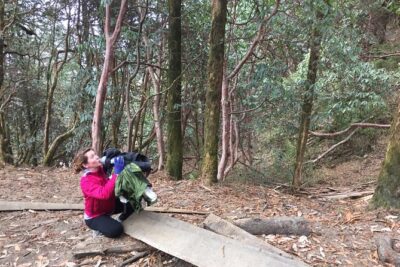
- Rhododendron forests and river valleys are part of the day-to-day trekking, not just scenery at the end
- Stone steps and steady climbs mean you’ll work, especially on the Ulleri and Ghorepani approach
- Ghandruk gives you Gurung village time, plus a proper lunch before heading back down to Pokhara
- Guides like Hari or Hari Bhatta are often praised for staying attentive, encouraging slower hikers, and making things feel safe
- No porter is included, so comfort depends a lot on how light you travel
Why the Poon Hill Sunrise routine is worth planning for
This trek is famous for a reason: sunrise from Poon Hill is one of those “everything clicks” travel experiences. The plan is simple and repeatable. You start very early, hike up for the best light, then head back down in time for breakfast.
That rhythm matters because it keeps your energy focused. Most days on this route are “trek, stop, eat, sleep, repeat,” but Day 4 is different. You’re hiking in near-darkness, then you’re chasing warm light and clear mountain views.
A practical note: since the experience depends on good weather, don’t treat sunrise as guaranteed. If clouds roll in, you may still get a great day on the trail, but the main show is weather-dependent.
More Ghorepani and Poon Hill departures:
- 4 Days Poon Hill Trek
★ 5.0 · 94 reviews - Ghorepani(Poonhill Trek)
★ 5.0 · 81 reviews - 4-day Poon Hill Trek
★ 5.0 · 74 reviews
Kathmandu to Pokhara: a smooth setup by tourist bus and Phewa Lake time
You begin in Kathmandu, with a transfer by tourist bus to Pokhara. The road trip is listed at about 6 hours, and it’s a real buffer for people who want trekking without jumping straight into hard hiking on Day 1.
Once you arrive, you settle into your hotel and get a relaxed evening by Phewa Lake. This matters more than it sounds. You’ll have time to orient yourself, do laundry or buy a few last supplies, and sleep without rushing.
If you’re sensitive to long drives, plan to hydrate early and keep snacks handy for the bus ride. Even with a comfortable vehicle, road time can make your legs feel heavy the next morning.
Ulleri day: Nayapul gateway, Modi Khola walking, and stone steps
On Day 2, you drive to Nayapul, the typical gateway into the Annapurna trekking zone. From there, the route follows the Modi Khola River, with trekking through villages and forest sections before a climb to Ulleri.
The big feature here is variety. You’re not only staring at mountains. You’re walking alongside life, seeing local paths, passing homes and small shops, and working your way through wooded sections before the steps start to demand attention.
Expect around 7 hours of trekking time. The mention of stone steps is your clue to take it steady. Steps can be deceptively tiring, especially if you rush in the first hour and then pay for it later.
If you want a strategy: go slow enough that you can breathe through your nose for stretches. You’ll arrive feeling like you still have energy for evening tea and a decent night’s sleep.
Ghorepani day: bright rhododendron forest climbing and big-range views
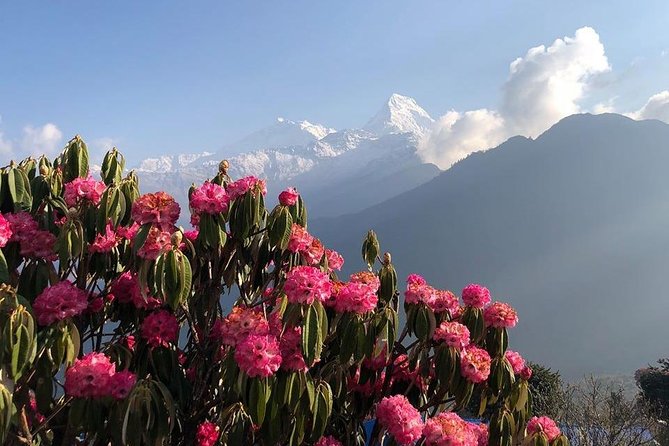
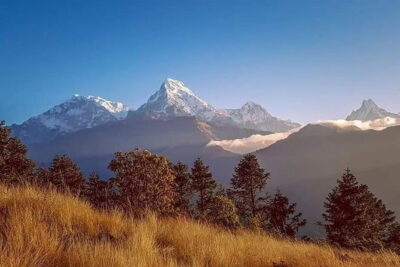
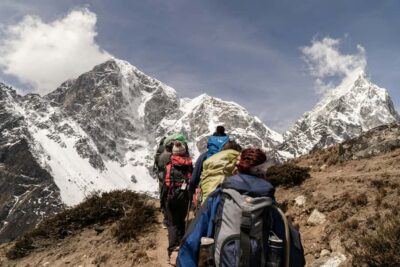
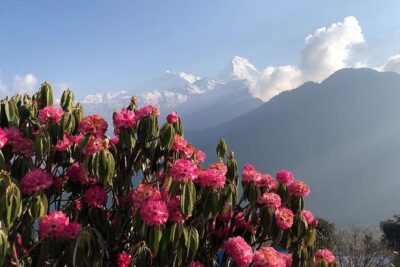
Day 3 is a classic Annapurna trek day. You push up toward Ghorepani, with sections through rhododendron forests that can turn especially colorful in season. The route description also calls out panoramic views of the Annapurna and Dhaulagiri ranges as you ascend.
This is the day that often turns a “I’m hiking” trip into a “wow, I’m really in the Himalayas” trip. You gain altitude gradually, so the views build instead of arriving all at once.
You’ll trek about 6 hours on this day, and it ends with sunset over snow-capped peaks from the Ghorepani area. Sunset is a friendly alternative when you don’t have the energy for another early sunrise effort, and it gives you a second moment of mountain light to remember.
The only real consideration is workload. This is still an uphill day, so keep your pack weight honest. No porter service means your choices on Day 3 directly affect how your knees feel on Day 4.
More to compare around Kathmandu
- Everest Base Camp Trek – 14 Days
★ 5.0 · 1,499 reviews - Everest Base Camp Trek
★ 5.0 · 842 reviews - Private Kathmandu Sightseeing Tour | UNESCO World Heritage sites
★ 5.0 · 756 reviews - Kathmandu: 7 UNESCO Sites with Lunch
★ 4.8 · 744 reviews
The early start: Poon Hill hike before dawn, then breakfast back in Ghorepani
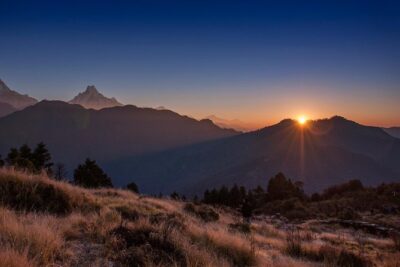
Day 4 is the signature day, and the schedule shows it clearly. You rise before dawn to hike to Poon Hill for sunrise. The payoff is watching the first light reach the peaks, with the sky shifting into warmer colors.
After the sunrise moment, the plan has you trekking back to Ghorepani for breakfast. That detail is more valuable than it looks. Breakfast after an early hike keeps you from feeling wrecked, and it gives you a real reset before you continue.
You then continue toward Tadapani. The itinerary doesn’t spend long on Tadapani itself, but that stop acts like the bridge between the main viewpoint day and the final village descent.
This day is listed at about 9 hours, so plan for a full-day commitment. If you’re a first-timer, consider this your “pace test.” You might feel fine during the first sections, but the cold and early start can trick you. Bring layers you can handle between dawn chill and warmer morning walking.
Ghandruk descent and Gurung village time, with a public bus back to Pokhara
Day 5 turns the corner into the “slower and scenic” phase. You descend to Ghandruk, described as a traditional village tied to Gurung culture, with mountain views nearby.
Ghandruk is where the trek becomes more than a viewpoint circuit. The plan includes time to explore the village, then you have a hearty lunch before heading back down.
After lunch, you travel from Ghandruk back to Pokhara by public bus, with about 6 hours of overall time listed for the day. Public bus is part of what makes this route feel real and local, but it also means you’re not in total control of timing. Build in patience.
From a body perspective, the descent can be tough even when the views are great. If you have knee issues, treat your early steps carefully and take shorter strides downhill.
Return drive to Kathmandu: wrap up with 7 hours and real rest
On Day 6, you drive from Pokhara back to Kathmandu by tourist bus, about 7 hours listed.
This is a good ending because it’s low effort. By now your legs know the routine, so you’re not asked to do any last-minute hero hiking. You can reflect, organize your photos, and plan your next Nepal stop without feeling like you’re rushing.
Price and logistics: is $650 good value for what’s included?
At $650 per person for a roughly 6-day trek, the value mostly comes from what you don’t have to juggle:
- Transfers: Kathmandu to Pokhara by tourist bus both ways, plus local bus legs (Pokhara to Nayapul and Ghandruk to Pokhara)
- Permits and local taxes: included in the package
- Guide support: an English-speaking professional guide is included
- Meals: the plan lists breakfast (5), lunch (4), and dinner (3)
That combination is what makes this trek work for many people. You’re paying for logistics and trail decisions, so you can focus on walking and enjoying the rhythm.
What’s not included is a key cost lever: porter service. If you hire a porter separately, that adds to your budget but can make a big difference if you’re carrying camera gear, extra layers, or you want a lighter load.
If you’re traveling with friends, the mention of group discounts can also help your final per-person cost. And because it’s a private tour/activity for your group, you’re not sharing the experience with strangers you didn’t choose.
The guide factor: why Hari-style support shows up again and again
The trek description says you’ll have an English-speaking professional guide. What the feedback adds is how guides actually behave day to day.
Guides named Hari or Hari Bhatta are repeatedly praised for being attentive, checking that everyone is okay, and making sure the day feels manageable. There’s also a clear pattern of help that goes beyond “point and move,” like taking lots of pictures, encouraging slower hikers to keep going, and stepping in when someone needs support.
One of the most practical examples from the feedback: carrying a bag for a day when a traveler injured a leg. That tells me the real value of a good guide is not just route knowledge, it’s human-level problem solving on the trail.
So when you book, ask a simple question: who will guide us, and how do you handle pacing for people who move at different speeds? You’ll get a better feel for the day you’re about to have.
How the days feel in real life: pacing, pack weight, and early mornings
This trek fits a moderate physical fitness level, but moderate still means you’ll be hiking for multiple hours, often uphill or downhill.
Here’s how the effort tends to stack up:
- Day 2: climb and steps after a river valley approach
- Day 3: uphill hiking through forests with sunset at the end
- Day 4: early start, sunrise hike, then a long day (about 9 hours total)
- Day 5: descent into Ghandruk plus the bus ride back
Pack weight is your biggest control knob because no porter is included. Bring only what you truly need for cold early starts and warm midday trekking. You’ll thank yourself later when your legs feel less cooked.
Also, plan your sleep like you mean it. Day 4’s pre-dawn hike is easier if you’re not dragging from a bad night.
Who this trek is best for
This is a strong choice if you want:
- A short trek that still includes multiple trekking days
- A major sunrise viewpoint at Poon Hill
- A mix of forest walking, villages, and cultural stop time in Ghandruk
- A guided experience where logistics like permits and meals are handled
It’s especially good for first-time trekkers because the route is structured and the guide support is a big part of the experience. If you’re an experienced hiker who wants long mileage every day, you might find it lighter than longer routes, but the sunrise day keeps it exciting.
If you have knee trouble, you’ll want to pack smart and take the descent on Day 5 seriously.
Should you book the Ghorepani Poon Hill Trek?
I’d book it if your top priorities are Poon Hill sunrise, village trekking, and not having to manage permits and transport yourself. The combination of included transfers, an English-speaking guide, and planned meals is a real convenience, and the consistent praise for guide care is a strong signal you’ll be looked after on the trail.
I’d think twice only if you hate early mornings, you know you struggle with long stair and slope days, or you really don’t want to carry your own load with no porter service included.
If you go in with a light pack, a patient pace, and a weather-flex mindset, this trek delivers exactly what it promises: mountain views, cultural stops, and that first light moment that makes the whole week feel worth it.
FAQ
What is the meeting time for the trek?
The start time listed is 7:00 am.
How do I get from Kathmandu to Pokhara?
You ride a tourist bus between Kathmandu and Pokhara. The road trip is listed as about 6 hours from Kathmandu to Pokhara, and about 7 hours on the return.
Are trekking permits included?
Yes. Permits for the trek and government and local taxes are included.
Is a porter included?
No. Porter service is not included.
Is this a private tour?
Yes. It’s listed as private, so only your group will participate.
What happens if weather is bad?
The experience requires good weather. If it’s canceled due to poor weather, you’ll be offered a different date or a full refund.
Latest Kathmandu write-ups
- Langtang Valley Trek★ 5.0 · 3 reviews
- Khopra Danda Trek★ 5.0 · 3 reviews
- Langtang Valley Trek from Kathmandu★ 5.0 · 3 reviews
- 5 night / 6 days Kathmandu Nagarkot Chitwan Pokhara tour★ 5.0 · 3 reviews
- Nepal Highlights Tour: 5 Nights 6 Days Kathmandu & Pokhara Tour★ 5.0 · 3 reviews
- Kathmandu Valley Private Day Tour★ 5.0 · 3 reviews
- Conquer the Himalayas: The Ultimate 16-Day Annapurna Circuit Trek★ 3.5 · 3 reviews
- Kathmandu Heritage Day Tour★ 5.0 · 3 reviews
Poon Hill Trek, compared.
4-Day Ghorepani, Poonhill & Ghandruk Mountain Trek
Read our review →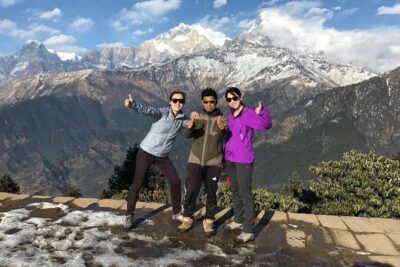
Browse the lists this tour appears in