
Reviewed · CITY TOURS
Kathmandu City Sightseeing Private Day Tour
Kathmandu can feel like a whole world in one compact bowl of streets, temples, and river air. This private day tour is interesting because it strings together four major sites that tell different parts of the city story in a single route. I like the private, air-conditioned vehicle for moving between stops without turning the day into a sweaty transit marathon, and I also like that you get an English-speaking guide to explain what you are looking at, not just where to stand for photos. One possible drawback is the pace between viewpoints and temple areas can still mean a fair bit of walking in warm weather.
The payoff is that you get both monumental architecture and spiritual atmosphere. You’ll spend meaningful time at Kathmandu Durbar Square, then work your way uphill to Swayambhunath, keep rolling to the massive Buddhist heart of Boudhanath, and finish at Pashupatinath on the Bagmati River. The main consideration for planning is that monument entry fees and food are not included, so you’ll want a little extra cash set aside.
If you’re the type of traveler who likes structure, comfort, and clear explanations, this is a strong way to see Kathmandu without guessing your way through. Just come ready for crowds at the big sites and plan your energy around the midday heat.
Key highlights worth your attention
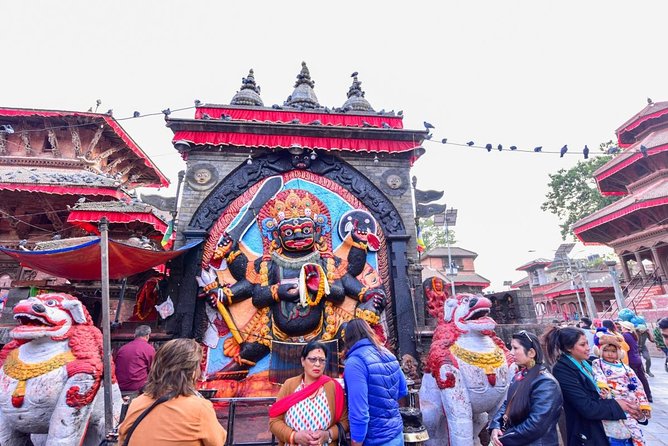
- Durbar Square in layers: you see palace-era monuments tied to Malla and Shah rule, plus a dense mix of temples and murtis.
- Swayambhunath’s Buddha-eye symbolism: you’re not just climbing to a view, you’re looking at a stupa designed with meaning in every layer.
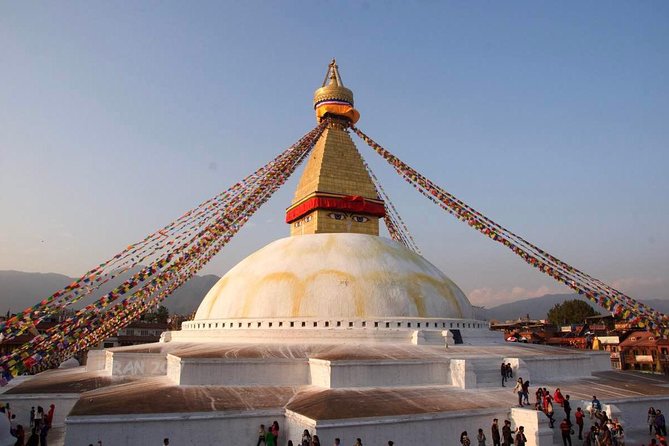
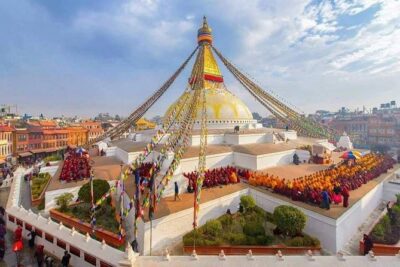
- Boudhanath’s giant mandala stupa: one of the largest stupas in the world, with monasteries all around it.
- Pashupatinath’s spiritual scope: Shiva temple on the Bagmati River with many surrounding shrines and a cremation platform area.
- Real comfort between stops: private A/C vehicle, pickup and drop-off in Kathmandu City, and bottled water.
- A guide who connects the dots: you get background on the history and religious purpose of each site.
A focused Kathmandu day route that actually makes sense
A lot of Kathmandu sightseeing days feel like running errands. This one works better because it groups the city’s big icons in a logical flow: royal monuments first, then a hilltop viewpoint, then a Buddhist center, and finally a major Hindu pilgrimage site on the river.
You’re not just collecting stamps. At Durbar Square, the buildings and statues are essentially a map of earlier rulers and Newari craftsmanship. At Swayambhunath, the stupa design gives you a visual language for Buddhism. At Boudhanath, you see what a living Buddhist center looks like, not a museum display. And at Pashupatinath, the temple complex shows how worship, shrine-hopping, and river rituals all overlap in one place.
This is also a private format, so you can move at a pace that fits you. If you want to linger at one courtyard or slow down at a viewpoint, your guide can help you make that choice.
More City Tours in Kathmandu
- Private Kathmandu Sightseeing Tour | UNESCO World Heritage sites
★ 5.0 · 756 reviews - Kathmandu: Private City Guided Tour
★ 4.9 · 174 reviews - Kathmandu Private Sightseeing Tour | UNESCO World Heritage Sites
★ 5.0 · 109 reviews
Getting picked up, staying comfortable, and keeping the day moving
The tour is built around convenience. You start at 9:00 am, and pickup and drop-off are offered from designated meeting points within Kathmandu City. Between stops you ride in your own private vehicle with A/C, which matters more than you might expect in Kathmandu, because the time you save on transit becomes time you can spend slowly looking, not rushing.
You also get one bottled water per person, which is a small detail, but it helps you avoid wasting time hunting for refreshments mid-route. The tour uses a mobile ticket, so you should plan on keeping your phone charged and easy to access.
As for group size, it’s private. That means you’re not sharing a guide with strangers, and you’re less likely to feel herded. It also means your guide can tailor small things like where to stand for the best views or how to manage time inside temple areas.
Kathmandu Durbar Square: Malla and Shah-era monuments, Hanuman Dhoka, and the Kumari Bahal
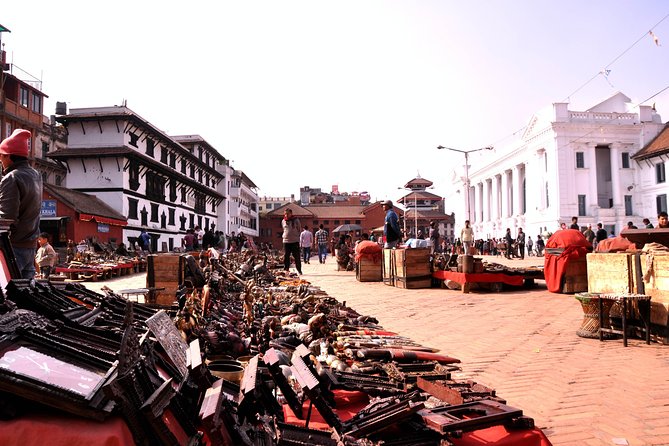
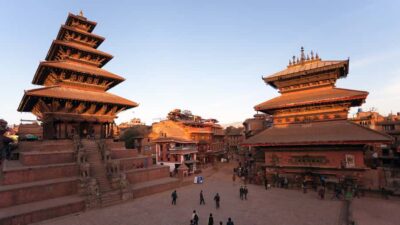
Stop one is Kathmandu Durbar Square, one of three durbar squares in the Kathmandu Valley. This is where royal architecture tells its story. The square sits in front of the old royal palace area of the former Kathmandu Kingdom, and it reflects a mix of influences and artistic styles associated with Newari artists. It’s associated with the Malla and Shah kings, so you are seeing monuments built during a time when power and religion were tightly linked.
What I love here is how packed the site feels. You are not looking at one temple and calling it done. You can notice a web of landmarks, from major temples like Trailokya Mohan Narayan temple and Taleju temple to places tied to deities and guardians, including Hanumandhoka and the Hanuman statue. The Basantpur Tower is another key focal point, and you may also spot shrine structures like Kotilingeshwara Mahadev temple, Ashoka Binayak, Kaal Bhairab, and Indrapur temple.
Then there is Kumari Bahal, which adds a distinctly local flavor. Even if you do not know every detail at first glance, the setting helps you understand why people treat this area as more than a sightseeing stop.
A real practical note: the tour info warns that some monuments were collapsed due to the 2015 earthquake, so you should expect that certain areas may look damaged or partially rebuilt. That can actually make the site feel more real, but it also means the visual experience might not match old photos you’ve seen online.
If you go here, wear shoes you can trust on uneven ground. Durbar Square is historical, but it is not a smooth indoor floor.
Swayambhunath hilltop views: Monkey Temple stupa symbolism and city-scale perspective
Next you head to Swayambhunath, also known as the Monkey Temple. This is a Buddhist chaitya with huge spiritual weight, and it also offers one of the most useful “orientation views” in Kathmandu because it’s on a hill.
From a distance, Swayambhunath’s stupa stands out for one reason: it’s built as a symbolic design. The description of the stupa includes a dome at the base, above which sits a cubical structure painted with Buddha’s eyes that look in all directions. The symbolism matters because it turns the stupa from an object into a teaching tool. The dome represents the world, the eyes represent wisdom and compassion, and the curly element described as the nose symbolizes unity of all things.
You’ll also get the meaning behind the name: Swayambhu is described as self-existence. That’s the kind of detail your guide can connect to what you see on site, especially if you’re not already familiar with Buddhist architecture and iconography.
The time here is about 1.5 hours, which can be just right if you balance two needs: moving slowly enough to enjoy the architecture and building energy for the climb. The hilltop experience can be a little demanding in heat. If you’re traveling in the warmer months, plan to take shade breaks whenever you can and save your biggest walking effort for earlier in the day.
A different sort of day out of Kathmandu:
- Everest Base Camp Trek – 14 Days
★ 5.0 · 1,499 reviews - Everest Base Camp Trek
★ 5.0 · 842 reviews - Kathmandu: 7 UNESCO Sites with Lunch
★ 4.8 · 744 reviews - Everest Base Camp Helicopter Tour landing at Everest View Hotel
★ 5.0 · 668 reviews
Boudhanath Stupa: a giant mandala centerpiece for Buddhist worship
Stop three is Boudhanath Stupa, one of the largest stupas in the world and a major pilgrimage site for Buddhists. It sits about 11 km from central Kathmandu, and reaching it by private vehicle is part of what keeps the day comfortable.
Here’s what makes Boudhanath special: it’s not just “a stupa.” It’s described as a hub, surrounded by hundreds of monasteries, and it is treated as a living center of Buddhism in Nepal. The stupa sits within a mandala-shaped area, and the giant dome is the visual anchor.
The history point to remember is the reference to Licchhavi rulers, who renovated the stupa during the 8th century. That detail helps you frame what you are seeing as something older and continuously cared for, rather than a single-era monument.
When you’re onsite, your best approach is to move with intention. Look at the stupa’s scale, then shift your attention outward to the surrounding monasteries and temple activity. If your mind is only on the main dome, you miss the way Boudhanath functions as a complex social and spiritual space.
Also, keep expectations realistic. Boudhanath can be busy. If you want photos without people constantly in them, you will likely need patience and small timing adjustments, like repositioning and waiting for the flow to change.
Pashupatinath Temple on the Bagmati: Shiva worship, shrine clusters, and ritual geography
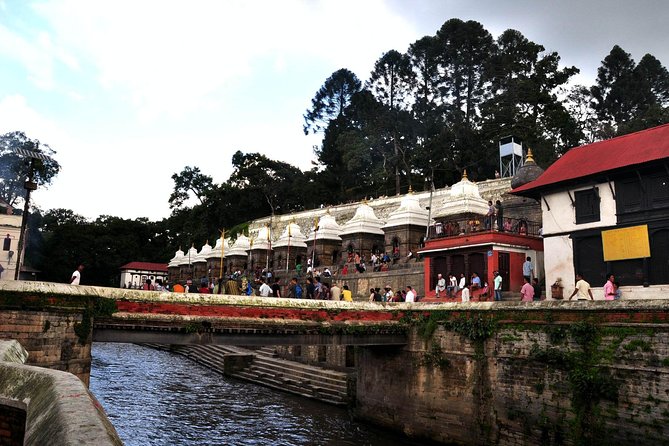
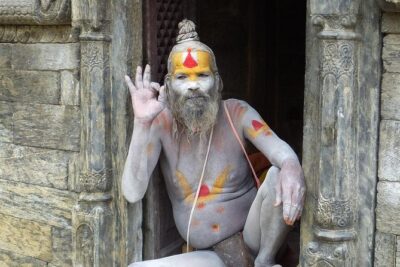
Your final major stop is Pashupatinath Temple, one of the most revered Hindu temples in Nepal. It is dedicated to Lord Shiva and it sits on the banks of the Bagmati River, which shapes the whole atmosphere of the complex.
The site is described as a blend of religious, cultural, and spiritual experiences. Around the main temple you’ll find multiple layers of sacred space, including Buddhist chaityas. The tour description lists many surrounding shrines and holy locations, such as Deupatan, Jaya Bageshori, Gaurighat (Holy Bath), Kutumbahal, Gaushala, Pingalasthan, and Sleshmantak forest. The numbers given are striking too: around 492 temples, 15 Shivalayas (shrines of Lord Shiva), and 12 Jyotirlinga (phallic shrines) within the broader complex area.
One detail that changes how you experience Pashupatinath is the mention of the cremation site on a raised platform along the Bagmati River. Even if you do not focus on that part of the complex, you should know it exists in the same sacred geography. Your guide can help you understand why it’s part of the religious landscape here.
Plan for a slightly different mood compared with the earlier Buddhist sites. This stop can feel more intimate and more intense, because of how worship and ritual are embedded into daily movement around the river.
Price and value: where your money goes, and what you should budget
The price is $100 per person for an 8-hour private day tour. That number can feel high if you’re thinking only in terms of transport and ticket-free sight-seeing. But the value shows up in three places the tour is specifically set up to deliver:
1) You’re paying for a private A/C vehicle plus pickup and drop-off in Kathmandu City.
2) You’re paying for a professional English-speaking guide who provides background on each site, so you’re not piecing together meaning on your own.
3) You’re buying time and comfort, since the itinerary covers multiple top sites in one day.
What’s not included matters, too. Monument entrance fees are not included, and food and drinks are not included. That means you should think of the tour price as the guide and transport package, not a full all-in day. If you under-budget entrance fees, you end up cutting your visit short or rushing through.
If you want this to feel smooth, budget for:
- entrance fees at each monument you enter
- a meal or snacks during the day
- water or drinks beyond the single bottled water provided
Timing tips for the 9:00 am start and heat on temple stairs
The tour starts at 9:00 am, which is a smart default for Kathmandu. Morning tends to be more manageable for climbing and walking, especially at hilltop or stepped areas like Swayambhunath and the temple-heavy zones around Durbar Square.
That said, the tour info recommends bringing a mask, and it also notes that some monuments may have collapsed from the 2015 earthquake. On top of that, one of the biggest practical realities is heat. Even with A/C in the car, you still have to walk inside outdoor temple complexes.
Here’s how I’d handle it:
- Wear breathable clothes and comfortable shoes with good grip
- Carry your own water if you tend to drink more than expected
- Take shade breaks when you can
- Keep a small energy snack in your day bag so you do not end up “waiting” for hunger
If you’re sensitive to crowds, aim to be calm and flexible. Big sites attract attention, and part of the charm is seeing how locals and pilgrims move through them.
Is this the right tour for you?
Book this private day tour if you want a structured Kathmandu highlights route with comfort built in. It’s especially a good fit if:
- you prefer a guide who explains meaning as you go
- you want to see Durbar Square, Swayambhunath, Boudhanath, and Pashupatinath without building an itinerary yourself
- you value the convenience of pickup, drop-off, and an A/C vehicle
- you are okay handling some walking on uneven temple grounds
Skip or reconsider if:
- you’re traveling super light and do not plan to spend extra on entrance fees
- you strongly dislike crowds at major religious sites
- you have limited mobility, since temple areas and hilltop zones usually require stairs or uneven walking
The overall experience tends to feel well organized and history-focused, and the major sites are real, not watered down. Just plan for heat, plan for fees, and you’ll get a full Kathmandu day that actually teaches you what you’re seeing.
FAQ
What is the duration of the Kathmandu City Sightseeing Private Day Tour?
The tour runs for about 8 hours.
Is pickup and drop-off included?
Yes. Pickup and drop-off from designated meeting points within Kathmandu City are included.
What does the price include?
It includes a professional English-speaking tour guide, sightseeing transport by private A/C vehicle, 1 bottled water per person, and pickup and drop-off.
Are monument entrance fees included?
No. Monument entrance fees are not included.
Is food included in the tour?
No. Any kind of food and drinks are not included.
What time does the tour start?
The start time is 9:00 am.
Is there free cancellation?
Yes, you can cancel for a full refund if you cancel up to 24 hours in advance of the experience start time.
Latest Kathmandu write-ups
- Langtang Valley Trek★ 5.0 · 3 reviews
- Khopra Danda Trek★ 5.0 · 3 reviews
- Langtang Valley Trek from Kathmandu★ 5.0 · 3 reviews
- 5 night / 6 days Kathmandu Nagarkot Chitwan Pokhara tour★ 5.0 · 3 reviews
- Nepal Highlights Tour: 5 Nights 6 Days Kathmandu & Pokhara Tour★ 5.0 · 3 reviews
- Kathmandu Valley Private Day Tour★ 5.0 · 3 reviews
- Conquer the Himalayas: The Ultimate 16-Day Annapurna Circuit Trek★ 3.5 · 3 reviews
- Kathmandu Heritage Day Tour★ 5.0 · 3 reviews
City Tours, compared.
Private Kathmandu Sightseeing Tour | UNESCO World Heritage sites
Read our review →
Kathmandu Private Sightseeing Tour | UNESCO World Heritage Sites
Read our review →
Browse the lists this tour appears in