Reviewed · TOURS
Kathmandu Day Tour
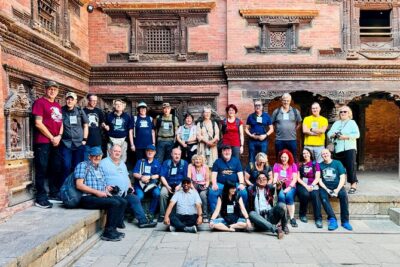
Kathmandu is one of those cities where a single day can still feel meaningful, if you pick the right stops. This tour is built around four major UNESCO sites, so you get the big picture without spending your time figuring out tickets and transport. I also like that you’re not just dropped off, you’re guided through what you’re seeing by English-speaking staff such as Kedar or Dil, who focus on history, architecture, and how Buddhism and Hinduism show up in everyday life.
The only real drawback to plan for is the pace. You’ll move between sites across a longer day, and each stop is time-limited, so if you want to linger for hours inside museums or at specific corners, you may wish you had more time in Kathmandu.
Key highlights you will feel right away
- Four UNESCO World Heritage stops in one outing, so you can cover the essentials fast
- Air-conditioned vehicle plus a guide who helps you understand what you are looking at
- Monkey Temple viewpoints at Swayambhu, with easy access to the valley panorama from a hillock
- Pashupatinath’s sacred Shiva connection, including the richly ornamented pagoda and the linga symbol
- Boudhanath’s prayer rhythm, where Tibetan pilgrims spin prayer wheels around the stupa
Why This Kathmandu Day Tour Makes Sense for First Timers
If you have only a day in Kathmandu, this kind of itinerary is exactly how I like to see cities. Four sites, arranged into a logical loop, keeps you from missing the main spiritual and historical anchors. Instead of bouncing around on your own, you spend your energy on the sights.
The tour is scheduled for about 7 to 8 hours, which is long enough to feel like a full day but not so long that you are fried by evening. The group is capped at 15 travelers, so you are not trapped in a huge herd. And because entrance fees for the listed sites are included, you avoid the annoying moment of scrambling for cash or passes at each gate.
Price matters, too. At $85.34 per person, you are paying for transport, a city guide, and site entry, not just a driver and a map. If you are comparing it to paying separately for tickets and organizing rides, it tends to feel like a fair deal, especially for a first day when everything is new.
More to compare around Kathmandu
- Everest Base Camp Trek – 14 Days
★ 5.0 · 1,499 reviews - Everest Base Camp Trek
★ 5.0 · 842 reviews - Private Kathmandu Sightseeing Tour | UNESCO World Heritage sites
★ 5.0 · 756 reviews
Meeting Ace the Himalaya and Staying Comfortable All Day
The tour starts at Ace the Himalaya (A1 Business complex, Thamel Marg, Kathmandu 44600, Nepal) and ends back at the same place. Thamel is convenient because it is a common base area, so you can actually plan your day without long commutes before you begin.
You travel by air-conditioned vehicle, which is a big deal in Kathmandu traffic. Even if you love walking, the distances between these major religious hubs can add up. Having transport ready means you can save your legs for the parts that require it, like stair climbs at the hilltop site.
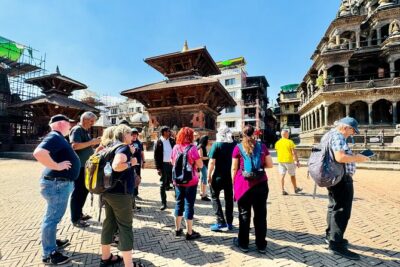
Also, you are not left to guess. The tour includes an authorized English-speaking city tour guide. In the reviews tied to this experience, the guides stand out for how they answer questions, explain architecture and symbolism, and connect the sites to the people who live around them, including the Newari community.
Kathmandu Durbar Square: Malla Palaces and Tiny Museum Stops
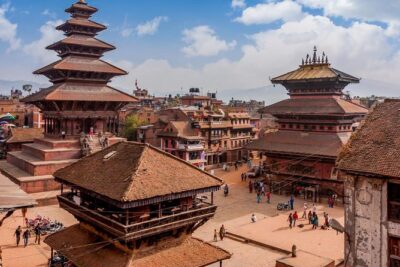
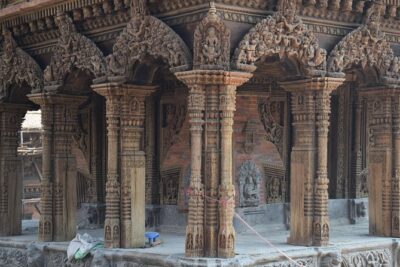
Stop 1 is Kathmandu Durbar Square, and it is a strong opener because it puts you inside the political and artistic heart of old Kathmandu. This complex includes palaces, courtyards, and temples built between the 12th and 18th centuries, and it used to be the seat of the Malla kings.
The best part is the variety in one footprint. You are not seeing one building, you are seeing a whole cluster of spaces that show how royal power blended with religious life. Even within a relatively short visit, the courtyards and temple shapes give you a sense of scale and design style.
You also get 30 minutes here, and entrance is included. That short time can feel tight if you want to read every label. But it is still enough to do a quick circuit, notice how the buildings relate to each other, and spot the three museums inside the palace building. If you are the type who likes stopping to look at details, use your time strategically and pick one museum area to focus on, rather than trying to do everything.
A practical note: Durbar Square is a high-visibility area, so expect people around. This is one of the best places to start your day because it sets a frame, but it can also mean short waits and busy sightlines.
Swayambhunath (Monkey Temple): Hilltop Views and Stupa Stories
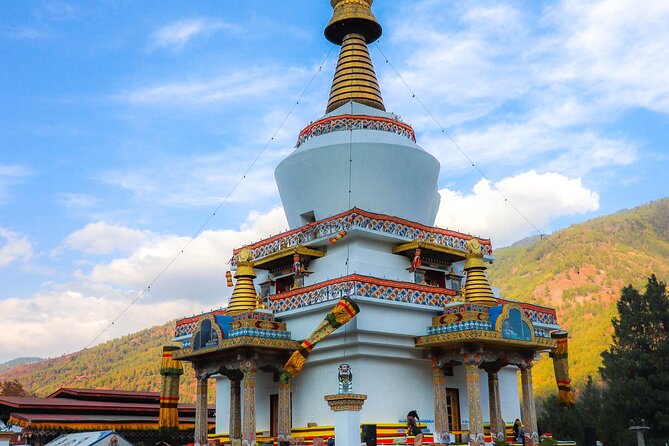
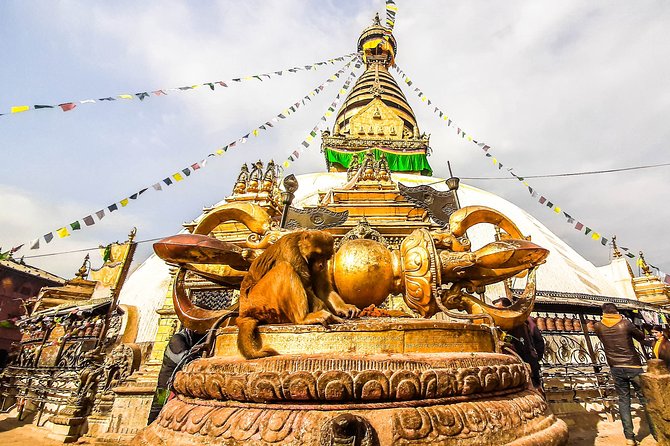
Stop 2 is Swoyambhu Mahachaitya, known commonly as Swayambhunath, and it is also nicknamed the Monkey Temple. You get about 1 hour here, and entrance is included.
The main reason Swayambhu is worth your attention is simple: it sits on a hillock on the western side of the valley, so you get views over Kathmandu. Even if the sky is hazy, the stupa area still gives you a sense of geography. You can look down and understand why these religious sites were placed where they are.
Then there is the atmosphere. Monkeys are famous here for a reason. They can be entertaining, but they also mean you should keep your personal items close and avoid leaving snacks unattended. If you are bringing a camera, be ready for sudden movement and a few curious faces in your frame.
At the stupa itself, a lot of the meaning is in the details and the setting. This is one of those places where a guide can help you connect symbols to beliefs, and in the reviews, both Kedar and Dil are praised for explaining not just what you see but why it matters to people practicing there.
One more thing to plan for: because it is a hilltop, you’ll likely deal with stairs and uphill walking. That is normal here, so wear shoes you can trust.
A different sort of day out of Kathmandu:
- Kathmandu: 7 UNESCO Sites with Lunch
★ 4.8 · 744 reviews - Everest Base Camp Helicopter Tour landing at Everest View Hotel
★ 5.0 · 668 reviews - Half day cooking class in Thamel kathmandu
★ 5.0 · 607 reviews - Everest Base Camp Trekking
★ 5.0 · 485 reviews
Pashupatinath Temple: One of the World’s Sacred Shiva Links
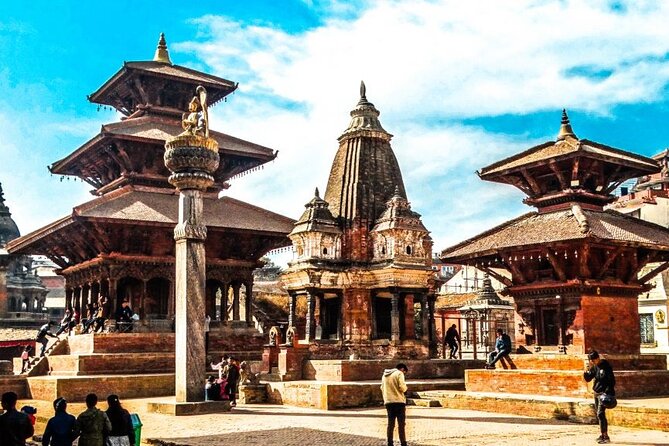
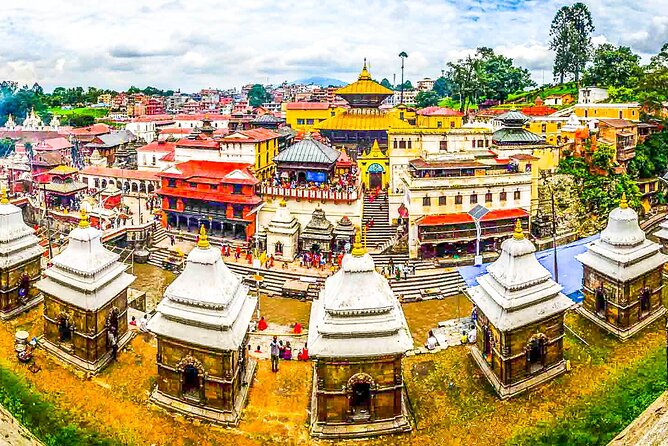
Stop 3 is Pashupatinath Temple, located about 5 km east of the city center. You have 45 minutes, and entrance is included.
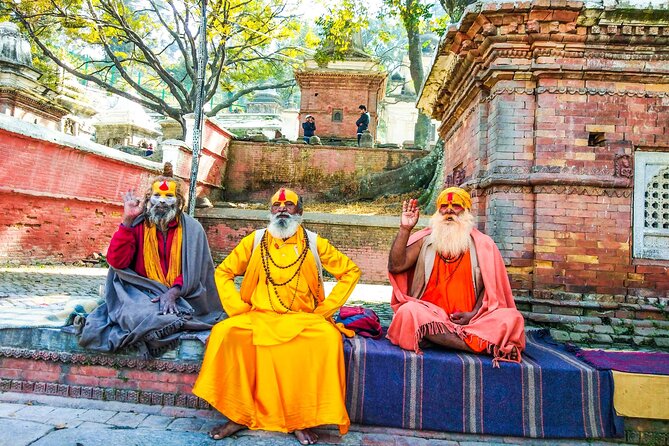
Pashupatinath is described as one of the most sacred Hindu shrines in the world. The temple is centered on a richly ornamented pagoda and, most importantly, it houses the sacred linga, which is the phallic symbol connected to Lord Shiva.
In other words, this is not just a pretty temple stop. This is a place where symbolism is part of the core identity of the site. A guide helps a lot here because otherwise you might experience it more as scenery than as lived religious meaning. If you like understanding the spiritual logic of architecture, this stop is your payoff.
Time is limited, so treat this as a focused look rather than a slow wander. Stand where you can see the main structure clearly, take in the ornamentation, and then use your last minutes to read the scene like a story. You want to notice how visitors behave, how the temple complex feels, and how the sacred centerpiece shapes the entire experience.
Because it is a major shrine, this stop can also feel busy. The upside is that you get to see the site in active use, which makes it feel more real than a museum setting.
Boudhanath Stupa: Prayer Wheels, Tibetan Influence, and the Eyes of Buddha
Stop 4 is Boudhanath Stupa, and this is a highlight if you want a different flavor of spiritual Kathmandu. The stupa is said to be about 2500 years old, built in the 5th century, and it features four pairs of eyes of Lord Buddha in the four cardinal directions.
The eyes detail matters because it gives you a constant sense of being watched and guided. It is also the kind of design you can see quickly, which is helpful with a 45-minute visit.
Around Boudhanath, you often see Buddhist pilgrims from Tibet who walk around the stupa and spin prayer wheels. This repetitive motion is part of the ritual rhythm of the place, and seeing it in motion is more convincing than reading about it.
This stop also tends to be educational for people who want cultural context. In the reviews, Dil gets praised for connecting Buddhism, Hinduism, and the Newari people to the way these sites function in daily life. That kind of explanation can turn a short stop into something you remember.
One caution: because Boudhanath is active and popular, it can be crowded. If you prefer quieter moments, you might find it easier to focus on the stupa design and prayer wheel process rather than trying to find space for photos everywhere.
Price and What You Actually Get for $85.34
Here is what you are paying for, based on what’s included: air-conditioned vehicle, an authorized English-speaking city tour guide, entrance fees for the mentioned cultural sites, and official expenses. That matters because in Kathmandu, the travel time and the ticket hassle can eat up a lot of your energy on your first day.
Meals and drinks are not included, so you will either need to grab something before you start, during any breaks (if the schedule allows), or after the tour. Also, tipping for the guide and driver is expected. If you keep those two points in mind, the price feels more predictable.
Where the value really comes in is for people who want the highlights but do not want to spend a day negotiating logistics. If you are pairing this with a bigger trip, like an Everest base camp trek add-on, this kind of organized day helps you still experience Kathmandu fully without getting bogged down by planning.
And because the group size is limited to 15, you get a bit more responsiveness from the guide than you would on a giant bus tour.
Pace, Group Size, and Who This Tour Fits Best
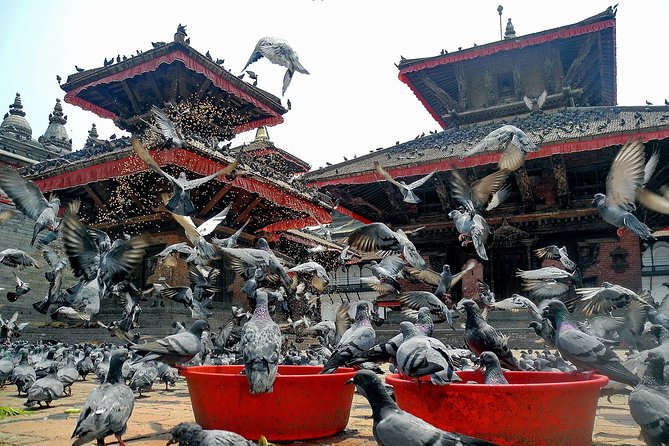
With a maximum of 15 travelers, you are in the sweet spot between personal and efficient. Small groups make it easier to ask questions without shouting over everyone.
The pace is structured around four major stops, each with its own time window: 30 minutes at Durbar Square, 1 hour at Swayambhu, 45 minutes at Pashupatinath, and 45 minutes at Boudhanath. That is enough time to see the main elements but not enough time to become a deep scholar at any single site.
So this tour fits best if you:
- want a high-impact first day in Kathmandu
- like having a guide to explain what you are looking at
- prefer not to handle tickets and local driving yourself
It may feel less ideal if you want long, unhurried museum time or if you dislike moving from one sacred site to another on a tight schedule.
Good news: the tour says most travelers can participate. If you have mobility challenges, you should still think carefully about stair walking at the hilltop site at Swayambhu.
Practical Tips to Make Your Day Smoother
I would plan your expectations around the fact that you are seeing big, sacred, and active locations. That means you will spend more time watching, walking, and observing than you would in a typical shopping-focused day.
A few practical moves help:
- Wear shoes you can handle for stairs and uneven temple-area walking, especially at Swayambhu
- Keep a small bag you can manage near busy stupa areas, because monkeys can get curious
- Plan for no included meals, so decide in advance whether you’ll eat before you go and grab something simple afterward
- Bring cash for optional snacks or drinks, since those are not included
- If you have questions about Hinduism, Buddhism, or Newari culture, this is the kind of tour where asking can pay off, since the guides are praised for answering questions and linking architecture to meaning
Also, because the tour requires good weather, keep an eye on conditions. If weather turns, the plan can shift to a different date or you may get a refund, so having flexible plans helps.
Should You Book This Kathmandu Day Tour?
I think you should book it if you want a smart, organized way to hit Kathmandu’s top cultural and religious highlights in one day. The combination of entrance fees included, English guide support, and transport makes it a better value than piecing everything together on your own, especially if you are short on time.
Skip it or reconsider if you expect a slow, museum-heavy day, because each stop is deliberately time-boxed. Also, if you are very sensitive to crowds at major temples and stupa sites, mentally prepare for busy moments.
If you want your first Kathmandu day to feel purposeful and not stressful, this is one of the easiest ways to do it.
FAQ
How long is the Kathmandu day tour?
It runs about 7 to 8 hours.
What stops are included in the tour?
You visit Kathmandu Durbar Square, Swoyambhu Mahachaitya (Swayambhunath), Pashupatinath Temple, and Boudhanath Stupa.
Is the price $85.34 per person, and what does it cover?
The price is $85.34 per person and includes an air-conditioned vehicle, an authorized English-speaking city tour guide, entrance fees for the mentioned sites, and official expenses.
What is not included?
Meals and drinks are not included. Tips for the guide and the driver are expected.
How big is the group?
The tour has a maximum of 15 travelers.
What if the weather is poor?
The experience requires good weather. If it is canceled due to poor weather, you will be offered a different date or a full refund.
Latest Kathmandu write-ups
- Langtang Valley Trek★ 5.0 · 3 reviews
- Khopra Danda Trek★ 5.0 · 3 reviews
- Langtang Valley Trek from Kathmandu★ 5.0 · 3 reviews
- 5 night / 6 days Kathmandu Nagarkot Chitwan Pokhara tour★ 5.0 · 3 reviews
- Nepal Highlights Tour: 5 Nights 6 Days Kathmandu & Pokhara Tour★ 5.0 · 3 reviews
- Kathmandu Valley Private Day Tour★ 5.0 · 3 reviews
- Kathmandu Heritage Day Tour★ 5.0 · 3 reviews
- Conquer the Himalayas: The Ultimate 16-Day Annapurna Circuit Trek★ 3.5 · 3 reviews
Tours, compared.
Private Kathmandu Sightseeing Tour | UNESCO World Heritage sites
Read our review →
Everest Base Camp Helicopter Tour landing at Everest View Hotel
Read our review →