
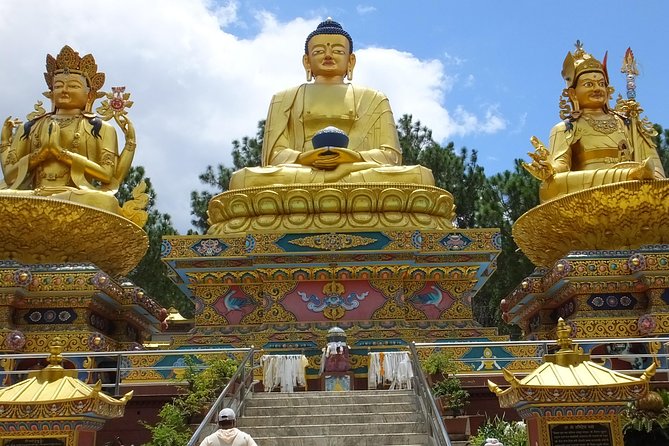
Reviewed · UNESCO WORLD HERITAGE SITES
Kathmandu World Heritage Sites Tour Sightseeing
Kathmandu’s UNESCO sites feel like a whole cultural system, not a checklist. You hit four heavyweight landmarks in one day, with a private vehicle and a guide who can connect the dots between Hindu and Buddhist life. I also like that this route is built around real religious places, so the mood stays sacred from start to finish.
The second big plus for me is practical comfort: hotel pickup and drop-off, plus lunch, and admission tickets included at each stop. And the guide style you can expect here is accommodating and friendly, with people making time to answer questions as you go.
One thing to consider before you book: this is a full half day of walking and temple stairs, and you should be ready for the monkey factor at the sites where people know them well.
Key points you can actually use
- Private transport and guide means you set the pace, not the traffic.
- Four UNESCO World Heritage Sites in one day helps you avoid multiple planning days.
- Admission tickets are included at every listed stop, so you are not scrambling for entry fees.
- Lunch is included which is a big deal in Kathmandu timing.
- Sacred Hindu and Buddhist sites together makes the cultural connections easier to understand.
- Monkeys are part of the experience at both Pashupatinath and Swayambhunath.
A private UNESCO route that links Hindu and Buddhist Kathmandu
This tour is built for one purpose: seeing how Kathmandu’s spiritual world overlaps and stays deeply separate at the same time. You visit Hindu temples and cremation grounds at Pashupatinath, then shift to Buddhist ritual space at Boudhanath and Swayambhunath, and finish at Kathmandu Durbar Square where royal-era temples and the living goddess tradition all sit inside one historic zone.
What makes it especially good is the flow. You start with Pashupatinath, where you will notice how place, river, and ritual all reinforce each other. Then you move into the big Buddhist visual language of stupas and prayer objects. Finally, you end in the royal city center, where you can see temples, palaces, and iconography that explain how power and devotion mixed in earlier centuries.
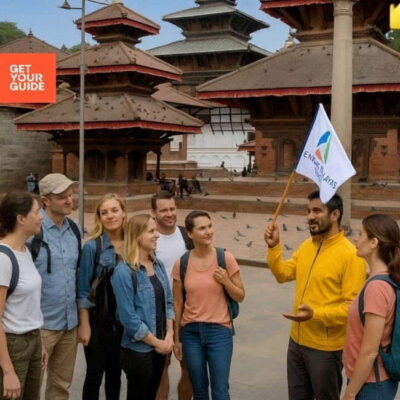
The private format matters here. In religious neighborhoods, crowds and confusion are normal. A guide who speaks English plus Chinese or Hindi helps you understand what you are looking at, rather than just watching people stream past.
More City Tours in Kathmandu
- Private Kathmandu Sightseeing Tour | UNESCO World Heritage sites
★ 5.0 · 756 reviews - Kathmandu: Private City Guided Tour
★ 4.9 · 174 reviews - Kathmandu Private Sightseeing Tour | UNESCO World Heritage Sites
★ 5.0 · 109 reviews
Timing and how your 6 to 8 hour day usually feels
You start at 9:15 am and the tour runs about 6 to 8 hours. Each main stop is scheduled for about an hour, which is enough time to see key viewpoints and get explanations, without turning the day into a marathon where you lose attention.
Hotel pickup and drop-off are included, using a private vehicle. That is not just convenience. It helps you get to each site faster and more calmly, especially when you are traveling across Kathmandu’s road network.
Also, lunch is included. That prevents the common problem where you spend the middle of your day hunting down something to eat while your tour time quietly disappears. You will still want to carry water, but the main meal piece is handled.
Pashupatinath Temple: Shiva, monkeys, and the Bagmati River atmosphere
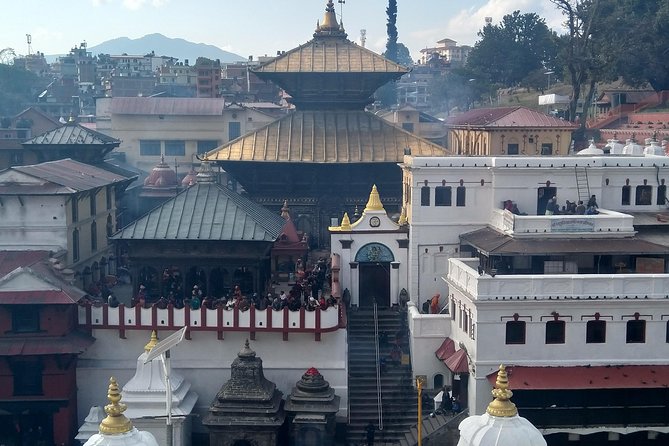
Pashupatinath is one of the places in Kathmandu where the sacred feeling is hard to fake. It is dedicated to Lord Shiva, and it is also famous for monkeys. Even if you are not a “temple person,” you will notice the ambience immediately, because the rituals and the crowd behavior are clearly connected to daily devotion.
You will spend about an hour here, with admission ticket included. What to watch for:
- How the area is organized around Hindu deities and devotional practice
- The vibe around the Bagmati River, which you can examine during your visit
- How the temple complex communicates holiness through repeated behaviors, not just decoration
Practical tip: plan to keep your camera ready but respectful. This is not a site where you can treat photography like a studio shoot. If you feel unsure about what is appropriate, follow what locals are doing and stay out of the way of ongoing ceremonies.
Possible drawback: the monkey presence is real. Keep small items secure and avoid sudden movements near animals, especially around temple edges and where people gather.
Boudhanath Stupa: Tibetan monasteries, prayer wheels, and Mani walls
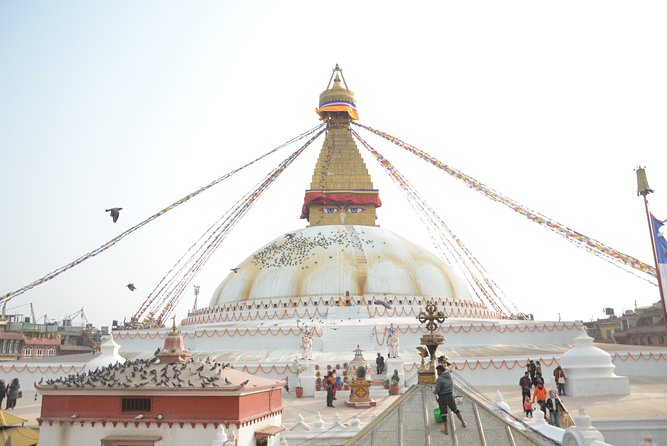
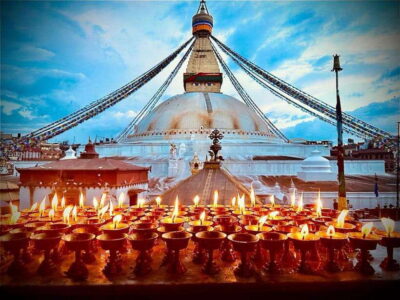
Boudhanath Stupa is one of the largest stupas in South Asia, and that scale changes how you experience it. Instead of walking into a room and seeing a single altar, you are surrounded by a ritual landscape. You can look around at Tibetan monasteries nearby, then focus on the Buddhist style of the stupa itself.
You get about an hour here, with admission ticket included. This is also where the tour gives you a clear visual story:
- Mani walls and prayer wheels are all over the place
- The stupa architecture supports Buddhist devotional patterns
- The area is tied to Tibetan culture, including the chance to discover Tibetan food options while you are in the neighborhood
If you like photography, this stop is strong. The stupa shape gives you a steady focal point, and prayer details add texture. If you prefer quiet, this is also a good place to slow down. The energy here often feels calmer than what you might expect from a city temple circuit.
One thing to keep in mind: Boudhanath is popular. Expect activity around the stupa. The best way to handle it is to pace yourself, because you will see more when you give your eyes time to adjust to the repeating symbols.
More UNESCO World Heritage Sites in Kathmandu:
- Kathmandu: 7 UNESCO Sites with Lunch
★ 4.8 · 744 reviews - Kathmandu: Full Day 7 UNESCO Tour with Lunch – Private/Group
★ 5.0 · 415 reviews - Kathmandu: Full Day Top 4 UNESCO Tour with Lunch – Private/Group
★ 5.0 · 269 reviews - UNESCO Seven World Heritage Tour in Kathmandu
★ 5.0 · 253 reviews
Swayambhunath Temple: monkey temple energy, mixed faith symbolism, and city views
Swayambhunath is known as the monkey temple, and it is also described as a bridge point between Buddhist and Hindu culture. That idea of blending is not just marketing. You will see how the site holds symbols and sculptures that speak to different traditions, all within the same hillside setting.
You will spend about an hour here, with admission ticket included. The highlights you should look for:
- Mani walls and prayer wheels, again reinforcing the Buddhist ritual language
- Carved stones that show the life cycle of Buddha, plus lots of sculptures
- Opportunities for photos of monkeys at the temple
- Additional temples for Hindus, including Harati Temple and Saraswati Temple
- A chance to position yourself for views over Kathmandu from atop the hill
This is one of the stops where your guide really adds value. Without explanations, you may only notice the big signposts, like monkeys and the stupa silhouette. With a guide, you start to recognize why certain carvings and side shrines matter.
Practical tip: wear shoes you can walk in. You are going up to viewpoints, and the surface can be uneven around temple zones. Also keep a light grip on your personal items. If monkeys approach, do not try to outsmart them. Just keep calm and follow what others are doing.
Kathmandu Durbar Square: Malla and Shah-era temples and the Kumari connection
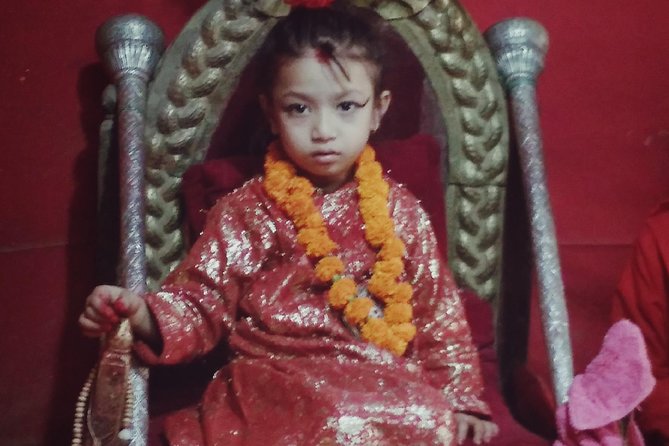
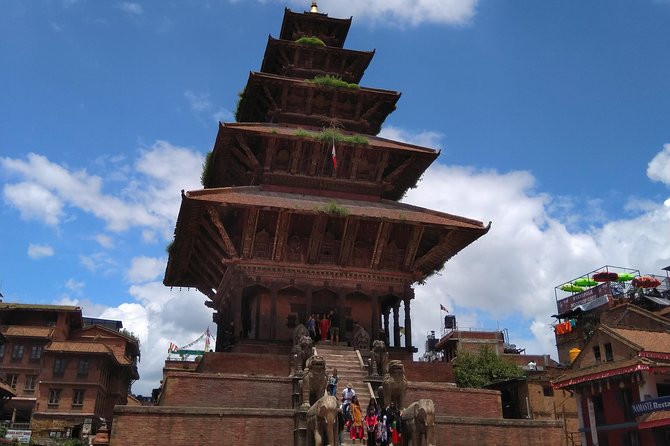
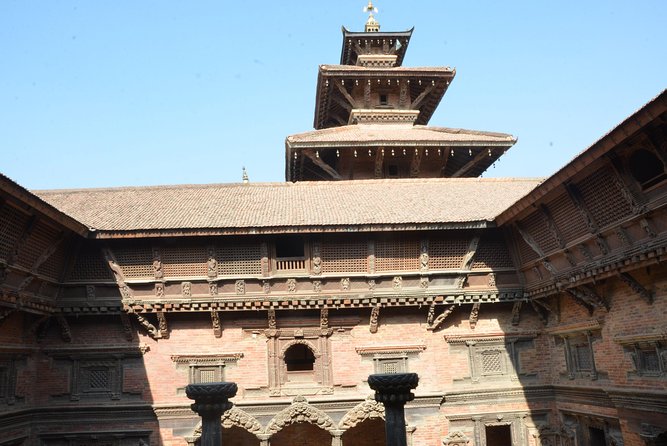
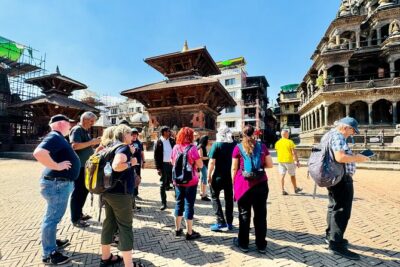
Kathmandu Durbar Square is where you shift from stupa symbolism into royal-era architecture and city-center devotion. This is a zone filled with handmade arts and monuments tied to the late kings of the Malla and Shah dynasties, with a historical span you can think of as roughly the 12th to the 18th centuries.
You get about an hour here, with admission ticket included. Major sights you may see include:
- Hanuman Dhoka
- Taleju Mandir
- Hanuman Temple
- The Royal Palace
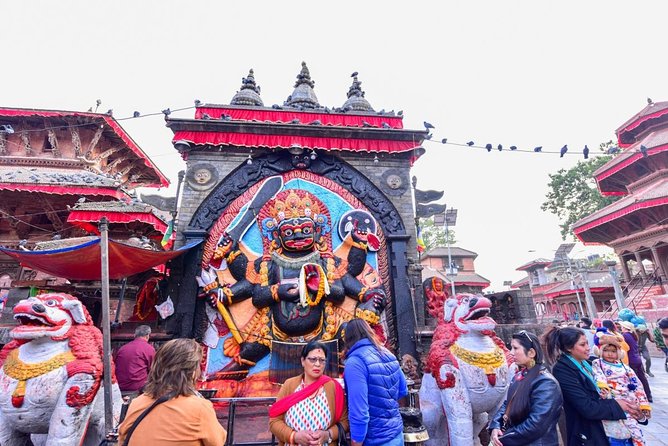
- Kal Bhairab temple
- The area connected to sacred Shiva and Parvati
- The living goddess, Kumari
That Kumari aspect is the one that often changes how people feel about this square. It is not just about stonework. It is about a living tradition tied to religious belief and community identity.
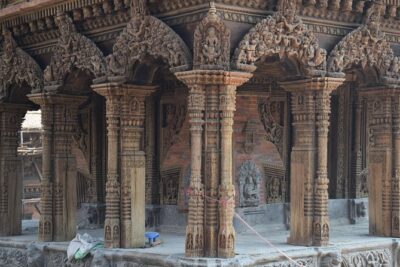
If you like details, this is your stop. The sculptures and temple structures give you lots to notice, and the layout helps you understand how a royal capital presented religion as part of daily order.
A possible drawback: this is a complex area. If you rush, you can miss connections. The hour can feel short if you want to read every carving. The workaround is simple: prioritize a few main structures, then ask your guide to point out what you should not skip.
What you get for $183, and where the value really comes from
At $183 per person, you are paying for a well-structured private day, not just transportation. The money makes sense mostly because of what is included:
Included items that improve your day
- Experienced guide who can speak English plus Chinese or Hindi
- Hotel pickup and drop-off in a private vehicle
- Guide and taxes, plus government taxes and office service charges
- Private transportation
- Lunch
- Admission tickets included at each stop
Not included, so plan ahead
- Tips, which are expected
- Personal expenses
- Insurance
- Anything not listed in the itinerary
Value reality check: if you tried to build this on your own, you would likely spend time and money coordinating multiple sites, paying separate admission fees, and arranging transport without a guide to explain what you are seeing. Here, you trade that uncertainty for a scheduled route with tickets already handled.
The group-discount note can also matter. Even though it is a private tour, the price can be more attractive when you are sharing the cost with more people in your group.
Who this tour suits best
This tour fits you if:
- You want four major UNESCO sites in one day and you do not want to plan the logistics yourself
- You like having context while you walk through sacred spaces
- You prefer a private guide and vehicle instead of squeezing into a crowded group bus
- You care about understanding Hindu and Buddhist culture as connected, not as two separate worlds
It might not be the perfect choice if:
- You want a super slow, no-pressure cultural day with long stays at fewer sites
- You get stressed by monkeys and crowded temple areas, because at least two stops are known for them
- You dislike hillside walking, since Swayambhunath and the temple layout there require stairs and uphill movement
Booking checklist before you go
Before you lock it in, think about these practical points:
- Wear comfortable shoes. You will move through multiple temple zones.
- Bring water and a small snack backup, even though lunch is included.
- Keep your valuables secure around the monkey sites.
- Plan for respectful behavior in religious spaces. This is where locals come for worship and ritual, not just photos.
Also note that the tour starts at Nepal Big Mountain Travel Co. Pvt. Ltd. on Chaksibari Marg, Kathmandu. The day ends back at the meeting point.
Should you book this Kathmandu World Heritage Sites tour?
I think you should book it if you want a high-impact introduction to Kathmandu’s UNESCO sites with a private guide who can explain the spiritual and historical connections. It is well-balanced: you get Hindu devotion at Pashupatinath, Buddhist ritual at Boudhanath and Swayambhunath, and royal-city context at Kathmandu Durbar Square, all with tickets and lunch taken care of.
If you are the type who likes to wander without structure, you may feel a bit time-boxed by the one-hour stop rhythm. But if your priority is clarity and getting to the key places efficiently, this is a strong deal for the price.
FAQ
What UNESCO World Heritage Sites are included in this tour?
The tour includes Kathmandu Durbar Square, Swayambhunath stupa, Pashupatinath Temple, and Boudhanath stupa.
How long is the Kathmandu World Heritage Sites tour?
It lasts about 6 to 8 hours.
What time does the tour start?
The start time is 9:15 am.
Is pickup and drop-off included?
Yes. Hotel pickups and drops are included in a private vehicle, and the tour ends back at the meeting point.
Are admission tickets included?
Yes. Admission tickets are included at each stop.
Is lunch included?
Yes. Lunch is included.
What languages does the guide speak?
The guide is described as experienced and speaking English, Chinese, and Hindi.
How much does the tour cost, and do I need to tip?
The price is $183.00 per person. Tips are not included and tipping is expected.
Can I cancel for a full refund?
Yes. Free cancellation is available, and you can cancel up to 24 hours in advance of the experience for a full refund.
More Historical Tours in Kathmandu
- Nepal Discovery Tour: Heritage Sites & Scenic Hill Easy Hike
★ 5.0 · 121 reviews - Kathmandu World Heritage Tour
★ 5.0 · 74 reviews - Nagarkot Sunrise & Bhaktapur UNESCO Heritage Private Tour
★ 5.0 · 66 reviews - Kathmandu Heritage Tour (Full Day)
★ 5.0 · 63 reviews
Latest Kathmandu write-ups
- Langtang Valley Trek★ 5.0 · 3 reviews
- Khopra Danda Trek★ 5.0 · 3 reviews
- Langtang Valley Trek from Kathmandu★ 5.0 · 3 reviews
- 5 night / 6 days Kathmandu Nagarkot Chitwan Pokhara tour★ 5.0 · 3 reviews
- Nepal Highlights Tour: 5 Nights 6 Days Kathmandu & Pokhara Tour★ 5.0 · 3 reviews
- Kathmandu Valley Private Day Tour★ 5.0 · 3 reviews
- Conquer the Himalayas: The Ultimate 16-Day Annapurna Circuit Trek★ 3.5 · 3 reviews
- Kathmandu Heritage Day Tour★ 5.0 · 3 reviews
UNESCO World Heritage Sites, compared.
Private Kathmandu Sightseeing Tour | UNESCO World Heritage sites
Read our review →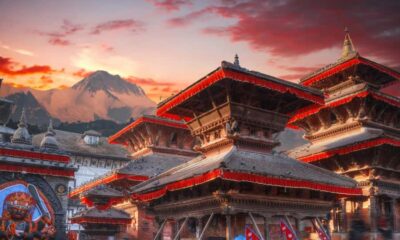
Browse the lists this tour appears in