
Namaste Cooking School is interesting because it turns Nepal’s everyday food culture into a hands-on lesson led by local women, with Sabita and Sushila setting the tone from the start. You get that warm, Kathmandu-style hospitality with a cup of masala chai, and the class is based in Thamel, where you can easily connect it with the rest of your day.
Two things I like a lot: you pick from three menu options, and you cook the meal yourself with close guidance. Plus, the session includes lunch, and you finish with a recipe book you can actually use later.
One thing to consider is that the experience depends on good weather, so you’ll want a bit of flexibility in your Kathmandu schedule.
Key things to know before you go
- Women-led instruction with Sabita and Sushila guiding the cooking and the vibe
- Three menu choices, plus time to flag allergies and dietary needs
- Spice education focused on how Nepali regional flavors come together
- Hands-on cooking while staff handle most of the cleanup
- Lunch included, so you leave fed, not just enlightened
- Small group size up to 16 people, which keeps the class friendly and interactive
Namaste Cooking School in Thamel, led by Sabita and Sushila
If you only eat Nepali food in restaurants, you miss half the story. This class gives you the other half: how people actually build flavor at home, using local ingredients and practical technique you can repeat later.
What really makes it feel personal is the leadership. You’ll be cooking with a group of women who clearly enjoy teaching, and names like Sabita and Sushila show up again and again in the way the experience is described. The welcoming start matters too, because the chai moment is not an afterthought, it is part of how the session opens.
The location is also handy. The school sits in the middle of Thamel, so you are not planning a whole expedition just to learn to cook dal and spice blends. From there, you can keep your day moving with easy access to other sights and meals.
More Cooking Classes in Kathmandu
- Half day cooking class in Thamel kathmandu
★ 5.0 · 607 reviews - Kathmandu: Local Women-Led Nepali Cooking & Momo Class
★ 4.9 · 360 reviews - The best Private Nepali Cooking Class in Kathmandu
★ 5.0 · 83 reviews
What the $30 price covers: lunch, lessons, and a recipe book
Let’s talk value, because cooking classes can range from fun to overpriced fast. At $30 per person for about 4 hours, you are paying for a structured teaching session, not just a casual cooking demo.
Here’s what you get:
You get lunch included, so you are not doubling up costs later to feed yourself. You also get guided instruction in English, and you leave with a Namaste Cooking School Recipe Book as a take-home reference.
The ingredient angle adds real value. The school emphasizes authenticity by sourcing ingredients from local farmers, so the cooking feels tied to how Nepali food is actually produced and flavored, not just how it is performed for tourists. You may not know which of those ingredients is different until you taste and cook with them yourself.
Also, the class is capped at 16 people. That matters more than it sounds. In a smaller group, it is easier to ask questions, get help with timing, and actually cook your own food rather than hover at the edge.
Step-by-step Nepali cooking: chai welcome, menu choice, and spice primer
The session flows in a way that makes sense even if you have never cooked Nepali food before.
First comes the warm welcome and masala chai. It sounds simple, but it helps you relax fast, especially if you are traveling solo. Several people highlight how friendly and upbeat the women leading the class are, and the chai is part of that welcoming tone.
Next you choose from three menu options. That selection time is also where they ask about dietary restrictions and allergies. I like this approach because it sets expectations early, and it helps the class feel safe and comfortable instead of awkward.
Then you get a short but practical intro to Nepali spices. The goal is not spice trivia for its own sake. It is to give you a mental map for what makes the dishes taste the way they do, so when you cook, you understand the purpose behind the flavor.
After that, the session moves into cooking mode. You should expect step-by-step guidance as you work, not a sink-or-swim lecture.
Hands-on cooking you control, with cleanup handled for you
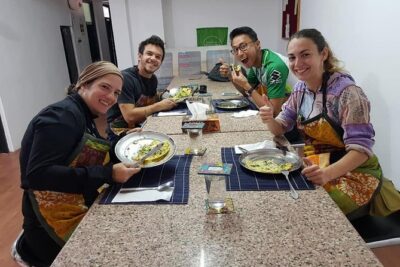
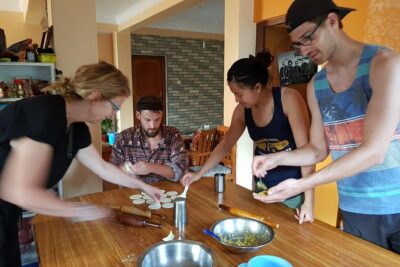
This is a hands-on class, and you should plan to cook. The best part is that the guidance is structured so you can follow along and actually produce the meal, even with zero prior experience.
One strong theme from experiences shared is how much you are doing yourself with the instructors telling you what to do next and watching closely. And yes, there is also a clear practical benefit that surprises people: you do not end up stuck doing all the cleanup. The instructors and staff handle that side, which means you can stay focused on learning and eating, not scrubbing.
In terms of atmosphere, it tends to be cheerful and social. Some sessions include lots of laughter, and you might even notice moments like dancing or singing. That kind of energy is not guaranteed every day, but the leadership style described is upbeat, so it is not a stiff classroom.
If you enjoy chatting, you may have a chance to trade stories while cooking. One account mentions that English practice and learning a few Nepali words can happen naturally during the class. That is a small thing, but it is the kind of real connection that makes food classes more than just recipes.
A different sort of day out of Kathmandu:
- Everest Base Camp Trek – 14 Days
★ 5.0 · 1,499 reviews - Everest Base Camp Trek
★ 5.0 · 842 reviews - Private Kathmandu Sightseeing Tour | UNESCO World Heritage sites
★ 5.0 · 756 reviews - Kathmandu: 7 UNESCO Sites with Lunch
★ 4.8 · 744 reviews
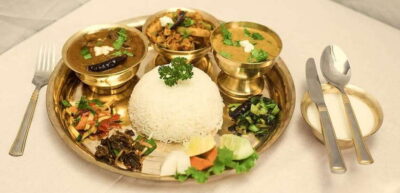
What you actually eat: lunch included, plus fresh food you cooked
You are not cooking as a hobby and then eating a sad snack later. Lunch is included, and it is part of the lesson.
Because you cook the food yourself, you get a better sense of texture and timing. You can also pay attention to how spices perform once heat and ingredients meet. That is harder to learn by just ordering food and moving on.
People also emphasize that the food is fresh and delicious, and that the dishes are easy to remake at home once you have the recipe book in hand. That is important for long-term value. The class works as a souvenir for your stomach, but also as a tool for future meals.
The Kathmandu logistics: pickup, Thamel location, and a 4-hour rhythm
The experience is listed with pickup offered, and the meeting point is shown as Tribhuvan Airport in Kathmandu. At the same time, the school is described as being in the heart of Thamel with easy access for travelers.
In plain terms, you should confirm what pickup means for your exact booking and where the driver meets you. If you are already in Thamel, you may find the logistics simpler than it sounds, but it’s smart to check so you do not waste time.
Timing is about 4 hours. That is a sweet spot for Kathmandu. It is long enough to learn the flow of a menu and get real hands-on practice, but short enough that you can still fit another activity the same day.
Also, the group size is small, and there is a mobile ticket. That setup usually makes check-in smoother, especially if you are navigating Thamel streets.
One more practical point: good weather matters. If conditions are poor, the class can be rescheduled or refunded. If you are building your itinerary, try to avoid booking this as the only plan on your tightest day.
Who this class is best for in Kathmandu (and who should skip it)
This is a great match if you:
- Want Nepali food knowledge that goes beyond eating
- Prefer learning from friendly local instructors, not just watching a cooking show
- Are traveling solo and want a welcoming, social environment
- Enjoy hands-on activities where you leave with something practical, like a recipe book
- Want a small-group experience capped at 16 people
It may not be the best fit if you:
- Have no flexibility for weather-dependent plans
- Want a purely spectator experience with zero cooking
- Are short on time and need something faster than a half-day class
If you are on your first trip to Nepal, I also think this is a smart way to learn what to look for in markets later. Once you understand how spices and local ingredients work together, you’ll read menus and spice shelves differently.
Should you book Namaste Cooking School in Kathmandu?
Yes, I think you should book it if you want a real Nepal food experience that feels human. The women-led instruction, the upbeat teaching style, and the fact that you cook your own meal put this in a different category than a basic dinner tour.
I would book it especially if you want value for money without cutting corners. Lunch is included, you get the recipe book to carry the lesson home, and the small group size makes the class feel like coaching rather than crowd control.
If you are the type who only likes “tourist food” and nothing hands-on, you might feel impatient. But if you enjoy learning by doing, this is the kind of Kathmandu activity you will remember when you cook the same flavors months later.
FAQ
How long is the Nepali cooking class?
The class runs for about 4 hours.
How much does it cost?
The price is $30.00 per person.
Is lunch included?
Yes, lunch is included.
Do they offer pickup?
Pickup is offered, and the start point is listed as Tribhuvan Airport in Kathmandu. The school itself is in Thamel, so it is worth confirming how pickup works for your specific booking.
What language is the class taught in?
The class is offered in English.
What happens if the weather is bad?
The experience requires good weather. If it is canceled due to poor weather, you will be offered a different date or a full refund.
Latest Kathmandu write-ups
- Visit Swayambhunath and Bauddhanath Stupa with Guide★ 5.0 · 5 reviews
- 10 days Annapurna Base Camp Trek★ 5.0 · 5 reviews
- Langtang Trek from Kathmandu 7 Days★ 5.0 · 5 reviews
- Island Peak Climbing with Everest Base Camp★ 5.0 · 5 reviews
- 7 Day Kathmandu Pokhara Tour★ 4.5 · 5 reviews
- Chandragiri Hill Cable Car Tour with Hotel Transfers from Kathmandu★ 4.5 · 5 reviews
- Kathmandu city day tour (4 world heritage sites)★ 5.0 · 5 reviews
- Everest Mountain Flight★ 5.0 · 5 reviews
Cooking Classes, compared.
Nepalese Momos or Dal Bhat Cooking Class (Cook with Delight)
Read our review →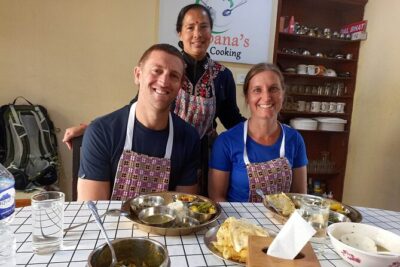
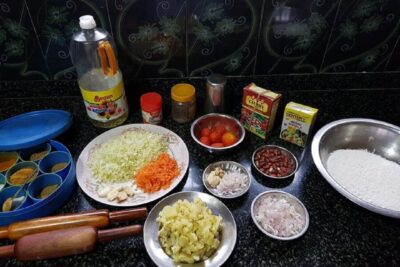
Nepalese Kitchen in Pokhara: Momos or Dal Bhat Cooking Class
Read our review →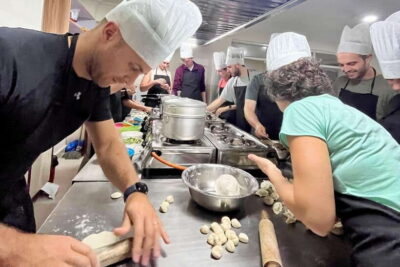
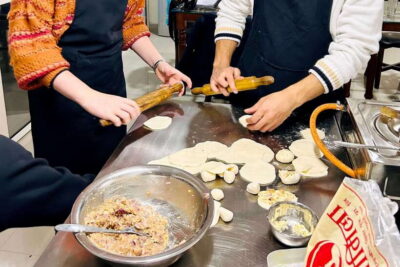
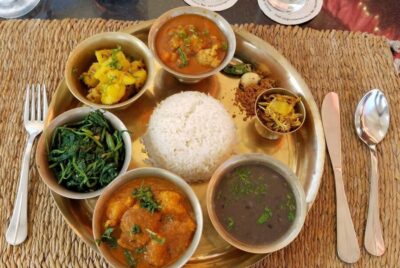
MoMo or Dal Bhat Cooking Class at Aama Kitchen in Pokhara
Read our review →Browse the lists this tour appears in