
Reviewed · UPPER MUSTANG TREK
Lower Mustang Motorbike Tour -8 Days
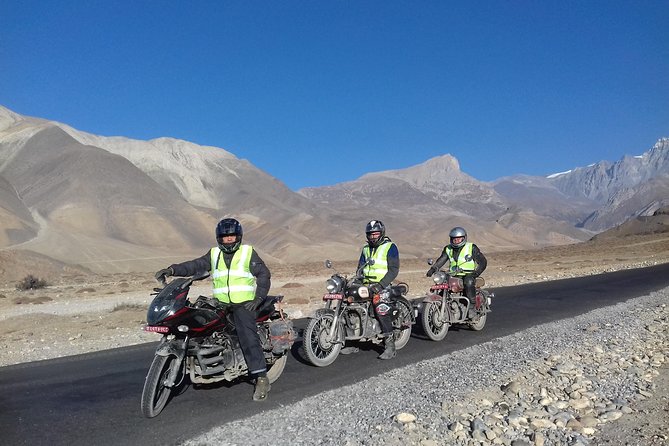
Lower Mustang on a Royal Enfield is interesting because you get a full-on ride across Nepal’s big scenery shifts, from Kathmandu’s energy to Mustang’s stark, dry mountain world. I love the classic 350cc Royal Enfield setup that keeps the focus on the road, and I love the human touch, with guides like Badri called out as calm, helpful, and high-service. One consideration: this is not a lazy sightseeing drive, you’ll face rougher gravel sections and long days, so you need strong fitness and common sense, especially if riding after dark.
You’ll also start and finish in the same place, Tribhuvan Airport in Kathmandu, with a schedule that stitches together Kathmandu, Pokhara, the Annapurna foothills, then down the Kali Gandaki corridor toward hot springs and back again. If you want a trip where your hands stay busy and the views do the talking, this is a strong match.
Must-know highlights before you plan your Mustang motorbike days
- Private, customizable ride with only your group involved, so the pace can match your comfort level
- Royal Enfield 350cc plus petrol, basic tools, and spare tyres, so you are not stuck improvising
- Permit coverage included (TIMS and ACAP), a real time-saver in Nepal
- Muktinath via Kagbeni gives you both dramatic canyon-country riding and a major pilgrimage stop
- Tatopani hot springs add a recovery day after longer canyon riding
- Guide support is a standout in reviews, with names like Badri and Bhagwat showing up often
Lower Mustang by motorbike: why this route feels different
Most Nepal trips give you a checklist of sights. This one gives you movement. You ride a Royal Enfield 350cc from Kathmandu toward Lower Mustang, then work your way through the Kali Gandaki area where the mountains feel close and the valley looks carved, not just scenic.
What makes it click is the sequence. You don’t just jump from city to temple. You build altitude and road texture in steps. Day by day you feel the air change, the hills shift from greener to drier country, and then you reach the Mustang region where the scenery turns more stark and otherworldly.
I also like that the trip is designed around practical riding realities. You get petrol support, basic tools, and spare tyres included. And you have an experienced guide who handles the “what comes next” part, so you can focus on staying smooth and alert on unfamiliar roads.
The vibe is clear in the reviews too: people remember the guide, the structure, and the way the ride kept moving without feeling chaotic. In one review, Badri is praised as always in good spirits and providing impeccable service. Another mentions a super experienced, attentive Badri guiding with timing that felt right, plus enough rest to actually look at what you are riding through.
More of Mustang and the Kali Gandaki:
- Upper Mustang Classic Trek with Local guide
★ 5.0 · 15 reviews - Upper Mustang Trek – 13 Days
★ 5.0 · 5 reviews - 12 Days Overland Tour to Upper Mustang
★ 5.0 · 4 reviews
The base cities: Kathmandu and Pokhara set you up for the ride
Your tour starts at Tribhuvan Airport in Kathmandu, with a start time of 8:00 am. You’ll be met by the tour team, and luggage is handled so you can focus on getting ready for the bikes.
Kathmandu (2 nights, 3-star hotel with breakfast) works as a prep zone. You get the time you need to settle in after arrival, confirm details, and prepare mentally for the riding days ahead. It also helps that the route begins from a predictable place. Many road trips in Nepal start with extra transfers. Here, you start near the airport, then later you return to the same area at the end.
Then you hit Pokhara (2 nights, 3-star hotel with breakfast). Pokhara is not just a bed stop. It’s where the trip switches from highway pace to higher, rougher roads. You also get breathing room built into the plan, including time to explore around Lakeside Pokhara. If you like a last chance for a coffee, a stroll, or easy shopping before the tougher days, this timing is useful.
Day 1, Kathmandu arrival: make your first day easy
On day one, you land, meet the tour representatives, and get rolling with your luggage. The tour framing is simple: you arrive, you get oriented, and you’re not thrown straight onto a long riding day.
Practical tip: keep your first day flexible. Your body is adjusting to altitude and the pace of Nepal. Use the time to pack your riding essentials. Think phone battery, charging plans, a dry bag for documents, and any comfort items you prefer on long days.
Day 2, Kathmandu to Pokhara by Prithvi Highway: warm-up miles
Day two is a classic start, a ride of about 210 km taking roughly 7 to 8 hours from Kathmandu to Pokhara. The route follows the Prithvi Highway, with highway sections mixed with winding roads and valley views.
What you’ll notice is the variety in the drive itself. You’ll likely stop for authentic Nepali cuisine and photo opportunities along the way. Those breaks matter because day three turns more rugged. A warm-up day you can stretch into, rather than rush, makes a big difference.
If you’re new to motorbike travel in the region, this is the day to set your habits. Stay consistent on speed, avoid aggressive lane changes, and take short stops instead of waiting until you feel drained.
More motorbike trips in Kathmandu:
- 7 days Nepal Motorcycle tour
★ 5.0 · 12 reviews - 8-Day Guided Sightseeing Motorcycle Tour of Manang with Meals
★ 5.0 · 4 reviews - Evening Roaming to North Lakeside with Motorcycle
★ 5.0 · 7 reviews
Day 3, Pokhara up to Kalopani: gravel and cooler air
Day three takes you from Pokhara toward Kalopani, about 125 km and 5 to 6 hours. This is where the roads become more serious. The route includes rougher sections and gravel roads, and the air typically cools as you gain elevation.
Kalopani sits near the foothills area (Dhaulagiri and Annapurna region), and it’s described as a peaceful village with a mix of Tibetan and Thakali culture. That matters because you are not only riding. You’re also getting an actual resting base with lodges that feel right for tired legs.
Drawback to keep in mind: gravel can be tiring. Even if you are confident on a bike, day three asks your core and hands to work. Plan to ride smoothly, keep your posture relaxed, and expect that “settling in” takes time.
Day 4, Jomsom to Muktinath via Kagbeni: canyon riding plus a major temple
Day four is a focused Mustang-region day, with a ride from Jomsom to Muktinath via Kagbeni. It’s about 40 km and typically 2 to 3 hours. The key point is that it’s scenic and concentrated, not long and grindy.
You’ll ride northeast along the Kali Gandaki River, passing through Kagbeni, a village with local life that you see up close as you move through the area. Then you reach Muktinath Temple, a pilgrimage site set in dramatic mountain surroundings.
This is one of the most meaningful parts of the tour, because the road and the destination connect. You arrive at the temple after riding a deep river valley corridor, so the religious stop doesn’t feel like a random box-check. It feels like the region’s culture is right next to the riding.
Practical tip: Muktinath is a pilgrimage stop, so dress respectfully and bring layers. Even when the day is clear, mountain air can turn cool fast.
Day 5, Muktinath down to Tatopani: Kali Gandaki Gorge and hot springs recovery
Day five is about descent and recovery. You ride about 70 km over 4 to 5 hours from Muktinath down toward Tatopani.
The route passes through the Kali Gandaki Gorge, described as one of the world’s deepest canyons, with dramatic cliff views and a river running below. This is another day where the scenery is there, but you will still feel the work in your wrists. Canyon driving often means a mix of tight turns, attention, and concentration.
Then you get the payoff: Tatopani, which means hot water, is famous for natural hot springs. After a longer day of riding, soaking is a simple, smart way to help your body reset. It also breaks up the mental load. You get to stop being “in riding mode” and shift into “rest and recover mode.”
If you ride daily, hot springs are not a luxury, they are maintenance. Pack a towel or be ready to follow lodge guidance, since “hot water” plans depend on where you stay.
Day 6, back to Pokhara: smoother descent and time to breathe
On day six, you ride back to Pokhara, about 102 km and 4 to 5 hours. The ride combines scenic views with relatively smoother roads as you descend from the highlands back into lush valley country.
This is your decompression day. When the route is less technical, you can focus more on enjoying the ride rather than fighting it. Once you arrive, you have time to explore around Lakeside Pokhara, grab food, and even consider a boat ride on Phewa Lake if that’s your style.
This is also when I’d sort out anything you need for the final long ride to Kathmandu. Check your bike’s basic condition, confirm spare tyre use if any, and recharge batteries you care about. The tour includes basic tools and spares, but personal comfort still depends on your planning.
Day 7, Pokhara to Kathmandu: the long return ride and a farewell dinner
Day seven takes you back to Kathmandu, about 210 km over 7 to 8 hours along the Prithvi Highway again. You’ll recognize stretches, but you will also see different angles depending on light and weather.
After you arrive, you get a farewell dinner at a local Nepali restaurant, including a cultural performance. This is a satisfying ending because it marks closure in a way that a hotel check-in never does.
One caution from a review stands out here: roads can be very dangerous during the night, so I strongly suggest you treat timing seriously. If your day’s schedule puts you at risk of dark riding, ask the guide what the plan is. Don’t assume “it will be fine.” In mountain terrain, visibility and reaction time matter.
Day 8, depart Kathmandu: keep time buffers
On day eight, you leave after breakfast and head to Kathmandu Airport. The plan mentions you might have time for last-minute shopping or a quick visit to heritage sites depending on your flight schedule.
If you want souvenirs, do it the day before where possible. Riding tours can leave you tired and slow the morning you depart. A little buffer keeps the end stress low.
What’s included, and why that matters for value
At $1,500 per person for an 8-day Lower Mustang motorcycle experience, value comes from what’s handled for you, not just the scenery.
Here’s what you should feel confident about being included:
- Royal Enfield 350cc motorbike, plus petrol, basic tools, and spare tyres
- Accommodation: 2 nights in Kathmandu and 2 nights in Pokhara at 3-star hotels with breakfast, plus lodges/tea houses on twin sharing during the tour
- Guiding and support: an experienced, helpful guide, plus a first aid kit
- Permits: TIMS and ACAP permits included, which reduces your admin stress
- Meals in specific parts: you have breakfast (4) plus dinner, including the last-night farewell dinner with cultural performance
What that means in real life: you don’t have to scramble for bike essentials, and you are not worrying about entry permits. Your money goes toward the heavy-lift logistics, the ride itself, and the parts that tend to trip people up.
Also, this is a private tour/activity, so you don’t share the bike time or schedule with strangers. For many road travelers, that matters more than saving a few dollars.
What’s not included, and the trade-offs you should plan for
A few things you need to budget for or prepare yourself:
- All meals are not included. Lunch and other meals beyond the listed breakfasts and dinners are on you.
- Bike insurance is not included, and motorbike damage is not included. Also means you should consider your own coverage approach and riding responsibility.
- Personal expenses like phone calls, laundry, bar bills, battery recharge, bottle or boiled water, and hot shower costs may not be covered.
- Motorbike insurance and damage risk are the big “read the fine print” items, because you can be a careful rider and still face bad luck.
Practical tip: on day rides in rough terrain, you can also run through water and recharge needs faster than you expect. Carry cash for small expenses and confirm what the lodge offers.
How fit and skill level should shape your expectations
The tour calls for strong physical fitness. That makes sense because long riding days plus gravel sections can be tiring even for experienced riders.
You don’t need stunt skills, but you should be comfortable:
- riding for long stretches (days around 7 to 8 hours on the highway)
- handling uneven surfaces when roads turn gravel
- staying alert in mountains where daylight changes fast
- being patient during cultural stops like Muktinath
If you’re sensitive to long hours in a saddle, this route may feel like a workout rather than a scenic cruise. If you like hands-on travel and want the road to be the main character, you’ll likely love it.
Guide quality is not a small detail here
The reviews put a lot of weight on the guide. Names like Badri come up repeatedly, praised for impeccable service, attentiveness, and good spirits. Another name, Bhagwat, is mentioned for being accommodating and responsive from early contact.
Even if your guide is different, the pattern is consistent: this tour wins because someone is actively managing timing, support, and the practical flow of the day.
Look for that kind of guidance when you book. You want someone who explains what’s next, keeps rest breaks reasonable, and helps you feel confident on the bigger road days.
Should you book the Lower Mustang motorbike tour?
Book it if you want a real riding adventure where the route changes the scenery dramatically, you want support handled for you, and you enjoy rugged roads more than neat, controlled tours. The mix of Kathmandu, Pokhara, Kali Gandaki Gorge, Kagbeni, Muktinath, and Tatopani hot springs gives you variety that feels earned, not random.
Skip it or rethink the fit if you strongly prefer short travel days, minimal rough-road riding, or you are not comfortable budgeting for extra meals and personal costs. Also think hard about the parts not included, especially bike insurance and potential motorbike damage costs. If you can ride calmly and plan ahead, this tour is a strong match for the kind of traveler who remembers the road long after the photos fade.
FAQ
Where does the Lower Mustang motorbike tour start?
It starts at Tribhuvan Airport in Kathmandu, Nepal.
What time does the tour start?
The start time is 8:00 am.
Is pickup offered?
Yes, pickup is offered.
What motorbike is included?
You get a Royal Enfield 350cc motorbike.
What permits are included?
The tour includes TIMS permit and ACAP permit.
How many nights of hotel stay are included in Kathmandu and Pokhara?
It includes two nights in Kathmandu in a 3-star hotel with breakfast, and two nights in Pokhara in a 3-star hotel with breakfast.
Are meals included?
Breakfast is included (4 breakfasts), and dinner is included, including the last night farewell dinner. All other meals are not included.
Does the tour include medical support?
Yes, medical supplies are included, with a first aid kit available.
Is the tour private?
Yes. It is a private tour/activity, only your group will participate.
Is there a vegetarian option?
Yes, a vegetarian option is available. You should advise at booking if you need it.
Latest Kathmandu write-ups
- 16 Days Island Peak Climbing With Everest Base Camp Private Trip★ 5.0 · 3 reviews
- 15 Days Round Annapurna Trek with Poon Hill from Pokhara★ 5.0 · 5 reviews
- Private Nepal round trip including Ghorepani Poonhill trek★ 5.0 · 3 reviews
- Everest Base Camp Trekking 16 Days★ 4.0 · 7 reviews
- 14 Days Luxury Annapurna Base Camp Trek★ 5.0 · 6 reviews
- Everest Base Camp Trek★ 5.0 · 32 reviews
- Everest Base Camp Trek★ 5.0 · 87 reviews
- Everest Base Camp Trek★ 5.0 · 97 reviews
Upper Mustang Trek, compared.
2-Day Scenic Mustang Tour: Pokhara to Jomsom, Kagbeni & Muktinath
Read our review →
Browse the lists this tour appears in