
Reviewed · MANASLU CIRCUIT TREK
Manaslu Circuit Trek:
The Manaslu Circuit Trek is one of Nepal’s most scenic “work for the views” routes, and that restricted feel is part of the magic. You’ll circle Mount Manaslu (8163m) and work your way toward the Larkya La Pass, where the air gets thin and the panoramas can be unreal. This trip also sneaks in a lot of culture, from Gurung and Tamang communities to Tibetan-influenced trading villages.
I really like how the trek rhythm is built for real trekking, not rushed sightseeing. I’d also pick this itinerary for the way the team supports acclimatization, with guides like Suraj and Suman being praised for patient pacing and encouraging breaks when your body needs them.
The main drawback to plan around is weather. Even on the best schedule, clouds can swallow the summit views, and the Larkya La Pass day is still demanding because of altitude and long walking time.
Key highlights worth knowing
- Restricted Manaslu route: You get the off-the-beaten-track feeling, plus the permits are included.
- Airport pickup and full ground transport: Kathmandu to trail start, plus the return to Kathmandu.
- Acclimatization stop in Samagaon: A dedicated rest day before going higher.
- Tea house trekking setup: 11 nights in local lodges with twin sharing (no camping required).
- High pass day drama: Early start and a steep push to the pass above 5,100m.
- Guides and porters get real praise: People repeatedly mention standout care and support from guides and porters like Kam(i), Bardan, and others.
Why Manaslu feels special, even before the first step
Manaslu has a “permission only” vibe, and you feel it as soon as you start moving. It’s not just about geography, it’s about access. Your trek package includes the necessary trekking permits (TIMS, Manaslu special permit, and ACAP), which matters here because this region is tightly managed.
What I like most is how the trail blends big mountain payoff with everyday life. You walk through terrace farms, rhododendron forest zones, and villages where monasteries and daily trading still shape the pace of the valley.
And the scale helps. The circuit covers about 177km, spread across roughly 10 to 15 days in general, and this version stretches it into a steady 14-day flow.
More of the Manaslu Circuit:
- Manaslu Circuit Trek
★ 5.0 · 292 reviews - Manaslu Circuit Trek (15 Days)
★ 5.0 · 50 reviews - Manaslu Circuit Trek
★ 5.0 · 35 reviews
The Kathmandu start: briefings, group dinner, and getting your footing
Day 1 is all about settling in and getting your bearings. You arrive in Kathmandu, get transferred to your hotel, then meet your guide and staff for a group briefing that covers do’s and don’ts for trekking in the Manaslu region.
A bonus here is the group dinner at a typical Nepalese restaurant. It’s a small thing, but it helps you sync up with your walking partners and get comfortable with the team before the real work starts.
Many people also highlight that airport pickup and post-trek hotel selection were handled smoothly in Kathmandu. So if your first day includes jet lag, this part still feels manageable.
Day 2 overland to Machha-Khola: swapping cars for rivers
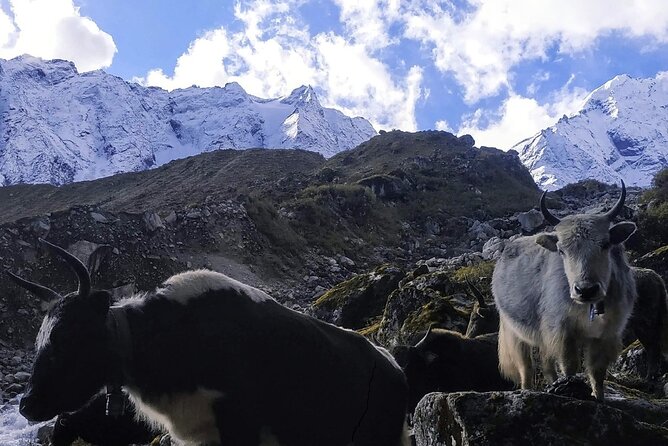
On Day 2, you trade Kathmandu traffic for an overland journey into the Gorkha district. The route pushes you toward Arughat (a warmer, subtropical-feeling area), then continues by dirt road for a stretch before you reach your first overnight at Machha-Khola, a small farm village that grows more “town-like” thanks to motorable road access.
This overland day is practical for two reasons. First, it saves your legs early in the trip. Second, it sets expectations for the rest of the circuit: you’re always walking alongside rivers and switching between uphill and downhill, not just climbing straight upward.
Days 3 to 5: rivers, hot springs, and village stairs that add up
More to compare around Kathmandu
- Kathmandu: 7 UNESCO Sites with Lunch
★ 4.8 · 744 reviews - Everest Base Camp Helicopter Tour landing at Everest View Hotel
★ 5.0 · 668 reviews - Kathmandu: Local Women-Led Nepali Cooking & Momo Class
★ 4.9 · 360 reviews - Kathmandu: Food and Drink Walking Tour
★ 4.9 · 292 reviews
Day 3, Tatopani and Jagat
Day 3 moves from Maccha-Khola up to Khorla-Beshi and onward toward Tatopani, literally hot water. If the timing works and you have energy after walking, you can enjoy natural warm bathing at the hot springs before continuing up to Jagat for the night.
This is one of those days where the altitude shift is subtle but constant. You’ll feel the climb, but it’s not the scary part yet. It’s a warm-up for the mental side of trekking, meaning you learn how often you’ll need to slow down and how good breaks feel.
Day 4, Philim to Deng
Day 4 continues higher with rural farm villages, then includes a crossing over a bridge to Nugget and continues toward Philim, one of the larger villages in this remote farm country. From there, you follow terraces of wheat and barley, then climb into bamboo forest before reaching Deng for overnight.
The best part of days like this is the variety in motion. You’re not stuck in the same scenery style for hours. Forest, ridges, farm terraces, and river crossings keep your senses awake.
Day 5, Bihi Bazaar, Numrung, and Lo Gaon views
Day 5 starts with a morning walk from Dyang toward a cooler region and increased altitude gain. You reach Bihi Bazaar near the river, then follow the Buri Gandaki River through farm villages and cultivated fields of barley, wheat, and millets.
The day keeps building as you pass through places like Banjham, Lhi, and Sho, then climb toward Shrimp village before continuing to Lo Gaon, a location with excellent views of the Manaslu north face.
One practical note: these longer days can feel “easy” in the first hour and hard by the fifth. Your guide’s pace plan matters here, and people repeatedly mention that leaders encouraged frequent breaks to help with acclimatization.
Day 6 to 8: Sama Gaon acclimatization and Tibetan-style culture
Day 6, toward Sama-Gaon
Day 6 fades out the lower tree lines, then moves through juniper bushes and willow trees. The trail faces peaks, and the day ends in Sama-Gaon, one of the larger villages in the remote north mid-west Himalaya region. It’s also on the route toward Manaslu base camp, Larke-la pass, and even the Tibet border area.
This day is valuable because it helps you settle into higher altitude life without jumping too fast. Tea house trekking at this stage starts feeling different. Your breath gets louder, and you drink more water simply because your body asks for it.
Day 7, Manaslu views from Lho and Syala
Day 7 is a scenic push toward Samagaun, with standout viewpoints in Lho and Syala. The walk includes pauses where you can see Mount Manaslu in a way that makes it feel close, almost too large for your brain to process.
This is also where the circuit starts to feel “big.” You’ll realize you’re not just hiking, you’re crossing a cultural and altitude zone.
Day 8, rest day in Samagaon
Day 8 is a true rest day in Sama Gaon. It’s built for acclimatization, and you’ll use it to recover, eat well, and prepare for the higher section toward base camp country around 4,800m.
Many trekkers treat this day like a luxury. I treat it like a necessary investment. If you ignore acclimatization and rush ahead, the rest of the trek punishes you later.
Day 9: Samdo, the last village before the high pass work
Day 9 goes from Sama Gaon up to Samdu and then onward to Samdo for overnight. Samdo is described as the last village before the Larke-la pass area and it has a strong Tibetan influence because it’s close to the border, with trade still happening.
This is where your priorities shift. The goal isn’t just to arrive, it’s to arrive feeling calm and strong. You might walk slower because the dry air can make movement feel slower even when the trail looks familiar.
Day 10: Dharmasala (Larke Phedi) and the blue sheep possibility
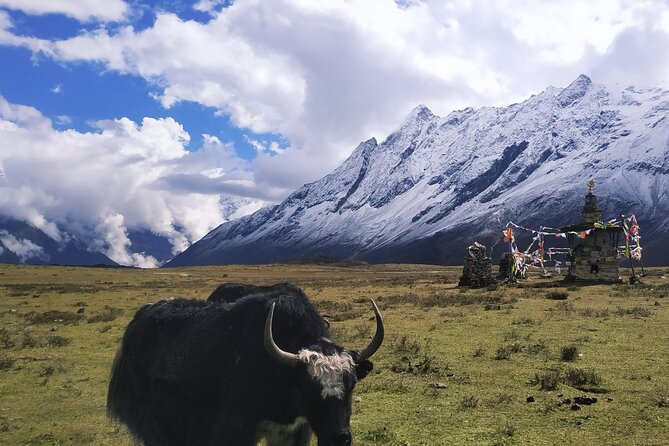
Day 10 is a downhill to the Budhi Gandaki River, then a cross and a climb back up. You’ll pass through Larkya Bazaar and the valley of Salka Khola toward Dharmasala, also known as Larke Phedi, where you stay overnight.
The itinerary notes a high chance of seeing blue sheep. You should treat that as a possibility, not a guarantee, but it’s a fun one to keep in mind during your walks.
This day matters because it sets up the pass crossing. By the time you’re in Dharmasala, you’re ready for early starts, extra warm layers, and a mindset of slow effort.
Day 11: Larke-la Pass crossing, prayer flags, and long downhill work
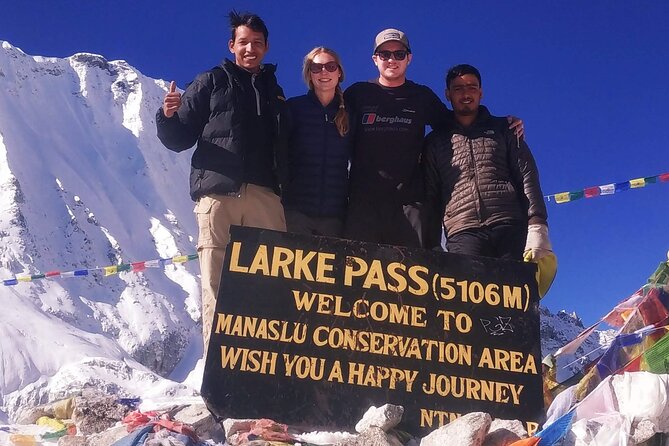
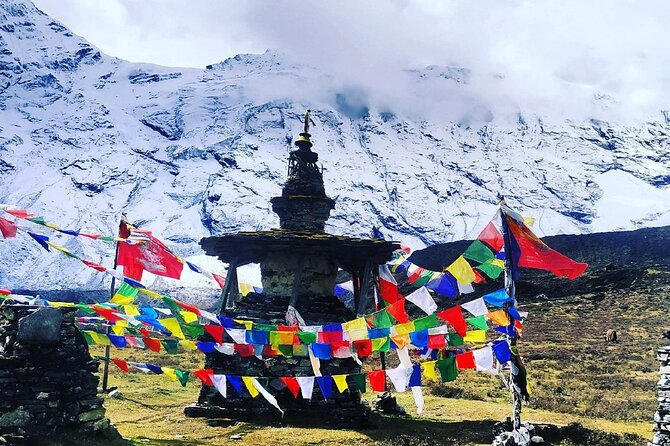
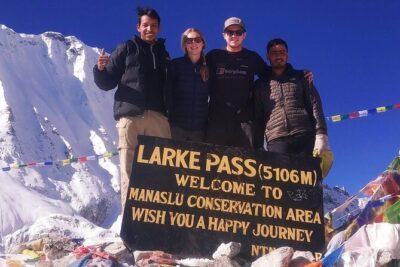
This is the headline day. You start much earlier in the morning and climb to the top of Larke-la pass above 5,160m. Along the way, you’ll gain altitude gradually, then hit a steep climb to the highest spot of the adventure decorated with colorful Buddhist prayer flags and stone piles.
From the pass, the views described include Himlung, Cheo Himal, Kang Guru, and Annapurna II. Then you transition into the long downhill, including walking over snowy and screen areas, to reach Larcia, then continue to Tambuche at 3,900m and finally to Bhimtang for overnight.
Here’s the practical truth: even if you’re in good shape, altitude changes everything. People in the group who have strong trekking legs still need time on this day because the effort is mostly breathing, not muscle.
If the weather cooperates, this is when you get the best “I can’t believe I’m here” moments. If it doesn’t, you’ll still finish the pass, just with fewer far-distance views. Either way, this day is the payoff for your patience.
Day 12: From Bhimtang down to Tilje, then a jeep to Besisahar
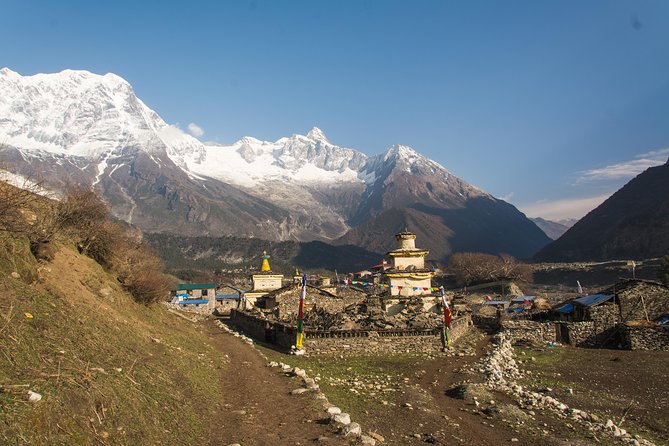
Day 12 is a mix of walking and transition. You leave Bhimtang and go downhill into forest passing small summer settlements. Then you climb on terraced fields to Karche La, and descend toward the Marysangdi River.
After a few hours, you reach Tilje, pass villages including Thonje, then from Tilje there’s an hour and last climb, crossing a bridge and joining the main trail in Dharapani. After that, you take a sharing jeep to Besisahar, roughly four hours.
Two useful things to know about this day. First, it’s a morale day because you’re headed toward the end of the circuit loop. Second, it’s physically mixed, so don’t assume “downhill equals easy” since you still have river, bridge, and final trail junction time.
Day 13 and 14: back to Kathmandu, plus time to decompress
Day 13 is your drive back to Kathmandu. The route goes along farm villages and terraced fields, passing through Besisar before returning on a good road to Kathmandu. You’ll have afternoon free time to relax after the trek.
Day 14 is departure day, based on your international flight time.
This is also when you’ll feel the trek in your body. Your legs might be mostly okay, but your sleep can be weird for a night or two after high altitude. Plan for low-key time in Kathmandu, not extra sightseeing marathons.
Price and value: what $1,099 covers (and what you still handle)
At $1,099 per person for about 14 days, the value comes from what’s already organized. Your package covers all ground transportation, two night hotel stays in Kathmandu with breakfast, trekking permits (TIMS, Manaslu special permit, and ACAP), and a government registered expert trekking guide.
Food and shelter are also handled. You get 11 nights in local tea houses with twin sharing, and meals during the trek are included, described as breakfast 11, lunch 12, dinner 11. You also get three times tea or coffee during the trek, plus seasonal fruit.
A sneaky value point is gear support. Nepal High Trek provides a down jacket and sleeping bags if you need them. That can save you money if you don’t already own cold-weather gear that handles high altitude nights.
What you still pay for yourself is also clearly defined. Travel and rescue insurance isn’t included, and you’ll cover personal expenses like phone calls, laundry, battery recharge, bottle of water, and hot water or showers. Tips for the guide and porter are also not included.
So, is it good value? If you want less stress and more structure for permits, transport, lodging, and guiding, the package makes a lot of sense. If you’re the kind of traveler who likes to self-arrange everything, then this price reflects convenience, not just services.
Lodges, meals, and the comfort level you should expect
Tea house style can mean different levels of comfort, but what comes through in the experience is that lodge selection is taken seriously. People mention good lodge choices, and the itinerary includes overnight stops in villages like Jagat, Numrung, Lo Gaon, Sama Gaon, Samdo, Dharmasala, Bhimtang, and then toward Dharapani.
One practical tip: don’t wait until you’re exhausted to eat or drink. Tea house days work best when you keep energy steady, especially on days leading to higher points.
Also, hot showers and extra comforts are often not free in mountain lodges. If you care about warmth, plan to pay for it or accept a simple wash. Your feet will thank you either way.
Weather reality: the pass views depend on clouds
The Manaslu Circuit is tied to mountain weather. When skies are clear, the views get dramatic, and trekkers mention that some trips had clear weather in April with great panoramic scenes.
But when weather turns, you might still walk the same trail with fewer summit angles and softer horizons. This is normal, not a disappointment. Bring a mindset that says I’m doing the crossing no matter what I see from it.
Layers are your friend. Cold at 5,000m plus is not a maybe, it’s a yes.
Who this trek is best for
This trek fits people with moderate physical fitness who can handle long days, changing altitude, and a high pass. You’ll be walking much of the time, and the best results come from being ready to slow down on purpose.
It’s also a great choice if you prefer an organized private group experience, since this is described as private with only your group participating.
If you like villages, river paths, and cultural stops as much as summit photos, you’ll have a good time. If you only want flat walking with guaranteed views, you might find it too challenging and too weather-dependent.
Should you book this Manaslu Circuit Trek?
Yes, consider booking it if you want a structured, well-supported Manaslu Circuit that handles permits, transport, lodging, and guidance, while still giving you real trekking days. The standouts in the experience are the careful pacing for acclimatization (especially around the big altitude jump), the praised guide care from people like Suraj and Suman, and the way the itinerary spreads effort across the circuit instead of racing ahead.
Skip it only if you know you hate altitude days or you absolutely need guaranteed Larkya La Pass visibility. You can still cross the pass in poor weather, but the scenery will not always deliver the same crisp, far-reaching views.
If you want a genuine restricted Himalayan circuit with thoughtful support and a real sense of place, this is a strong pick.
FAQ
How long is the Manaslu Circuit Trek?
The trek is listed as 14 days approximately, with a full return trip back to Kathmandu and departure on the final day based on your flight time.
What is included in the trek price?
The package includes all ground transportation, two nights of hotel in Kathmandu with breakfast, trekking permits (TIMS card, Manaslu special permit, and ACAP permit), meals during the trek (breakfast, lunch, and dinner as scheduled), tea or coffee three times during the trek, seasonal fruit, and 11 nights of tea house accommodation in twin sharing.
Do you provide a guide and porter support?
Yes. The trek includes a government registered expert trekking guide, and porter support is part of how the trek is run. Tips for guide and porter are not included.
Is airport pickup and transfer included?
Pickup is offered, and all ground transportation is included. You’ll be transferred from Kathmandu international airport to your hotel on arrival and driven back to Kathmandu near the end of the trek.
Does this trek include lodging or do I camp?
You sleep in local tea houses for 11 nights during the trek. There is also hotel accommodation in Kathmandu for two nights.
Do you provide trekking gear like cold-weather sleeping bags?
Yes, Nepal High Trek provides a down jacket and sleeping bags if you need them.
What is the highest point on this trek?
The itinerary highlights crossing Larkya La Pass above 5,100m, with the pass described as around 5,106m in the overview and above 5,160m in the pass day description.
Is there time built in for acclimatization?
Yes. There is a rest day in Samagaon (Sama Gaon) described as an ideal acclimatization stop before the higher section.
Do I need travel and rescue insurance?
Travel and rescue insurance is not included. The package also includes medical supplies on the trek (first aid kit), but you should still arrange your own insurance.
Can I cancel for a full refund?
Free cancellation is available. You can cancel up to 24 hours in advance for a full refund, and within 24 hours there is no refund.
Latest Kathmandu write-ups
- 16 Days Island Peak Climbing With Everest Base Camp Private Trip★ 5.0 · 3 reviews
- 15 Days Round Annapurna Trek with Poon Hill from Pokhara★ 5.0 · 5 reviews
- Private Nepal round trip including Ghorepani Poonhill trek★ 5.0 · 3 reviews
- Everest Base Camp Trekking 16 Days★ 4.0 · 7 reviews
- 14 Days Luxury Annapurna Base Camp Trek★ 5.0 · 6 reviews
- Everest Base Camp Trek★ 5.0 · 32 reviews
- Everest Base Camp Trek★ 5.0 · 87 reviews
- Everest Base Camp Trek★ 5.0 · 97 reviews
Manaslu Circuit Trek, compared.
Experience the Thrill of a Lifetime:12-Days Manaslu Circuit trek
Read our review →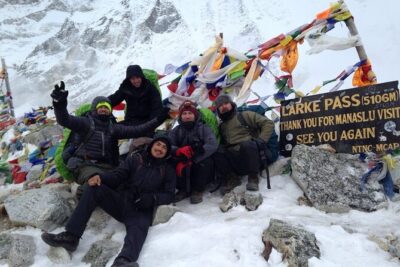
Browse the lists this tour appears in