Reviewed · TOURS
Nepal and Bhutan Tour – 12 Days
What makes this Nepal and Bhutan tour so interesting is the speed of the switch in spiritual vibe, from Kathmandu’s temple-culture to Bhutan’s dzong-centered way of life. I especially love the chance to see Boudhanath Stupa and Pashupatinath in one smooth, guided day, because you get context without guessing what you are looking at.
My second big plus is the Chitwan plan. I like that the animal program is built around ethical animal interactions, with a clear stance against elephant safaris and elephant baths, while still giving you the classic park experiences like Jeep safaris and canoe rides. One possible drawback to plan for: you may come face-to-face with religious practices during temple visits, including Hindu cremation activity near the Bagmati River at Pashupatinath, and you should tell your guide if that feels uncomfortable.
Key highlights worth your attention
- Kathmandu heritage day: Boudhanath Stupa, Pashupatinath, and Kathmandu Durbar Square in one organized route
- Pokhara at the right times: Sarangkot sunrise plus lake time on Phewa Lake
- Chitwan ethics with real wildlife time: no elephant safaris or baths, plus canoeing on the Rapti River
- A Bhutan introduction that goes beyond photos: Thimphu workshops like incense making and textile weaving
- Punakha dzong at the river junction: Pho Chu and Mo Chu meet, then you hike for a scenic chorten
- Tiger’s Nest hike planning: a 2 to 3 hour climb (option for a pony for part of it) plus practical comfort tips
Nepal and Bhutan in one trip: what you are really signing up for
This tour is for people who like two things at once: clear logistics and meaningful cultural stops. In 12 days you will cover major stops in Nepal, then cross into Bhutan for a very different pace and approach to travel.
The pacing works best if you accept that you are not doing one “light” sightseeing day after another. You have early starts, long road days, and at least one serious hike (Tiger’s Nest). If you like travel that has shape, this is that kind of plan.
Also, this is a private group tour. That matters more than most people think. Your guide can adjust when you ask a question, and you are not stuck watching a cookie-cutter show that ignores your comfort level.
More to compare around Kathmandu
- Everest Base Camp Trek – 14 Days
★ 5.0 · 1,499 reviews - Everest Base Camp Trek
★ 5.0 · 842 reviews - Private Kathmandu Sightseeing Tour | UNESCO World Heritage sites
★ 5.0 · 756 reviews
Day 1 in Kathmandu: the airport meet and your first feel for the city
You start with a Peregrine representative greeting you at the airport and walking you to your hotel. Later that afternoon you meet your tour leader for a briefing covering trip details and the schedule. If something changes last-minute, you talk it through with the leader so you are not left guessing.
Your time that evening is free, and I like how Kathmandu opens in a low-pressure way. After check-in, you can go for a walk and start noticing how the city mixes old and new architecture. Even just a short stroll helps you orient before the UNESCO-heavy day that follows.
Practical note: you are arriving to Nepal’s capital after international travel. Keep your first night simple, hydrate, and aim for sleep. Kathmandu is active, and your next day starts with major sights.
Kathmandu heritage day 2: Boudhanath Stupa, Pashupatinath, and Kathmandu Durbar Square
This is the day most people will remember, because it compresses three different “reads” of Kathmandu into one guided loop.
Boudhanath Stupa
Boudhanath sits at the heart of the Tibetan trade history with Kathmandu, and the stupa itself is massive and distinctive. What I like about going here with a guide is that you learn what to look for beyond the photo. Even if you do not know the details, you can pick up the rhythm of the place: pilgrims moving, prayer wheels turning, and the stupa giving off this constant, grounded energy.
A different sort of day out of Kathmandu:
- Kathmandu: 7 UNESCO Sites with Lunch
★ 4.8 · 744 reviews - Everest Base Camp Helicopter Tour landing at Everest View Hotel
★ 5.0 · 668 reviews - Half day cooking class in Thamel kathmandu
★ 5.0 · 607 reviews - Everest Base Camp Trekking
★ 5.0 · 485 reviews
Pashupatinath Temple area
Next is the Hindu temple complex of Pashupatinath, which dates back to the 5th century. It sits along the Bagmati River, and that location is the key point. You might see funerals and cremations along the river ghat.
If you think you may find that uncomfortable, this tour gives you a straightforward option: tell your guide. I recommend doing it early, not in the moment. A good guide will adjust how you move and what you see.
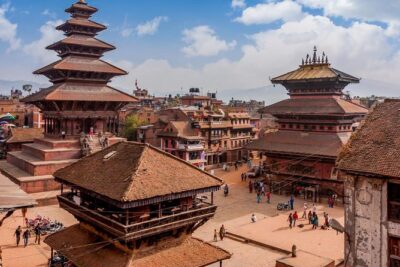
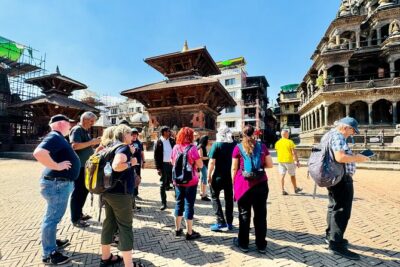
Kathmandu Durbar Square
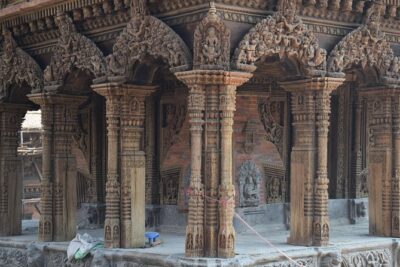
Finally, you walk around Kathmandu Durbar Square, one of the Durbar Squares in the Kathmandu Valley. The architecture here points back toward earlier periods, including Lichhavi-era influences reaching back centuries.
This day is active on purpose. You are not just touring buildings, you are seeing how different traditions share space, time, and daily life in the city.
The road to Pokhara day 3: 200 km of views and a long sit
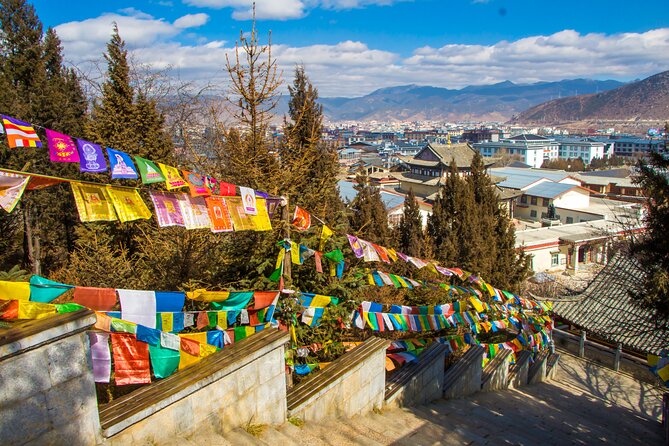
Day 3 is a scenic drive of about 200 kilometers, roughly 7 to 9 hours by road, using the Prithvi Highway. You travel through Nepal’s central countryside, with rivers, mountains, and villages sliding by.
This is one of those travel days where comfort matters. The vehicle is air-conditioned, which helps if the heat is intense. Still, plan for a long sit. Bring a water bottle, keep a light snack handy, and give yourself permission to rest.
Pokhara is where the tour’s vibe softens, and that contrast is why the long drive is worth it.
Pokhara day 4: Sarangkot sunrise, Phewa Lake, and the caves and falls combo
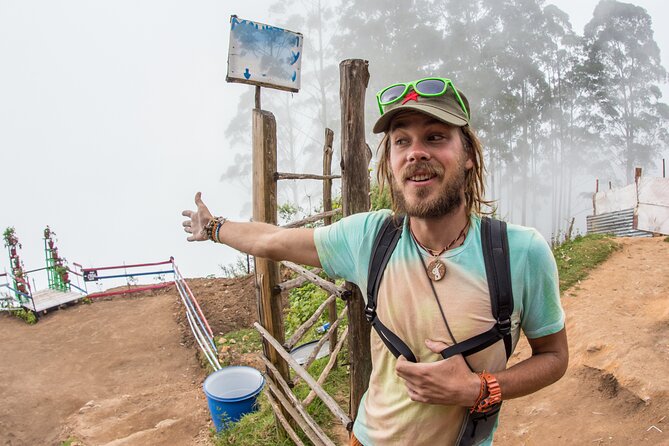
Pokhara is famous for views, but this day is designed so you get them more than once.
You start with sunrise from Sarangkot, then head down for lake time on Phewa Lake. Boating here is a gentle break after a cold morning. If you can, bring a light layer, because mornings by the lake can feel chilly.
Then the plan mixes nature attractions with a cultural stop:
- Gupteshwor Cave, a cave visit that adds variety beyond viewpoints
- Devi’s Falls, the dramatic cascade side trip
- Tibetan Refugee Camp, where you can learn about Tibetan community culture and crafts
- Peace Stupa, perched up high for a calmer final note to the day
This is also a practical day for people who want a bit of everything. You will get scenery, but you also get structure, so you are not stuck trying to plan a route alone.
Chitwan National Park day 5: arriving to Sauraha with Tharu culture
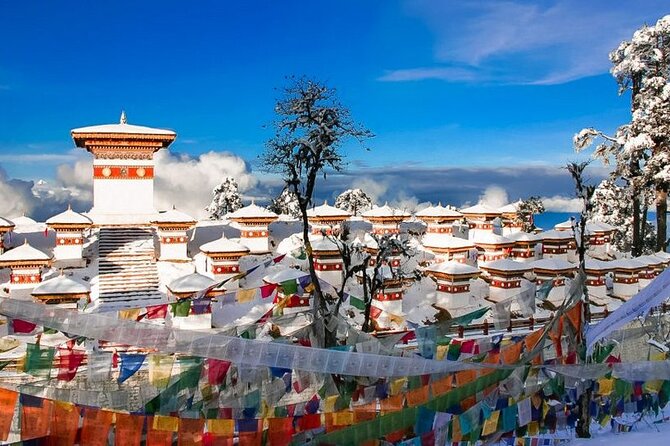
Chitwan is where the trip shifts from city temples and lake views into wildlife country. Day 5 includes a 6 to 7 hour drive, arriving in the afternoon. You check into an ethnic and eco-friendly lodge in Sauraha, then meet your nature guide for park activities.
I like the way this day blends downtime with a real cultural element. After a late-afternoon decompression, you can watch the sunset and enjoy a chilled beer by the riverside. Later, you get a Tharu cultural dance show, with an optional extra cultural program at a local theatre if your leader can arrange it.
This day is not just about ticking off wildlife. It sets up the right mood for the ethical wildlife approach you get on day 6.
Chitwan day 6: ethical wildlife rules, Jeep safaris, and canoe rides on the Rapti
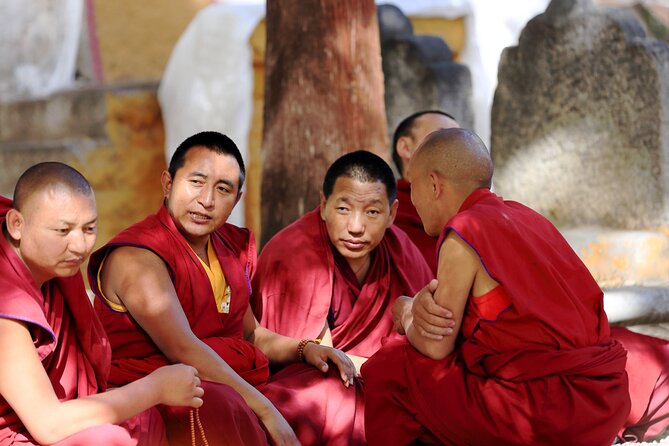
Day 6 is the core “wildlife day,” and it comes with a clear ethical stance. The tour explicitly avoids elephant safaris and elephant baths. Instead, the plan includes activities like Jeep safaris, canoe rides, and an Elephant Walk that is described as a non-harmful way to observe an Asian elephant up close.
You also get the “why it matters” context. Chitwan is home to endangered rhinoceros unicornis and around 120 Bengal tigers. You are not guaranteed any specific animal sighting, but the park is known for the variety, and your guide will help you track what is realistically possible.
Your afternoon includes a canoe ride on the Rapti River, with an aim to spot gharials and marsh muggers. Then the day ends with dinner at the Tharu Kitchen.
What I appreciate here: you are not asked to overlook ethics for the sake of an action photo. The approach is more thoughtful, and it fits with the overall Bhutan-Nepal spiritual tone later in the trip.
Day 7: bird watching, then the flight back to Kathmandu and the Bhutan handoff
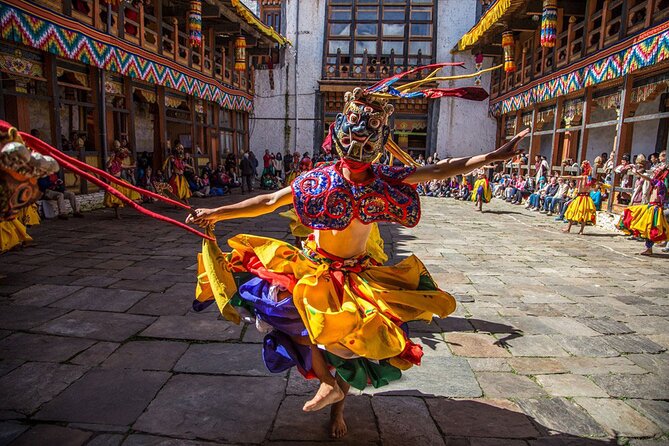
Day 7 includes a small optional nature moment before you transition countries. You can join an early morning bird-watching program for a couple of hours, then depart from Chitwan and fly to Kathmandu.
After you arrive in Kathmandu, the Nepal portion ends and you prepare for Bhutan. Even though this day can feel like a “transfer day,” it prevents the trip from feeling like one long blur. You get a last quiet nature break before you step into Bhutan’s different rule set and rhythm.
Thimphu day 8: landing in Paro, a drive to Thimphu, and incense and textile culture
In Bhutan, your first major shift is logistical and cultural. You fly from Tribhuvan International Airport to Paro, then go through immigration and customs. A licensed Bhutanese guide escorts you to Thimphu with a two-hour drive showing rivers and red rice fields.
A small but useful flight tip is included: if you want better views, try to sit on the left side of the plane.
Once in Thimphu, you have local lunch, then visits to:
- Nado Poizokhang, an incense factory
- Gagyel Lhundrup Weaving Centre, for textile weaving
After that, you get free time to explore the city, followed by dinner at your hotel and a group discussion about the Bhutan portion. You are also told that Peregrine manages all group visas and follows Bhutan’s quality-focused tourism regulations, including the need for fixed travel dates. Unexpected changes may bring additional costs.
That fixed-date rule is one thing to weigh if you like spontaneous travel. Bhutan tends to reward planning.
Thimphu day 9: Gompas, stupa landmarks, and the arts circuit
Day 9 is a full Thimphu exploration day. You start with stops that show everyday life and spirituality side by side.
You visit Tibetan Village, then you spend time walking around blue pine forests and nearby cultural sites. There is also a hike to Pangri Zampa Gompa, described as a hub for traditional astrology. You also visit Tango and Cheri Gompa.
Then the plan includes a picnic by the river, which is a welcome pause in a day that otherwise mixes walking, temples, and museum-style learning.
After lunch and spiritual time, you shift to Bhutan’s art and craft world:
- National Memorial Stupa honoring the third king
- Zhilukha Nunnery
- Choki Traditional Art School
- National Textile Museum
- National Handicrafts Emporium
This day is valuable because it is not only “temples, then photos.” You see how craft and practice link together in Bhutan, and you get multiple entry points into what people do daily, not just what they worship.
Punakha day 10: Punakha Dzong at the river junction and the Khamsum hike for 360 views
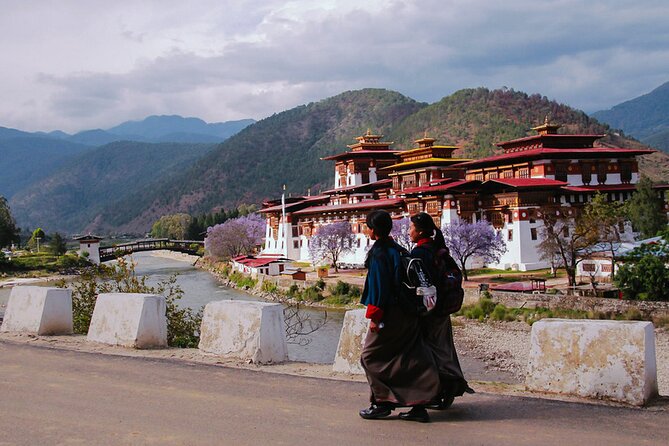
Punakha is where Bhutan starts feeling more dramatic. Day 10 centers on Punakha Dzong, described as the second largest and oldest dzong. It is located at the junction of Pho Chu and Mo Chu Rivers.
Dzongs are not just impressive buildings. They function as living religious and administrative centers, so the vibe is different from what you might be used to in other countries. You get to see Bhutanese architecture and learn about relics associated with Tibetan Buddhism and the unifier of Bhutan, Ngawang Namgyal.
After lunch, you hike about an hour from the Mo Chu River base to Khamsum Yulley Namgyal Chorten, at an altitude of 1800 meters. The trail is mostly uphill on loose earth mud path. This is one of the places where trekking shoes matter. Mud means traction.
Once you reach the chorten, you get 360 views of Punakha Valley, paddy fields, and the Mo Chu River. If you want a payoff that matches the effort, this is it.
Paro day 11: the Tiger’s Nest climb, timing, and practical comfort tips
Day 11 is your big Bhutan hike: Tiger’s Nest Monastery (Paro Taktsang). After breakfast, you drive to the trail starting point for a 2 to 3 hour hike, around 4 kilometers, up about 3000 feet above Paro Valley.
The path is described as challenging, with an option to hire a pony for part of the trek. If you go on foot, bring water and snacks, and wear comfortable hiking boots. That is not just advice for the sake of it. The steepness and uneven steps make footwear and hydration part of enjoying the day.
As you ascend, you get views of the monastery and valleys. Even if the climb feels tough at first, those views help the effort feel worth it.
At the end of the day, you spend your last night in Paro Valley, with provided meals and accommodation at a 3-star hotel like Mandala Resort.
This is also one of those days where your camera will fill up fast. I still suggest you pause and look without shooting for a few minutes. The monastery’s setting is calm in a way that photos often flatten.
Day 12 in Paro: a calm goodbye, then flying home
Your final day is simpler. You have breakfast, then head to Paro Airport for your flight back to your destination.
If you want one practical takeaway: keep your travel documents, snacks for the airport, and any loose cash accessible. The tour ends right at departure time.
Price and value: what $4,460 covers, and what you should budget for
At $4,460 per person for 12 days, this is not a bargain-basement trip. It is priced more like a guided, door-to-door experience across two countries with different travel rules.
Here is what you get included:
- All fees and taxes
- Air-conditioned vehicle
- English-speaking tour guide during the Nepal and Bhutan portion
- Hotel accommodation in Nepal and Bhutan
- All land transportation in Nepal and Bhutan
What is not included:
- Lunch and dinner in Kathmandu and Pokhara
- Personal expenses like bar bills, phone calls, internet, laundry
- Nepal visa fee and Bhutan visa fee
- International airfare and travel insurance
You also have some extra costs to plan for because of the nature of the routing. The itinerary includes domestic flights, including Kathmandu to Paro via the Bhutan direction and flights tied to the Nepal-to-Bhutan transition. The included list specifically calls out land transportation, so confirm in your booking what air segments are included for your departure dates.
So is it good value? For me, the best value signals are the combination of:
- Guided UNESCO heritage days in Kathmandu
- Multi-day routing that connects distant regions efficiently
- Hotel accommodation included
- Chitwan activities that explicitly avoid elephant safaris and baths
If you would otherwise pay for a guide, drivers, and separate bookings across Nepal plus Bhutan, the price can start to make sense fast.
What to pack and how to handle temple moments and hikes
This is the kind of tour where “comfortable travel” beats “cool travel.”
For hikes and walking
Tiger’s Nest is the big one. Plan for boots with grip, water, and snacks. The Khamsum Yulley Namgyal Chorten hike includes loose earth and uphill sections, so you want stable shoes rather than flimsy sneakers.
For temples and religious practices
In Kathmandu at Pashupatinath, you might see cremation activity on the Bagmati River. If that would be hard for you, tell your guide in advance and expect them to help manage what you encounter.
In Bhutan, dress modestly for temple visits and follow your guide’s instructions. You are in a place with strong cultural rules, and respectful behavior makes the experience better for everyone.
For comfort on transit days
Road days include long seated time, like the Kathmandu to Pokhara drive and the drive into Chitwan. Bring layers. Even in warm months, mornings and long journeys can feel cooler than you expect.
Should you book this Nepal and Bhutan Tour?
Book it if you want a well-planned 12-day combo that mixes major sights with real structure: Kathmandu UNESCO sites, Pokhara sunrise and lake time, an ethical Chitwan wildlife approach, and Bhutan’s dzong and hike rhythm ending at Tiger’s Nest.
Do not book it if you hate physical hikes. Tiger’s Nest alone can be demanding, and Punakha includes an uphill chorten hike with a muddy trail. Also, if you are very sensitive about seeing funerary practices, go into Kathmandu with your expectations clear and tell your guide.
One more practical note: the tour is non-refundable and cannot be changed for any reason. If your dates are firm and you are ready for a guided journey across both countries, it is a strong fit.
If you want Bhutan without DIY stress and Nepal with real local context, this is the kind of trip that makes planning feel like a relief rather than a chore.
FAQ
Is airport pickup included?
Yes. On Day 1, a Peregrine representative greets you at the airport and accompanies you to your hotel.
What is included in the tour price?
The package includes all fees and taxes, air-conditioned vehicle, an English-speaking tour guide, hotel accommodation in Nepal and Bhutan, and all land transportation in Nepal and Bhutan.
Are lunches and dinners included in Kathmandu and Pokhara?
No. Lunch and dinner in Kathmandu and Pokhara are not included.
Are Nepal and Bhutan visa fees included?
No. Nepal visa fee and Bhutan visa fee are not included.
How do I get the Nepal visa?
The Nepal visa is obtained at Kathmandu Airport.
Does the tour handle Bhutan group visas?
Yes. Peregrine manages all group visas and follows Bhutan’s quality-focused tourism regulations.
Are international flights and travel insurance included?
No. International airfare and travel insurance are not included.
Does the tour include any ethical rules for elephants in Chitwan?
Yes. The Chitwan activities avoid elephant safaris and elephant baths, and use options like Jeep safaris, canoe rides, and an Elephant Walk described as non-harmful.
What is the main hike in Bhutan?
Tiger’s Nest Monastery (Paro Taktsang). It is described as a 2 to 3 hour, 4 kilometer hike to reach the monastery perched about 3000 ft above Paro Valley, with an option to hire a pony for part of the trek.
Are any meals specifically included on the last day?
Yes. Breakfast is included on Day 12.
Latest Kathmandu write-ups
- Langtang Valley Trek★ 5.0 · 3 reviews
- Khopra Danda Trek★ 5.0 · 3 reviews
- Langtang Valley Trek from Kathmandu★ 5.0 · 3 reviews
- 5 night / 6 days Kathmandu Nagarkot Chitwan Pokhara tour★ 5.0 · 3 reviews
- Nepal Highlights Tour: 5 Nights 6 Days Kathmandu & Pokhara Tour★ 5.0 · 3 reviews
- Kathmandu Valley Private Day Tour★ 5.0 · 3 reviews
- Kathmandu Heritage Day Tour★ 5.0 · 3 reviews
- Conquer the Himalayas: The Ultimate 16-Day Annapurna Circuit Trek★ 3.5 · 3 reviews
Tours, compared.
Private Kathmandu Sightseeing Tour | UNESCO World Heritage sites
Read our review →
Everest Base Camp Helicopter Tour landing at Everest View Hotel
Read our review →