
Reviewed · PASHUPATINATH TEMPLE
Pashupatinath Evening Aarati: Few Divinely Hours in Kathmandu
Pashupatinath at dusk is one of those Kathmandu experiences that feels both spiritual and real, because you are watching Hindu rituals unfold in front of you. I love that you get the Pashupatinath evening aarti led by Brahmin priests with live bhajana, and I love that the timing gives you a clear window into how the temple closes the day. One consideration: the tour area includes views of cremation activity on the Bagmati River, so if you find funeral rites very upsetting, think twice before going.
Logistics are pretty painless. A guide and driver meet you at your hotel between 4:30 PM and 5:30 PM, then you head out and return after the short evening program, usually around 2 to 4 hours total depending on the season and the flow of ceremonies. In past departures, guides like Mahesh Ji, Mani, and Amber were singled out for explaining what you are seeing in a way that actually helps.
Also, this is priced at $35, which is a fair deal for the combination of transport, timing, and guided context. Just note that while temple admission is described as free, the entry fee to the Pashupati Temple Premises is not included, so you should expect to pay something on-site when you arrive.
Key highlights you will feel right away
- Aarti happens in the early evening, around 6:00 PM to 7:00 PM, when the mood of the temple shifts from day to night
- Brahmin-led ritual with live bhajana, so you are not just observing, you are hearing the devotion that drives the ceremony
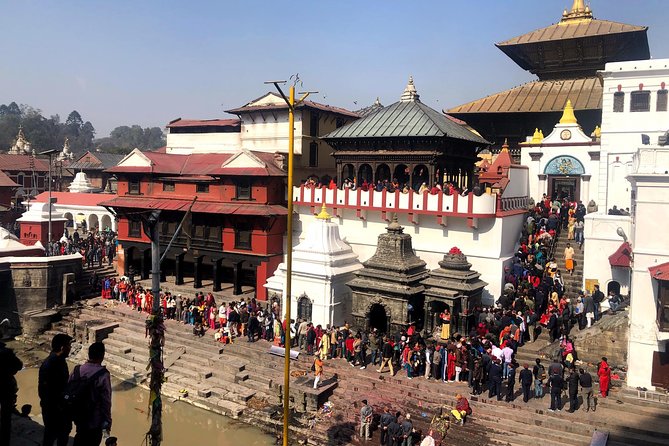
- Bagmati River cremation views, a powerful, culturally important part of how Kathmandu practices this faith
- Guides who explain clearly, with standout mentions of Mahesh Ji, Mani, and Amber for making the meaning click
- Hotel pickup and an air-conditioned ride, which matters when you are moving through traffic right before a set ceremony time
Pashupatinath at Dusk: why the evening aarti works
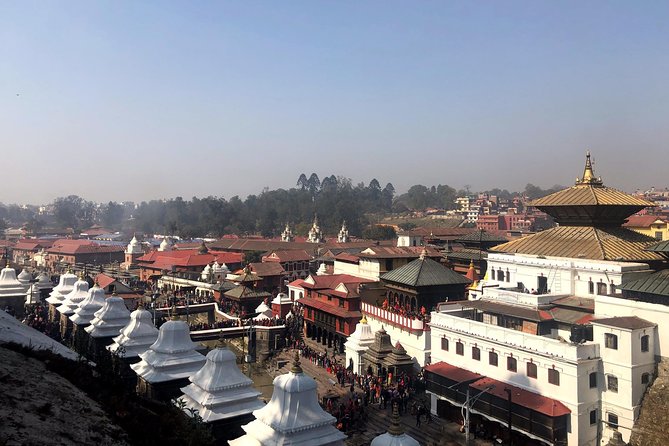
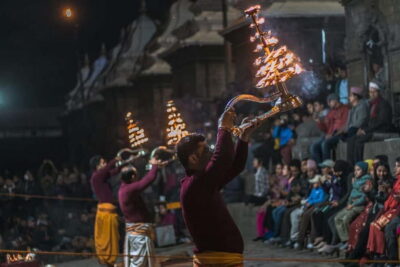
The big draw here is simple: you are catching Pashupatinath Temple when it matters most. The evening aarti, dedicated to Lord Shiva, takes place each night at roughly the same hour, around 6 PM to 7 PM depending on the season. That means you are not wandering the temple aimlessly. You are arriving for a specific moment when priests, devotees, and music align.
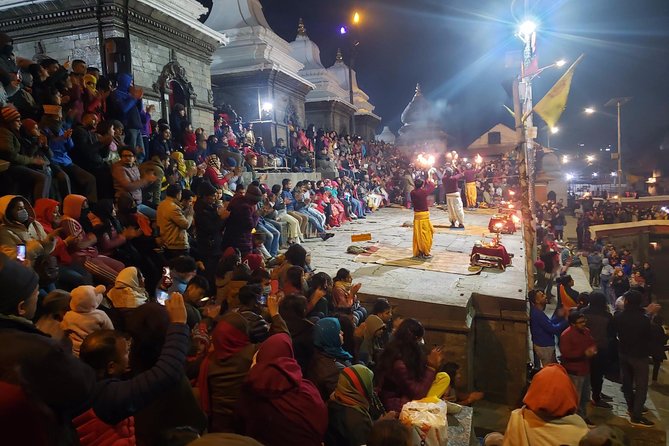
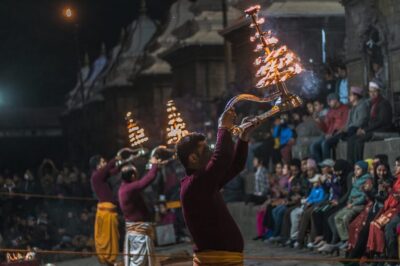
I like how the ritual is more than symbolic pageantry. During the aarti pooja, priests offer light, flowers, incense, and other items as part of a day-closing ceremony. You will see worship happening in sequence, not as one random highlight. And because the ceremony includes live bhajana devotional songs, the sound becomes part of the experience, not a background detail.
One practical point: this is not a private, quiet experience. You will be in a crowd, near active religious activity. If you handle busy sacred spaces well, you will get more out of it. If you prefer quiet sightseeing, this may feel intense.
More at Pashupatinath:
- Kathmandu Spiritual Sites: Bodhnath & Pashupatinath Tour
★ 5.0 · 185 reviews - Kathmandu: Pashupatinath Temple Evening Aarati Tour
★ 5.0 · 36 reviews - Kathmandu: Pashupatinath Temple Aarti Night Tour
★ 4.8 · 29 reviews
Hotel pickup and timing: making the ceremony without stress
Kathmandu traffic can be unpredictable. The tour solves that by building the day around a set pickup window. Your guide and driver meet you somewhere between 4:30 PM and 5:30 PM, which gives you time to reach the temple area with daylight still fading and before the crowd peaks.
The ride is in an air-conditioned vehicle. That sounds small, but it helps. Late afternoon in Kathmandu can be warm, and even if you are fine outside, you will appreciate the reset on the way back.
The program itself is short, typically about 2 to 4 hours. That is valuable if you only have a couple of evenings in town. You are not committing to a half-day excursion just to see one ceremony.
If you are someone with a tight schedule after dinner, plan for the fact that ceremonies follow real life. The start time is around 6 PM to 7 PM and can shift with the season and the flow of devotees. The best move is to keep your next commitment flexible.
Entering the Pashupatinath temple scene: Shiva, priests, and incense
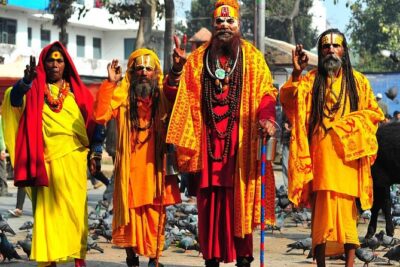
Pashupatinath is Nepal’s most revered Hindu temple. The evening experience centers on Shiva worship, with Brahmin priests leading the aarti pooja. As you get closer to the main ritual area, you will notice that the temple does not feel like a museum. It feels like a working place of devotion.
During the aarti, you will see offerings laid out for the ritual, and you will smell incense as the ceremony progresses. This matters, because the sensory details are what help you understand why the ritual is meaningful to people who practice it daily.
Here is the practical part: you will get more out of the ceremony if you treat it like a guided explanation, not just a spectacle. In earlier trips, guides like Mahesh Ji, Mani, and Amber were praised for being accommodating and for explaining with real detail. That kind of guidance helps you connect the items being offered to what is happening in that moment, so you are not left guessing.
About fees: temple admission is described as free, but the entry fee to the Pashupati Temple Premises is not included. Translation: you may need to pay on-site when you enter the temple grounds. Bring some cash just in case, and do not wait until the last second.
Bagmati River cremation views: what you might see and how to handle it
The second emotional layer of this tour is the Bagmati River section, where cremation ceremonies take place. This is not tourism-only theater. Cremation and funeral rites are part of Hindu practice there, and the tour includes observing that activity on the river bank.
I am going to say it plainly. If you are squeamish about death rituals, you should consider skipping this experience. Even if you are curious and respectful, cremation rites can feel heavy and personal. One of the best pieces of advice I can give is to set your expectations before you arrive. Read the mood in advance, then decide if you can stay calm and respectful.
If you do go, you will likely get something valuable: context. When the guide explains what the ritual is and why it is performed, it changes your experience from shock to understanding. That is the difference between watching without meaning and watching with comprehension.
Also, choose your mindset. You are not there to judge. You are there to witness a living religious practice. Keep your phone down when it feels intrusive. Follow your guide’s cues on where to stand, when to move, and how to watch respectfully.
More to compare around Kathmandu
- Everest Base Camp Trek – 14 Days
★ 5.0 · 1,499 reviews - Everest Base Camp Trek
★ 5.0 · 842 reviews - Private Kathmandu Sightseeing Tour | UNESCO World Heritage sites
★ 5.0 · 756 reviews - Kathmandu: 7 UNESCO Sites with Lunch
★ 4.8 · 744 reviews
Other nearby monuments: how a short walk gives you Kathmandu context
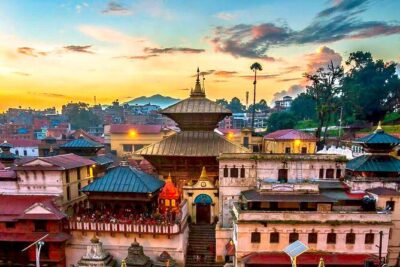
Beyond the main stops, the evening program includes visiting other monuments in the surrounding temple area. This is one of the reasons the tour makes sense even if you are only in Kathmandu for a few days. Instead of treating Pashupatinath like one isolated postcard view, you get a short, guided circuit that gives you a wider sense of the complex.
The value here is context, not checkboxes. When you can place multiple monuments in relation to the main ritual site, you understand why devotees come where they come and why the area has this particular sacred gravity.
You should still expect to do some walking. The pace is not described as fast, but evenings at Pashupatinath can be crowded and uneven underfoot. Wear shoes you trust. You do not want to think about your footwear while incense and chanting are the main event.
What to expect from the group experience
This is designed as a group tour, and there are group discounts. Exact group size is not listed, so I would plan for a mix of people and a shared space near the ceremony. The upside is that the guide keeps you oriented and helps you time your viewing.
From the guidance in past departures, communication and punctuality tend to be a strong point. Drivers arriving on time and guides showing up to pick you up from the hotel were specifically praised. That is not guaranteed on every trip, but it signals that the operator takes timing seriously because the aarti has a real time window.
One thing to keep in mind: the ceremony starts in a narrow window, around 6 PM to 7 PM. If you are late or if you miss the meetup, you may lose the best part of the program because the ritual loses its significance afterward.
Price and value: is $35 a good deal here?
At $35 per person, this tour is priced in the range where you are paying for two things: access at the right time, and a local guide to explain what you are seeing.
You get air-conditioned transport and hotel pickup. You also get a structure that pulls you into the right place for the ceremony instead of leaving you to figure out timing on your own. That alone can save you time and stress, especially if you do not speak the local language or you do not know where to stand for good viewing.
The not-included piece matters too. Entry to the temple premises is not included, even though admission is described as free. So your all-in cost might be slightly higher than the base price, depending on the entry fee required on the day.
Still, when you factor in the guided explanation, the set timing, and the river-bank component, $35 is pretty reasonable for a high-impact evening. This is not just a transfer. It is a guided experience built around a real ritual.
If you want maximum value, go with the mindset of learning. Pay attention to what the guide tells you about Shiva, the offerings, and what the cremation activity means in the larger practice.
Respectful viewing tips that make the experience better
This is one of those tours where respect is not optional. It is the difference between enjoying the ceremony and feeling awkward.
- Listen first, watch second. The bhajana songs and the rhythm of the ritual matter.
- Avoid blocking sight lines. If the crowd shifts, move when your guide tells you to move.
- Keep conversations quiet during the main sequence. Sacred spaces work differently at night.
- Think about your photos. Some moments are better left unrecorded, especially near active rites.
Also, bring patience. This is Kathmandu, and the temple area can be crowded. A calm attitude helps you see more and feel less stressed.
Who should book this, and who should skip it
This tour fits best if you want a cultural experience that is not just sightseeing. You get the core Hindu ritual at Pashupatinath, plus the Bagmati River rites, and you also get short guided context around the surrounding monuments.
You should book if:
- you like understanding religious practices through observation and explanation
- you are comfortable with crowds and with an active sacred site at night
- you want a short evening outing that packs a lot into 2 to 4 hours
You should skip or be cautious if:
- you find cremation ceremonies very upsetting
- you need a strictly lighthearted or relaxing evening
- you cannot manage a busy, emotionally intense setting
And if you are wondering whether this works for most people, the tour notes that most travelers can participate. That does not mean it is for everyone. Use your own comfort level, especially regarding the river-bank rites.
Should you book the Pashupatinath Evening Aarati tour?
If you want one evening in Kathmandu that actually tells you something about how faith works there, I think this is a strong choice. The combination of evening aarti, live bhajana, and Bagmati River cremation views gives you a real, local slice of life that most daytime temple visits miss.
I would book it if you are okay with sacred crowds and can handle the emotional weight of funeral rites. I would skip it if that kind of imagery will ruin your night.
One last decision tip: choose a guide you trust. Past departures highlighted clear communication and strong explanation from guides such as Mahesh Ji, Mani, and Amber. If the tour description and your questions line up, and you show up on time for the 6 PM to 7 PM window, this can be one of those few Kathmandu moments that stays with you longer than the photos.
FAQ
How long does the Pashupatinath evening aarti tour take?
It runs about 2 to 4 hours, depending on the season and how the evening program moves.
When does the aarti start, and when is hotel pickup?
The evening aarati takes place around 6:00 PM to 7:00 PM depending on the season. The guide and driver meet you at your hotel between 4:30 PM and 5:30 PM.
What is included in the tour price?
The tour includes an air-conditioned vehicle, and it includes hotel pickup. It also includes the guided experience around Pashupatinath and the river area as part of the evening program.
Is the Pashupatinath temple entry fee included?
Temple admission is described as free, but the entry fee to the Pashupati Temple Premises is not included, so you should expect to pay an entry fee on-site.
Can most travelers participate?
Yes. The tour notes that most travelers can participate.
What is the cancellation policy?
You can cancel for a full refund up to 24 hours in advance of the experience start time. If you cancel less than 24 hours before, the amount paid is not refunded.
Latest Kathmandu write-ups
- 10 days Annapurna Base Camp Trek★ 5.0 · 5 reviews
- Visit Swayambhunath and Bauddhanath Stupa with Guide★ 5.0 · 5 reviews
- Langtang Trek from Kathmandu 7 Days★ 5.0 · 5 reviews
- 7 Day Kathmandu Pokhara Tour★ 4.5 · 5 reviews
- Island Peak Climbing with Everest Base Camp★ 5.0 · 5 reviews
- Chandragiri Hill Cable Car Tour with Hotel Transfers from Kathmandu★ 4.5 · 5 reviews
- Everest Mountain Flight★ 5.0 · 5 reviews
- Kathmandu city day tour (4 world heritage sites)★ 5.0 · 5 reviews
Pashupatinath Temple, compared.
Pashupatinath Temple, Hindu Crematorium and Aarati in-depth Tour
Read our review →
Private Half-Day Tour of Boudhanath and Pashupatinath Temples in Kathmandu
Read our review →
Browse the lists this tour appears in