
Reviewed · ANNAPURNA BASE CAMP TREK
Pokhara: Annapurna Base Camp Trek Multi-Day Guided Tour
This trek works because it is built like a guided on-ramp to the mountains. You get a clear, day-by-day plan from Pokhara to Annapurna Base Camp, with an expert guide out front so you can focus on walking and taking it all in. I like that it includes the hard-to-handle stuff like permits, fees, and pickup, so you are not scrambling at the last minute.
I also like the rhythm of the route: sunrise moments at Poon Hill and later at Jhinu Danda, plus overnight stays in small tea houses or guest houses. The only drawback to really know upfront is that meals are not included, so you will still want a daily budget for food and drinks.
One more consideration, and it matters: the tour is priced for people with strong physical fitness. This is a multi-day trek, with long walking days and early starts, so go into it with realistic expectations.
Key highlights you actually feel on the trail
- Permits and park fees handled for you, including TIMS and required documentation
- Guide leadership plus commentary, useful when you want sense and context, not just views
- Tea house and guest house nights, so you are living the trek, not commuting
- Two sunrise hits: Poon Hill early morning and another sunrise after Jhinu Danda day
- Crossing classic suspension bridges and walking through rhododendron forests
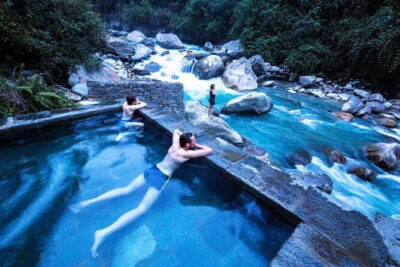
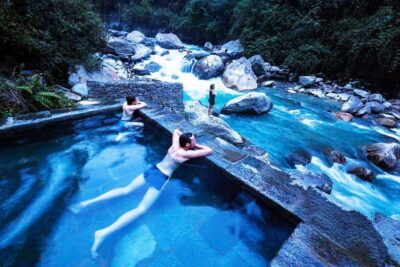
- Jhinu hot spring dip after the long descent, a rare reward that keeps you smiling
Planning Done for You, Permits and Pickup Included
I love treks where the logistics are handled, because it keeps the mind calm. Here, you get hotel pickup and drop-off in Pokhara, plus a driver transfer connected to the start at Nayapul and the finish back in town.
Just as important, national park fees and permits are taken care of. That means you are not trying to figure out what paperwork you need after you arrive in Nepal. The requirement to send passport scans and a digital passport-size photo ahead of time is also a good sign of a well-run operation, because it reduces last-minute stress.
There is also a mobile ticket, which sounds minor until you are standing at a meeting point and everything is sorted fast.
More routes into the Annapurna Sanctuary:
- Kathmandu/Pokhara: 5-Day Annapurna Base Camp (ABC) Trek
★ 4.9 · 72 reviews - Annapurna Base Camp Trek -8 days
★ 5.0 · 56 reviews - Private 7 – Day Annapurna Base Camp Trekking
★ 5.0 · 50 reviews
Price and Value: What $480 Covers, and What Costs Extra
At $480 per person, the value comes from what is included, not the headline number. You get seven nights of lodging in small tea houses or guest houses, a professional guide, and all taxes, fees, and handling charges. On top of that, you get a private setup, meaning your group does the trek with your guide and not a random shuffle of people.
The big thing to budget separately: meals and drinks are not included. Tea houses run on what you buy there, so you will pay for breakfast, lunch, and dinner along the route. If you tend to eat hearty or like tea with every stop, plan for it.
One more value note: the price structure includes group discounts, even though the tour is private for your group. That can make a difference if you travel with friends and want the cost to feel less steep.
Day 1, Pokhara to Nayapul, and Your First Taste of the Trek
You start with a drive from Pokhara to Nayapul that takes about 1.5 hours. Then the walking begins through Birethanti, with that classic early feel of village life before the trail gains altitude. The route follows the Bhurungdi Khola, so you are not just climbing in a vacuum, you are walking with the river and the valley rhythm.
You reach Hile after about 7 hours of trekking and settle in for your first night in a tea house or guest house. I like this day because it is a bridge between travel mode and trek mode. It is not the steepest day, but it wakes up your legs the right amount.
Practical tip: keep your first-day pace steady. If you rush early, the whole trek pays you back later.
Day 2, Ulleri Steps to Ghorepani, Rhododendron Walking
Day 2 gives you a noticeable climb right away via the stone steps known as Ulleri. This is the kind of ascent that feels like it has its own personality, because step climbing quickly turns into a steady breathing rhythm.
After the steep section, you move through rhododendron forests and pass through Banthanti. Then you arrive at Ghorepani, a village that is known for its mountain-facing trekking life and its convenient staging for the big sunrise day to come.
This day takes about 6 hours on the trail. The tradeoff is simple: less time than some other days, but you still earn it with that stair-style effort.
If you get offered hot drinks at tea houses, take them. You are building energy for the next early start.
More to compare around Pokhara
- ZipFlyer Nepal – The World’s Steepest Zip-line
★ 5.0 · 608 reviews - Bungee Pokhara by HighGround Adventures
★ 5.0 · 366 reviews - From Pokhara: Sarangkot Sunrise Himalayas Tour
★ 4.7 · 218 reviews - ATV Adventure Tour in Pokhara, Nepal
★ 5.0 · 194 reviews
Day 3, Poon Hill Sunrise and the Trail to Tadapani
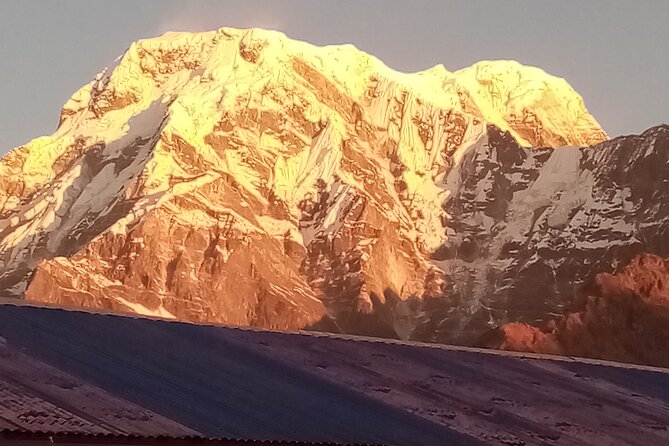
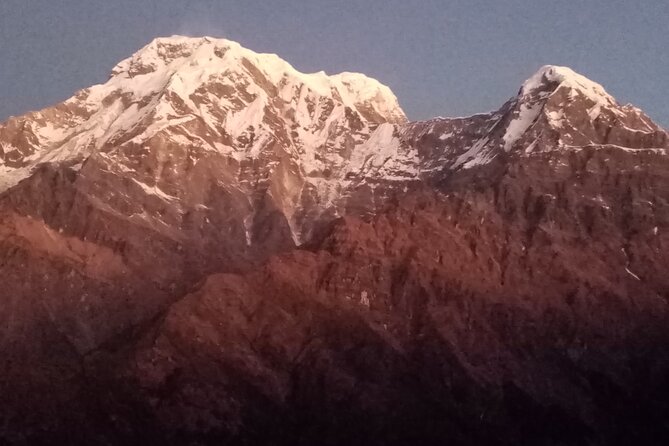
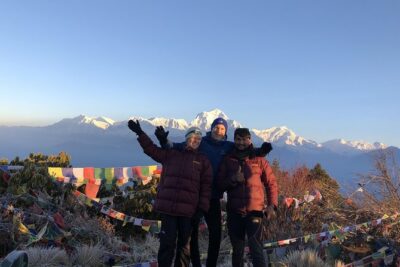
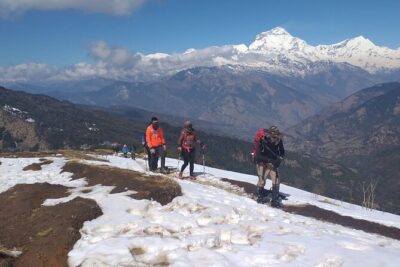
This is your early morning star turn. You wake up early and hike up to Poon Hill for sunrise views over the Annapurna and Dhaulagiri mountain ranges. The point here is not only the view, it is how the morning light turns the peaks into something you can almost understand, even if you are new to high-country trekking.
After you descend back to Ghorepani for breakfast, the trek continues toward Tadapani. You walk through scenic stretches and forest sections and reach Tadapani for the night, after about 7 hours.
The drawback on this day is early wake-up fatigue. If you already struggle with mornings, treat it like training. Pack your routine the night before so you are not rummaging around half awake.
Day 4, Chomrong Village Views and a Kimrong Bridge Moment
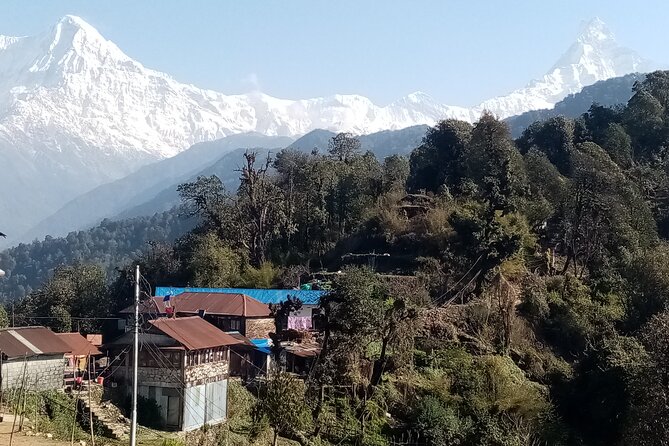
Day 4 balances forest walking with mountain payoff. You descend through dense forest, then get glimpses of the mountains as the trail rhythm changes. One highlight is crossing a suspension bridge over the Kimrong Khola, a small but memorable moment because it reminds you you are on an actual local trail system, not a hiking path that feels staged.
Then you trek uphill to Chomrong, a Gurung village known for its mountain views. This is one of those places where the scenery and the culture both matter, since you are passing through a community, not just passing over terrain.
It takes about 7 hours to get there. The key consideration is that Chomrong is a real day in your legs. If you feel good, you enjoy it more. If not, your guide can help you keep your pace sensible.
Day 5, Bamboo and Deurali, Rhododendron to Higher Ground
Day 5 starts with a descent toward the Chhomrong Khola and another suspension bridge crossing, then comes the climb sequence. You ascend to Sinuwa, then work through rhododendron forests again, which is one reason this trek keeps feeling varied instead of repetitive.
From there, you reach Bamboo, and the route continues toward Deurali. This whole day is about 7 hours, and it is a classic “keep moving, gain altitude, let the air work on you” kind of day.
What I like about this day is that it keeps you in the rhythm of the Annapurna foothills and mid-hills, with plant life and village trails still part of the experience. The possible drawback is that you might start to feel the cumulative fatigue. That is normal. This is a long trek, not a single heroic day.
Day 6, Along the Modi Khola to Annapurna Base Camp Overnight
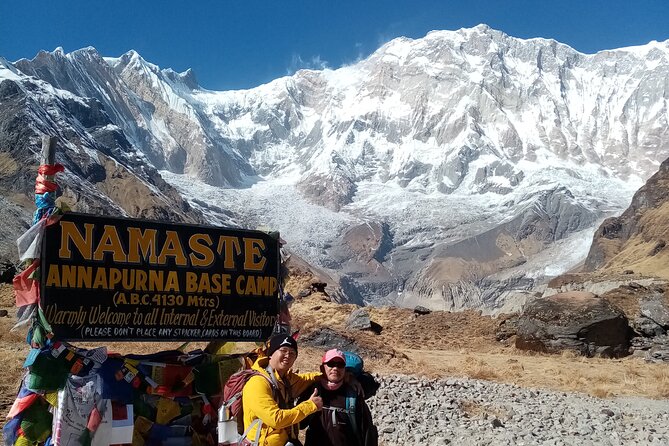
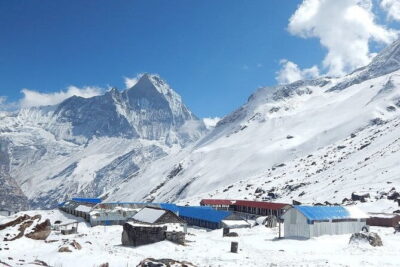
Day 6 is the big summit day without using the word summit. You trek along the Modi Khola with views of snow-capped peaks around you. You pass Machhapuchhre Base Camp, listed at about 3,700m, and then continue onward to Annapurna Base Camp.
You spend about 6 hours on the trail to reach Annapurna Base Camp, where you stay overnight. That overnight is the whole point for many people, because you are not just touching the destination for a photo and leaving.
The practical reality: an overnight at a high base camp is both a reward and a test. Conditions can change, and your body can feel it. But with a guide in charge, you are not left guessing about pacing or when to push.
This is where the guide commentary matters. When you understand what you are seeing, you enjoy the mountains more, even if you are tired.
Day 7, Retrace to Bamboo, Then Jhinu Danda Hot Springs
Day 7 begins with sunrise, then you start the descent back to Bamboo, retracing the route you came from. From Bamboo, you keep descending to Jhinu Danda, which is where the day switches gears from walking effort to bodily relief.
Then you get the reward: relaxing in the natural hot springs at Jhinu Danda. I love this contrast because it changes the trek from a grind into a story with an ending you can feel.
This day takes about 7 hours. The main consideration is that retracing your steps means you know what is coming, but your legs still have to do it. If your knees feel cranky, your guide can help you manage the pace.
Day 8, Down to Nayapul and Back to Pokhara Comfort
You finish with trekking down to Nayapul. Then your driver takes you back to Pokhara, where you transfer to your hotel and the trip ends.
This last day takes about 8 hours. Yes, it is long for a finish, but the good news is that it is downhill most of the way, so the tired feeling shifts from uphill strain to careful foot placement.
I like that the tour connects the trek to real life again. You are not left trying to figure out transport while you are sore and hungry. With hotel drop-off included, you can actually relax after the final descent.
If you have an evening in Pokhara after you arrive, you will feel the difference between being in transit and being done.
Guides, Management Style, and the Human Side of the Trek
A good guide can turn stress into progress. In the trip stories tied to this type of operator, I saw names like Dadhi and Ramu credited for making the trek memorable and manageable, including for people doing their first big trek.
That matters more than you might think. When you are walking all day, you do not just need direction, you need someone who can pace you, explain what you are passing, and keep you calm when the day gets harder.
I also saw Sunil Dahal mentioned as a manager who handled things smoothly. That signals an organized team, not just a guide on their own. For you, that translates into fewer surprises and better continuity from Pokhara to the mountains and back.
Who Should Book This Trek, and Who Should Reconsider
This tour fits people who want a guided Annapurna Base Camp trek with planning taken off your plate. It is also a strong choice if you like structured days and want the comfort of permits and fees handled.
It may be a tough match if you do not feel comfortable with long walking days, steep sections like Ulleri steps, and early mornings for sunrise. The requirements also note a strong fitness level, and the minimum age is 5, with children needing an adult.
If you want a trip that balances mountain views with village trekking, this route does that through places like Chomrong and the rhododendron forests along the way. If you want a purely self-guided adventure, you might prefer something different, because the value here is the guidance and the planning.
Should You Book This Guided Annapurna Base Camp Trek?
I would book it if you want the Annapurna Base Camp experience without the paperwork scramble, and if you appreciate sunrise moments built into the plan. The $480 price makes sense when you look at what is included: lodging, a guide, pickup and drop-off, and TIMs and permit fees covered.
I would think twice if you hate early starts or you do not want to budget for meals and drinks. Also, be honest with yourself about fitness. This is a multi-day trek, and your body will notice every decision you made on pace.
If you book, the best way to set yourself up for success is simple: plan your spending for meals, set expectations for long days, and trust the guide when it comes to pacing.
FAQ
What is the duration of the Pokhara to Annapurna Base Camp guided trek?
The trek is listed as 8 days (approx.).
Are permits and national park fees included?
Yes. TIMs and national park permits/fees are included, along with all taxes, fees, and handling charges.
What kind of lodging is provided during the trek?
You get 7 nights of accommodation in small tea houses or guest houses, as per the route’s overnight stops.
Does the tour include meals?
No. All meals and drinks are not included, but they are available to purchase during the trek.
Is pickup and drop-off in Pokhara included?
Yes. The tour includes hotel pickup and drop-off in Pokhara, and a driver transfer connected to Nayapul at the start and end of the trek.
What documents are needed before departure?
You need to send a scanned copy of each passport and a digital passport-size photo for each traveler prior to the trip.
Latest Pokhara write-ups
- Paragliding in Pokhara★ 5.0 · 4 reviews
- 3-Day Ghandruk Loop Trek from Pokhara★ 5.0 · 4 reviews
- Ghorepani Poonhill Trek★ 5.0 · 4 reviews
- 2 Iconic Suspension Bridge Tour in Pokhara★ 5.0 · 4 reviews
- Pokhara: Budget Unguided Tour By Sharing Bus★ 4.0 · 4 reviews
- 2 Night 3 Days Lumbini Tour from Pokhara or Kathmandu★ 5.0 · 4 reviews
- Unique Easy Hiking to Foxing Hill from Pokhara★ 5.0 · 4 reviews
- 6 Night 7 Days ABC Trek★ 5.0 · 4 reviews
Annapurna Base Camp Trek, compared.
Browse the lists this tour appears in