
Reviewed · POON HILL TREK
Poon Hill Trek
This Poon Hill trek is interesting because it pairs big sunrise views from Poon Hill (3,210 m) with relaxed tea-house village nights guided by pros like Sushanta. I like how the route gives you that classic Annapurna feel without needing hardcore technical trekking. The one drawback to plan for is the very early morning start for sunrise, which can feel rushed if you are not used to early wake-ups.
I also like the way the trip builds in breathing room. You get Kathmandu first, then Pokhara as your trail launch pad, so you are not just thrown straight onto uphill days. And with a group capped at 15 and porters to carry your luggage (one porter for every two guests), you can keep your focus on the walk, not your bag weight.
You should consider your comfort level with cold at higher altitudes, even on an “easy trek.” You will reach a high point of 3,210 m, and early starts plus shaded forest mornings can be chilly, so pack for real weather, not just the forecast in Kathmandu.
Key highlights worth knowing
- Unobstructed sunrise views from Poon Hill, with about an hour at the viewpoint
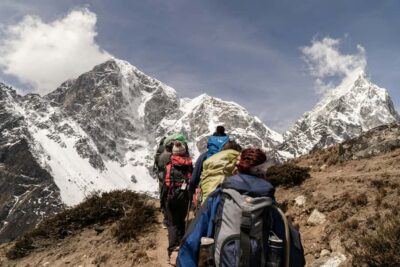
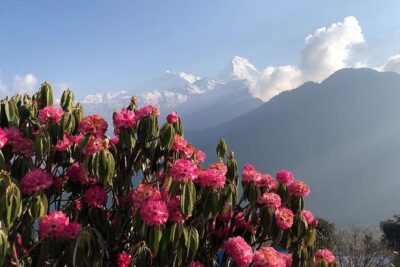
- A guided tea-house trek through oak and rhododendron forests into classic villages like Ghorepani and Ghandruk
- Porter support so you hike lighter, with one porter assigned for every two guests
- Permit and safety paperwork included, including TIMS and Annapurna Conservation Park permits
- You see Nepal’s cultures before the trail, with Pashupatinath, Boudhanath, and Bhaktapur Durbar Square in Kathmandu
- Small-group pacing, with a maximum of 15 travelers, which helps the whole day feel smoother
Why Poon Hill sunrise is the whole point
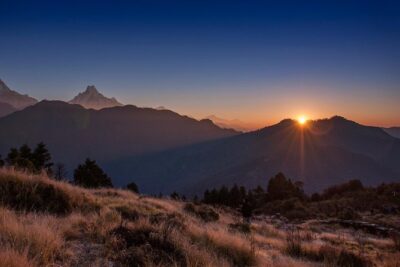
Poon Hill is the kind of viewpoint that earns its reputation. You start the day very early, hike about an hour up to the viewpoint at 3,210 m, and then spend around an hour there soaking in the mountain panorama. The goal is simple: sunrise over the high Himalayas, with views you are not wrestling with through complicated logistics.
I like that the trek is built around this payoff, but it does not feel like a stunt. You still walk through real places, including Ghorepani at 2,840 m and forested sections that change how the air feels from day to day. Then you get a hot breakfast at Ghorepani after the sunrise climb, which makes the “early” part feel less punishing.
The best part for value is that you do not have to pay extra to make the sunrise happen. Your guide and the route plan are part of the package, and you are not left figuring out which trail segment to take or what time to leave.
More Ghorepani and Poon Hill departures:
- 4 Days Poon Hill Trek
★ 5.0 · 94 reviews - Ghorepani(Poonhill Trek)
★ 5.0 · 81 reviews - 4-day Poon Hill Trek
★ 5.0 · 74 reviews
Ace the Himalaya logistics, from Kathmandu arrivals to your return trip
This is not just a “walk and hope” trek. The trip includes airport and hotel transfers in Kathmandu and Pokhara using private tourist vehicles, plus a tourist bus between Kathmandu and Pokhara. That matters because it reduces the number of moving parts you have to manage after a flight.
You will also get a pre-trip meeting depending on your arrival time. If you land after 4 pm, your briefing is handled by the guide that same day as a pre-meeting, so it is worth coming ready with questions. If you arrive earlier than 4 pm, the pre-trip meeting happens at the company office that day. Either way, plan to bring your passport for the meeting.
Group size is small, maximum 15 travelers. That tends to help with timing at trailheads and in city transport, and it also makes your guide’s explanations feel more personal. If you are the type who likes to ask follow-ups, this kind of group size is a good fit.
Day-by-day: what you actually do, and what to watch for
Day 1: Arrive in Kathmandu, then settle in
Day one is all about getting your bearings. You meet an airport representative at Tribhuvan International Airport who will be holding an Ace the Himalaya signboard, then you get transferred to your hotel in a private tourist vehicle.
This is also when you learn your guide details and get a briefing. If you arrive late, the briefing is compressed into that evening prep. I recommend using that time to confirm daily pacing, how early you are expected to start on the sunrise day, and what your porter will carry versus what you will keep.
More to compare around Kathmandu
- Everest Base Camp Trek – 14 Days
★ 5.0 · 1,499 reviews - Everest Base Camp Trek
★ 5.0 · 842 reviews - Private Kathmandu Sightseeing Tour | UNESCO World Heritage sites
★ 5.0 · 756 reviews - Kathmandu: 7 UNESCO Sites with Lunch
★ 4.8 · 744 reviews
Day 2: Kathmandu valley highlights, Pashupatinath to Bhaktapur
Kathmandu day is packed with major sites in a way that feels like a primer for Nepal’s spiritual life.
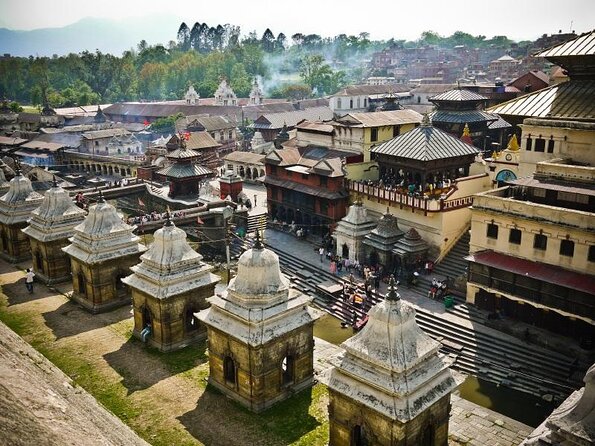
- Pashupatinath Temple: You cannot go inside, but you can clearly see the temple and riverfront activity from the eastern bank of the Bagmati River. It is a two-tiered pagoda-style temple dedicated to Lord Shiva, built on a single plinth.
- Boudhanath Stupa: This is one of the most important Buddhist sites, built in the 5th century. The four pairs of eyes of Lord Buddha face four cardinal directions, and you will see pilgrims walking around the stupa and spinning prayer wheels.
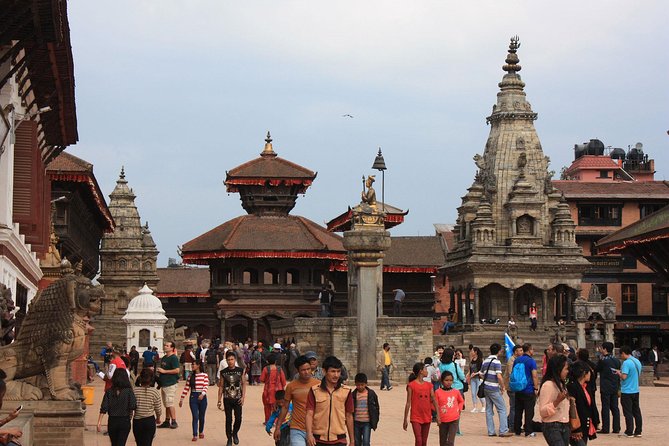
- Bhaktapur Durbar Square: You visit the royal residential quarter and key temples, including the Nyatapola pagoda-style temple and other structures such as the Palace of 55 Windows.
Why this matters for your trek: it gives you cultural context for the region you are about to walk through. Also, it breaks up the trip so you are not immediately grinding uphill on day two or day three.
A possible consideration: with three separate stops, you will be on the move. If you want an ultra-relaxing city day, you might find this one a bit full.
Day 3: Travel to Pokhara, then sleep near the mountains
On day three, trekking staff pick you up at 6:30 am and escort you to the tourist bus station. The bus leaves around 7:30 am for the long-ish ride to Pokhara.
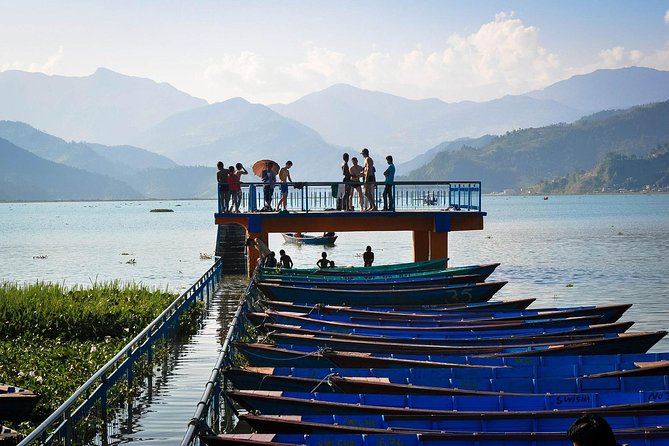
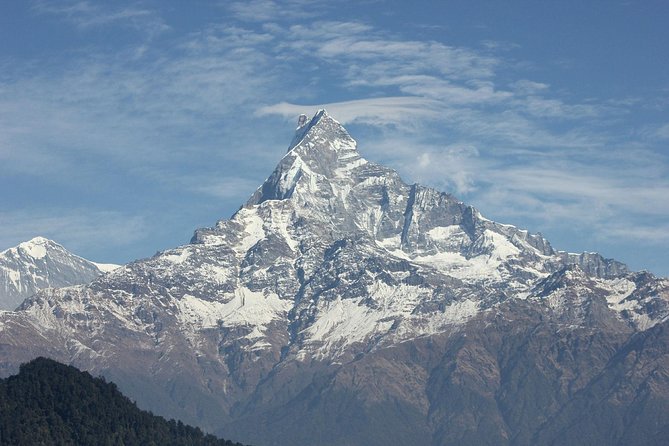
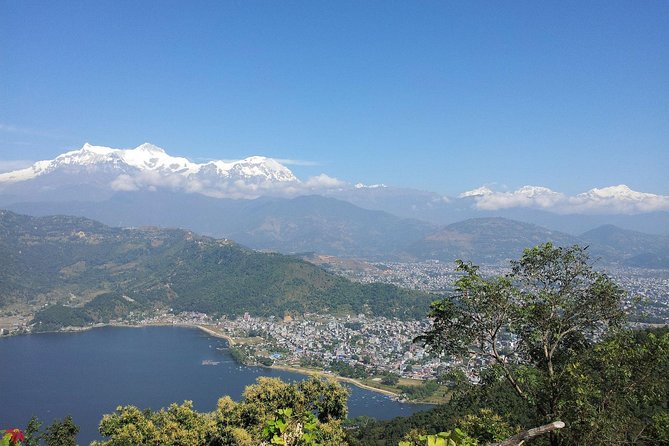
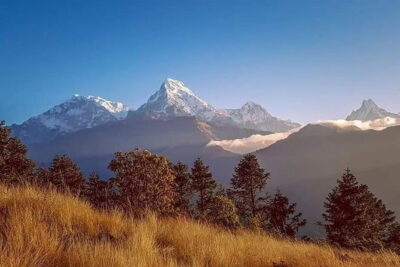
Pokhara is the calmer starting point for this route. The city sits on Phewa Lake, and from here you can get panoramic views of Annapurna and Machhapuchhare (Fish Tail Peak) northward, Dhaulagiri to the west, and Lamjung Himal and Manaslu to the east. Pokhara is smaller and less hectic than Kathmandu, which makes it a good place to reset before your walking begins.
Value note: your trek proper starts after this travel day, but you are not wasting an entire day on logistics. You are also included for the bus and the city time.
Day 4: Nayapul to Hille, Tikhedhunga, and an easy warm-up
You begin trekking at Nayapul after about an hour drive from Pokhara by private vehicle. The trek starts with a short 15-minute walk along the Modi Khola, then continues to Birethanti (1,015 m), where you will find shops and teahouses.
From there, the trail follows the north bank of the Bhurungdi Khola. Day four climbs steadily up the valley side, reaching Hille (1,495 m) and then Tikhedhunga (1,570 m). The walk is relatively short and easy, which is exactly what you want on the first true trekking day.
What to watch: even on “easy” days, you will feel the uphill rhythm. If you push too fast here, you will pay for it later when the altitude stacks up.
Day 5: Steady climb through Ulleri to Ghorepani
Today is a bigger step up, but it is still a classic teahouse trek day: villages, forest, and gradual gains.
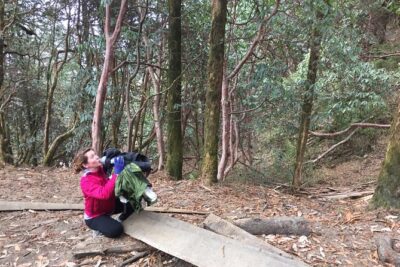
You head toward the steep climb to Ulleri, a Magar village at 2,070 m. After Ulleri, the trail ascends more gently through forests of oak and rhododendrons toward Banthanti (2,250 m) and onward to Nangethanti (2,460 m). Then you arrive in Ghorepani (2,840 m).
Even if you do not count distances, you will feel the change from lower valley walking into the higher, cooler village atmosphere. Ghorepani also sets up your sunrise day, so getting a decent night’s sleep matters.
Day 6: Poon Hill sunrise day, then a move to Tadapani
This is the centerpiece day. You start very early with an hour hike to Poon Hill at 3,210 m. The main payoff is unobstructed sunrise views over the high Himalayas. You spend about an hour at the viewpoint, then return to Ghorepani for a hot breakfast.
After that, the day continues with climbing along ridges and through pine and rhododendron forests toward Deurali (2,960 m). Then you descend to Banthanti and turn off toward Tadapani.
Why this day can feel demanding: sunrise days compress sleep and planning. But the route is set up so you get a clear “reward window” at Poon Hill, not just a vague promise of views.
If you hate very early mornings, this is your main trade-off.
Day 7: Tadapani down to Ghandruk, Gurung culture, and a slower afternoon
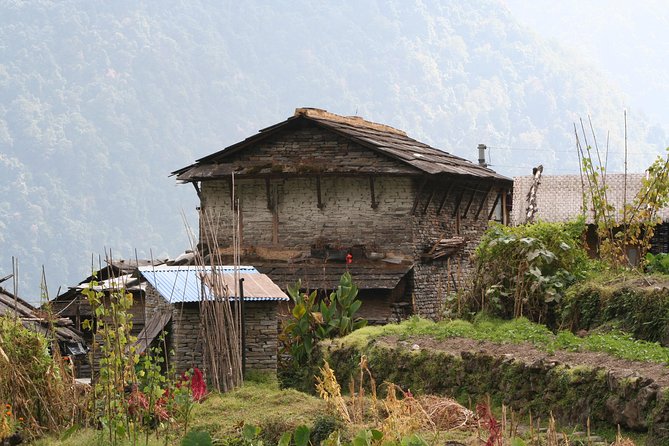
From Tadapani, the trail descends through forests into Ghandruk, a Gurung village. Ghandruk is known for beautiful mountain views and it is within easy reach from both Pokhara and Kathmandu.
This is also a place where you see culture as part of daily life, not just a performance for tourists. The village has its own dialect, costume, and lifestyle, and it is also home to many Gurkha soldiers. After the hike, you have the afternoon to visit the Annapurna Conservation Office and museums, plus time to explore the village.
Value for you: the trek stops being only about scenery and turns into understanding how people live in the mountains’ shadow. It also gives you a structured reason to spend time in Ghandruk beyond resting.
Day 8: Back to Nayapul, then Pokhara lake time
Today you end the trek at Nayapul and then drive back to Pokhara. Once you reach Pokhara, you have a relaxing afternoon and you can stroll around the lakeside.
This is a good day for laundry, recovery walks, and a low-stress meal. It also helps if you are traveling with a body that gets cranky after long downhill sections.
Day 9: Return to Kathmandu and a farewell night with performances
In the morning you drive back to Kathmandu. The evening includes a farewell dinner in a traditional Nepalese restaurant with cultural performances.
This is a nice emotional bookend. After days of hiking and tea houses, you get a more formal meal and a way to process what you just walked through.
Day 10: Airport drop-off and you’re done
You transfer to Tribhuvan International Airport for your departure. An airport representative drops you off, so you are not left juggling timing with a taxi.
What the tea-house trekking feels like day to day
This route uses guesthouses along the way, mostly twin-share rooms with breakfast included during hotels, and during the trek you will have mostly twin-share and occasionally dormitory. The trip also includes your meals on the trail: breakfast 9 times, lunch 6 times, and dinner 6 times.
What you should expect in practical terms is simple: you will eat where you sleep. That means your hiking schedule affects your meal schedule. If you keep to the pace your guide recommends, the food stops feel like a steady rhythm.
I also like that hot food and a hot breakfast are part of the plan on key days, since cold mornings can drain your energy faster than you think.
A possible drawback: guesthouses can vary. The included plan gives you food, a bed type, and a place to stay, but the exact comfort level is never identical from stop to stop.
Price and value: what $1,172.27 is paying for
At $1,172.27 per person, you are paying for a full package across 10 days. The core value is that the price covers not just “a route,” but people and permits that are hard to manage yourself.
Included items that matter:
- licensed English-speaking trekking guide (local Ace the Himalaya guide)
- porters, with a 1 porter per 2 guests ratio
- TIMS permit and Annapurna Conservation Park permits
- Kathmandu city tour by private vehicle
- hotels in Kathmandu (3 nights) and Pokhara (2 nights) with breakfast
- meals on trek days, plus sightseeing/monument entrance fees in Kathmandu
- bus Kathmandu to Pokhara, private vehicle Pokhara to Nayapul, plus airport and hotel transfers
What is not included:
- Nepal entry visa and international airfare
- travel insurance that covers emergency rescue and evacuation
- personal trekking equipment
- tips for trekking staff and drivers, which are expected
- lunch and dinner in Kathmandu and Pokhara
So is it good value? For a first-time or comfort-focused trek, the porter coverage plus permit handling plus meals can be a big deal. It means less decision fatigue and fewer chances to mess up paperwork or timing.
If you already have trekking gear, an insurance plan, and you enjoy building your own schedule, you might find other DIY options cheaper. But this price buys you fewer headaches, and that can be worth a lot.
Guides, porters, and the kind of support that makes or breaks it
The trek’s quality depends heavily on who walks with you. Based on the guides associated with this operator, people like Sushanta and Baburam (Babu) show up as standout names, along with attentive porters such as Bipi, Limbhu, Posan, and RJ.
Here is what you want to see in this type of trek, and what to ask your guide once you meet:
- Confirm your sunrise logistics, including the pace to Poon Hill
- Ask what you should keep on you versus what the porter will carry
- Get guidance on how to handle the “short but steep” sections, especially early in the trek
- Ask what weather signs would change the day’s plan
When guides are responsive, the trek becomes smoother, especially if you are new to hiking. When they are not, you end up second-guessing everything from snacks to footwear.
Fitness level and packing, without overpromising
This trek is described as easy, but it is still a trek. You will walk daily, climb repeatedly, and sleep at altitude. The highest point on this route is Poon Hill at 3,210 m.
You should plan for moderate physical fitness. That means you can comfortably walk for several hours, handle some uphill, and keep a steady pace even when you feel tired.
Packing wise, the one item the trip provides is a free Ace the Himalaya duffel/kit bag and sun hat. Your personal trekking equipment is not included, so you need to bring your own.
If you are sensitive to cold, do not assume the forecast will be enough. Early starts plus higher elevations are where you feel the temperature drop first.
Should you book this Poon Hill trek?
Book it if you want a classic Annapurna teahouse route with a real plan, a licensed guide, and sunrise views that are the centerpiece of the whole trip. You will also like it if you value a smooth “big city to mountains” transition, since Kathmandu and Pokhara are built in before and after the walking.
I would skip it if early mornings will make you miserable, or if you dislike a structured schedule with set pickup times and included meals. This trek rewards people who can follow the rhythm, hike steadily, and enjoy the payoff at the viewpoint.
If that sounds like you, this is a strong pick for your first Nepal trek, or a satisfying return trip when you want mountains without the strain of a harder high-altitude route.
FAQ
What is the duration of the Poon Hill Trek?
The trip is listed as 10 days approximately.
Where does the trek start and end?
The Annapurna Ghorepani and Poon Hill trek starts and ends in Pokhara, with trekking beginning at Nayapul and finishing back at Nayapul.
What is included in the price?
The package includes airport and hotel pickup and drop-off by private tourist vehicle, twin-share hotel rooms in Kathmandu and Pokhara (with breakfast), a guided Kathmandu valley tour, guesthouse accommodation during the trek, an English-speaking trekking guide, porters (one porter for every two guests), permits (Annapurna Conservation Park permits and TIMS), tourist bus between Kathmandu and Pokhara, and meals during the trek.
What is not included?
Not included are lunch and dinner in Kathmandu and Pokhara, travel insurance covering emergency rescue and evacuation, international airfare and airport departure tax, Nepal entry visa, alcoholic drinks, personal trekking equipment, and tips for trekking staff and driver.
How do transfers work between Kathmandu and Pokhara?
You take a tourist bus between Kathmandu and Pokhara. Then you use private tourist vehicle between Pokhara and Nayapul, which is where trekking begins and ends.
Is there a cancellation option if weather is bad?
Yes. The experience requires good weather. If it is canceled due to poor weather, you will be offered a different date or a full refund. You can cancel for a full refund up to 24 hours in advance.
Latest Kathmandu write-ups
- Langtang Valley Trek★ 5.0 · 3 reviews
- Langtang Valley Trek from Kathmandu★ 5.0 · 3 reviews
- Khopra Danda Trek★ 5.0 · 3 reviews
- 5 night / 6 days Kathmandu Nagarkot Chitwan Pokhara tour★ 5.0 · 3 reviews
- Nepal Highlights Tour: 5 Nights 6 Days Kathmandu & Pokhara Tour★ 5.0 · 3 reviews
- Kathmandu Valley Private Day Tour★ 5.0 · 3 reviews
- Kathmandu Heritage Day Tour★ 5.0 · 3 reviews
- Conquer the Himalayas: The Ultimate 16-Day Annapurna Circuit Trek★ 3.5 · 3 reviews
Poon Hill Trek, compared.
4-Day Ghorepani, Poonhill & Ghandruk Mountain Trek
Read our review →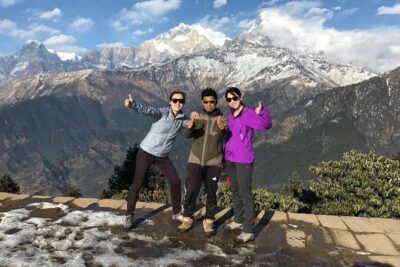
Browse the lists this tour appears in