Reviewed · TOURS
Shamanism Tour in Nepal – One-to-one Consultation with Sharmans
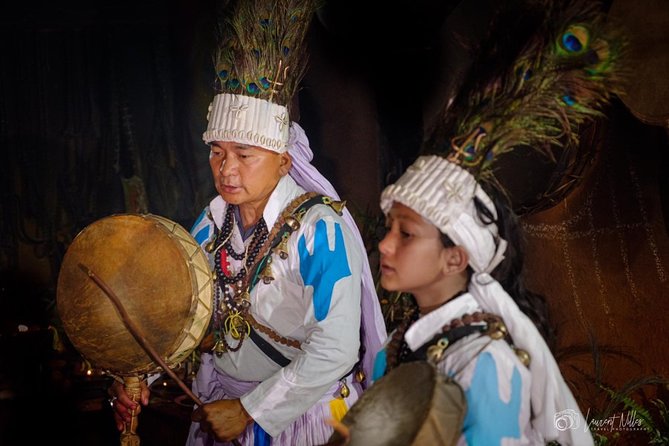
If you want a real taste of Kathmandu beyond temples and trekking photos, this is one of the stranger, more personal options. You go to a local shaman temple and get a one-to-one consultation, with the focus on Himalayan Bon shamanism and divination meant to address what is going on with your health and energy.
I like that the tour is private and guided, with English translation from Siddartha so you are not guessing what is happening. I also like that the experience is set up in a working treatment center, not a staged performance, so you can watch how local people are treated first.
One drawback to consider: the consultation is not guaranteed to cover everything you might hope for. If the shaman does not sense negative spirits, they may limit what they do, and some people felt the session was shorter or more “quiet” than expected.
Key things you should know before you go
- One-to-one consultation: You get direct divination and counseling time, not a generic group talk.
- Near Thamel, walkable: You start close to where you will already be staying, so you can fit this into a travel day.
- Watch local sessions first: You are encouraged to observe how the shaman consults before yours.
- Divination-driven healing: The focus is on sensing energy or spirits, then acting only if needed.
- Not a fixed script: Past, present, future guidance depends on what is sensed in the moment.
- Donation is separate: There is likely a donation expectation in the healing center, even though it is not included in the tour price.
Kathmandu Bon Shamanism, a private meeting with energy and spirits
Let’s start with what makes this experience interesting: you are not just learning about shamanism, you are sitting inside a real cultural practice where the shaman uses divination and healing techniques meant to affect your wellbeing. The tour frames Himalayan Bon shamanism as extremely old, and it also calls shamans something like the earliest psychologists and psychotherapists, using counseling through spiritual diagnosis.
Your day begins near Thamel, a practical base because getting anywhere from here is easy. From the start, it feels like a local appointment more than a sightseeing stop, and that matters because you are going to be asked to approach this with the right attitude.
Expect a private consultation that is guided and translated. In multiple sessions, the guide setup and translation were praised, including people highlighting that Siddartha explained what the shaman can and cannot do before anything starts.
More to compare around Kathmandu
- Everest Base Camp Trek – 14 Days
★ 5.0 · 1,499 reviews - Everest Base Camp Trek
★ 5.0 · 842 reviews - Private Kathmandu Sightseeing Tour | UNESCO World Heritage sites
★ 5.0 · 756 reviews
Before you go: what you are signing up for, and what you are not
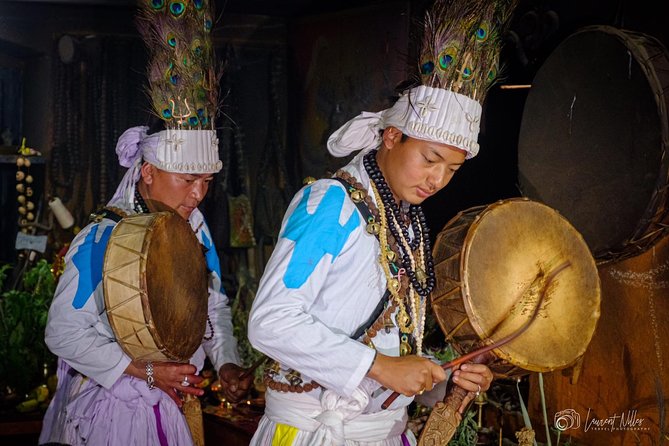
This is not a magic show. The tour’s own description is pretty clear that shamanic healing here is about sensing and interpreting energy and spirits, then dealing with negativity if it is found. It also talks about guidance on your health, including past, present, and future, but that seems conditional.
That conditional part is where you need to manage expectations. Some sessions will feel like a full reading, while others may be more limited. One review specifically noted that health issues in the past were not discussed, even though the promotional description mentions past and future information.
So here is my practical advice: go for a one-to-one conversation about what the shaman detects, not for a guaranteed detailed timeline. If you need a structured, checklist-style “all topics covered” experience, you might feel frustrated.
Finding the shaman temple from Thamel without making your day harder
Good news: the meeting area is in central Kathmandu, within walking distance of Thamel. The exact start point is listed as P8F3+WX, Kathmandu 44600, Nepal, and the activity ends back near the same meeting place.
Because it is near public transportation and you are walking from the Thamel area, you can schedule this early in your trip. One person even booked it on their arrival day, and that choice makes sense because it is a quick way to meet local people and understand a cultural thread you would otherwise miss.
The flow is simple. Your guide and translator handles the in-between moments, and you do not have to figure out where to stand, what to ask, or how to respond. In at least one case, the guide walked the group across the road to reach the temple area.
The pre-session moment: observing how the shaman consults others
A neat detail in the setup: you are recommended to observe how the shaman consults and heals local visitors before your own consultation. That is more than a nice extra. It helps you read the room, understand how people behave, and mentally step into the ritual rhythm.
It also gives you a clue about how your own session will move. You will see what kinds of questions are asked and the general pace of the healing center. Some days there may be ceremonies running, which can make the setting feel alive rather than empty.
If you hate awkward silences, this might still work. The observation phase is there so you can get comfortable before you sit down for your one-to-one moment.
A different sort of day out of Kathmandu:
- Kathmandu: 7 UNESCO Sites with Lunch
★ 4.8 · 744 reviews - Everest Base Camp Helicopter Tour landing at Everest View Hotel
★ 5.0 · 668 reviews - Half day cooking class in Thamel kathmandu
★ 5.0 · 607 reviews - Everest Base Camp Trekking
★ 5.0 · 485 reviews
Inside the temple: what you can expect to happen during healing and divination
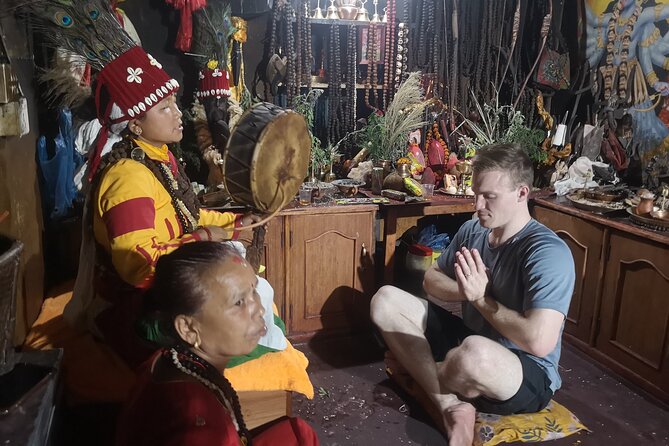
Your consultation is one-to-one, and it is centered on Himalayan Bon shamanism divination and counseling. In plain terms, the shaman is looking for negative spirits or harmful influences, then using healing techniques to remove or address them.
The tour description also says the shaman provides information about your health, including past, present, and future. But several reviews underline a key reality: the shaman’s work is guided by what is sensed. If there is negativity, the reading and healing may go further. If there is not, the shaman may avoid disturbing positive energy.
That approach makes sense in their logic, but it has a practical impact for you: your session could be shorter or lighter than expected. One review described the experience as brief and felt it was mostly active only if negative energy is present.
You should also expect the guide to frame what is normal. Siddartha, for example, was praised for explaining the process clearly, including what is and is not done. That matters because this kind of consultation can feel strange if you are unsure how people decide what to say and what to do next.
Healing rituals and the “real place” feel of a training and treatment center
The venue matters here. The temple is not described as a tourist prop. It serves both as a place for training and as a treatment center, meaning the setting can feel serious and functional.
That is a big reason the experience gets strong ratings. People highlighted that it felt real, not a tourist thing, and that they saw rituals happening as part of the center’s day. One person even said it was the spiritual, awakening kind of experience they would remember, especially because the shaman seemed accurate without prior information.
Also pay attention to how the shaman presents. One review flagged a mismatch between what was expected in photos and what happened in the session, saying the shaman was a woman in normal clothes. That can be a helpful warning: don’t assume costume rules. The important part is the consultation and ritual actions, not the outfit you think you’ll see.
Women and timing: the first 4 days rule you should know
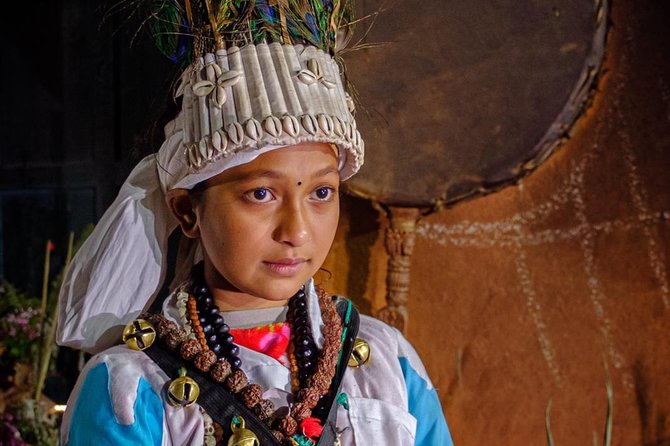
The tour notes a specific tradition: in Shaman tradition, women do not visit the shaman or temple during the first four days of their period. If that applies to you, plan around it.
This is one of those details that is easy to ignore until the moment you arrive. So double-check your timing before booking.
The tour also includes a practical suggestion: take a bath before going to the shaman temple. That is not a guaranteed requirement in the description, but it is a safe move if you are comfortable doing it.
Price and value: how $40 fits into a Kathmandu culture day
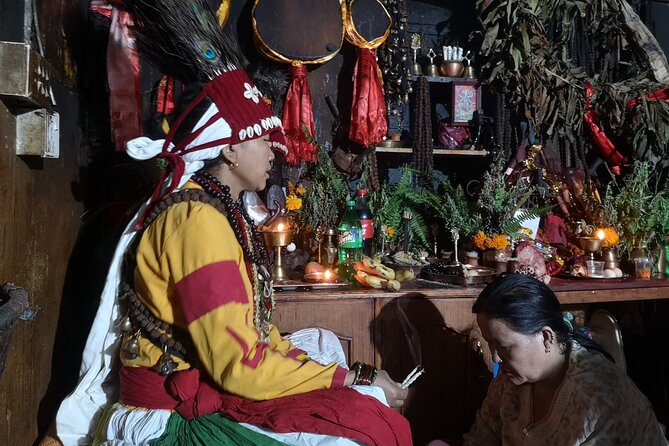
At $40 per person, this is not a cheap “add-on” in Kathmandu terms. Some people felt it was good value, while others thought the cost was high for what they got.
Here is how I’d judge value based on the structure of the experience. You are paying for:
- A one-to-one consultation (not group sharing)
- A guide who translates and explains the process
- Bottled water
What you are not paying for is also clear. Donation in the healing center is not included, and tipping the guide is not included either. Meals are not included.
So the value question comes down to whether you want a personal spiritual consultation and whether you can accept the fact that the shaman’s actions depend on what is sensed. If you go expecting the shaman to diagnose you like a doctor with a standard checklist, you may feel shortchanged. If you go open-minded, prepared for a variable session length, and you value direct cultural participation, it can feel worth it.
Also, the session is about one hour to one hour 30 minutes. That is a good fit if you want something meaningful but not half your day disappears.
Who should book this shaman consultation, and who should skip it
This fits best if:
- You want a personal cultural experience in Kathmandu, not another crowded landmark
- You are comfortable with spirituality that is not explained in a lab-coat way
- You like asking questions and receiving counsel, even if it does not follow Western categories
- You want a guided translation, especially if you are curious but not sure what to expect
I would think twice if:
- You want guaranteed detailed discussion of past, present, and future health topics
- You need a consistent, scripted length and a fixed sequence of rituals
- You are strongly skeptical and would find it stressful rather than thought-provoking
One review summed it up with the idea of being open to a moving experience. That’s the right mindset. If you treat it like a fun side quest, you might miss what makes it powerful for others.
Practical etiquette and mindset, so your session goes smoothly
You can make this experience easier on yourself with a few small choices:
- Arrive ready to be respectful. This is a temple and treatment center, not a show.
- Expect translation and guidance. Let Siddartha handle the process framing, and listen closely.
- Be prepared for a session that reflects what is sensed, not what you hoped for.
Also, consider the donation culture. The tour does not include donation in the healing center. That means you should be ready to give if you feel it fits the situation and local expectations. Since tipping the guide is also not included, plan a little extra budget if you want to follow local good manners.
Finally, go with a calm mental goal. Several reviews mentioned reflection and meditation-like moments after divination. You can get more out of the session if you arrive with real questions, or even just one theme you want to think about.
Should you book this Shamanism Tour?
I’d recommend booking if you want a close-up, guided introduction to Himalayan Bon shaman practices in Kathmandu, especially if you enjoy experiences that are personal and culturally specific. The strong ratings line up with the same pattern: clear explanation from the guide, a real center feel, and a session that can be surprisingly insightful when you stay open.
I would not book if you need a guaranteed reading that covers every detail you can list in advance. The practice here depends on what the shaman senses, and that can mean you get less if negativity is not detected.
If you are doing only a few things in Kathmandu and you want one that is genuinely different, this is a smart candidate. Just remember: you are buying time with a healer and a translated conversation, not a standardized product.
FAQ
How long is the Shamanism Tour in Nepal?
It lasts about 1 hour to 1 hour 30 minutes.
Is this tour one-on-one, or is it a group activity?
It is a private tour or activity, so only your group participates.
What’s included in the $40 per person price?
Included items are a one-to-one consultation with the shaman, bottled water, and a guide/translator.
What is not included?
Donation in the healing center and tipping to the guide are not included. Meals are also not included, and anything not mentioned in the itinerary would not be included.
Where do we meet, and how does the tour end?
The start point is listed as P8F3+WX, Kathmandu 44600, Nepal. The activity ends back at the meeting point.
Do women have any restrictions for visiting the shaman temple?
The tour information states that in Shaman tradition, women do not visit the shaman or temple during the first four days of their period.
If I book and need to cancel, what happens?
This experience is non-refundable and cannot be changed for any reason, meaning the amount you paid will not be refunded if you cancel or ask for an amendment.
Latest Kathmandu write-ups
- Langtang Valley Trek★ 5.0 · 3 reviews
- Khopra Danda Trek★ 5.0 · 3 reviews
- Langtang Valley Trek from Kathmandu★ 5.0 · 3 reviews
- 5 night / 6 days Kathmandu Nagarkot Chitwan Pokhara tour★ 5.0 · 3 reviews
- Nepal Highlights Tour: 5 Nights 6 Days Kathmandu & Pokhara Tour★ 5.0 · 3 reviews
- Kathmandu Valley Private Day Tour★ 5.0 · 3 reviews
- Kathmandu Heritage Day Tour★ 5.0 · 3 reviews
- Conquer the Himalayas: The Ultimate 16-Day Annapurna Circuit Trek★ 3.5 · 3 reviews
Tours, compared.
Private Kathmandu Sightseeing Tour | UNESCO World Heritage sites
Read our review →
Everest Base Camp Helicopter Tour landing at Everest View Hotel
Read our review →