
Reviewed · ANNAPURNA BASE CAMP TREK
14-Day Annapurna Base Camp Trek from Kathmandu
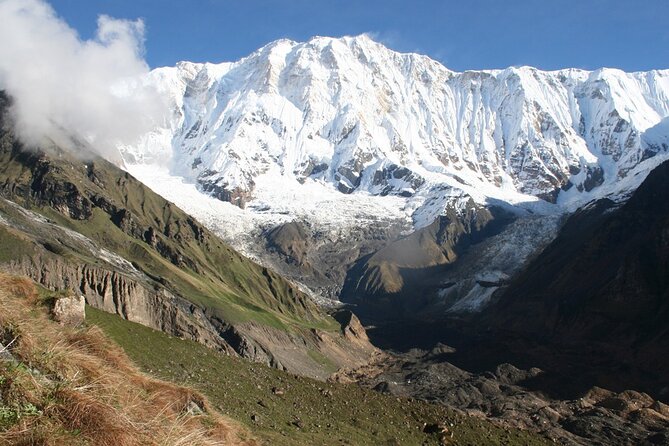
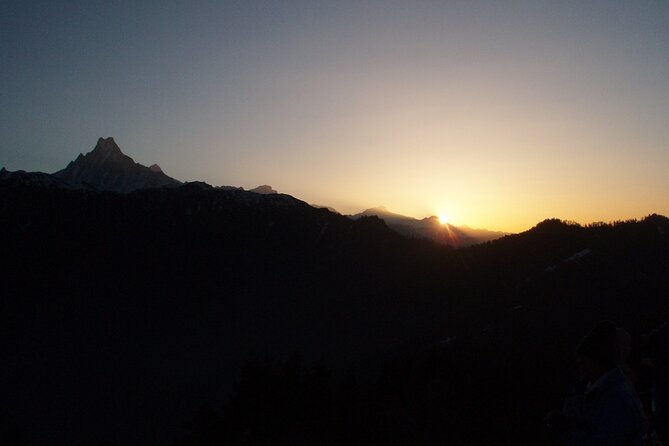
Annapurna Base Camp is interesting because your days stack up like Nepal in miniature, from Kathmandu’s temples and old squares to high-altitude stone steps, rhododendron valleys, and that big alpine day when Annapurna Base Camp finally arrives. I like how the route builds in variety instead of feeling like one long grind, and one of my favorite moments is the early push for Poonhill sunrise.
The other thing I really like is the mix of landscapes you pass through on foot, bamboo and oak shade down low, then colder Buddhist and animist middle hills with prayer flags and chortens. The one consideration is that this is still a real trek at altitude, with steep stairs and a top end around 4,170m, so you’ll want a steady pace and moderate fitness.
Key highlights worth packing for
- Poonhill sunrise timing that gives you broad Himalayan views before the day turns into hiking
- Forest-to-village variety across different ethnic communities and trail atmospheres
- Chomrong to ABC approach with the classic mix of descent, suspension bridge, and gradual climbs
- Base camp day with breathing space plus an easier planned return rather than forcing a hard down-day
- Jhinudanda hot springs as a morale boost after the long descent loop
- Small group feel with a maximum of 14 travelers
Why the Annapurna Base Camp route feels special, not just famous
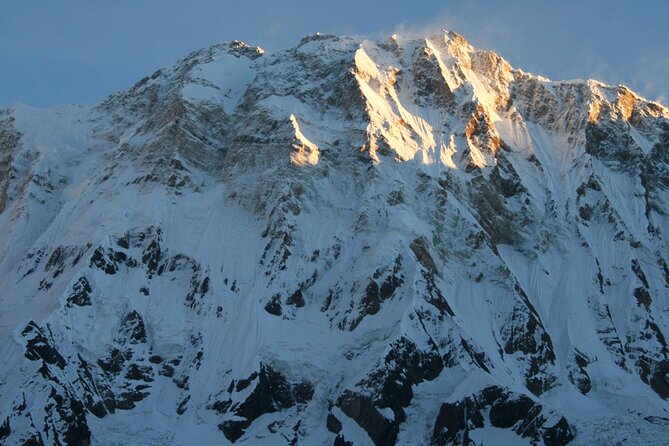
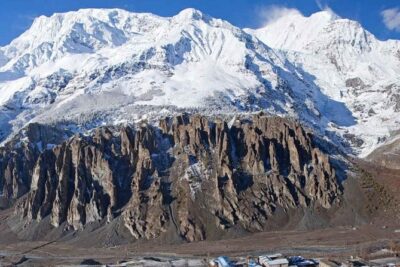
Annapurna Base Camp works because it keeps changing the deal. One day you’re walking through lively villages on easier ground, the next you’re surrounded by rhododendron shade, then you’re threading through bamboo and alpine meadows as the air gets thinner. Even if you have seen photos, the rhythm of the trail hits different in real life.
I also like that the journey connects cultures, not just peaks. You pass places shaped by Gurung and Magar communities, and you’ll see chortens and prayer flags that make the route feel like part of lived Nepal, not a theme park for hikers. Add in waterfalls, bird life, and even monkeys in the trees, and the trail becomes a whole day outside, not only a means to reach a campsite.
The flip side is that the trek includes a lot of stone steps, steep sections, and high points where fatigue can show up faster than you expect. This is not the trek to wing with a hope and a prayer. Your best strategy is to commit to your pace, keep snacks handy, and use the built-in rest days and gradual climbs.
More routes into the Annapurna Sanctuary:
- Annapurna base camp trek 5 Days
★ 5.0 · 252 reviews - 14-Day Private Annapurna Base Camp Trek
★ 5.0 · 180 reviews - Annapurna Base Camp Trekking
★ 5.0 · 116 reviews
Price and logistics: what the $950 includes (and where value comes from)
At $950 per person for about 14 days, what stands out is that you’re buying more than a route. You get 13-night accommodations, an experienced guide, Kathmandu sightseeing, permits, and most meals. You also get the ground transport connection from Kathmandu to Pokhara and back by tourist bus, plus a car or van pickup at the trekking end point.
Here’s what’s clearly included:
- Annapurna conservation entry and TIMS permit
- Kathmandu sightseeing tour on the first full sightseeing day
- An experienced guide
- Accommodations for the full stretch (listed as 13 nights)
- Meals listed as breakfast 12, lunch 9, dinner 8
- Ground transportation Kathmandu to Pokhara and back, plus the final car or van link to the trekking start or finish in the Pokhara area
- Sightseeing entrance fees in Kathmandu on day 2 (listed as NPR 2,600)
What is not included:
- Nepal entry visa fee
- Travel insurance (not optional)
- International airfare to and from Nepal
- Tips for guide, porter, and driver
- Alcohol and drinks
- Any meals not specified in the plan
- A trekking porter if you want one
So the value equation for me is simple. If you want a guided, permit-covered Annapurna Base Camp trek with built-in meal planning and transport, the price can make sense. If you already have your own gear, want a strict food budget, and plan to arrange permits and guides yourself, you might find cheaper options. But for most people, the included planning saves time and stress, especially when altitude and daily logistics pile up.
Kathmandu warm-up: Durbar Square, Monkey Temple, Pashupatinath, Bouddhanath
Your trip starts in Kathmandu with an airport representative meeting you and transferring you to the hotel. That matters because you’re arriving after travel, not after training. Then you get a sightseeing day guided through key spiritual and historic stops in Kathmandu Valley.
On the sightseeing day, the plan includes:
- Kathmandu Durbar Square
- Monkey Temple (Swayambhunath)
- Pashupatinath Temple
- Bouddhanath Stupa
- Time to shop for trekking equipment
This is a smart setup because you get to orient yourself in a culturally intense city before the quiet of the hills. Walking around these sites also helps you wake up your legs for what comes next, even though it’s not a trek day.
One practical note: the Kathmandu equipment shopping time is useful. If you need last-minute essentials like warm layers, gloves, or trekking socks, you want that buffer before you’re stuck on a trail with limited choices. The trip also includes sightseeing entrance fees for that day, so you avoid the annoying task of checking what costs what at each gate.
From Kathmandu to Pokhara, then out toward Tikhedunga
After the Kathmandu setup, you drive along the Trisuli and Marsyangdi River to reach Pokhara. The drive is long, listed as about 6 hours, and it’s framed as scenic, with chances to spot Ganesh Himal and Manaslu peaks. Pokhara then gives you the calmer pre-trek feeling, with lakes, caves, and temple sites in the general city rhythm.
The first trekking day out of the city starts with a drive to Nayapul, about 1.5 hours. From there you begin the trek toward Tikhedunga (1,577m) via Birethanti (1,065m). This early segment is described as a fairly easy flat-out hike through small villages and settlements, then a gentle ascent to your end point.
Why this start matters:
- It lets you feel your stride before the big climbing begins.
- It gives your body time to adjust to walking with a daypack.
- It gives you a Nepal village warm-up, so later trail days feel like progression, not shock.
Also, if you’re nervous about day one, this segment is your reassurance day. It’s meant to be approachable, then it ramps up on subsequent days.
More to compare around Kathmandu
- Everest Base Camp Trek – 14 Days
★ 5.0 · 1,499 reviews - Everest Base Camp Trek
★ 5.0 · 842 reviews - Private Kathmandu Sightseeing Tour | UNESCO World Heritage sites
★ 5.0 · 756 reviews - Kathmandu: 7 UNESCO Sites with Lunch
★ 4.8 · 744 reviews
Ulleri, Banthanti, and Chomrong: the classic view-and-stairs combo
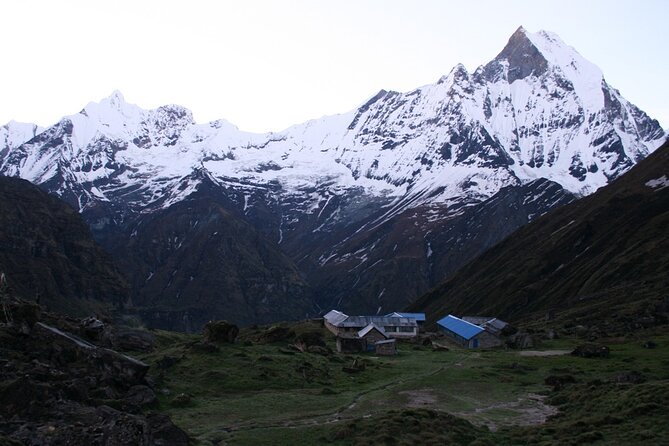
From Nayapul country you move into your first steeper push. The trek described for the day includes ascending steeply for about two hours, then climbing more gently past Ulleri (2,070m) and Banthanti. This is where the route starts delivering the big names: Machhapuchhare or Fish Tail, Hiunchuli, and Annapurna south, seen along the way.
From there, you spend time in rhododendron and shadowy forest with birds calling around you. Even when the gradient shifts, that forest feel matters because it shades you and makes the climb less visually repetitive.
Then comes the mid-trek milestone: Chomrong, described as the gateway to Annapurna Base Camp and located at the base of Himalchuli. The plan gets you there through a pattern of gentle descent, then a steep push, then a level walk for about 45 minutes with small ups and downs.
If you like a trek that teaches you its own logic, this part does that. You learn that:
- Some days spend more time descending before the real climb shows up.
- Your legs will tire first on stairs and rocky edges, not always on long flat stretches.
- The emotional reward ramps up as you approach Chomrong.
And if you’ve never seen Machhapuchhare’s shape clearly in person, this is one of the earlier opportunities on the route.
Poonhill sunrise, then Ghorepani to Tadapani: easier miles with a payoff
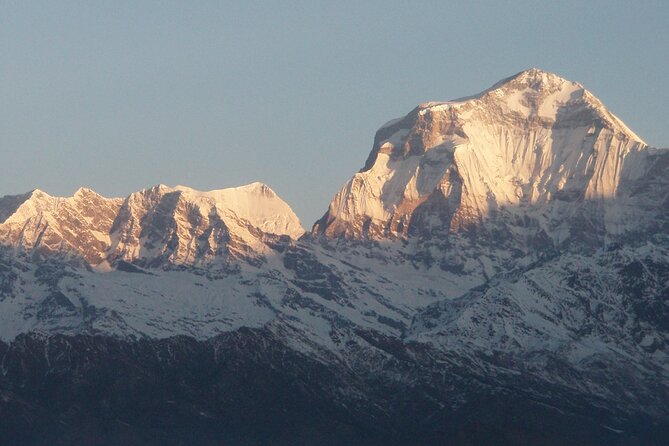
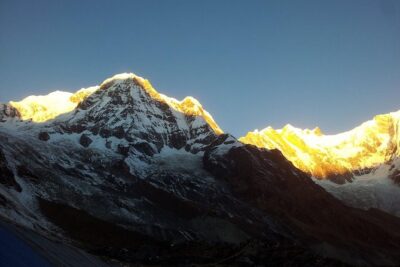
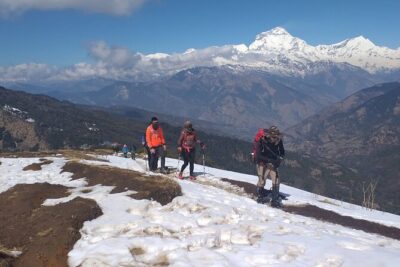
One of the most iconic moments on this trek is the early hike to Poonhill (3,232m) for sunrise views. The plan lists views stretching across Dhaulagiri, Tukuche Peak, Nilgiri, Varaha Shikhar, Annapurna peaks, Machhapuchhare, Lamjung Himal, and more.
Then it’s down to Ghorepani for a hot breakfast at the lodge, followed by trekking onward to Tadapani (2,650m). The route is described as mostly through blooming rhododendron forest, and that detail is not just scenery fluff. In spring, flowering rhododendron turns a normal trek day into an extra sensory experience, especially for the monotony-busting effect.
What to know as a practical matter:
- Sunrise days start early. Treat it like a training day, not like a casual stroll.
- After Poonhill, you’ll be moving while still half-awake. Keep water and quick snacks ready.
- The Tadapani day is a rhythm shift, often easier than the big altitude pushes, but you’ll still feel it by the end.
This section is also a mental reset. You get one of the clearest view moments early, then you roll into the forest days that make the overall trek feel deep and satisfying.
The sanctuary approach: Sinuwa, Bamboo, Dovan, and finally the gates to ABC
After Tadapani and the Chomrong day, the trek becomes more about moving through layered terrain toward the base camp zone.
From Chomrong, the plan takes you down a stone stairway for about one and a half hours, then across the Chhomrong Khola via a suspension bridge. After that, you climb out of the side valley and pass forests of bamboo, rhododendron, and oak above the Modi Khola on its west bank. Eventually you reach Sinuwa at about 2,350m.
Then you drop into deep bamboo and rhododendron forests on a long steep stone staircase down to Bamboo, and from there you walk gently toward Dovan and Himalaya. This is the kind of day where your pacing skill matters more than your speed. If you rush, your feet will protest, and the altitude will amplify the burn.
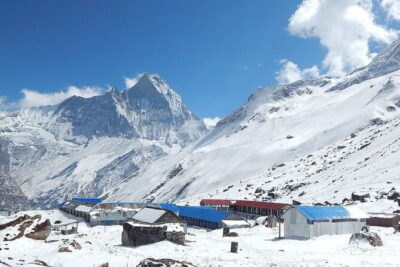
The next big approach day widens the valley and gets closer to the sanctuary feel. The trail crosses two avalanche tracks on a narrow path near cliff sides. You then reach Bagar (3,310m), described as a green meadow with abandoned hotels. After more gradual movement, you approach Annapurna Base Camp at about 4,170m and reach the destination.
That last stretch is the moment where the trek stops being a route and becomes an achievement. The plan even frames it as a holiday goal, and that’s accurate. You’ve been earning every meter.
Base camp day and the return plan: looking, then getting your legs back
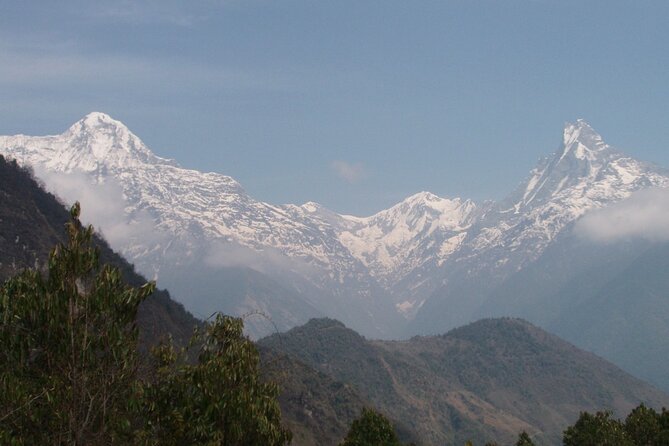
On the base camp day, you visit Annapurna Base Camp and surrounding views after breakfast. The plan notes that the views from base camp are amazing, and this is the day you slow down a little. Not because it’s easy, but because it’s worth spending time looking.
Then you start trekking back toward Dovan, taking about six hours. The description says it’s much easier going down, and that while it’s possible for some trekkers to reach Sinuwa in a single day, this route is chosen for comfort, especially for people who might struggle with wobbling or shaking legs on a harder descent.
That is an underappreciated detail. Many people plan a tough day just because they can. This plan adds a small piece of wisdom, it gives you a slightly easier return step so you can still enjoy the later days, not just survive them.
Bamboo backtrack, Chhumrong stairs, Jhinudanda hot springs
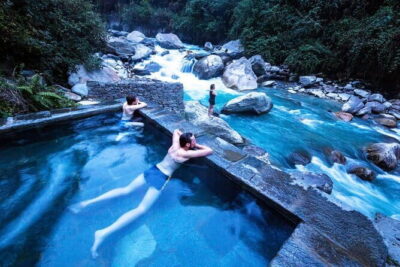
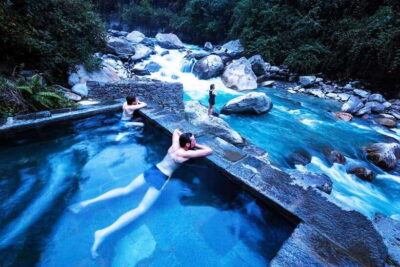
The next day begins with trekking and starts with a descent to Bamboo, traveling through rhododendron, oaks, and bamboo. After Bamboo, there’s a steep climb for about an hour, then more level walking until Sinuwa. From there you gradually descend to Chhumrong Khola, then follow a stone staircase for about an hour to reach Chhumrong. The day ends with a steep descent to Jhinudanda, where you can soak in hot springs in warm natural hot waters.
This is the perfect combination after so many trail hours:
- You get a long stair sequence to feel the work.
- Then you get the reward, hot springs, to recover and reset.
And recovery is not a luxury. It’s what makes the last trekking days feel possible instead of painful.
Ending at Pokhara, then back to Kathmandu for departure
The final trekking day feeds you down toward easier ground. After breakfast, the trail descends and then appears through flat land until Birethati. You stop for lunch at Birethati, then walk about 30 minutes to Nayapul, where the car or van is waiting to take you back toward Pokhara.
Then Pokhara becomes your transport hub. On the following day, you take a tourist bus at 7 AM after breakfast to drive to Kathmandu, about 6 hours. The plan highlights satellite towns, rural settlements, gushing rivers, terraces, and green rural landscapes along the way.
Finally, you’re transferred to the international airport for your departure.
In other words, you finish with enough structure that you’re not stuck trying to figure out how to get home while your body is still recovering. That kind of planning matters.
Fitness and altitude: how to set yourself up for an easier experience
This trek is listed as suitable for people with moderate physical fitness. That doesn’t mean it’s easy. It means the plan expects you to handle a steady pace, long stair sections, and some steep segments without panicking.
Altitude points you should take seriously:
- Poonhill at 3,232m
- Base camp area at about 4,170m
- Several stops along the way at higher elevations, including Bagar at 3,310m and Sinuwa around 2,350m
Your best altitude strategy on this kind of itinerary is boring but effective:
- Walk slower than you think you can.
- Drink water regularly.
- Don’t treat sunrise day like a sprint.
- Use breaks to eat, not just to catch your breath.
Also, plan for your feet. A lot of this route sounds like stone stair movement plus rocky trail segments. Good traction shoes and socks that don’t bunch can make a bigger difference than an extra layer.
And if you prefer to travel with more support for your load, note that a trekking porter is not included if you need one. That’s your chance to decide based on your body and comfort level.
Should you book this 14-day Annapurna Base Camp trek?
Book it if you want a guided, well-paced Annapurna Base Camp trek that includes permits, Kathmandu sightseeing, planned meals, and the back-and-forth transport, with small-group scale up to 14 travelers. The route also has smart recovery elements, including an easier return from base camp and hot springs at the end of the loop.
Think twice if you’re expecting a light hike with minimal stairs, or if your idea of moderate fitness is mostly flat walking. This trek has steep sections, lots of steps, and real time at altitude. If you’re comfortable with that trade, you’ll probably love the mix of villages, forests, and the big base camp moment.
If you do book, do one extra thing before you go: ask your operator who will be guiding you and whether they can advise on pace for your fitness level. The route works best when you walk it like a plan, not like a race.
FAQ
Where does the trek start?
The meeting point is Tribhuvan Airport, Kathmandu, Nepal, and you are met and greeted for transfer to your hotel.
How long is the Annapurna Base Camp trek?
It’s listed as 14 days (approx.).
What is the price?
The price is $950.00 per person.
What permits are included?
The tour includes Annapurna conservation entry and TIMS permit.
Is Kathmandu sightseeing included?
Yes. You get a Kathmandu Valley sightseeing tour including Kathmandu Durbar Square, Monkey Temple, Pashupatinath Temple, and Bouddhanath Stupa, plus time to shop for trekking equipment.
How do you get to and from Pokhara?
You get ground transportation from Kathmandu to Pokhara and back by tourist bus, and after the trekking finish at Nayapul there is a car/van waiting to take you back to civilization in the Pokhara area.
What meals are included?
The tour lists breakfast (12), lunch (9), and dinner (8). Meals not specified are not included.
Is travel insurance included?
No. Travel insurance is not included and it is noted as compulsory.
Is a trekking porter included?
A trekking porter is not included if you need one.
What are the main altitude highlights on the route?
The plan includes Poonhill (3,232m) and Annapurna Base Camp (about 4,170m), plus other elevation stops like Bagar (3,310m) and Sinuwa (2,350m).
FAQ
When is a full refund available if I cancel?
You can cancel up to 6 days in advance for a full refund, as long as you cancel at least 6 full days before the start time.
When is a 50% refund available?
A 50% refund is available if you cancel 2 to 6 full days before the start time.
What if I cancel less than 2 days before the start?
If you cancel less than 2 full days before, the amount paid is not refunded.
Latest Kathmandu write-ups
- Langtang Valley Trek★ 5.0 · 3 reviews
- Khopra Danda Trek★ 5.0 · 3 reviews
- Langtang Valley Trek from Kathmandu★ 5.0 · 3 reviews
- 5 night / 6 days Kathmandu Nagarkot Chitwan Pokhara tour★ 5.0 · 3 reviews
- Nepal Highlights Tour: 5 Nights 6 Days Kathmandu & Pokhara Tour★ 5.0 · 3 reviews
- Kathmandu Valley Private Day Tour★ 5.0 · 3 reviews
- Conquer the Himalayas: The Ultimate 16-Day Annapurna Circuit Trek★ 3.5 · 3 reviews
- Kathmandu Heritage Day Tour★ 5.0 · 3 reviews
Annapurna Base Camp Trek, compared.
Browse the lists this tour appears in